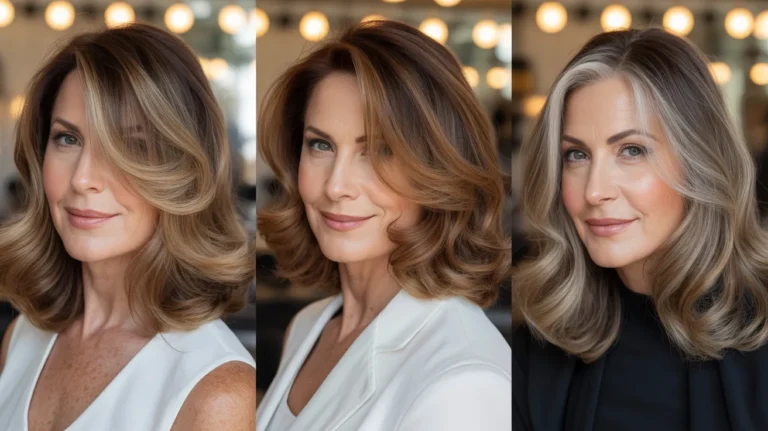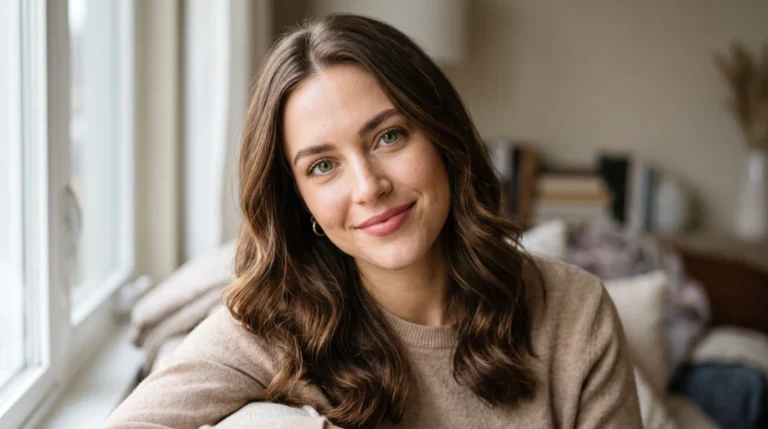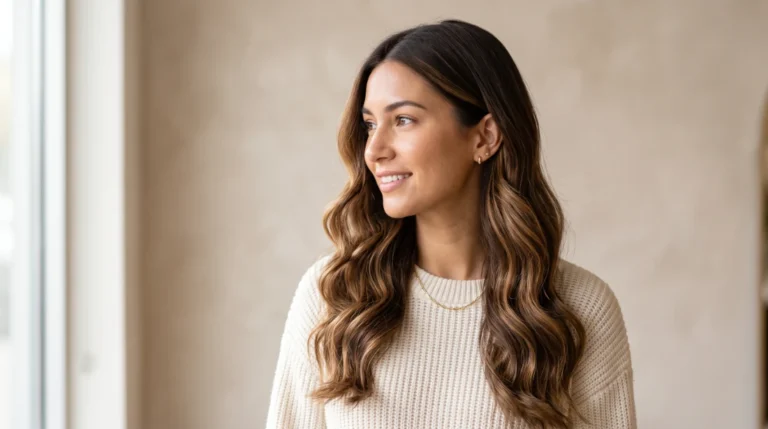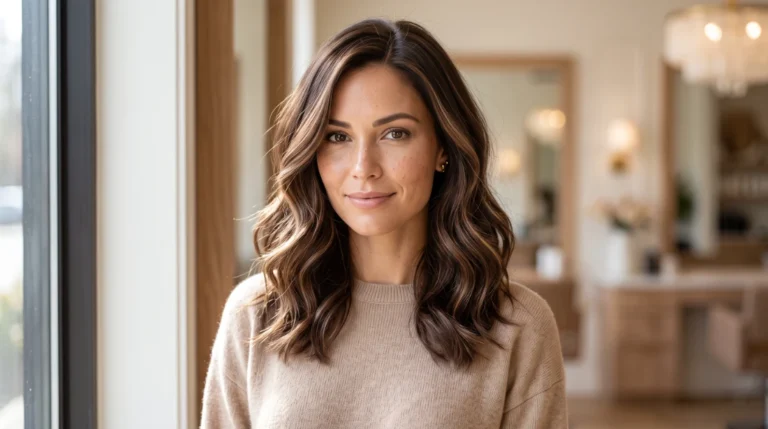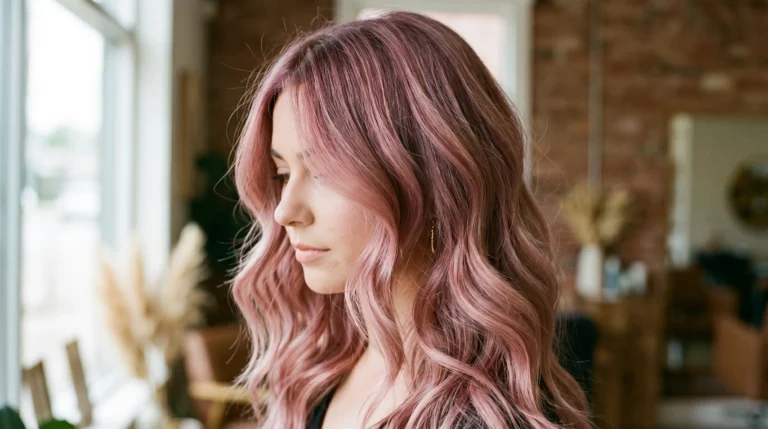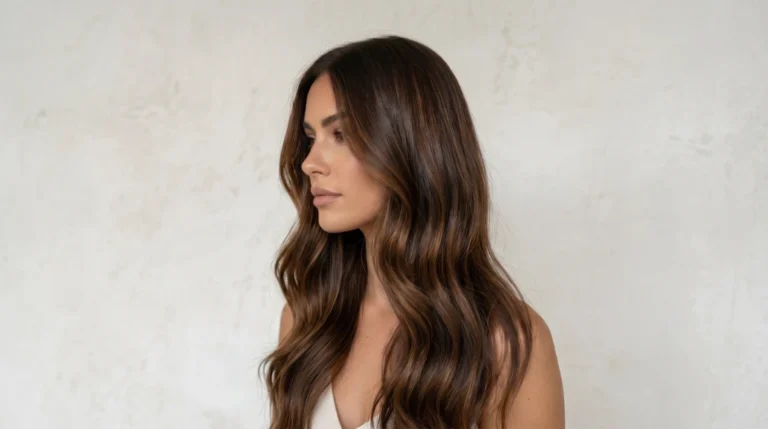
21 Plum and Wine-Toned Brunette Hair Ideas That Look Rich and Dimensional
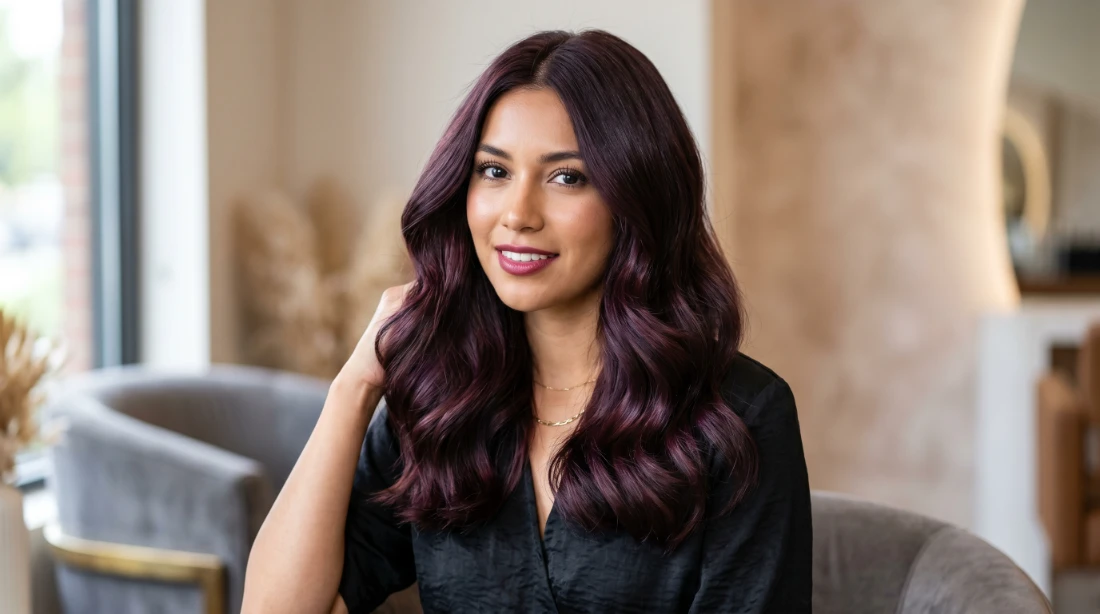
Some hair colors announce themselves the second you walk into a room. Plum and wine toned brunette hair ideas tend to do the opposite — they wait. They sit quietly as dark brunette under regular light and only reveal their full depth when sunlight, candlelight, or a phone flash catches them at the right angle.
That restraint is exactly why this color family has become so popular. After years of high-maintenance, high-contrast blonde dominating the conversation, plum and wine tones offer something that feels more grown-up: richness instead of brightness, depth instead of drama for drama’s sake.
Getting it right takes real skill. A good plum or wine brunette isn’t just dark hair with red dye dumped over it — it’s a layered build of cool and warm pigment that creates the impression of color glowing from beneath the surface rather than sitting flatly on top of it. That layered quality is what separates a forgettable dye job from a color people stop and ask about.
This roundup covers twenty-one distinct plum and wine toned brunette hair ideas, from barely-visible undertones that only show up in bright sun to fully saturated, unmistakable statement shades. Wherever you fall on that spectrum, there’s a version here built specifically for you.
Finding Your Match: Face Shape and Texture Guide
By Face Shape
Oval Face: Most shades in this lookbook will suit an oval face without much adjustment. Deep, saturated tones create striking contrast against lighter skin and a unified richness against deeper skin. Try placing slightly lighter wine pieces around the face to draw extra attention to the eyes without committing to an all-over change.
Heart Face: A wine-toned color that deepens gradually from the temples down works especially well here, since the added weight near the jaw softens a pointed chin. Avoid concentrating bright plum exclusively at the crown, which can draw extra attention to a wider forehead.
Square Face: Soft, diffused plum woven through a brunette base rather than concentrated in one spot pulls the eye along a diagonal path instead of a straight horizontal line, which helps soften an angular jaw.
Round Face: A deep plum or wine base with slightly lighter face-framing pieces in the same color family creates a subtle contouring effect — the darker base recedes visually while the lighter framing pieces advance, adding the appearance of length without changing the haircut at all.
By Hair Texture
Fine Hair: A single, deeply saturated plum or wine color tends to deliver the most intense result on fine hair, since thinner strands absorb pigment fully. That added depth reads visually as extra thickness. Heavy highlighting on already-fine hair can undercut this effect, so a more even, all-over approach usually works better.
Thick Hair: Thick hair is an ideal canvas for multi-tonal work, since there’s enough volume for several different shades — a deep root, a richer mid-tone, a lighter wine at the ends — to all be visible at once, producing the layered effect this color family is known for.
Curly Hair: Every curl naturally creates its own light and shadow, so plum and wine tones pick up a built-in shimmer on curly hair that straight hair has to work harder to achieve. A single, well-placed color application can read as multi-tonal simply because of how curls catch the light.
Straight Hair: Straight hair shows these tones with total clarity — every undertone and every transition is fully visible, which means the technical precision of the color work matters more here than on any other texture.
21 Plum and Wine-Toned Brunette Hair Ideas
1. The Burgundy Hour
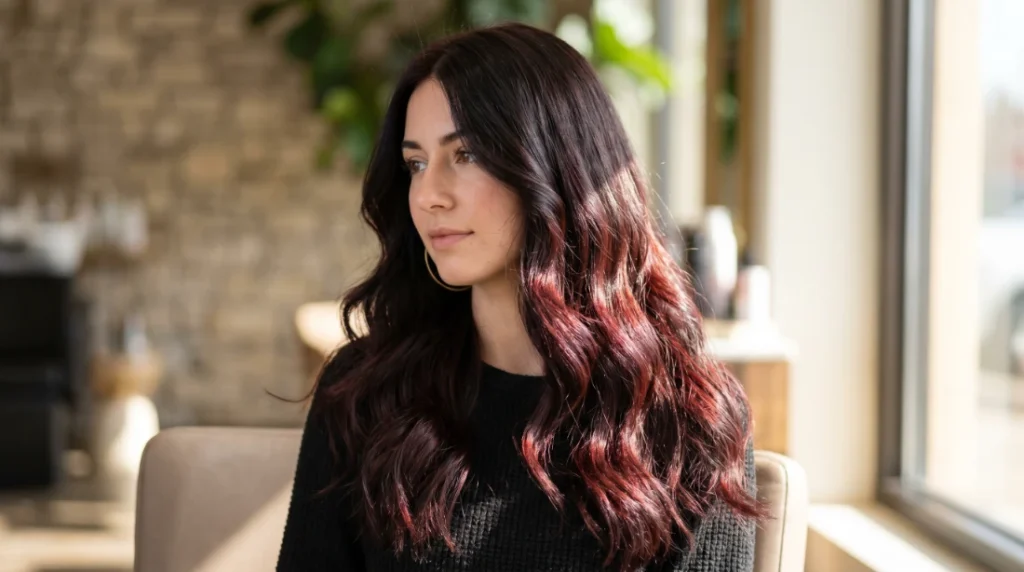
The Look: A deep, restrained burgundy-brown that reads as plain dark brunette under office lighting and reveals a full wine-red glow the moment it catches direct sun or a lamp. Quiet by design, dramatic on cue.
Why It Works: Solves the problem of wanting a noticeable color shift without anyone at work asking if you ‘did something’ to your hair. The undertone only announces itself when light gives it permission to.
Stylist Tip: A weekly red-toned conditioning mask keeps the wine cast from fading toward plain brown — without it, this shade slides back to ordinary dark brunette within a few weeks.
2. The Garnet Undertone
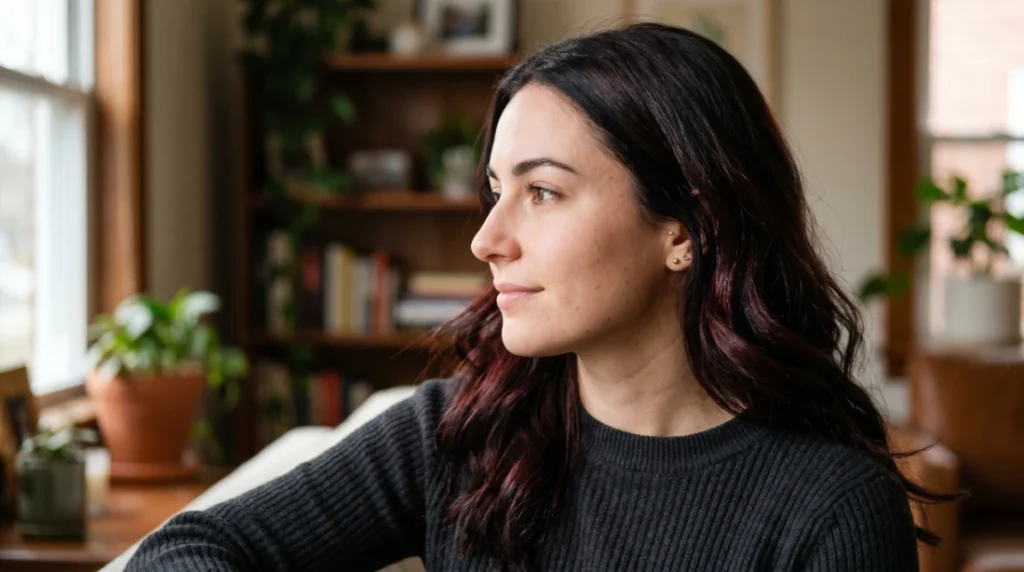
The Look: A near-black base carrying a deep garnet-red shadow beneath the surface, visible mainly as a flash of color when hair moves or catches light at an angle. Subtle enough to read as natural, rich enough to reward a second look.
Why It Works: Gives anyone nervous about color a low-risk way in. Because the base stays dark and the undertone does all the work, there’s very little visible commitment if the look doesn’t end up suiting you.
Stylist Tip: Request a tone-on-tone gloss rather than a permanent dye for this one — it builds the garnet undertone gradually and fades out cleanly if you decide to change direction.
3. The Smoked Plum
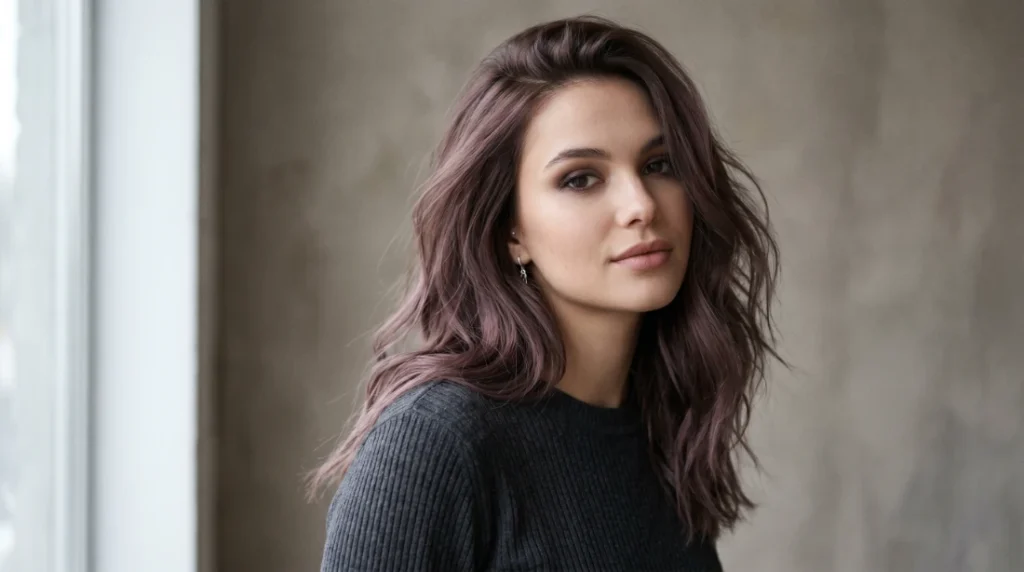
The Look: A muted, almost grey-leaning plum layered over a cool brunette base — not bright purple, not flat brown, but a hazy in-between that’s hard to categorize and easy to stare at.
Why It Works: Appeals to anyone who finds standard warm brunette boring but isn’t drawn to a loud, saturated color. The smoky quality delivers something genuinely different without tipping into costume territory.
Stylist Tip: This tone fades fastest in hot water specifically, faster than almost any other shade in this family — keep showers lukewarm at most if you want it to hold.
4. The Spiced Cherry Brunette
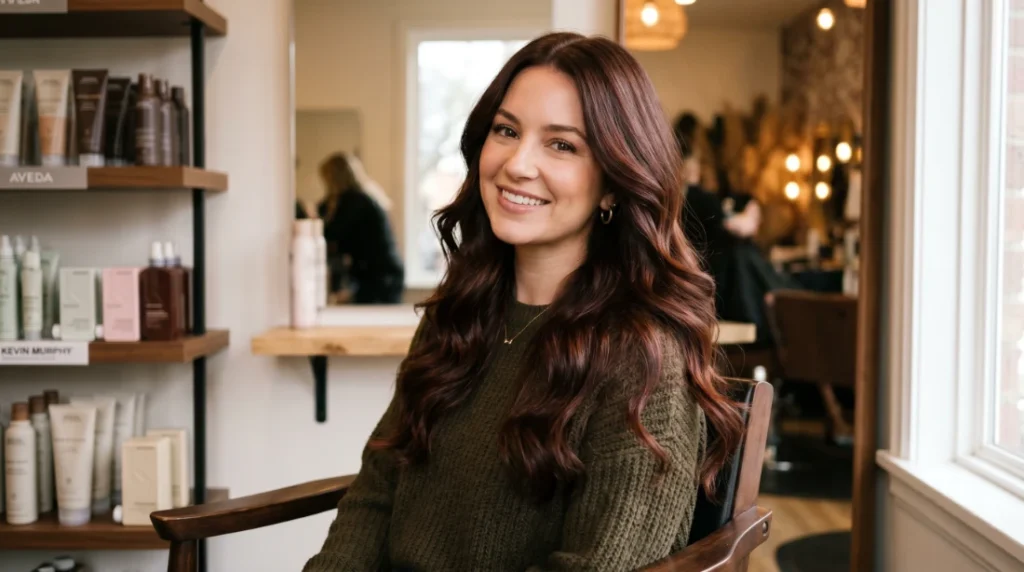
The Look: A warm, cherry-leaning brown that sits between chocolate and deep red — closer to dessert than to wine, and arguably the easiest entry point in this entire list for anyone used to standard brunette.
Why It Works: Gives natural brunettes a richer, more interesting version of the color they already wear, without asking them to leave their comfort zone. Grow-out is nearly invisible.
Stylist Tip: A glossy, shine-focused blow dry brings out the cherry warmth far more than any product can — finish with a boar bristle brush to distribute natural oils evenly across the color.
5. The Black Cherry Depth
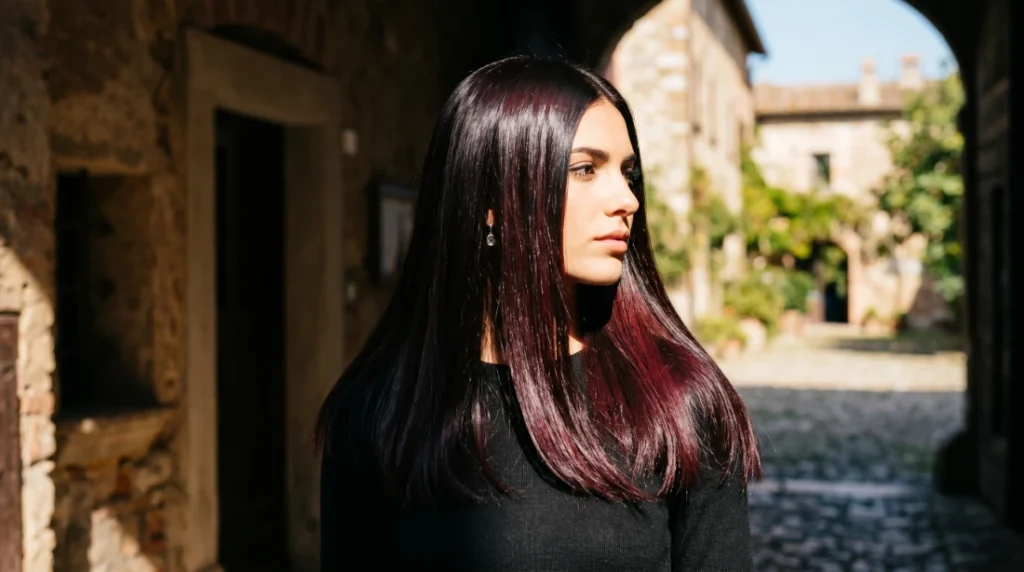
The Look: The deepest, most saturated shade in the collection — a near-black base with a rich cherry-red undertone that only fully reveals itself in bright, direct sunlight. Bold in concept, understated in everyday execution.
Why It Works: Solves the problem of wanting serious depth and drama without lightening a single strand. All the richness comes from added pigment rather than any lift, which keeps the hair’s structural integrity largely intact.
Stylist Tip: Skip sulfate shampoo entirely with this shade — sulfates pull red and violet pigment out faster than any other color family, and the difference is noticeable within two washes.
6. The Wine-Painted Balayage
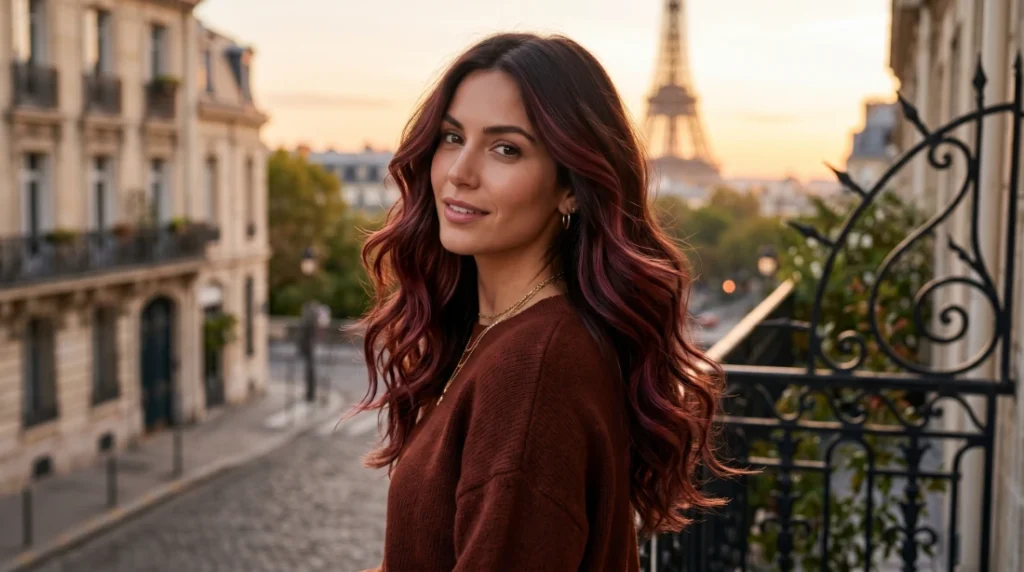
The Look: A natural brunette base with hand-painted wine and plum pieces swept through the mid-lengths and ends, mimicking the organic placement of sun-kissed balayage but built entirely in deep, cool-red tones instead of lightness.
Why It Works: Gives balayage lovers a way to keep the technique’s dimensional, hand-painted quality without going lighter — depth and contrast come from tone rather than from lift.
Stylist Tip: Loose waves show this technique off best — each curl catches a different painted section, so the color shifts constantly as you move rather than sitting flat.
7. The Reverse Shadow Root
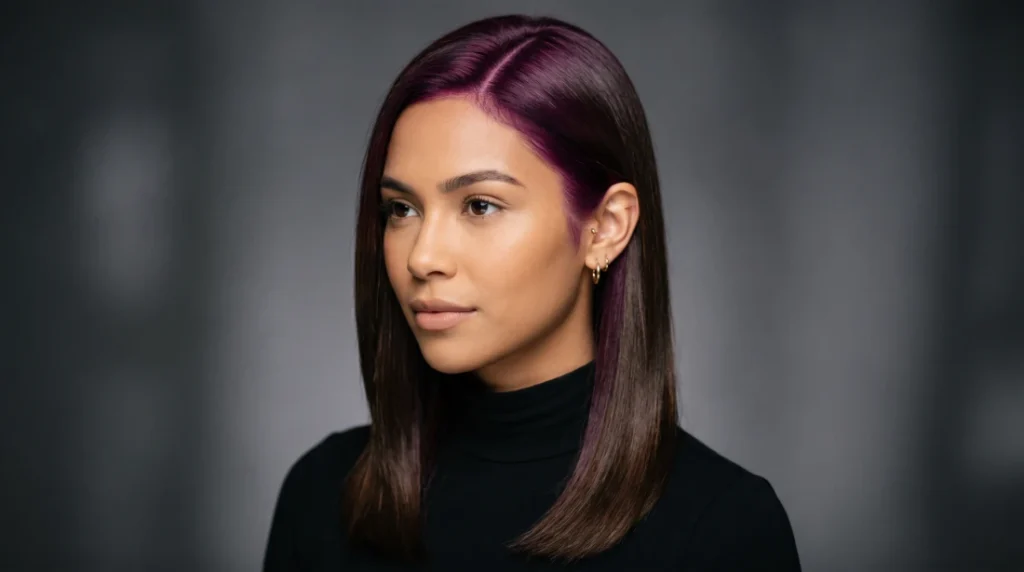
The Look: A vivid plum concentrated right at the root, melting down into a warmer, more conventional brunette through the rest of the hair — essentially the standard shadow-root technique flipped upside down.
Why It Works: Turns regrowth into a feature instead of a problem. As new hair comes in, the plum deepens naturally at the root, extending the time between salon visits rather than shortening it.
Stylist Tip: Treat the root area gently with heat tools — it’s the most recently processed section, and unprotected heat there is the single fastest way to dull this look’s signature feature.
8. The Plum Gloss Refresh
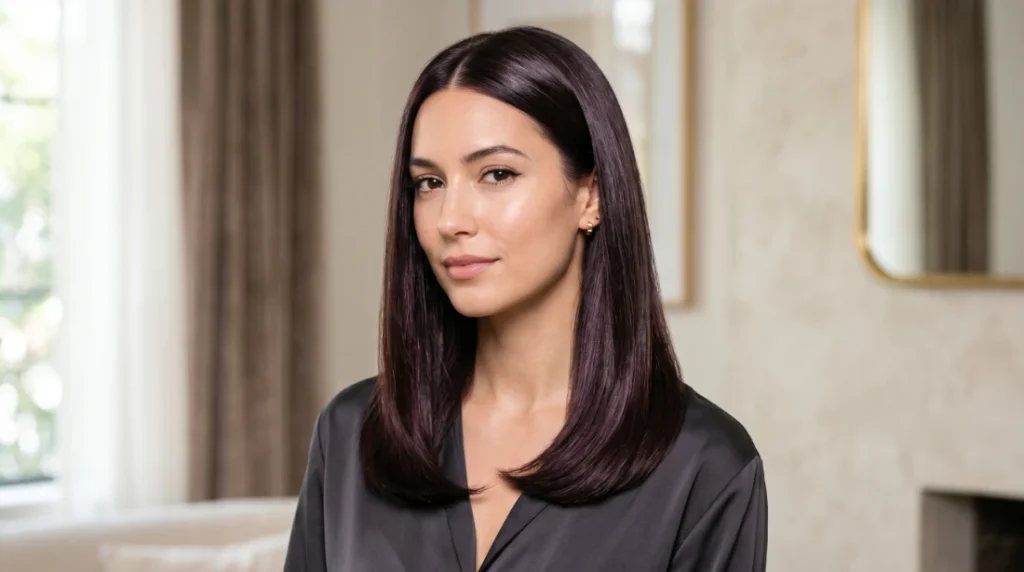
The Look: A natural dark brunette enhanced only with a sheer plum gloss — no permanent color, no lightening, just a translucent wash of cool purple-red laid over the existing base.
Why It Works: Built for anyone who wants to test plum tones without any lasting commitment. The gloss fades naturally over a matter of weeks, making it a completely reversible way to experiment.
Stylist Tip: Finish the gloss service with a cold water rinse and a strengthening leave-in — this single step locks in noticeably more shine and longevity than skipping it.
9. The Sangria Brunette
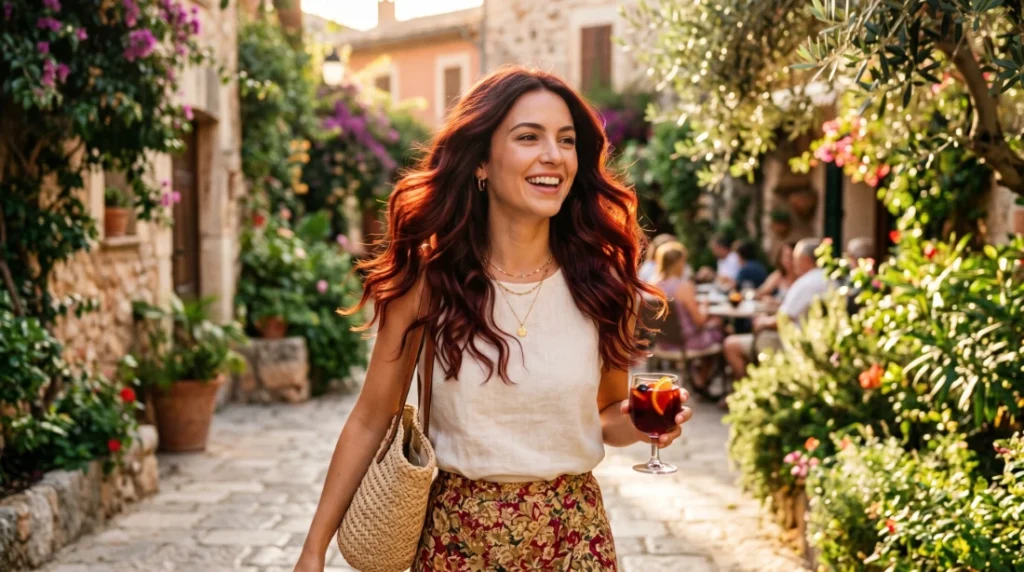
The Look: A bright, fruit-leaning red-brown with unmistakable sangria warmth that flushes vivid in direct sun — playful and energetic in a way most of the cooler shades in this list deliberately aren’t.
Why It Works: Solves the problem of brunette color that’s gone flat and lifeless between appointments. The warmth in this shade reads as healthy and vibrant rather than simply dark.
Stylist Tip: A warm-toned color-depositing shampoo used once weekly keeps the sangria flush alive and noticeably extends the gap between full color services.
10. The Claret Gradient
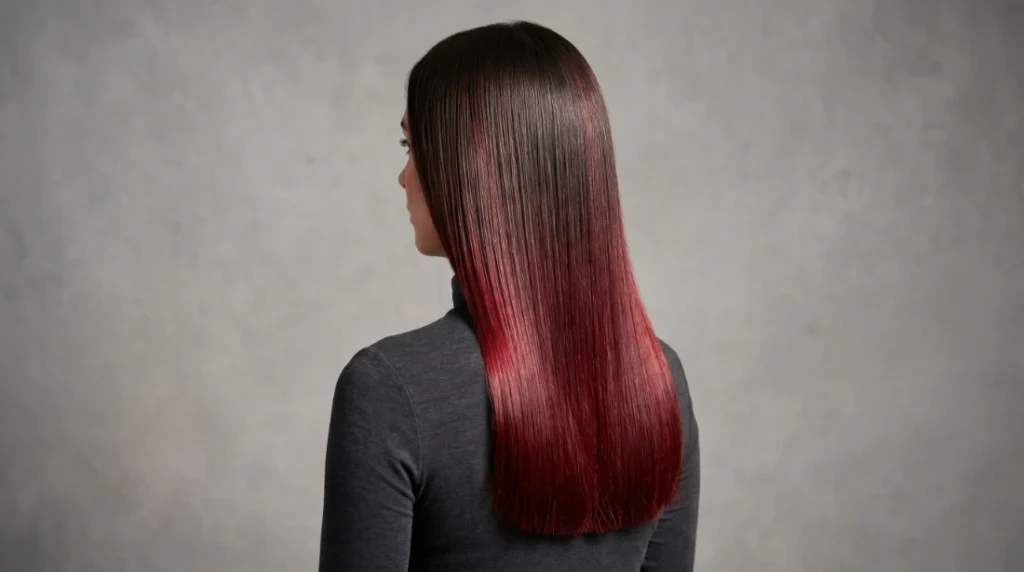
The Look: A rich claret red graduating from a dark brunette root into progressively deeper red tones toward the ends — built entirely through added pigment rather than lightening, so the gradient comes from depth rather than lift.
Why It Works: Gives anyone who loves the visual drama of an ombre a way to get it without the bleaching that traditional ombre requires, making it a notably lower-damage route to the same gradient effect.
Stylist Tip: Style this one pin-straight whenever possible — a flat iron pass from root to tip on dry hair makes the claret gradient read with far more clarity than it does on textured hair.
11. The Blackcurrant Crown
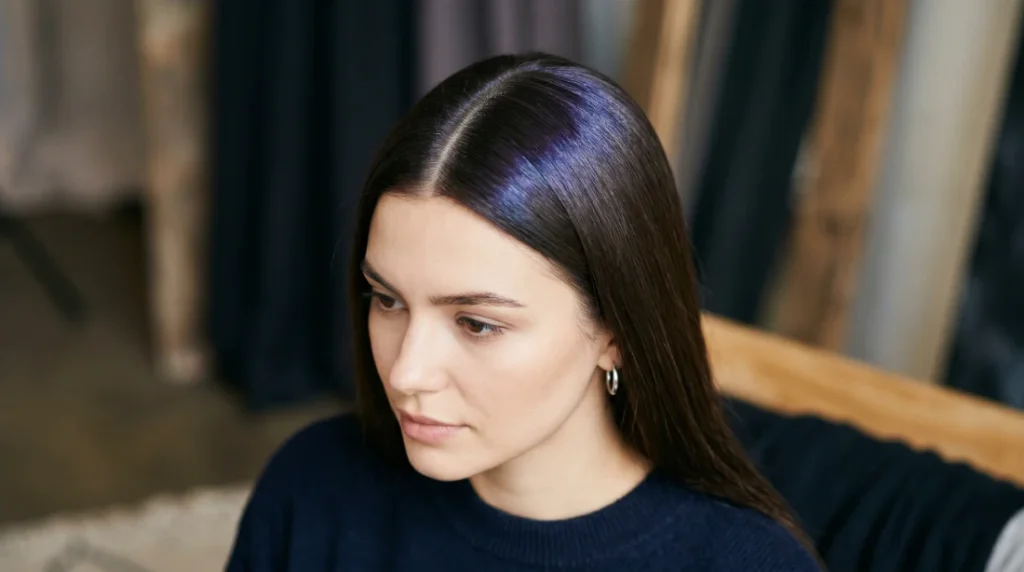
The Look: A deep, cool-leaning purple-brown with a blue undertone that reads as nearly black with a distinct jewel-toned coolness — closer to a dark gemstone than to traditional brunette.
Why It Works: Specifically flatters cool and neutral skin undertones that often look slightly off against warm, red-based brown shades. This cooler, blue-leaning option avoids that clash entirely.
Stylist Tip: A blue-toned conditioner used weekly stops the cool purple-blue base from drifting warm and muddy, which is the single most common way this shade loses its distinctive quality.
12. The Mulberry Panels
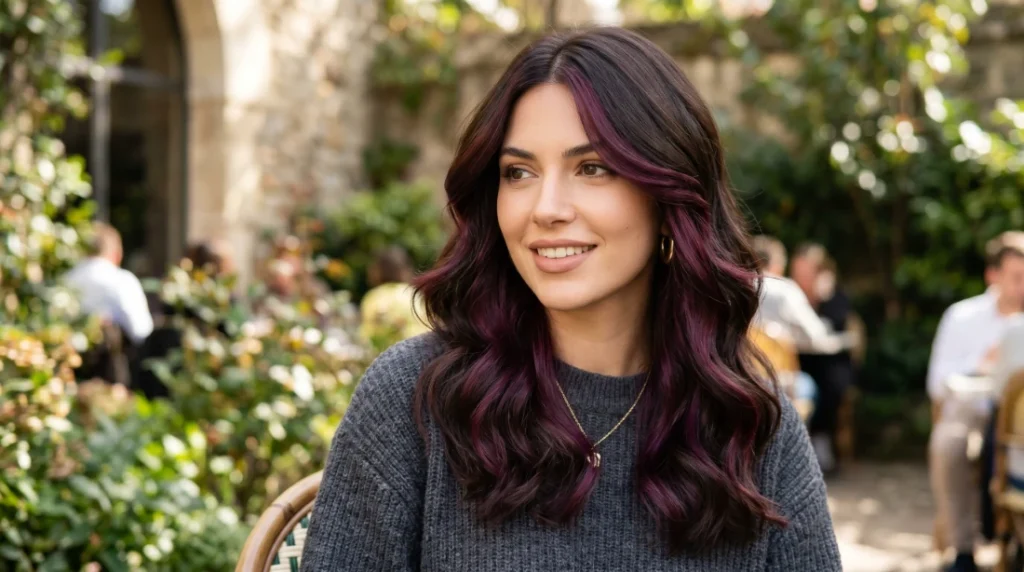
The Look: A natural dark brunette base carrying a small number of deliberately placed mulberry-purple panels rather than an all-over color — individual painted sections that surface through the brunette like threads of color through dark fabric.
Why It Works: Lets anyone curious about plum tones dip a toe in. Two or three strategically placed panels deliver a real preview of how the color interacts with your skin tone, at a fraction of the cost and commitment of a full-head service.
Stylist Tip: Wear the hair in loose, open waves to separate the mulberry panels visually from the brunette base — tight or sleek styles tend to hide them entirely.
13. The Plum Bob
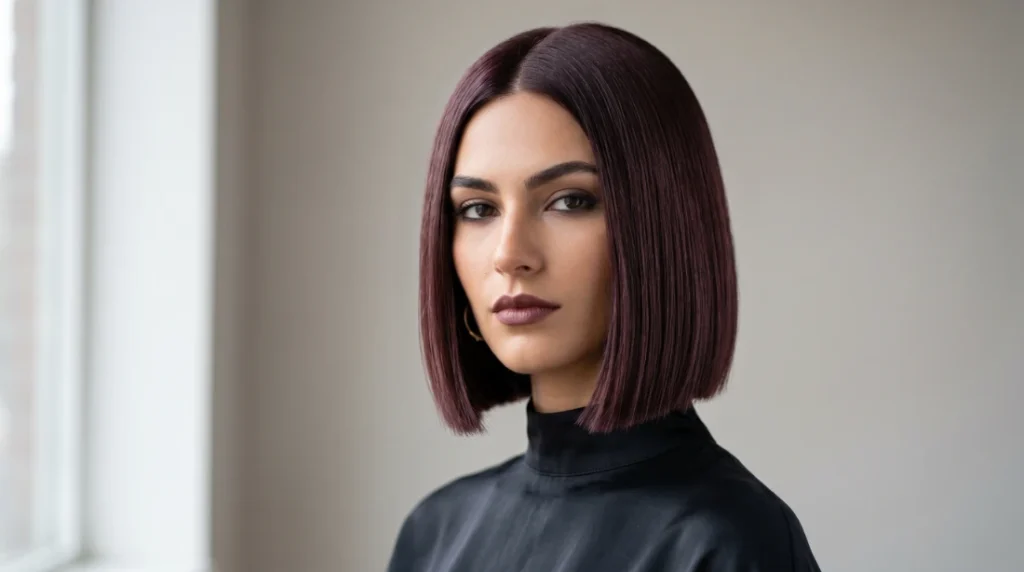
The Look: A precise, chin-length bob carrying a fully saturated plum-brunette color from root to end. The clean lines of the cut and the depth of the color reinforce each other, turning a simple haircut into a complete look.
Why It Works: Solves the flatness that short, single-process color sometimes runs into. The richness of the plum tone gives the bob’s geometry something to catch and reflect at every angle.
Stylist Tip: A flat iron finish followed by a lightweight silk serum produces an almost lacquered shine — exactly the kind of glassy surface that makes deep plum read at full intensity.
14. The Wine and Amber Blend
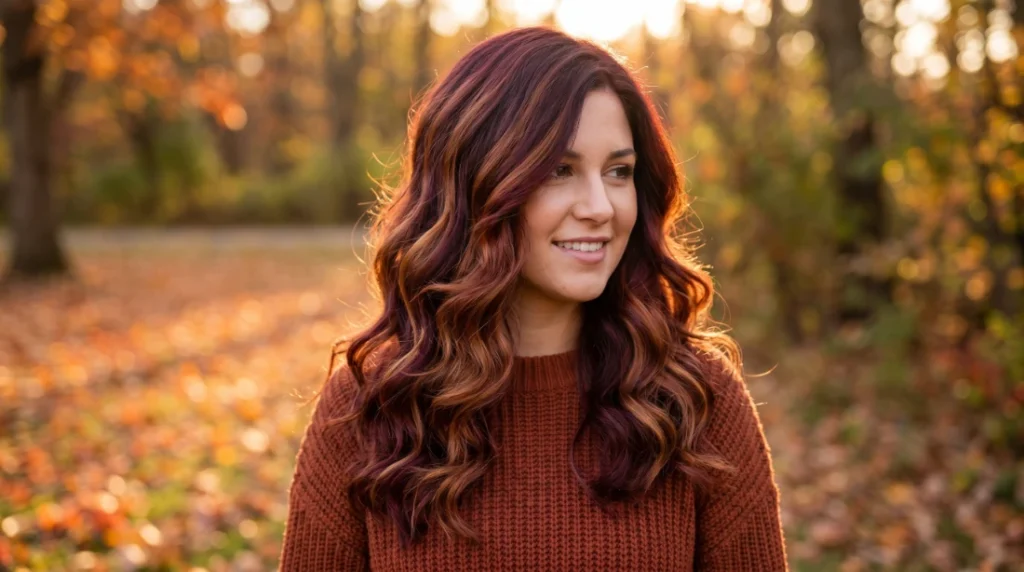
The Look: A warm fusion of deep wine red and amber-bronze, creating a multidimensional color that leans autumnal and noticeably warmer than most of the looks in this list. The amber keeps the wine from ever reading as cold.
Why It Works: Solves the issue of pure wine or plum sometimes clashing with very warm skin undertones. The amber addition bridges that gap, making the overall result flattering on both warm and neutral complexions.
Stylist Tip: A weekly conditioner with both red and golden-orange pigment maintains both halves of this blend evenly — using a single-tone product will let one half fade faster than the other.
15. The Crown Plum Shadow
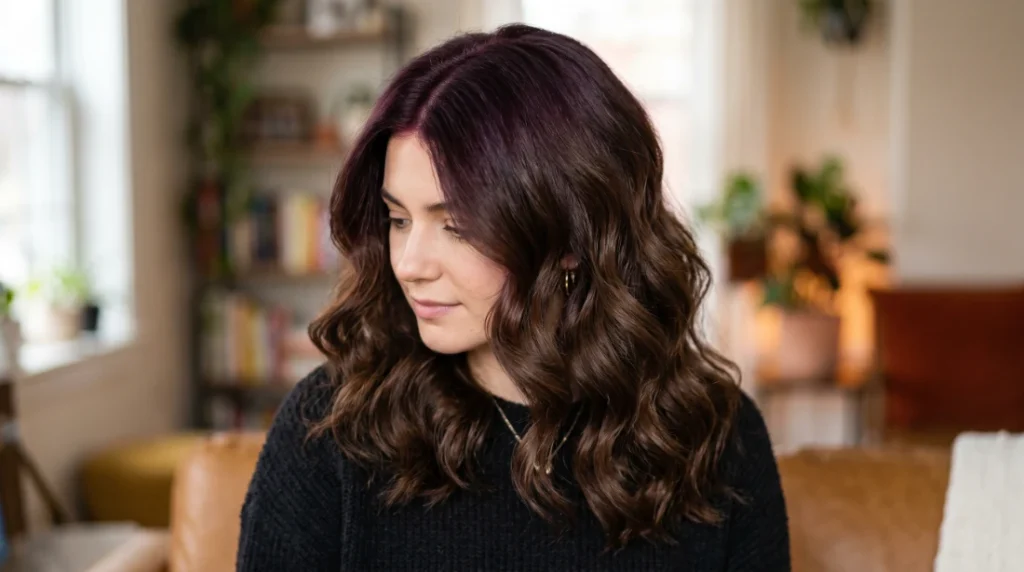
The Look: A concentrated plum shadow at the root and crown that softens into a warmer medium brunette through the rest of the hair. The crown carries all the drama; the lengths stay easy to live with day to day.
Why It Works: Turns visible regrowth into part of the design rather than something to manage. The shadow is meant to deepen as it grows, which makes this one of the more forgiving color techniques for stretching out salon visits.
Stylist Tip: A volumizing root spray before blow-drying lifts the crown physically, making the deepest, richest part of the color the most visually prominent part of the whole look.
16. The Plum Curtain Bangs
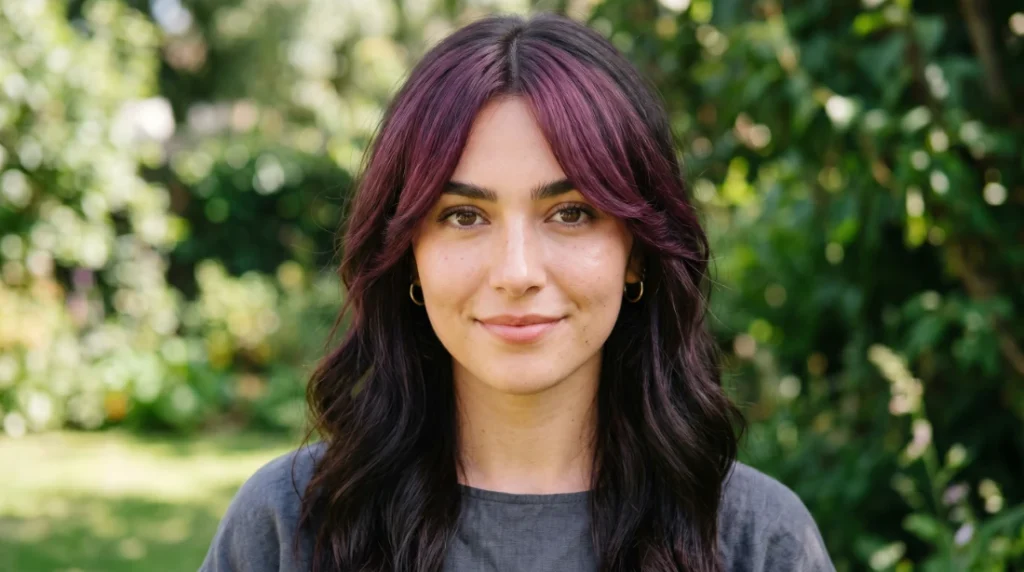
The Look: A medium brunette base left mostly untouched, except for a deep plum applied specifically to curtain-style bangs — concentrating the entire color statement on the most visible, face-framing section of hair.
Why It Works: Delivers maximum visual impact with minimum overall color work. Because only the fringe needs serious attention, this is one of the fastest and least expensive ways to wear noticeable plum tones.
Stylist Tip: A small amount of plum-toned conditioner applied to just the fringe weekly keeps that section vivid while the rest of the brunette base needs only standard upkeep.
17. The Rosewood Brunette
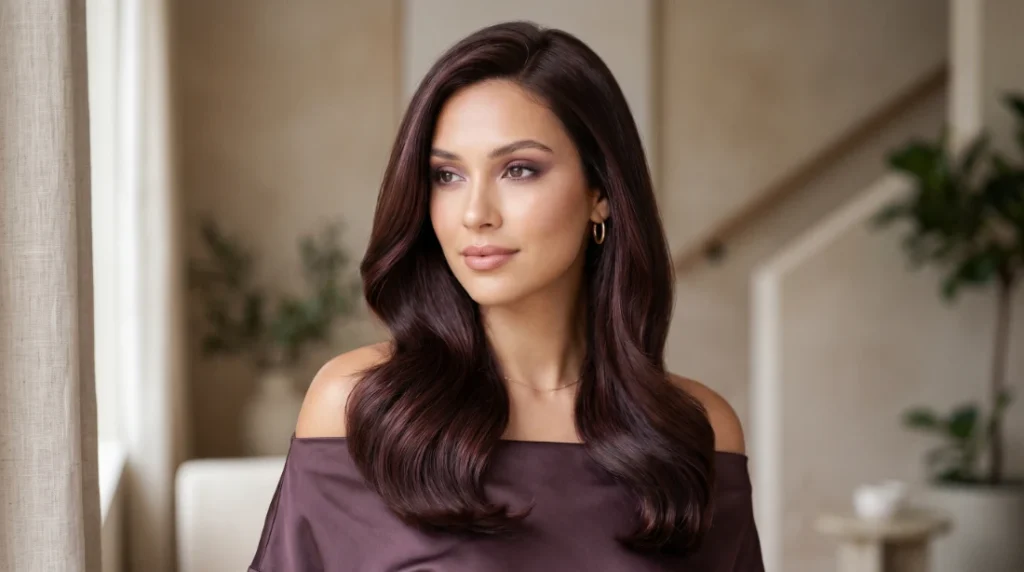
The Look: A balanced shade that sits right between red and purple — warm enough to flatter golden undertones, cool enough to keep that jewel-toned quality this whole family is known for. Arguably the most universally wearable shade here.
Why It Works: Solves the indecision between warm and cool plum tones. Sitting at the midpoint means it avoids clashing with either warm or cool skin undertones, which makes it the safest first step for anyone unsure where to start.
Stylist Tip: Wear UV-protective leave-in spray religiously outdoors — this balanced mid-tone fades unevenly in strong sun, with the warmer half typically fading first and throwing off the balance.
18. The Multi-Tonal Plum Weave
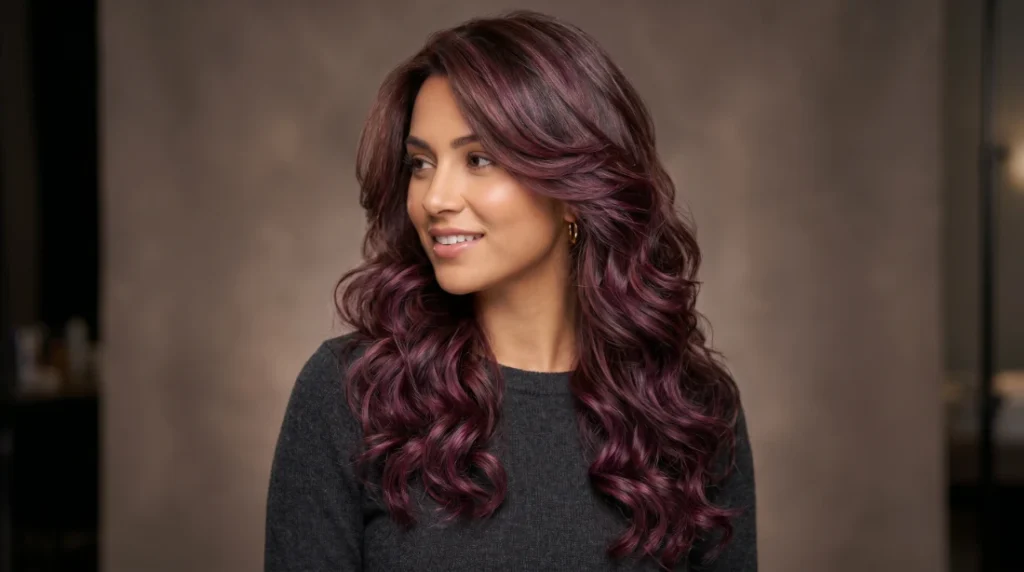
The Look: The most technically involved look on this list — deep brunette as the base, plum woven through the mid-shaft, and a warmer wine tone finishing at the ends. The result genuinely looks three-dimensional rather than flat.
Why It Works: Solves the problem of single-process color looking one-note up close. This layered build rewards close attention and shifts subtly depending on the light and the angle, which keeps it visually interesting over time.
Stylist Tip: Bring specific reference photos to this appointment and ask for a foilayage or hand-painted sectioning technique — a single-process application simply can’t produce this level of tonal layering.
19. The Muted Mauve Brunette
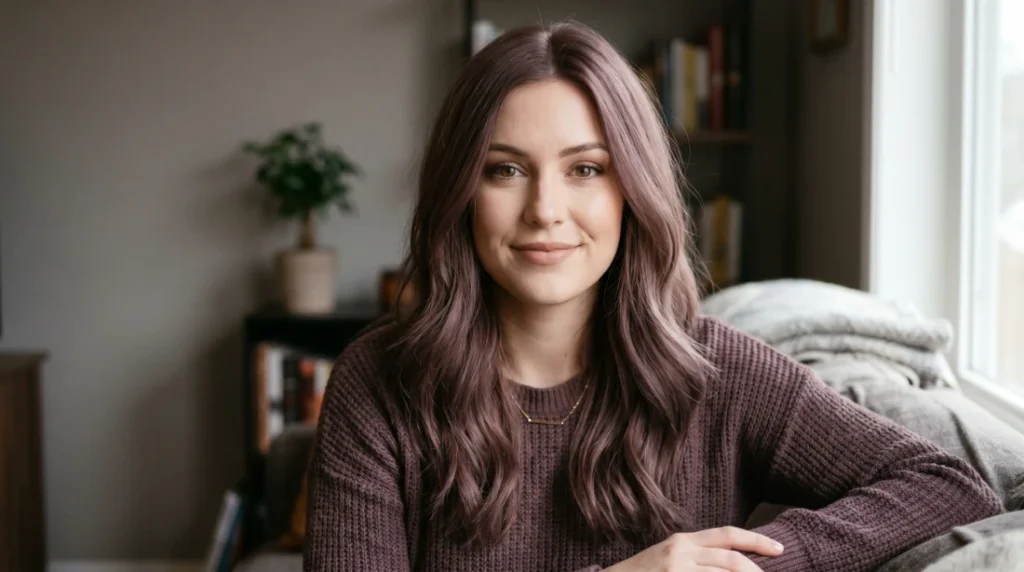
The Look: A desaturated, dusty mauve-plum laid over a medium brunette base — softer and less saturated than most of the looks here, reading as fashion-forward and considered rather than ‘obviously dyed.’
Why It Works: Gives anyone who finds bold plum too much for daily life a quieter way into the trend. It communicates the same cool, considered sophistication at a noticeably lower volume.
Stylist Tip: This shade loses its muted quality fastest of anything in the list — a cool-toned shampoo used every third wash is essential to keep it from drifting into a dull, brassy pink-brown.
20. The Plum and Jet Contrast
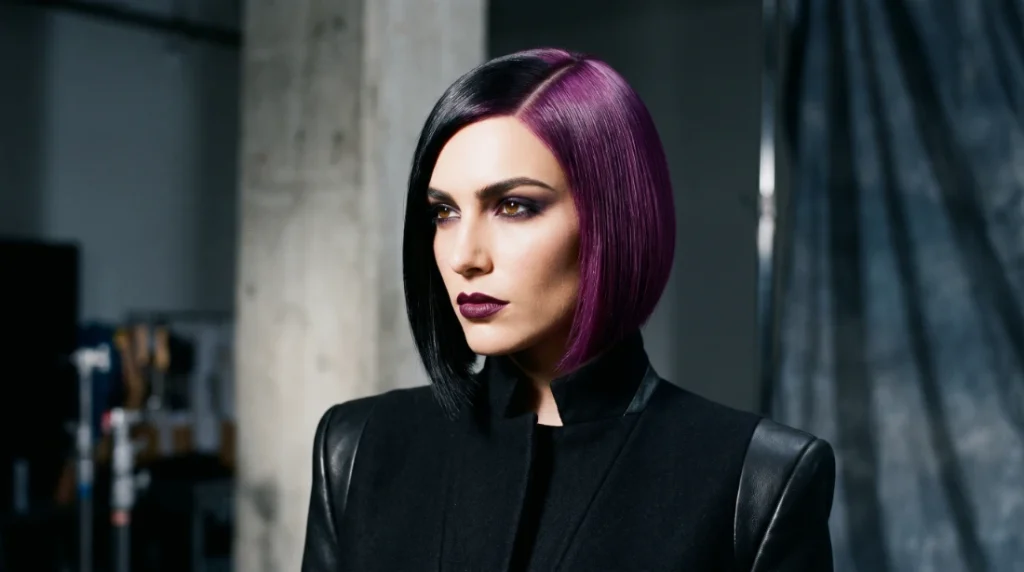
The Look: A high-contrast pairing of vivid plum sections against deep, near-black panels — two distinct depths within the same color family rather than two competing hues, producing a look that’s both dramatic and cohesive.
Why It Works: Gives anyone drawn to bold, sectioned color a way to get real visual drama without the harsher contrast that comes from mixing two completely different color families.
Stylist Tip: The plum sections need the most upkeep here since they carry more added pigment — a weekly bond-repairing treatment on those panels specifically keeps them structurally sound.
21. The Candlelit Wine
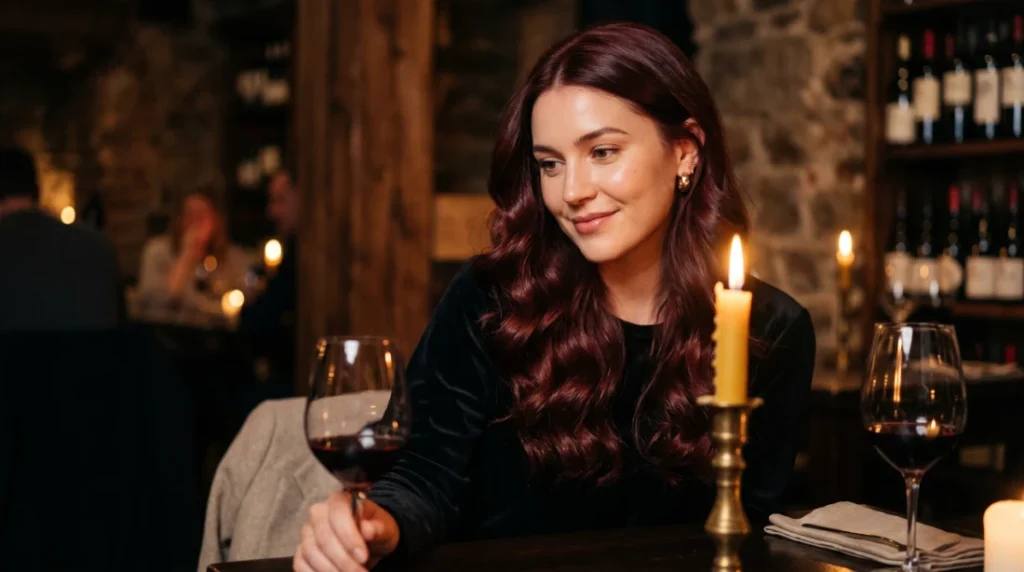
The Look: A warm, glowing wine-brunette with amber threaded through the mid-lengths and deeper burgundy concentrated at the root — built specifically to look its absolute best under warm, low light.
Why It Works: Built for anyone who cares about how their hair photographs at golden hour, in candlelight, or at evening events specifically — this shade is engineered around exactly that kind of lighting.
Stylist Tip: An at-home gloss in a warm wine shade every couple of months keeps the glow alive; between treatments, a few drops of warming hair oil through dry ends brings the candlelit effect back on demand.
Maintenance Tips That Actually Make a Difference
- Stretch your wash days. Red and violet pigment molecules are some of the most water-soluble in professional hair color, so every wash removes some color. Going three to four days between washes, with dry shampoo to manage roots, noticeably extends how long the tone holds.
- Keep water cool, especially on the final rinse. Hot water opens the cuticle and lets pigment escape; cool water closes it and helps lock color in. This single habit makes a measurable difference over a few months.
- Book toner or gloss appointments between full color services rather than recoloring every four to six weeks. A full reapplication that often adds unnecessary processing — a toner refresh in between maintains vibrancy with far less damage.
- Choose pH-balanced, sulfate-free products specifically. A slightly acidic formula helps keep the cuticle closed after washing, working alongside cool water rather than against it.
- Treat sun exposure like it’s actively working against your color, because it is. UV rays break down red and violet pigment faster than almost any other environmental factor, so a UV-protective leave-in is worth using daily, not just in summer.
Shopping List: What to Keep on Hand
- A color-depositing conditioner in the plum or wine family, used once or twice a week to refresh tone between salon visits.
- A sulfate-free, pH-balanced shampoo built specifically for color-treated hair.
- An at-home gloss treatment in a shade that matches your specific tone, used monthly to replicate an in-salon refresh.
- A UV-protective leave-in spray for daily wear, particularly through spring and summer.
- An ionic blow dryer, ideally with a concentrator nozzle, to seal the cuticle and bring out the color’s full depth.
- A lightweight silk finishing serum to smooth the surface and let the color reflect light evenly.
- A satin or silk pillowcase to cut down on the nightly friction that quietly fades color over time.
Making the Leap
What plum and wine toned brunette hair ideas all share, no matter how subtle or saturated, is a sense of intention. None of them look accidental. They look like someone who knew exactly what she wanted and went and got it.
Save the shade that made you pause, bring it to your colorist along with a clear sense of how much commitment you’re ready for, and ask about the realistic maintenance schedule before you book. From there, it’s just a matter of sitting in the chair and letting the color do the rest of the talking.
Frequently Asked Questions
Do plum and wine tones work on dark hair without bleaching?
Many of them do, especially the deeper, more shadowed looks like The Black Cherry Depth, The Blackcurrant Crown, and The Garnet Undertone, all of which are designed to deepen and tint a dark base rather than lighten it. A tone-on-tone gloss can introduce that wine or plum quality without any lift at all. For brighter, fully saturated shades like The Plum Curtain Bangs, some targeted lightening may be needed in the colored sections so the pigment has something lighter to show up against. Your colorist can tell you exactly what your specific hair needs after a quick consultation.
How long do these colors typically last before fading?
Red and violet pigment molecules are some of the smallest in professional hair color, which means they deposit beautifully but also wash out faster than warm brown or ash tones. With a sulfate-free routine, cooler shower water, and a gloss touch-up roughly every six to eight weeks, most of these shades hold real vibrancy for that same stretch of time. Skip the maintenance routine and visible fading can show up within two to three weeks.
Which shade suits my skin tone best?
Warmer skin tones tend to look best in shades with red or amber warmth built in, like The Spiced Cherry Brunette or The Sangria Brunette. Cooler skin tones are usually better served by the blue-leaning shades, such as The Blackcurrant Crown or The Smoked Plum. If your undertone is neutral or you’re not sure, The Rosewood Brunette sits right in the middle and tends to flatter the widest range of complexions.
Can I go back to my natural color afterward?
It depends on the technique. A gloss fades out on its own over four to six weeks with no extra steps needed. Semi-permanent color fades in a similar window but may benefit from a gentle color-removing treatment to clear fully. A permanent, all-over application is a different story and will need professional color correction to lift back to your natural base — that’s not something to attempt at home. Worth discussing your exit plan with your colorist before committing to a permanent version.
Will these colors work on hair that’s already been highlighted or bleached?
Often beautifully — lightened or highlighted hair tends to absorb plum and wine pigment with even more saturation than virgin hair, since the cuticle is already more open. The trade-off is maintenance: that same porosity means the color also releases faster, so color-depositing conditioners and gloss touch-ups will need to happen more frequently to keep the tone looking fresh.