15 Hair Colors That Make Olive Skin Glow (2026 Guide)
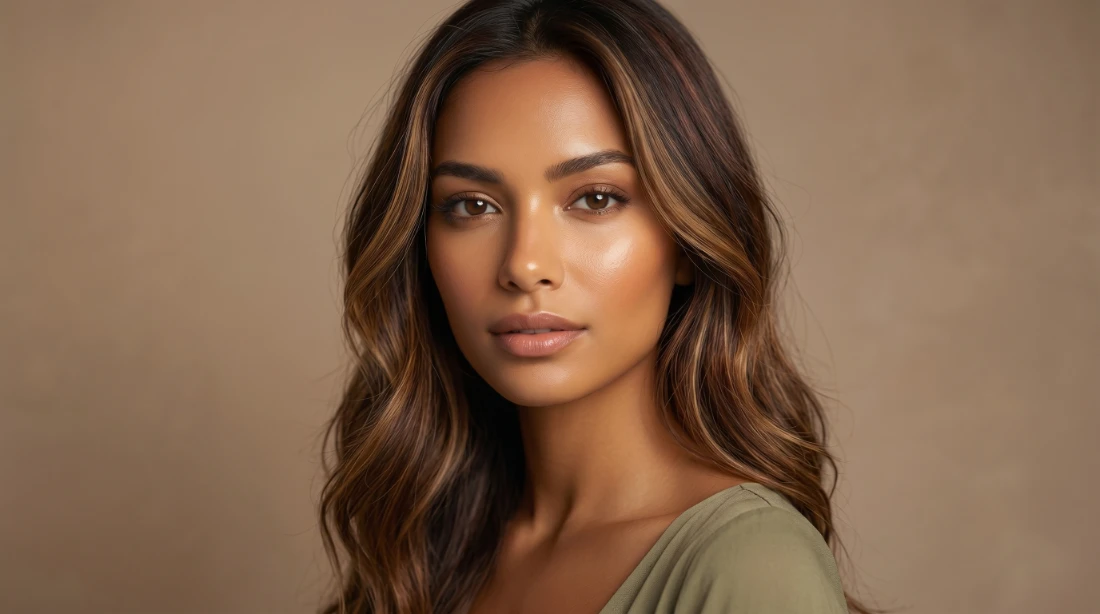
There’s a specific kind of magic that happens when the right hair color meets olive skin. You’ve seen it — that warm, lit-from-within radiance that makes a complexion look healthy, dimensional, and effortlessly beautiful. It’s not luck. It’s color theory, applied correctly.
Olive skin incorporates both cool and warm tones, although some olive-skinned people lean strongly in one direction or the other — and having a little of both is actually a blessing when it comes to choosing hair color. It means olive skin is genuinely one of the most versatile complexions to work with, capable of carrying everything from rich, dark chocolates to warm honey blondes with equal success.
Olive skin has a warm, neutral golden-green undertone — and the key to choosing the right shade is looking for dimensional, vibrant colors with warm or neutral undertones, while avoiding cool-toned shades that can make olive skin look sallow or washed out.
Whether you’re a brunette considering going lighter or someone darker who wants more warmth and depth, here are 15 hair colors that make olive skin genuinely glow — along with exactly how to wear and maintain each one.
What to Know Before Choosing a Hair Color for Olive Skin
Not all olive skin is the same. Warm olive skin glows with honey, caramel, chestnut, copper, and golden brunette shades, while neutral or cooler olive skin can wear espresso, ash brown, burgundy, smoky silver, and other contrast-rich tones beautifully. If you’re nervous about a dramatic switch, starting with balayage, a gloss, or face-framing highlights lets you test a new tone without committing to a full-color change.
With that in mind, here are the 15 shades worth knowing.
15 Hair Colors That Make Olive Skin Glow
1. Warm Espresso Brown
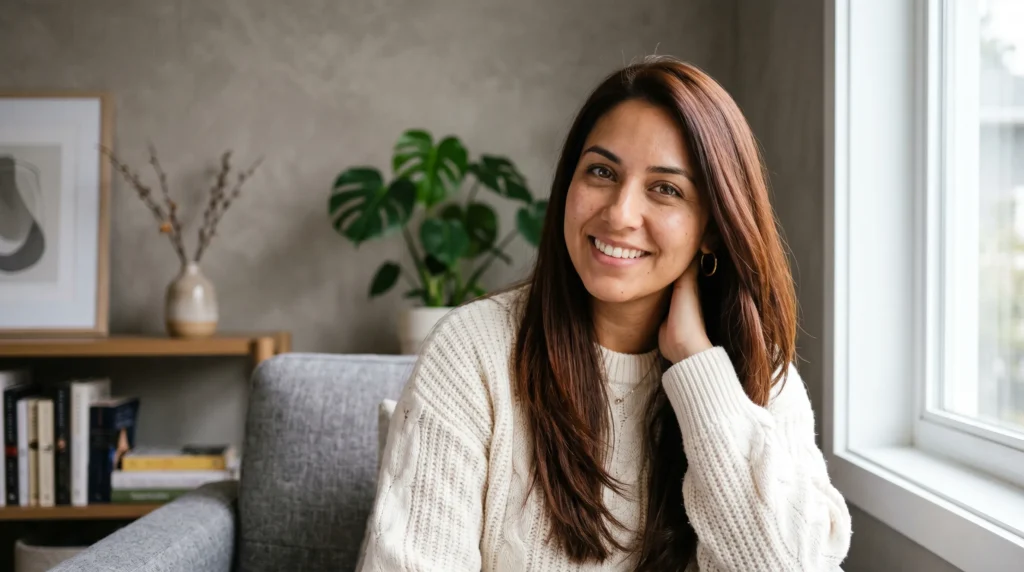
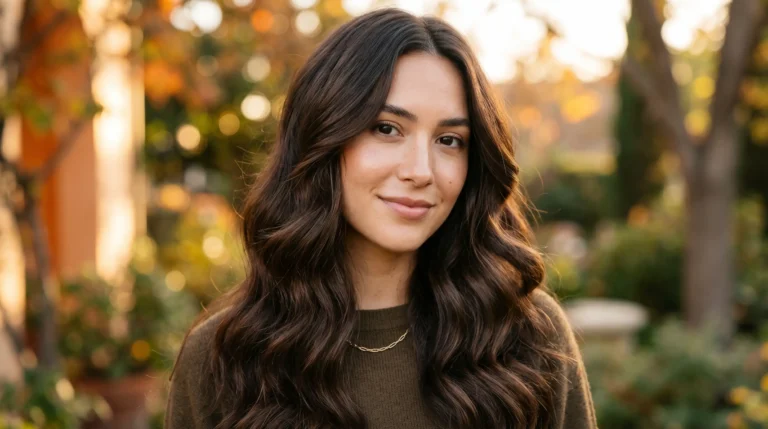
Espresso brown sits in that perfect zone between true black and medium brown, with subtle red-auburn undertones that catch the light like polished wood. Against olive skin, it creates an almost cinematic contrast — deep, rich, and completely effortless.
Chocolate brown becomes even more flattering on olive skin when subtle mahogany ribbons are worked through it. The red-brown traces warm up the overall look without overpowering the complexion. Espresso applies this same principle — warmth embedded in depth.
Best for: All olive skin tones. Particularly striking on medium to deep olive complexions.
Maintenance tip: A color-depositing gloss treatment every 3–4 weeks maintains the mirror-like shine and keeps the warm undertones from going flat between appointments.
2. Golden Caramel Balayage
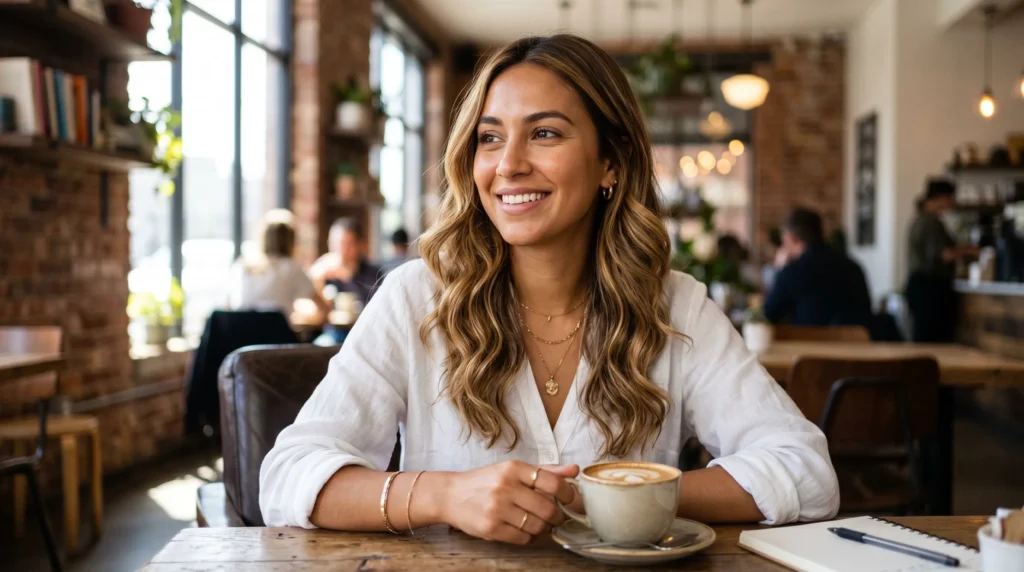
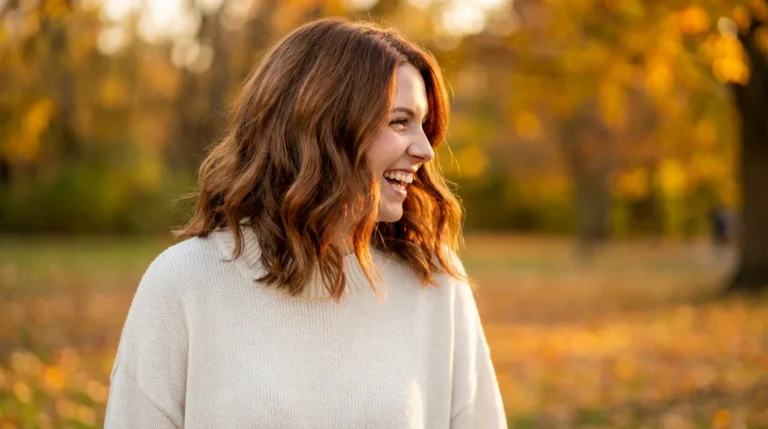
Golden caramel balayage uses a hand-painted technique to place warm, buttery highlights through a medium brown base — creating movement that reads like natural sun exposure rather than a deliberate dye job. Caramel is one of the best hair colors for olive skin because it complements olive skin’s natural glow, making the complexion look radiant and healthy.
It’s also one of the most forgiving options on this list in terms of grow-out — the roots blend naturally rather than creating a hard line, which means you can stretch appointments significantly.
Best for: Warm and neutral olive skin tones. Works on all hair textures.
Maintenance tip: Skip purple shampoo here — it neutralizes the warmth that makes this color so flattering on olive skin. Use a gold-toning gloss instead to keep the honey tones vivid.
3. Chocolate Cherry
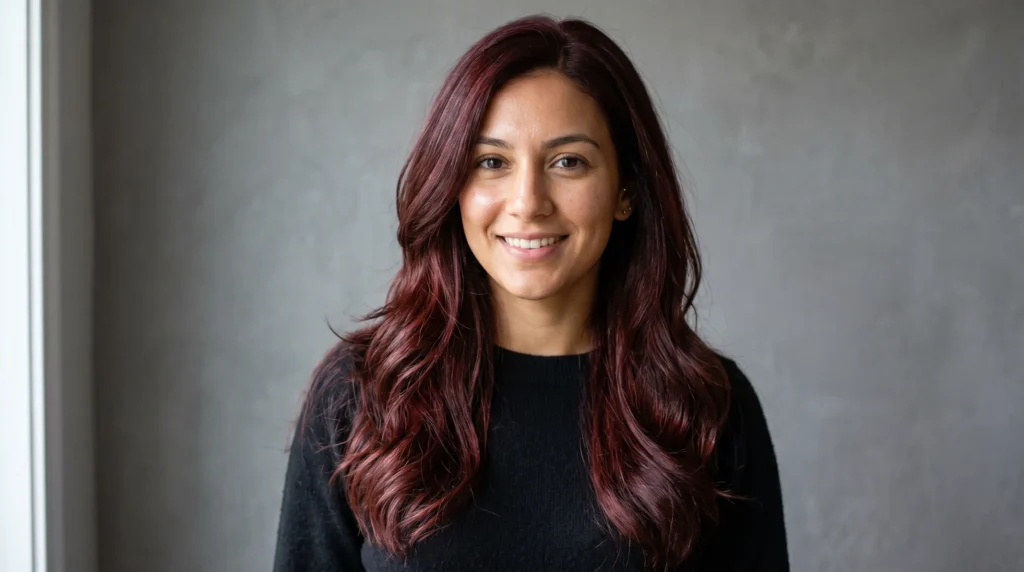
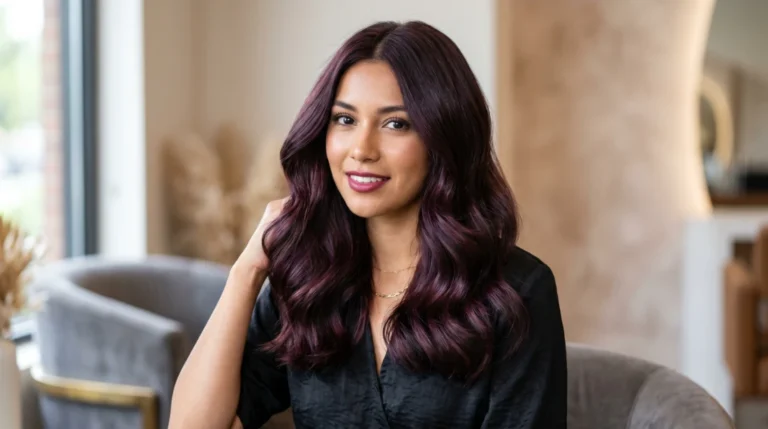
Chocolate cherry is a deep blend of dark brown and burgundy-red — dark chocolate with a glossy, wine-stained depth. It’s bold without being aggressive, and the red pigment creates extraordinary warmth against olive skin that reads as genuinely luxurious.
For olive-skinned women, warm brown hair colors are consistently recommended by colorists — and chocolate cherry sits in that family while adding a red-wine dimension that’s particularly flattering under warm and indoor lighting.
Best for: All olive skin tones. Especially effective on olive complexions with cooler undertones, where the warm red counteracts any sallowness.
Maintenance tip: Red-adjacent tones fade faster than pure browns. Sulfate-free shampoo and cool water rinses after every wash are non-negotiable to maintain depth.
4. Sun-Kissed Bronde
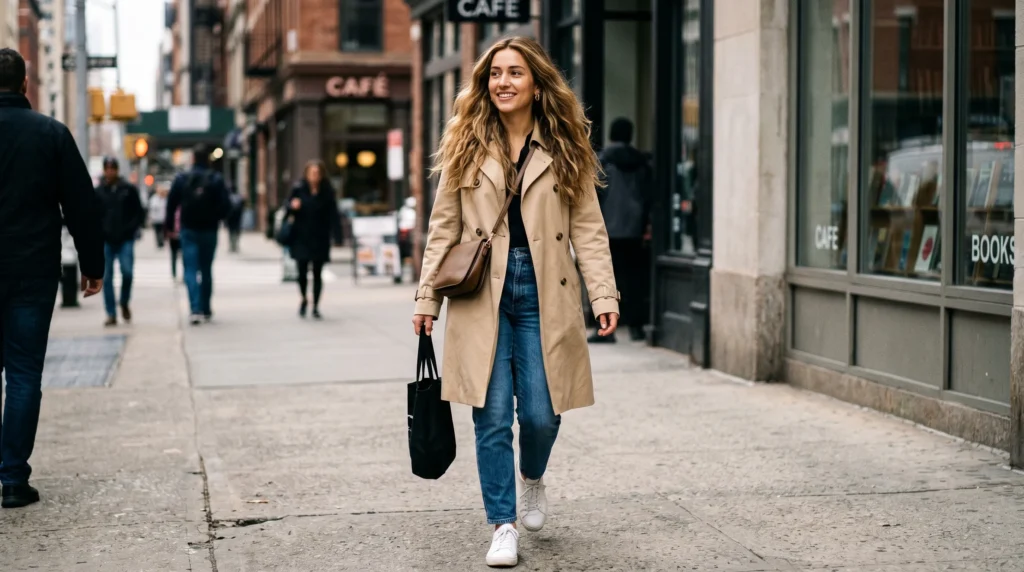
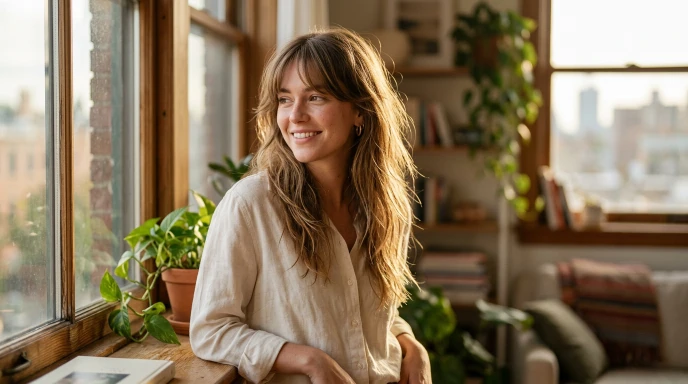
The word “bronde” exists for the magical middle ground between blonde and brunette — warm, dimensional, and naturally beautiful in a way that reads like sun exposure rather than a salon visit. Hair colors that are golden, reddish-brown, caramel, or honey-toned are absolutely dreamy on olive skin tones — and bronde sits right at the heart of that spectrum.
It’s the right choice for anyone who wants to go lighter without the stark contrast of full blonde, maintaining enough dark depth at the root to look intentional while delivering enough brightness at the ends to genuinely illuminate the face.
Best for: Warm and neutral olive skin tones. Works especially well on medium to long lengths.
Maintenance tip: A brass-enhancing gloss — rather than a neutralizing purple shampoo — keeps the honey tones warm and alive between appointments.
5. Cognac Copper
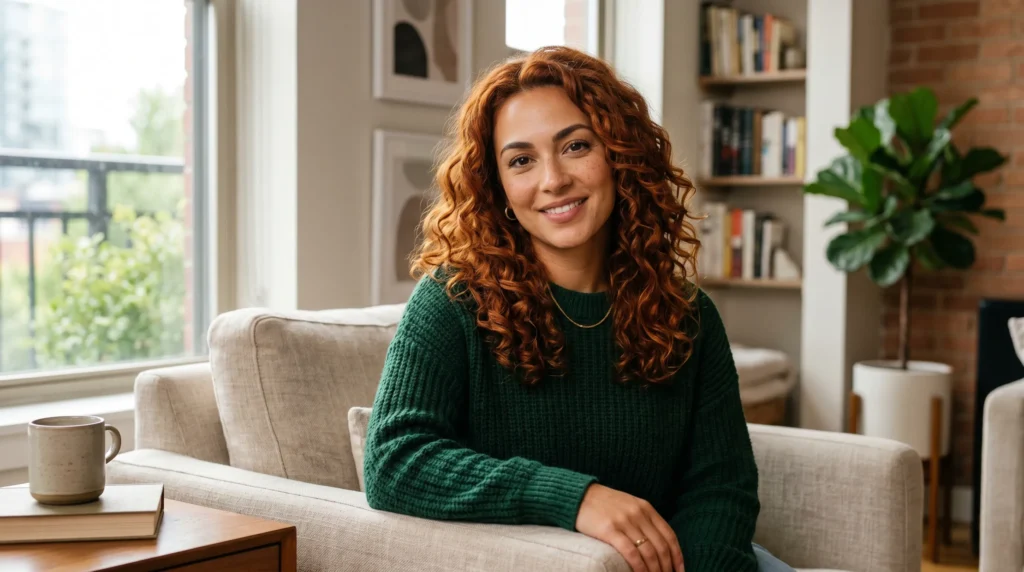
Cognac copper sits at the intersection of amber, rust, and gold — a fiery, luminous shade with an almost metallic quality in direct sunlight. Against olive skin, it creates a striking contrast that feels exotic and vibrant without crossing into high-maintenance territory.
Warm skin tones pair beautifully with colors that contain golden or rich undertones — honey blonde, caramel balayage, golden brown, copper, and warm chestnut all create natural harmony with warm complexions. Cognac copper is the boldest expression of that principle.
Best for: Warm olive skin tones. Particularly flattering on brown and hazel eyes.
Maintenance tip: A color-depositing conditioner in a warm amber or copper shade, used once weekly, extends vibrancy significantly between salon visits.
6. Mocha Latte Highlights
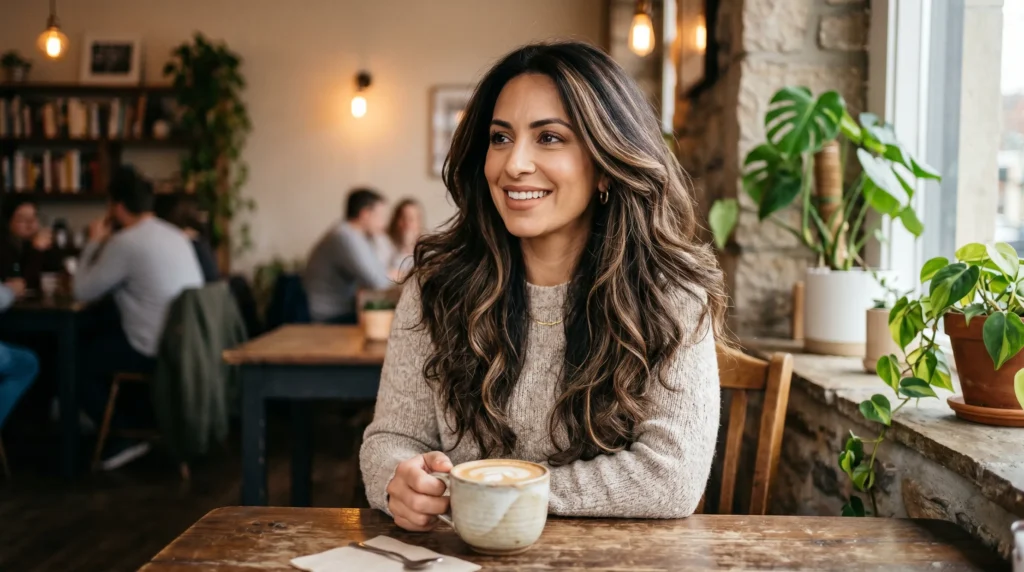
Imagine the color of a perfectly made flat white — creamy beige-brown swirled through a deep espresso base. Mocha latte highlights are soft, warm, and dimensional, creating depth that reads as natural rather than colored. The cooler beige tones in the highlights balance the warmth in olive skin without washing it out.
It’s one of the best hair colors that make olive skin glow for anyone with flat, one-dimensional dark hair — the subtle contrast between the espresso base and the mocha highlights creates visual depth that makes hair look thicker, healthier, and more structured.
Best for: Neutral olive skin tones. Works well on fine to medium hair that needs the appearance of more volume.
Maintenance tip: A volumizing mousse applied at the root before blow-drying lifts the base and allows the highlighted pieces to catch more light — amplifying the dimensional effect.
7. Warm Honey Blonde
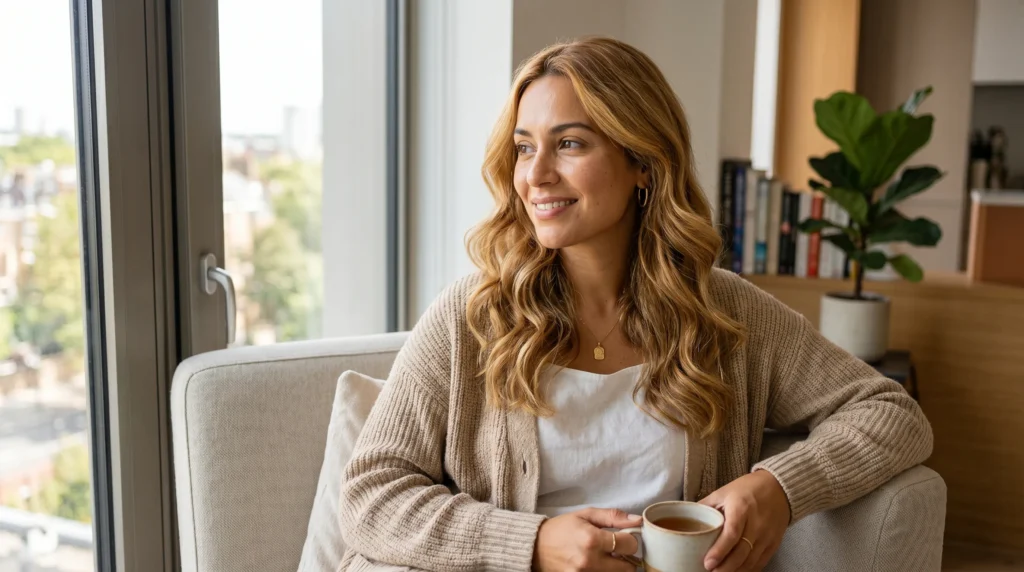
Not platinum, not ash — warm honey blonde is liquid gold, and it’s one of the most incandescent choices for olive skin. Where cool blondes can wash out or clash with olive skin’s golden-green undertones, honey blonde leans fully into the warmth and rewards it with a glow that looks completely natural.
It solves the classic problem of “I want to go blonde but I’m not sure it’ll suit me.” The warm, golden pigment mirrors the natural undertone in olive skin, creating harmony rather than contrast.
Best for: Warm and neutral olive skin tones. Works particularly well on medium complexions where the contrast is significant but not jarring.
Maintenance tip: Use a gold or peach toner rather than purple shampoo — the goal is to preserve warmth, not neutralize it.
8. Toasted Almond
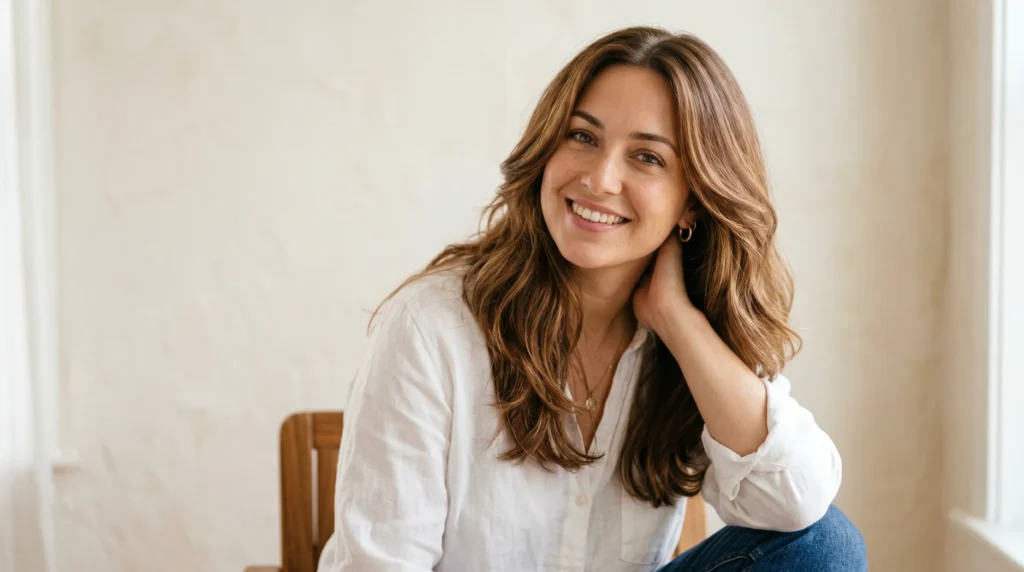
Toasted almond is a medium warm brown with subtle golden and beige undertones — sitting just a shade or two lighter than most natural bases. If you’re nervous about a dramatic switch, starting with a subtle shift like this lets you test a warmer tone without full commitment. The grow-out is seamless, and the dimension it adds is immediately noticeable.
It’s the ideal first color for anyone who’s never colored their hair before, and an equally strong choice for someone who wants a low-maintenance refresh between more significant appointments.
Best for: All olive skin tones. Especially good for light to medium olive complexions.
Maintenance tip: A bi-weekly deep conditioning mask with keratin and argan oil keeps the warm tones looking saturated and smooth between gloss appointments.
9. Mahogany Brown
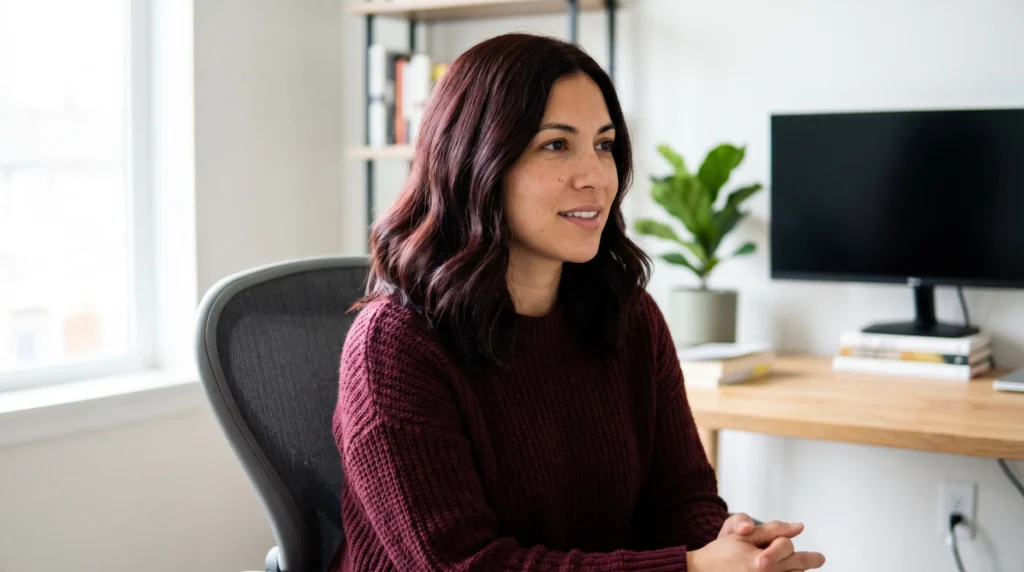
Mahogany is a deep, glossy brown with significant red-violet undertones that shift from pure brown in dim light to a rich, reddish hue in direct sunlight. On olive skin, it creates an almost jewel-toned effect — deeply flattering and visually arresting in any light source.
In general, people with olive skin should look for bright, dimensional color with hints of warmth — and mahogany delivers exactly that, with red and violet pigments that work with olive skin’s natural undertones to create a warm flush that reads as vibrant health.
Best for: All olive skin tones. Particularly striking on medium to deep olive complexions with cool or neutral undertones.
Maintenance tip: A few drops of lightweight, non-greasy hair oil applied to dry hair amplify the glossy depth of mahogany and elevate the whole look.
10. Cinnamon Spice
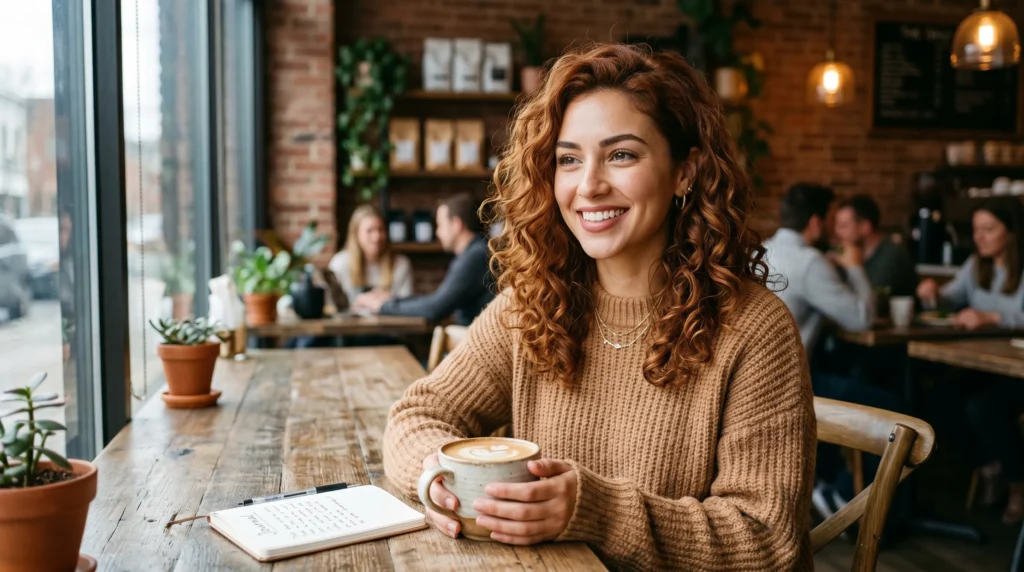
Cinnamon spice is a vivid medium-brown with prominent orange-red tones — warm, playful, and surprisingly flattering on olive skin that can absorb the warmth without being overpowered. It’s one of the best hair colors that make olive skin glow for anyone who finds pure red too bold but wants genuine color impact.
For those with warm olive skin, shades in the copper, chestnut, and warm auburn family are among the most flattering options — and cinnamon spice sits right in that zone, offering the warmth and vibrancy of red-adjacent color with a more forgiving grow-out line.
Best for: Warm olive skin tones. Works especially well on wavy and curly hair where the multi-dimensional warmth shows through texture.
Maintenance tip: A curl-enhancing cream with bond-repairing technology defines wave patterns and creates dimension that showcases every facet of this color.
11. Toffee and Cream Balayage
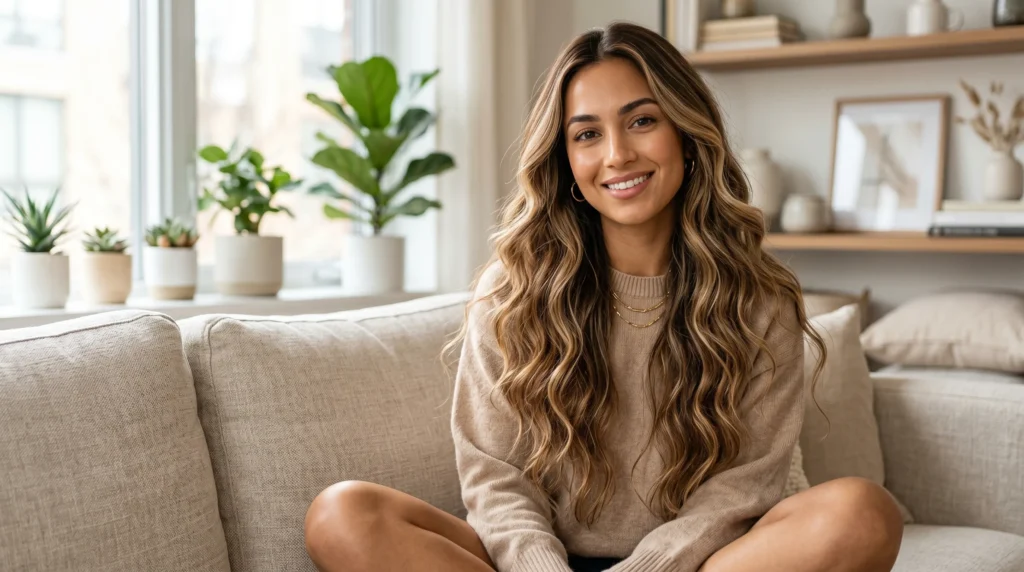
Deep toffee-brown roots with lighter butterscotch ends — this soft, creamy balayage combination creates a natural gradient that’s gentle, dimensional, and entirely effortless. It’s warm enough to complement olive skin without being too saturated, and the grow-out is one of the most seamless of any technique on this list.
Colorists consistently recommend starting with balayage if you’re testing a new tone — it adds dimension, softens grow-out, and lets you try a warmer shade without committing to a full-color change. Toffee and cream is the perfect entry point.
Best for: Warm and neutral olive skin tones. Adds significant visual movement to shoulder-length and longer hair.
Maintenance tip: A sea salt spray applied to damp hair before air-drying creates the laid-back, curated texture that lets this color gradient unfold most beautifully.
12. Smoky Brunette
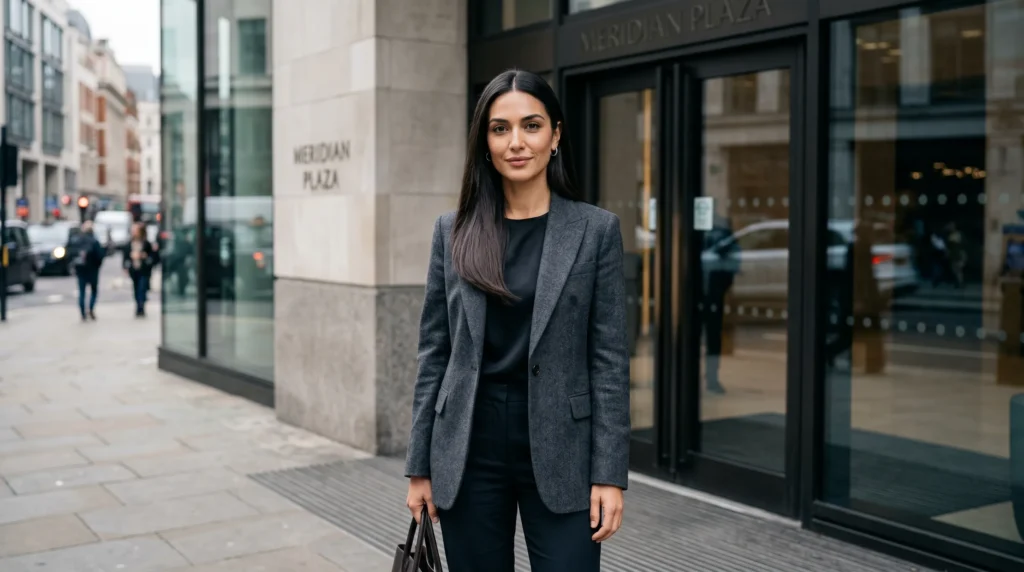
Smoky brunette is the darker, cooler member of the brown family — a deep, almost charcoal-inflected brown with subtle cool tones that give it a sophisticated, urban edge. It’s one of the few hair colors that make olive skin glow by working with cooler undertones rather than warm ones.
For olive-skinned women who lean cooler or more neutral in their undertone, cool-toned hair colors like ash brown can be equally flattering — the key is ensuring the shade has enough depth to create contrast rather than washing the complexion out.
Best for: Cool and neutral olive skin tones. Works particularly well on olive complexions with a more greenish cast.
Maintenance tip: A high-shine hair gloss treatment applied monthly maintains the intentional, polished quality of this shade and prevents it looking simply flat and dark.
13. Amber Glaze
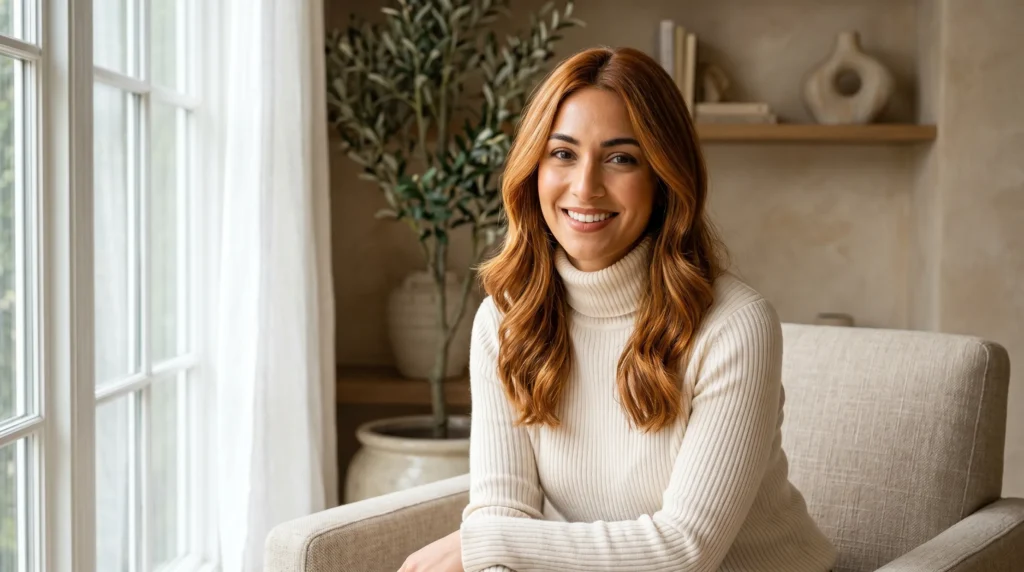
Amber glaze works as both an all-over color and a gloss treatment applied over existing color, creating a warm, translucent amber radiance that lights up olive skin from every angle. It’s one of the fastest single-service fixes for dull or flat hair — no significant lightening required.
The best hair colors for olive skin help emphasize the skin’s natural glow, making the complexion look radiant and healthy — and a warm amber glaze does exactly that, depositing warmth and shine in a single service that revives color without any of the commitment of a full dye.
Best for: All olive skin tones. Works on dark, medium, and lighter bases.
Maintenance tip: Recreate the glaze effect at home with a clear or amber-tinted hair gloss applied to clean, towel-dried hair for 20 minutes — it’s the most cost-effective way to maintain salon-fresh warmth between appointments.
14. Deep Burgundy Balayage
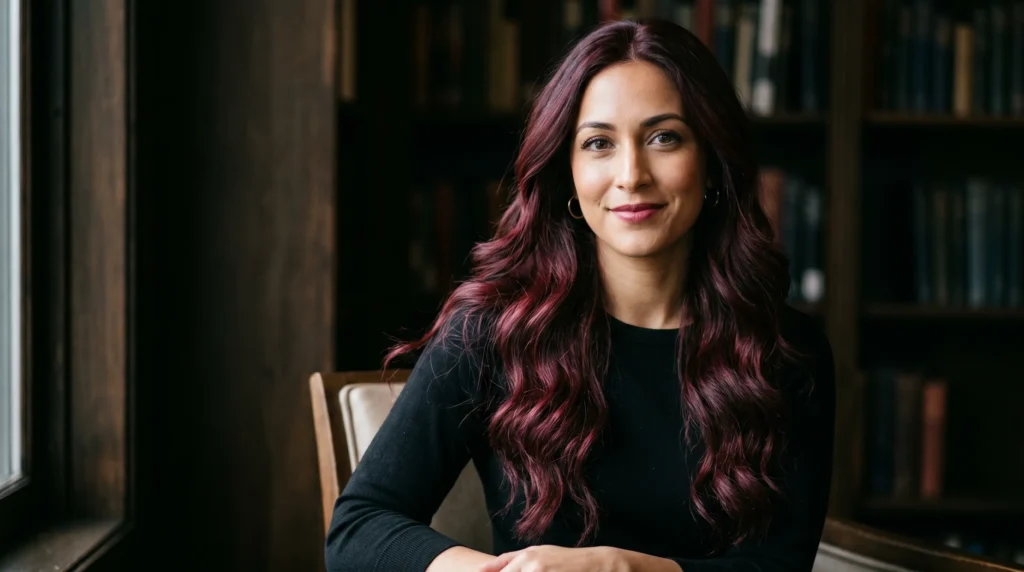
Deep burgundy balayage takes a dark brown or black base and paints through it with rich, wine-dark tones — creating a color that’s bold, intentional, and genuinely luxurious. For olive skin that leans cooler, burgundy and wine-toned reds are particularly flattering because they add warmth without clashing — the key is staying in the mahogany, cherry, and burgundy families rather than bright, orange-based reds.
The depth of this color has an almost three-dimensional quality, with flashes of red-violet that emerge differently in various light sources — making it one of the most visually dynamic hair colors that make olive skin glow.
Best for: Medium to deep olive skin tones. Particularly striking on complexions that can carry significant color saturation.
Maintenance tip: A color-sealing conditioner and weekly bond-repairing treatment are the minimum care requirements for maintaining this level of pigment investment.
15. Gilded Bronze
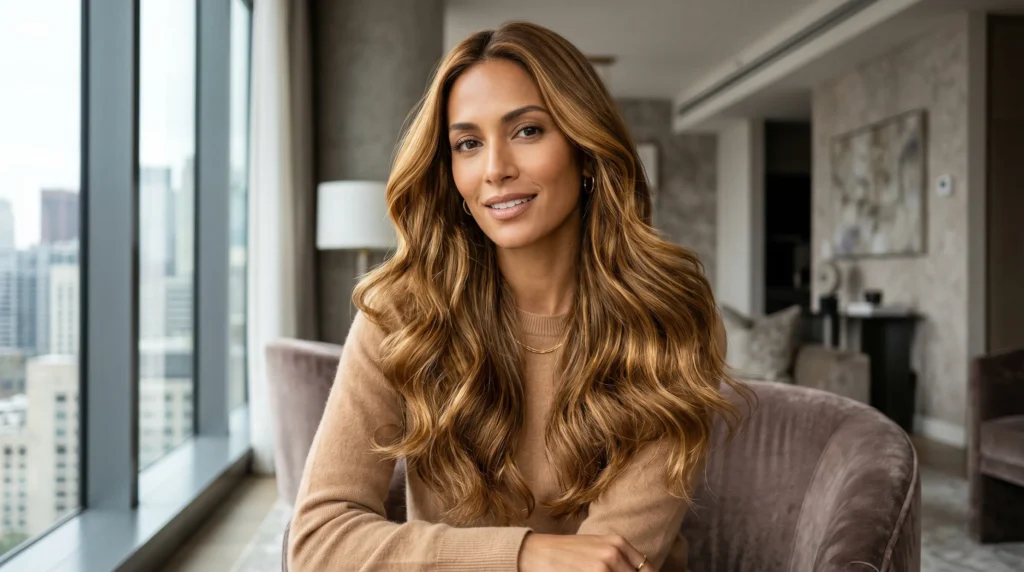
Gilded bronze is the most overtly luminous shade on this list — a warm, metallic-toned color sitting between copper, gold, and deep blonde. It’s the choice for when you want maximum glow impact, and against olive skin specifically, it creates that lit-from-within radiance that looks sun-drenched and healthy in every light source.
Warm skin tones pair beautifully with colors that contain golden or rich undertones — and gilded bronze is the fullest expression of that principle, creating natural harmony with warm complexions in a way that cooler or more neutral shades simply can’t replicate.
Best for: Warm olive skin tones. Works best on medium to long straight or wavy hair where the metallic sheen is fully visible.
Maintenance tip: Blow-dry with a paddle brush for maximum smoothness, then finish with an ionic flat iron pass through the lengths — the heat-smoothed cuticle reflects light like glass and is what makes gilded bronze genuinely spectacular.
How to Choose the Right Shade for Your Olive Undertone
Olive skin tone — whether warm, cool, or neutral — is the primary factor in determining the most flattering hair color choices. The best hair colors for olive skin include honey blonde, caramel, ash brown, chocolate, and auburn — but the specific variation within each family depends on which direction your olive skin leans.
A simple guide:
- Warm olive (golden, yellow-green undertones) — Golden caramel balayage, honey blonde, cognac copper, toffee and cream, gilded bronze, cinnamon spice.
- Neutral olive (a balance of warm and cool) — Toasted almond, warm espresso, mocha latte highlights, amber glaze, bronde.
- Cool olive (greenish, slightly ashy undertones) — Smoky brunette, mahogany brown, deep burgundy balayage, chocolate cherry.
For more expert guidance on identifying your undertone and choosing the most flattering direction, Davines’ professional guide to hair color for olive skin is one of the most thorough and trustworthy references available before booking a consultation.
How to Maintain Any Hair Color on Olive Skin
Refresh with gloss, not just shampoo. A professional gloss treatment — or a quality at-home version — done every 4–6 weeks does more for color longevity and vibrancy than any shampoo on the market. It seals the cuticle, deposits fresh tone, and restores shine.
Protect warm tones from UV damage. The sun fades warm shades — coppers, caramels, ambers — faster than almost anything else. A UV-protective leave-in spray is a year-round non-negotiable, not just a summer habit.
Wash less frequently. Every wash strips a small amount of pigment. Extending time between washes with dry shampoo is as much a color strategy as it is a styling choice. Twice a week is the ideal maximum for most colored hair.
Never skip the toning step at the salon. Toning is the final step where the colorist applies a gloss or toner to neutralize unwanted tones and lock in the exact shade you discussed. It’s the difference between a good color job and a great one — if your salon skips it, speak up.
Book a consultation before committing to a significant change. Before moving from dark to light, or into a red-adjacent family, a standalone consultation with your colorist is worth every minute. Bring reference images, discuss your maintenance commitment honestly, and let them map out the most flattering approach for your specific complexion and hair texture.
Olive skin is not a limitation — it’s one of the most versatile and rewarding complexions to work with when it comes to hair color. Whether you’re gravitating toward the quiet warmth of toasted almond or the full-throttle radiance of gilded bronze, there’s a shade here that will make your complexion look genuinely, measurably better. Find the one that fits your undertone and your lifestyle, and let the color do the rest.
Frequently Asked Questions
Can olive skin pull off blonde hair? Yes — but the key word is warm blonde. Honey blonde, golden blonde, and bronde are all deeply flattering on olive skin because they mirror the natural warmth in the complexion. Ashy or platinum blondes can create an unflattering contrast, so staying in the warm-to-neutral spectrum is the safest approach.
How do I keep warm hair colors from fading quickly? Sulfate-free shampoo, cool water rinses, UV protection, and less frequent washing are the four pillars of color retention. A monthly gloss treatment — either at the salon or at home — is also one of the most effective ways to refresh warmth and maintain vibrancy.
Will red-toned shades like mahogany or burgundy make my skin look orange? Not if the shade is chosen correctly. Red tones that lean toward burgundy or deep wine work beautifully with olive skin because they add warmth without clashing — staying in the mahogany, cherry, and burgundy families keeps things sophisticated rather than clashing.
How often does balayage need to be touched up on olive skin? Most balayage looks only require a refresh every 12–16 weeks, making it one of the most practical options for anyone who doesn’t want to live at the salon. A gloss appointment at the 8-week mark extends this significantly.