Shoulder Length Haircuts Ideas for Every Hair Type
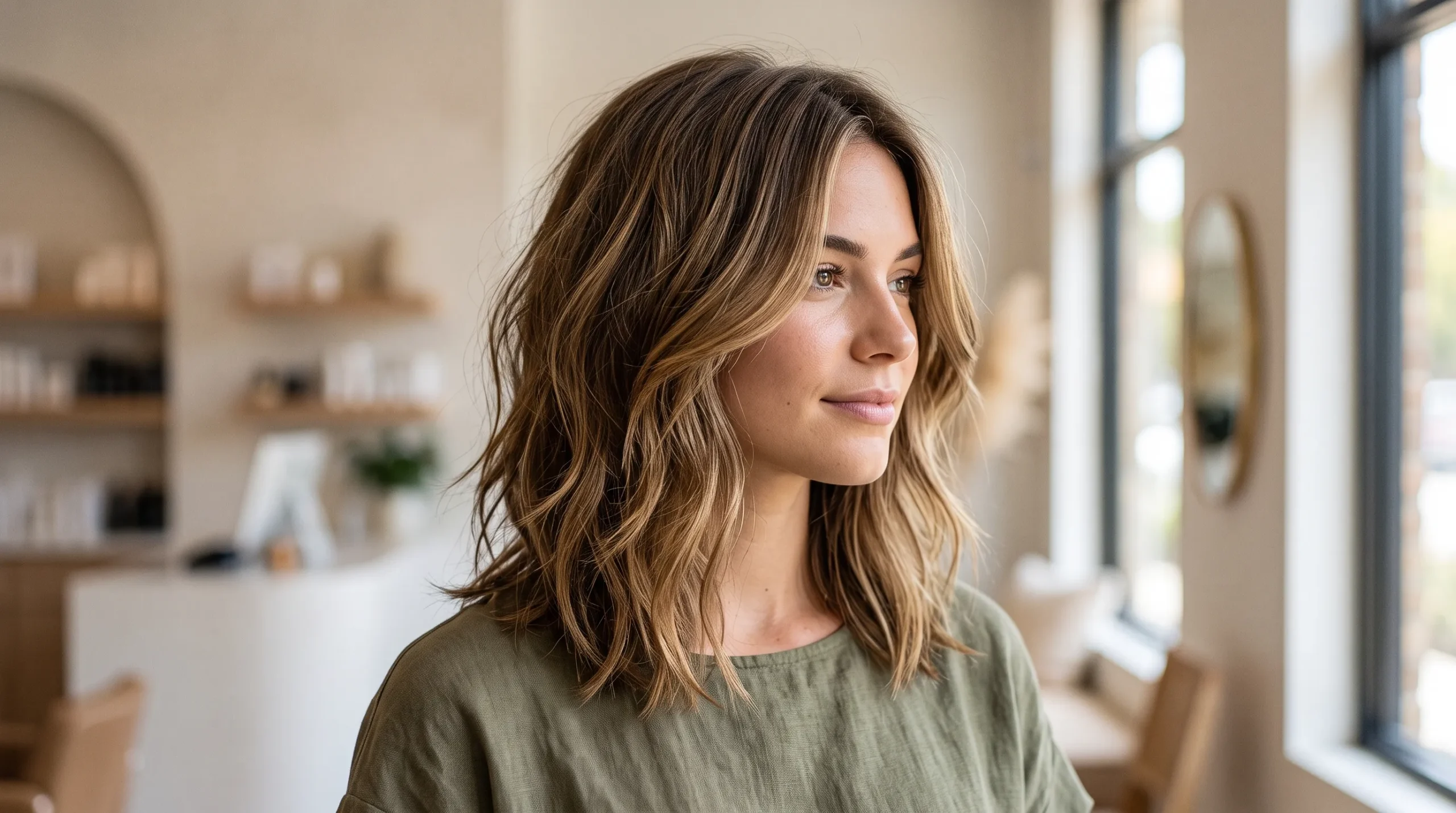
If you’ve ever stood in front of the mirror debating whether to go short or keep growing your hair out, shoulder length haircuts are the answer you’ve been looking for. This length gives you the best of both worlds: enough hair to experiment with waves, braids, and half-up styles, but not so much that you’re stuck with hours of blow-drying and product just to leave the house. Whether your hair is thick and unruly, fine and flat, curly, or pin-straight, there’s a shoulder length cut that will work with your texture instead of against it. Below, we break down the most flattering variations so you can walk into your next salon appointment knowing exactly what to ask for.
For more versatile styles around the same length, explore these medium length haircuts for women.
What Actually Counts as “Shoulder Length”?
Before you book your appointment, it helps to know that “shoulder length” isn’t one single length — it’s a range. Hair that stops just above the shoulder has a crisp, structured look and very little flip as it grows out. Hair that lands right on the shoulder tends to flick outward and can feel a bit unpredictable day to day. And hair that grazes the collarbone (often called a “lob,” or long bob) is the easiest of the three to tie back and the most forgiving as it grows. Knowing which of these three zones you’re aiming for will save you from a lot of back-and-forth with your stylist.
Shoulder Length Haircuts for Every Hair Type and Texture
No two heads of hair behave the same way, which is why the cuts below are organized around texture and density rather than just aesthetics. Find the description that sounds like your hair, and use it as your starting point for a consultation.
Blunt Cut
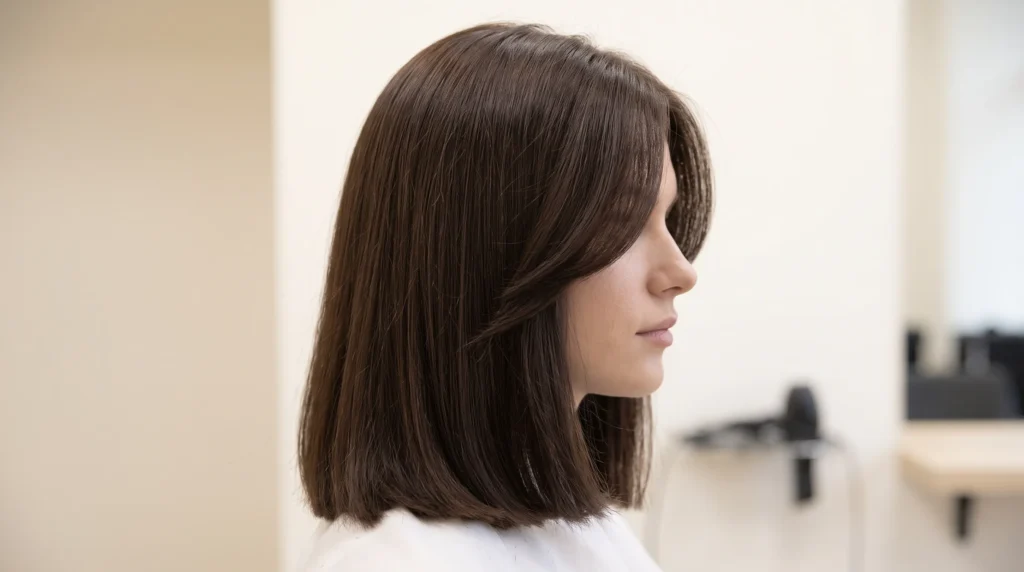
A blunt shoulder length cut is cut in one clean, straight line with no layering at all. Because every strand ends at the same point, the hair looks noticeably thicker and more polished. This is a favorite for anyone with fine or thin hair, since the uniform ends create the illusion of density without a single layer being removed. A center part gives it a slightly more contemporary edge, while a side part softens the overall look.
Layered Cut for Thick Hair
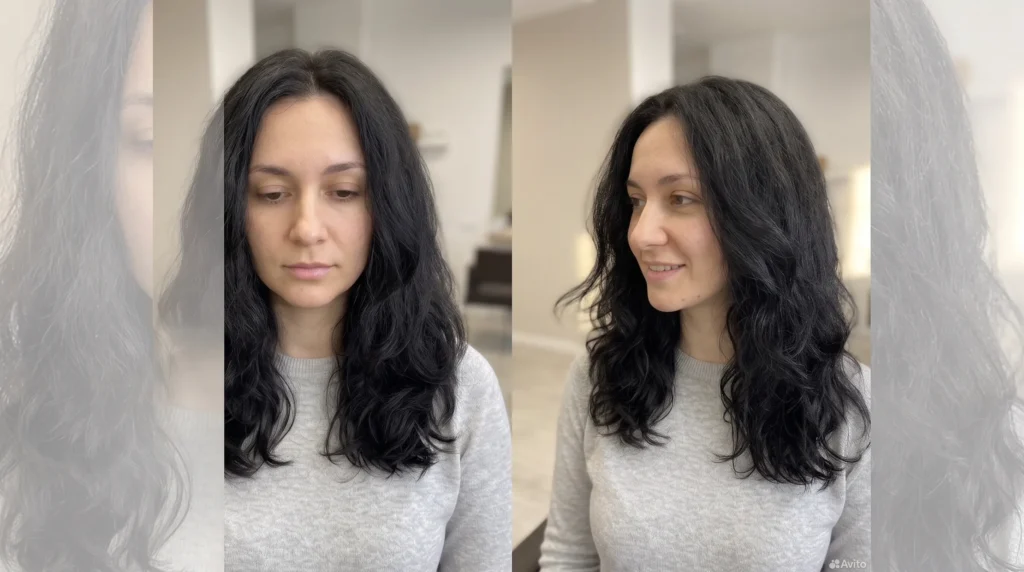
If your hair is naturally heavy or dense, layering is what keeps a shoulder length cut from turning into a triangle-shaped mass. Strategic layers remove weight from the mid-lengths and ends, letting the hair move instead of sitting like a helmet. Done well, this cut still reads as full and healthy — it just loses the bulk that makes thick hair hard to style.
Soft Layers
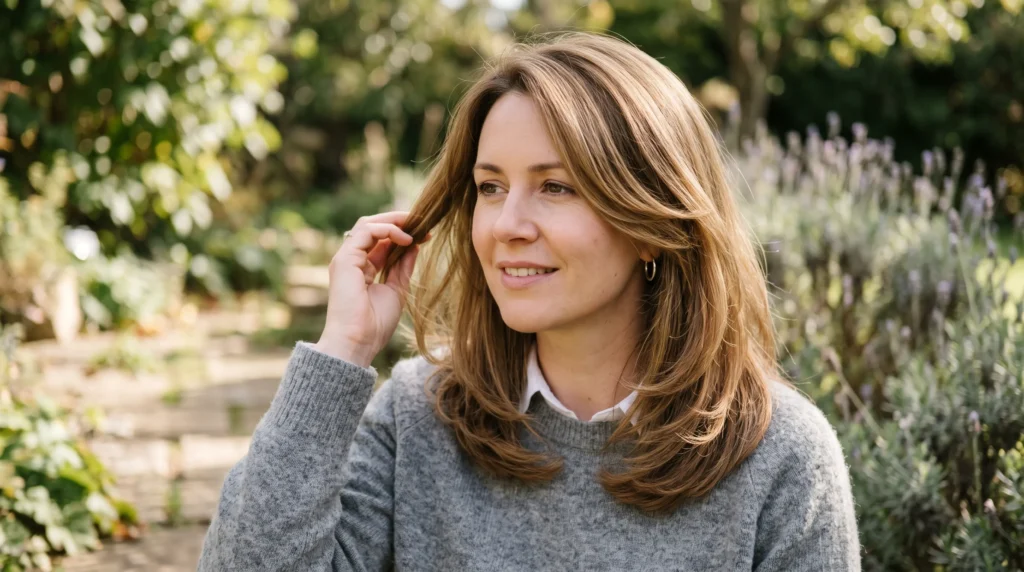
Soft layering sits between a blunt cut and a heavily textured one. Instead of choppy, disconnected pieces, the layers blend gradually into one another for a rounded, feminine silhouette. This version is especially low-maintenance because it grows out gracefully and doesn’t require constant trims to keep its shape. It works well on medium to thick hair and tends to flatter almost every face shape.
Feathered Layers
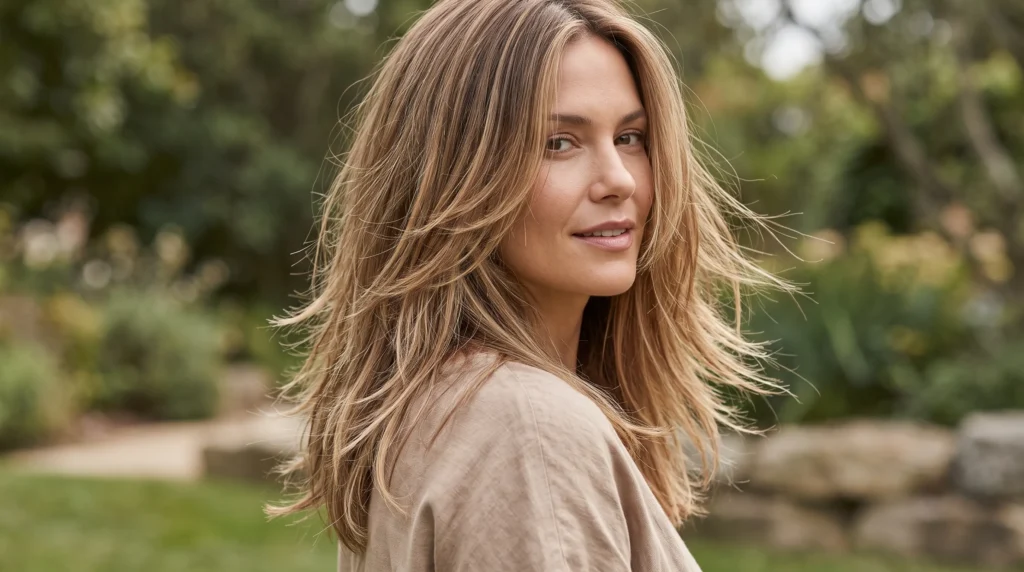
Feathered layers are cut with fine, close texturing near the ends, which lightens the overall weight of the hair while keeping plenty of length. The result is soft, wispy movement that looks great whether you air-dry it or blow it out with a round brush. This style suits medium to thick hair and works equally well on straight or wavy textures.
Choppy Layers
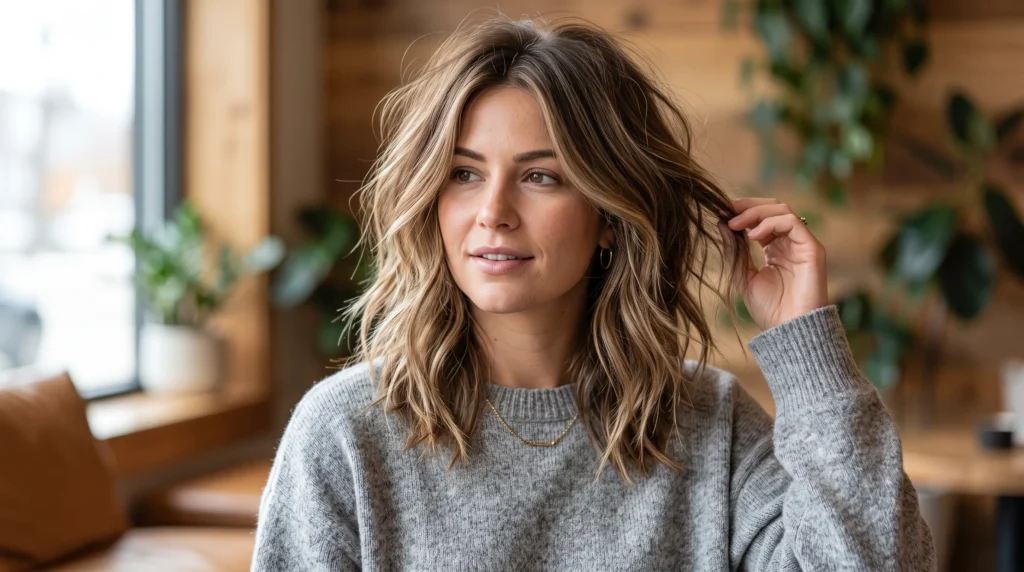
For a more lived-in, undone finish, choppy layers use uneven, textured pieces cut at varying lengths. It’s a low-effort style that still looks intentional, and it’s particularly good at adding volume to fine or medium hair that tends to fall flat. Choppy layers pair naturally with tousled waves or a messy bun.
Shag
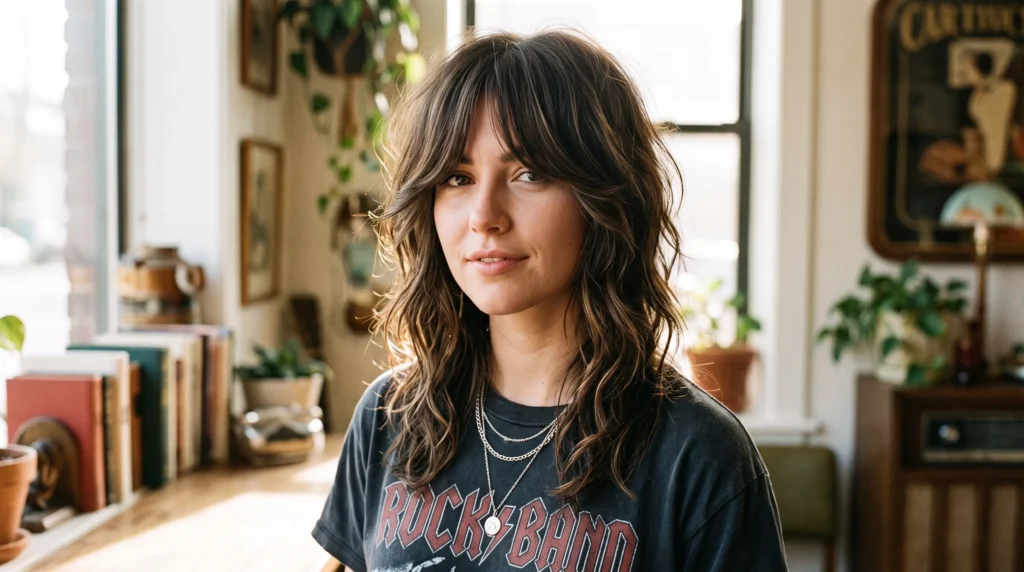
The shoulder length shag borrows its DNA from the ’70s: heavy layering throughout, often paired with curtain bangs or a wispy fringe. It has an effortlessly rock-and-roll quality and works on straight, wavy, and curly hair alike, which is part of why it’s remained in near-constant rotation as a trend. Because it’s meant to look a little undone, it’s also one of the most forgiving cuts to maintain between salon visits.
Wavy Lob
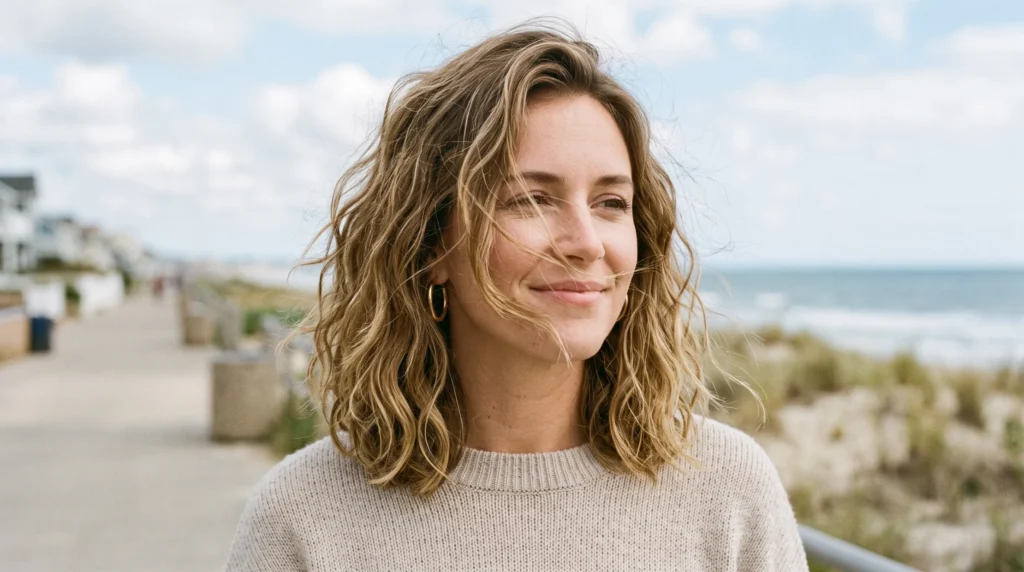
The wavy lob — a long bob that hits somewhere between the chin and the collarbone — might be the most universally flattering length in this entire list. Natural waves add texture and movement without much styling effort, and the cut can be dressed up with a sleek blowout or left to air-dry into loose beach waves.
Razored Ends
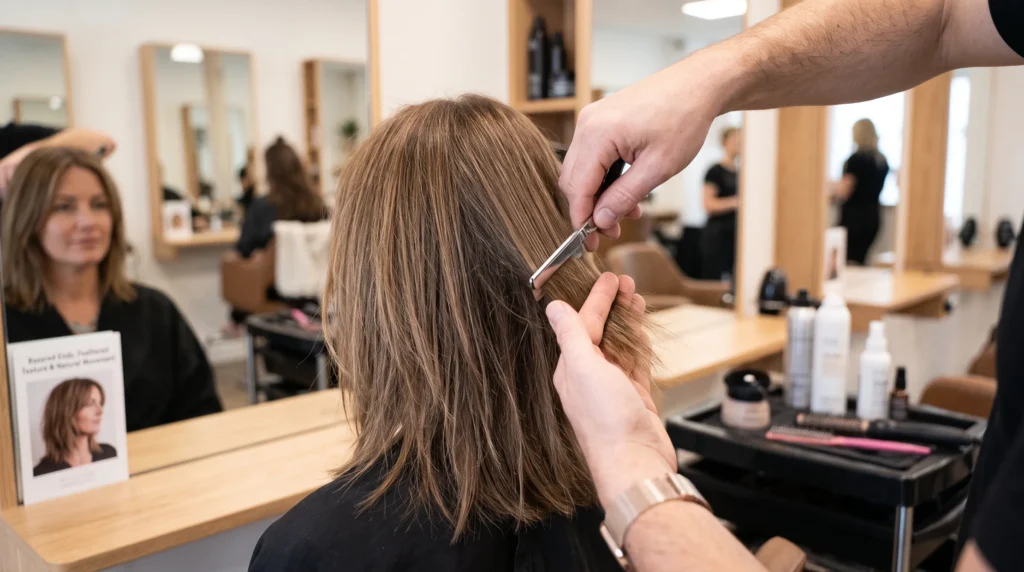
Instead of scissors, a razor cut uses a blade to slice into the ends of the hair, creating soft, feathered tips rather than a hard, blunt line. It gives fine to medium hair a light, airy quality and requires very little styling to look finished. It’s a good option if you want movement without committing to heavy layers.
Curtain Bangs
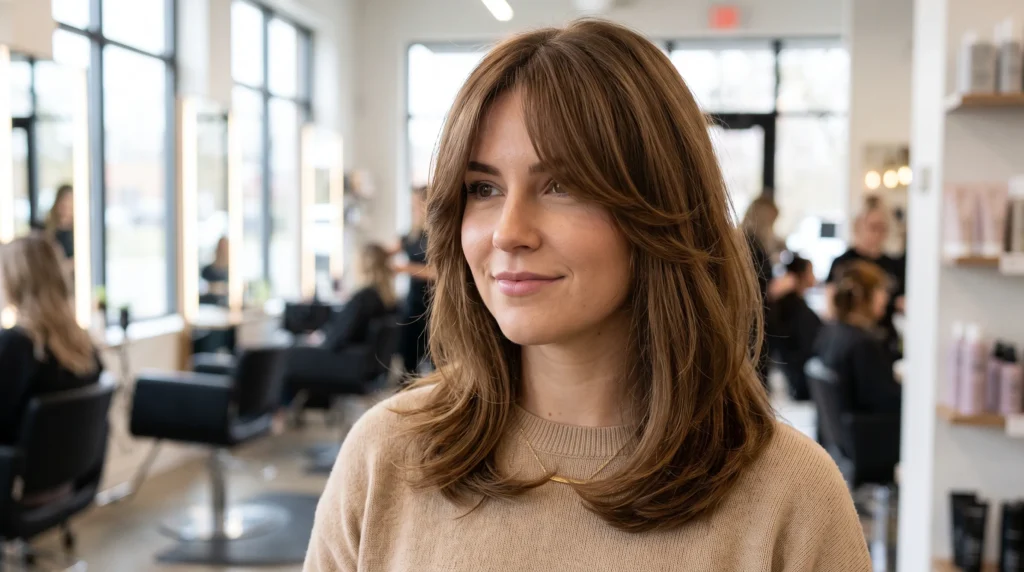
Pairing shoulder length hair with curtain bangs is one of the most requested combinations in salons right now. The soft, parted fringe frames the face and softens features, and it can be styled in multiple ways — tousled and natural, blown out with a round brush, or tucked behind the ears when you want it out of the way.
Side-Swept Bangs

If you like the idea of bangs but aren’t ready to commit to a full fringe, side-swept bangs are the gentler alternative. They add softness and a bit of face-framing detail while blending easily into the rest of the cut. This works well on both straight and wavy hair and requires minimal daily styling.
Classic Lob

The classic long bob is the “safe” choice in the best possible way — it’s timeless, low-maintenance, and flattering on nearly every hair type and face shape. It’s longer than a traditional bob but still short enough to feel like a real change, and it looks equally good straight, wavy, or lightly curled.
Balayage-Enhanced Shoulder Cut
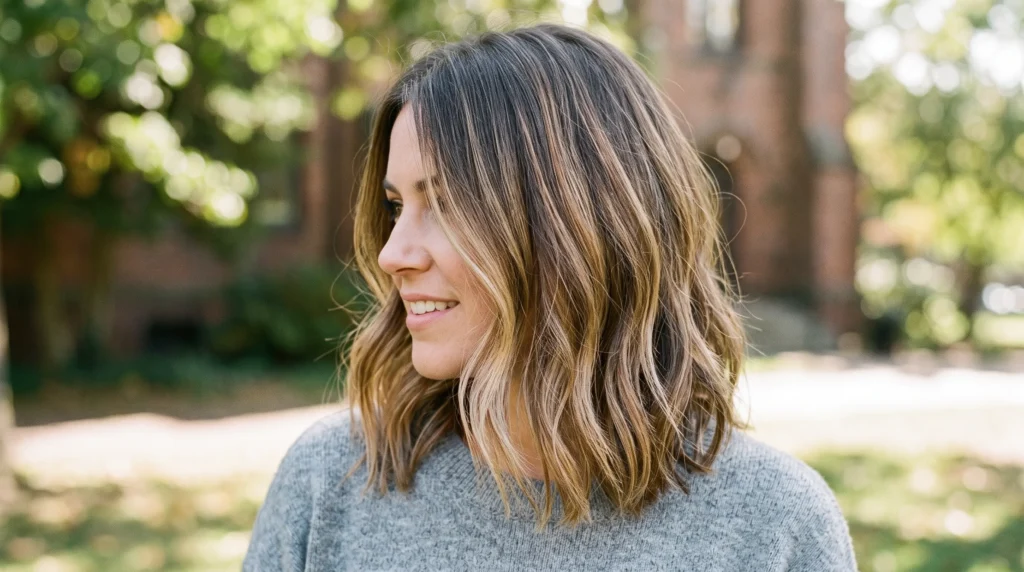
Color can do just as much work as the cut itself. Adding balayage to a shoulder length style creates soft, sun-kissed dimension that blends naturally into the root color, giving the illusion of depth and movement even on days when you don’t style your hair at all.
Inverted Lob
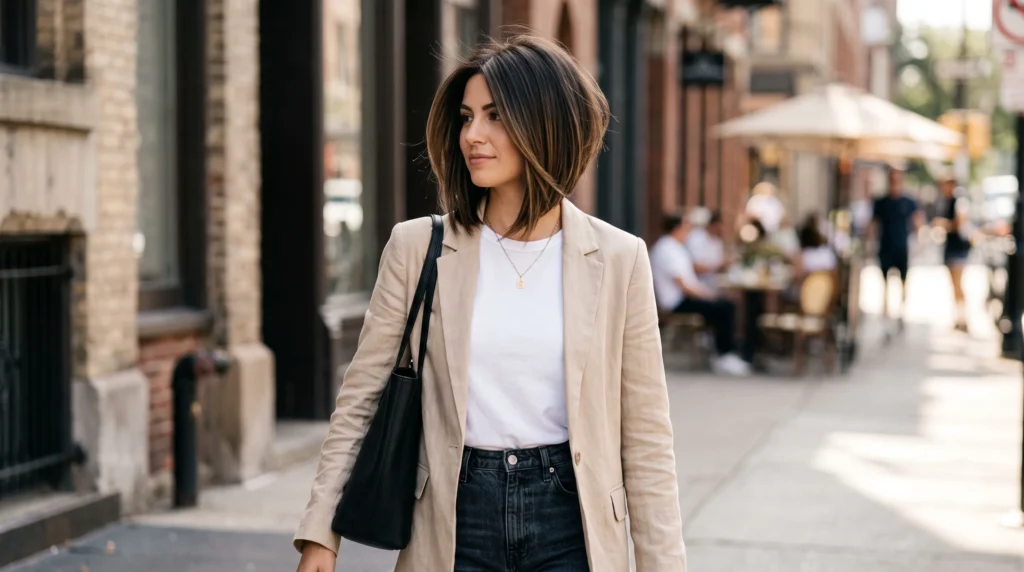
An inverted lob is cut at an angle, shorter in the back and gradually longer toward the front. The angle creates a sleek, graphic silhouette with built-in volume at the crown, and it photographs particularly well for anyone who wants a cut that reads as polished for both casual and dressier occasions.
A-Line Cut

The A-line shoulder length cut is another angled style, but the emphasis here is on a shorter back that lengthens progressively toward the face. It has a slightly more corporate, put-together feel than a shag or wolf cut, while still leaving room to add waves or texture for a softer, off-duty look.
Wolf Cut
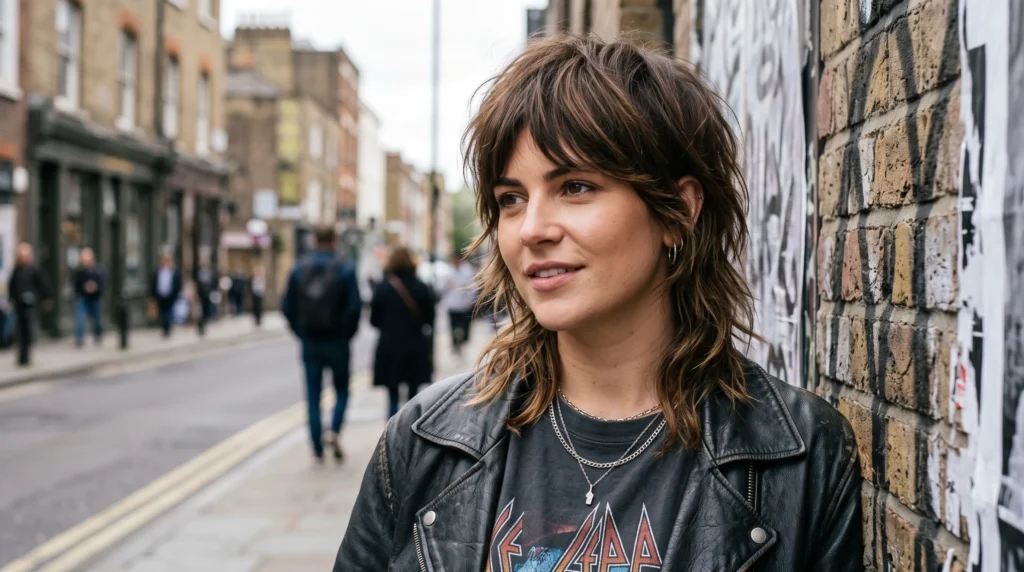
A modern mashup of the shag and the mullet, the wolf cut brings heavy layering and choppy texture to shoulder length hair without sacrificing everyday practicality. It has a deliberately undone, rock-star energy, and it’s a strong option for anyone who wants a cut that photographs as edgy but still styles quickly in the morning.
French Bob

Traditionally a jaw-skimming cut, the French bob can be adapted to shoulder length for a softer, more wearable version of the trend. It’s usually paired with a slight wave or natural bend for a romantic finish, and it suits people who want a chic, low-maintenance cut without going drastically short.
Enhanced Natural Curls
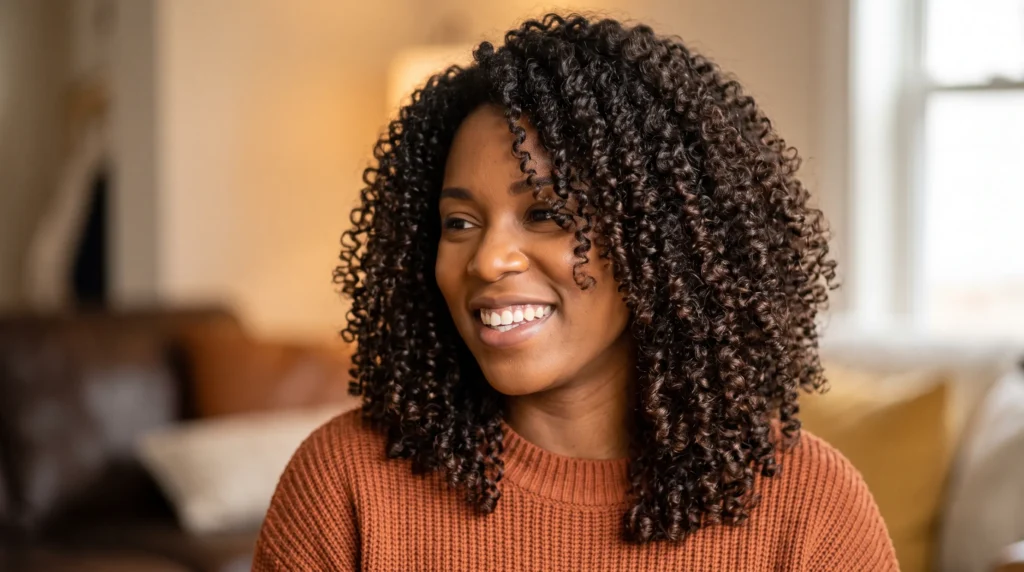
For naturally curly hair, a shoulder length cut can be shaped specifically to support your curl pattern rather than fight it. Layers are placed carefully so the curls stay springy and well-defined instead of becoming bottom-heavy, giving you volume and bounce without weighing the ends down.
How to Choose the Right Cut for Your Face Shape
Beyond hair type, face shape plays a big role in which shoulder length style will feel the most flattering. Round faces tend to benefit from cuts with some height at the crown and layers that start below the cheekbone, like an inverted lob or A-line cut, since these add the illusion of length. Square faces often look softer with wavy, layered styles or curtain bangs, which take the edge off strong jawlines. Heart-shaped faces usually pair well with chin-to-shoulder length cuts and side-swept bangs that balance a narrower chin against a wider forehead. And oval faces are the most flexible of all — almost every style on this list, from a blunt bob to a wolf cut, tends to work.
Styling and Maintenance Tips
Shoulder length hair is genuinely one of the easier lengths to maintain, but a few habits will keep it looking its best between trims. Regular trims every six to eight weeks are especially important for layered or shag-style cuts, since they lose their shape faster than a blunt cut does. A lightweight heat protectant is worth using any time you reach for a curling wand or flat iron, since shoulder length hair is short enough that damage shows up quickly. And if you’re growing out layers or bangs, a good texturizing spray can help disguise awkward in-between stages while everything catches up. For more styling inspiration and expert tips on working with this length, Byrdie’s roundup of medium-length layered haircuts is a solid resource to bookmark.
Products Worth Having on Hand
A great cut only looks great if it’s paired with the right products, and shoulder length hair has a few specific needs. A lightweight mousse or sea-salt spray is useful for anyone working with waves or a shag, since it adds texture without the crunchiness of stronger-hold products. For blunt cuts and lobs, a smoothing serum applied to damp hair keeps flyaways down and gives the ends a glassy, polished finish. If you’re growing out bangs or layers, a flexible-hold pomade can help train shorter pieces to blend into the rest of your style rather than sticking straight out. And no matter which cut you choose, a good heat protectant spray should become part of your routine any time you’re using a blow dryer, curling iron, or flat iron on hair this length, since damage tends to show up faster and more visibly than it does on longer strands.
Frequently Asked Questions
Does shoulder length hair suit every face shape? Most shoulder length cuts can be adjusted to flatter any face shape — the trick is in where the layers start and whether you add bangs, not the base length itself.
Is shoulder length hair harder to maintain than long hair? Generally, no. It air-dries faster, uses less product, and doesn’t tangle as easily, though heavily layered or shag-style cuts need more frequent trims to hold their shape.
Can I still put shoulder length hair in a ponytail? Yes, especially once it reaches the collarbone. Shorter shoulder length cuts may need a few bobby pins to keep shorter face-framing pieces in place.
How often should I get shoulder length hair trimmed? Plan on a trim every six to eight weeks if you have a layered or shaped cut like a shag or wolf cut. Blunt cuts and lobs can usually stretch to ten or twelve weeks between visits, since there’s no layering to lose its definition as the hair grows.
What should I tell my stylist if I’m not sure which shoulder length cut to get? Bring photos, but also be specific about your hair’s natural texture and how much time you’re realistically willing to spend styling it each day. A stylist can adjust almost any of these cuts to work with fine, thick, straight, or curly hair — the more honest you are about your daily routine, the better the result will hold up in real life.
Final Thoughts
Shoulder length haircuts remain one of the most versatile choices you can make, precisely because there’s no single “right” version of the style. Whether you gravitate toward a blunt, no-fuss bob or a heavily layered shag with curtain bangs, the length adapts to your hair type, your face shape, and how much time you actually want to spend styling it each morning. Bring a few of these ideas to your next salon visit, describe your hair’s natural texture honestly, and let your stylist help you land on the exact variation that will work best for you.