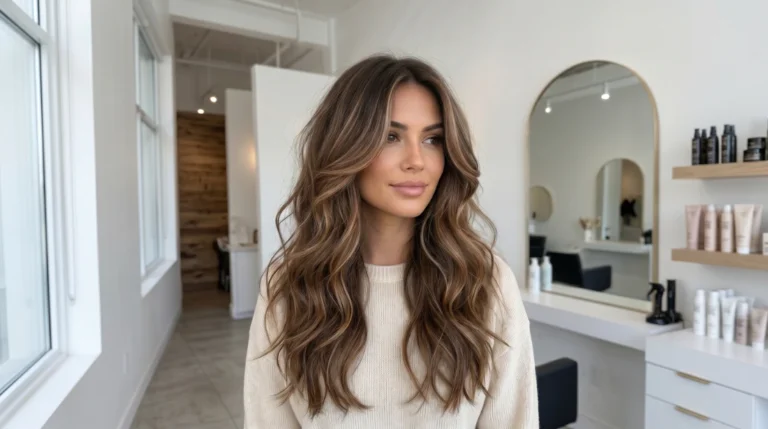
Explore the Top Haircuts for Fine Hair to Achieve Voluminous and Stylish Results
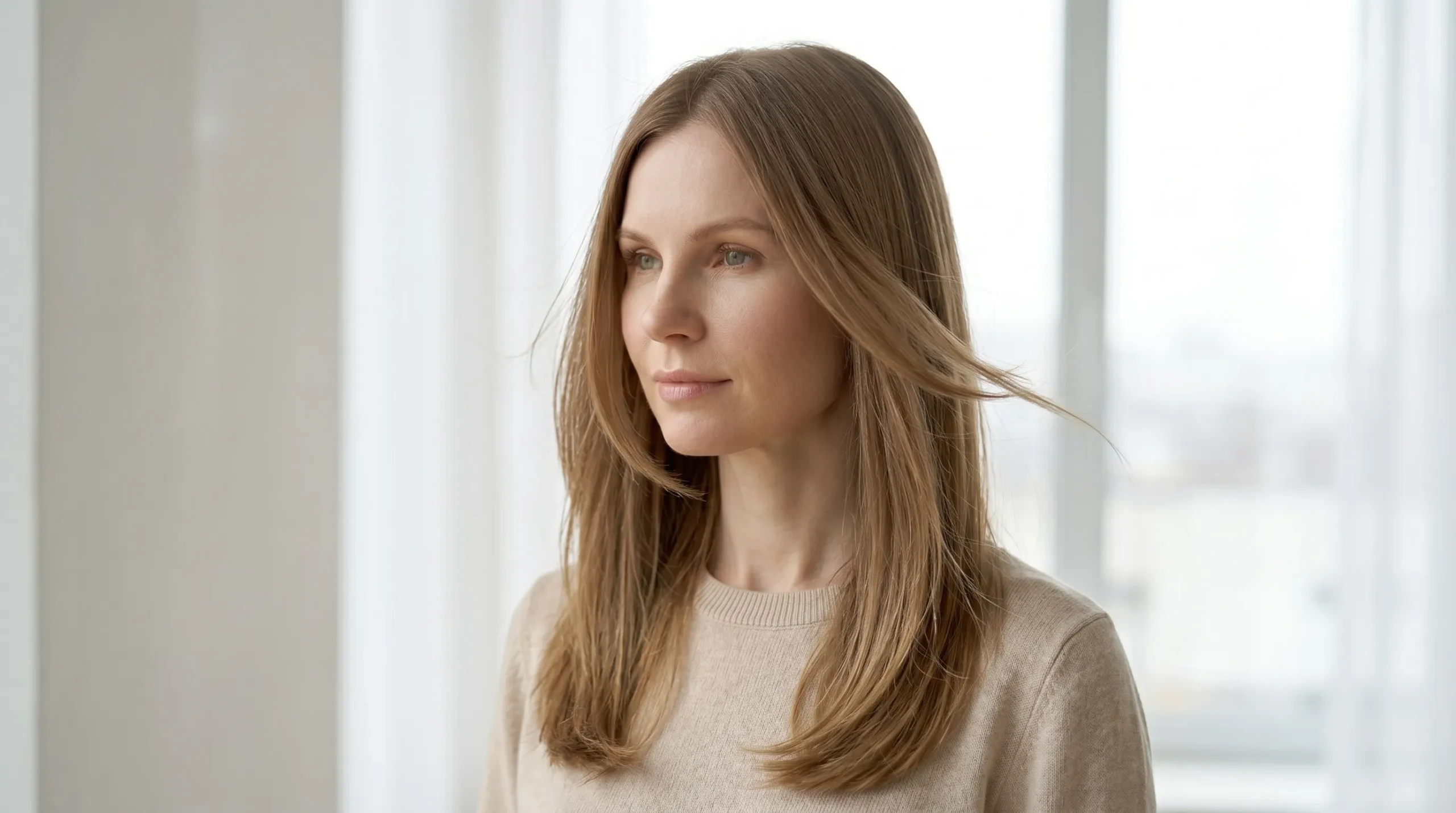
Fine hair has a way of feeling like a paradox. It glides through your fingers with a silky softness that thicker hair can never quite match, yet that same delicacy can leave it looking flat by mid-afternoon. The trick isn’t fighting your hair type — it’s cutting and styling it in a way that works with it.
The encouraging part? A well-chosen haircut can do more for the appearance of volume than almost any product on the shelf. Below, we’ll break down what fine hair actually is, the cuts that flatter it most, and the styling habits that keep that lift from disappearing by lunchtime explore the top haircuts for fine hair achieve voluminous and stylish results
If you’re looking for more layered styles that add movement and volume, explore these modern haircut ideas for 2026.
What “Fine Hair” Really Means
It’s worth clearing up a common mix-up before diving into cuts: fine hair is about the width of each individual strand, not how much hair is on your head. That second quality — density — is a separate trait, and you can technically have fine, dense hair or fine, sparse hair. Most people use “fine” loosely to describe both, but the distinction matters when you’re talking to a stylist, since it changes how they’ll approach cutting and layering.
A few traits tend to show up across the board with fine hair:
- A soft, smooth feel that’s prone to looking flat without help
- A tendency to go limp by the end of the day, especially without product
- Greater sensitivity to heat and chemical damage than coarser hair types
Knowing this going in helps you choose a cut that plays to fine hair’s strengths instead of working against them.
Explore the Top Haircuts for Fine Hair to Achieve Voluminous and Stylish Results
The right cut does a lot of the heavy lifting before you even pick up a hairdryer. Here are five styles stylists consistently recommend for fine hair, along with why each one works.
1. The Blunt Bob

A one-length, blunt-cut bob is one of the simplest ways to make fine hair read as thicker. Because every strand ends at roughly the same point, the hair has more weight concentrated at the bottom, which creates a denser-looking line instead of the wispy taper you’d get from heavy layering.
Why it suits fine hair:
- The uniform length tricks the eye into seeing more density
- Works especially well on straight or barely-wavy textures
- Easy to maintain day-to-day, with minimal styling required
Styling tip: A light texturizing spray on dry hair adds just enough grit to keep the blunt line from looking too flat or “wig-like.”
2. A Softly Layered Lob

The long bob — or “lob” — gets a fine-hair upgrade when soft, subtle layers are added throughout. Unlike heavy layering, which can thin out fine hair even more, gentle layers add shape without stripping away the weight that creates volume.
Why it suits fine hair:
- Layers introduce movement so hair doesn’t sit flat against the head
- The length adapts easily to waves, sleek styles, or air-dried texture
Styling tip: Work a volumizing mousse through damp roots before blow-drying for noticeably more lift and bounce.
3. A Textured Pixie Cut
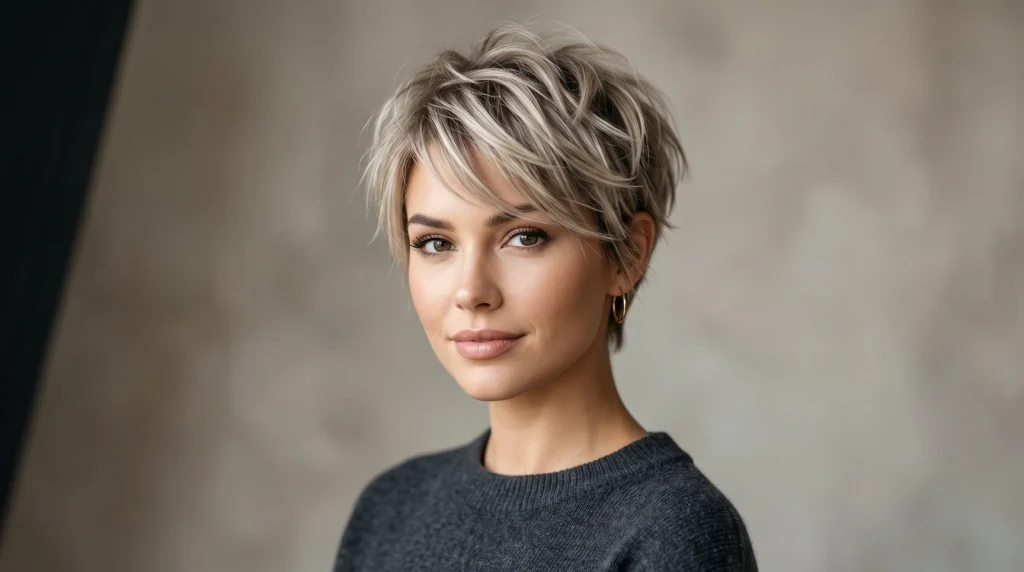
For anyone open to going short, a textured pixie is one of the most effective ways to fake density. Choppy, feathered layering throughout a pixie gives the illusion of much thicker hair than is actually there.
Why it suits fine hair:
- Layering throughout the cut builds visible texture and body
- The short length naturally frames and brightens the face
Styling tip: A small amount of matte pomade or wax, worked through with fingertips, defines individual pieces without adding heaviness.
4. Curtain Bangs Paired With a Shag

The shag-and-curtain-bangs combination has become a go-to for fine hair, and it’s easy to see why. The piecey, irregular layering of a shag mimics thickness, while curtain bangs add soft fullness right at the front, where it’s most noticeable.
Why it suits fine hair:
- Curtain bangs create the appearance of volume framing the face
- Uneven layering throughout makes hair look fuller than its actual density
Styling tip: Dry the bangs with a round brush, rolling them slightly outward for a soft, face-framing curve.
5. An Asymmetrical Bob
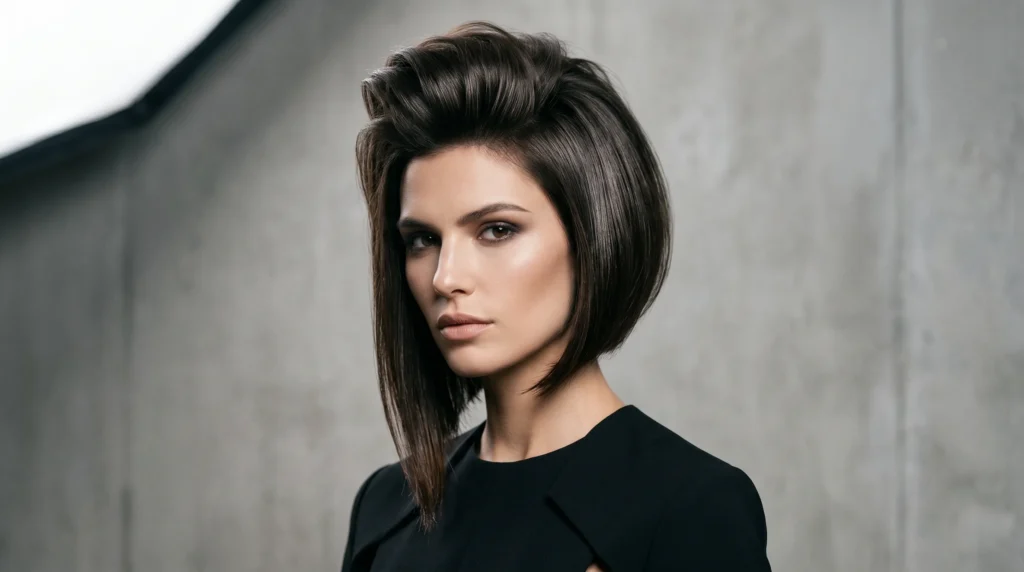
An asymmetrical bob — shorter in the back, longer toward the front — brings a bit of edge while still flattering fine hair. The contrast in lengths creates visual movement that a single straight line can’t.
Why it suits fine hair:
- The shifting lengths add dimension and draw the eye
- The shorter back section gives the crown a fuller, lifted look
Styling tip: Finish with a shine serum to smooth flyaways and keep the asymmetry looking crisp rather than wispy.
How to Build (and Keep) Volume on Fine Hair
A great haircut is the foundation, but daily habits determine whether that volume actually shows up. These five adjustments make a real difference:
1. Choose lightweight, volumizing formulas.Heavy creams, butters, and oils tend to sit on fine strands and flatten them. Volumizing shampoos and conditioners, along with a dry shampoo or root powder for extra lift, work much better.
2. Get strategic with your blow-dry. Apply a heat protectant first, then flip your head upside down while drying to lift the roots away from the scalp. Finishing with a round brush adds shape and body to the lengths.
3. Use heat tools to your advantage. A curling wand or straightener with adjustable heat settings can introduce bend and texture that naturally read as more volume — just keep the temperature on the lower end to protect fragile strands.
4. Don’t skip root teasing. A quick backcomb at the roots with a fine-tooth comb, set with a light-hold spray, gives instant lift that lasts through the day.
5. Lean on accessories when you need a shortcut. Headbands, clips, and scarves aren’t just decorative — they can disguise flatness at the crown while adding personality to a simple style.
Habits That Work Against Fine Hair
Just as important as what to do is what to avoid:
- Piling on rich products. Heavy serums and creams weigh fine hair down fast and can leave it looking oily rather than full.
- Stretching out time between trims. Split or frayed ends make fine hair look thinner and more tired than it actually is.
- Overusing high heat. Fine strands are more prone to heat damage, and damaged hair loses whatever volume it had.
Final Thoughts
Fine hair doesn’t have to mean flat hair. The right haircut — whether that’s a blunt bob, a piecey shag, or a textured pixie — does most of the work toward a fuller look before you even reach for a styling product. Pair that with smart blow-drying habits and the right lightweight formulas, and “limp” stops being part of the conversation.
Hair density and volume can also be affected by underlying factors like diet, hormones, and scalp health, so if you notice a sudden change in thickness, it’s worth a conversation with a dermatologist rather than just a stylist. WebMD’s roundup of dermatologist-backed advice on boosting hair volume is a solid place to start if you want medical perspective alongside styling tips.
Ready for a change? Bring this list to your next salon visit and talk through which of these cuts best suits your face shape, texture, and lifestyle. With the right stylist in your corner, “fine” and “fabulous” aren’t mutually exclusive.