Demi vs Semi Permanent Hair Color: What’s the Difference and Which Should You Use?
If you’ve ever stood in a hair color aisle — or sat in a consultation chair — feeling genuinely confused by the terminology, you’re not alone. Demi and semi permanent hair color sound almost identical. They’re both temporary. Neither contains ammonia. Both are significantly gentler than permanent dye. But they’re not the same product, they don’t work the same way, and choosing the wrong one for your goal can mean either a color that disappears too fast or one that lingers longer than expected.
The primary difference between semi and demi permanent hair color is how long they last after repeated washing and exposure to sunlight. Both are temporary compared to permanent hair color — demi lasting up to 30 washings, and semi lasting about 5.
Here’s everything you need to know to choose the right one between demi vs semi permanent hair color.
What Is Semi Permanent Hair Color?
Semi permanent hair color coats only the surface of the hair — the outer cuticle — without altering the hair’s natural structure. It doesn’t open up the outer layer of hair, so no pigment is deposited inside. This means it may not last as long as demi permanent, although it can still offer staying power depending on the hair base — as a general rule, a semi permanent shade lasts for 10–20 washes, but on very light or highly porous hair, or with bold colors, it could stay visible for months.
Semi permanent hair color is often referred to as a toner, stain, or gloss. Unlike demi, it does not require a developer to work and is usually applied to freshly-washed hair. It doesn’t change hair color as much as it enriches the tone and adds depth or vibrancy.
Because it contains no ammonia and no hydrogen peroxide, semi permanent dye is the most damage-free coloring option available. It cannot lighten your hair — it can only add a tone, refresh an existing color, or subtly shift the shade darker.
Semi permanent is the right choice when you want to:
- Experiment with a new shade or tone without commitment
- Refresh faded color between salon appointments
- Tone bleached or lightened hair (eliminate brassiness or yellow)
- Add shine and richness to your natural color
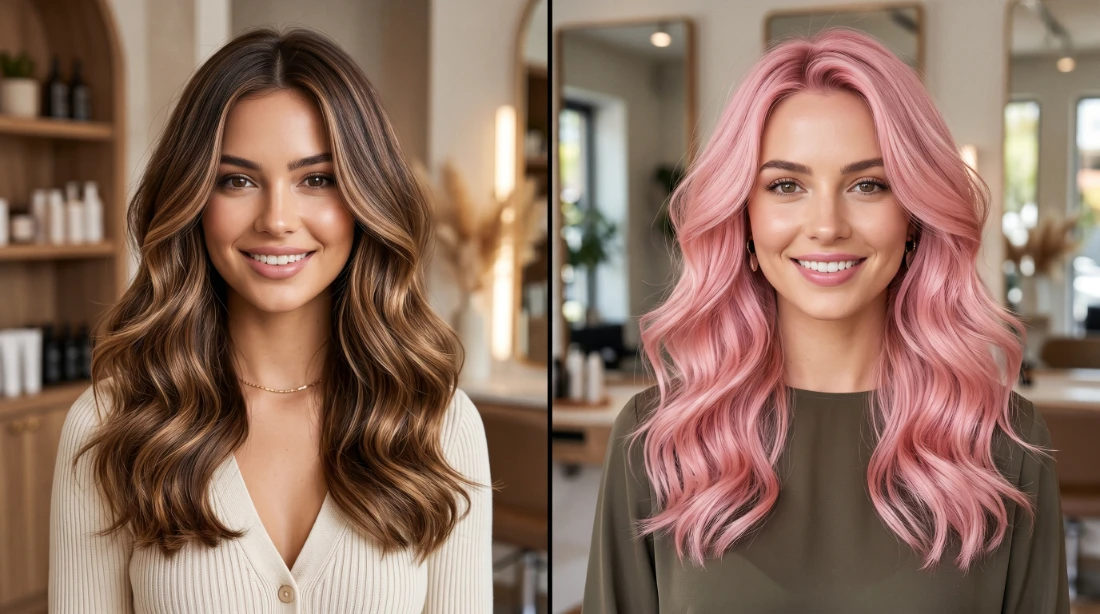
- Try a vivid or fashion color (pink, purple, teal) without permanent consequences
What Is Demi Permanent Hair Color?
Demi permanent hair color is ammonia-free and mixed with a low-volume developer, washing out after about 24 to 28 shampoos. Applied to dry hair before shampooing, it works by depositing pigment on the surface of the hair while slightly penetrating the cuticle. Demi permanent creates a “diffused” finish — a softer transition between your current color and your growth, meaning no obviously visible roots.
Demi permanent color uses a low-volume developer, lasts 16–28 washes, and offers subtle, natural results with gray blending. Both semi and demi permanent color create a softer grow-out than permanent dye, requiring less maintenance.
The small amount of developer (typically 5 or 10 volume hydrogen peroxide) is what makes demi permanent more long-lasting than semi — the hydrogen peroxide slightly opens the cuticle so the pigment can penetrate a little deeper. It’s not enough to lighten the hair, but it’s enough to make the color hold significantly longer.
Demi permanent is the right choice when you want to:
- Add depth, shine, and dimension to your natural color
- Blend or soften gray hairs (but not fully cover them)
- Refresh a faded permanent color between appointments
- Try a new shade with more staying power than semi permanent
- Keep roots looking less obvious as your color grows out
Demi vs Semi Permanent Hair Color: The Key Differences at a Glance
This is where a side-by-side view genuinely helps — the differences between these two color types are more nuanced than most product packaging communicates:
| Feature | Semi Permanent | Demi Permanent |
|---|---|---|
| Lasting power | 3–20 washes | 16–28 washes |
| Contains ammonia | No | No |
| Contains developer | No | Yes (low-volume) |
| Penetrates hair cuticle | No — coats surface only | Slightly — opens cuticle partially |
| Can lighten hair | No | No |
| Can darken hair | Slightly | Yes |
| Gray coverage | No | Partial (blending only) |
| Damage level | Virtually none | Minimal |
| Best applied to | Clean, freshly washed hair | Dry hair before shampooing |
| Grow-out appearance | Fades gradually, no harsh line | Soft, diffused grow-out |
| Best for | Experimenting, toning, glossing | Adding depth, blending grays, refreshing color |
| Ideal user | Color-curious beginners | Those wanting low-commitment, longer-lasting results |
How Each One Actually Works
Understanding the mechanism behind each product makes it much easier to choose the right one.
Semi permanent works entirely on the surface of the hair strand. Semi permanent hair color is a deposit-only, temporary hair color that stains the hair for a short while. It does not need to be mixed with a developer and is typically applied to freshly shampooed hair for best results. Because no developer is involved, the cuticle never opens — the pigment simply coats the outside of each strand like a wash of color over glass. The moment you start washing, it begins to rinse away.
Demi permanent works slightly differently. Demi permanent hair color is a gentle formula that lasts up to 28 washes and offers subtle blending, while semi permanent is a short-term, zero-damage color option. The low-volume developer partially lifts the cuticle just enough for the pigment to sit inside the outer layer of the hair shaft rather than simply coating the surface. This deeper deposit is what makes it more durable — and also what gives it a slightly more impactful effect on the existing hair color.
Which Is Less Damaging?
When it comes to semi vs demi permanent hair color, both are far gentler than permanent dyes, but semi permanent is generally better for overall hair health. It only coats the hair surface, causing no structural change, making it the most damage-free option available.
Demi permanent causes minimal damage — significantly less than permanent dye — but the small amount of hydrogen peroxide in the developer does slightly open the cuticle, which can leave hair a touch drier or more prone to frizz after application. On already dry or damaged hair, this is worth factoring into your decision.
The practical hierarchy from least to most damaging is: semi permanent → demi permanent → permanent.
Which Lasts Longer?
Semi permanent hair color, like Davines’ Finest Pigments, coats the hair shaft and lasts 4–12 washes. Demi permanent color lasts 16–28 washes and offers subtle, natural results with gray coverage and blending.
A few factors affect this beyond the product type itself:
Hair porosity matters significantly. Highly porous hair (bleached, heat-damaged, or chemically treated) absorbs semi permanent color deeply and can hold it for far longer than expected — sometimes as long as a demi permanent would on healthier hair. Lower-porosity hair releases both types of color more quickly.
Washing frequency determines fade speed. Every wash removes pigment. If you wash daily, a semi permanent color that “lasts 10–20 washes” might be gone in under two weeks. If you wash twice a week, it could last six weeks or more.
Water temperature affects fade rate. Hot water opens the cuticle and accelerates color loss. Cold or cool water rinses after shampooing extend both semi and demi permanent color noticeably.
Can Either One Cover Gray Hair?
This is one of the most common questions — and the answer requires honesty.
Demi permanent creates a diffused finish between your current color and your growth, but while this is true for hair without grays, demi will not fully lessen the appearance of gray regrowth. For total gray coverage, you’ll need something stronger — like permanent hair color.
Semi permanent dye on gray hair typically has even less impact — it may add a slight tint or tone to gray strands, but it won’t meaningfully cover or blend them.
The practical breakdown:
- Semi permanent on gray — Adds a tint or subtle tone but no meaningful coverage. Best used as a gloss or toner on non-gray hair.
- Demi permanent on gray — Blends and softens gray rather than covering it. Creates the appearance of highlights or dimension within gray strands. Best for women who want a “gray blending” effect rather than full coverage.
- Permanent dye on gray — The only option for complete, opaque gray coverage.
Demi vs Semi Permanent: Which Should You Choose?
Semi permanent dye is perfect for short-term color experiments, while demi permanent dye offers longer-lasting, more refined results. If you’re choosing between the two, understanding your hair goals is essential.
Here’s a simple way to decide:
Choose semi permanent if:
- You want to try a new color with zero commitment
- You’re toning bleached or lightened hair (fighting brassiness or yellow)
- You want to add shine and a fresh tone to your natural color
- Your hair is already dry, damaged, or chemically compromised
- You’re experimenting with a vivid or fashion color
Choose demi permanent if:
- You want longer-lasting color without the damage of permanent dye
- You want to add depth, richness, and dimension to your natural base
- You’re blending grays rather than covering them completely
- You want a grow-out that looks soft and natural rather than obviously rooted
- You’ve tried semi permanent before and want something that holds longer
Your colorist will have definite opinions about demi vs semi permanent color and will consider individual factors such as the degree of porosity, how vivid your natural color is, the overall health of your hair, and your hair washing habits. If you’re genuinely unsure, a consultation before committing to either is always worthwhile.
For a deeper breakdown of how each formula works at a molecular level, including which professional products your colorist is likely to use, Wella’s professional guide to demi vs semi permanent hair color is the most thorough and expert-backed resource available.
How to Make Either Type of Color Last Longer
Regardless of which you choose, a few habits significantly extend the life of both semi and demi permanent color:
Wash less frequently. Every shampoo strips pigment. Extending time between washes with dry shampoo is the single most effective thing you can do to preserve temporary color.
Use cool or cold water to rinse. Hot water opens the cuticle and accelerates color loss. A cool water rinse at the end of every wash keeps the cuticle sealed and the pigment locked in.
Use color-safe, sulfate-free shampoo. Regular formulas are too stripping for temporary color. Sulfate-free formulas cleanse without aggressively removing the color deposit with every wash.
Avoid prolonged sun exposure. UV light fades both types of color — particularly warm tones like copper, caramel, and red. A UV-protective leave-in spray is worth using year-round if you’re outdoors frequently.
Deep condition regularly. Healthier, well-hydrated hair holds color better than dry or porous hair — regardless of which type you’re using. A weekly conditioning mask significantly extends color vibrancy and keeps the hair looking its best.