15 Balayage Wolf Cut Ideas That Are Pure Main Character Energy
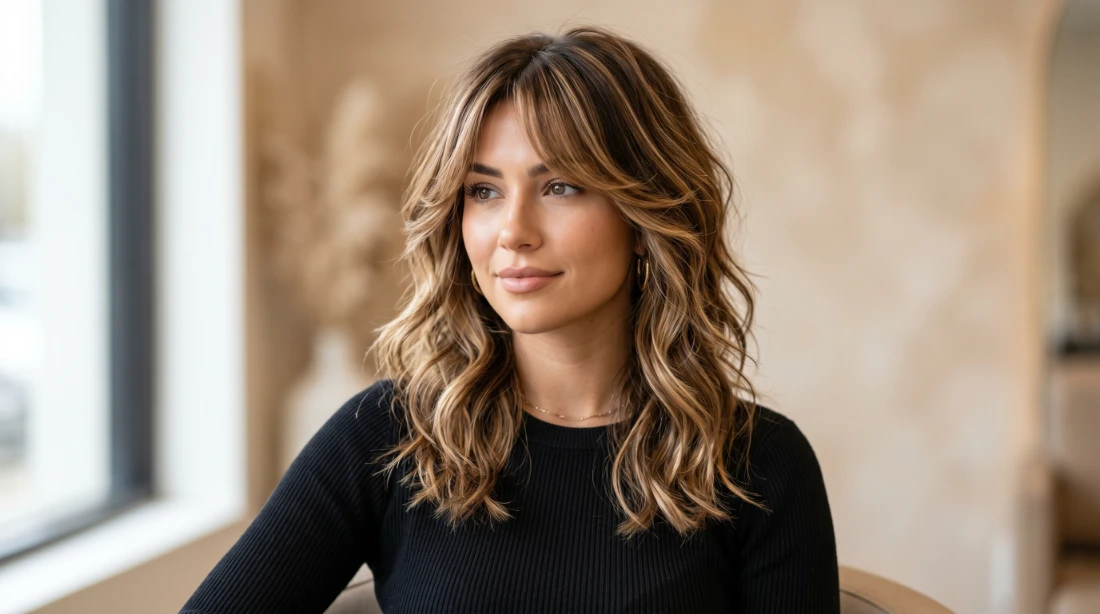
There’s a specific moment that happens with the right haircut and color combination — you catch your reflection somewhere unexpected and actually stop. Not to check, but because you genuinely surprised yourself. That’s what the balayage wolf cut does, and it’s not an accident.
Balayage on its own is transformative. The wolf cut on its own is structural genius. Together, they operate on a completely different frequency — color that moves, dimension that shifts, and a silhouette that holds its shape whether you’ve spent forty minutes or four getting ready. The reason this combination dominates every beauty platform right now isn’t trend-chasing. It’s cause and effect: balayage’s hand-painted placement is designed to highlight dimension, and the wolf cut’s disconnected layers create dimension. The two were always going to find each other.
What makes it feel so unmistakably main character is the specificity. This isn’t just highlights and a shag cut. The balayage is painted with the layers in mind — lighter at the tips where the wolf cut’s ends are most visible, warmer through the mid-lengths, deeper at the roots for that grown-in depth that reads as effortless. Your colorist and your stylist are essentially co-directing the same film.
Who These Balayage Wolf Cut Ideas Are Perfect For
By Face Shape
Oval faces are the canvas that every balayage wolf cut variation flatters without modification. The only real decision is length — and with 15 options below, that’s a very good problem to have.
Heart-shaped faces benefit most from balayage where the lighter tones are concentrated at the mid-lengths and ends rather than the roots, drawing the eye downward and balancing a wider forehead.
Square faces are softened by the combination of balayage warmth and the wolf cut’s curved, feathered layers. Request color that lightens progressively toward the jawline to visually round the angles.
Round faces should lean toward balayage placement that’s heaviest at the crown and surface layers, creating a luminous halo at the top that draws the eye upward and elongates the face shape.
By Hair Texture
Fine hair gets arguably the most dramatic upgrade from this combination. Balayage creates the visual impression of depth and density, while the wolf cut’s layers build physical volume — together, they engineer a thickness that wasn’t structurally there before.
Thick hair benefits from the wolf cut’s interior layer work, which removes mass while the balayage replaces that removed bulk with visual interest.
Curly hair in a balayage wolf cut is a revelation — the color placement reveals itself differently in every individual curl cluster, creating a kaleidoscopic effect that changes as the hair moves.
Straight hair showcases balayage most cleanly and precisely, with every painted stroke visible in high definition. The wolf cut’s layers then animate the color with movement and dimension.
15 Balayage Wolf Cut Ideas Worth Saving
1. The Golden Hour
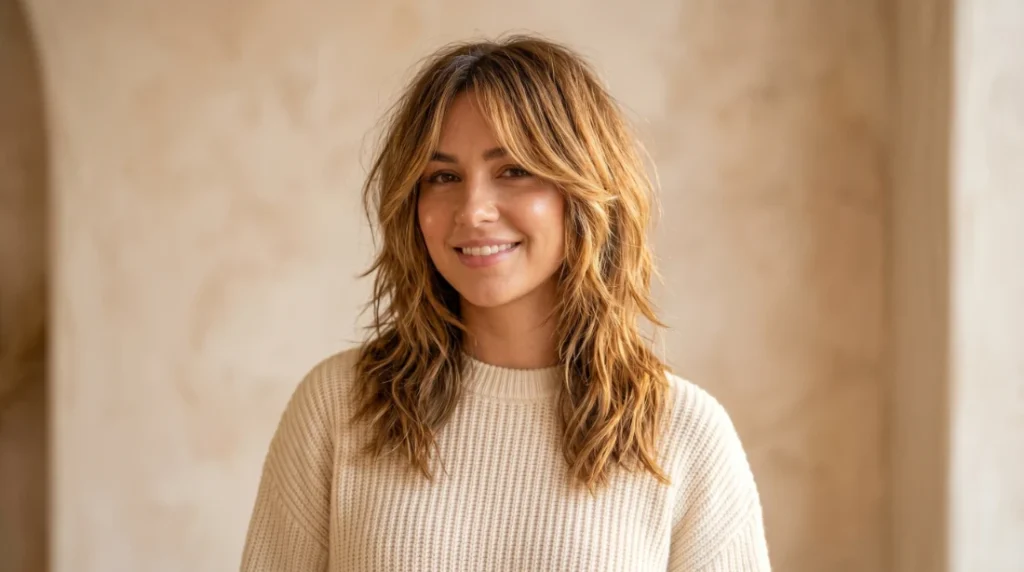
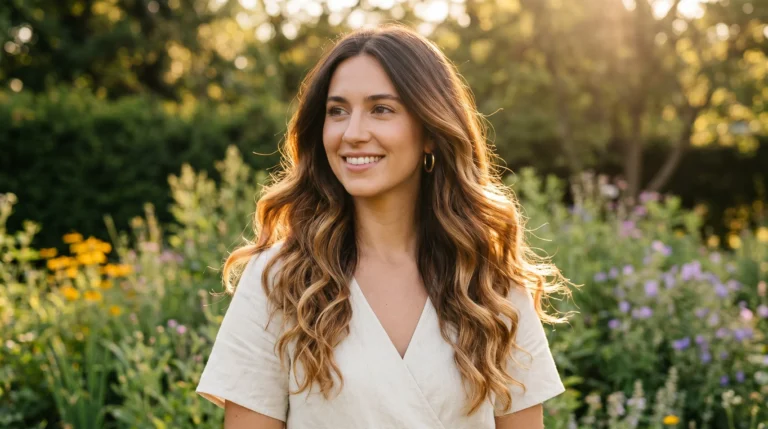
Warm honey and butterscotch balayage swept through medium-length wolf layers, styled into loose, lived-in waves. This is the combination that photographs beautifully in every lighting condition and never looks like it’s trying.
Medium-length hair without color dimension can read as tonally flat and shapeless. The honey balayage introduces light-reflective depth through the wolf cut layers, making what would otherwise be a forgettable length feel curated and intentional. Style with a large-barrel wand to let the balayage graduation show itself across the wave pattern — the lighter ends catch light as they curl outward.
2. The Smoky Quartz

Cool ash-brown roots that melt into smoky taupe at the mid-lengths and near-platinum at the tips. The wolf cut’s disconnected layers make this color graduation appear three-dimensional, like something carved from stone and then set in motion.
Cool-toned balayage can look washed out without enough contrast. The root shadow created by deep ash roots against the platinum tips gives this wolf cut dramatic tonal range that keeps the color looking rich regardless of skin undertone. A purple-toning shampoo used every third wash keeps the platinum ends from pulling yellow.
3. The Cognac Sunrise
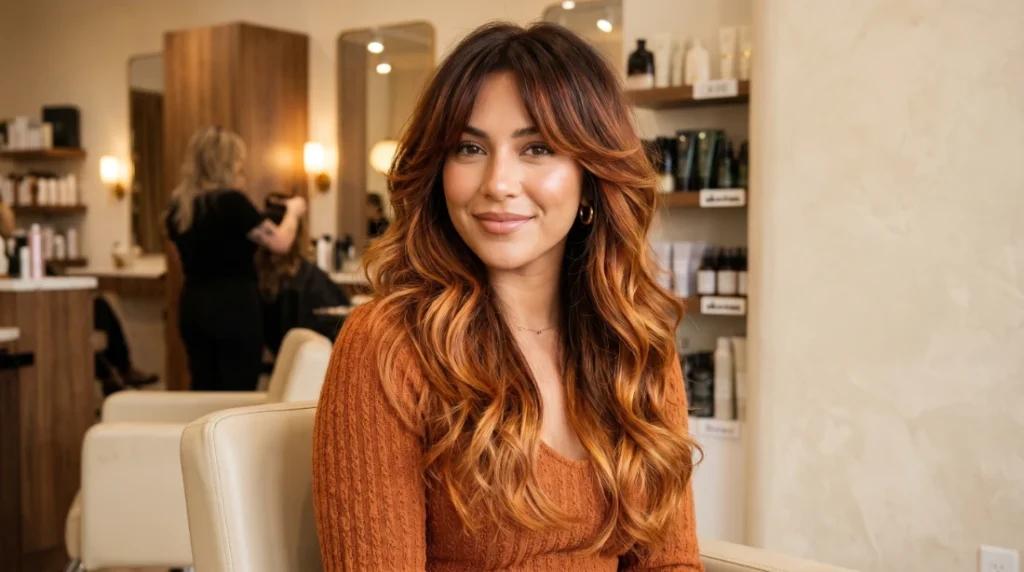
Reddish-brown cognac roots with fiery amber and copper balayage through the ends of a long, chest-grazing wolf cut. The color mimics the exact gradient of a sunrise — dark at the base, warm and luminous where the light hits.
Long wolf cuts can lose their layered definition over time as the hair grows. Cognac-to-amber balayage visually maps the layer structure of the cut — the lighter ends mark exactly where each layer falls, making the wolf cut’s architecture visible at a glance. A copper-tinted color-depositing conditioner used once weekly refreshes the warmth between salon visits.
4. The Mushroom Silk
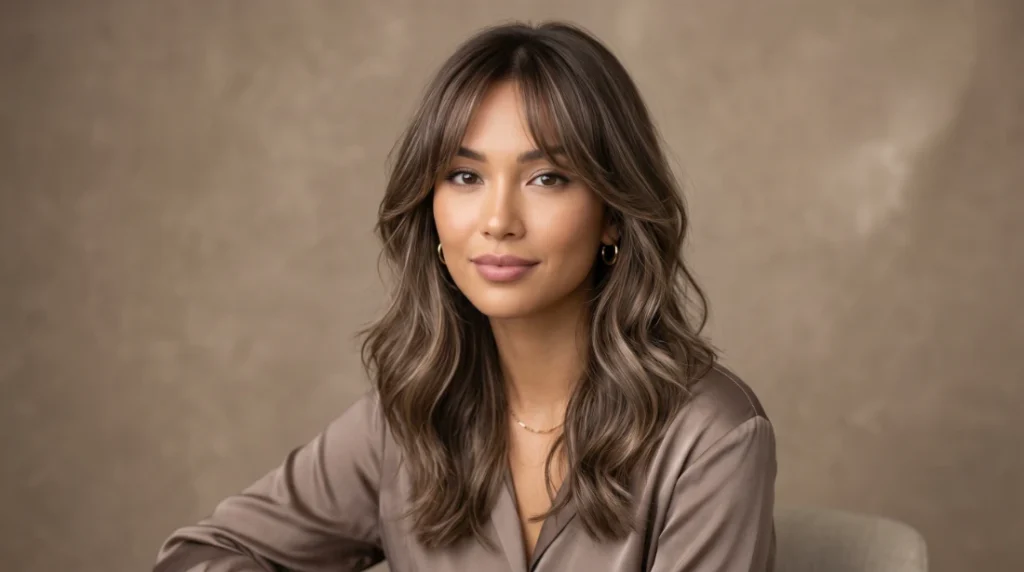
The most sophisticated neutral on this list. A mushroom-brown base with soft, barely-there beige balayage that creates dimension without contrast. The wolf cut’s layers catch the subtle tonal shifts and amplify them into something that reads as genuinely expensive.
This low-contrast palette grows out invisibly — the shadow root blends seamlessly into the balayage at every growth stage, dramatically extending the time between color appointments. A gloss treatment applied every three weeks keeps the muted tones looking intentionally soft rather than faded.
5. The Midnight Money Piece
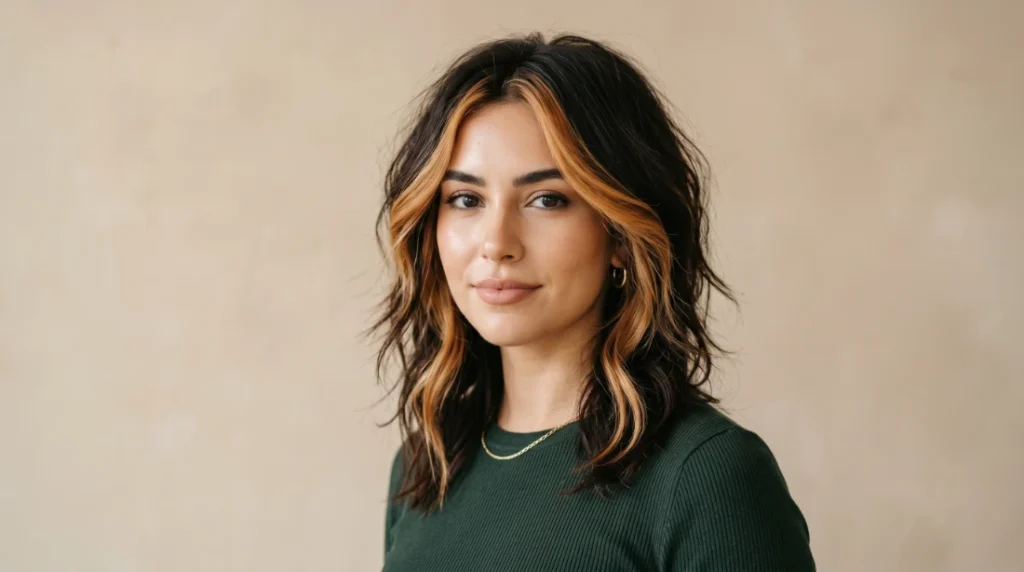
Deep, near-black base with a dramatic money-piece balayage — face-framing sections lifted to a bright caramel or gold — cascading through a shoulder-length wolf cut with textured, piecey ends. Bold contrast. Maximum face-framing effect.
Dark-haired clients often feel locked out of the balayage conversation because lifting on dark bases requires significant processing. The money-piece wolf cut approach focuses that processing on the most impactful areas only — the face-framing sections — rather than the entire head. A bond-repairing treatment used weekly as a five-minute pre-shampoo mask specifically on those sections keeps them strong and vibrant.
6. The Desert Rose
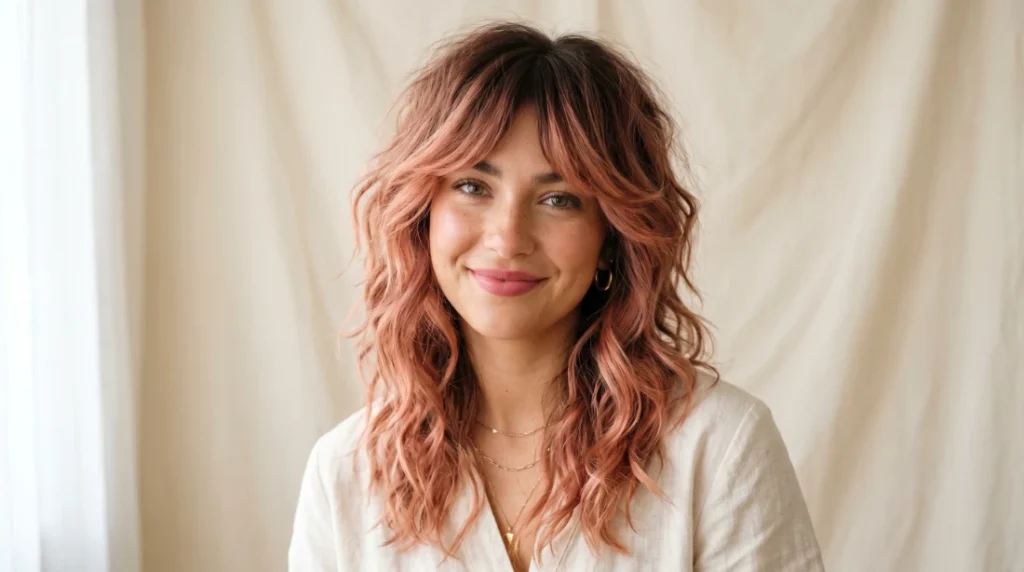
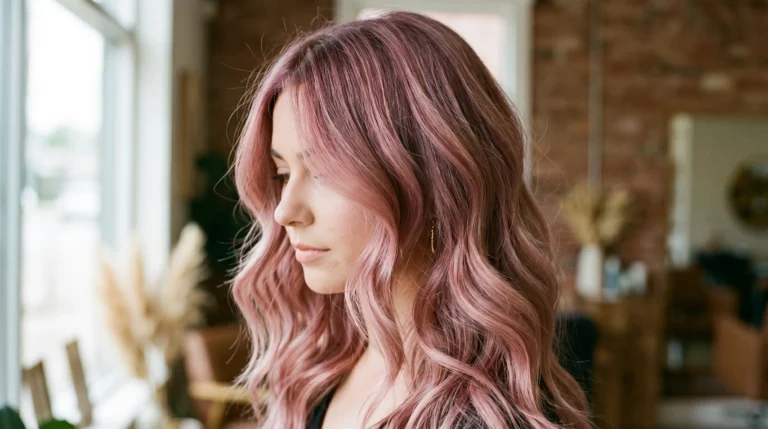
Rose-gold and warm pink balayage layered through a medium wolf cut with soft, rounded layers and barely-there curtain bangs. The color sits in that perfect zone between fashion and natural — pink enough to be noticed, warm enough to be wearable.
Fashion-color balayage fades faster than natural tones. The wolf cut’s shorter layers at the crown mean that as the color fades and grows, the layers continuously present fresher color at the surface. Cold rinses only — heat is the fastest route to a washed-out result on pink-toned balayage.
7. The Espresso Martini
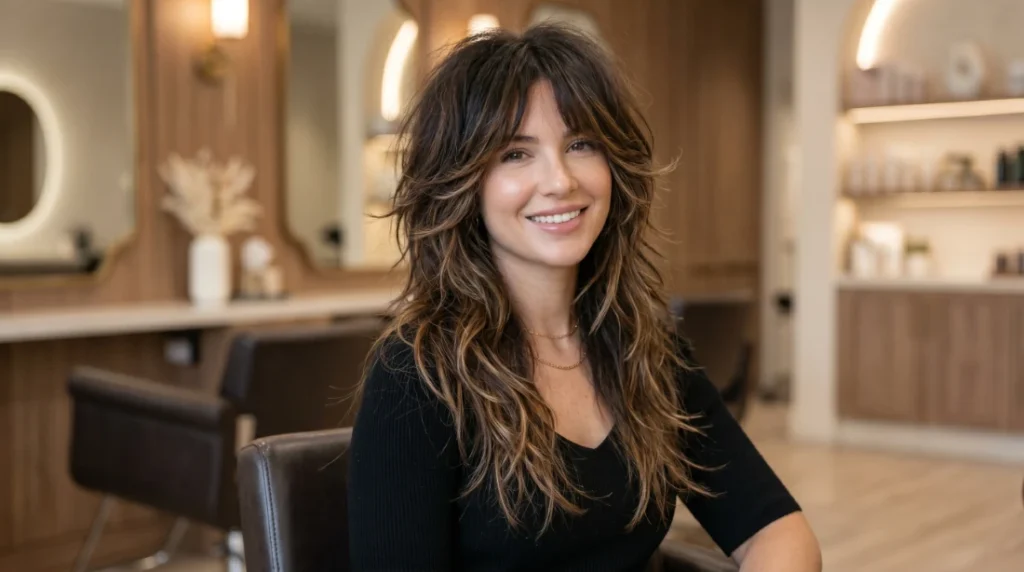
Rich espresso base with warm caramel balayage threaded through long wolf layers — not too light, not too subtle. Sophisticated and seasonless, translating beautifully from summer to winter without looking out of place on the calendar.
Long balayage wolf cuts on thick hair can appear heavy and monolithic. Threading caramel through the mid-lengths and ends visually breaks up the mass, creating the impression of movement and airiness. A lightweight glossing oil worked through dry hair focusing on the mid-lengths gives that fresh-from-the-salon luminosity between appointments.
8. The Bronde Architect

The forever-flattering bronde — balanced precisely between brown and blonde — in a structured, collarbone-length wolf cut with sharp, defined layers. The color does all the visual work; the cut provides the shape.
Bronde balayage is one of the most universally flattering color formulas available. The wolf cut’s architecture amplifies the bronde’s multidimensional quality by presenting the color across multiple layer planes rather than as a flat surface. A toning gloss in a beige or warm wheat tone applied for ten minutes over clean, damp hair keeps the bronde balanced between its two components.
9. The Toffee Shag
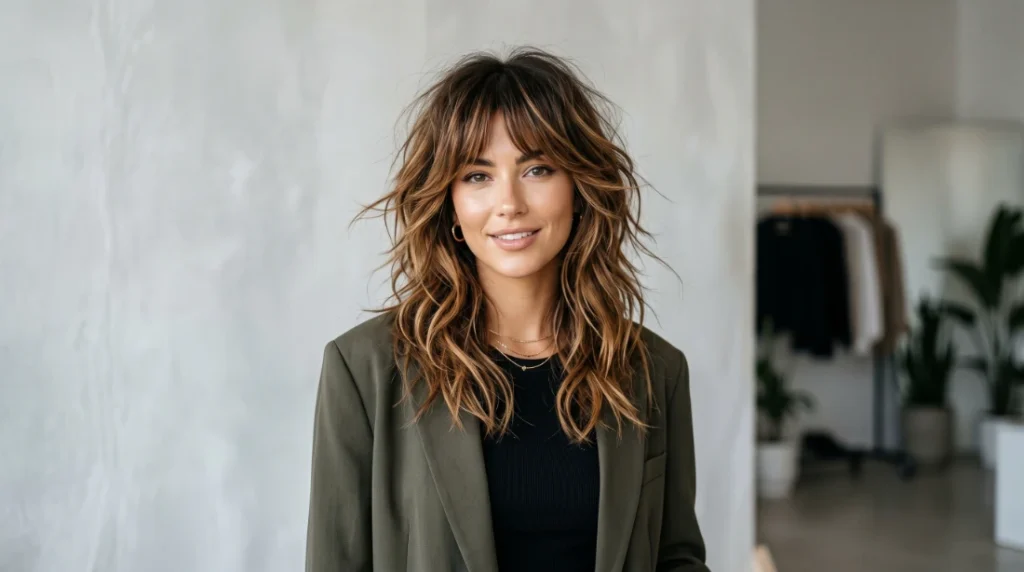
A heavily textured, shaggy wolf cut in warm toffee and caramel balayage with deliberate, piecey ends. Maximum texture, maximum warmth, maximum character. This is the wolf cut that has a personality before you’ve even styled it.
Thick hair in a shaggy wolf cut without color dimension can look monolithic and heavy. The toffee-caramel balayage segments the visual weight into warm and darker pockets, creating the impression of individual texture clusters rather than one dense mass. Work a matte texturizing clay through the ends on dry hair and use fingertips — never a comb — to pull sections apart.
10. The Cashmere Blonde
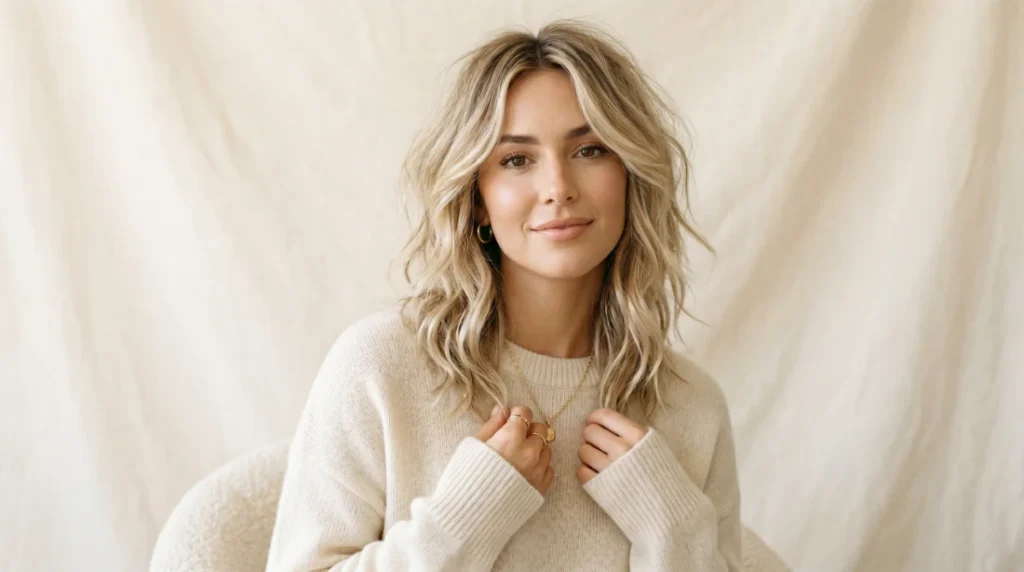
The softest, most wearable blonde on this list. A warm, cashmere-blonde balayage — not platinum, not honey, exactly between — swept through a shoulder-length wolf cut with loose, air-dried texture. The visual equivalent of a slow morning.
Going fully blonde is a significant commitment and a significant processing load. Cashmere balayage through a wolf cut achieves the blonde impression at a fraction of the chemical exposure, with a result that looks like a natural sun-kissed evolution of existing hair color. A nourishing oil containing marula or argan applied to damp ends before air-drying delivers a naturally glossy finish without any heat.
11. The Rich Mahogany Edit
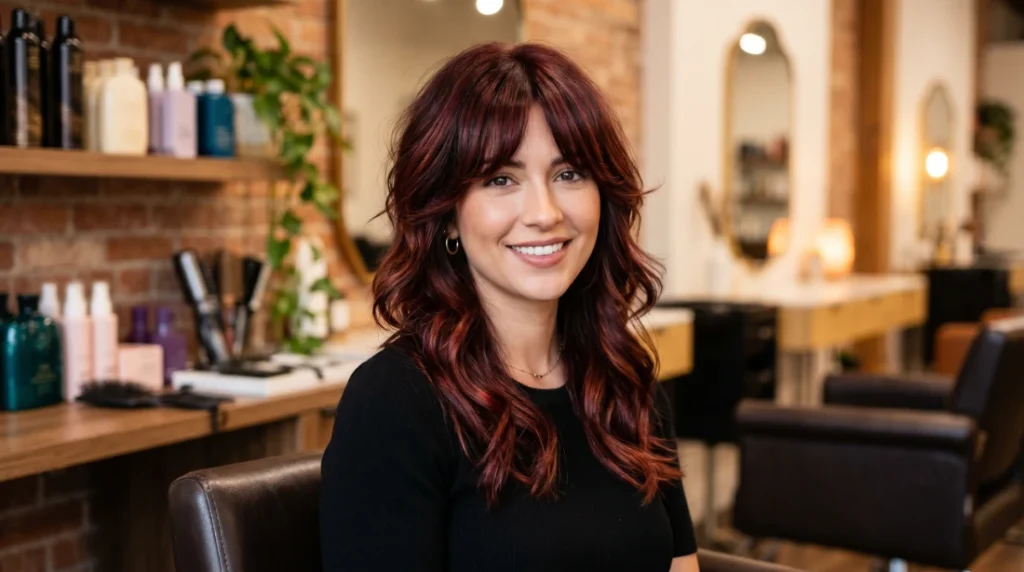
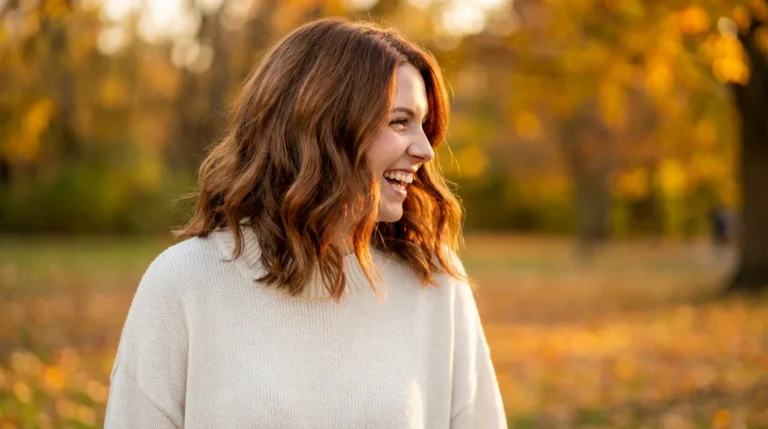
A deeply pigmented reddish-brown mahogany base with subtle garnet and brick-red balayage through the wolf cut’s surface layers. In direct light, the red tones ignite. In shade, it reads as a sophisticated, dimensional brunette.
Red-family balayage is notoriously difficult to maintain because red pigment molecules are the smallest and first to escape the hair shaft. The wolf cut’s shorter surface layers mean fresher, more recently colored hair is always at the forefront, naturally extending the vibrancy window. A garnet-toned color-depositing gloss every two weeks refreshes the warmth without booking another color appointment.
12. The Dimensional Brunette
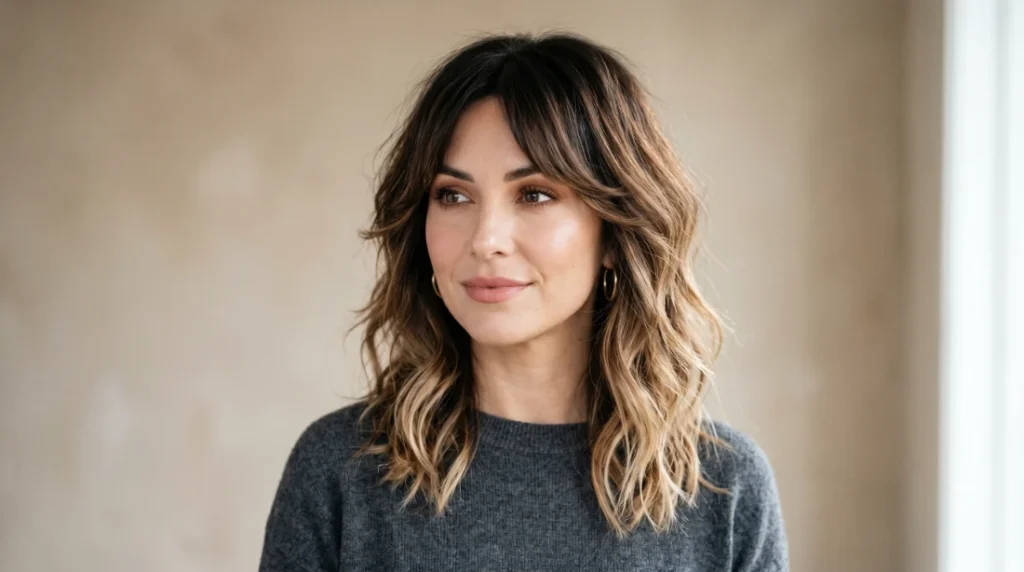
The most wearable, versatile, and enduring entry on this list — a classic brunette balayage wolf cut with three distinct tonal depths creating genuine, visible dimension. Darkest at the roots, medium through the body, lightest at the tips of the wolf cut’s layers.
Single-color brunette hair, regardless of how healthy it is, can look flat in photographs and in low light. Tri-tonal balayage through a wolf cut creates depth that reads as three-dimensional in virtually every lighting condition, making hair look thicker, healthier, and more considered. A glossing treatment applied every four weeks keeps the three tonal levels sharp and differentiated.
13. The Sundipped Shag
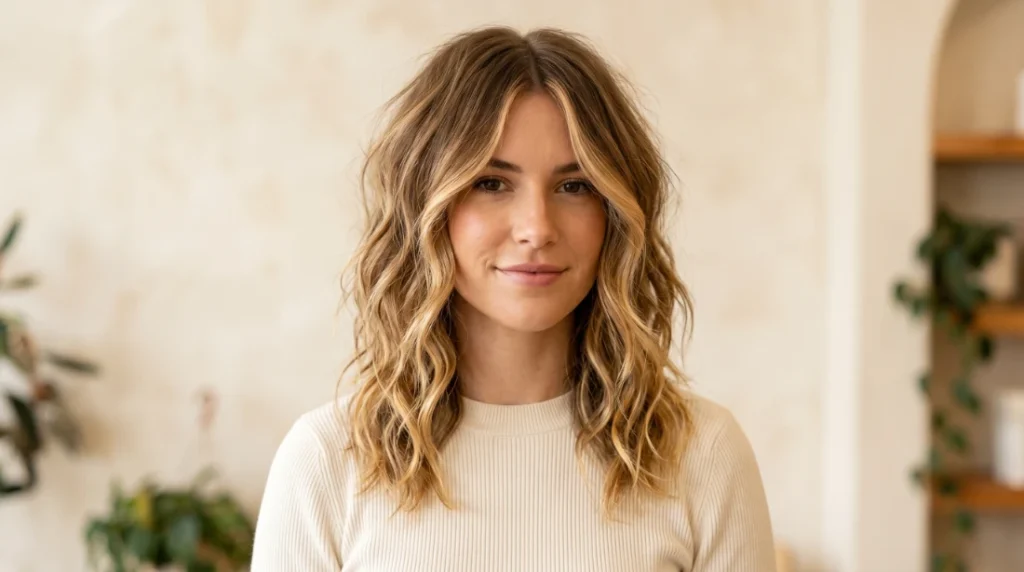
A shoulder-length shaggy wolf cut with balayage so natural it genuinely looks like the sun did it — warmth concentrated around the face and at the outermost surface layers, as though the hair has been slowly, consistently kissed by sun over several summers.
Heavy hand-painting in balayage can sometimes look too deliberate, with visible demarcation between highlighted and non-highlighted sections. The sundipped technique blurs every boundary between tones, creating a seamless gradient that never reveals where the color begins or ends. A golden-wheat toning shampoo used once a week maintains the sun-touched warmth between sessions.
14. The Champagne Toast
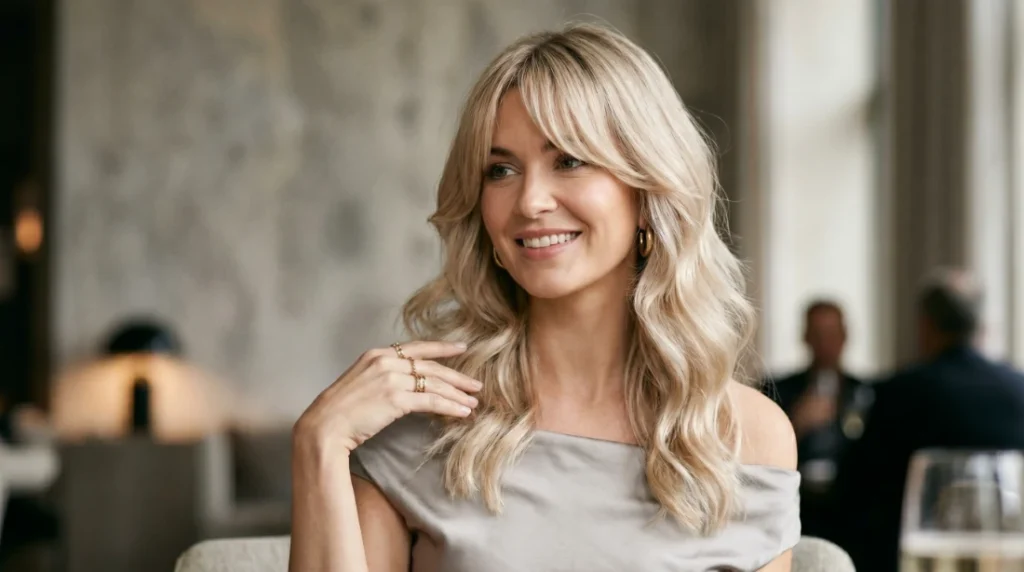
Pale, effervescent champagne and gold balayage through a medium-length wolf cut with curtain bangs and soft, barely-there waves. Luminous and celebratory — like light refracted through glass. Delicate, refined, quietly spectacular.
Very fine hair often reads as see-through or sparse in certain lighting conditions. Champagne balayage on fine hair creates a light-catching halo effect that makes hair appear fuller and more present without any volumizing products required. A volumizing styling primer applied to the roots before blow-drying works alongside the champagne color’s natural luminosity — the color reflects light, the primer builds physical lift.
15. The Velvet Underground
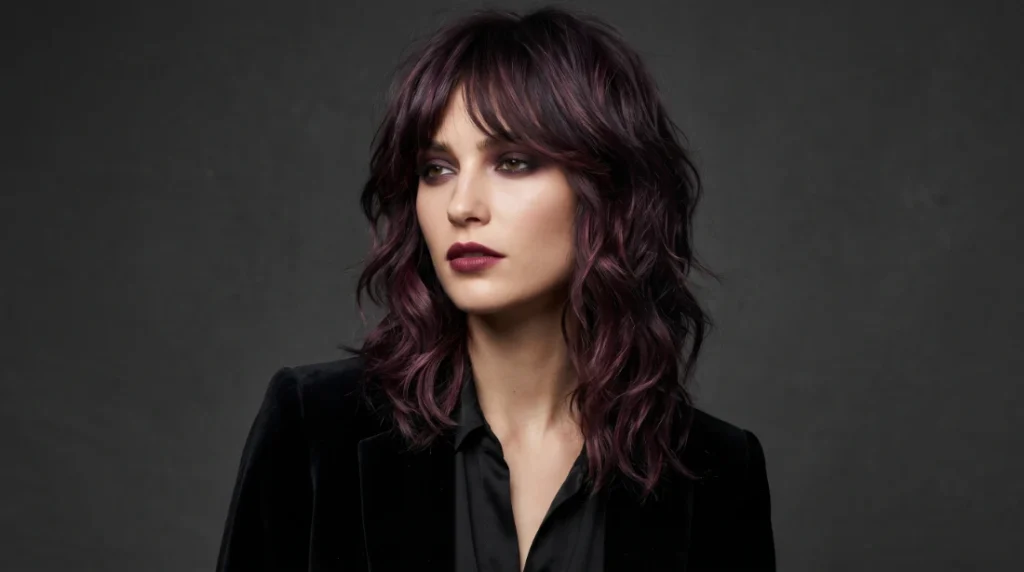
A deeper, more subversive take — dark violet-brown base with soft burgundy and plum balayage through a long, heavily layered wolf cut. The color lives mostly in the shadows, revealing itself fully only in direct light. Quietly dramatic.
Deep fashion-adjacent colors like violet-brown can look costume-like when applied all over. Balayage placement in a wolf cut softens the fantasy quality of the color, distributing the plum and burgundy tones in a way that reads as sophisticated rather than theatrical. A sulfate-free shampoo and deep purple hair mask used every ten days maintains the violet depth — high heat is particularly damaging to violet pigments, so keep hot tools to a minimum.
Styling and Maintenance: What You Need to Know
Your balayage and your wolf cut have separate maintenance schedules. Color touch-ups should happen every 10–14 weeks depending on the contrast level; the wolf cut shape needs refreshing every 8–10 weeks. These rarely fall on the same appointment — budget for both.
Apply heat protectant to towel-dried hair, not soaking wet hair. Most people apply it when the hair is saturated with water, which dilutes it immediately. Towel-dry first, then apply to product-free hair for maximum thermal protection — particularly important for bleached balayage sections.
Rotate your part to preserve the face-framing effect. Wearing the same part daily causes balayage to wear unevenly — sun, styling tools, and daily friction all affect the most consistently exposed sections. Rotating your part by even a centimeter distributes that wear evenly over time.
A gloss treatment is not optional for balayage. Whether in-salon or at-home, a gloss applied every four weeks maintains the tonal precision of your color. Without it, colors drift — bronde goes too warm, ash goes too yellow, mushroom goes too muddy. The gloss is what keeps the color looking exactly as intended between appointments.
Trim the ends more frequently than the full cut. Balayage concentrates the lightest, most processed color at the ends of the wolf cut’s layers — the most structurally vulnerable point. A light dusting every six to eight weeks before split ends develop keeps the balayage looking crisp and prevents breakage from working up the shaft.
The Essential Product List
A toning shampoo calibrated to your color family. Purple for ash and platinum, blue-black for dark obsidian, golden-wheat for warm brunette tones. Used once weekly as a replacement for regular shampoo — not in addition to it.
An at-home gloss kit. The single highest-impact product category for maintaining balayage between appointments. A clear or tinted gloss applied every four weeks refreshes translucency, neutralizes brassiness, and keeps color-to-color transitions seamless.
A bond-repairing leave-in conditioner. Non-negotiable for any balayage that involved lifting. Applied after every wash, it actively rebuilds internal strand structure that lifting compromises, protecting both color vibrancy and hair health simultaneously.
A wide-barrel wand. For wavy, textured balayage wolf cuts, a two-inch barrel creates the loose, effortless wave that shows balayage graduation at its most flattering — the wave pattern separates tonal layers and allows each depth to catch light independently.
A high-shine serum. Two drops of a marula or squalane-based serum worked through dry, styled hair creates the glossy, lacquered effect that makes balayage look expensive and impeccably maintained. This is the finishing product that separates a good result from a spectacular one.
A silk pillowcase or sleep cap. Friction while sleeping is one of the most underestimated causes of balayage fading and mechanical breakage. Silk reduces friction at the hair shaft surface, preserving both the color and the structural integrity of the wolf cut’s ends overnight.
Frequently Asked Questions
How do I find a stylist who can do both the wolf cut and the balayage in one appointment? Look for a salon where colorists and stylists work together rather than independently. Book a consultation first and explain that you want both services coordinated. The best results happen when the colorist and stylist discuss your cut together before either picks up their tools.
Will balayage wolf cuts work on very short hair? Yes, though the technique shifts toward a more focused application. On shorter wolf cuts, balayage is typically concentrated at the face-framing sections and the crown surface layers. The result is more targeted but equally impactful — think money-piece intensity rather than full-length graduation.
How long does a combined balayage and wolf cut appointment take? Budget four to five hours for a first-time appointment combining both services. Balayage processing time alone is typically 45–90 minutes depending on the number of sections and desired lift, with additional time needed for the cut and any toning or glossing finishes.
My hair is damaged from previous color. Can I still get balayage? This depends on the specific condition of your hair, which your colorist needs to assess in person. Generally, a bond-building treatment applied before and during the bleaching process significantly reduces damage risk. Your colorist may recommend a lower-lift approach as a starting point.
How often will I need to visit the salon to maintain this look? Plan on a color appointment every 10–14 weeks and a cut appointment every 8–10 weeks. These schedules can be combined when the timing aligns but will often be separate. Low-contrast variations — like mushroom silk, sundipped shag, and bronde architect — can stretch closer to 16 weeks between color sessions.
These 15 balayage wolf cut ideas aren’t just aesthetic options — they’re a way of thinking about hair as something that operates on multiple levels at once: shape, color, movement, light, texture. The version that made you stop scrolling is the one built for you. Save the image, take it to your next appointment, and let your stylist and colorist align around a single unified vision. That’s when the real result happens.