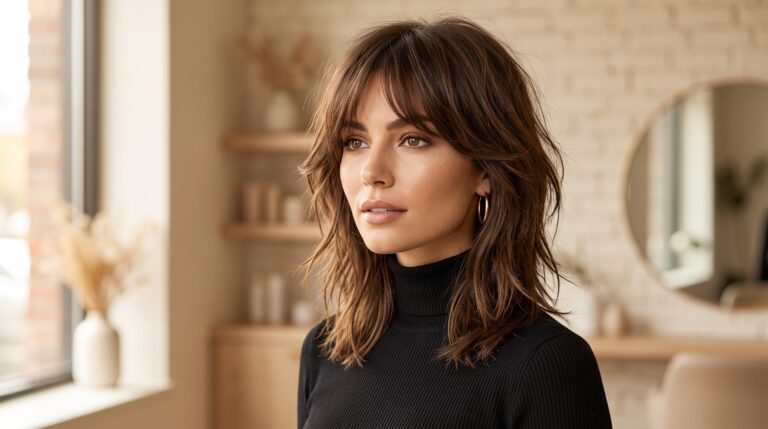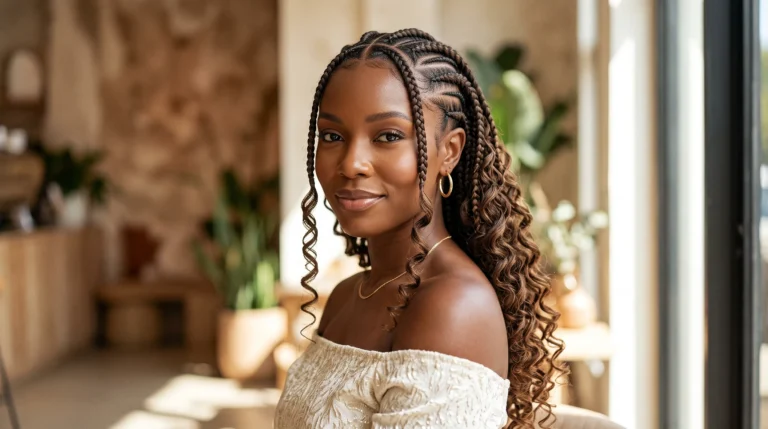
12 Wolf Cut Hairstyles That Are Ruling 2026

If there’s onewolf cut hairstyles that keeps refusing to fade quietly into the background, it’s the wolf cut. Born from the collision of two throwback icons — the shag and the mullet — this cut has become the go-to choice for anyone who wants hair that looks lived-in, a little rebellious, and endlessly easy to style. It isn’t a single fixed shape either. It’s more of a framework: choppy layers piled up at the crown, a longer and heavier tail at the back, and pieces around the face that can be blunt, wispy, curtain-style, or swept to one side depending on what you’re after.
Part of why the wolf cut has stuck around for so long is that it doesn’t discriminate. Straight hair, curly hair, fine hair, thick hair — there’s a version that works. And because the whole point of the cut is texture and movement rather than a sleek, uniform finish, it tends to forgive bad hair days instead of punishing them. Below are twelve ways to wear it, along with some real-world advice on keeping each one looking sharp between salon visits.
The cut’s rise also has a lot to do with how it photographs and moves on camera. Short-form video made choppy, high-volume layering look effortless in a way that older, more structured cuts never quite managed, and that visibility turned a once-niche throwback into something stylists now hear requested by name almost every week. It also helps that the wolf cut isn’t tied to one gender or one age group. Teenagers wear it as a low-commitment way to try something edgier, while people further along in their haircare journey use it to add volume and movement to hair that’s started to feel flat or predictable. Because the shape is built entirely around layering rather than length, it also tends to grow out more gracefully than a lot of trend cuts — the choppy sections simply blend further down as your hair grows, instead of turning into an obvious, awkward stage.
For a longer, softer version of the trend, explore these long wolf cuts.
Who a Wolf Cut Actually Suits
One of the more persistent myths about the wolf cut is that it only works on thick, wavy hair. In reality, the technique is adaptable enough to flatter most hair types and face shapes, provided the layering and length are adjusted to fit. Round and oval faces tend to have the easiest time with it, since the face-framing pieces can be shaped to add angles. Square and heart-shaped faces do well with softer, curtain-style framing that rounds out sharper features. If your hair is naturally fine or thin, a stylist can concentrate the heaviest layering higher up, near the crown, so the cut reads as full rather than sparse. Thicker or coarser hair, on the other hand, usually needs more aggressive thinning through the mid-lengths so the layers don’t bulk up into a triangle shape instead of a soft, tapered one.
Wolf Cut Hairstyles: 12 Ways to Wear the Trend
Think of this section as your lookbook. Every style below is a variation on the same wolf cut foundation, adjusted through bangs, color, length, or texture to fit a different mood or hair type.
1. Curtain Bangs Wolf Cut

This version softens the wolf cut’s usual edge by adding curtain bangs that part down the middle and sweep away from the face. Paired with shorter layers up top and longer pieces falling toward the chin, it creates a shape that flatters almost every face because it draws attention to the eyes and cheekbones without hiding them. To style, rough-dry with a round brush to coax the bangs into a soft curve, then run a light mousse through the roots for lift. A flexible-hold spray locks it in without turning it stiff, so it still moves the way a wolf cut should.
2. Feathered Shag Wolf Cut

Here the layers are cut and blow-dried to feather outward rather than lie flat, giving the whole style a windswept, almost vintage feel. It leans into the “undone” side of the wolf cut, with layers starting around cheekbone height and cascading down toward the nape. A sea salt or texture spray scrunched through damp hair brings out grit and separation, which is really the whole point here. It suits straight, wavy, and gently curly hair equally well, especially in the medium-to-long range.
3. Undercut Wolf Cut
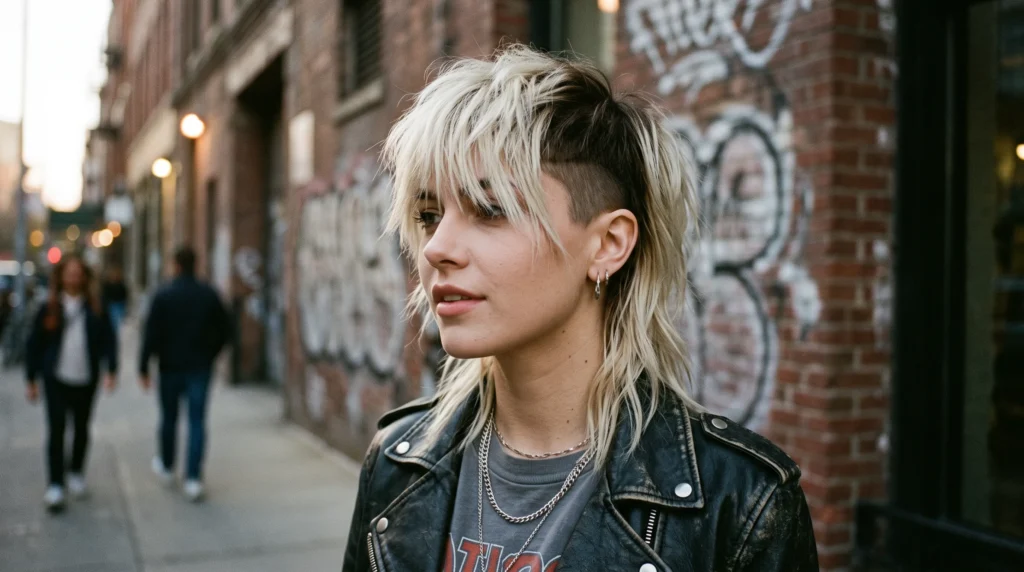
For anyone who wants their wolf cut to read as a bit more punk than pretty, an undercut at the nape or along one side does the trick. It exposes the shape of the head and creates sharp contrast against the longer, layered top — a look that gets even more striking with a bold or contrasting color on top. Because the shaved section grows out fast, plan on a trim every three to four weeks to keep the line crisp, while the longer layers up top can be reshaped with a matte paste between cuts.
4. Beach Wave Wolf Cut

This is the wolf cut’s most relaxed cousin, built for anyone chasing that just-back-from-the-coast look. Layers are cut to mimic the natural roll of a wave, so once you add a curl cream to damp hair and let it air-dry (or gently diffuse it), the texture does most of the work. A drop of light oil on the ends keeps flyaways under control without weighing the waves down. It’s especially pretty with balayage, since the lighter pieces catch the light as the waves move.
5. Side-Swept Wolf Cut
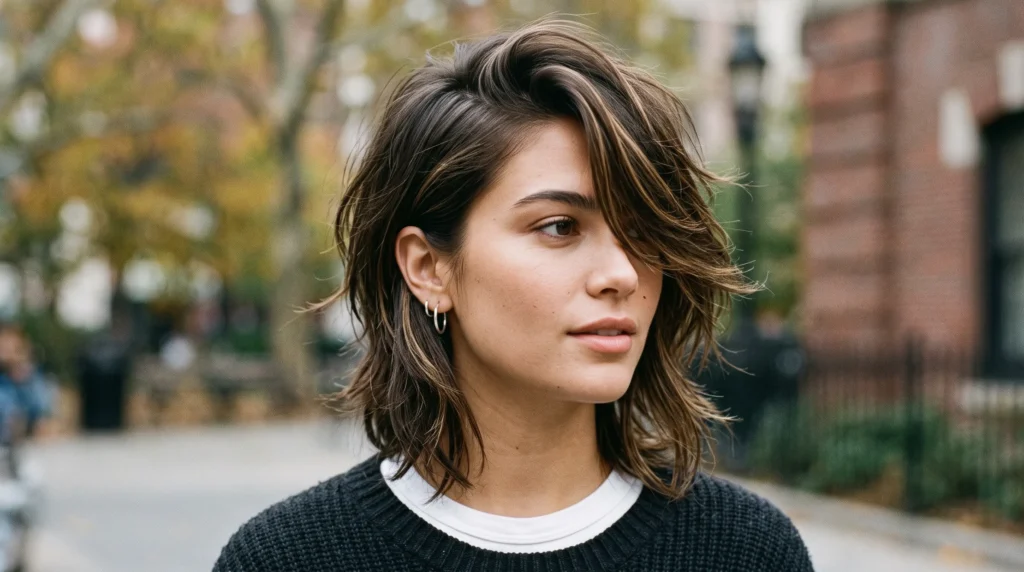
Instead of layers falling evenly on both sides, this version pushes length across one side of the face for a more dramatic, asymmetrical line. Combined with an off-center part, it adds a sense of motion even when your hair is sitting still, and it’s particularly good at drawing focus toward the jawline. Blow-dry with a round brush in the direction of the sweep, then set with a light-hold spray so it keeps its shape through the day.
6. Blunt Fringe Wolf Cut
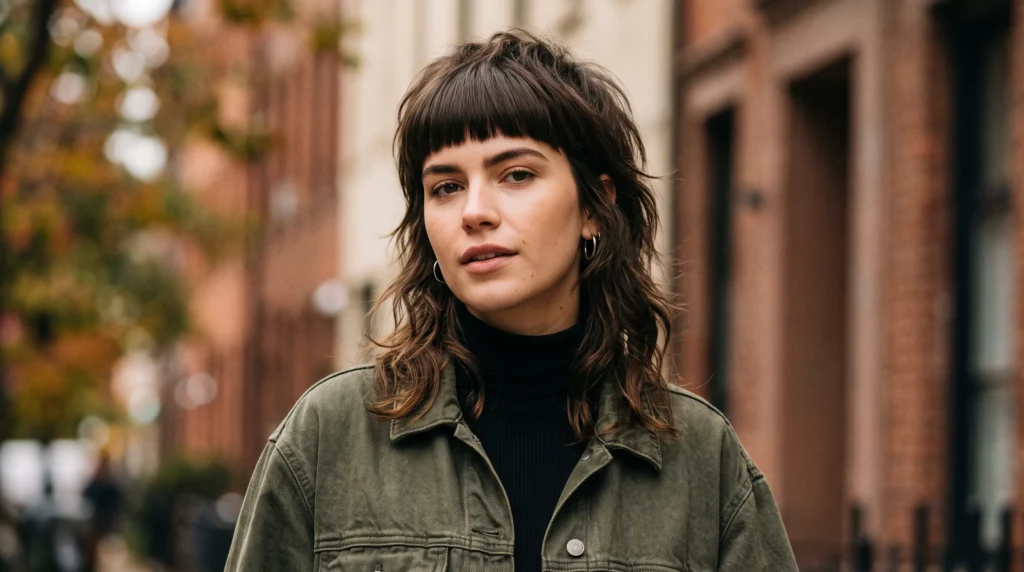
Pairing a wolf cut with a straight-across, blunt fringe creates an interesting push-and-pull: the fringe is crisp and deliberate while the rest of the cut stays loose and choppy. It’s a strong, graphic look that works best with hair that isn’t too fine, since the fringe needs some density to read as bold rather than wispy. Smooth the fringe with a light serum and keep it trimmed every four to six weeks so it doesn’t lose its clean edge.
7. Gradient Wolf Cut

This take plays with proportion — longer pieces framing the front of the face that gradually shorten toward a cropped, textured nape. The result is a lot of visible depth, since you can actually see the layering happen as your eye moves from front to back. It works best on straight or slightly wavy hair, styled with a volumizing mousse at the roots and finished with a light-hold spray so the shorter layers don’t go flat.
8. Curly Wolf Cut
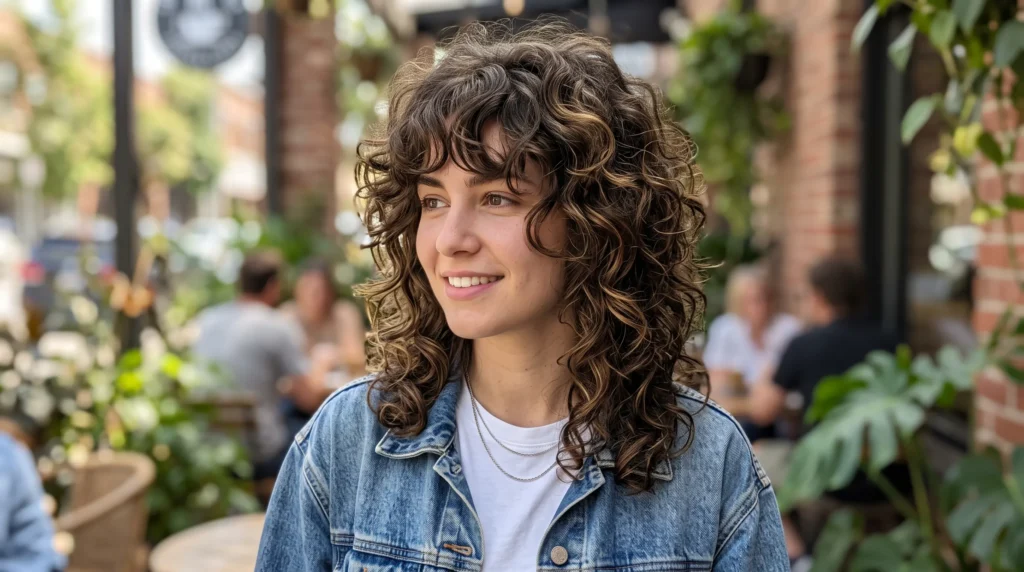
Curls and the wolf cut were made for each other — the layering technique naturally works with a curl’s shape instead of fighting it. Shorter pieces around the face keep curls from swallowing your features, while length is preserved through the back and sides to maintain volume and bounce. A curl-defining cream applied to soaking wet hair, followed by air-drying or diffusing, keeps ringlets defined and frizz in check.
9. Peekaboo Color Wolf Cut

For people who want color without fully committing to it, peekaboo highlights hidden underneath the top layer of a wolf cut are a clever compromise. Pastels, brights, or anything in between can peek through as your hair moves, giving a flash of color that’s easy to hide for work and easy to show off everywhere else. Because the color sits close to the scalp, it does fade with washing, so a color-safe shampoo and touch-ups every six to eight weeks keep it looking fresh.
10. Pixie Wolf Cut

This hybrid takes the cropped sides and back of a pixie cut and adds height and texture on top, borrowed straight from the wolf cut’s playbook. It’s one of the lowest-maintenance versions on this list — a texturizing spray worked through with your fingers is often all it needs. Because the cut is short all over, keep up with trims roughly every six weeks so the shape doesn’t lose its definition.
11. Spiky Wolf Cut
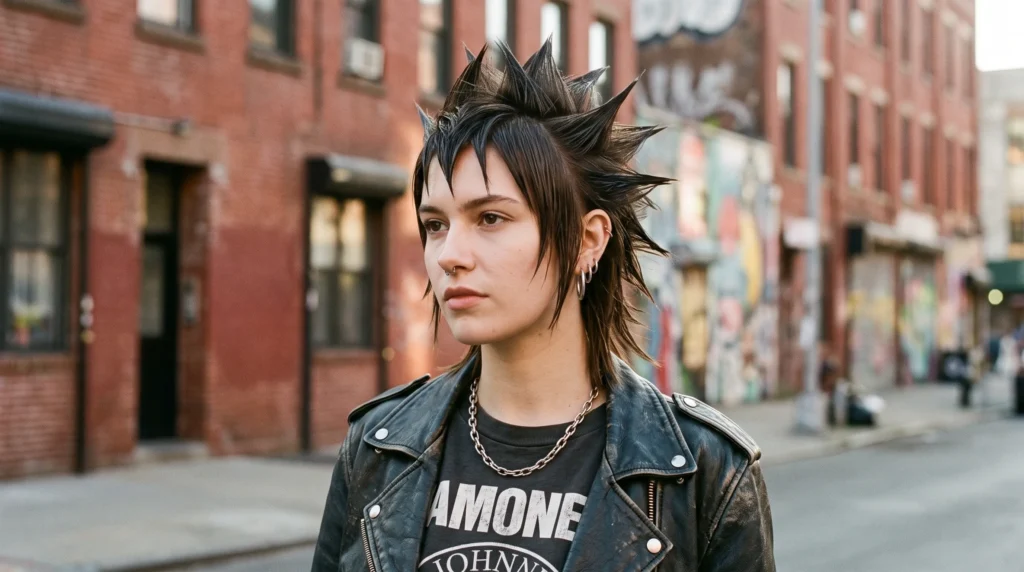
Leaning hard into the wolf cut’s punk-adjacent roots, this version uses a strong-hold gel or wax to push layers at the crown and sides into deliberate, pointed spikes. It reads more structured and more “styled” than most wolf cut variations, which makes it a good option for anyone who wants the shape without the intentionally messy texture. It suits straight hair best, since the spikes hold their form more easily without added curl or wave.
12. Straight Wolf Mullet

The most polished member of this whole family, the straight wolf mullet keeps hair sleek and glossy rather than tousled, with length concentrated at the back and sharply cut layers up front. A flat iron and a smoothing serum give it that glassy finish, while the graduated layering still nods to the wolf cut’s mullet DNA. It’s an easy way to wear the trend if your day-to-day style leans polished rather than grungy.
Keeping Any Wolf Cut Looking Its Best
However you wear it, a wolf cut lives or dies on the right products and a bit of routine upkeep.
- Texture sprays and sea salt mists bring out natural movement and are great for waves, curls, and anything meant to look undone.
- Matte paste or wax is your friend for spikier or more structured versions, since it holds shape without adding shine.
- Smoothing serum tames flyaways in sleeker takes like the straight wolf mullet, without flattening the layers underneath.
- Curl cream keeps curly and wavy versions defined instead of frizzy, especially when applied to soaking wet hair.
- Trims every six to eight weeks keep the layering, fringe, and any undercut looking intentional rather than grown-out.
- Color refreshes matter most for peekaboo or gradient color work, since faded pigment reads as dull rather than edgy.
Because the wolf cut is really a layering technique rather than one fixed look, there’s a lot of room to make it your own — softer and more romantic, sharp and punk-inspired, or somewhere comfortably in between. That flexibility, more than anything else, is why it’s stayed a favorite well past its initial viral moment.
How to Talk to Your Stylist Before You Cut
A wolf cut can go sideways fast if the layering isn’t communicated clearly, so it’s worth walking into the appointment with a plan rather than a single word. Bring reference photos, but be specific about which parts of each photo you actually want — the volume at the crown, the length of the fringe, the bluntness (or softness) of the face-framing pieces. It also helps to be upfront about your styling habits. If you’re not someone who blow-dries daily, ask your stylist to cut the layers so they still look intentional when air-dried, since a wolf cut that’s only ever been shown blown out with a round brush can look shapeless without heat styling.
It’s also worth discussing maintenance expectations before you sit down. Some versions, like the undercut or spiky takes, need trims every three to six weeks to stay sharp, while softer, longer variations can often stretch to eight or ten weeks between visits. Knowing that upfront avoids the disappointment of a cut that looked amazing on day one but lost its shape within a month because the upkeep schedule wasn’t realistic for your lifestyle.
Common Questions About the Wolf Cut
Does a wolf cut work on shorter hair? Yes — several of the styles above, like the pixie-wolf hybrid, are built specifically for shorter lengths. The layering technique scales down just as well as it scales up.
Will a wolf cut suit fine hair? It can, as long as the heaviest layering is concentrated near the crown rather than spread evenly throughout, which helps create the illusion of extra density.
How often does a wolf cut need touch-ups? Most versions hold their shape well for six to eight weeks, though styles with an undercut or a precise fringe usually need attention closer to every three to four weeks.
Can I try a wolf cut without committing fully? Some stylists recommend starting with a softer, longer version — closer to a modern shag — and gradually adding more choppy layers over a few appointments if you want to ease into the look rather than dive straight in.
For more expert-backed styling advice and additional wolf cut inspiration, Marie Claire’s beauty team has put together an in-depth guide worth checking out: 27 Wolf Cut Hairstyle Ideas for a Chic Shaggy Look.