Summer Blonde Hair Color Ideas: 15 Low-Maintenance Looks That Grow Out Beautifully
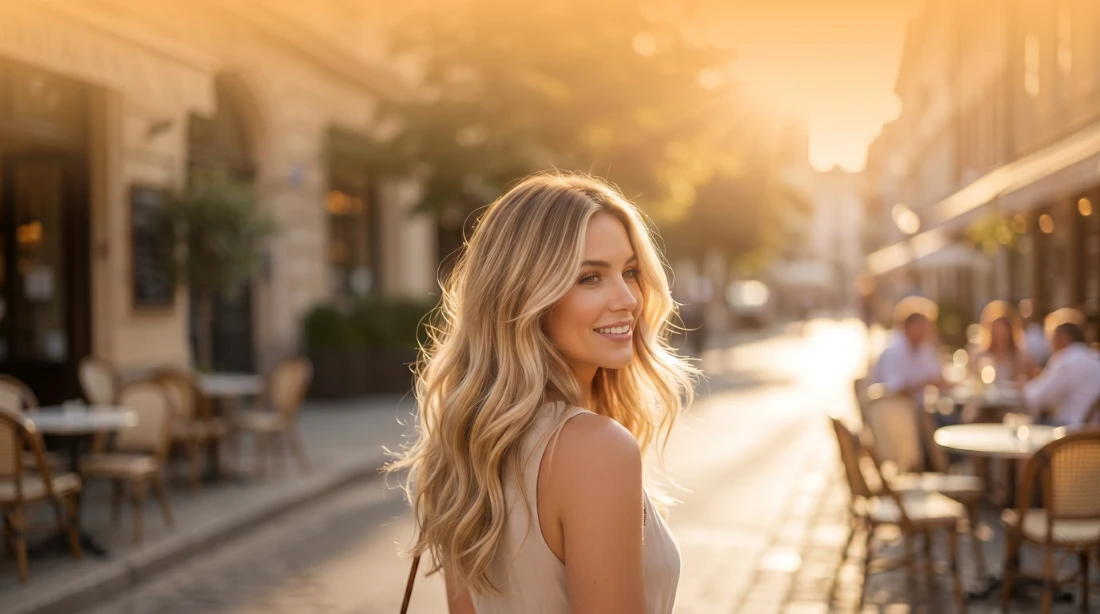
The most significant shift in blonde hair for summer 2026 isn’t about going lighter — it’s about going smarter.
The constant salon cycle that came with icy platinum, harsh money pieces, and aggressive root contrast is giving way to something considerably more liveable. Celebrity colorist Jess Gonzalez puts it plainly: “The goal is color that grows out beautifully and still feels polished months later.” Clients still want brightness around the face, but they’re no longer willing to be in the salon every six weeks to maintain it.
Celebrity hairstylist Bradley Leake, whose summer 2026 blonde predictions have been widely cited, describes the emerging approach as strategic highlighting rather than all-over bleach — color placed so the hair remains healthier by not being overprocessed, while still giving that expensive bright blonde effect without the upkeep.
The 15 Summer Blonde Hair Color Ideas below all follow that same logic: intentional placement, natural-looking grow-out, and a softness that looks just as good six weeks later as it does on day one.
Summer Blonde Hair Color Ideas: 15 Low-Maintenance Looks
1. Soft Rooted Vanilla Blonde
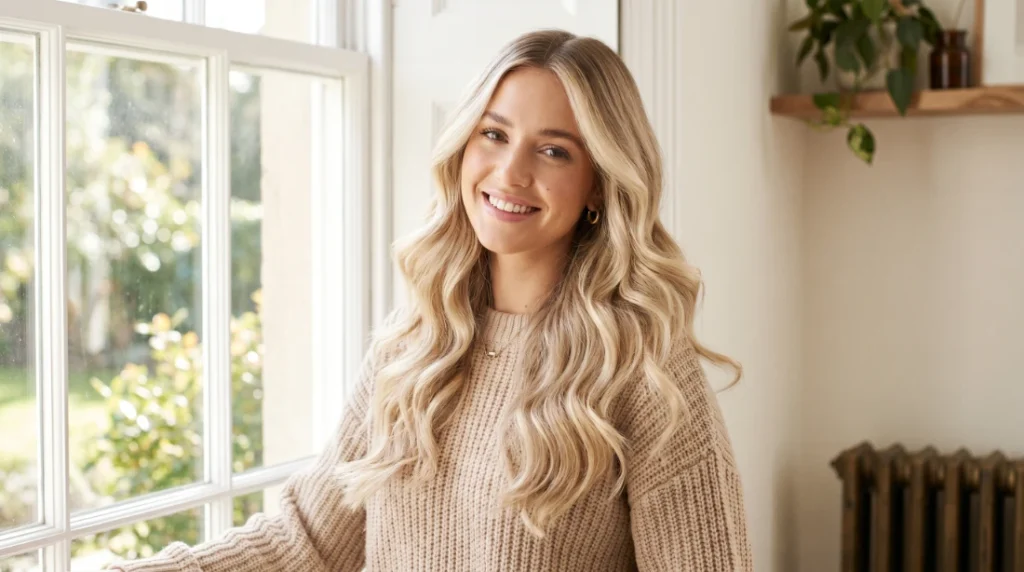
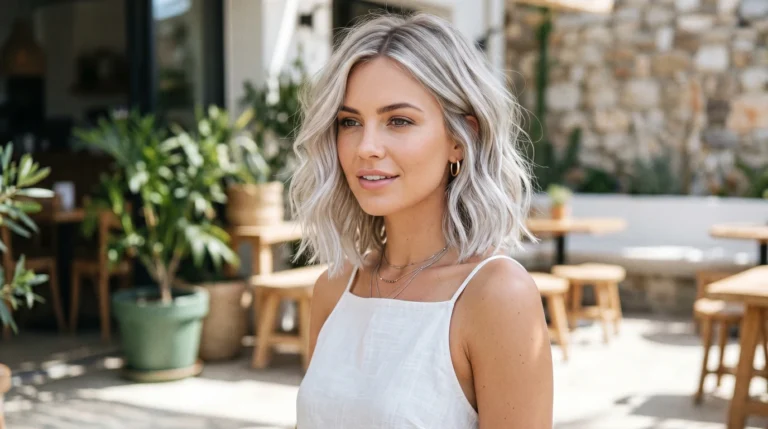
One of the most naturally balanced blondes available. The root is left slightly deeper but blends so gently into the vanilla tone that there’s no clear starting point — no harsh line, no obvious demarcation. The vanilla itself isn’t bright; it has a creamy softness that reflects light evenly rather than dramatically. As the hair grows, the transition continues to look intentional rather than neglected. This is what low-maintenance blonde actually looks like when it’s done properly.
Salon ask: “Vanilla blonde with a soft shadow root — no harsh contrast at the base.”
2. Melted Champagne Blonde
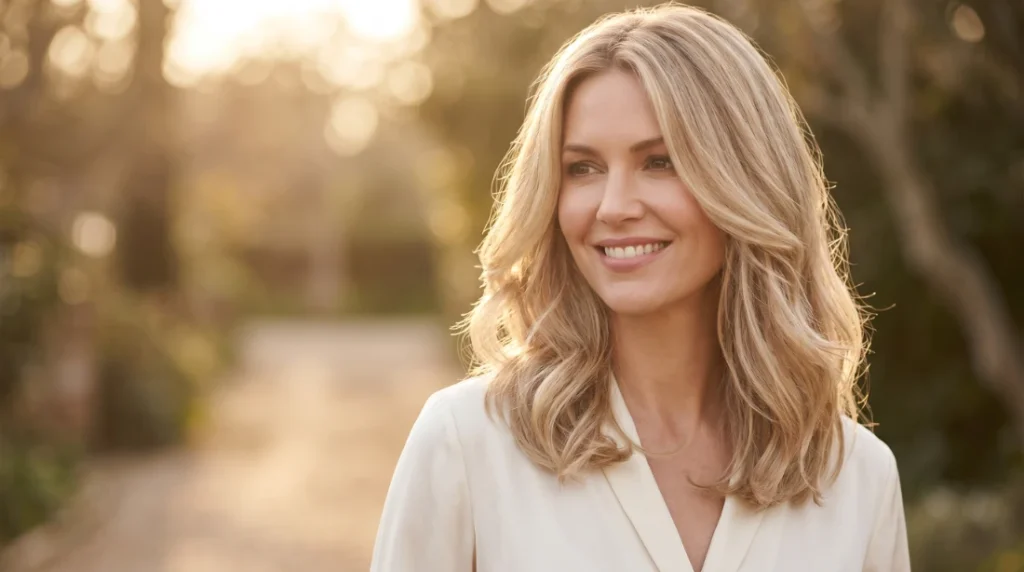
More fluid than most blondes — the champagne tone is melted through the hair so it moves with it rather than sitting on top. Some sections appear slightly lighter, others softer, depending on how the light hits. No flat, uniform coverage. The result is a polished look that doesn’t require heavy styling or frequent toning to maintain its dimension and depth.
Salon ask: “Melted champagne blonde — color melt technique, no foils, natural-looking transition.”
3. Sandy Root Blonde Blend
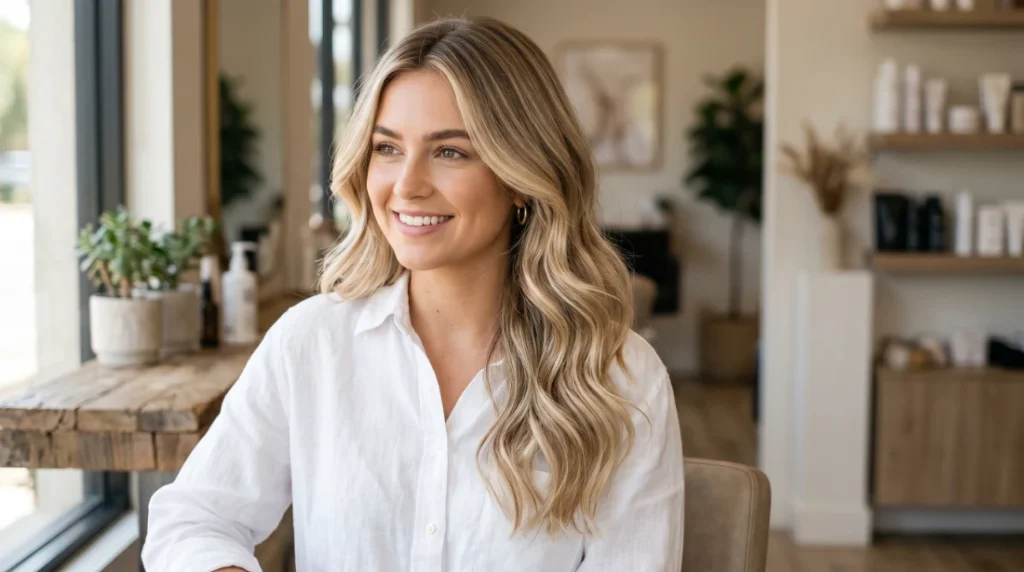
Instead of hiding the root, this makes it part of the overall look. The sandy tone near the roots blends gradually into lighter blonde, creating a seamless transition that means constant touch-ups are no longer necessary. The natural depth at the top handles the grow-out — as the hair grows, it remains soft and cohesive rather than developing a harsh line.
Salon ask: “Sandy root blend into lighter blonde — root depth stays, no abrupt contrast.”
4. Creamy Blonde With Soft Lowlights
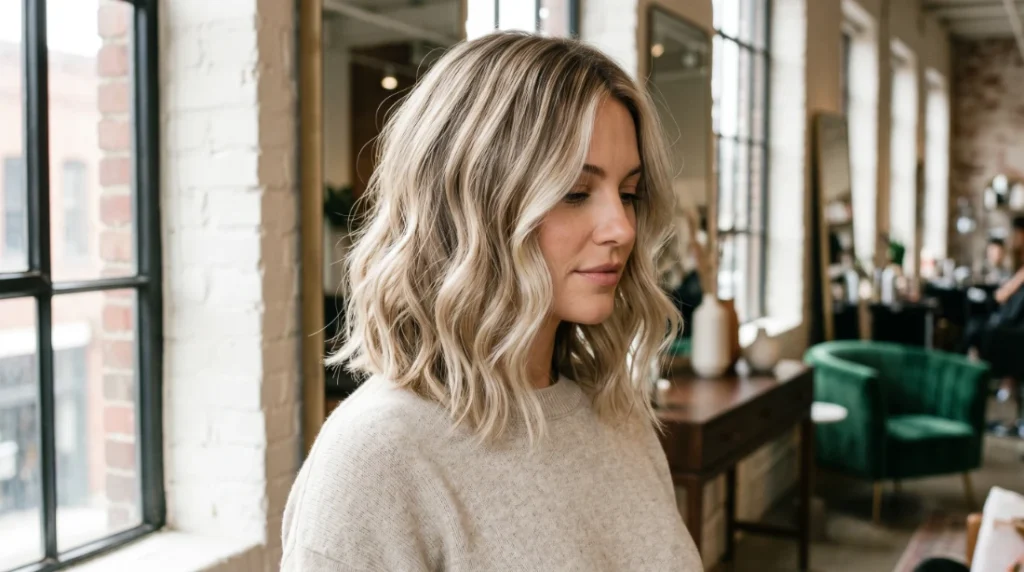
Rather than adding more lightness, this technique brings depth back into blonde hair. The lowlights are soft, slightly darker, and blended so well they don’t read as separate sections — they simply make the hair look fuller and more natural. The variation in tone creates movement, particularly on waves, and the result is considerably more natural-looking than a single flat blonde.
Salon ask: “Creamy blonde base with soft, blended lowlights — no visible contrast, just dimension.”
5. Honey Butter Blonde
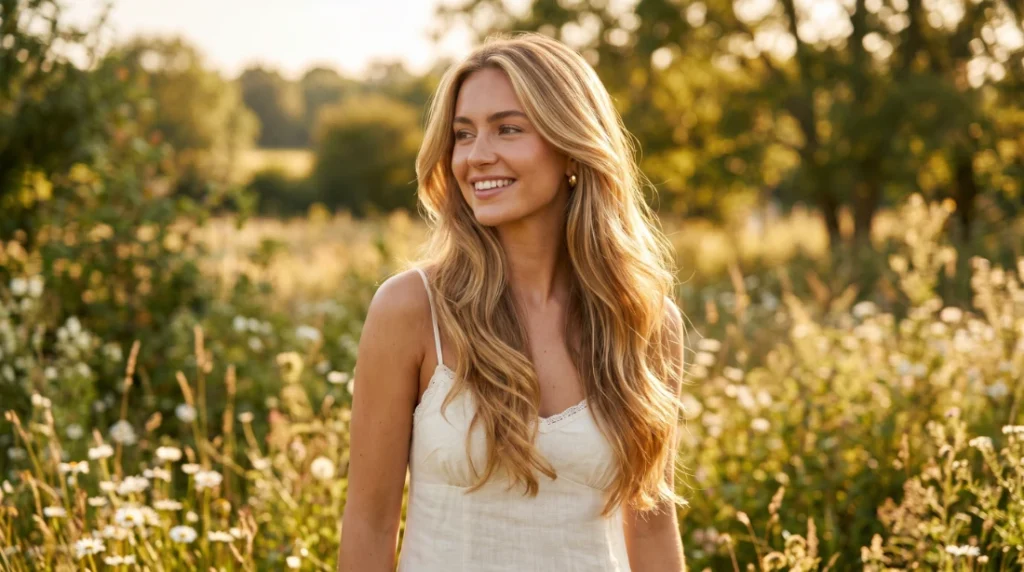
That perfect middle ground between golden and creamy — warm, but not overly yellow. The honey adds softness while the buttery tone keeps everything smooth and even. This shade reflects sunlight in a way that gives the hair a genuinely healthy-looking glow without any artificial quality. It’s one of those colors where the hair simply looks better, not obviously different.
Salon ask: “Honey butter blonde — warm golden tone, creamy finish, no platinum or silver toning.”
6. Sun-Faded Blonde Layers
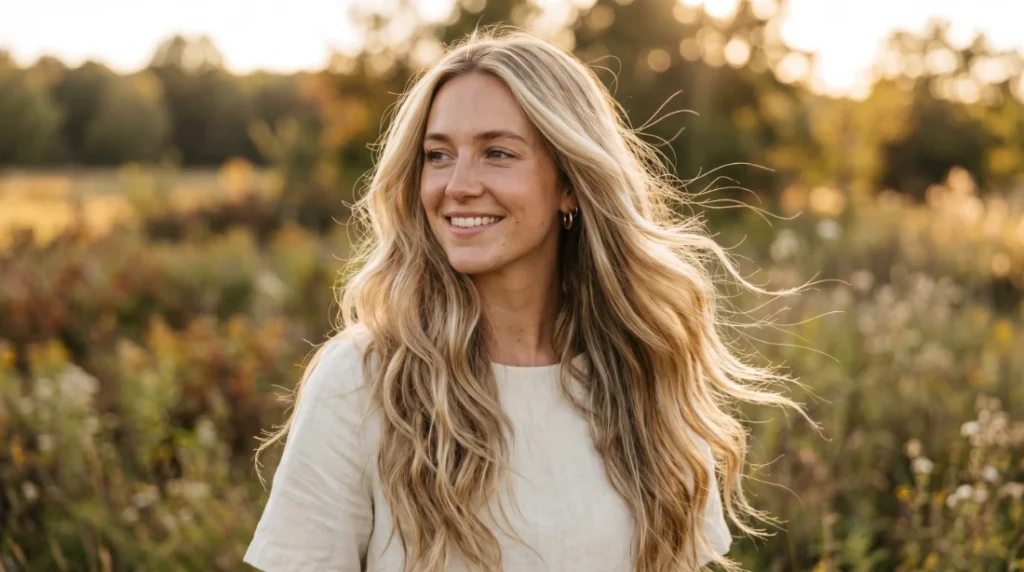
Designed to look like the hair naturally lightened over time rather than through an obvious salon appointment. The lighter pieces are placed through the layers rather than evenly across the surface — the color only really shows when the hair moves. It feels lived-in from day one, which means it continues to look appropriate rather than overgrown as weeks pass.
Salon ask: “Sun-faded layer blonde — lighter pieces placed within the layers, not evenly distributed.”
7. Golden Shadow Blonde
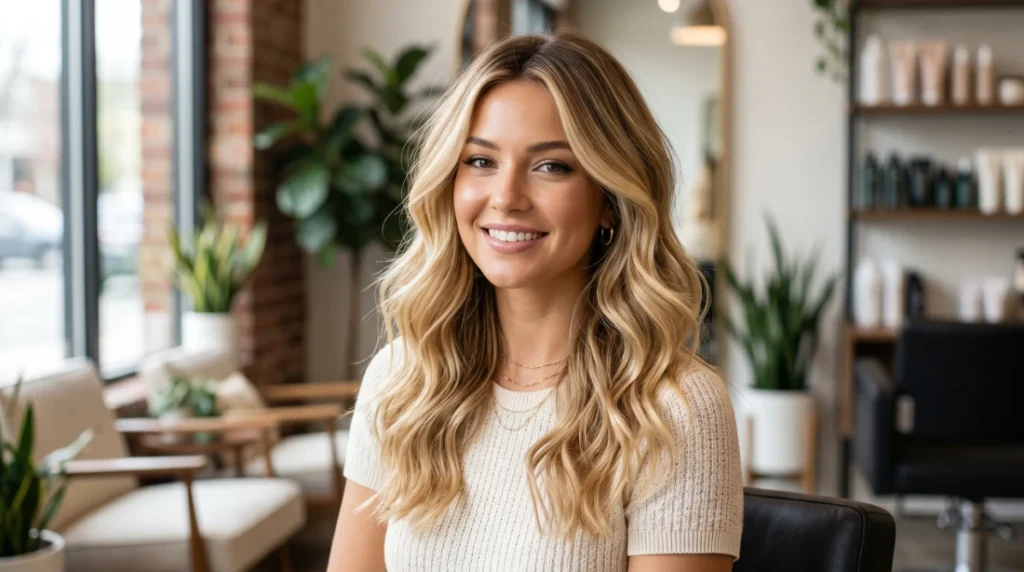
A deeper root with soft golden tones starting just below — the transition is gradual enough that there’s no sharp contrast at any point. One of the most forgiving approaches available: as the hair grows, the shadow effect continues to look intentional. Minimal touch-up appointments, consistently polished result.
Salon ask: “Golden shadow root into warm blonde — gradual transition, no stark contrast.”
8. Buttercream Blonde Balayage
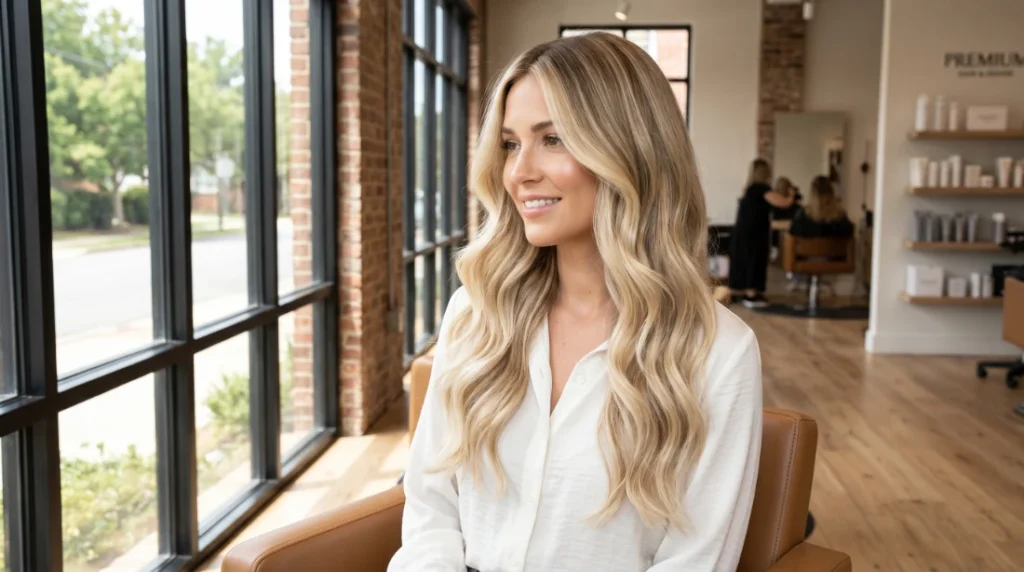
A softer, more blended version of balayage that doesn’t rely on obvious placement. The buttercream tone is diffused so gently through the hair that there are no clear starting points or visible sections — just color that moves naturally from one tone to another. Because there’s no hard line, the grow-out is exceptionally smooth. This stays polished without constant maintenance.
Salon ask: “Buttercream balayage — very soft placement, diffused finish, no obvious highlight sections.”
9. Subtle Apricot Blonde
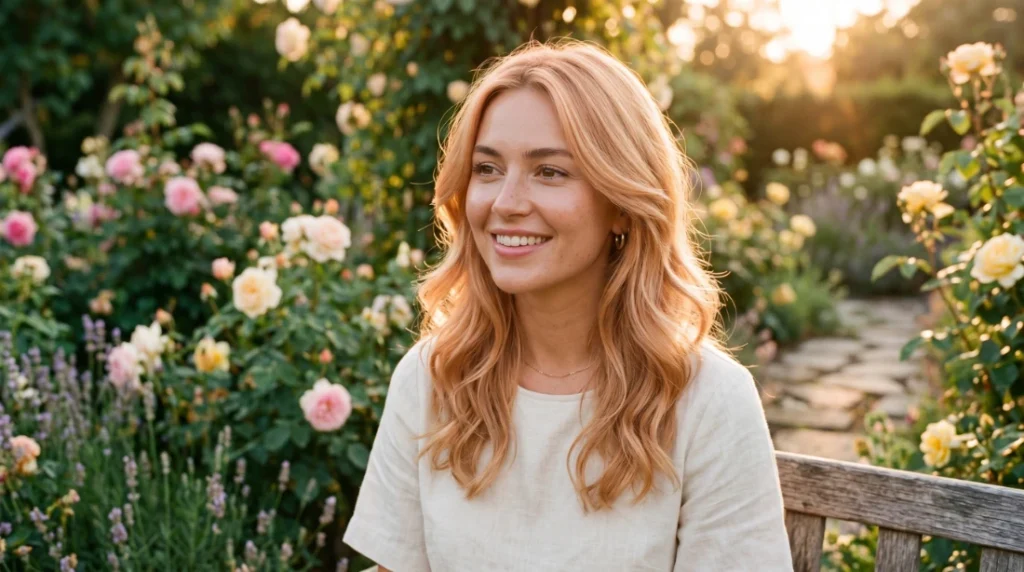
A slight apricot tint layered over blonde hair that becomes more visible in sunlight and softer indoors. The warmth is never strong or overpowering — just enough to add interest and prevent the blonde from looking flat. The most natural-looking application of warmth in the summer blonde lineup, and one that ages gracefully as it softens between appointments.
Salon ask: “Subtle apricot tint over blonde base — very soft, visible in sunlight only, not copper or orange.”
10. Rooted Ice Cream Blonde
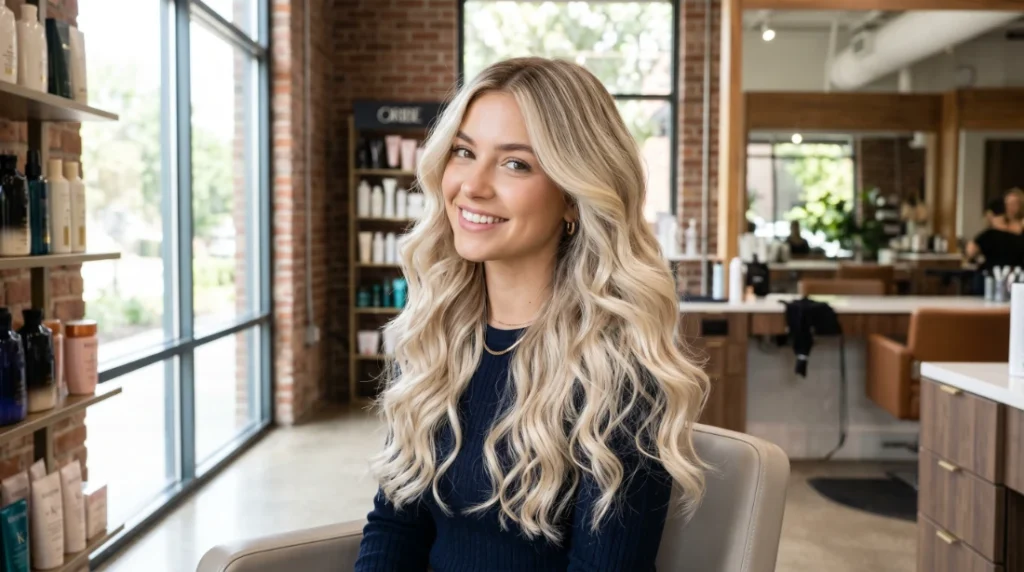
A slightly deeper root with a soft, creamy blonde through the lengths — the transition is gradual enough that the root doesn’t feel separate from the rest of the hair. It blends naturally rather than appearing styled. This gives the brightness of a lighter blonde without the maintenance commitment, because the darker root handles the grow-out seamlessly.
Salon ask: “Rooted ice cream blonde — deeper root, soft creamy blonde lengths, seamless blend.”
11. Champagne Beige Babylights
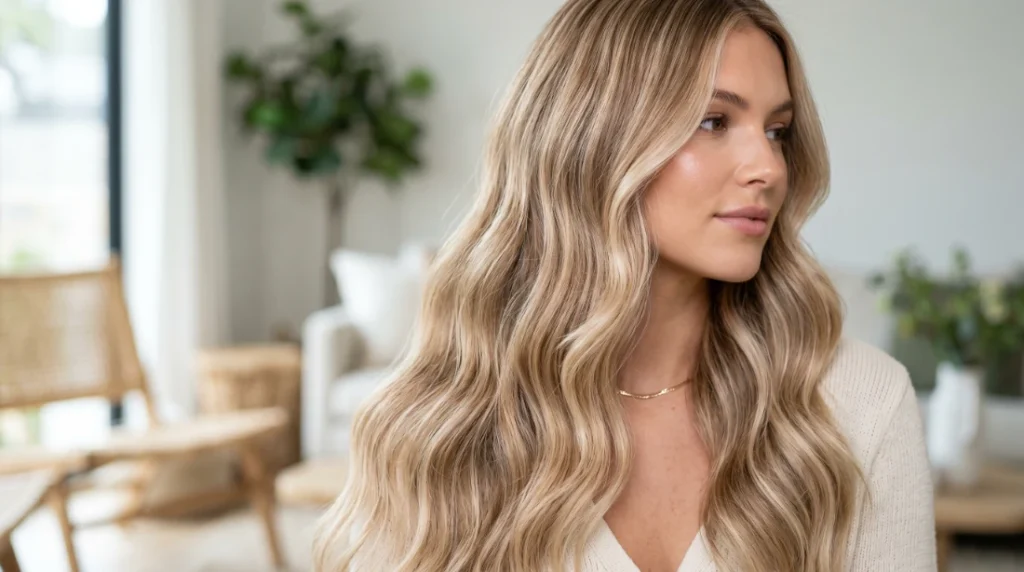
Extremely fine highlights placed close together so they blend completely into the base rather than reading as individual strands. The effect is an overall softness and brightness across the hair rather than visible highlighted sections. This doesn’t look like highlighted hair — it looks like lighter, more refined blonde, which makes it one of the easiest and most natural-looking techniques to maintain.
Salon ask: “Champagne beige babylights — very fine placement, fully blended, no visible highlight sections.”
12. Neutral Cream Blonde
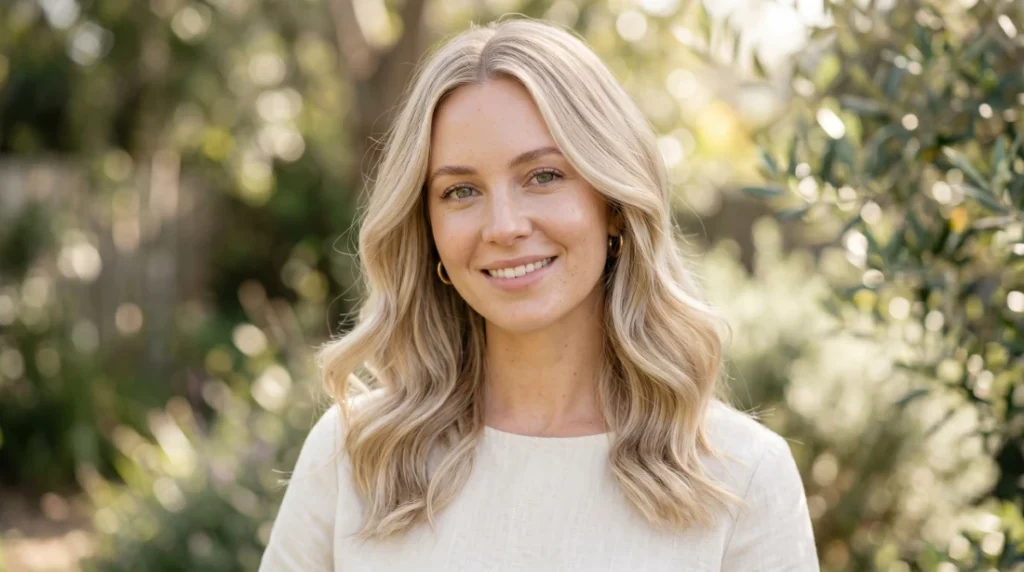
Sitting right in the middle of warm and cool tones — this shade doesn’t lean strongly in either direction, which makes it consistently balanced across different lighting conditions. The color fades evenly over time without shifting toward brassiness or ashiness, which is precisely what makes it one of the lowest-maintenance blonde options. No toning anxiety, no surprise color shifts.
Salon ask: “Neutral cream blonde — balanced, not too warm or too cool, even fade over time.”
13. Blended Vanilla Beige Blonde
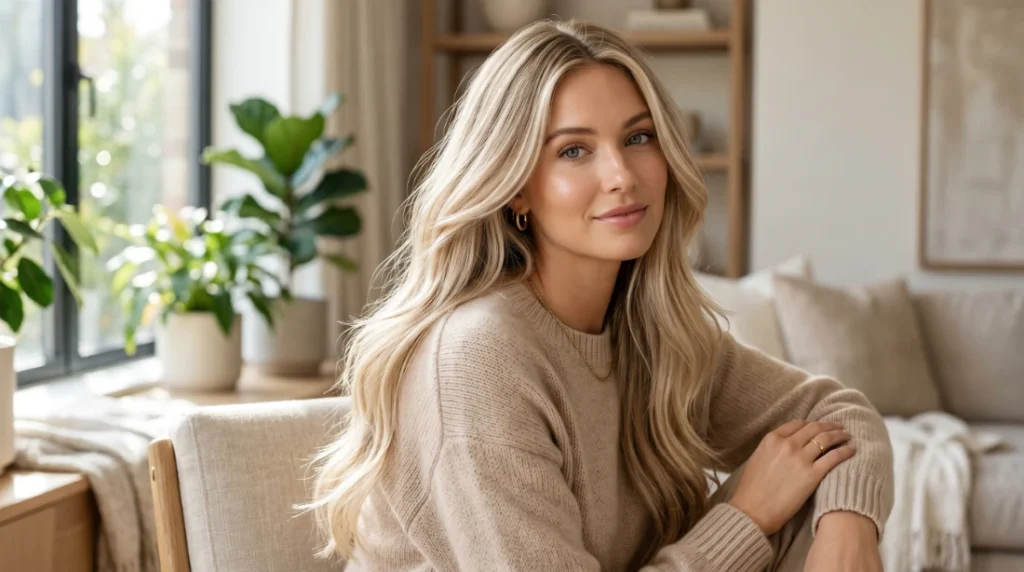
The combination of vanilla and beige tones creates a color that feels smoothly layered without any obvious contrast. The gentle variation adds depth without the blonde looking heavily highlighted or heavily processed. Stays soft and even between appointments — no harsh lines to worry about as the hair grows out.
Salon ask: “Vanilla beige blonde — gentle tonal variation, soft depth, no obvious highlights.”
14. Light Sand Melt Blonde
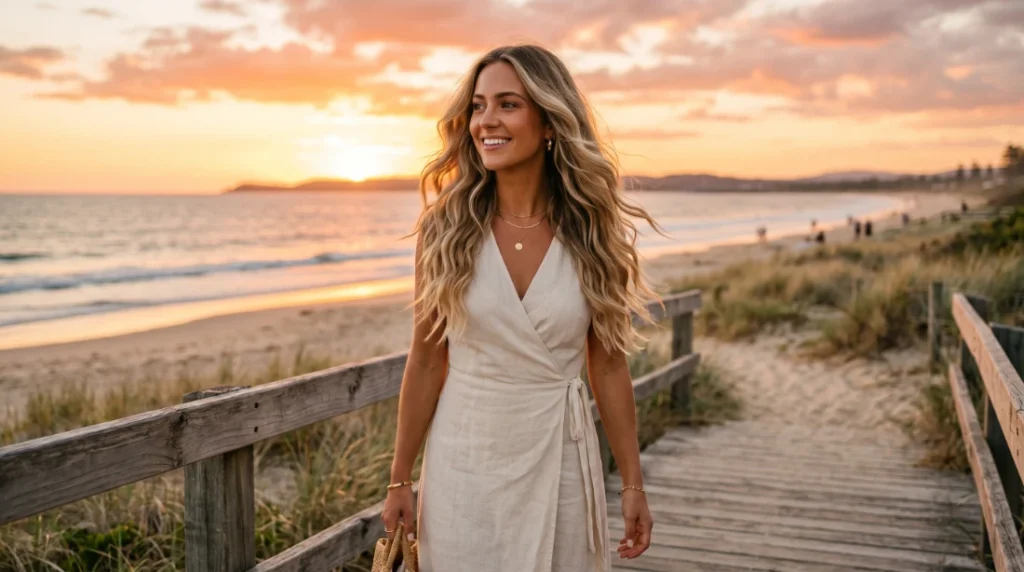
One of the most naturally seamless transitions in this lineup. The roots stay slightly deeper in a soft sandy tone, and the rest of the hair melts into a lighter version of the same shade. There’s no clear break between the two — it feels like a gradual shift rather than applied color. As the hair grows, the blend continues to look intentional rather than developing the harsh root line that makes blonde feel high-maintenance.
Salon ask: “Light sand melt — shadow root in sandy tone melting into lighter blonde, no contrast.”
15. Airy Blonde Layers
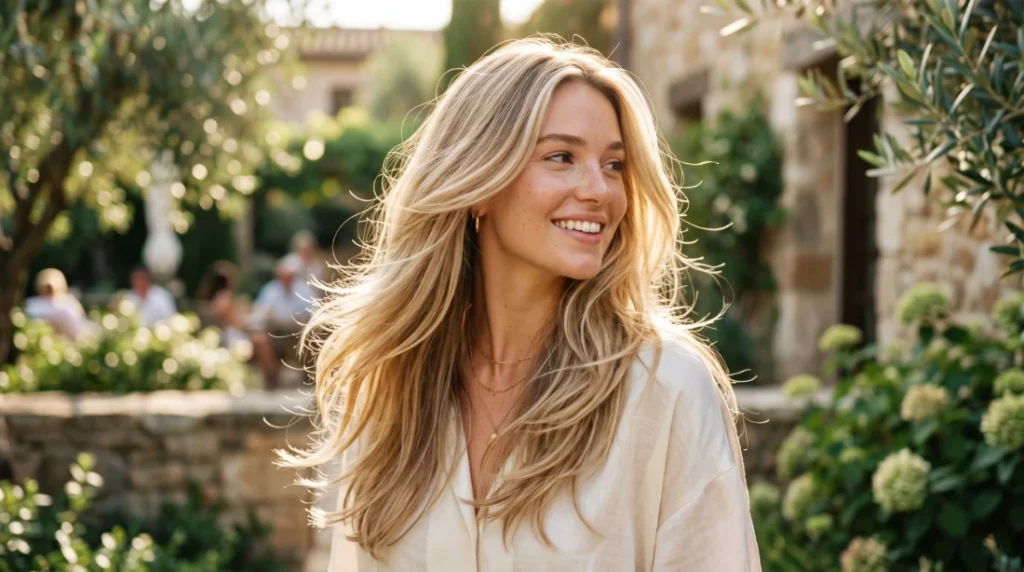
Less about tone and more about placement — the lighter pieces are added only where the layers fall, so the color becomes visible when the hair moves and recedes when it’s still. At first glance it looks like naturally blonde hair. In movement, dimension appears. That combination of subtlety and interest is exactly what makes this feel genuinely effortless and wearable through an entire summer without a single touch-up.
Salon ask: “Blonde placed within the layers only — color reveals itself in movement, not at rest.”
Why Low-Maintenance Blonde Works Better in Summer
The practical reality of summer — swimming, sun exposure, humidity, and a packed schedule — makes high-maintenance color genuinely difficult to preserve. Frequent salon visits for toning or root touch-ups become harder to schedule, and aggressive bleach-heavy color shows its maintenance demands more obviously during summer than any other season.
Every technique above is chosen because the grow-out is part of the design. The root depth, the diffused placement, the seamless color melts — these all work with natural hair growth rather than against it. The result is blonde that looks intentional for months, not weeks.