11 Stunning Purple Hair Ideas to Inspire Your Next Look
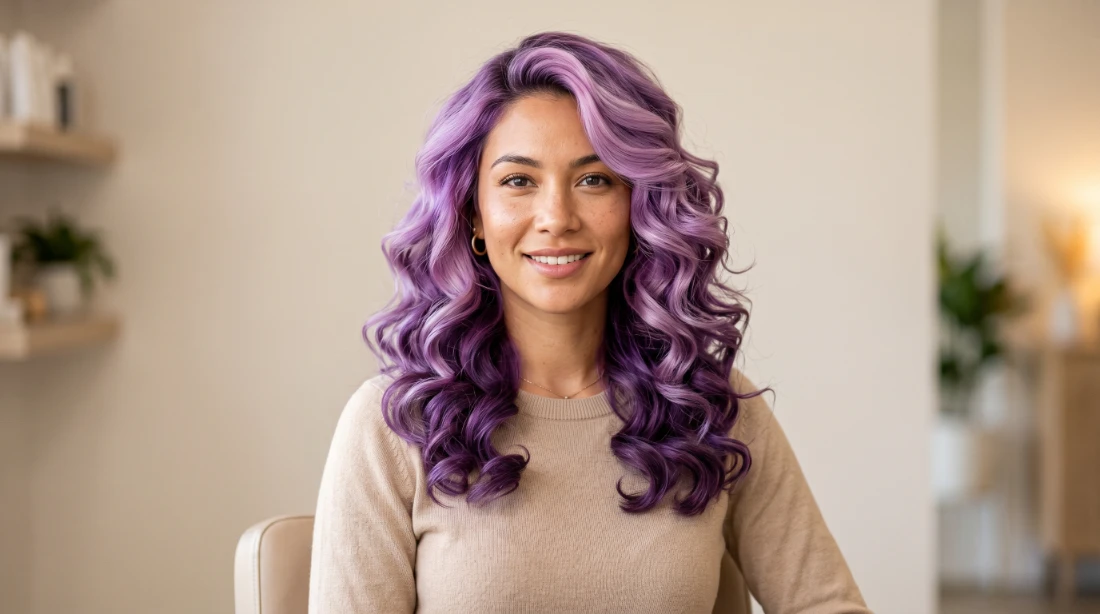
Purple hair has never really been just a trend that comes and goes — it’s closer to a permanent fixture in the world of self-expression through color. Purple hair ideas span an enormous range, from the faintest pastel lilac tint to a saturated, almost-black eggplant, and that range is exactly what makes the color so adaptable. Whatever level of boldness you’re after, there’s a version of purple built for it.
What follows is a full guide: eleven distinct purple hair ideas, what each one communicates, how to actually get it done, and how to keep it looking good once you leave the salon chair.
Why Purple Hair Keeps Coming Back
- Flattering across the board: Purple sits comfortably across nearly every skin tone, which is rare for a non-natural hair color and a big part of why it’s stayed popular for so long.
- More than just a look: The color carries genuine meaning — associations with creativity, individuality, and a refusal to blend in that resonate with a lot of people choosing it.
- Memorable without being predictable: It draws attention without feeling overly familiar or expected, the way blonde or red sometimes can, which keeps it feeling fresh even after years of popularity.
What Purple Hair Tends to Say About You
- Creativity and imagination: Purple has long been tied to artistic and inventive thinking, making it a natural choice for anyone who leans creative in how they live or work.
- Individuality: Choosing a color outside the natural spectrum is its own small act of nonconformity — purple in particular tends to read as deliberate rather than accidental.
- Confidence: Bold hair color is genuinely linked to a boost in confidence for a lot of people who wear it — there’s something about a striking color choice that changes how you carry yourself.
11 Purple Hair Ideas, From Subtle to Bold
1. Wisteria Whisper
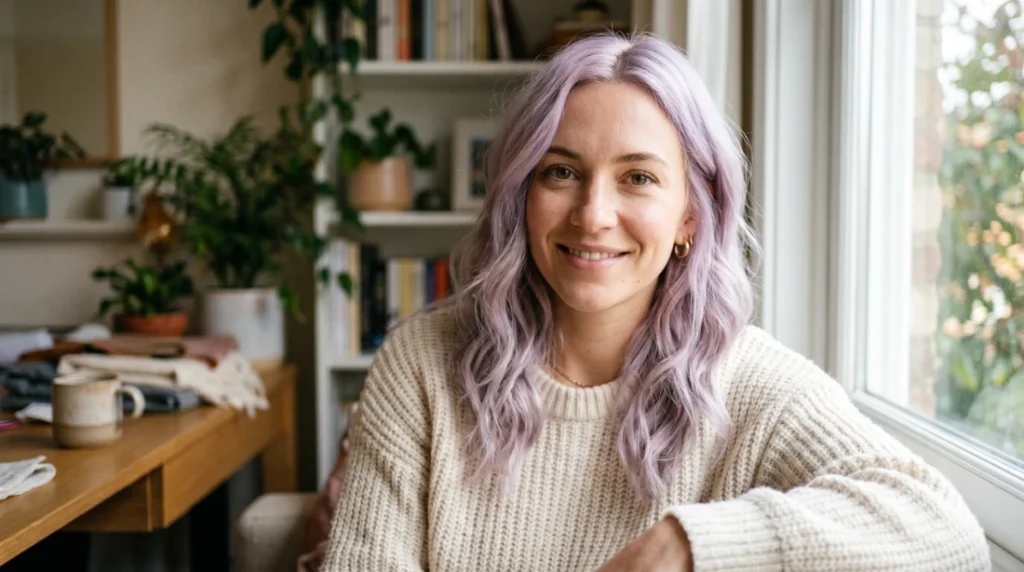
A pale, barely-there lilac that reads more like a soft tint than a full color change — gentle enough to feel wearable every day, distinct enough to be unmistakably purple in the right light.
Pro Tip: A weekly toning mask in a cool violet shade keeps this pale tint from washing out into a dull, indistinct grey within a few weeks.
2. Deep Amethyst
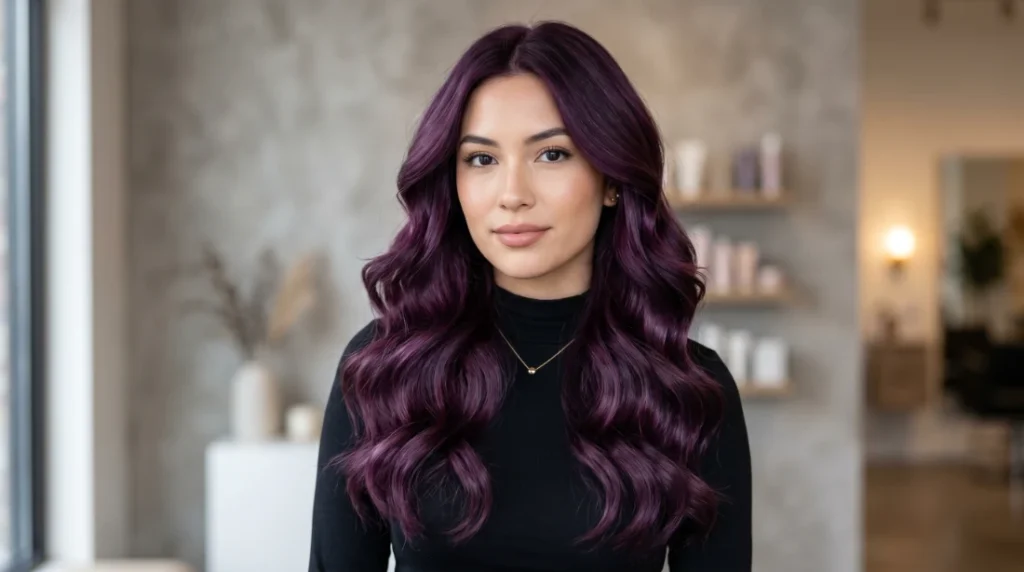
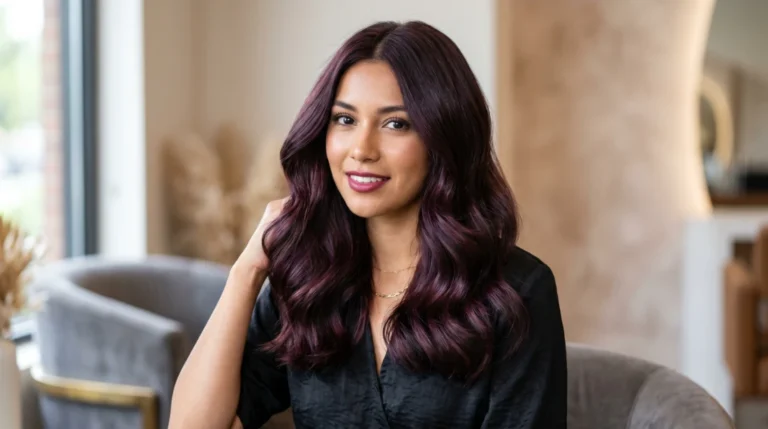
A rich, saturated jewel-toned purple with real depth and shine — the kind of color that looks almost gemstone-like under bright light and quietly luminous in shade.
Pro Tip: Curling the hair in loose waves brings out the color’s depth far more than straight styling does, since each wave catches and reflects light differently.
3. Hand-Painted Violet Balayage
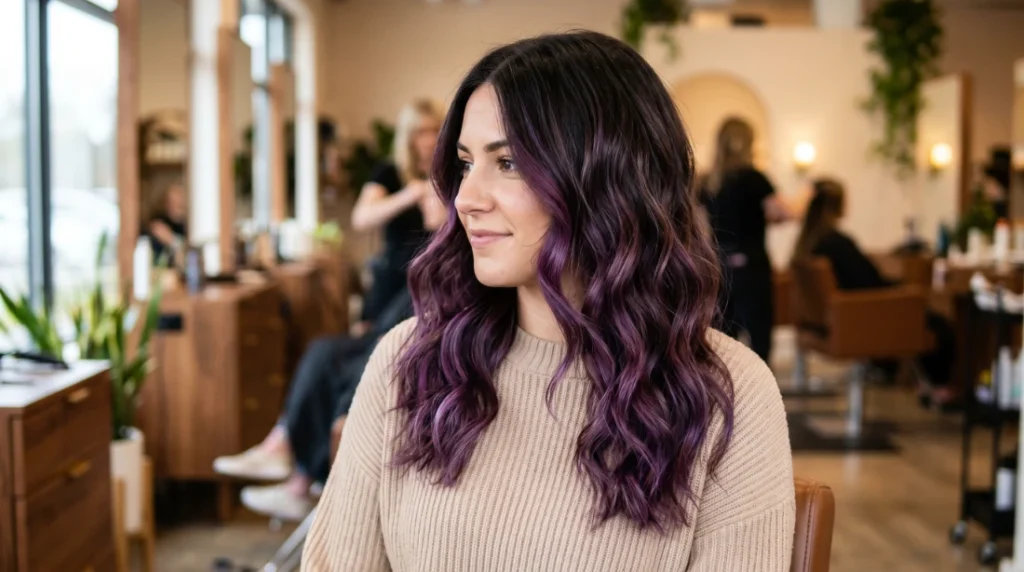
Freehand-painted violet pieces swept through a darker base, creating a soft, naturally graduated effect rather than a flat, all-over color block.
Pro Tip: A soft root smudge in a slightly deeper violet blends new growth seamlessly, stretching the time between full color appointments considerably.
4. Threaded Plum Highlights
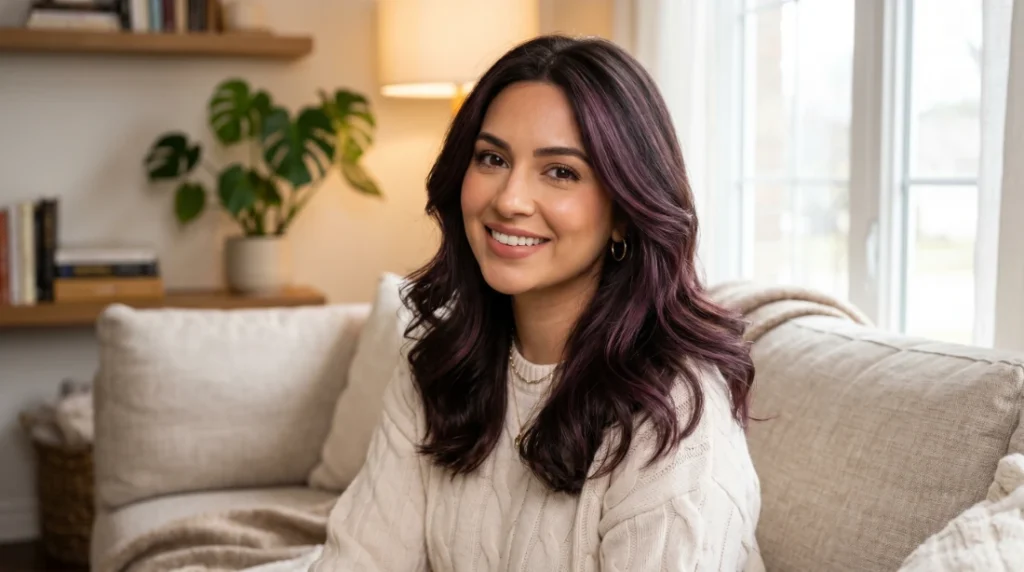
Fine, carefully placed plum-purple highlights woven through a natural brunette base — present and noticeable without overwhelming the rest of the hair.
Pro Tip: A clear glossing treatment every six to eight weeks keeps the fine highlighted pieces shining and prevents them from looking dull against the darker base.
5. Oceanic Purple Fade
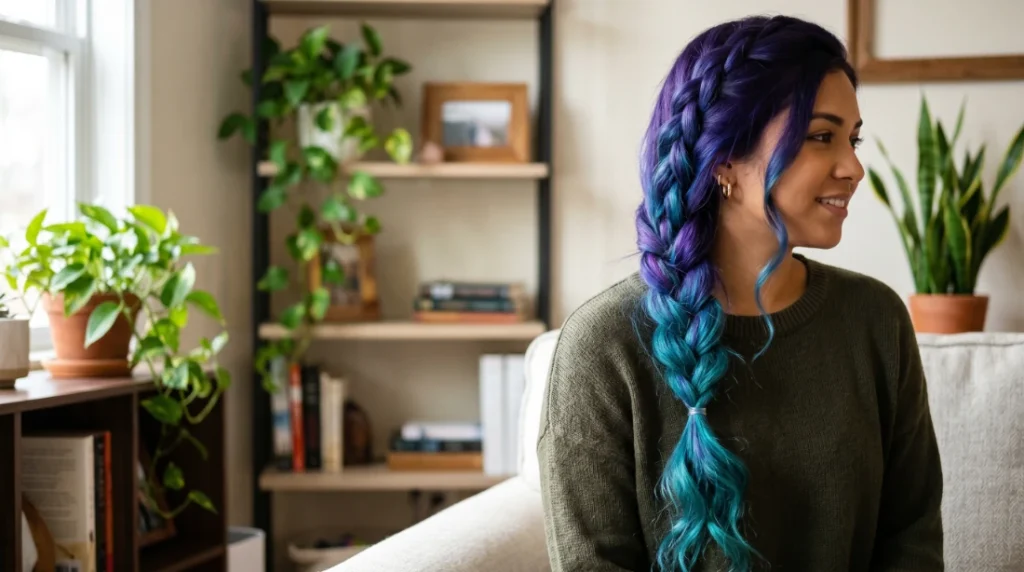
A flowing blend of purple, teal, and deep blue tones that moves through the hair like shifting water — best suited to longer length where the gradient has room to unfold.
Pro Tip: Loose braids or twisted updos display this multi-tonal blend beautifully, letting each section of color peek through in an organized way.
6. Burgundy Plum
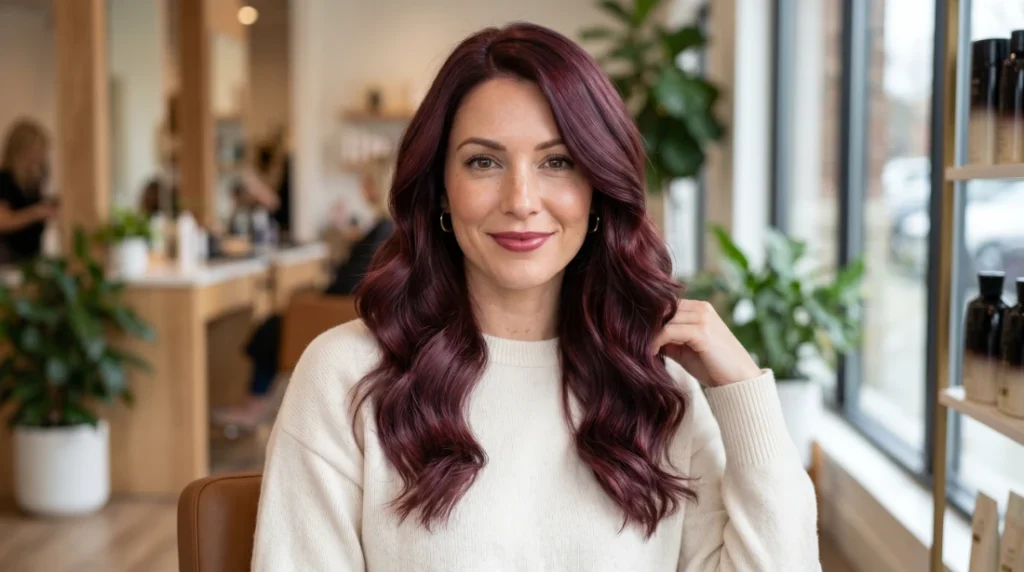
A warm fusion of red and purple that leans more burgundy than true violet — flattering on warmer skin tones that find cooler purples slightly harsh against their complexion.
Pro Tip: A color-depositing conditioner in a matching burgundy-plum shade used weekly keeps this warmer tone rich rather than letting it fade toward a flat, washed-out brown.
7. Cosmic Violet Melt
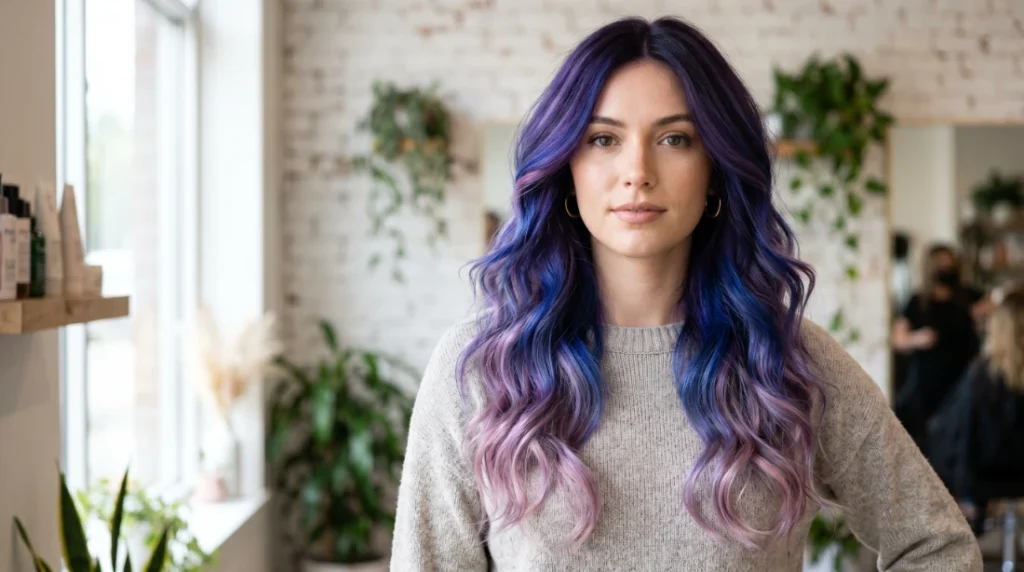
A layered build of deep violet, electric blue, and soft pink that creates an otherworldly, almost holographic effect when the hair catches different light sources.
Pro Tip: This multi-color blend needs careful, even sectioning at application — uneven placement is the most common reason this look ends up patchy rather than smoothly blended.
8. Smoky Lavender Ombre
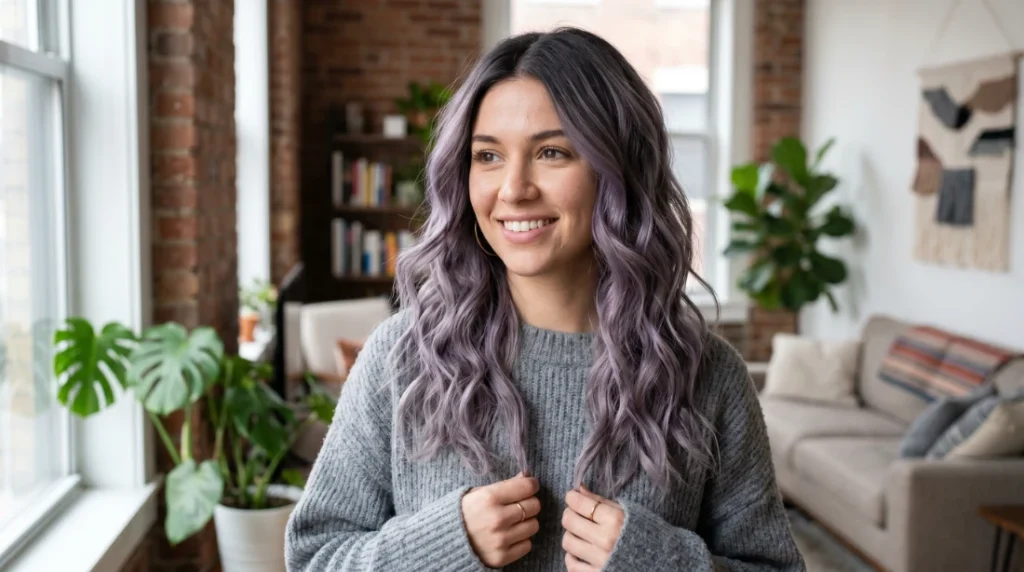
A darker root that gradually lightens into a soft, smoke-tinted lavender at the ends — moody at the top, ethereal toward the bottom, with a smooth transition in between.
Pro Tip: Adding texture with a curling wand or texturizing spray makes the gradient between the dark root and pale lavender ends look more intentional and less abrupt.
9. Electric Orchid Streaks
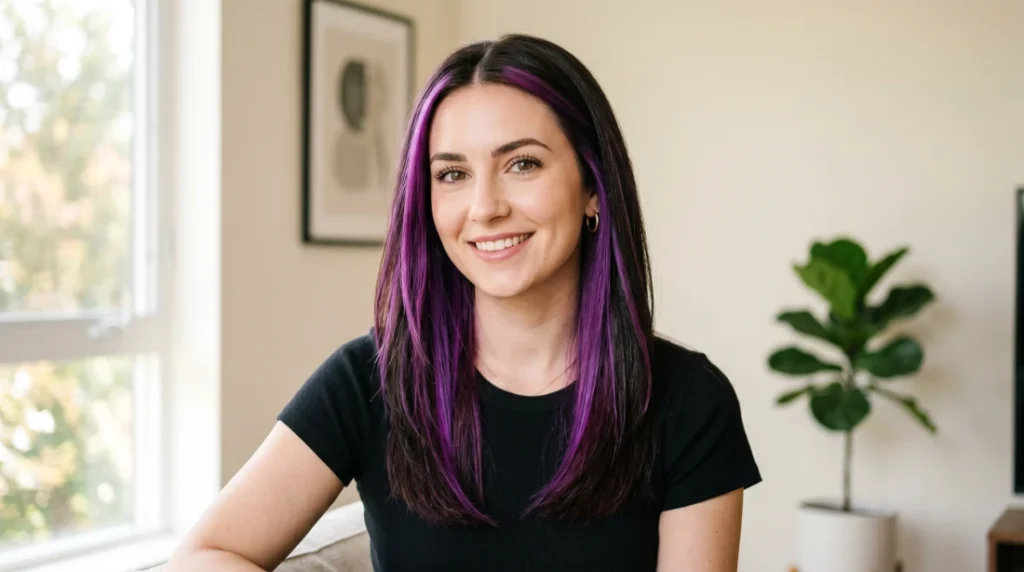
Bold, saturated streaks of bright orchid-purple placed through darker hair for a playful, attention-grabbing pop of color rather than an all-over transformation.
Pro Tip: A UV-reactive styling spray applied before a night out makes these streaks visibly glow under blacklight, which is a fun bonus most people don’t expect.
10. Misted Lilac Grey
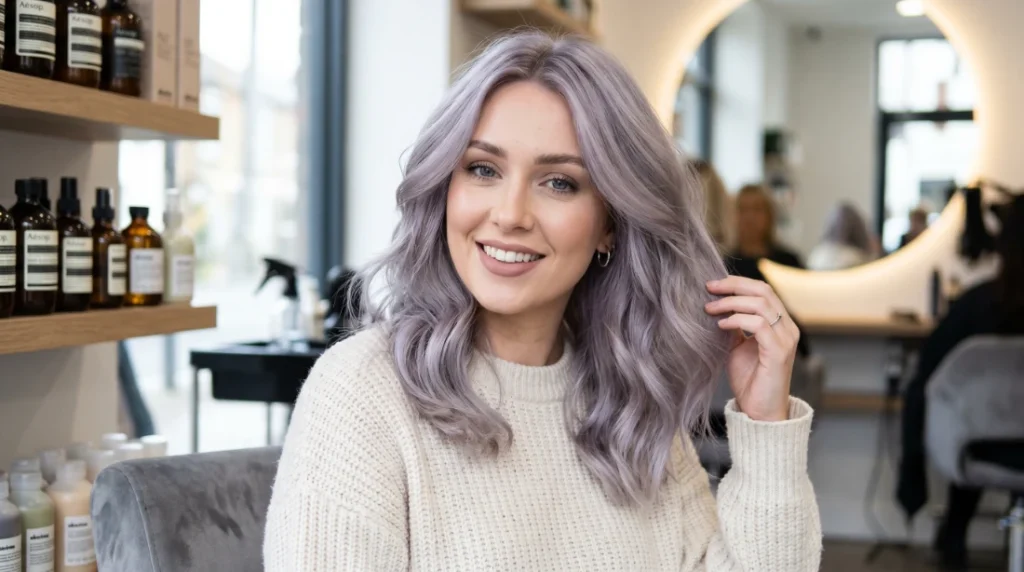
A muted, grey-tinted lilac with almost no warmth in it at all — understated, cool, and noticeably more sophisticated-looking than brighter purple shades.
Pro Tip: Pairing this shade with cool-toned makeup, especially in mauve or taupe shades, keeps the overall look cohesive rather than letting the hair color clash with warmer makeup tones.
11. Midnight Eggplant
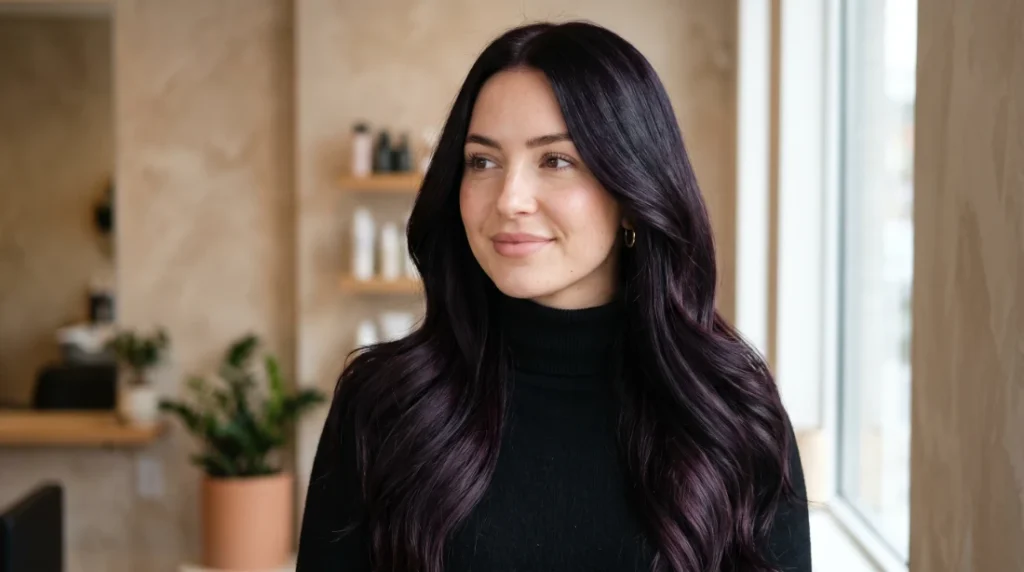
A deep, almost-black purple with a subtle reddish undertone that only reveals itself in direct light — dramatic, dense, and remarkably easy to maintain compared to brighter purples.
Pro Tip: Because this shade sits so close to the natural dark base for many people, a simple tone-on-tone gloss is often enough to achieve it without any bleaching at all.
How to Actually Get Purple Hair
- Talk to a professional first: Start with a real consultation. A stylist can tell you honestly which shade will work with your current hair and what it will take to get there — this conversation saves time and money down the line.
- Lightening, if needed: Most dark or naturally pigmented hair needs some amount of bleaching to let true purple tones show up clearly. Plan for a healthy hair care routine afterward to offset the dryness this step can cause.
- Toning: A toning step neutralizes any leftover yellow or orange in the hair after lightening, giving the purple dye a clean, neutral base to land on rather than fighting underlying warmth.
- Application: Depending on the look you want — full color, balayage, streaks, or highlights — your stylist will choose the application method that fits. This is where the specific shade you picked actually comes to life.
Keeping Purple Hair Looking Fresh
- Sulfate-free shampoo: Sulfate-free shampoo cleans without stripping pigment the way harsher detergent-based formulas do.
- Cold water washes: Hot water opens the hair cuticle and lets color escape faster — washing in cooler water keeps that cuticle sealed and the purple tone locked in longer.
- Color-safe products: Products formulated specifically for color-treated hair are gentler on pigment than general-purpose formulas, even ones that seem similar on the surface.
- Purple-toning shampoo: A purple-toning shampoo used periodically deposits fresh pigment and counters any warmth trying to creep back in.
- Deep conditioning: Lightened hair dries out fast — regular deep conditioning keeps it healthy enough that the color actually has something good to sit on top of.
- Minimal heat styling: Heat styling fades color faster than almost anything else. A heat protectant before any hot tool is non-negotiable if you want the color to last.
- Sun protection: UV rays break down color pigment over time — a leave-in spray with UV protection, or simply a hat on sunny days, meaningfully slows that fading process.
- Regular touch-ups: Even with great care, purple hair needs more frequent touch-ups than most natural-looking colors. Budgeting for that upkeep ahead of time avoids any unpleasant surprises later.
Matching Purple to Your Skin Tone
- Fair Skin: Pale, soft shades like Wisteria Whisper or Smoky Lavender Ombre tend to look most natural and flattering against lighter complexions.
- Medium Skin: Richer tones like Deep Amethyst or Burgundy Plum sit beautifully against medium skin, adding warmth and depth without overwhelming the complexion.
- Dark Skin: Deep, saturated shades such as Midnight Eggplant or Threaded Plum Highlights have real presence against darker skin tones and tend to look especially striking in person.
Purple Hair at the Office
Not every workplace is going to embrace bright, saturated purple, and that’s worth being realistic about going in. That said, plenty of the more muted shades on this list — Misted Lilac Grey, Smoky Lavender Ombre, Midnight Eggplant — read as polished and intentional rather than as a dramatic statement, which makes them workable in a wider range of professional settings. Checking your company’s specific dress code before booking anything is always the smart move.
DIY or Professional: Which Makes Sense
Simple upkeep, like refreshing tone with a color-depositing conditioner between salon visits, is genuinely fine to handle at home. Anything that involves lightening, multi-tonal blending, or hand-painted placement — looks like Oceanic Purple Fade or Cosmic Violet Melt fall squarely into this category — calls for a professional. The risk of uneven color or real damage goes up significantly without the right technique, and fixing a DIY attempt gone wrong almost always costs more than doing it properly would have in the first place.
Final Thoughts
Out of every purple hair idea covered here, the right one for you isn’t necessarily the boldest or the most subtle — it’s whichever shade feels most like an honest reflection of how you actually want to show up in the world. With the right shade, a realistic maintenance plan, and a stylist who understands what you’re going for, purple hair can stay vibrant and genuinely yours for a long time. Pick a direction, commit to the upkeep, and enjoy the process.
Frequently Asked Questions
How long does purple hair color actually last?
Most purple shades hold their vibrancy for around four to six weeks, though the exact timeline depends heavily on how the hair is washed and cared for afterward. Paler, pastel purples tend to fade fastest since they carry the least pigment overall, while deeper shades like Midnight Eggplant or Deep Amethyst tend to hold on longer. Be mindful of color transfer onto pillowcases and light clothing, especially right after a fresh application.
Will I need to bleach my hair to get purple color?
It depends on your starting shade and how bright you want the final result. Naturally dark hair usually needs some lightening to let brighter purples like Electric Orchid Streaks or Deep Amethyst show up properly. Deeper, more muted shades such as Midnight Eggplant or Burgundy Plum can often be achieved with little to no lightening at all, since they sit close to many natural dark bases already.
Can I go back to my natural color after going purple?
Yes, though how easily depends on how much lightening was involved in the first place. If your purple was achieved with minimal bleaching, growing it out or doing a single corrective color visit is usually straightforward. If significant lightening was required to get the shade bright enough, you may need a few salon visits to fully correct back to your natural color without excessive damage.
Is purple hair appropriate for a professional workplace?
It really depends on the specific shade and your workplace’s culture. Bright, saturated colors like Electric Orchid Streaks or Cosmic Violet Melt read as more casual or creative, while muted, deeper tones like Midnight Eggplant or Smoky Lavender Ombre can pass in many professional settings without raising an eyebrow. Checking your company’s dress code policy before committing is always worth the five minutes it takes.
Should I do this myself or go to a salon?
Simple maintenance, like refreshing an existing purple tone with a color-depositing conditioner, is reasonable to do at home. Anything involving lightening, balayage placement, or blending multiple tones — like Oceanic Purple Fade or Cosmic Violet Melt — is best left to a professional. Those techniques require an even hand and color theory knowledge that’s genuinely difficult to replicate without training, and a DIY attempt gone wrong is usually more expensive to fix than it would have been to do properly the first time.