20 Vintage Cleaning Tips That Actually Work Better Than Modern Products
Discover the time-tested cleaning secrets your grandmother swore by—and why they still outperform expensive store-bought cleaners today.
There’s something almost magical about walking into an older home that’s been lovingly maintained for decades. You know the kind I’m talking about—where the wood floors gleam, the windows sparkle like crystal, and everything smells fresh without that artificial chemical scent.
My own grandmother kept a house so spotless you could eat off any surface (and trust me, as kids, we tested that theory). The fascinating part? She never had a cabinet full of specialty cleaners. Just a few simple ingredients that lived under her kitchen sink.
These vintage cleaning tips aren’t just charming relics from the past. They’re incredibly effective methods that have survived generations because they actually work. And in a world where we’re increasingly worried about harsh chemicals, plastic waste, and expensive cleaning products that promise miracles but deliver mediocrity, maybe it’s time we listened to grandma’s wisdom.
Let me share the old-school cleaning secrets that are making a major comeback—and why your great-grandmother was smarter than she probably got credit for.
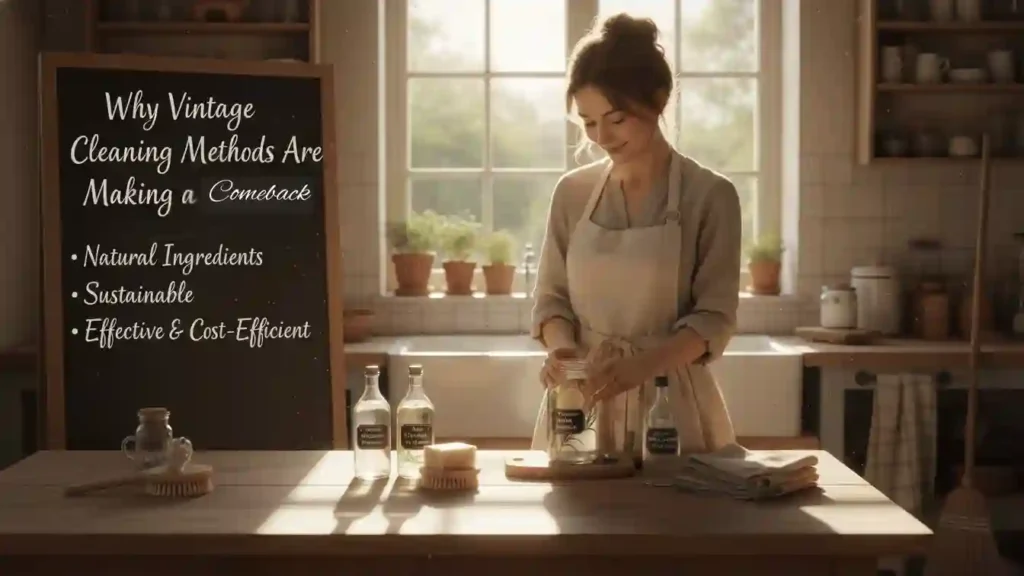
Why Vintage Cleaning Methods Are Making a Comeback
Before we dive into specific tips, let’s talk about why these methods have such staying power.
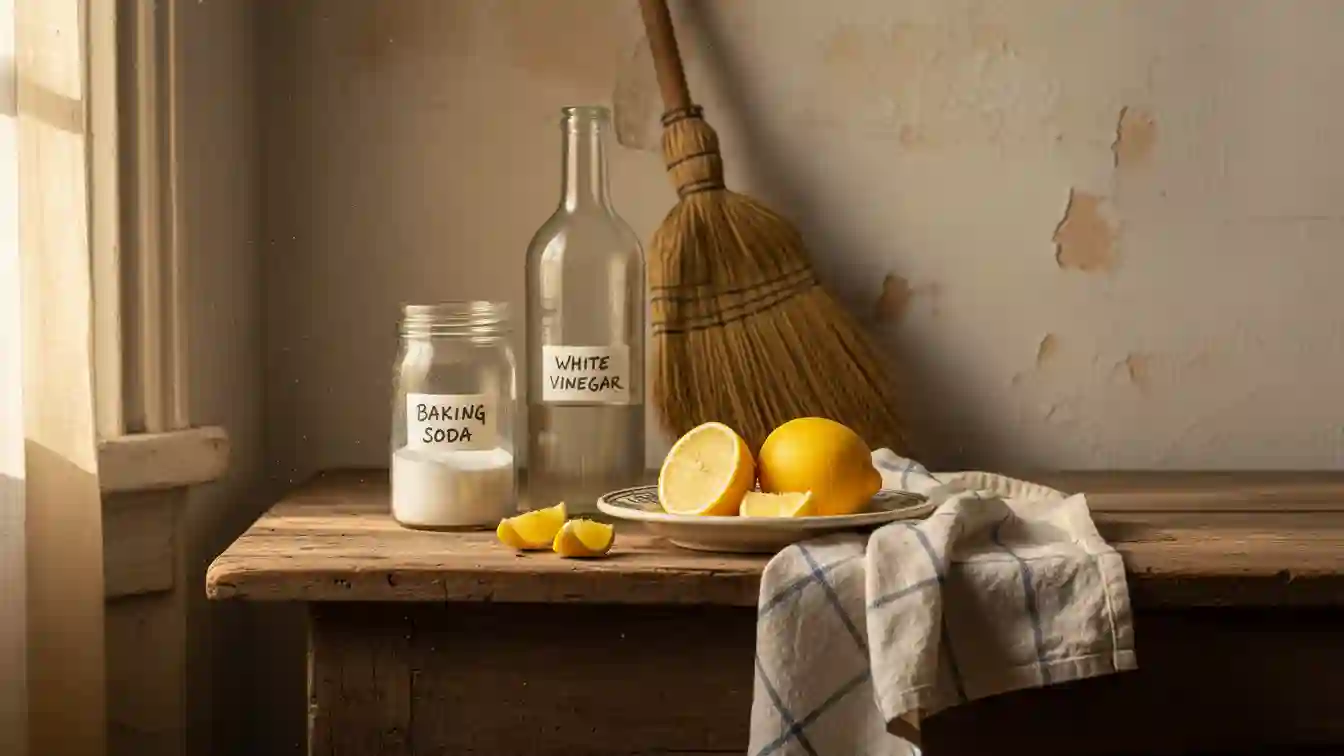
Back in the day, families didn’t have twenty different bottles under the sink. They had vinegar, baking soda, salt, and maybe some lemon juice or borax. That’s it. And somehow, their homes were impeccably clean.
Here’s the thing: these simple ingredients work with chemistry, not against it. Vinegar is acidic, which breaks down mineral deposits and cuts through grease. Baking soda is mildly alkaline and abrasive, making it perfect for scrubbing without scratching. Lemons contain citric acid that naturally disinfects and deodorizes.
Our grandmothers understood something we’re only now rediscovering: you don’t need a different chemical cocktail for every surface in your home. You just need to understand a few basic principles.
Plus, these vintage cleaning tips are:
- Budget-friendly (a box of baking soda costs about a dollar)
- Safe for kids and pets (no toxic fumes or residues)
- Environmentally responsible (biodegradable and minimal packaging)
- Actually effective (they’ve been tested for over a century)
And if you want your home to actually feel lighter while you’re cleaning this way, start by letting go of a few clutter magnets with these things to declutter before spring.
Now let’s get into the good stuff.
20 Vintage Cleaning Tips Your Grandma Swore By
1. Always Clean from Top to Bottom
This is the golden rule that every grandmother lived by, and it’s pure logic.
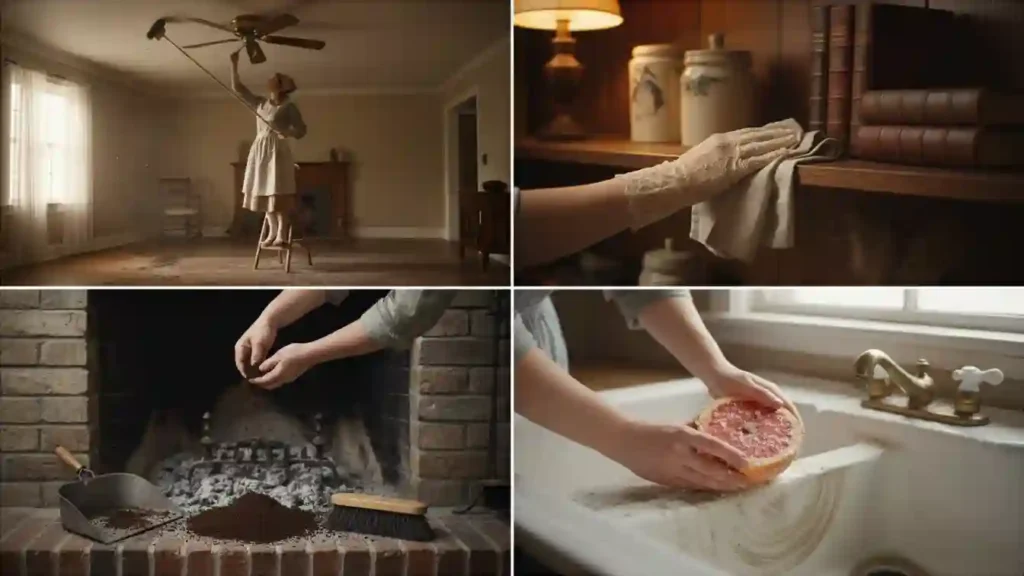
Start dusting ceiling fans, light fixtures, and the tops of tall furniture. Work your way down to shelves, tables, and countertops. Finish with floors last.
Why? Because dust falls. If you vacuum first and then dust your shelves, you’re just going to have to vacuum again. My grandmother used to say, “Only a fool cleans the floor before the ceiling,” and she was absolutely right.
This simple technique can cut your cleaning time in half because you’re not redoing work you’ve already finished.
2. Ditch the Feather Duster for a Damp Cloth
Feather dusters look cute and vintage, but here’s a secret: grandma knew they were mostly for show.
A slightly damp microfiber cloth (or even an old cotton t-shirt) actually captures dust instead of just relocating it to another part of the room. The moisture makes dust particles stick to the fabric.
Pro tip: Keep a small bucket of water nearby and rinse your cloth every few minutes. You’ll be shocked at how much dirt you’re actually removing instead of just spreading around.
3. Use Yesterday’s Coffee Grounds for Your Fireplace
If you have a fireplace, here’s a vintage cleaning tip that’s pure genius: sprinkle damp coffee grounds over the ashes before sweeping them out.
The moisture in the grounds weighs down the fine ash particles so they don’t poof up into a cloud of dust that settles all over your clean living room. Plus, the coffee smell is infinitely better than breathing in fireplace ash.
My grandmother did this every single week during winter, and I never understood why until I tried cleaning a fireplace without this trick. Never again.
4. Tackle Grease with Grapefruit and Salt
This vintage cleaning tip sounds like something from a fairy tale, but it’s remarkably effective.
Cut a grapefruit in half, sprinkle coarse salt on the cut side, and use it to scrub grimy countertops, cutting boards, or even your bathtub. The citric acid breaks down grease and grime while the salt provides gentle abrasion. And your kitchen will smell incredible.
This works especially well on butcher block countertops and wooden cutting boards that you can’t soak in harsh chemicals.
5. Run Your Dishwasher Empty with Vinegar Monthly
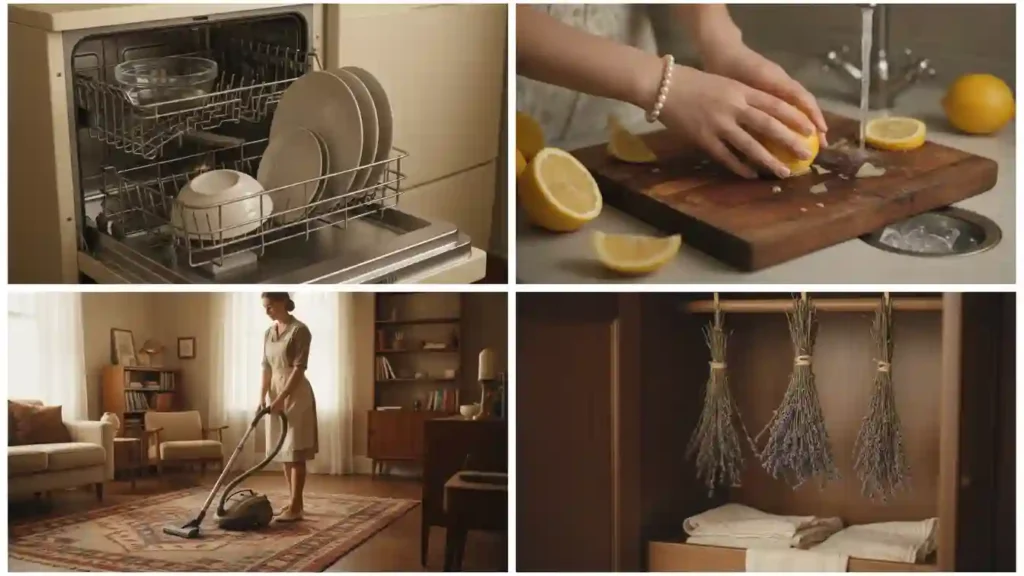
Modern dishwashers are convenient, but they can get surprisingly gross inside with soap scum, grease buildup, and mystery smells.
Once a month, place a dishwasher-safe bowl filled with two cups of white vinegar on the top rack of an empty dishwasher. Run a full hot cycle.
The vinegar will steam through every nook and cranny, dissolving mineral deposits, breaking down grease, and eliminating odors. Your dishes will come out cleaner, and your dishwasher will last longer.
This vintage cleaning tip saved my grandmother from ever having to call a repair person for a smelly dishwasher.
6. Clean Everything with Real Lemons
Before “lemon-scented” became a marketing gimmick, people used actual lemons—and they worked better.
Lemons are natural disinfectants thanks to their high acidity. They can:
- Deodorize your garbage disposal (toss in half a lemon while running it)
- Remove stains from cutting boards (rub with half a lemon and salt)
- Clean your microwave (microwave a bowl of water with lemon slices for 3 minutes, then wipe)
- Brighten white fabrics (add lemon juice to your laundry)
The best part? When you’re done cleaning, your house smells like a citrus grove instead of a chemical factory.
7. Vacuum Your Carpets at Least Twice a Week
This isn’t just about appearances—it’s about preservation and health.
In the old days, good carpets and rugs were investments that families expected to last decades. They protected those investments by vacuuming religiously, preventing dirt from getting ground deep into the fibers.
Regular vacuuming also dramatically reduces allergens, dust mites, and pet dander. Your great-grandmother might not have known about “particulate matter,” but she knew that frequent vacuuming meant fewer sniffles and sneezes.
Modern robot vacuums make this vintage cleaning tip easier than ever to follow.
8. Keep Dried Lavender in Your Closets and Drawers
Long before Febreze, people used dried lavender, cedar chips, and other natural herbs to keep spaces smelling fresh.
Lavender doesn’t just smell wonderful—it actually repels moths and other insects that might damage your clothes. Tie small bunches with string and hang them in your closet, or make simple sachets to tuck in drawers.
You can buy dried lavender online, or dry your own if you have access to fresh lavender. This vintage cleaning tip doubles as aromatherapy.
9. Do a Little Bit Every Single Day
Perhaps the most important vintage cleaning tip: don’t let things pile up.
Our grandmothers didn’t deep clean every Saturday because their houses were disasters. They deep cleaned because they maintained everything daily with small tasks:
- Make your bed every morning
- Wipe down counters after cooking
- Wash dishes immediately after eating
- Do one load of laundry
- Sweep high-traffic areas
These tiny habits prevent overwhelming messes. You’re never more than 15 minutes away from a “company ready” home.
If you want a plug-and-play routine to make this easier, try my 15 minute living room reset routine so your main space looks guest-ready without a huge weekend deep clean.
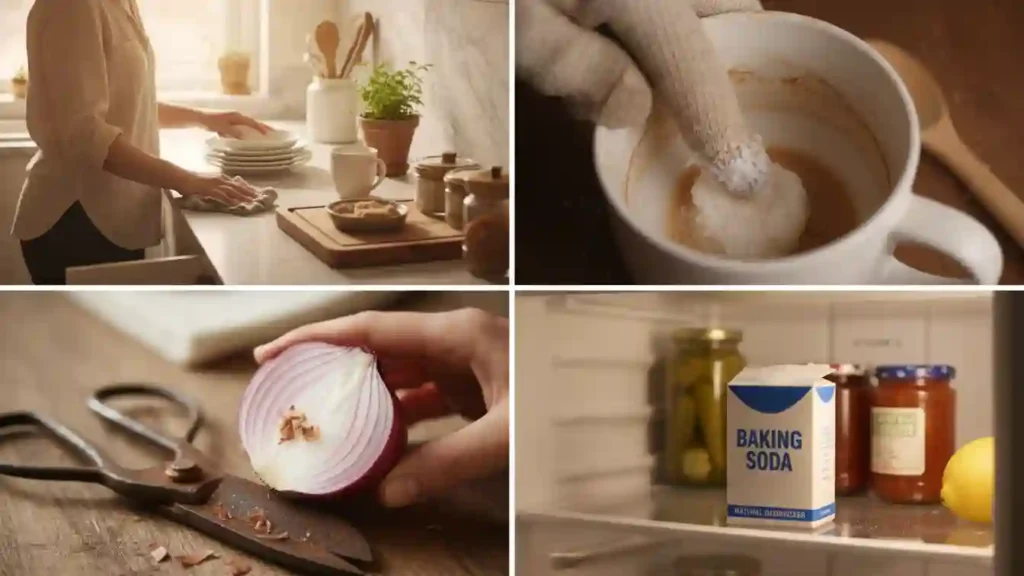
10. Remove Coffee and Tea Stains with Salt and Vinegar
If your favorite mugs have dark rings that seem permanent, here’s a vintage cleaning tip that works like magic.
Make a paste with equal parts salt and white vinegar. Use a sponge to scrub the stained areas with the paste, then rinse thoroughly.
The salt acts as a gentle abrasive while the vinegar’s acidity dissolves the tannin stains. Even mugs that have been stained for years will come clean with a little elbow grease.
11. Remove Rust with a Raw Onion
This sounds absolutely bizarre, but it’s one of those vintage cleaning tips that makes you respect your ancestors’ ingenuity.
Got rusty knives, scissors, or garden tools? Cut a raw onion in half and scrub the rusty metal with it. The sulfenic acid in onions helps break down rust.
For stubborn rust, stick the blade into the onion and let it sit for a few minutes before scrubbing. Rinse, dry, and be amazed.
12. Keep an Open Box of Baking Soda in Your Fridge
This is probably the most famous vintage cleaning tip, and it’s popular for good reason.
Baking soda absorbs odors rather than just masking them. An open box in your fridge prevents that weird smell when you open the door.
Replace the box every month or two. Don’t throw the old baking soda away—use it to scrub your sink or deodorize drains.
13. Polish Wood Furniture with Olive Oil and Lemon
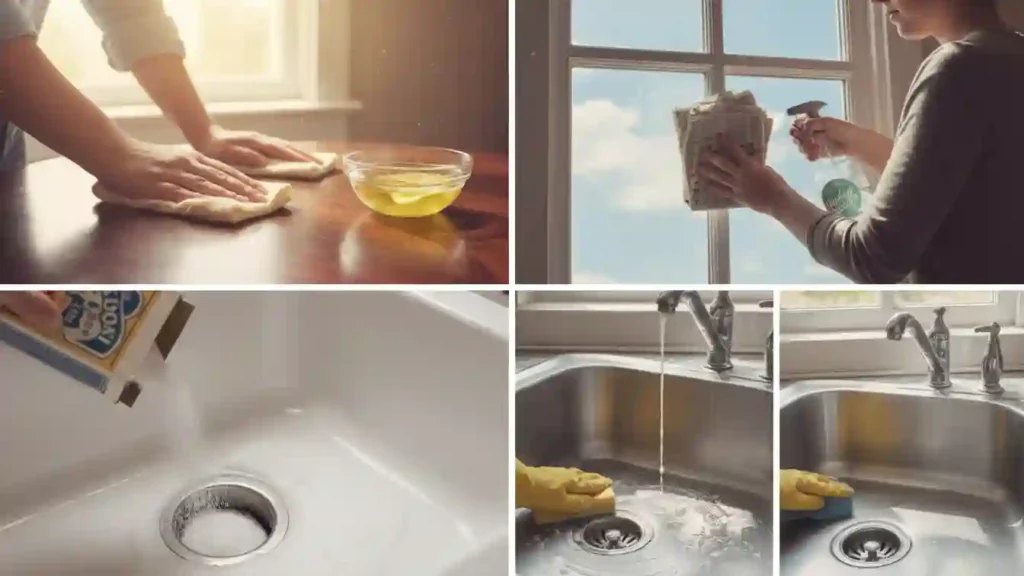
Store-bought furniture polish is expensive and often leaves a sticky residue. Your grandmother had a better solution.
Mix two parts olive oil with one part fresh lemon juice. Apply a small amount to a soft cloth and rub it into wood furniture in the direction of the grain.
The olive oil nourishes the wood and prevents it from drying out, while the lemon juice cuts through any grime and leaves a fresh scent. Buff with a clean cloth for a gorgeous shine.
This works beautifully on all wood furniture except pieces with a urethane finish.
14. Clean Windows with Vinegar and Newspaper
Paper towels leave lint. Expensive glass cleaners leave streaks. Grandma used newspaper and vinegar, and her windows were spotless.
Mix equal parts white vinegar and water in a spray bottle. Spray liberally on windows, then wipe clean with crumpled newspaper.
The slight abrasiveness of newsprint combined with vinegar’s grease-cutting power gives you streak-free, crystal-clear windows. Plus, it’s a great way to recycle old newspapers.
15. Unclog Drains with Baking Soda and Vinegar
Before Drano became the go-to solution, people used this fizzing duo to clear sluggish drains.
Pour half a cup of baking soda down the drain, followed by half a cup of white vinegar. The mixture will foam and bubble (that’s the chemical reaction working). Let it sit for 30 minutes, then flush with boiling water.
This vintage cleaning tip works for minor clogs and regular maintenance. For serious blockages, you might need a plumber, but this method prevents most problems from developing in the first place.
16. Shine Stainless Steel Sinks with Baking Soda
Your stainless steel sink can look brand new with this simple vintage cleaning tip.
Sprinkle baking soda liberally all over your dry sink. Use a damp sponge or cloth to scrub in circular motions, paying extra attention to stained areas and the drain.
Rinse thoroughly with hot water, then dry with a clean towel to prevent water spots. Your sink will gleam.
For extra shine, buff with a few drops of mineral oil or olive oil after cleaning.
17. Freshen Carpets with Baking Soda Before Vacuuming
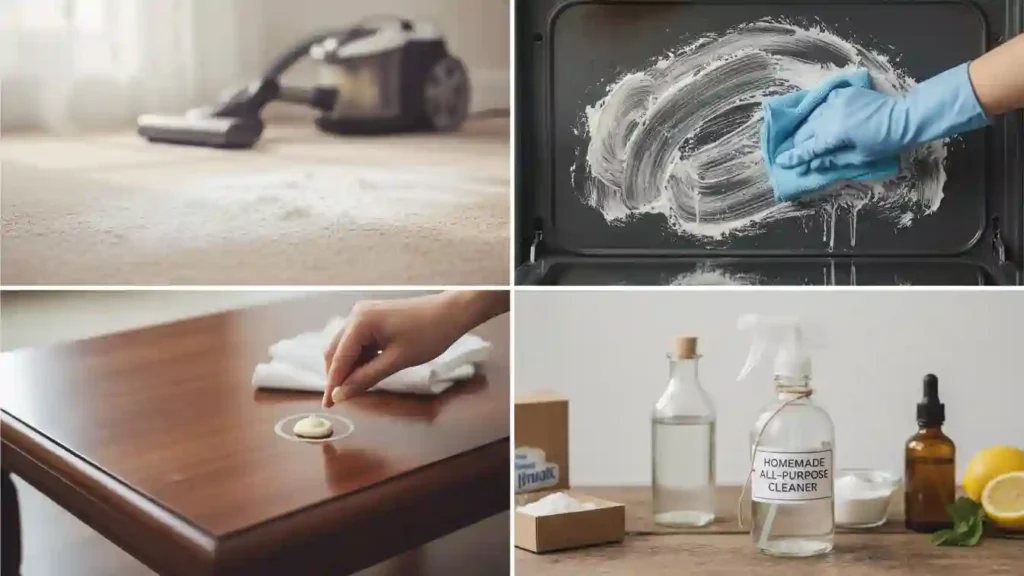
If your carpets smell a bit musty or you have pets, here’s a vintage cleaning tip that works wonders.
Sprinkle a generous layer of baking soda over your carpet. Let it sit for at least 30 minutes (or overnight for really stubborn odors), then vacuum thoroughly.
The baking soda absorbs odors trapped in the carpet fibers. For extra freshness, mix in a few drops of essential oil with the baking soda before sprinkling.
This is so much safer and cheaper than commercial carpet fresheners.
18. Clean Your Oven with a Baking Soda Paste
Oven cleaners are some of the most toxic products in your home. Your grandmother cleaned her oven without them.
Make a thick paste with baking soda and water. Spread it all over the inside of your cool oven, avoiding the heating elements. Let it sit overnight.
In the morning, spray with vinegar (it will foam), then wipe everything out with a damp cloth. For stubborn spots, use a plastic scraper.
It takes a little more elbow grease than spray cleaners, but you won’t be breathing toxic fumes.
Once the inside of your oven is handled, it’s the perfect time to organize kitchen cabinets so the whole cooking zone feels just as calm and intentional.
19. Remove Water Rings from Wood with Mayonnaise
This vintage cleaning tip sounds completely crazy, but furniture restorers swear by it.
Got white rings on your wood table from wet glasses? Dab a small amount of regular mayonnaise on the ring and let it sit for several hours or overnight.
The oils in mayonnaise penetrate the wood finish and displace the trapped moisture that causes the white appearance. Wipe clean and buff.
This also works with petroleum jelly or toothpaste (non-gel), but mayonnaise is most effective.
20. Make Your Own All-Purpose Cleaner
Why buy expensive all-purpose cleaners when you can make a better one for pennies?
In a spray bottle, combine:
- 1 cup white vinegar
- 1 cup water
- 10-15 drops of essential oil (lemon, tea tree, or lavender)
- 1 tablespoon of dish soap (optional, for extra grease-cutting power)
This vintage cleaning tip formula works on countertops, appliances, bathroom surfaces, and pretty much everything except granite or marble (vinegar is too acidic for those).
Label your bottle and keep it under the sink. You’ve just replaced about five different cleaning products.
The Real Secret Behind These Vintage Cleaning Tips
After trying all these methods, you start to see a pattern. The real secret isn’t in any specific ingredient or technique—it’s in the philosophy.
Our grandmothers approached cleaning as regular maintenance, not emergency intervention. They didn’t wait until things were disgusting to clean them. They did a little bit consistently, using simple ingredients they understood.
They also weren’t afraid of a little elbow grease. Some of these vintage cleaning tips require actual scrubbing, not just spraying and wiping. But the results are worth it, and you’re building arm strength in the process.
Most importantly, they didn’t fall for marketing that told them they needed a different product for every surface. They knew that vinegar, baking soda, lemon, and salt could handle 90% of cleaning tasks when used correctly.
Modern Convenience Meets Old-School Wisdom
Here’s the beautiful thing: you don’t have to choose between vintage cleaning tips and modern convenience.
Use your robot vacuum for daily maintenance, but spot-clean with baking soda when needed. Run your dishwasher with vinegar to keep it fresh. Store your homemade all-purpose cleaner in a modern spray bottle.
The goal isn’t to recreate 1950 in your home. It’s to take the proven methods that have stood the test of time and adapt them to work with how you actually live today.
If you love that naturally clean feeling, pair these routines with a few bedroom plants that improve air health and wellness so your home smells fresher without heavy fragrances.
Getting Started with Vintage Cleaning Tips
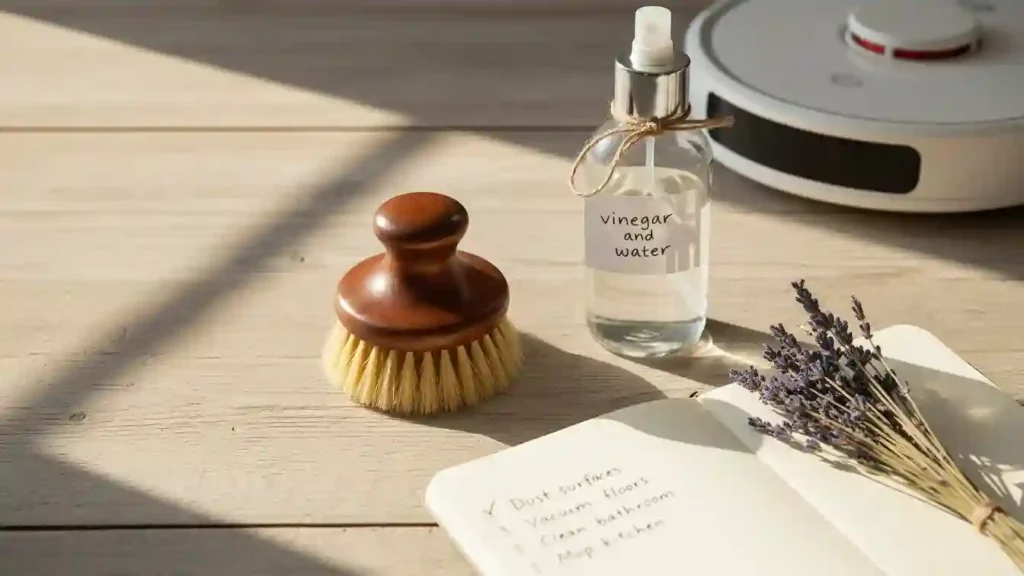
If you’re ready to try these methods, start simple. You don’t need to overhaul your entire cleaning routine overnight.
Think of it like any other gentle habit shift – just like these gentle habits that actually fit your life, you can layer one vintage cleaning tip at a time until it feels natural.
Pick three vintage cleaning tips from this list that address your biggest pain points:
- Smelly dishwasher? Try the vinegar cycle.
- Stained coffee mugs? Salt and vinegar paste.
- Dull wood furniture? Olive oil and lemon polish.
Once you see how well these work, you’ll naturally want to try more. Before long, you’ll have a simpler, more effective cleaning routine that costs less and works better.
Your Grandmother Was Right All Along
These vintage cleaning tips have survived for generations because they work. They’re not trendy or complicated. They’re just smart, practical solutions that respect both your budget and your health.
The next time you’re standing in the cleaning aisle overwhelmed by choices, remember: your grandmother kept an immaculate home with about five ingredients. You can too.
Try these methods. Embrace the simplicity. And maybe, just maybe, your own grandkids will someday write about the wonderful vintage cleaning tips you taught them.
After all, the best traditions are worth passing down.
What vintage cleaning tips do you remember from your grandmother or mother? Share your favorites in the comments—I’d love to add them to my routine!