14 Things To Declutter This Weekend For A Calm Home
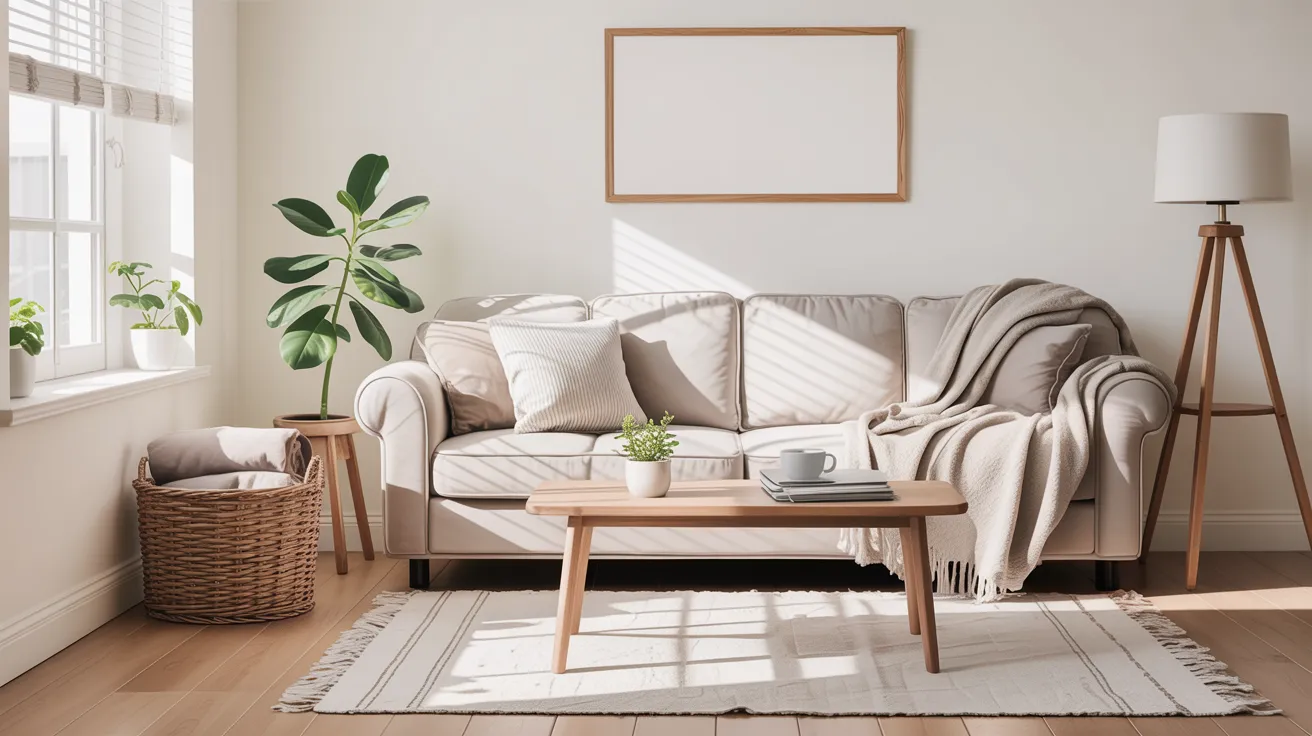
If your home has started to feel a little too busy and heavy, a quick declutter weekend can change more than you think. You don’t need to empty every closet or pull your whole house apart. You just need a short list, a timer, and a clear idea of what’s actually worth keeping.
The whole point of this plan is simple: move through high-impact zones, make fast decisions, and wake up on Monday feeling like your home can finally breathe again.
As you work through these things to declutter this weekend, keep one rule in mind: if it’s used, loved, or truly helpful, it stays. If it’s broken, “meh,” guilt-based, or never used… let it go.
The Weekend Declutter That Changes Everything
14 Things To Declutter This Weekend Before Monday Hits
Before you grab your bags, skim through these ideas and choose the areas that feel the heaviest. These are the things to declutter this weekend that will give you the biggest emotional and visual payoff.
1. Expired + “Meh” Stuff In The Bathroom (20–40 Minutes)
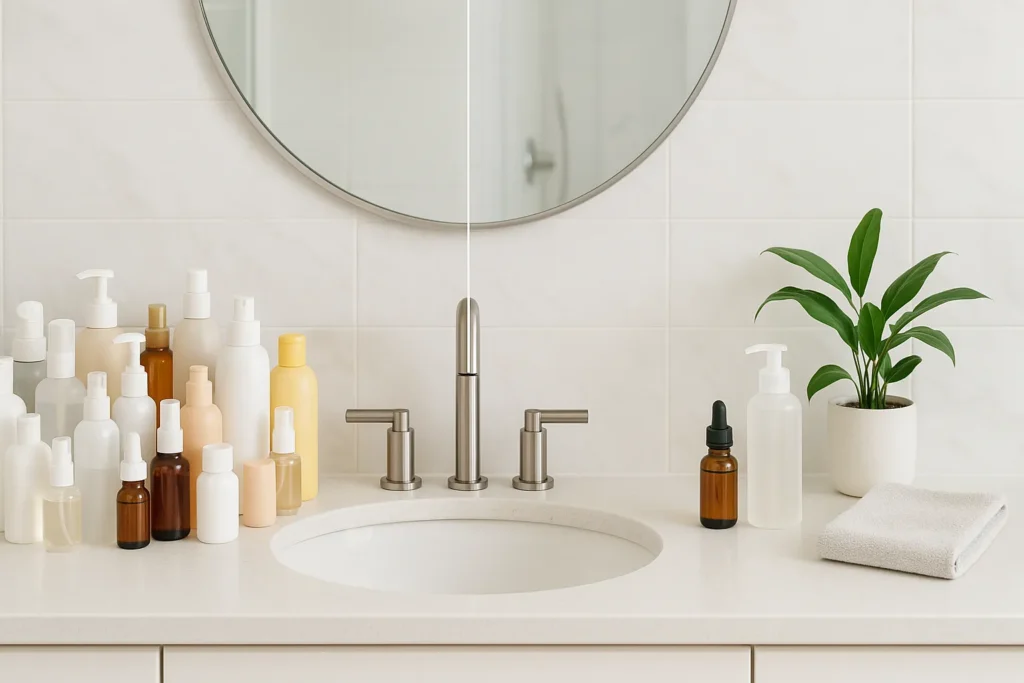
Your bathroom is the easiest place to start because half the decisions are made for you already. Pull everything out of your vanity, medicine cabinet, shower caddy, and any baskets hiding under the sink.
What To Toss Quickly
Look for anything that’s clearly past its prime or simply never used:
- Expired skincare, makeup, sunscreen, and medication
- Products that are dried out, separated, or smell off
- Old hotel minis and samples you never reach for
- Stretched-out hair ties and dead scrunchies
- Duplicate minis you “tested” and didn’t really like
What Actually Stays
Keep the things you reach for again and again:
- Daily-use items (cleanser, deodorant, toothbrush, razor)
- Products you actually finish all the way to the end
- One or two tools that still work well (your best brush, one solid hair tool)
What You Can Pass On
Set aside a tiny pile for donating:
- Unopened, in-date gift sets
- Extra lotions or duplicates you know you’ll never open
Reset The Space
Give the shelves a quick wipe, then:
- Put daily items front and center
- Group similar items in small bins (hair, skincare, dental)
- Add a sticky note that says “Use me first” for half-used bottles you want to finish
Mini Rule For Later
Whenever a new product comes in, something older has to leave. No more collecting half-used bottles just because they “might” be useful someday.
2. The Paper Pile (30–60 Minutes)
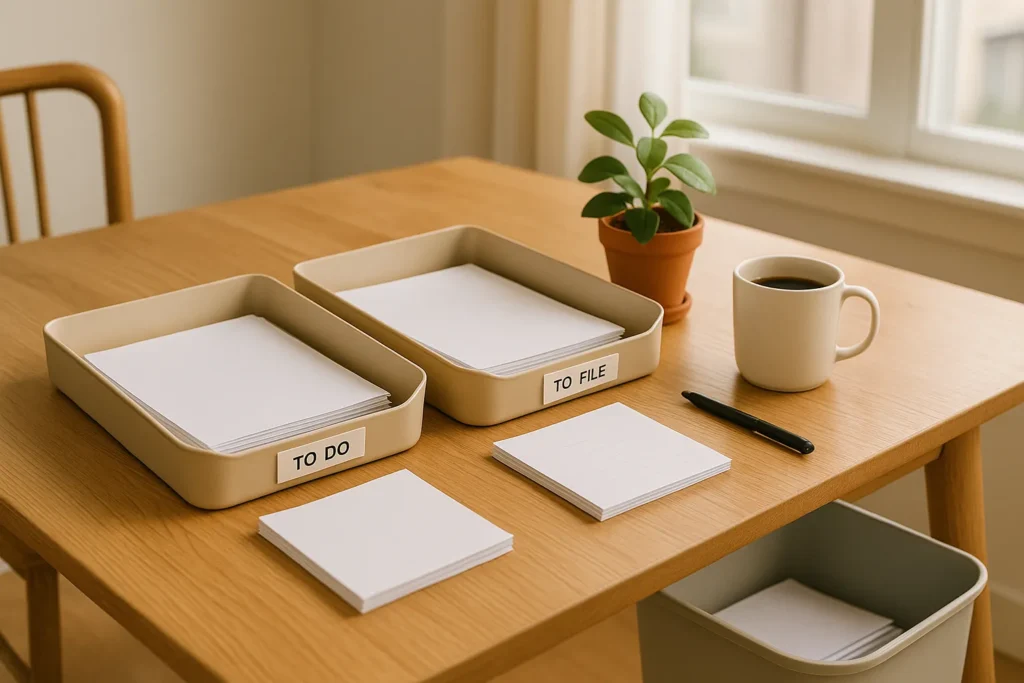
Paper clutter grows silently until it takes over your table or kitchen counter. Today, you’re going to give every sheet a home—or let it go.
Set up four spots: Action, File, Shred, and Recycle.
After clearing out old gadgets and duplicates, you can finally style your kitchen like a boutique cafe, giving it that clean, intentional look that’s both cute and functional.
Sort Once, Decide Once
- Action/To-Do: Bills, forms, school papers, anything that actually needs you. Jot the action on top: “pay,” “sign,” “call,” “email.”
- File: Important documents you’ll really need later—tax papers, insurance, home records.
- Shred: Items with personal information you don’t need to keep.
- Recycle: Flyers, menus, envelopes, random junk mail and mystery sheets you don’t care about.
Handling Sentimental Paper
You don’t have to keep every drawing or card forever.
- Choose your top 5 pieces for this season.
- Slip them into a clear folder or a single keepsake box.
- Snap photos of the rest so the memory stays without the stack.
Create A Paper Landing Zone
Pick one place where all paper “arrives”: a tray, upright file, or wall pocket near the door. Keep just three sections: In, To Do/Pay, To File. Empty it once a week so it never turns into a mountain again.
Mini Rule For Later
When a paper hits your hand, decide right away: “Where does this live?” If there’s no answer, it probably doesn’t belong in your home.
3. Kitchen Duplicates You Never Use (30–45 Minutes)
Kitchens quietly fill with gadgets, mugs, and odd tools you never actually use. Decluttering here gives you smoother mornings and calmer cooking.
Open your most stuffed drawers and cabinets and lay everything out by category.
Group First, Then Edit
- Spatulas with spatulas
- Wooden spoons together
- Measuring cups, mugs, storage containers in their own groups
Right-Size Each Category
- Utensils: Keep your best version of each tool. If you always use the same two spatulas, let the rest go.
- Gadgets: Be honest about single-use tools (avocado slicers, banana savers, random peelers). If they never leave the drawer, they’re just clutter.
- Mugs: Keep what fits in one realistic load and what you genuinely like using.
- Food storage: Match lids to bottoms. Recycle anything warped, stained, or orphaned.
Reset Your Drawers
Give the prime spots (top drawers, front shelves) to the tools you touch almost daily. Party or seasonal items can live higher or in the back.
Mini Rule For Later
Before bringing a new gadget home, ask: “Will this replace something I already own?” If not, it stays at the store.
4. The Entry Drop Zone (20–35 Minutes)
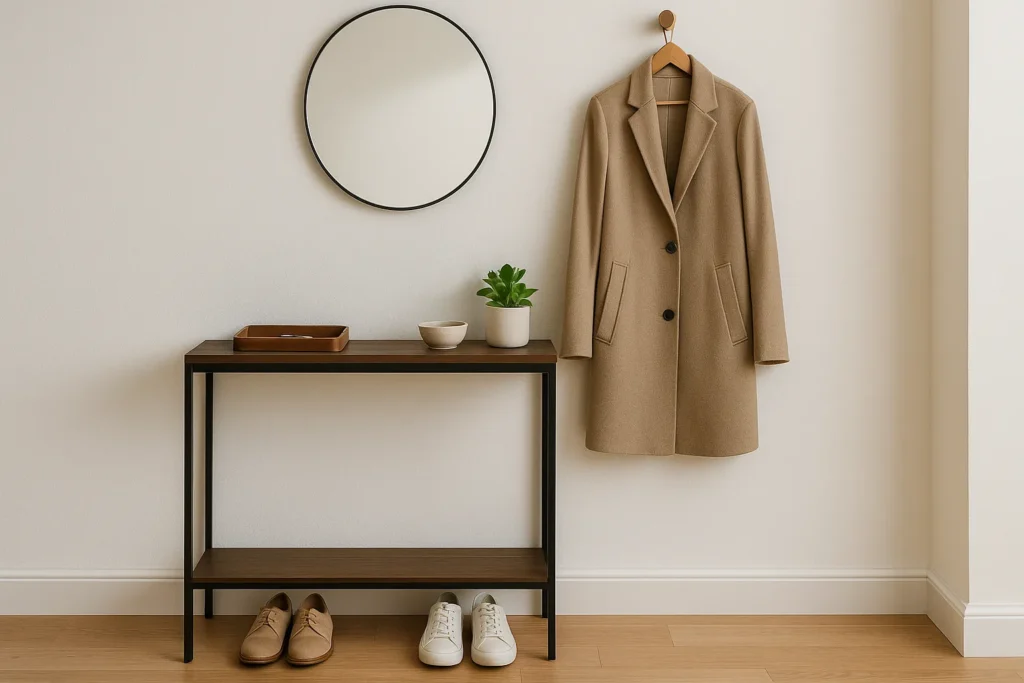
The spot by your front door sets the tone for the whole house. If you only tackle one of the things to declutter this weekend, let it be this.
Empty everything: hooks, table, shoe rack, key bowl, and baskets. Wipe surfaces and start fresh.
Decide What Truly Belongs Here
- Everyday keys, wallet, phone, sunglasses
- One coat per person for the current season
- Only the pairs of shoes you actually wear in a normal week
- One go-to bag (not the whole collection)
Add Light Structure
- A small tray or hook for keys
- A slim sorter or wall pocket for incoming mail
- A low shoe tray or small rack with defined spots
- A tiny bowl for grab-and-go items like lip balm or dog bags
The Daily Speed-Sweep
Keep a small bin under the table for “goes elsewhere.” Once a day, carry it around the house and put things back where they belong. It takes under a minute.
Mini Rule For Later
If it doesn’t help you leave the house faster, it shouldn’t live at the door.
5. Living Room Surfaces (25–40 Minutes)
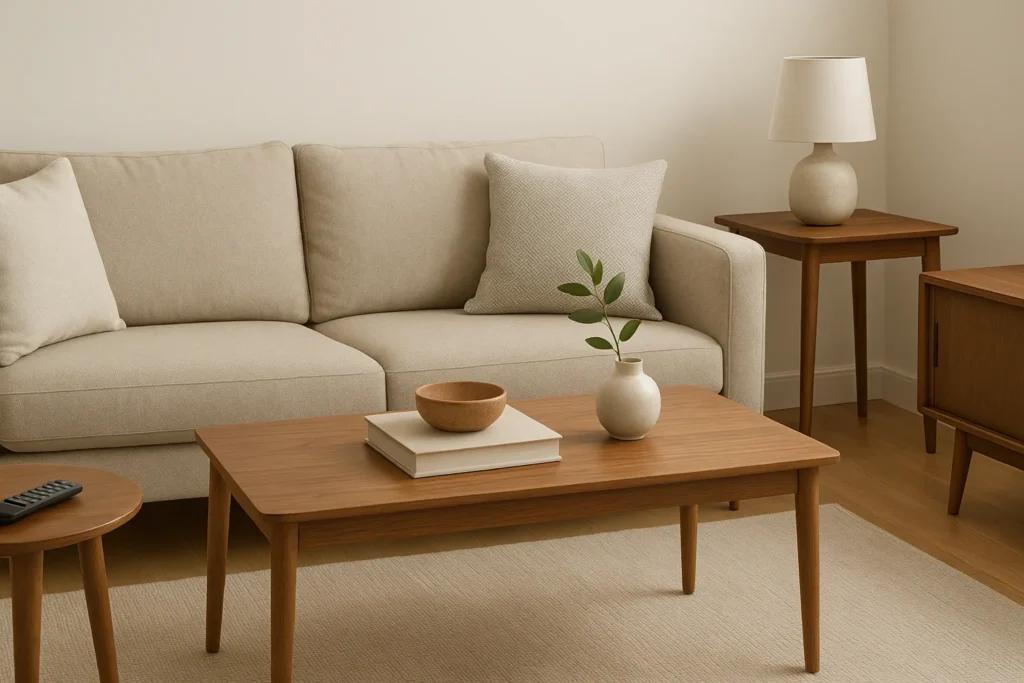
Coffee tables, side tables, and consoles love to collect random stuff. You want cozy, not chaotic.
Clear every surface and drop items into piles on the floor.
And if you’re craving a softer, cozier aesthetic after decluttering, these cottagecore decor ideas can help you style your home without adding visual noise back in.
Sort Fast, Then Edit
Group by category:
- Remotes and tech
- Books and magazines
- Decor items
- Cups and dishes
- Random bits (toys, chargers, odds and ends)
Decide What Stays Out
- Keep only a few current books or magazines
- Limit blankets and pillows to what you’ll actually use
- Choose 1–3 decor pieces per surface instead of lots of tiny things
Calm The Cables
Use simple clips or ties on the back of furniture to guide cords so they’re not spilling everywhere. Label the ends if you have multiple devices.
Create A Quick Reset Habit
Keep a small basket for remotes, controllers, and small items. At the end of the day, everything goes back in its home, blankets get folded, and dishes return to the kitchen.
Mini Rule For Later
Aim to leave at least one-third of every surface empty. If a new decor piece comes in, something else steps out.
6. Your Nightstand (15–25 Minutes)
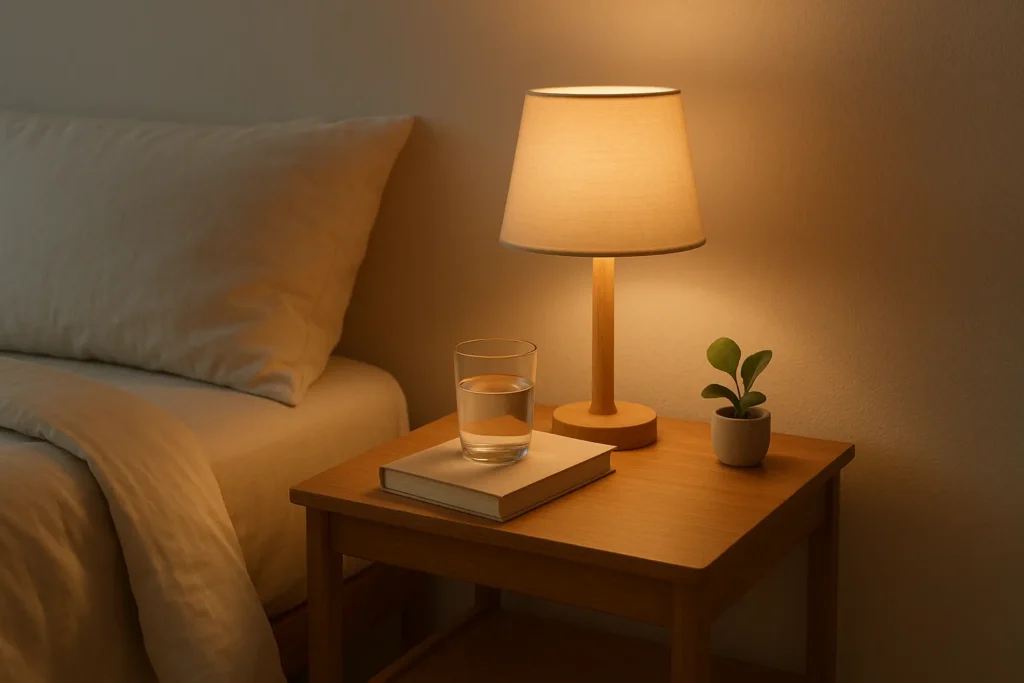
Your nightstand is the first and last thing you see each day. Clearing it makes a bigger difference than you’d expect.
Empty the entire thing: top, drawer, and floor beside it.
Once you’re done with the high-impact zones, you can use these same principles to refresh your personal space too—especially if you want to learn how to make your bedroom feel like you.
What Deserves A Spot
On top:
- Lamp
- Water
- Current book or journal
- Lip balm
- One small, calming object (photo, plant, candle)
Inside the drawer:
- Charger
- Earplugs, hand cream, bedtime meds
- One or two sleep-related items you truly use
What Needs To Leave
- Loose receipts
- Random cords
- Piles of half-read books you never reach for
- Old skincare and snacks that drifted in
Reset The Vibe
Use a tray, cloth, or small dish so everything looks intentional instead of dumped. Coil your charging cable and clip it so it doesn’t fall behind the bed.
Tiny Habit
Each night when you plug your phone in, take ten seconds to straighten the top and return anything out of place.
Mini Rule For Later
If you wouldn’t use it when you’re half-asleep, it doesn’t belong on your nightstand.
7. Your Camera Roll + Digital Photos (30–60 Minutes)
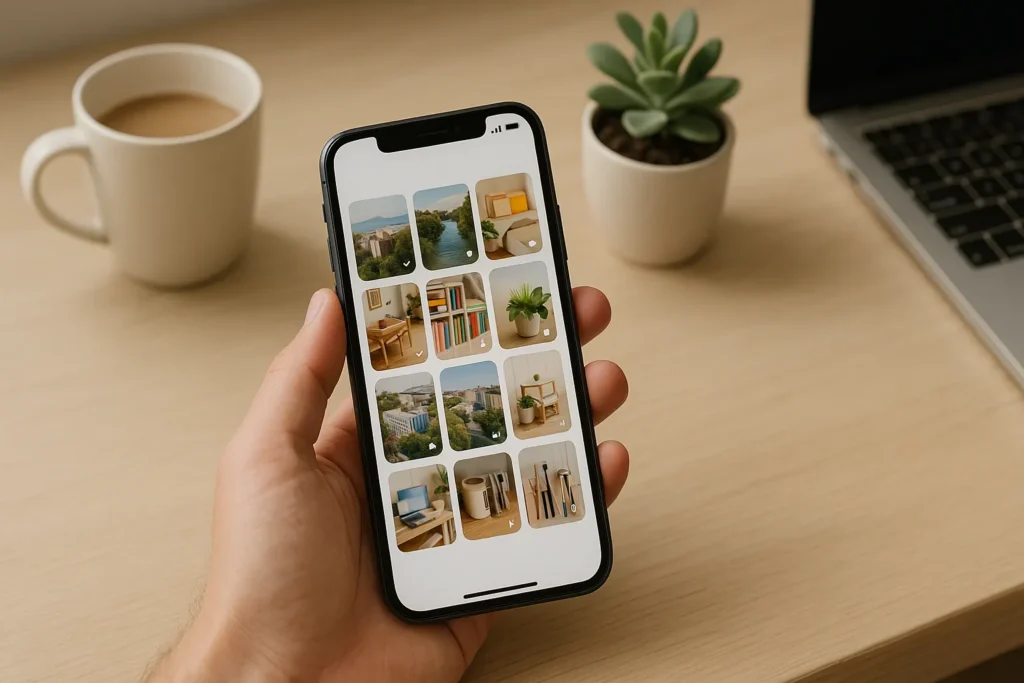
Visual clutter also lives on your phone. A cleaner camera roll makes memories easier to find and enjoy.
Create three basic albums: Keepers, Important/Family, and To Print.
One Simple Pass
- Delete obvious extras: duplicates, blurry shots, 15 selfies to get one good one, screenshots you’ll never need again.
- Move favorite moments into Keepers as you scroll.
- Shift ID photos, medical details, and house info into Important/Family.
- Add special photos you might frame into To Print.
Build A Light System
Create a few broad albums like: Home, Friends, Trips, Pets, Work, Inspo. Don’t over-organize—just give your photos loose “buckets” to land in.
Make Memories Visible
Pick one favorite photo as your lock screen or wallpaper. Order a tiny batch of prints or add them to a digital frame so you actually see them.
Tiny Habit
Once a week, quickly skim the last seven days of photos and clean them up while you drink tea or wait in line.
Mini Rule For Later
Try to take one or two good photos instead of ten. If you take extras, delete the bad ones on the spot.
8. Your Car (20–40 Minutes)
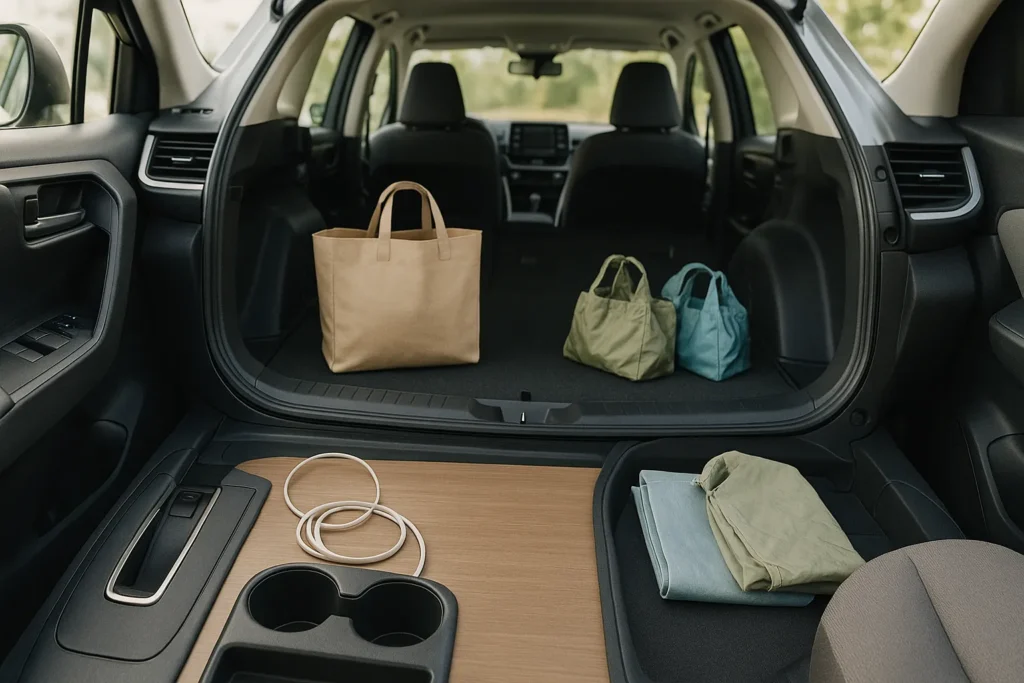
Think of your car like a small room you visit every day. When it’s tidy, your whole day feels smoother.
Open all the doors and the trunk. Bring a trash bag, a cloth, and one tote bag.
Quick Clear Out
- Throw away cups, wrappers, receipts, and old tissues
- Put extra shoes, jackets, or random items in the tote to take inside
Keep Just The Basics
- In the glove compartment: registration, insurance, manual, one pen
- In the console: phone cable, sunglasses, sanitizer, tissues, lip balm
- In the door: a few napkins or wipes, not a year’s supply
A Calm Trunk Kit
Use a small bin for:
- Reusable shopping bags
- A compact umbrella
- Small first-aid bits
- A flashlight and spare tote
Adjust for the season—gloves or ice scraper in winter, sunscreen and water bottle in summer.
Tiny Habit
Whenever you fill up on gas, do a 60-second sweep and toss any new trash.
Mini Rule For Later
If it didn’t start its life in the car, it doesn’t live in the car long-term.
9. Your Purse / Everyday Bag (15–25 Minutes)
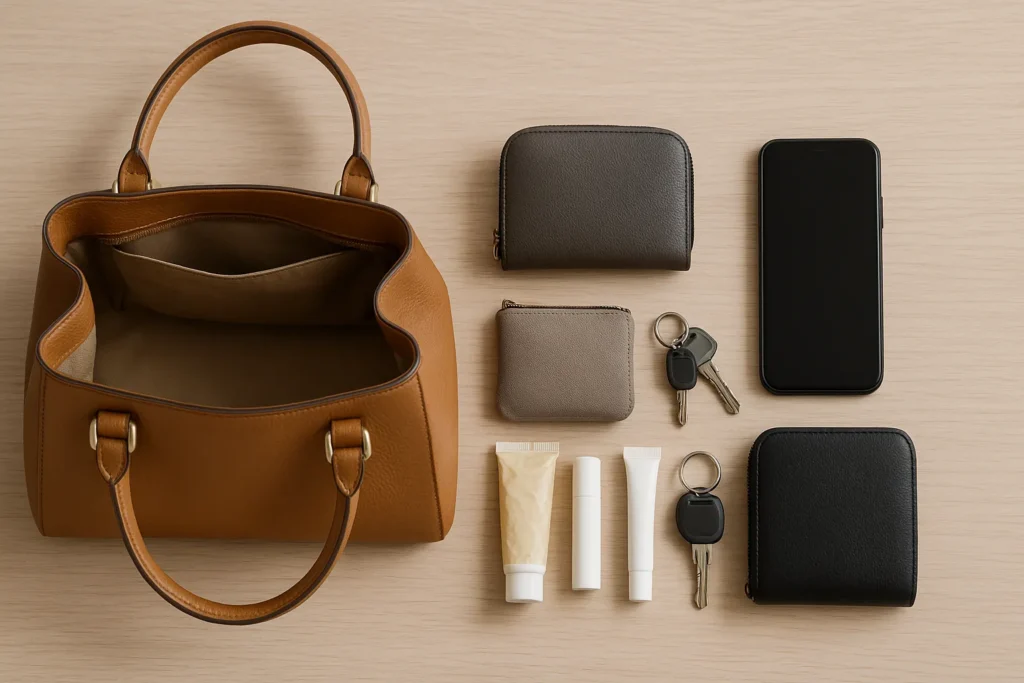
Your bag should feel like a tool kit, not a black hole. Dump everything onto a clean surface.
Sort What’s Inside
- Trash: old receipts, candy wrappers, dead pens
- Relocate: toys, mail, random extras that belong elsewhere
- Essentials: wallet, keys, phone, tissues, lip balm, one hand cream, earbuds, one small snack
Create Tiny Zones
- One small pouch for personal care
- One small pouch for tech (charger, battery, earbuds)
- A slim wallet with just the cards you actually use
- Keys on a clip so they’re easy to grab
Lighten The Load
Choose the smallest bag that still fits your real life. Less space automatically means less clutter.
Weekly Reset
Once a week, pull out receipts, toss wrappers, and reorganize the pouches so everything feels fresh again.
Mini Rule For Later
If something new goes into the bag permanently, something old comes out.
10. TV Console (20–35 Minutes)
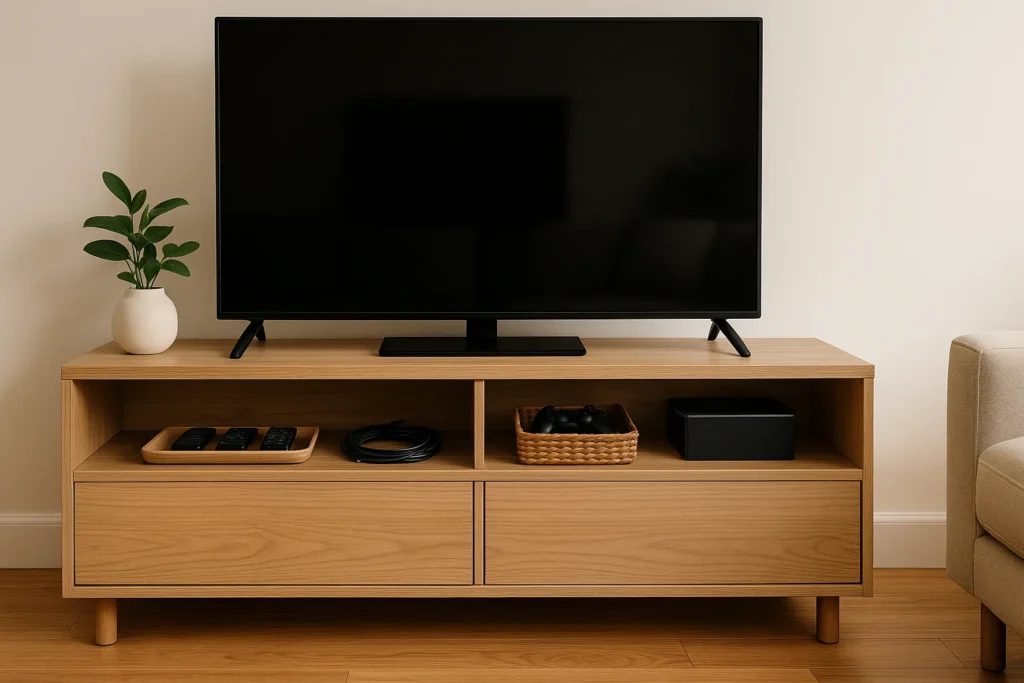
Your TV area can easily become a hiding place for “later.” Today, you’re turning it into a calm, functional zone.
Empty every drawer and shelf first.
Decide What’s Worth Keeping Here
- Current remotes and controllers
- Cables you use regularly
- Favorite games or movies your household actually watches
- A small spot for batteries and instructions
Give Everything A Simple Home
- One shallow tray for remotes and two main cables
- A bin or basket for controllers and game pieces
- A slim folder for any paper instructions you truly want nearby
- Clips or ties on the back to guide cables neatly
Two-Minute Reset
At night, drop remotes and controllers back in the tray, coil any loose cables, and take stray mugs or snacks to the kitchen.
Mini Rule For Later
If it doesn’t help you watch, play, or relax in this spot, it doesn’t live in the console.
11. Closet “Top 10” Purge (30–60 Minutes)
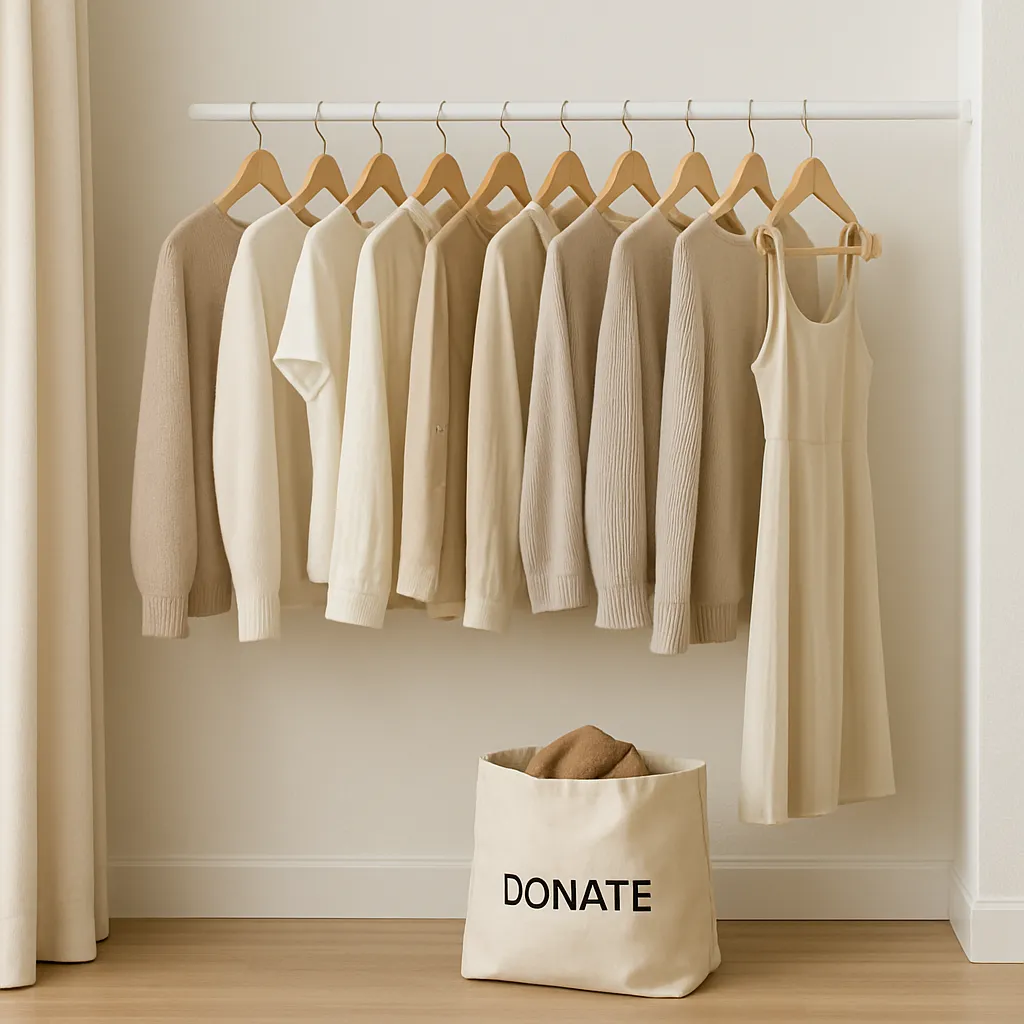
You don’t have to pull out your whole wardrobe to make progress. Just target the loudest clutter.
Grab a donate bag and a “maybe” bin.
Hunt These 10 Items
- Itchy pieces you never reach for
- Too tight or too loose items
- Almost-duplicates (keep your favorite version)
- Stained or damaged clothes you won’t realistically fix
- Shoes that hurt every time
- “One day” outfits that don’t match your current life
- Freebies and logo tees you don’t like
- Old bras and underwear that have given up
- Sentimental clothing you never wear (keep one hero piece, photograph the rest)
- Piles of empty hangers that invite more clutter
Quick Reset
- Use one style of hanger if you can
- Face everything the same direction
- Make a tiny “try this week” section with 3 maybe-items and actually wear them
Exit Plan
Put your donation bag straight into the car. Plan a drop-off with your next errand so the bag doesn’t move from corner to corner.
Mini Rule For Later
For every new item that enters, one old piece has to leave—and it must earn a hanger.
12. Bathroom Linen Closet (20–40 Minutes)
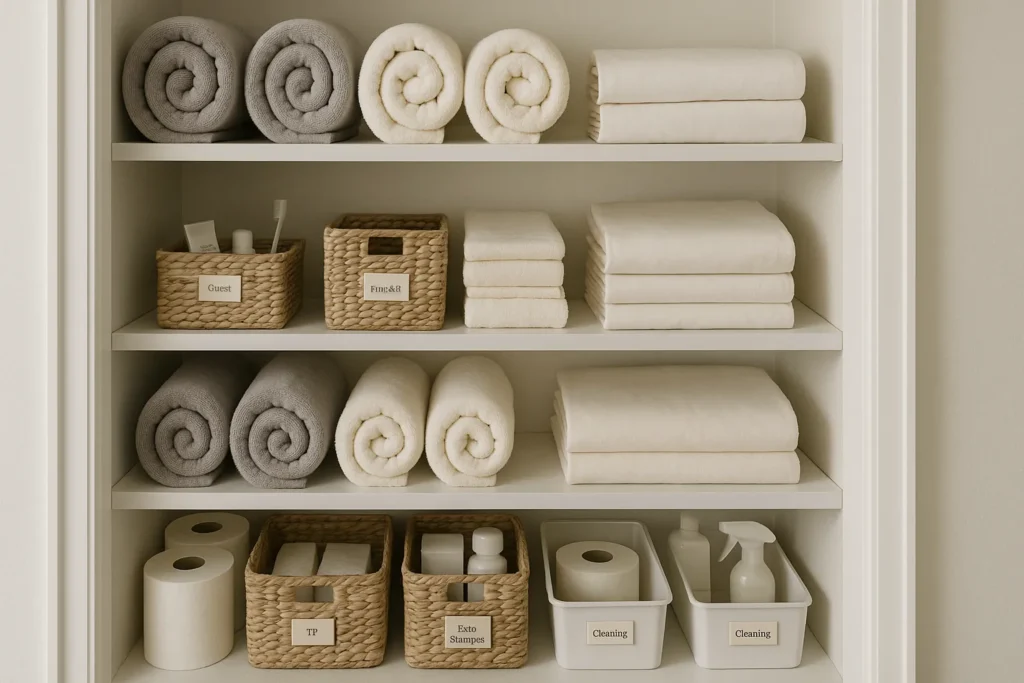
This is where towels, sheets, and random extras quietly pile up. You’re going to turn it into a mini home spa shelf instead of a messy cave.
Pull everything out and give shelves a fast wipe.
Sort Like A Store
- Towels: Keep your best and softest. Aim for about two bath + two hand + two washcloths per person, plus a small guest set.
- Sheets: Two good sets per bed is usually enough.
- Backstock: Group extra toiletries and paper products so you can actually see what you own.
- First-aid: Give these their own bin so you can grab it easily.
Put It Back Calmly
- Roll or fold towels neatly with edges facing the back
- Use labeled bins or baskets (Guest, First Aid, TP, Extra Shampoo, Cleaning)
- Tuck each sheet set inside one pillowcase so it’s a ready-made bundle
A Simple Guest Shelf
Create one little shelf or basket with guest-ready basics: towels, washcloths, toothpaste, spare toothbrush, mini lotion. Grab and hand over, no scrambling.
Tiny Habit
Stick a note inside the door that says “Check here first.” When you run out of something in the bathroom, shop your closet before buying more.
Mini Rule For Later
If it doesn’t touch skin, support bath time, or belong to the bedroom, it probably shouldn’t be in the linen closet.
13. Makeup + Hair Tools (25–45 Minutes)
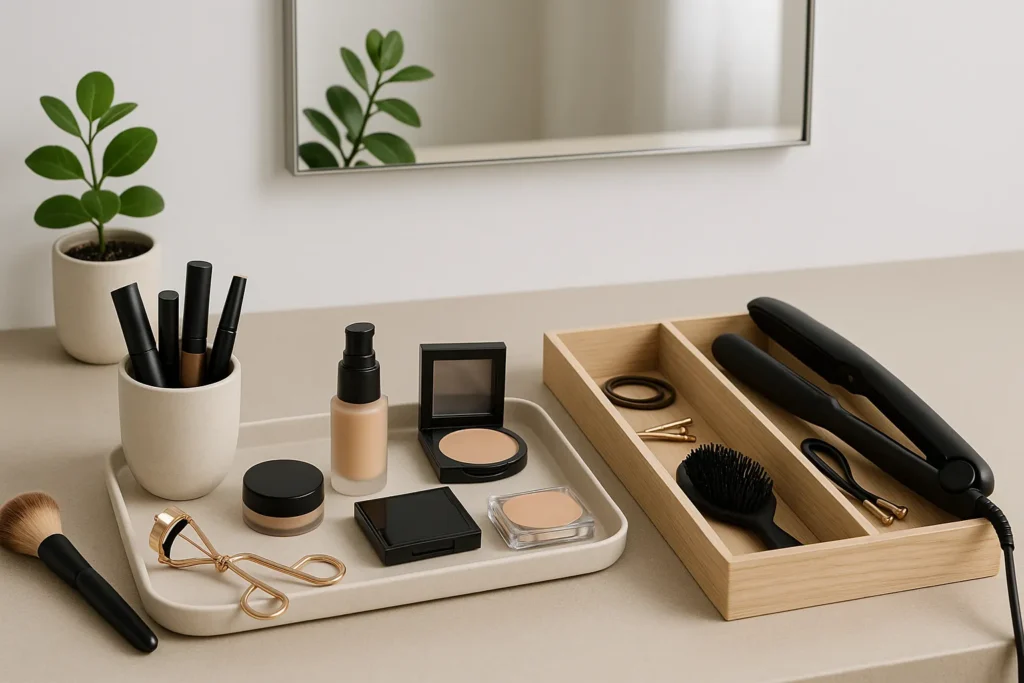
Getting ready is faster and more fun when you’re not digging through products you never use.
Lay a towel down and empty your makeup bag, drawers, cups, and hair-tool tangle.
Make Fast, Honest Decisions
- Throw away dried-out mascara, crusty liners, broken powders, or anything that smells off
- Follow rough timing: mascara and liquid liner every 3–6 months, creamy face products around a year, powders last longer but not forever
- Keep only the shades and products you wear in real life, not just “someday”
Sort By How You Actually Get Ready
- Everyday heroes: the 6–10 products you use on autopilot
- Fun extras: bold colors or glitter you wear occasionally
- Hair kit: one brush, the hot tools you genuinely use, and a small stash of clips and elastics
Give Everything A Home
- Use a cup or tray for daily products, standing upright so you can see them
- Use shallow dividers or boxes in drawers (lips together, eyes together, face together)
- Store hot tools in a heat-safe holder or file stand, with cords tied loosely
Freshen Your Tools
Give brushes a quick wash and wipe handles and hair tools. Everything feels cleaner instantly.
Tiny Habit
When you’re done getting ready, take 30 seconds to cap products, close palettes, and return everything to its spot.
Mini Rule For Later
If a product makes it onto your daily tray, something older or unloved gets moved out.
14. Fridge + Freezer Audit (25–45 Minutes)
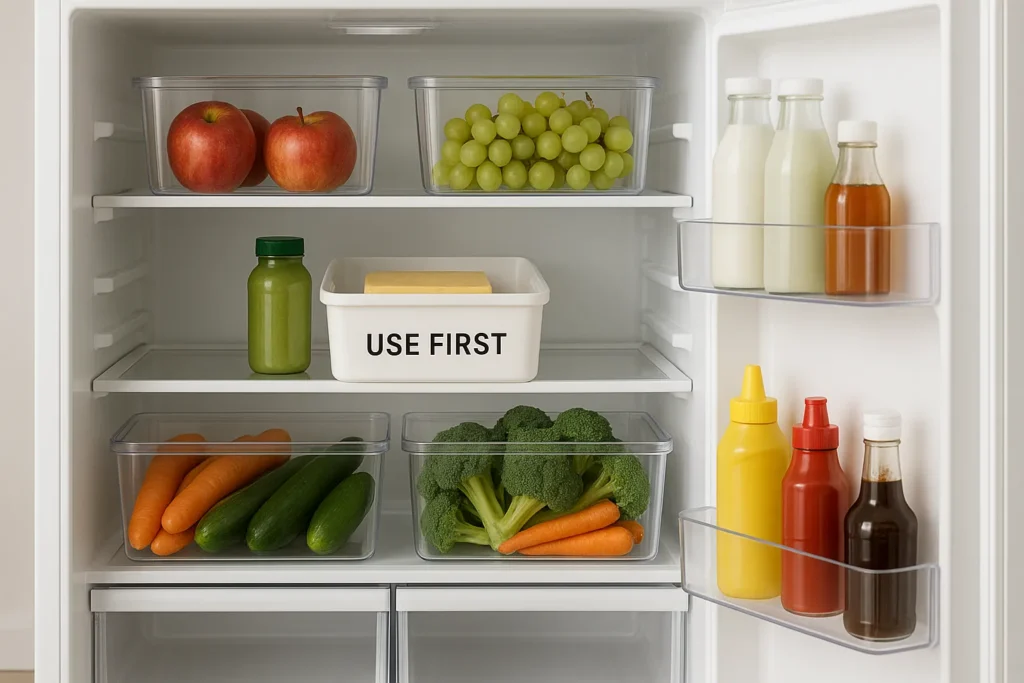
A clean, organized fridge can save money and mental energy. No more mystery containers or surprise science experiments.
Grab a trash bag, recycling bag, two bins labeled Use First and Meal Prep, plus a damp cloth.
Quick Clear
Pull things out shelf by shelf. Toss anything clearly spoiled, moldy, or unidentifiable. Wipe shelves and drawers as you go.
Sort What Stays
- Use First bin: leftovers, open sauces, cut produce, half-used cheese—anything that needs to be eaten soon
- Breakfast zone: keep your morning go-tos together (eggs, yogurt, berries, jam)
- Snack zone: ready-to-grab options like cut veggies, hummus, cheese sticks
- Crispers: one for fruit, one for veggies, so you can see what’s what
Sauce & Condiment Check
Combine duplicates, toss the sticky bottles no one touches, and let go of sauces you haven’t used in months.
Leftover Rule
Label leftovers with the date and name. If you wouldn’t eat it tomorrow, you’re not going to eat it next week.
Freezer Reset
- Toss anything freezer-burned or older than you want to admit
- Group by type: proteins, vegetables, fruit, bread/baked goods, quick meals
- Start a soup bag for veggie scraps and a smoothie bag for ripe fruit
Make It Easy To Keep Tidy
Use shallow bins like pull-out drawers and keep a dry-erase marker on the freezer door to jot a simple inventory.
Tiny Habit
Once a week, peek into your Use First bin and plan one or two simple meals around what’s in there.
Mini Rule For Later
Always “shop” your fridge and freezer before you write a grocery list.
Your 2-Day Reset: Things To Declutter This Weekend For A Calmer Home
You don’t have to tackle all 14 zones in one go. Pick a few of these things to declutter this weekend, set a timer, and let yourself move quickly. Every bag you fill, every drawer you clear, and every surface you simplify is proof that your home is shifting into a calmer, lighter version of itself.
When Monday comes, notice how it feels to grab your keys easily, open a clean fridge, or step into a bathroom that’s not overflowing. That feeling is your reminder: clutter doesn’t have to be your default.
Weekend Declutter: Quick FAQ
Why use a weekend for decluttering?
A weekend gives you a clear start and finish line. You’ve got two focused days to move through a few high-impact areas, see real progress, and start Monday in a home that already feels lighter.
Where should I start?
Start with one small, contained space like a bathroom cabinet, nightstand, or entry table. Set a 20–25 minute timer, grab a trash bag and a donate box, and work only in that zone until the timer goes off. Tiny wins build fast momentum.
How long will it take?
Most zones in this list take around 20–40 minutes each if you stay focused. Aim to tackle 3–5 of these things to declutter this weekend instead of trying to do everything at once. You can always come back to the rest later.
What supplies do I need?
You just need one trash bag, one recycling bag, a donate box, and a small “maybe” bin with a 30-day limit. A microfiber cloth or simple rag is enough to wipe shelves and drawers as you go—no fancy organizers required to start.
Should I donate or sell?
Donate low-value, bulky, or fussy items that are hard to list. Save selling for higher-value pieces you can realistically photograph, list, and ship within a week. If you keep postponing the sale, it’s better off donated.
How do I stay motivated?
Work in short sprints with music on. Take quick before-and-after photos so you can actually see your progress. And as soon as your donate box is full, put it straight in the car so it doesn’t become new clutter hiding in a corner.