Textured Layers With Curtain Bangs: The Complete Guide for 2026
Ever catch yourself scrolling through hair inspiration photos, wondering how to add life to your long locks without going for a drastic chop? You’re not alone. Textured layers with curtain bangs might just be the refresh you’ve been searching for.
I’ve spent years watching this style evolve from a comeback trend to an absolute staple. What I love about this look is how it manages to be both effortless and polished at the same time. It’s that rare hairstyle that works whether you’re rushing out the door or getting ready for something special.
Here’s the thing – this isn’t just about copying a Pinterest photo. It’s about understanding how textured layers and curtain bangs work together to frame your face, add movement, and give your hair that coveted “I woke up like this” vibe.
Let’s break down everything you need to know.
What Makes Textured Layers With Curtain Bangs Special?
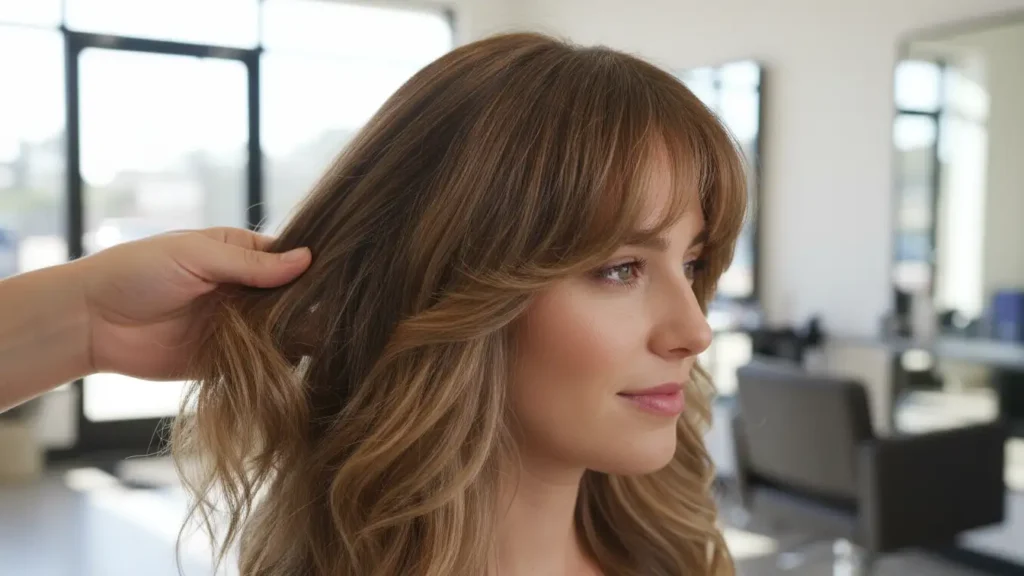
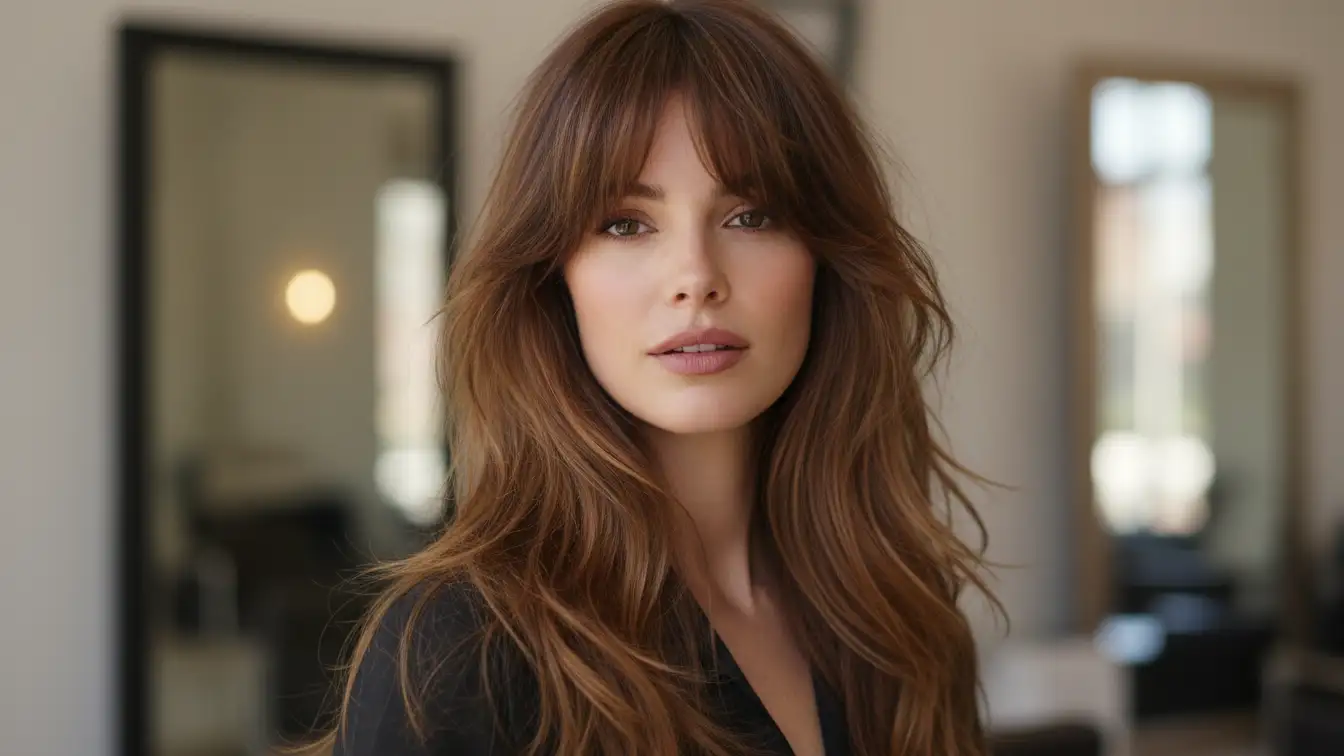
Textured layers with curtain bangs combine two game-changing elements. The layers create dimension and movement throughout your hair, while the curtain bangs frame your face in a way that’s softer than traditional bangs.
Now here’s where it gets interesting. Unlike blunt bangs that sit straight across your forehead, curtain bangs are parted down the middle (or slightly off-center) and sweep to both sides. They’re longer at the outer edges, which means they blend seamlessly into your layers.
The texture comes from strategic cutting techniques. Your stylist might use point cutting, slide cutting, or texturizing shears to create those soft, lived-in ends. This removes bulk without sacrificing length, giving you that bouncy, dimensional look.
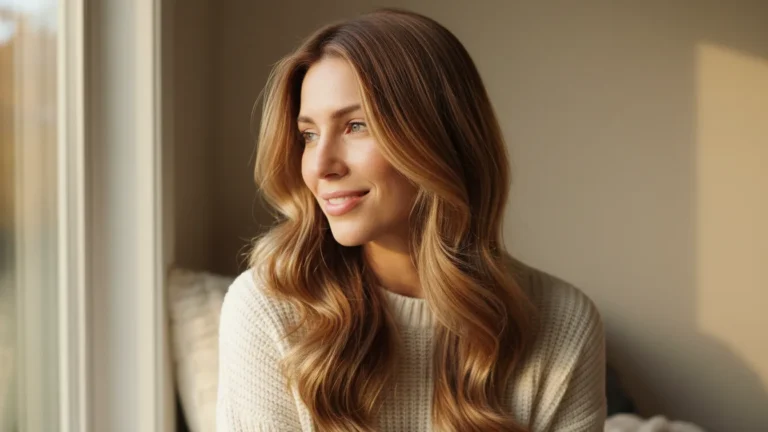
In my experience, this style works because it’s incredibly versatile. You can wear it straight, wavy, or curly. You can tuck it behind your ears or let it flow freely. That adaptability is what makes textured layers with curtain bangs such a smart choice.
Why This Style Is Trending Right Now

Social media has definitely played a role, but the real reason this look has staying power goes deeper. People want hairstyles that don’t demand perfection. We’re moving away from ultra-sleek, high-maintenance cuts toward styles that embrace natural texture.
Curtain bangs with layers hit that sweet spot. They give you polish without the pressure. Your hair doesn’t need to be perfectly straight or meticulously curled. The texture works with your natural movement, not against it.
Understanding Your Face Shape and Hair Texture
Before you book that salon appointment, let’s talk about customization. Textured layers with curtain bangs aren’t one-size-fits-all, and that’s actually a good thing. Here’s what you need to consider.
Face Shape Matching Guide
Oval Faces: You’ve got the most flexibility here. Almost any variation of curtain bangs will flatter you. You might be wondering whether to go shorter or longer with your bangs – I’d say experiment with where they hit on your face. Cheekbone-length is a safe bet.
Round Faces: Longer curtain bangs that graze your cheekbones will help elongate your face. Keep the layers starting below your chin to create vertical lines. Avoid too much volume at the sides, which can add width.
Square Faces: Soft, feathered textured layers are your best friend. They’ll balance out strong jawlines. Your curtain bangs should have plenty of movement and texture – nothing too blunt or heavy.
Heart-Shaped Faces: This is where curtain bangs really shine. They balance a wider forehead beautifully. Keep your layers starting around chin or collarbone length to add volume where your face naturally narrows.
Long/Oblong Faces: You’ll want to add width, not length. Shorter, fuller curtain bangs that hit around eyebrow level work well. Add layers throughout to create horizontal volume.
Hair Texture Considerations
Fine Hair: Textured layers are magical for you. They create the illusion of thickness by removing weight and allowing hair to lift at the roots. Ask your stylist for light, strategic layering – not too much, or you’ll lose density. Your curtain bangs should start around eyebrow length so they have enough weight to hold their shape.
Thick Hair: You need those layers to manage bulk. Medium to heavy layering will remove weight while maintaining length. Curtain bangs can be slightly thicker for you since you’ve got the density to spare. Just make sure your stylist thins them out properly so they don’t sit like a shelf on your forehead.
Wavy Hair: This texture was basically made for textured layers with curtain bangs. The waves enhance the dimensional look of layers. Your bangs might need to be cut slightly shorter when wet since they’ll elongate as they dry and wave up.
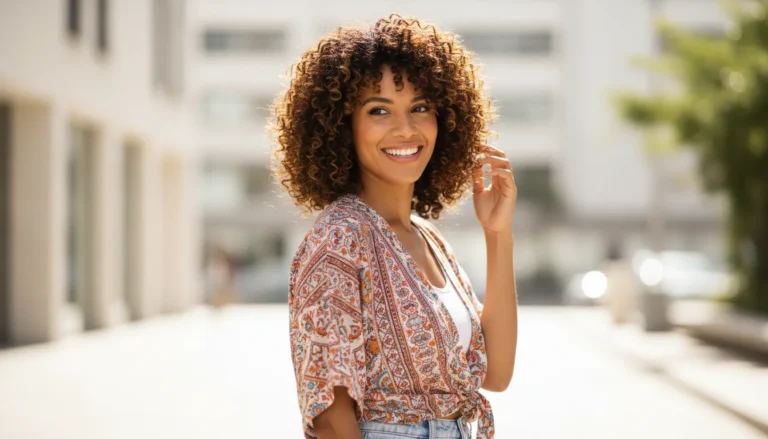
Curly Hair: Yes, this style absolutely works for curls! The key is dry cutting. Your stylist should cut your curls when they’re dry and in their natural state. Curtain bangs on curly hair need to account for shrinkage – they should be cut longer than you think.
Straight Hair: You’ll get a sleek, polished version of this look. The texture comes more from cutting technique than natural movement. Point cutting and texturizing will be essential to prevent your layers from looking too blunt or heavy.
15+ Stunning Textured Layers With Curtain Bangs Ideas
Let me walk you through some of my favorite variations. Each one offers something different, and I’ve included specific guidance on who they work best for.
1. Classic Warm Copper Textured Layers With Curtain Bangs

This look combines rich copper tones with soft, face-framing layers. The color adds warmth and dimension, while the textured layers create movement that catches the light beautifully.
What I love about this style is how the copper tone makes the curtain bangs pop. When they sweep across your face, you get these gorgeous dimensional highlights that draw attention to your eyes.
Best for: Oval and heart-shaped faces with warm or neutral skin undertones. Works beautifully on medium-textured hair that holds color well.
Styling difficulty: Moderate. The copper color requires maintenance every 6-8 weeks, and you’ll need color-safe products. The actual styling takes about 15 minutes with a round brush and texturizing spray.
Maintenance needs: Trim your curtain bangs every 4-6 weeks. Use a purple or blue shampoo once a week to prevent brassiness. Deep condition every other week to keep the color vibrant.
2. Edgy Charcoal Feathered Curtain Bangs With Layers
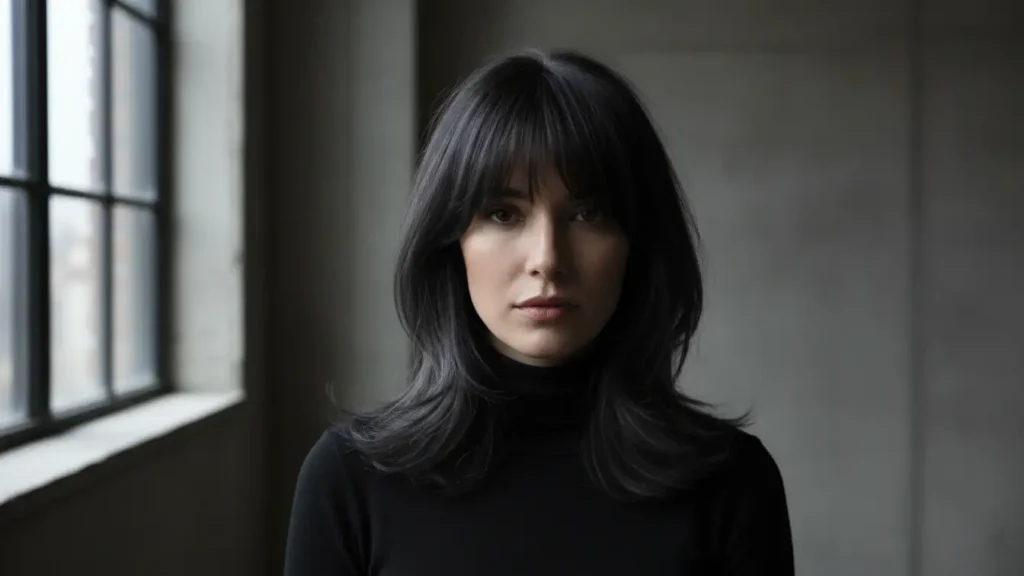
Here’s where things get a bit more dramatic. Charcoal tones create striking contrast, especially if you have lighter skin. The feathered texture in the bangs gives them a soft, wispy quality that prevents the dark color from looking too harsh.
The textured layers throughout add movement without making the dark color feel heavy. It’s sophisticated with just the right amount of edge.
Best for: Square and oval faces. The soft feathering balances angular features. Works on all hair types, but looks especially stunning on fine to medium hair where the feathering really shows.
Styling difficulty: Easy to moderate. Dark hair shows shine beautifully, so you’ll want to keep it healthy. Blow dry with a round brush for volume, or let it air dry for a more relaxed look.
Maintenance needs: Color touch-ups every 4-6 weeks to cover roots. The feathered texture means you can go slightly longer between trims – every 6-8 weeks is fine for the overall cut.
3. Sun-Kissed Honey Highlight Textured Layers With Curtain Bangs

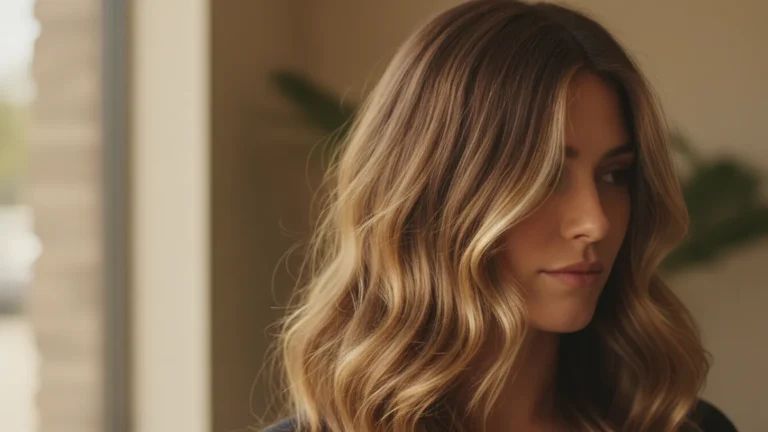
This is summer in a hairstyle. Honey highlights woven through textured layers create a warm, luminous effect. The curtain bangs catch the lightest pieces, framing your face with brightness.
Now here’s where it gets interesting – the placement of those highlights matters. They should be concentrated around the face and through the top layers where they’ll catch the most light.
Best for: Round and oval faces. The brightness draws the eye upward and inward, which is flattering for wider face shapes. Works best on light brown to medium brown base colors.
Styling difficulty: Easy. The highlights create dimension even when your hair is simply air-dried. A bit of texturizing spray and you’re done. About 10 minutes for casual styling.
Maintenance needs: Highlights need refreshing every 8-10 weeks. Use a purple shampoo weekly to keep them from turning brassy. Trim every 6 weeks to maintain shape.
4. Cool Silvery Ash Textured Layers With Curtain Bangs
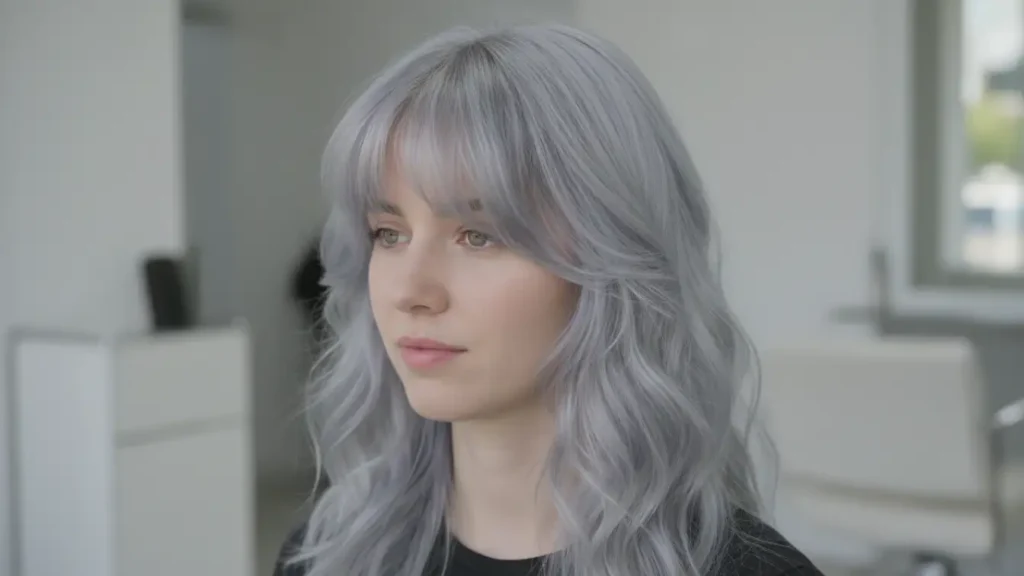
This sophisticated look features cool-toned ash colors that give your hair an almost metallic quality. The curtain bangs are cut to lightly brush the eyebrows, then taper into longer pieces that blend with your layers.
The silvery tones work beautifully with the texture because each layer reflects light differently. You get this gorgeous dimensional effect that looks expensive and polished.
Best for: Heart and diamond face shapes. The cool tones work best with cool or neutral undertones in your skin. Ideal for fine to medium hair texture.
Styling difficulty: Moderate. Ash tones require significant upkeep to prevent warmth from showing through. Daily styling takes about 15 minutes with proper products.
Maintenance needs: This is high maintenance, friends. Color appointments every 4-5 weeks, purple shampoo 2-3 times weekly, and regular deep conditioning treatments. Curtain bangs need trimming every 4 weeks.
5. Rich Ruby Textured Layers With Curtain Bangs
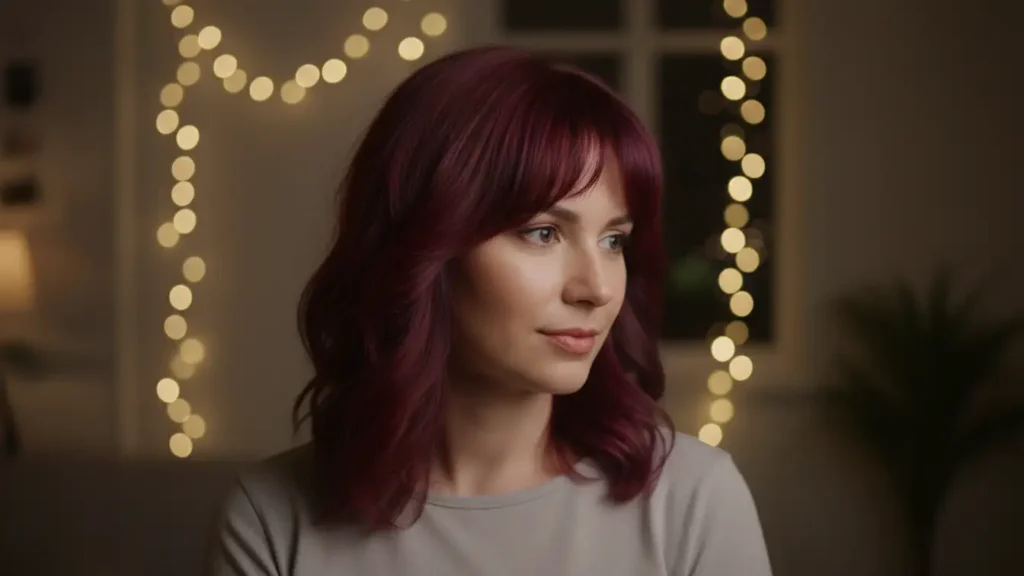
Bold, vibrant, and attention-grabbing. Ruby tones add warmth and vibrancy that really makes a statement. The textured layers prevent the color from looking flat, giving you that multidimensional richness.
Your curtain bangs become a focal point with this color. They frame your face in warm, glowing tones that enhance your complexion and draw attention to your eyes.
Best for: Oval faces and those with warm undertones. The bold color works on all hair textures, but looks especially vibrant on medium to thick hair that holds color intensity.
Styling difficulty: Easy. The color does most of the work for you. Simple blow drying or air drying with some texturizing cream takes about 10-15 minutes.
Maintenance needs: High maintenance color. Expect salon visits every 4-6 weeks. Use color-depositing shampoo weekly to maintain vibrancy. Trim curtain bangs every 4-5 weeks.
6. Soft Champagne Blonde Textured Layers With Curtain Bangs
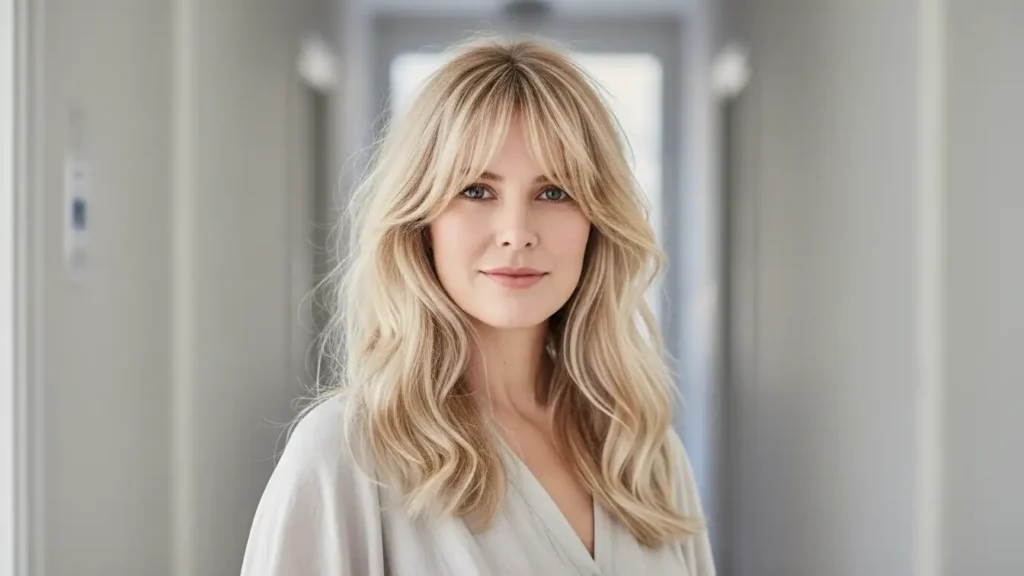
This elegant look features soft, buttery blonde tones that have a slight warmth to them. The textured layers create movement, while the champagne color adds a luxurious, polished feel.
What I love about this version is how forgiving it is. The soft color doesn’t show roots as harshly as platinum would, and the texture disguises any bad hair days.
Best for: Heart, oval, and round face shapes. Best suited for those with cool to neutral undertones. Works beautifully on fine to medium hair.
Styling difficulty: Moderate. You’ll need to maintain the blonde, which means proper products and techniques. Styling takes 15-20 minutes for a polished look.
Maintenance needs: Blonde requires commitment. Salon appointments every 6-8 weeks, purple shampoo 2-3 times weekly, deep conditioning treatments weekly. Trim every 6 weeks.
7. Sunset Ombre Textured Layers With Curtain Bangs
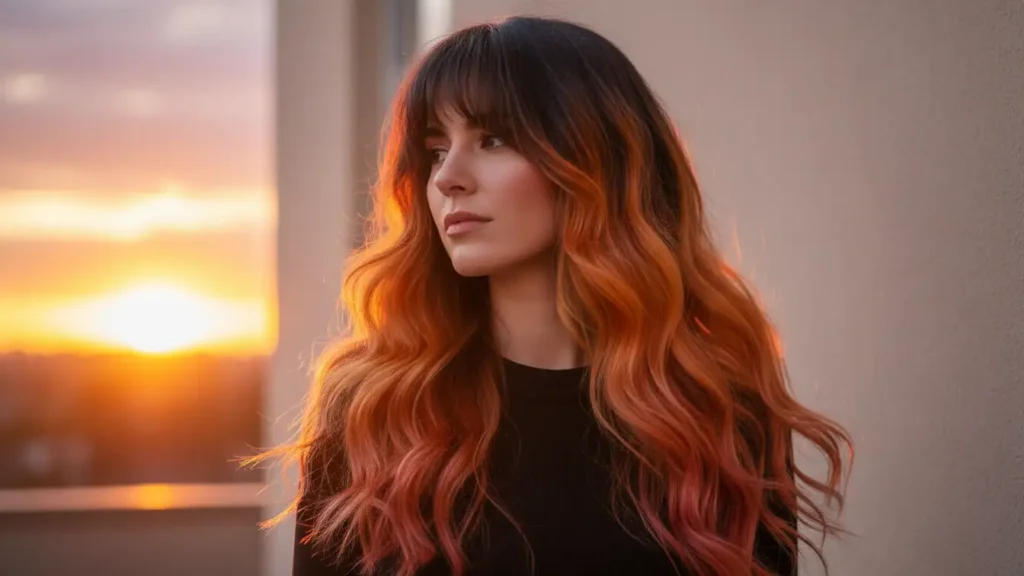
This dramatic style features a gradient effect that transitions from darker roots to lighter, warmer ends. The textured layers show off the color transition beautifully, creating depth and dimension.
The curtain bangs typically start in the darker shade and might catch some of the transitional color, which creates a soft, blended look that’s less stark than traditional ombre.
Best for: All face shapes. The gradient draws the eye vertically, which is universally flattering. Works best on medium to long hair where you have enough length to show the transition.
Styling difficulty: Easy. The color creates automatic dimension. You can air dry or blow dry – both look great. About 10-15 minutes of styling time.
Maintenance needs: Lower maintenance than all-over color. You can go 8-12 weeks between salon visits since roots are supposed to be darker. Trim every 6-8 weeks.
8. Peachy Pink Textured Layers With Curtain Bangs

Soft, romantic, and playful. Peachy pink tones add a subtle pop of color that’s not too bold but definitely makes a statement. The textured layers prevent the color from looking cartoonish by creating natural-looking dimension.
This works especially well for spring and summer when people want something fresh and fun. The curtain bangs frame your face in soft, warm tones that are incredibly flattering.
Best for: Oval and heart faces. Works best on those with neutral to warm undertones. Ideal for fine to medium hair that holds pastel colors well.
Styling difficulty: Moderate. Pastel colors fade quickly, so you’ll need color-depositing products. Styling takes about 15 minutes with heat tools or texturizing products.
Maintenance needs: High maintenance. Pastel colors fade fast – expect salon visits every 4-5 weeks. Use color-depositing conditioner weekly. Trim every 5-6 weeks.
9. Deep Espresso Textured Layers With Curtain Bangs
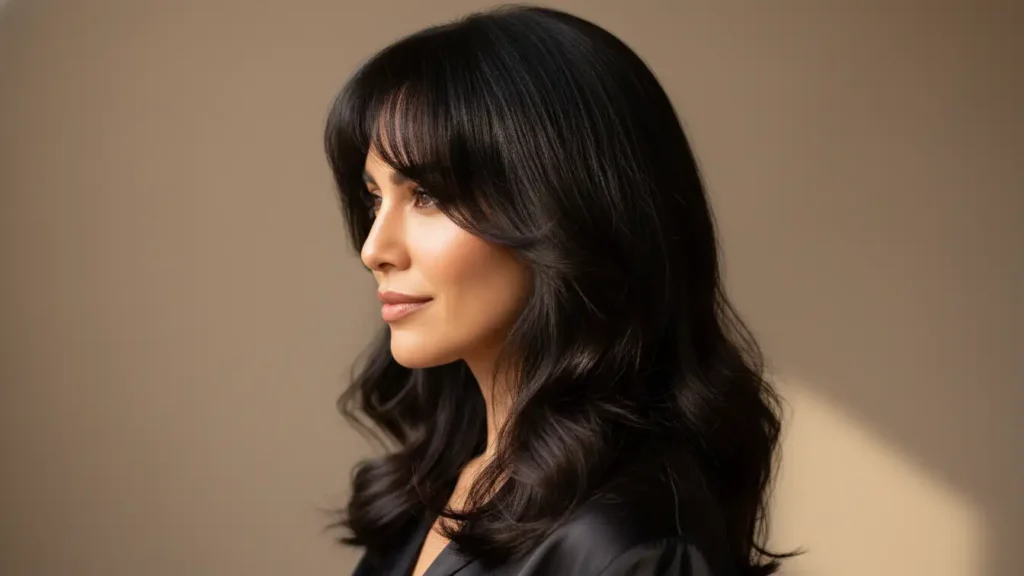
Rich, glossy, and timeless. Deep brown tones with textured layers create a look that’s sophisticated and classic. The darkness shows shine beautifully, making your hair look incredibly healthy.
The curtain bangs in this deep color create a striking frame for your face. They draw attention to your eyes and cheekbones without being too dramatic.
Best for: All face shapes, but especially flattering on square faces where the softness balances strong features. Works on all hair types and textures.
Styling difficulty: Easy. Dark hair naturally looks polished. Air drying with some texturizing cream takes 10 minutes. Heat styling for sleeker looks takes about 15 minutes.
Maintenance needs: Relatively low maintenance. Color touch-ups every 6-8 weeks for roots. Regular trims every 6 weeks to maintain the textured layers and prevent split ends.
10. Beachy Blonde Textured Layers With Choppy Curtain Bangs
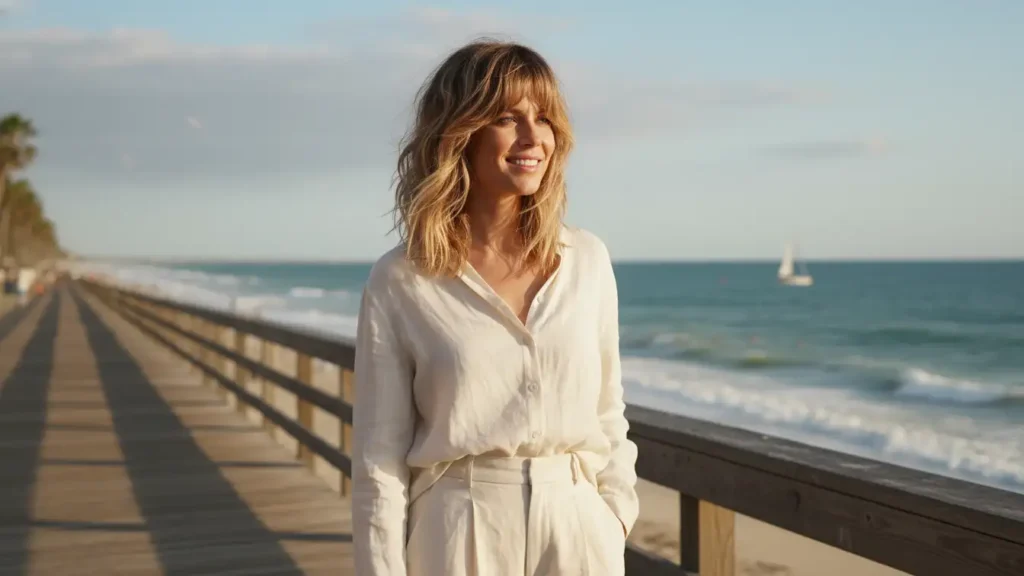
This relaxed style features choppy, piece-y textured layers throughout and curtain bangs that are intentionally imperfect. The blonde tones have variation – some lighter, some slightly darker – for that natural, sun-kissed effect.
What makes this different from other blonde styles is the choppy texture. It’s not polished or refined. It’s meant to look a bit undone, like you just came from the beach.
Best for: Oval, round, and heart faces. The choppy texture adds angles that can balance rounder features. Works best on wavy or naturally textured hair.
Styling difficulty: Easy. This style actually looks better when it’s a bit messy. Scrunch in some sea salt spray and go. Takes about 5-10 minutes.
Maintenance needs: Blonde upkeep every 6-8 weeks. The choppy nature means you can stretch trims to every 8 weeks. Use purple shampoo weekly.
11. Mocha Brown Textured Layers With Babylights and Curtain Bangs
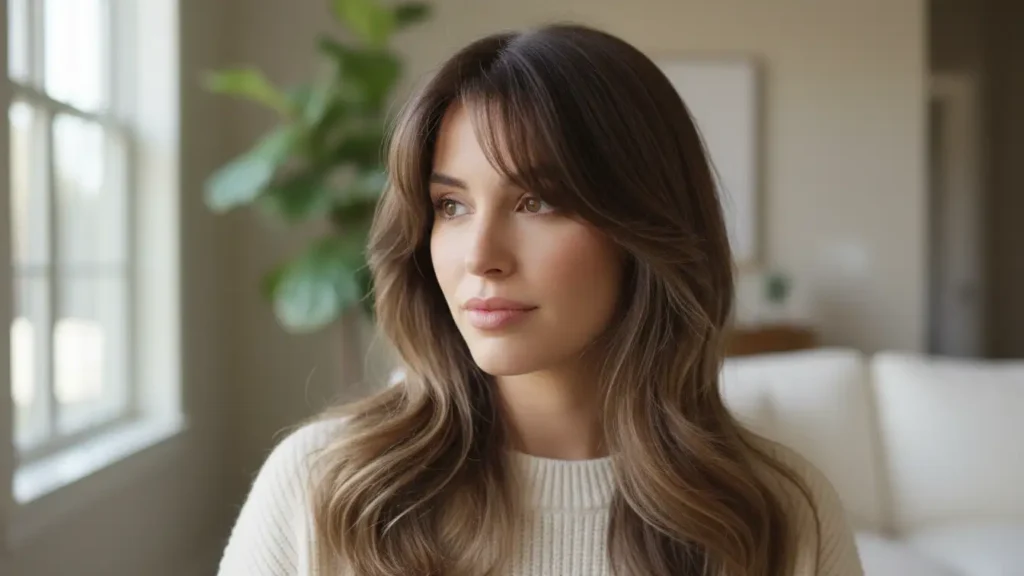
This sophisticated look combines a mocha brown base with delicate babylights throughout. The textured layers show off the subtle highlights beautifully, creating a multidimensional effect that’s rich and warm.
The babylights in the curtain bangs are especially impactful. They catch the light as your bangs move, creating a gorgeous glowing effect around your face.
Best for: All face shapes. The subtle highlighting is universally flattering. Works on all hair textures but looks especially beautiful on medium to thick hair.
Styling difficulty: Easy to moderate. The color does most of the work. Simple blow drying takes about 15 minutes. Air drying looks great too.
Maintenance needs: Moderate. Babylights grow out naturally, so you can go 10-12 weeks between appointments. Trim every 6 weeks. Use color-safe products to maintain richness.
12. Platinum Blonde Textured Layers With Wispy Curtain Bangs
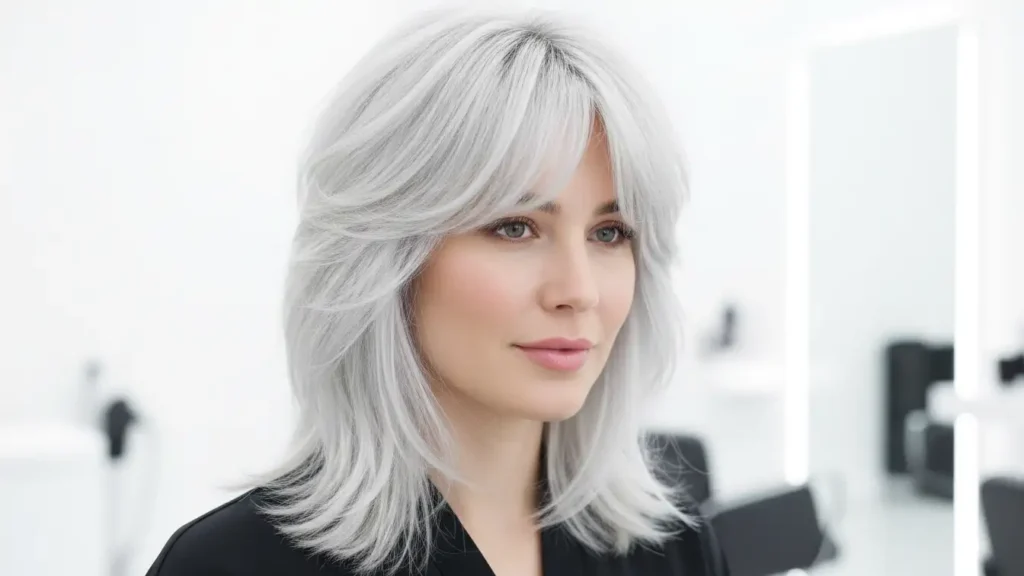
Bold, bright, and striking. Platinum blonde is a statement color, and when paired with textured layers and wispy curtain bangs, it creates an edgy, fashion-forward look.
The wispy quality of the bangs keeps this from looking too harsh. They’re soft and feathery, creating a delicate contrast with the bold color.
Best for: Heart and oval faces. Best on those with cool undertones. Works best on fine to medium hair where the wispy texture shows well.
Styling difficulty: Moderate to high. Platinum is demanding – you need proper products and techniques. Styling takes 15-20 minutes with heat protectant and finishing products.
Maintenance needs: Very high maintenance. Salon appointments every 3-4 weeks to maintain the platinum and prevent brassiness. Purple shampoo 3-4 times weekly. Deep conditioning treatments twice weekly. Trim every 4-5 weeks.
13. Golden Blonde Textured Layers With Face-Framing Highlights
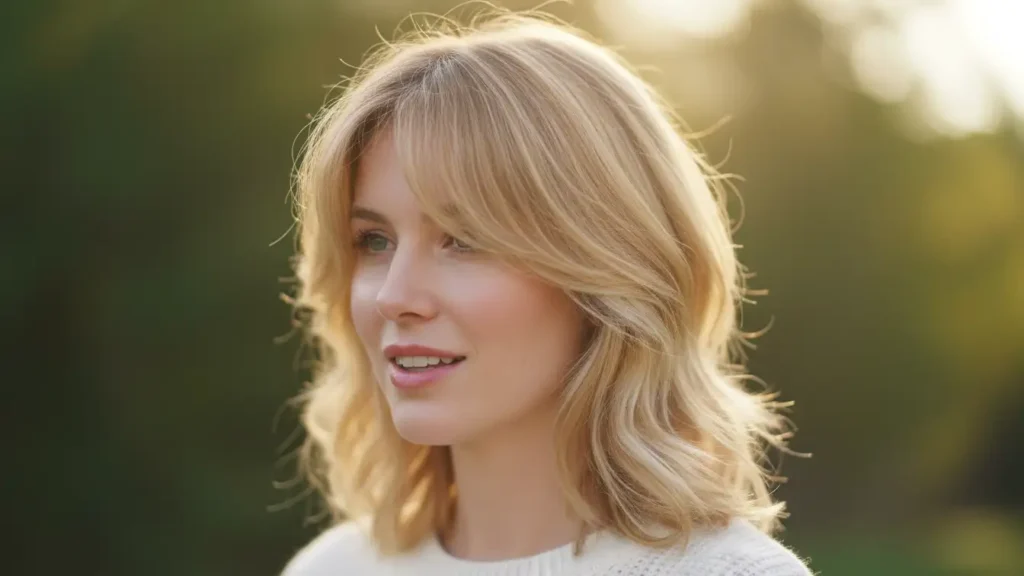
Warm, sunny, and youthful. Golden blonde tones with concentrated highlights around the face create a lifted, brightened effect. The textured layers ensure the color doesn’t look flat.
The face-framing highlights in the curtain bangs are the key here. They’re slightly lighter than the rest of your hair, drawing attention to your features and creating that lit-from-within glow.
Best for: Round, oval, and square faces. The brightness elongates and lifts. Works best on those with warm or neutral undertones. Ideal for medium textured hair.
Styling difficulty: Easy. The strategic highlighting means even simple styling looks dimensional. Takes about 10-15 minutes with basic blow drying.
Maintenance needs: Moderate. Highlights need refreshing every 8-10 weeks. Use purple shampoo weekly. Trim every 6 weeks to maintain the face-framing shape.
14. Blunt Bangs Meets Curtain Bangs Hybrid With Textured Layers
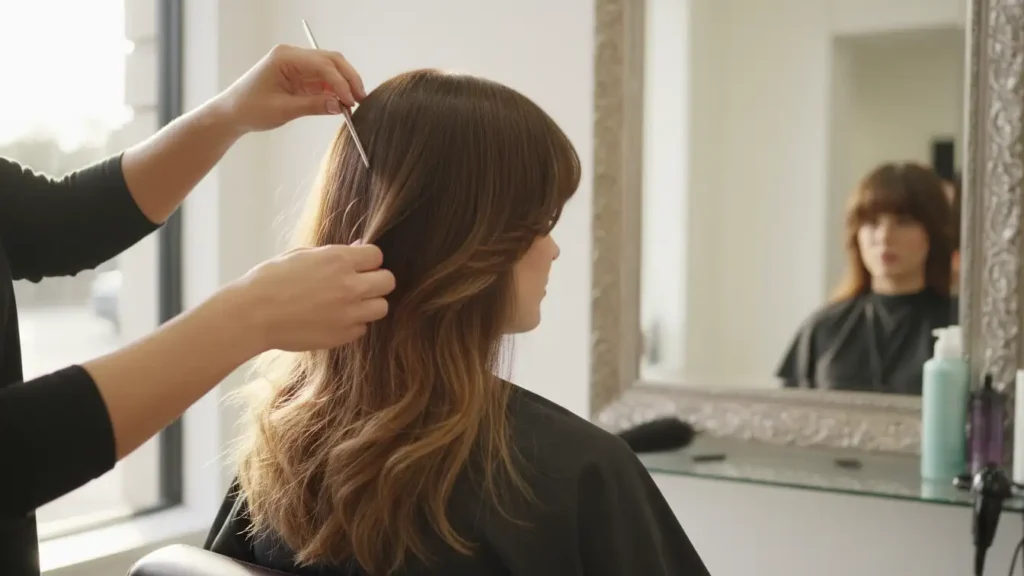
This unique style combines the best of both worlds – blunt bangs across the center of your forehead with longer pieces at the sides that sweep back like curtain bangs. The textured layers throughout add movement and prevent the bangs from looking too heavy.
It’s an interesting compromise if you love the look of full bangs but want the versatility of curtain bangs. You get fringe coverage in the middle with face-framing softness on the sides.
Best for: Oval and heart faces who want to hide a larger forehead while still getting face-framing benefits. Works on most hair textures.
Styling difficulty: Moderate. You’re essentially styling two different bang styles. Takes about 15-20 minutes with a round brush and possibly a flat iron.
Maintenance needs: High maintenance on the bang front – you’ll need trims every 3-4 weeks to keep the blunt section from getting too long. Overall cut every 6-8 weeks.
15. Warm Terracotta Textured Layers With Curtain Bangs

This earthy, grounded color features warm reddish-brown tones that have a natural, organic feel. The textured layers create movement, while the warm color adds depth and richness.
The terracotta tones in your curtain bangs frame your face in warm, flattering color. It’s less vibrant than red but more interesting than plain brown.
Best for: Oval, square, and round faces. Works beautifully on those with warm or neutral undertones. Ideal for medium to thick hair that holds rich colors well.
Styling difficulty: Easy. The warm color looks great with minimal styling. Air drying with texturizing products takes 10 minutes. Heat styling takes about 15 minutes.
Maintenance needs: Moderate. Color appointments every 6-8 weeks. Use color-safe products to prevent fading. Trim every 6 weeks to maintain the textured layers.
Finding Your Perfect Textured Layers With Curtain Bangs Style
Now that you’ve seen the options, let’s make this practical. Here’s a quick reference guide to help you match your features with the right style.
| Face Shape | Best Layer Length | Ideal Bang Length | Texture Level | Top Color Choices |
|---|---|---|---|---|
| Oval | Chin to collarbone | Eyebrow to cheekbone | Medium to heavy | All colors work |
| Round | Below chin start | Cheekbone length | Medium layers | Dimension, highlights |
| Square | Chin length start | Cheekbone to chin | Soft, feathered | Warm tones soften |
| Heart | Chin to shoulder | Eyebrow to nose bridge | Light to medium | Balayage, ombre |
| Long/Oblong | Above chin start | Eyebrow to bridge | Heavy, voluminous | Rich, solid colors |
| Diamond | Cheekbone level | Temple to cheekbone | Medium layers | Face-framing lights |
How to Ask Your Stylist for Textured Layers With Curtain Bangs
Communication is everything when you’re sitting in that salon chair. Here’s exactly what to say and bring to get the results you want.
Bring Visual References
Don’t just bring one photo. Bring 3-5 images that show the exact look from different angles. Make sure they show:
- The length and placement of the curtain bangs
- How the textured layers fall throughout the hair
- The color or highlighting technique you want
- The overall texture and styling
Save these to your phone or print them out. Visual communication eliminates so much confusion.
Use These Specific Phrases
For your curtain bangs: “I want face-framing curtain bangs that hit at [eyebrow/cheekbone/chin] length when styled. Please angle them so they gradually get longer as they move toward my ears and blend into my layers. I prefer [soft and wispy / slightly thicker with more weight].”
For your textured layers: “I’d like [light/medium/heavy] textured layers throughout, starting at [chin/shoulder/collarbone] length. Please use [point cutting/slide cutting/texturizing shears] to create soft, blended texture – nothing choppy or blunt. I want movement and dimension without losing too much weight or length.”
For the overall shape: “I want to maintain my length at [specific measurement]. The layers should create an oval shape overall, with the most movement around my face. Can you check the balance from both the front and back to make sure it’s even?”
Questions to Ask Your Stylist
Don’t be shy about asking questions. A good stylist will appreciate your thoroughness.
“How often will I need to trim the curtain bangs to maintain this shape?”
“What’s your cutting technique for creating the texture in the layers? Will you use a razor, texturizing shears, or point cutting?”
“How will this cut work with my natural texture? Will I need to heat style it every time, or can I air dry it?”
“What products do you recommend for maintaining this look at home?”
“If I don’t like how the curtain bangs sit after a few days, can I come back for an adjustment?”
Styling Your Textured Layers With Curtain Bangs at Home
Let’s talk about the daily reality of this hairstyle. You might be wondering if it’s high maintenance or if you can roll out of bed looking decent. Here’s the truth.
Daily Styling Routine (15-20 Minutes)
Step 1: Start With the Right Foundation
Wash your hair with products suited to your texture. If you have fine hair, use volumizing products. Thick hair benefits from smoothing formulas. Apply a heat protectant to damp hair – this is non-negotiable if you’re using any heat tools.
Step 2: Tackle Those Curtain Bangs First
This is the most important part. Section out your curtain bangs in a triangle shape at the front. Using a round brush (I recommend a 2-inch barrel), blow dry them forward first. Yes, forward – even though they’ll end up swept to the sides.
Once they’re about 80% dry, switch direction and blow dry them to each side, pulling the brush up and away from your face. This creates that lifted, swept-back shape. It takes maybe 3-4 minutes total.
Step 3: Rough Dry Your Layers
You don’t need to be precious with the rest of your hair. Flip your head upside down and rough dry with your fingers, scrunching as you go. This builds volume at the roots and encourages natural texture.
If you have straight hair and want more movement, wrap sections around your round brush as you dry. For wavy or curly hair, scrunch in a texturizing cream or curl cream and let it air dry the rest of the way.
Step 4: Add Texture and Finish
Once everything’s dry, spray a texturizing spray throughout, focusing on the mid-lengths and ends. Scrunch it in with your hands. This gives you that piece-y, lived-in texture.
If your curtain bangs need a touch-up, you can use a small flat iron to gently curve them under and to the sides. Takes maybe 30 seconds per side.
Finish with a light hairspray if you need hold, or a shine serum if you want gloss. That’s it – you’re done.
The Lazy Day Method (5-10 Minutes)
We all have those mornings. Here’s how to make textured layers with curtain bangs work when you’re short on time.
Wake up, spray dry shampoo at your roots if needed. Focus on your curtain bangs – they’ll show oil first. Brush through gently.
Spray texturizing spray throughout damp or dry hair. Scrunch it in with your hands. The spray reactivates products from yesterday and adds fresh texture.
Use a flat iron or small round brush to quickly reshape your curtain bangs – just 2-3 minutes. The rest of your hair can be a bit messy. That’s actually the point of textured layers.
Pull the top section back with a clip if things are really rough. The face-framing pieces and curtain bangs will still look intentional.
Products You Actually Need
Let me be real with you – you don’t need 47 products. Here are the essentials:
Heat Protectant Spray: Non-negotiable if you’re using heat tools. Protects up to 450°F and prevents damage. Spray on damp hair before styling.
Texturizing Spray: This is your secret weapon for textured layers. It adds grit, volume, and that piece-y texture without making hair crunchy. Use on damp or dry hair.
Lightweight Styling Cream: For taming frizz and adding definition without weight. Use a dime-sized amount on damp hair, focusing on ends.
Dry Shampoo: Essential for refreshing your curtain bangs between washes. They’ll get oily faster since they touch your forehead.
2-Inch Round Brush: Perfect size for styling curtain bangs and adding volume at the roots. Get one with a ceramic barrel for even heat distribution.
Mini Flat Iron: Great for touch-ups on your bangs throughout the day. A 0.5-inch to 1-inch width is perfect for bangs.
Finishing Spray: Flexible hold hairspray keeps your style in place without stiffness. Look for humidity resistance if you live in a humid climate.
Maintenance Schedule and Cost Breakdown
Let’s talk about the reality of upkeep. Textured layers with curtain bangs do require regular maintenance, but it’s manageable if you plan for it.
Trimming Schedule
Curtain Bangs: Every 4-6 weeks. This is crucial. Bangs grow fast, and once they’re past your desired length, they lose their shape. Some salons offer free bang trims between regular cuts – ask about this.
Overall Cut and Layers: Every 6-8 weeks. This maintains the shape of your textured layers and prevents split ends from traveling up the hair shaft. You can sometimes push this to 10 weeks if you’re growing out your hair.
Mini Trims: Some people do mini trims at home between salon visits. If you’re comfortable with scissors, you can dust the very ends of your bangs. Just be conservative – it’s easier to cut more than to add length back.
Color Maintenance (If Applicable)
All-Over Color: Every 4-6 weeks for permanent color. 6-8 weeks for demi-permanent. The darker your color, the longer you can typically wait.
Highlights/Balayage: Every 8-12 weeks. These grow out more naturally than all-over color, giving you more time between appointments.
Fashion Colors (pink, purple, copper, etc.): Every 4-6 weeks, plus weekly color-depositing treatments at home. These fade faster than natural tones.
Platinum/Blonde: Every 3-6 weeks depending on how fast your hair grows and your natural color. Plus weekly purple shampoo treatments.
Cost Expectations
Prices vary wildly by location and salon, but here’s a general range:
Initial Cut: $50-$150 depending on your location and stylist experience. Major cities will be on the higher end.
Bang Trims: $0-$25. Many salons offer these free or at a minimal cost between regular cuts.
Regular Trims: $40-$100 every 6-8 weeks.
Color Services: $80-$300+ depending on technique. All-over color is typically less expensive than highlighting or balayage.
Color Maintenance at Home: $30-$60 every 2-3 months for purple shampoo, color-depositing treatments, and deep conditioners.
Styling Products: Initial investment of $100-$150 for all the essentials. These last 3-6 months typically.
Annual Investment: Expect to spend $800-$2,500 per year on maintaining textured layers with curtain bangs, depending on whether you’re doing color and how often you visit the salon.
Common Mistakes to Avoid With Curtain Bangs and Textured Layers
I’ve seen (and made) a lot of mistakes with this hairstyle. Let me save you some trouble.
Over-Washing Your Bangs
Your curtain bangs will get oily faster than the rest of your hair because they’re constantly against your forehead. But washing them daily strips natural oils and makes them stringy and lifeless.
Instead, use dry shampoo between washes. Or just rinse your bangs in the sink with water – no shampoo. Pat them dry and restyle with a round brush or flat iron. This extends time between full washes.
Using Too Much Product
Those textured layers need to move. Too much styling cream, oil, or serum weighs them down and makes them look greasy or flat.
Start with a tiny amount – like a dime-sized dollop – and add more only if needed. It’s much easier to add product than to remove it.
Cutting Your Own Bangs When They’re Wet
Wet hair is longer than dry hair. If you absolutely must trim your own curtain bangs between salon visits, do it when they’re completely dry and styled how you normally wear them.
Cut less than you think you need to remove. You can always cut more, but you can’t add length back.
Neglecting Heat Protection
If you’re heat styling your curtain bangs and textured layers daily, you need heat protectant. Every. Single. Time.
Without it, you’ll damage your hair, leading to frizz, split ends, and breakage. Damaged hair doesn’t hold texture or style well, defeating the whole purpose.
Getting Too Many Layers
More isn’t always better. Too many textured layers can make your hair look thin and stringy, especially if you have fine hair.
Be specific with your stylist about the level of layering you want. If you’re unsure, start conservative. You can always add more layers, but you have to grow out excessive layering.
Styling Your Bangs Straight Back
Curtain bangs are meant to sweep to the sides, not be blown straight back off your forehead. If you style them straight back, they’ll stick up awkwardly and lose their curtain shape.
Always blow dry them forward first, then sweep them to the sides. This creates the proper curve and angle.
Troubleshooting Common Issues
Even with the best cut and products, you’ll run into some challenges. Here’s how to handle them.
Your Curtain Bangs Won’t Stay in Place
This usually means they’re either too long, too short, or you’re not styling them correctly. If they’re the right length, try this:
Blow dry them forward first to set the root direction. Then blow dry side to side with tension on the round brush. Use a light hold hairspray while they’re still warm from the blow dryer – this sets the style.
If they’re too long, they’ll flop forward no matter what you do. Time for a trim. If they’re too short, give them a few weeks to grow and use a small amount of styling cream to help coax them into place.
Your Layers Look Stringy or Thin
This happens when there’s too much layering for your hair density. Unfortunately, the only fix is growing them out. While you wait, use volumizing products at the roots and avoid heavy oils or serums that make thinness more obvious.
Ask your stylist to add some weight back on your next visit by trimming less and focusing on the ends only. Future cuts should be more conservative with the layering.
Your Bangs Separate in the Middle Creating a Gap
This is often a cowlick issue. Everyone has a natural growth pattern, and sometimes curtain bangs fight against it.
Try blow drying your bangs in the opposite direction of how they want to fall, then switching to your desired direction. This confuses the cowlick and makes it lie flatter.
You can also ask your stylist to cut your bangs slightly off-center rather than directly in the middle. This works with your natural part instead of against it.
Your Textured Layers Look Frizzy
Frizz usually comes from damage, humidity, or both. Make sure you’re using heat protectant every time you style. Deep condition weekly if you have color-treated hair.
Use an anti-humidity finishing spray in humid climates. Look for products with smoothing silicones that create a barrier against moisture.
Consider switching to microfiber towels or t-shirts for drying – regular towels rough up the hair cuticle and create frizz.
Your Bangs Are Too Short After a Cut
We’ve all been there. If your stylist cut your curtain bangs shorter than you wanted, here’s what you can do:
Style them to the extreme sides of your face rather than directly forward. This makes them appear longer.
Use a small flat iron to create a strong curve under and to the sides. The curl eats up some length but also helps them blend better with your layers.
Pin them back with cute clips while they grow. Bobby pins, barrettes, or small claws work great.
Be patient – hair grows about half an inch per month. In 4-6 weeks, you’ll have much more length to work with.
Seasonal Styling Tips for Textured Layers With Curtain Bangs
Your textured layers with curtain bangs will perform differently throughout the year. Here’s how to adapt.
Summer Styling
Summer means humidity, sweat, and sun damage. Your curtain bangs will be the first to show these effects.
Use a humidity-resistant styling spray on your bangs. This creates a barrier that keeps them from frizzing or going limp in sticky weather.
Embrace the texture summer naturally brings. Instead of fighting frizz, work with it using sea salt spray or texturizing products. The slightly messy, beachy look fits the season.
Protect your color with UV-protectant hair products. The sun fades color fast, especially if you have highlights or fashion colors.
Wear your hair up more often when it’s really hot. Pull your textured layers into a loose ponytail or bun, leaving your curtain bangs out to frame your face. This keeps you cool while still looking intentional.
Fall and Winter Styling
Cold, dry air and indoor heating will dry out your hair. Your textured layers might start looking brittle or lackluster.
Increase your deep conditioning routine to once a week. Focus on the mid-lengths and ends where damage shows first.
Static is a real problem in winter. Use a small amount of hair oil on your hands, rub them together, and smooth over your styled hair. This controls flyaways without making hair greasy.
Your curtain bangs might stick to your forehead more under winter hats. Bring a small travel-size texturizing spray and your mini flat iron if possible. Quick touch-ups in the bathroom take 2 minutes.
Switch to more moisturizing styling products. The same products that worked in summer might not provide enough hydration now.
Spring Styling
Spring rain and unpredictable weather require flexibility. Your textured layers with curtain bangs need to handle both humid and dry conditions.
Keep a small emergency kit in your bag: mini hairspray, bobby pins, and a small comb. Weather changes fast in spring, and you might need quick fixes.
This is a great time to refresh your cut and color before summer. Book your appointment 6-8 weeks before you want to show off your new look.
Lighter products work well as temperatures warm up. Switch from heavy creams to lighter mousses or sprays.
How This Style Works for Different Ages
Textured layers with curtain bangs is surprisingly versatile across age groups. Here’s how to adapt it.
Teens and Twenties
You can get away with bolder colors and more dramatic texture. Fashion colors, heavy layering, and experimental lengths all work well.
Focus on styles that are lower maintenance since you’re probably busier and have less time for complex routines. The beachy, lived-in versions of textured layers work great.
This is also when you can be more adventurous with length. Super long layers or very short, choppy versions both suit younger faces.
Thirties and Forties
This age range benefits from curtain bangs that add softness without looking too young. Medium texture works well – not too choppy, not too blunt.
Face-framing is key now. Your curtain bangs and the layers around your face should enhance your features and draw attention to your eyes.
Consider adding subtle highlights or lowlights for dimension. This adds interest without requiring the high maintenance of all-over color.
Fifties and Beyond
Softer, more refined versions of textured layers with curtain bangs work beautifully. The face-framing elements help lift features and draw focus to your best assets.
Avoid excessive layering that can make hair look thin. Instead, opt for strategic layers that add movement without removing too much bulk.
Consider slightly longer curtain bangs that graze your cheekbones. These are incredibly flattering and easier to style as hair texture changes with age.
Rich, dimensional colors work better than solid, flat tones. Babylights or subtle balayage add youthfulness without looking like you’re trying too hard.
Celebrity Inspiration for Textured Layers With Curtain Bangs
Seeing this style on real people helps visualize how it might look on you.
Brigitte Bardot pioneered the original curtain bang look in the 1960s. Her version featured soft, feathered bangs with lots of volume and movement. It’s the classic reference point for this style.
Alexa Chung has worn modern curtain bangs for years. Her version is typically paired with shaggy layers and has a cool, effortless vibe that’s very wearable for everyday.
Dakota Johnson rocks a more polished version of textured layers with curtain bangs. Her bangs are slightly longer and blend seamlessly into face-framing layers. It’s sophisticated without being overly done.
Camila Cabello has shown how well curtain bangs work with curly and wavy hair. Her textured layers enhance her natural curl pattern rather than fighting it.
Sydney Sweeney wears a softer, more romantic version with lots of volume and movement. Her curtain bangs are typically styled with a strong curve that creates maximum face-framing effect.
When you’re looking for inspiration, search for these celebrities plus “curtain bangs” or “textured layers.” Save multiple angles and styling variations to show your stylist.
DIY Maintenance Between Salon Visits
You can do some upkeep at home to extend time between professional cuts. Just be very careful and conservative.
Trimming Your Curtain Bangs at Home
Only do this if you’re comfortable with scissors and have steady hands. Here’s the safest method:
Wait until your curtain bangs are completely dry and styled how you normally wear them. Never cut wet hair – it will look much shorter when it dries.
Section out your bangs in a triangle, just like your stylist does. Clip the rest of your hair back so you don’t accidentally cut it.
Hold the scissors vertically, not horizontally. Point cut into the hair at an angle, taking tiny snips. This creates soft, textured edges rather than blunt lines.
Cut less than you think you need to remove. You can always cut more, but you can’t add length back. Start by trimming just the longest pieces that are bothering you.
Check your work constantly. Step back from the mirror, look at your face from different angles, and make sure both sides are even.
Refreshing Your Textured Layers
You can dust your own ends between salon visits to remove split ends before they travel up the hair shaft.
Work with small sections of hair. Twist each section loosely, and any split ends will stick out from the twist. Carefully snip just those damaged ends.
Don’t try to reshape your layers or add new texture. That requires professional cutting techniques. You’re just maintaining what’s already there.
When to Stop and See a Professional
If you’re second-guessing yourself, stop immediately. It’s better to live with slightly-too-long bangs for another week than to have a DIY disaster.
If you’ve already made a mistake, don’t try to fix it yourself. Book an emergency appointment with your stylist. They can work with almost anything and correct your cut.
Be honest about what you did. Your stylist needs to know exactly what happened to fix it properly.
Frequently Asked Questions About Textured Layers With Curtain Bangs
Can curtain bangs work with my face shape?
Yes. Curtain bangs are very adaptable and can be adjusted in length and softness to suit almost any face shape. A good stylist will tweak the curve to flatter your features.
How long does daily styling take?
Styling just the bangs usually takes about 3–5 minutes. If you’re doing a full blow-dry with layers, expect around 15–20 minutes.
Will curtain bangs make my hair look thinner?
Not when they’re cut correctly. Lighter, wispy bangs paired with textured layers can actually make fine hair look fuller and more balanced.
Can I pull my curtain bangs back?
Yes, and that’s one of their biggest benefits. They’re long enough to pin back, tuck behind your ears, or blend easily into ponytails and buns.
How do I prevent curtain bangs from getting greasy?
Because they sit on your forehead, they can oil up faster. Using dry shampoo just on the bangs and avoiding constant touching helps a lot.
What if I don’t like them after the cut?
Give it a few days to adjust—bangs always feel strange at first. If you still don’t love them, your stylist can refine the shape, and they grow out smoothly if needed.
Can curtain bangs work with curly hair?
Absolutely. They look soft and natural on curls when cut by a stylist experienced with curly hair. Dry cutting is key to avoid bangs ending up too short.
How much does this haircut usually cost?
Prices vary by salon and location. Expect lower costs in smaller areas and higher prices in big cities, especially if you add color.
Is this style suitable for very thick hair?
Yes. Textured layers help remove bulk while keeping length, which makes thick hair feel lighter and more manageable.
What’s the difference between curtain bangs and regular bangs?
Regular bangs are blunt and straight across. Curtain bangs part in the middle and sweep to the sides, making them more versatile and easier to maintain.
How long do curtain bangs take to grow out?
They usually start blending into your layers within 6–8 weeks. By 3–4 months, they often look like natural face-framing pieces.
Final Thoughts on Textured Layers With Curtain Bangs
Textured layers with curtain bangs offer that rare combination of versatility, style, and manageability. Whether you’re going for a dramatic color transformation or keeping things natural, this cut adapts to your personal style.
What makes this hairstyle special is how it frames your face while adding movement throughout your hair. The curtain bangs draw attention to your eyes and cheekbones, while the textured layers prevent your hair from looking heavy or flat.
Yes, it requires maintenance. The curtain bangs need trimming every 4-6 weeks, and you’ll spend 15-20 minutes styling most days. But compared to other trending hairstyles, this one offers a lot of flexibility. Bad hair day? Pull it up and leave the face-framing pieces down. No time to style? Air dry with some texturizing spray and embrace the lived-in look.
The key to success is finding a skilled stylist who understands how to customize this cut for your specific face shape, hair texture, and lifestyle. Bring reference photos, ask questions, and be clear about your maintenance capabilities and styling preferences.
Start with conservative changes if you’re nervous. You can always add more layers or go shorter with the bangs on future visits. It’s much easier to remove more hair than to add it back.
Remember that this style looks different on everyone. Your textured layers with curtain bangs should reflect your personal style, not be an exact copy of a celebrity or Pinterest photo. Work with your natural texture instead of fighting it, and you’ll end up with a style that feels authentically you.
Ready to take the plunge? Screenshot your favorite styles from this guide, book a consultation with an experienced stylist, and get ready to fall in love with your new look. Your refreshed, face-framing, dimensional hair is waiting.
Save this guide for your salon appointment – you’ll want to reference it when talking to your stylist!