19 Running Hairstyles That Actually Stay Put (From Someone Who’s Tried Them All)

Let me be real with you — I’ve had my ponytail smack me in the face mid-stride more times than I’d like to admit. There’s nothing quite like the frustration of constantly adjusting your hair when you’re trying to hit a new PR or just enjoy a peaceful morning jog.
After years of trial and error (and way too many flyaways), I’ve finally cracked the code on running hairstyles that don’t fall apart halfway through your workout. Whether you’re logging miles for your first 5K or you’re a seasoned marathoner, your hair shouldn’t be the thing holding you back.
Here’s the thing: the right hairstyle isn’t just about looking cute in your post-run selfies. It’s about comfort, performance, and not having to stop every quarter mile to re-tie your hair. Trust me on this one.
Why Your Running Hairstyle Actually Matters More Than You Think
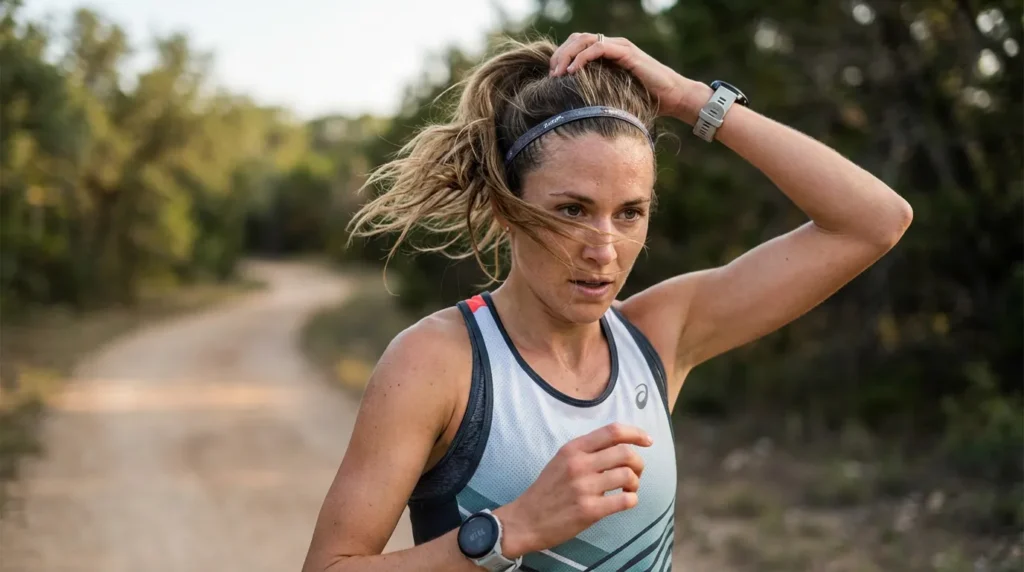
You might be wondering why we’re making such a big deal about hair. Can’t you just throw it in a ponytail and call it a day?
Well, technically yes. But here’s what I’ve learned from running in everything from humid Florida summers to windy Chicago winters: your hairstyle directly impacts your run quality.
When your hair keeps falling in your face, you lose focus. When it’s bouncing against your neck, you overheat faster. And don’t even get me started on what happens when loose strands get stuck to your sweaty face — it’s not just annoying, it can actually obstruct your vision at the worst possible moment.
The right running hairstyles keep everything secure so you can concentrate on your breathing, your form, and crushing those goals instead of constantly brushing hair out of your eyes.
My Honest Running Hair Journey (The Good, Bad, and Tangled)
I’ll be the first to admit — I didn’t always have this figured out. In my early running days, I’d just throw my hair up in whatever elastic band I could find and hope for the best. Spoiler alert: it wasn’t great.
Tight ponytails gave me tension headaches that lasted for hours. Loose buns would completely unravel by mile two. Braids seemed promising until I realized how much time they took, and half the time they’d still come loose anyway.
Now here’s where it gets interesting. I finally found my rhythm when I stopped fighting my hair type and started working with it instead. For me, that means low braided styles or twisted buns that don’t pull at my scalp. What works for you might be totally different, and that’s okay.
The biggest game-changer? Using the right products and accessories. I start with a tiny amount of leave-in conditioner on my ends — not enough to make things greasy, just enough to prevent friction damage. Then I use fabric scrunchies or no-snag elastics that don’t leave those weird creases in my hair.
Post-run, dry shampoo is my best friend. It absorbs sweat, adds volume, and makes it look like I didn’t just run three miles in 80-degree heat. What I love about this routine is how simple it actually is once you nail it down.
The Essential Products in My Running Bag
Look, you don’t need a million products to make this work. But having a few solid basics makes everything easier. These are the things I actually use, not just recommend:
A quality dry shampoo that doesn’t leave white residue (because nobody has time for that), headbands that actually stay put without causing headaches, and hair ties that won’t snap or snag. The right tools make all the difference between a hairstyle that lasts and one that falls apart.
In my experience, investing in good elastics and headbands saves you money in the long run because you’re not constantly replacing broken ones. Plus, your hair will thank you for the gentler treatment.
19 Running Hairstyles That Won’t Let You Down
Alright, let’s get into the good stuff. These are hairstyles for running that I’ve either tried myself or seen work consistently for other runners. They’re practical, secure, and yes — they actually look good too.
1. The Classic Braided Ponytail
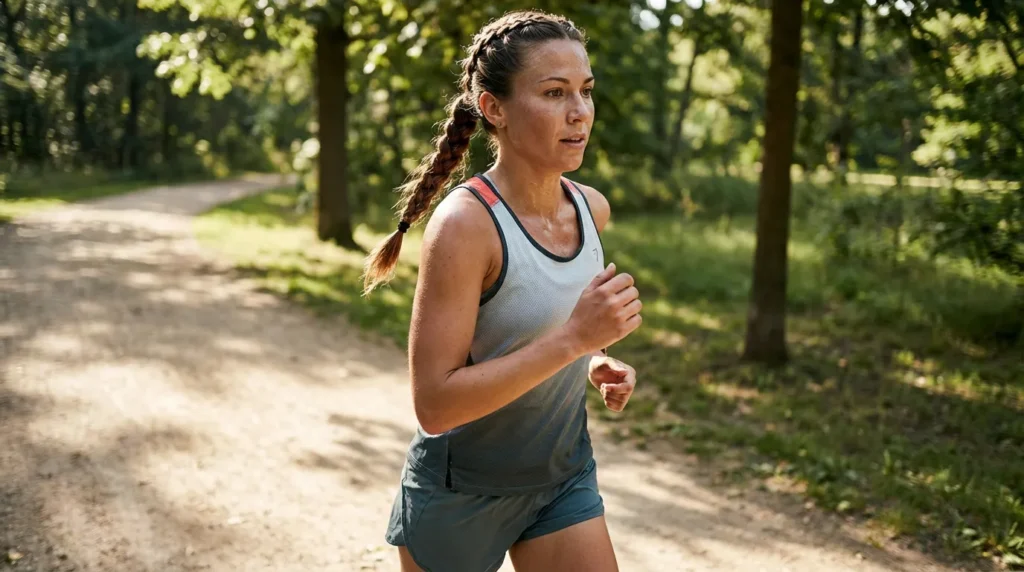
This is hands-down one of the most reliable running hairstyles out there. You get the security of a braid with the swish factor of a ponytail.
Start with a mid to high ponytail, then braid the length. The braid keeps everything contained while adding just enough weight to prevent that annoying swinging motion some ponytails have. I like adding a bit of smoothing serum before braiding so it stays sleek even after miles.
Here’s a bonus: when you take it out post-run, you’re left with those effortless waves everyone loves. It’s like getting two hairstyles in one.
2. Ponytail with Curtain Bangs

If you’ve got bangs (or you’re growing out your hair), this style hits different. There’s something about having your face framed while your hair’s pulled back that just works.
The key is securing your ponytail at whatever height feels comfortable — too high and you might get a headache, too low and it’ll bounce against your neck. Mid-height tends to be the sweet spot for most people.
Your bangs will move naturally with your stride, and honestly? It gives off that effortless “I didn’t overthink this” vibe while still looking intentional.
3. Sport Headband with Hair Down

Not everyone wants their hair completely tied up, and that’s totally valid. A good sport headband keeps your hair out of your face while letting the rest flow freely.
The trick is finding a headband that actually stays put. Look for ones with silicone grips or textured interiors that won’t slide around. Stretchy fabric bands work well for absorbing sweat too.
You can go neutral for a classic look or add a pop of color to match your running outfit. Either way, it’s one of the easiest running hairstyles to master.
4. Low Mini Bun

What I love about this style is how secure it feels without any tightness around your hairline. A low mini bun sits at the nape of your neck, completely out of the way.
Twist your hair into a small, tight bun and secure it with a couple of bobby pins or a small elastic. It pairs perfectly with over-ear headphones for those long runs where you need your favorite playlist or podcast.
No flyaways, no frizz, just clean and simple. Plus, it looks effortlessly cute, which is always a bonus.
5. Cap and Low Ponytail Combo
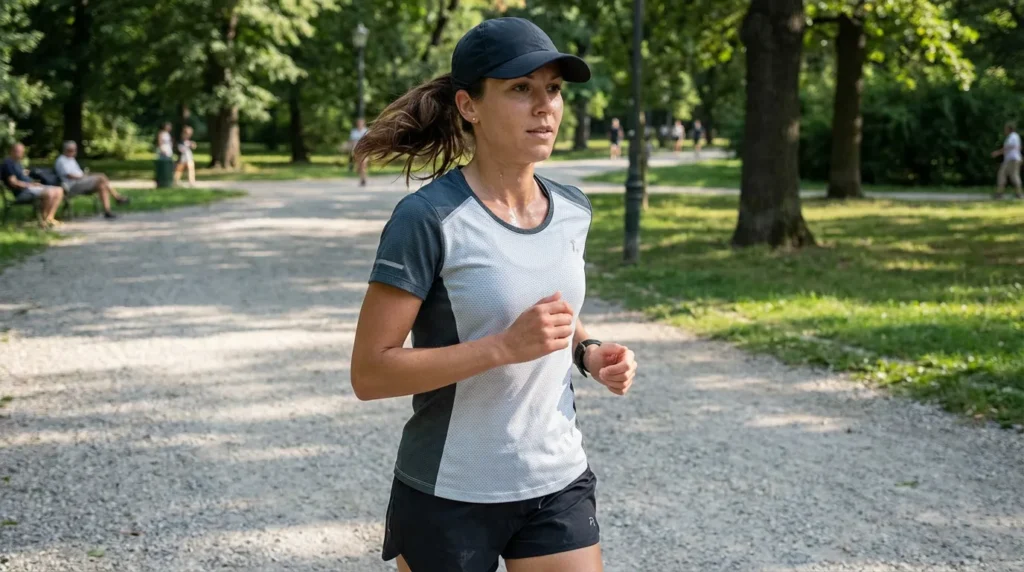
The classic runner look, and for good reason. A baseball cap protects your face from sun (and hides those bad hair days), while a low ponytail keeps everything neat.
Thread your ponytail through the back of the cap, and you’re done. It’s sporty, practical, and you can literally throw this together in under a minute.
Perfect for those mornings when you hit snooze one too many times but still want to get your run in.
6. Braided Ponytail Under Cap

This takes the cap-and-pony combo up a notch. Instead of leaving your ponytail loose, braid it before pulling on your cap.
The braid prevents your hair from sticking to your neck, which becomes a real lifesaver on humid days or longer runs. It’s also great for windy conditions — your hair won’t whip around or tangle.
You get sun protection from the cap and total security from the braid. It’s the best of both worlds for running hairstyles.
7. Sleek Low Ponytail with Cap
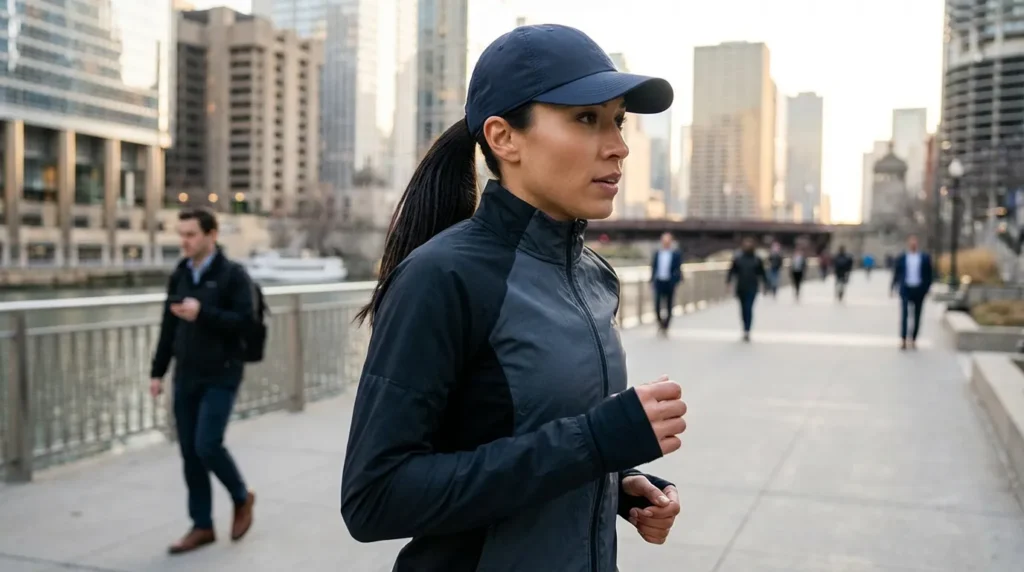
Sometimes simple really is best. A sleek low ponytail paired with a cap is clean, comfortable, and won’t budge no matter how many miles you log.
Use a bit of gel or smoothing cream to slick back any baby hairs or flyaways, secure your ponytail, then pop on your cap. The sleek finish gives off that polished runner aesthetic without requiring much effort.
This is my go-to for outdoor jogs when I want to look put-together but don’t want to spend time on complicated styling.
8. Mid-Height Ponytail
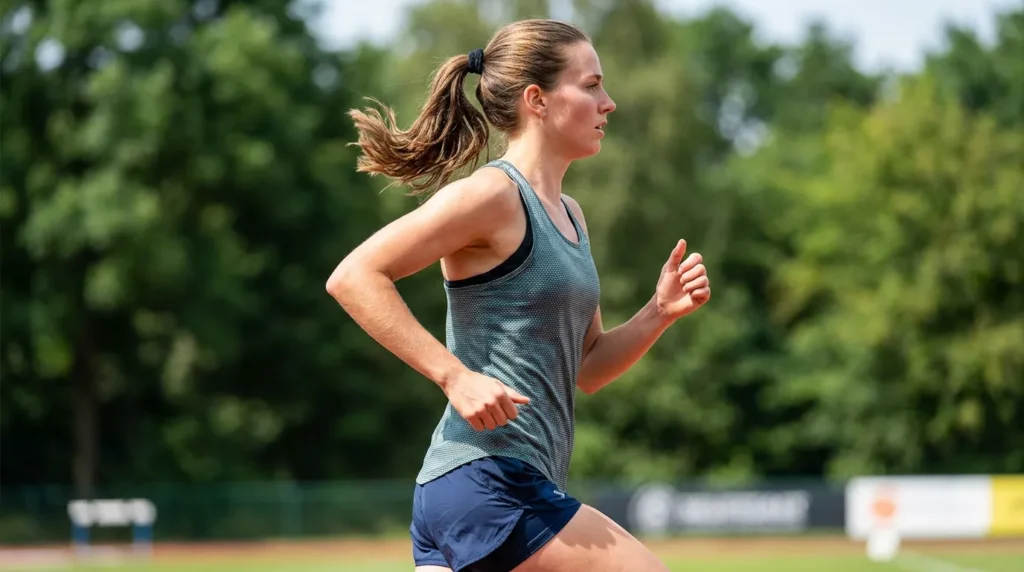
The mid ponytail is that perfect sweet spot — high enough to stay out of your way but low enough to avoid scalp tension.
It’s one of those running hairstyles that just works for everyone. The height keeps your ponytail from bouncing against your back or neck, and it distributes the weight evenly so you don’t get that pulling sensation.
Add over-ear headphones and a comfortable running outfit, and you’ve got the ultimate effortless runner look.
9. Curly Hair with Baseball Cap
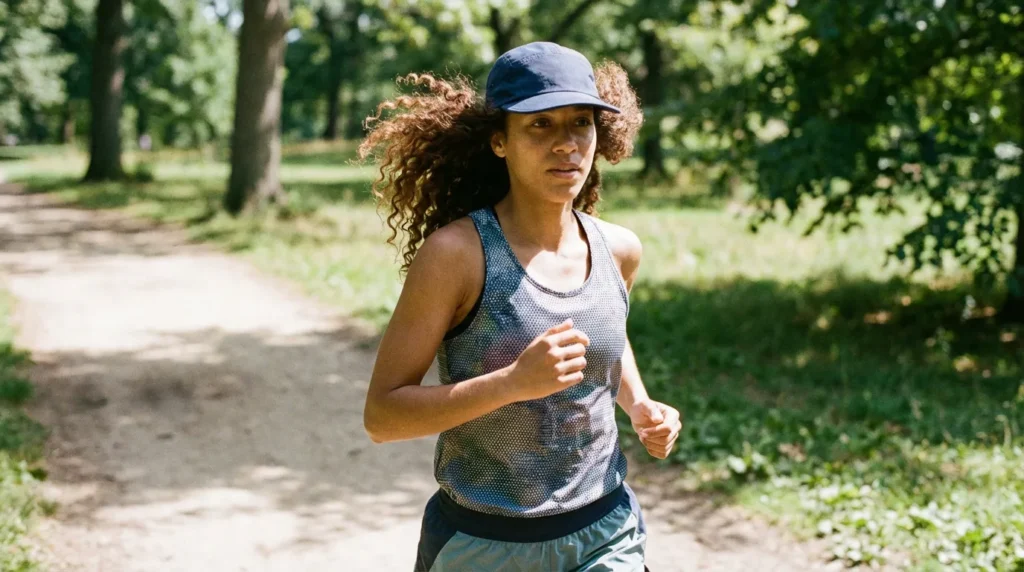
Running with curls can be tricky, but here’s the secret: don’t fight your natural texture. Let your curls be free under a soft, breathable cap.
The cap keeps your hair in place while giving your curls room to breathe and bounce naturally. It’s one of those carefree styles that looks just as good post-run as it does during.
Apply a leave-in conditioner or curl cream before heading out to keep frizz under control and maintain definition. Your curls will thank you.
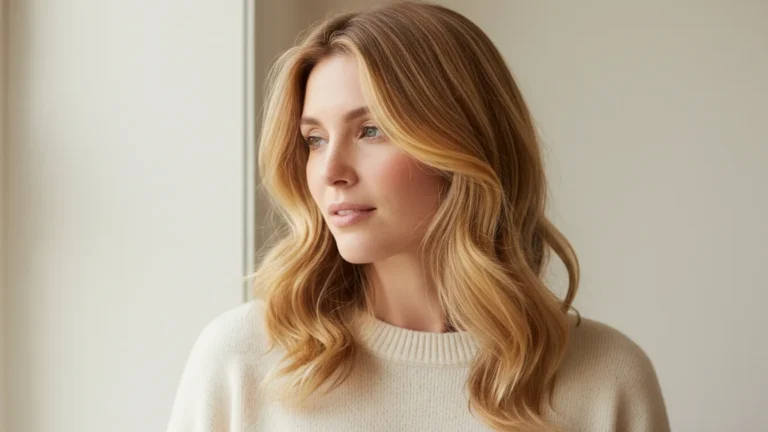
10. Loose Waves

If you’re just going for a light jog or a casual walk-run, loose waves can totally work. This is more of a lifestyle run situation than a marathon training style, but it has its place.
The waves move naturally with you, creating that relaxed “I woke up like this” vibe. Add sunglasses for sun protection and a touch of cool factor.
Just keep some small elastics handy in case you need to tie things back if your run gets more intense than planned.
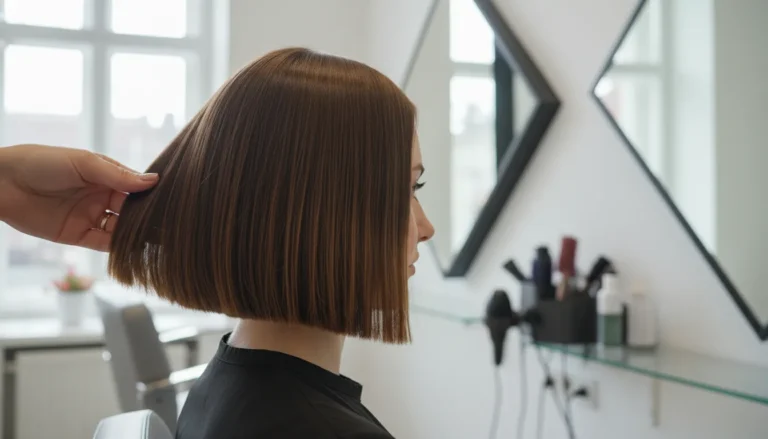
11. Straight and Simple

Sometimes the best running hairstyles are the ones that require zero effort. If you have naturally straight hair or you’ve just blow-dried it, you can keep it down for shorter runs.
A quick brush-through and maybe a touch of shine serum is all you need. This works best for early morning runs or when you’re running errands right after your workout.
It’s clean, low-effort, and still looks intentional.
12. Low Messy Bun with Cap

This is my go-to for those super casual runs or dog walks. A low messy bun doesn’t need to be perfect — that’s literally the point.
Twist your hair into a loose bun at the nape of your neck, secure it however it lands, then add a cap for that laid-back sporty feel. It keeps your hair contained even on humid days or during light drizzle.
Comfortable, practical, and cute enough for a post-run coffee stop. What’s not to love?
13. Ultra Sleek Low Ponytail
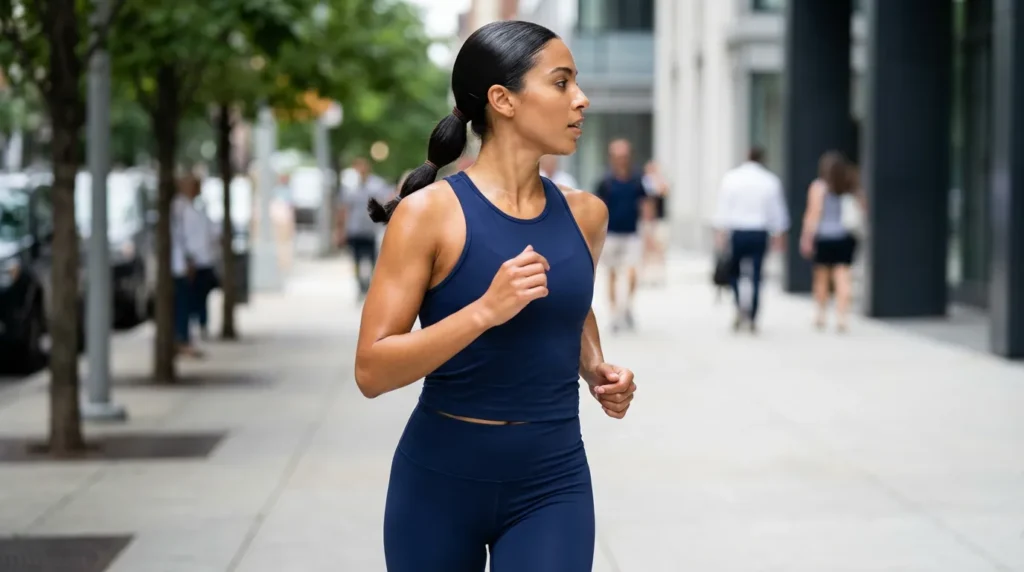
For those early morning runs when you want zero distractions, go for an ultra-sleek low ponytail.
Use a smoothing serum or light gel before tying everything back. Every strand stays in place, giving you that effortlessly polished look even if you just rolled out of bed 10 minutes ago.
Pair it with a matching running set and sunglasses, and you’re officially that runner who always looks put-together.
14. Classic Mid Ponytail
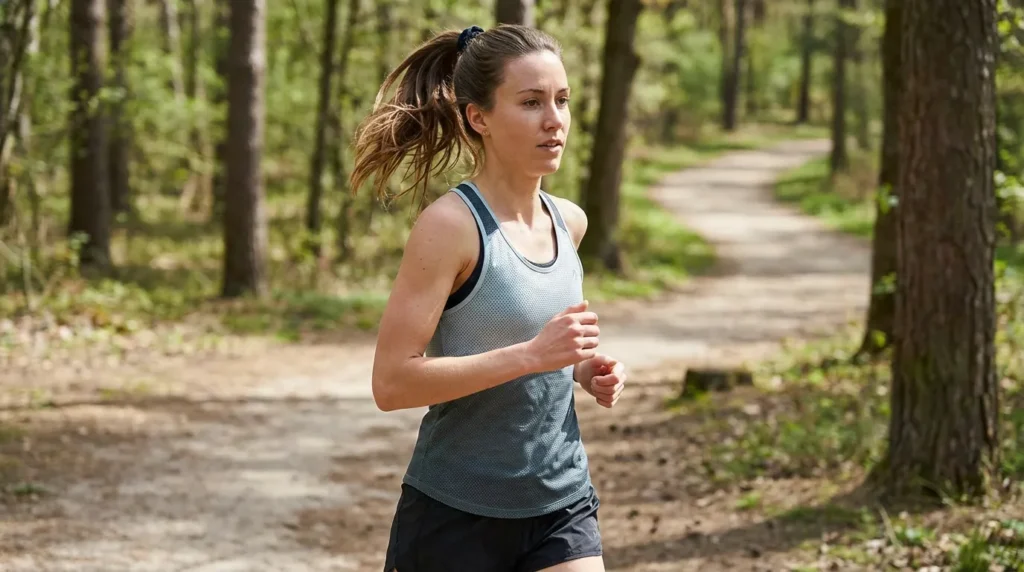
The mid ponytail deserves its own mention because it’s genuinely that reliable. It’s the Goldilocks of running hairstyles — not too high, not too low, just right.
High enough to keep hair off your neck and back, low enough to avoid pulling at your scalp during those longer runs. It looks flattering from every angle too, which means your post-run selfies will always turn out great.
Perfect for crisp outdoor jogs when you just want to throw your hair up and move.
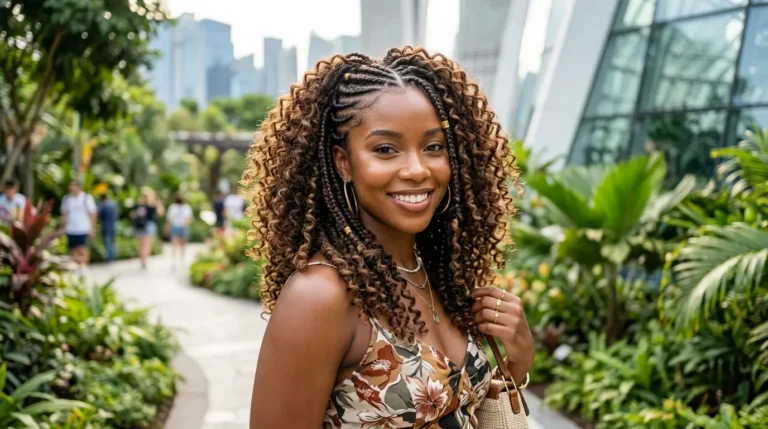
15. Natural Curls Flowing Free

Let those curls bounce! Running with natural hair doesn’t mean you need to hide it away or force it into submission.
A touch of leave-in conditioner or curl-defining cream helps control frizz while adding definition as you move. It’s confident, effortless, and proof that fitness and natural beauty go hand in hand.
Embrace what makes you unique. Your natural texture is part of your power.
16. High Bouncy Ponytail
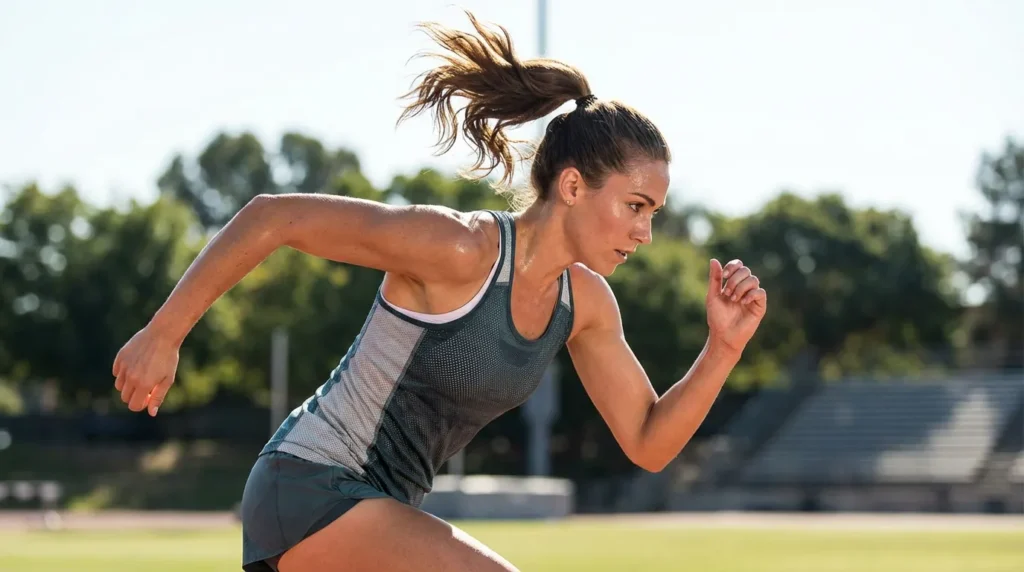
A high ponytail is classic for a reason. It keeps every strand off your face and neck, and that bounce as you run actually feels motivating somehow.
The key is using a strong elastic that won’t slip or break. Position it right at your crown for maximum lift and security. Add a bit of dry shampoo or texture spray at the roots for extra volume.
Trust me, it’s the kind of hairstyle that makes you feel unstoppable before you even hit your first mile.
17. Loose and Natural

You don’t always need to overthink it. Sometimes loose, natural hair is the move, especially for easy recovery runs or casual jogs.
Let your hair move with you naturally. A little leave-in spray tames frizz without weighing things down or making your hair stiff. It’s the perfect mix of sporty and carefree.
This works particularly well if you’re transitioning from running to other activities and don’t want obvious “workout hair.”
18. Free-Flowing Curls

Running with curls doesn’t mean tying them down tight. Let them bounce and flow naturally — it’s part of what makes you, you.
A little leave-in conditioner keeps everything soft and manageable while controlling frizz. It’s low-maintenance, totally effortless, and celebrates your natural texture.
Your curls have life and movement. Why hide that?
19. Short and Fuss-Free

If you’ve got short hair, congratulations — you’re already ahead of the game when it comes to low-maintenance running hairstyles.
No tangles, no ponytails, no complicated braiding. Just throw on your running shoes and go. A little sweat only adds texture and character to your cut.
It’s simple, cool, and totally practical for everyday runners who don’t want hair to be a thing they think about.
Understanding Different Hair Types for Running
Now here’s where it gets interesting — not all running hairstyles work equally well for every hair type. What works beautifully for fine, straight hair might be a disaster for thick, curly hair, and vice versa.
Fine Hair Challenges
If you have fine hair, you know the struggle. Everything slips, elastics slide down, and styles that look secure in the mirror fall apart five minutes into your run.
The solution? Create texture before styling. Dry shampoo isn’t just for post-run — spray it at your roots before tying your hair back. It gives your hair grip so elastics and pins actually stay put. Braided styles work particularly well because they lock fine hair in place.
Thick Hair Solutions
Thick hair has the opposite problem — it’s so heavy that it can pull and cause headaches if you’re not careful. You might be wondering what works best for heavier hair types.
Low styles distribute weight more evenly, which helps prevent tension. Split your hair into sections when creating buns or braids so you’re working with manageable amounts. Using multiple smaller elastics often works better than one larger one.
Curly and Textured Hair
Curly and textured hair needs moisture and gentle handling. Styles that work with your natural curl pattern instead of fighting it will always be more comfortable and look better.
Pineapple updos, loose buns, and protective styles like braids all work well. The key is not pulling too tight at the roots, which can cause breakage and discomfort. Always use satin or silk scrunchies instead of regular elastics — your curls will thank you.
Comparison Table: Finding Your Perfect Running Hairstyle
| Hairstyle | Hair Length Needed | Skill Level | Security Rating | Best For |
|---|---|---|---|---|
| Braided Ponytail | Medium to Long | Easy | ⭐⭐⭐⭐⭐ | Long runs, windy days |
| High Ponytail | Medium to Long | Very Easy | ⭐⭐⭐⭐ | Speed work, races |
| Low Bun | Medium to Long | Easy | ⭐⭐⭐⭐⭐ | Hot weather, long runs |
| Sport Headband | Any | Very Easy | ⭐⭐⭐ | Light jogs, shorter hair |
| Cap + Ponytail | Medium to Long | Very Easy | ⭐⭐⭐⭐ | Sunny days, casual runs |
| Natural Curls | Any | Very Easy | ⭐⭐ | Short runs, walking |
| Sleek Ponytail | Medium to Long | Easy | ⭐⭐⭐⭐ | All run types |
Essential Products and Tools You Actually Need
Let’s talk about what actually makes a difference. You don’t need a whole beauty store in your gym bag, but having the right basics changes everything.
Hair Ties That Won’t Destroy Your Hair
Regular rubber bands are the enemy. They snap, they snag, and they leave those annoying creases that take hours to fall out. Invest in fabric scrunchies or coil hair ties instead.
What I love about these is how they grip without pulling. They’re especially crucial for people with thick or curly hair who need strong hold without damage. Keep several in your running bag because they inevitably disappear.
Headbands That Actually Stay Put
A headband that slides around is worse than no headband at all. Look for ones with silicone grips or velvet interiors that stick to your hair without creating pressure headaches.
Wide headbands work well for absorbing sweat, while thinner ones are better for keeping baby hairs contained. I usually keep both types around depending on the weather and how sweaty I expect to get.
Pre-Run and Post-Run Hair Care
Pre-run, a light leave-in conditioner protects your ends from friction and keeps everything smoother. Don’t use too much — you don’t want greasy hair before you’ve even started sweating.
Post-run, dry shampoo is non-negotiable. It absorbs sweat, adds volume, and makes it look like you didn’t just run five miles. Spray it at your roots, let it sit for 30 seconds, then brush through.
Weather Considerations for Running Hairstyles
Different conditions call for different approaches. What works on a cool spring morning might be a disaster in August humidity.
Hot and Humid Weather
In my experience, high humidity is hair’s worst enemy. Everything gets frizzy, styles fall apart faster, and sweat accumulates quickly. Your best bet? Secure updos that keep hair completely off your neck.
Braided buns, twisted chignons, or even a simple high bun all work well. The less hair touching your skin, the cooler you’ll feel and the better your hair will hold up.
Cold Weather Runs
Winter running comes with its own challenges, mainly static from hats and dry air. A small amount of hair oil before your run helps combat both issues.
Lower styles work better under winter hats than high ponytails, which can get squished and create weird bumps. If you’re wearing ear warmers instead of a full hat, any style works.
Windy Conditions
Wind is sneaky. A style that seems secure in your bathroom can completely unravel once you hit that open stretch along the waterfront.
Braids are your friend here. Whether it’s a simple three-strand braid or something more complex, braiding keeps hair contained when the wind picks up. Caps help too, obviously, but they’re not always comfortable for everyone.
Common Running Hair Mistakes (And How to Fix Them)
Let me save you from some frustration by sharing the mistakes I made so you don’t have to.
Tying Your Hair Too Tight
This was my biggest mistake early on. I thought tighter meant more secure, so I’d practically give myself a facelift with my ponytail tension. Headaches lasted for hours afterward.
Here’s the truth: moderate tension is enough. Your hairstyle should feel secure but not painful. If you can feel your scalp pulling or you get a headache during or after your run, you’re tying too tight.
Using the Wrong Products
Heavy products weigh down your hair and make everything greasy when mixed with sweat. On the flip side, nothing at all means more tangles and damage from friction.
The sweet spot is lightweight leave-in conditioners or serums — just enough protection without the heaviness. Save your thick masks and oils for post-shower treatment.
Ignoring Your Hair Type
Trying to force your hair into styles that don’t work with your natural texture is a recipe for frustration. Straight hair people can’t always replicate curly hair styles and vice versa.
Work with what you have. Fine hair does better with braids and textured styles. Thick hair needs low, distributed weight. Curly hair thrives with styles that embrace the curl pattern. Fighting your natural hair type never ends well.
Post-Run Hair Recovery Tips
Your run might be over, but hair care doesn’t stop there. How you handle your hair post-run affects its health long-term.
The Immediate Post-Run Routine
If you can’t shower right away, at least take your hair down and let your scalp breathe. Leaving it tied up for hours after running traps sweat and oil, which can cause scalp irritation.
A quick spritz of dry shampoo and a gentle brush-through works wonders. If your hair is damp with sweat, try not to pull it back tightly again — wet hair is more fragile and prone to breakage.
When to Wash After Running
You might be wondering how often you actually need to wash your hair after running. The answer depends on how much you sweat and your hair type.
If you’re a heavy sweater or ran in extreme heat, washing makes sense. But if you just did an easy three-miler in cool weather and barely broke a sweat? Dry shampoo is probably fine.
Over-washing strips natural oils and can actually make your scalp produce more oil to compensate. Find your balance based on your body and activity level.
Protecting Hair Long-Term
Running regularly means repeated friction from elastics, exposure to sun and wind, and lots of sweat. Over time, this can damage your hair if you’re not careful.
Deep conditioning treatments once a week help repair damage. Rotating between different hairstyles prevents breakage in the same spots. And using gentle, fabric-covered elastics instead of rubber bands makes a huge difference.
Styling Tips for Race Day
Race day is different from training runs. You want your hair secure, but you also might want to look good in those finish line photos.
Keep It Simple
This isn’t the time to experiment with a new complicated style. Stick with something you’ve done dozens of times before that you know will hold.
The last thing you want mid-race is to be fussing with your hair. Choose reliability over creativity when it comes to race day running hairstyles.
Consider the Distance
A 5K and a marathon require different approaches. For shorter races, almost any style works since you’ll be done relatively quickly. For longer distances, comfort becomes crucial.
Test your race day hairstyle during training runs of similar length. What feels fine for three miles might drive you crazy by mile 15.
Bring Backup Supplies
Always carry an extra hair tie or two in your race packet or running belt. Hair ties break at the worst possible moments, and having a backup can save your race.
Bobby pins, small elastics, whatever your style requires — bring extras. It’s better to have them and not need them than need them and not have them.
Final Thoughts on Running Hairstyles
Look, at the end of the day, the best running hairstyles are the ones that work for you. What makes your neighbor look like a magazine cover might give you a headache, and that’s totally fine.
The goal is finding styles that let you focus on your run instead of your hair. Whether that’s a simple ponytail, an elaborate braid, or just letting your short hair do its thing, the right choice is whatever feels comfortable and secure.
Don’t be afraid to experiment during training runs. Try different heights, different techniques, different products. You’ll eventually find your go-to styles for different conditions and distances.
Your hair is part of who you are, and running shouldn’t mean sacrificing that. With the right approach, you can keep your hair healthy, secure, and looking great no matter how many miles you log.
Now get out there and run. Your perfect hairstyle is waiting to be discovered — probably while you’re hitting a new PR and feeling amazing.