
Personal Growth Habits: 15 Small Daily Moves for a Successful Life

I used to think change meant big swings—new planners, new diets, new me by Monday. And then Tuesday would arrive with the same old chaos. What finally worked wasn’t chasing motivation; it was stacking small, boring-but-beautiful actions that made my days lighter. That’s the magic of personal growth habits: tiny moves that quietly shift how you think, work, love, and show up—without burning you out.
If you’re rebuilding your evenings so mornings feel sane, these nighttime habits to transform your life make sticking to personal growth habits way easier.
What personal growth habits really are (and aren’t)

Personal growth habits aren’t about forcing yourself to be a different person overnight. They’re repeatable cues that help you act like the person you’re becoming—on autopilot.
Identity > willpower
When a habit matches your identity, it’s lighter to carry. “I’m a person who moves daily” beats “I should work out.” Personal growth habits anchor who you are trying to be, not who you’re trying to impress.
Tiny wins compound
Two minutes today turns into five next week and ten a month from now. Habit stacking (attaching a new behavior to one you already do) makes personal growth habits click faster with less friction.
Consistency beats intensity
High intensity is flashy; consistency is transformative. Build floors (the minimum you’ll do on your worst day), not ceilings (the best you’ll do on your best day).
15 personal growth habits that actually stick
1) The two-minute start

Tiny doors open big rooms. When a task feels heavy, shave it down to the first two minutes—fill your water bottle, open the doc, put on shoes. You’re not finishing; you’re just starting.
That little motion snaps you out of hesitation. Once you’ve begun, momentum does the rest. This is one of those personal growth habits that quietly removes excuses and gets you moving without a pep talk.
2) The evening reset ritual

Night-you can make morning-you’s life so much easier. Lay out clothes, set your water glass, and write a tiny Top 1–3 for tomorrow. Ten sleepy minutes now save you an hour of decision fatigue later.
This ritual lowers morning friction so you slide into your day instead of tripping over it. Over time, it turns chaotic starts into calm, repeatable wins—exactly how personal growth habits build confidence.
3) Walk & think (10 minutes)

A short walk untangles thoughts better than another scroll session. Keep it simple: around the block, no pressure, no performance. Let your brain breathe while your feet move.
Movement changes your mood and gives you a fresh angle on stuck problems. Ten minutes a day compounds fast; it’s low effort, high clarity—prime territory for personal growth habits.
4) Single-task sprint (20–30 minutes)

Pick one task, close the tabs, set a timer, and go. No multitasking, no “quick check.” The boundary is the magic.
When you protect a single block of focus, you finish things that used to linger for days. Finished beats perfect every time, and that steady completion loop is what makes personal growth habits feel worth keeping.
5) Write two lines at night

Two lines: “What worked today?” and “Tomorrow’s headline?” That’s it. Keep it scrappy and short.
This isn’t about poetry; it’s about proof. The pages stack into a record of progress, even on messy days. You fall asleep with a lighter mind and wake up already pointed in the right direction.
6) Skill-on-a-timer (10 minutes)

Choose one upgrade—writing, Excel, Spanish, design—and touch it daily for ten minutes. You’re training identity, not chasing perfection.
Tiny reps keep your growth muscle warm, so opportunities don’t catch you cold. Over weeks, these minutes turn into a baseline of competence. That’s how personal growth habits quietly change your ceiling.
7) Input audit (swap one feed)

Your mind becomes what it eats. Unfollow one low-quality source and replace it with something thoughtful—an author, a newsletter, a calm podcast.
Cleaner inputs reduce mental static and panic-posturing. When your information diet improves, your decisions follow suit. It’s a subtle, elegant upgrade to your daily environment.
8) The “one thing” social habit

Each day, send one micro-connection: a thank-you, a check-in, a quick follow-up. No long messages required.
Relationships grow from consistent nudges, not grand gestures. This five-sentence habit keeps doors open and trust warm—crucial fuel for opportunities and emotional wellbeing.
9) Boundaries you keep (one screen-free window)

Pick a dependable window—maybe the first 30 minutes after waking or the last hour before bed—and keep it screen-free. Expect withdrawal at first; that’s normal.
That quiet patch returns your attention to you. It’s where you feel your actual life again, and where other personal growth habits can breathe without constant pings pulling you sideways.
10) Weekly review lite

Once a week, jot three bullets: wins, lessons, next tiny bet. Five minutes, max. Keep it on one page so it stays friendly.
This micro pulse-check prevents drift. You’ll course-correct sooner, celebrate more often, and stop repeating the same mistakes. It’s the maintenance plan that keeps your engine smooth.
11) Micro-declutter

Choose one tiny zone: a drawer, a shelf, your desktop. Two–three minutes, toss or tidy, done. No “whole closet” heroics.
Visible order calms your nervous system and lowers friction for tomorrow. Each cleared patch proves change can be easy—exactly the message personal growth habits need to stick.
12) Fuel & fill
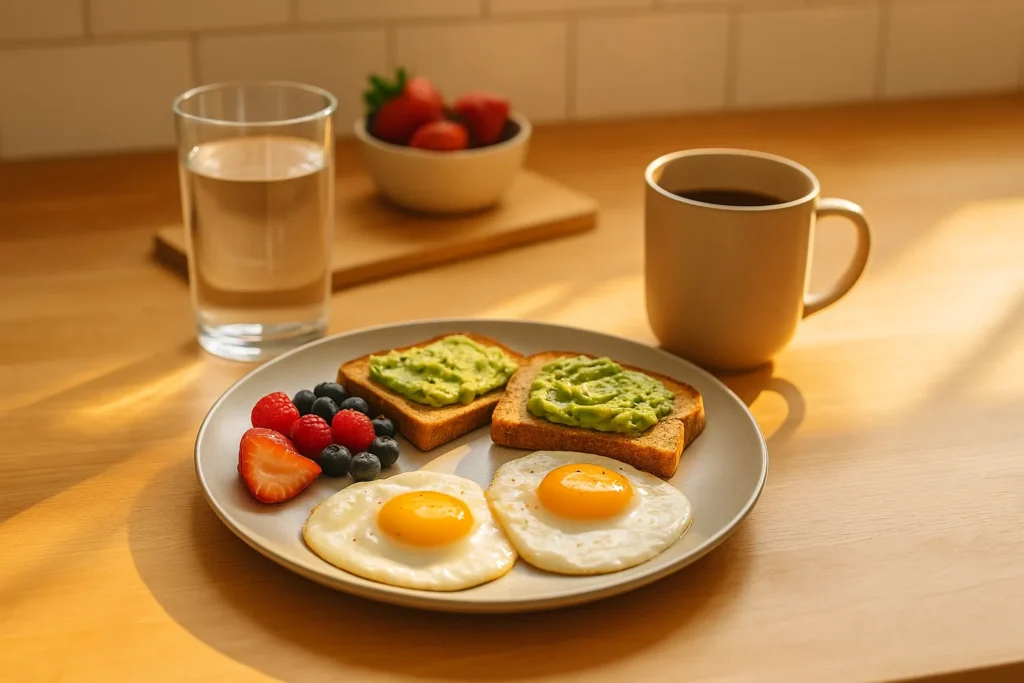
Water first, then anchor a meal with protein and produce. No spreadsheets, no perfection—just a steady base.
Stable energy makes everything else easier: focus, patience, mood. When your body feels supported, your goals are easier to carry. It’s not a diet; it’s a kindness that pays rent daily.
13) Financial touchpoint (2–5 minutes)

Open your banking app, glance at transactions, move $5 to savings, or pay one tiny bill. Keep the ritual short to avoid avoidance.
Money clarity lowers background stress you didn’t realize was there. Two minutes a day prevents week-long spirals later—and makes bigger financial habits less scary.
14) Gratitude that’s specific

Write one very specific sentence: “The sun on my steering wheel at 5:42 pm.” Specificity makes it real to your brain.
This tiny lens shift doesn’t erase problems; it balances them. You’ll start catching small, good moments in real time, not just in hindsight. That optimism fuels endurance.
15) Sleep protector

Choose a wind-down cue and guard it: lamp on, phone away, wash face, stretch, read two pages, lights out. Same order, most nights.
Sleep is the mother habit—everything else improves when you’re rested. Protecting it makes every other choice lighter, steadier, and kinder to your future self.
Habit stacking: how to attach new to old

After I ___, I will ___
Pick a rock-solid routine and latch something tiny to it. After I make coffee, I drink a glass of water. After I brush my teeth, I stretch for 60 seconds. After I open my laptop, I set a 20-minute focus timer.
Make it obvious, easy, satisfying
If the habit requires hunting for equipment, it won’t happen. Put the mat where you step. Keep the book by the mug. End with a tiny reward—a check mark, a sticker, a “done” whisper. Your brain loves closure.
Troubleshooting when motivation dips

Shrink the habit, don’t skip it
Bad day? Make the minimum microscopic: one push-up, one paragraph, one drawer. You’re protecting identity, not chasing intensity.
Miss twice rule
Missing once is life. Missing twice is a new habit—so don’t. If last night went off the rails, get a tiny win this morning and move on.
Swap the time, keep the reps
If your schedule changes, your habit can too. Moved walk to lunch? Wrote at 8 pm instead of 6 am? Still counts. Personal growth habits are meant to bend, not break.
7-day starter plan (5 minutes a day)

Day 1: Two-minute start (fill water, open doc, put shoes by the door).
Day 2: Write your Top 1–3 for tomorrow before bed.
Day 3: Ten-minute walk—with no podcast, just your thoughts.
Day 4: One 20-minute single-task sprint; timer on, tabs closed.
Day 5: Two lines at night: “What worked?” + “Tomorrow’s headline?”
Day 6: Micro-declutter one tiny zone (60–180 seconds).
Day 7: Weekly review lite (wins, lessons, next tiny bet).
If simplifying your life includes spending smarter, here’s how to stop buying things you don’t need (mental clutter included): https://yourselflovehub.com/how-to-stop-buying-things/
FAQ: making personal growth habits stick
How long until a habit “sticks”?
It varies—studies suggest weeks to months—but you’ll feel the lift sooner. Focus on showing up; let sticking be a side effect.
What if I have kids, shift work, or zero free time?
Shrink the scope, not the standard. Two minutes done daily beats a perfect plan you never start.
How do I track without obsessing?
Paper calendar, tiny checkmarks. When it gets noisy, you’ll know—it’s supposed to feel simple, not like a second job.
When do I level up?
When the minimum feels laughably easy for a week straight, add 1–2 minutes or one tiny step. No leaps required.
What if I fall off?
Reboot with one microscopic win within 24 hours. Identity > shame. You’re practicing being the person who returns.
A gentle close (and a nudge)
Personal growth habits aren’t glamorous. They’re simple, repeatable choices that protect your energy and build quiet confidence. Start where it’s embarrassingly easy. Let the floor be your friend. In a month, you won’t recognize how calm your days feel—and you won’t want to go back.
If you’re ready for a bigger life reset (without the chaos), here’s a kind, step-by-step guide to reset your life and build momentum that lasts: https://yourselflovehub.com/reset-your-life-find-balance-purpose/
Quick on-page SEO cues (keep it natural)
- Use the exact phrase personal growth habits in the first 100 words, one H2 (“What personal growth habits really are”), and in the conclusion once.
- Sprinkle variants like “habits for personal growth,” “daily habits for success,” and “habit stacking” where they fit.
- Keep sentences short, paragraphs light, and transitions warm—your readers (and Google) will stay with you.