
Personal Development Tips for Women: 30 Gentle Ways to Grow Without Burning Out

When people talk about “personal development,” it often sounds intense.
Wake up at 5 a.m.
Crush your goals.
No excuses. Hustle harder.
Meanwhile you’re just trying to get through your day without crying from stress, snapping at the people you love, or losing yourself completely. You want to grow, yes—but you also want to feel safe, grounded, and like yourself while you do it.
Personal development doesn’t have to mean turning into a completely different woman. It can be a quiet, gentle process of becoming more you—bit by bit, habit by habit, decision by decision.
These personal development tips for women are for the version of you who’s tired, thoughtful, and still hopeful. The one who wants more, but not at the cost of her sanity.
What Personal Development Can Look Like (When It’s Soft, Not Harsh)

Personal development isn’t just about reading self-help books or optimizing your entire life in one weekend. It’s about:
- noticing what no longer fits,
- choosing tiny new ways of being,
- and repeating them until they feel natural.
For women, there’s often extra pressure: be kind but not a doormat, ambitious but not “too much,” soft but not “weak,” independent but not “cold.” It’s a lot.
A softer approach to growth says:
“You’re allowed to grow in ways that feel kind to your nervous system. You’re allowed to go slowly.”
How to Use These 30 Gentle Personal Development Tips
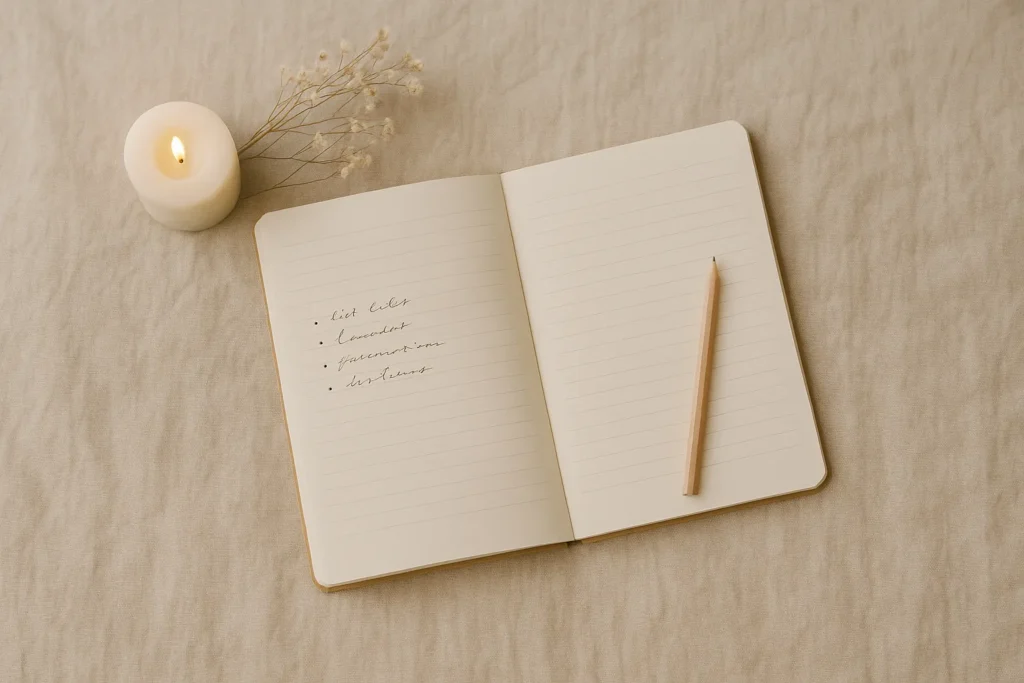
Don’t treat this like a strict checklist.
You don’t need to apply all 30 at once. Honestly, please don’t. Instead:
- Read through them and notice which ones make you exhale a little.
- Circle or highlight 3–5 tips that feel doable in your actual life.
- Start with one or two this week.
- Let the rest be “saved for later,” not “I’m failing because I’m not doing everything.”
You can grow without going to war with yourself.
30 Gentle Personal Development Tips for Women (That Won’t Burn You Out)
Mindset + Inner Voice Tips

1. Ask Yourself, “How Do I Want My Life to Feel?”
Before you set goals, ask how you actually want your life to feel day to day: calm, supported, playful, spacious, stable? When you know the feeling you’re aiming for, it’s easier to choose habits that match it. You might realize you don’t actually want a busier life—you want a quieter but more meaningful one. Let that guide your decisions more than what looks impressive.
2. Do a Five-Minute Check-In With Yourself Each Day
You don’t need an hour-long morning routine to be self-aware. Set a timer for five minutes and ask: “How am I really today?” Write a few lines or talk to yourself out loud. This tiny habit helps you catch burnout, resentment, or sadness sooner instead of letting it pile up. Personal development starts with honest check-ins, not pretending you’re fine.
If you want a deeper step-by-step guide on building small habits that actually fit your real life, this breakdown of how to improve yourself in gentle, realistic ways is the perfect next read.
3. Choose One Word to Guide Your Week
Instead of twenty goals, pick one word: “steady,” “gentle,” “brave,” “open,” “focused.” Let that word be your filter for the week. When you’re unsure what to do, ask, “What choice matches my word?” It simplifies decision-making and turns growth into a theme instead of a pressure.
4. Build a “Bare-Minimum” Version of Your Routine
You don’t need the perfect morning routine to develop yourself. You need a version that works even on the hard days. Decide on a bare minimum: maybe that’s water, brushing your teeth, one stretch, and a three-line journal entry. On days when you do just that, you haven’t failed—you’ve kept a tiny promise to yourself. Consistency comes from realistic routines, not fantasy ones.
5. Upgrade Your Inner Voice by 10%, Not 100%
If your self-talk is brutal, you don’t have to jump to “I love everything about myself!” overnight. Start by softening your language just a little. When you catch yourself thinking, “I’m so stupid,” try, “I made a mistake, but I’m learning.” That 10% gentler voice is still personal development—and it’s much more sustainable.
6. Let Yourself Be a Beginner Again
A lot of women stop trying new things because they hate feeling “bad at it.” Give yourself permission to be a beginner. Try a new hobby, class, or skill and let it be messy. Learning something new stretches your brain, builds self-trust, and reminds you that you’re still allowed to grow in directions that aren’t practical or perfect.
7. Create a “Proof I’m Growing” List
Your brain naturally remembers what went wrong more than what went right. Once a week, open a note or journal page and list tiny proofs that you’re growing: a boundary you set, a reaction you handled better, a habit you kept for a few days. Over time, this becomes evidence you can lean on when your mind tries to say “you’re still the same, nothing is changing.”
Boundaries, Self-Worth, Emotional Capacity

8. Practice Saying, “Let Me Think About It”
If you say yes too quickly and regret it later, this one’s for you. Instead of giving instant answers, say, “Let me think about it and I’ll let you know.” This buys you time to check in with your energy, schedule, and gut. Personal development for women often starts with this simple sentence—it’s a bridge from people-pleasing to self-respect.
9. Start Listening to Your Body’s “No”
Your body knows before your brain catches up. Tight chest, headache, shallow breathing, dread when someone messages you—that’s not nothing. When your body feels heavy every time you agree to something, pay attention. You don’t have to justify it to everyone. “This doesn’t feel right for me” is a valid reason to step back.
10. Curate Your Social Media More Seriously
You can’t grow peacefully if you’re constantly bombarded with comparison. Mute or unfollow accounts that make you feel behind, ugly, lazy, or “less than.” Follow people who make you feel calm, inspired, and seen. It’s not petty; it’s hygiene for your brain. The content you see daily quietly shapes what you believe about yourself.
11. Choose One Relationship to Nurture Intentionally
You don’t have to become a perfect friend/partner/daughter overnight. Choose one relationship you genuinely want to deepen. That might mean checking in more often, listening without scrolling, or planning a small, cozy hangout. Personal development isn’t only about your solo life—it’s about the way you show up with the people who matter.
12. Give Yourself One Small “Learning Block” Each Week
Instead of feeling guilty about not reading enough or “never learning anything new,” set aside one small block: 30–60 minutes a week to learn. You might watch a course, read a chapter, practice a skill, or listen to a podcast with your full attention. You’re building a gentle habit of growth instead of waiting for the perfect moment.
13. Make Rest Part of the Plan, Not a Reward
You don’t have to earn rest by suffering first. Plan rest into your week the way you plan work: early nights, slow mornings, screen-free evenings, afternoon breaks. When you treat rest as part of your personal development (because it is), everything else you try—new goals, new habits, new boundaries—becomes easier to sustain.
On days when you have zero extra energy, you can still support your growth with simple self-care ideas you can do in 5 minutes instead of abandoning yourself completely.
14. Ask “What Do I Need?” at Least Once a Day
You’re probably trained to ask what everyone else needs first. Flip that script once a day. Pause and ask, “What do I need right now?” It might be water, quiet, a hug, a bathroom break, movement, or someone to listen. Meeting your own needs—even in tiny ways—is a powerful act of growth.
Routines, Self-Care, Nurturing Your Nervous System

15. Set One Gentle Boundary This Month
You don’t have to overhaul all your boundaries at once. Pick one place where you feel consistently drained—a person, an app, a habit, a time of day—and set one boundary. That might be less availability, clearer time limits, or saying no to a specific request. Boundaries are personal development in action: they protect your future self from the patterns that burned your past self out.
16. Start Noticing Your Emotional Patterns Without Judging Them
Instead of just reacting, try noticing: “I always feel anxious before this type of meeting,” or “I feel lonely on Sunday nights,” or “I get defensive when someone gives feedback.” You’re not gathering evidence that you’re broken—you’re gathering information. Awareness is a huge part of personal development for women, especially if you’ve spent years ignoring your own emotions.
17. Create a Tiny “Evening Reset” Ritual
You don’t need a full night routine right away. Start with one thing that closes your day: putting your phone away, lighting a candle, writing three lines about your day, washing your face slowly, or stretching for five minutes. That tiny ritual signals to your brain: “we’re done for today.” It helps you sleep better and wake up less frazzled.
18. Let Go of the Idea That Growth Has to Be Loud
You don’t need a huge announcement every time you change. Quiet growth is still growth. You’re allowed to heal without posting about it, start a new habit without telling everyone, and break a pattern without needing applause. Some of your most important personal development will happen in private moments no one else ever sees.
19. Learn to Recognize Your “Overwhelm Tells”
Do you start scrolling more? Snapping at people? Procrastinating? Overeating? Overworking? These are often signs you’ve hit your limit. Instead of shaming yourself, learn to see them as signals: “I need a pause. I need help. I need less on my plate.” Responding to your tells with care, not criticism, is a huge step forward.
20. Keep a List of “Things That Actually Help”
When you’re low, you forget what helps. Start a running list of things that genuinely soothe or ground you: specific songs, walks, journaling, calling a certain friend, cold water on your face, stretching, going outside. Next time you feel awful, you don’t have to think—you just pick something from the list. This is personal development that meets you where you are.
21. Stop Waiting to Be Less Afraid Before You Move
Fear doesn’t disappear before you change; it usually travels with you. Instead of waiting to feel “ready,” experiment with doing things while scared, just in smaller doses. Send the email. Apply for the role. Post the thing. Book the therapy session. You don’t need to be fearless—you just need to be slightly braver than your fear in that one moment.
Life Expansion + Identity Growth

22. Practice Receiving Help Without Explaining Yourself to Death
If someone offers help and you need it, try saying yes without a five-paragraph essay. “Thank you, that would really help,” is enough. You’re not a burden just because you have limits. Learning to receive without spiraling into guilt is a life-long skill—but it changes everything.
23. Build Tiny Money Habits That Make You Feel Safer
Feeling unsafe around money can affect your entire nervous system. You don’t have to become a finance expert overnight. Start small: check your accounts once a week, track one category of spending, set up one automatic transfer to savings, or learn about one topic a month. Safety and clarity around money are a huge part of personal development, especially for women.
24. Let Yourself Change Your Mind About Old Dreams
Some goals you set five years ago don’t fit who you are now. That’s okay. You’re allowed to let go of dreams that belonged to a different version of you. Changing direction isn’t failing; it’s updating. Personal development sometimes means saying, “I don’t want that anymore—and that’s allowed.”
When you’re ready to turn these tips into actual plans, this breakdown of the key areas of life to set goals for a balanced future will help you see the bigger picture.
25. Create One Corner of Your Life That Feels Like “Future You”
You don’t need your whole life to match your vision. Start with one corner: your desk, your nightstand, your morning playlist, your journal, your phone background. Make that one tiny slice of your world feel like the version of you you’re becoming—calmer, kinder, more intentional. Every time you see it, you’ll feel a little tug toward that future self.
26. Give Yourself Micro-Rewards for Showing Up
We’re so quick to punish ourselves and so slow to celebrate. Start rewarding even the smallest growth moments: finishing a tough task, saying no, going for a walk, texting the therapist, having the hard conversation. Your reward can be simple: a cup of tea, a chapter of a book, ten minutes of guilt-free scrolling. You’re teaching your brain that growth feels good, not just exhausting.
27. Notice Who You Feel Like After You Hang Out With People
After you see someone, ask: “Do I feel lighter or heavier?” “More like myself or less?” Over time, you’ll notice patterns. Then you can gently invest more in the people who leave you feeling supported, and step back from the ones who consistently drain you. You don’t need to label anyone as “bad”—you just need to honor how your nervous system responds.
28. Let Your Hobbies Be Just for You
Not every skill has to turn into a side hustle or content. Allow yourself to have at least one “useless” hobby—something you do purely because it’s fun or soothing. Painting, reading, puzzles, baking, dancing in your kitchen, learning a language… whatever feels like play. Joy with no outcome is powerful personal development.
29. Rewrite One Old Story You Keep Telling Yourself
“We’re not good with money.”
“I always mess up relationships.”
“I can’t finish anything.”
Pick one old story and question it. Is it 100% true? Where did it come from? Who would you be without it? Then write a softer, more accurate version. You don’t have to fully believe the new story yet; you’re just opening a door. Over time, this kind of work quietly changes your life.
30. Remember That Slow Growth Is Still Growth
You might feel like you’re moving at a snail’s pace. But if you zoomed out and looked at yourself from a year ago, you’d probably see changes: boundaries, awareness, emotional control, habits, self-respect. Personal development for women isn’t a race; it’s a relationship—with yourself. And that relationship doesn’t need to look fast or dramatic to be real.
You’re Allowed to Grow Gently

You don’t have to burn your life down to change it. You don’t have to become a strict, hyper-productive version of yourself to be “serious” about growth.
You’re allowed to:
- grow quietly,
- make tiny changes,
- rest in between,
- and celebrate progress that no one else even sees.
If all you do after reading this is choose one gentle tip and try it for a week, that counts as personal development. You’re already in motion.