
10 Easy Hacks to Organize Kitchen Cabinets Like a Pro
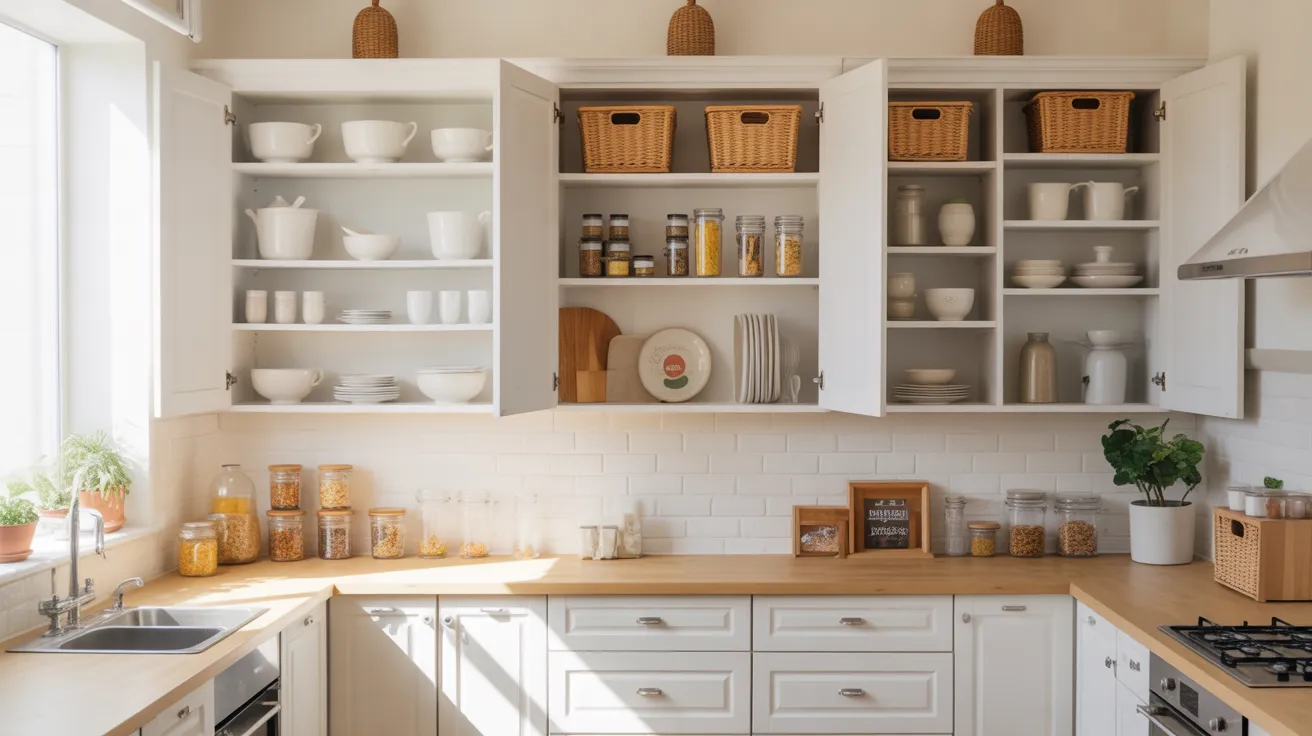
If your kitchen cabinets feel like they’re always overflowing, you’re not alone. Most kitchens slowly collect random containers, extra spices, mismatched lids, and those tools you swear you’ll use someday. Before you know it, everything turns into a cluttered maze where finding a single pot feels like a mini challenge.
The good thing is—you don’t need a huge kitchen or fancy organizing systems to fix this. A few thoughtful tweaks can transform even the messiest space into something neat, calm, and functional. When you organize kitchen cabinets the right way, cooking becomes smoother, grocery storage becomes easier, and your kitchen finally works the way you want it to.
This guide walks you through 10 simple hacks that help you create order, make the most of your space, and bring that fresh, tidy feeling back into your kitchen.
Hacks to Organize Your Kitchen Cabinets
Turn Messy Cabinets into a Calm Kitchen
Ask yourself: does your kitchen feel calm, or does it feel a bit chaotic every time you open a cabinet?
Maybe you start cooking and instantly get stuck looking for the right pot, the matching lid, or that one spice you use all the time. Maybe you’ve bought the same ingredient twice simply because it was buried in the back.
Kitchen cabinets fill up fast, and when things don’t have a clear home, clutter becomes the default.
The nice thing is, once you decide to organize kitchen cabinets with intention, everything else becomes easier:
– cooking flows better
– putting away groceries is quicker
– cleaning up doesn’t feel so heavy
Let’s look at why organizing your cabinets is worth the effort and how to make it simple and sustainable.
Why Bother Organizing Your Kitchen Cabinets?
When your cabinets are organized:
- You waste less time hunting for things
- You avoid buying duplicates
- You feel more in control of your home
There’s something so satisfying about opening a cabinet and seeing everything in its proper place. It’s refreshing, reassuring, and instantly lowers stress.
And if you’re craving a bigger reset beyond just the cabinets, you can always start with a few simple things to declutter before spring so your whole home feels lighter and fresher.
What If You Have Limited Space?
Even a small kitchen can feel bigger when you use the space wisely.
Think:
- stackable bins
- hooks on the inside of doors
- tension rods for vertical storage
You don’t need a huge, fancy kitchen to stay organized. You just need to be intentional with the space you already have.
How Do You Stay Organized Once You Start?
It’s one thing to organize everything once. It’s another thing to keep it that way.
A few simple habits make a big difference:
- Give every item a “home” and keep it there
- Use labels so everyone knows what belongs where
- Do a quick weekly check to reset things
Put items back in their place, get rid of anything expired, and donate what you don’t use anymore. These tiny check-ins prevent clutter from building up again.
Can You Do This on a Budget?
Yes, you really can.
You don’t need designer organizers or custom-built systems to organize kitchen cabinets. Instead, you can look for:
- basic plastic or wire bins
- simple shelf risers
- stick-on hooks
- clear jars or containers you already own
Small upgrades can make your cabinets feel completely different without a big price tag. It’s more about how you arrange things than how much you spend.
If you want to keep your cabinets from filling right back up again, learning how to stop buying things you don’t really need will protect both your space and your budget.
10 Simple Hacks to Finally Organize Your Kitchen Cabinets
Here are 10 easy ways to organize kitchen cabinets and make your daily routine smoother.
1. Start With a Clean Slate
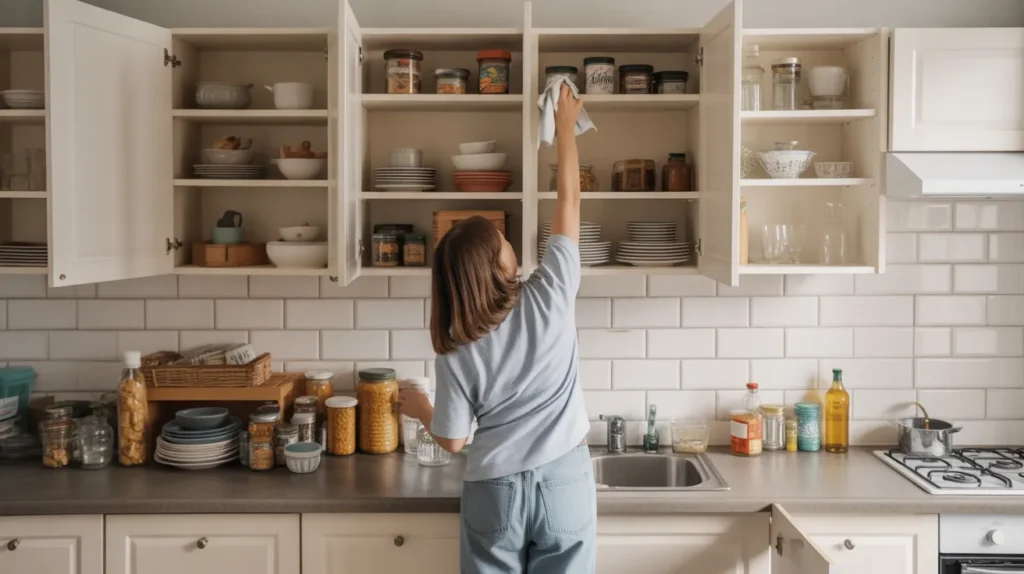
Take everything out of your cabinets.
Yes—every single thing.
It may look overwhelming for a moment, but this step gives you a clear view of what you actually own.
- Wipe down shelves with a gentle cleaner
- Check dates on food items
- Toss anything expired, broken, or unusable
- Set aside duplicates or rarely used items to donate
Once everything is cleared, you’ll know exactly how much space you have and what truly deserves to go back in.
2. Categorize Your Items
Now that everything is out, start grouping your items in ways that match how you use your kitchen.
You might make categories like:
- Baking: flour, sugar, baking powder, chocolate chips, measuring cups
- Pantry staples: rice, pasta, beans, canned tomatoes
- Breakfast: cereal, oats, spreads, coffee, tea
- Snacks: crackers, chips, granola bars
- Cooking essentials: oils, vinegars, sauces, spices
Think in terms of routines: what do you reach for together? Keeping those items close to each other makes cooking so much smoother.
If you find items you rarely use or don’t really like, that’s your cue to let them go instead of putting them back.
3. Store with Stackable Bins and Containers
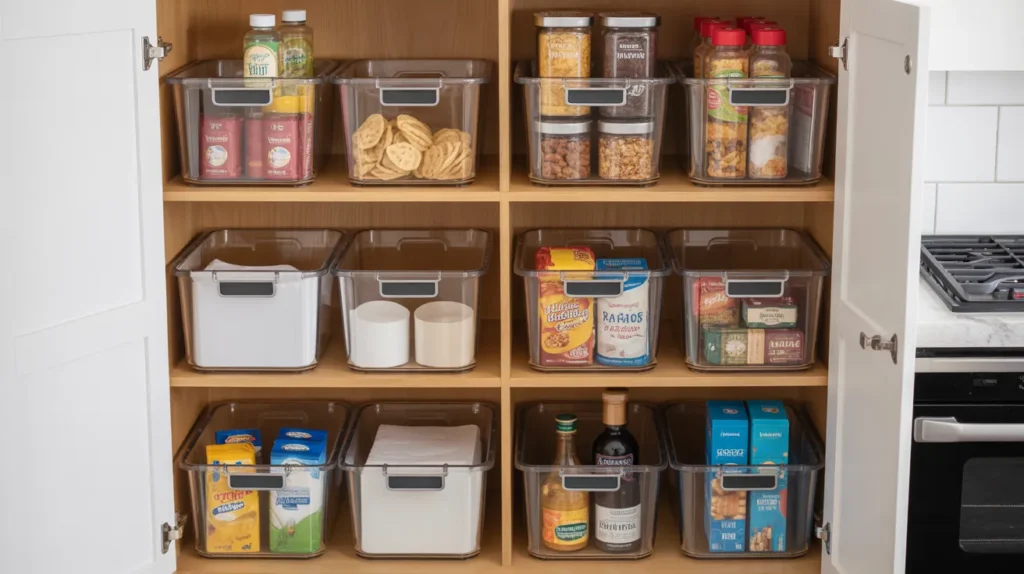
Stackable bins are one of the easiest ways to organize kitchen cabinets without wasting vertical space.
They help you:
- use the space between shelves more efficiently
- keep small items from spreading everywhere
- see everything at a glance if you choose clear bins
Use bins for:
- snack packs
- packets of seasoning or gravy mix
- tea bags, coffee pods, hot chocolate sachets
- small baking supplies
When similar items live together in each bin, it becomes effortless to grab what you need and put it back in the right spot.
4. Install a Lazy Susan
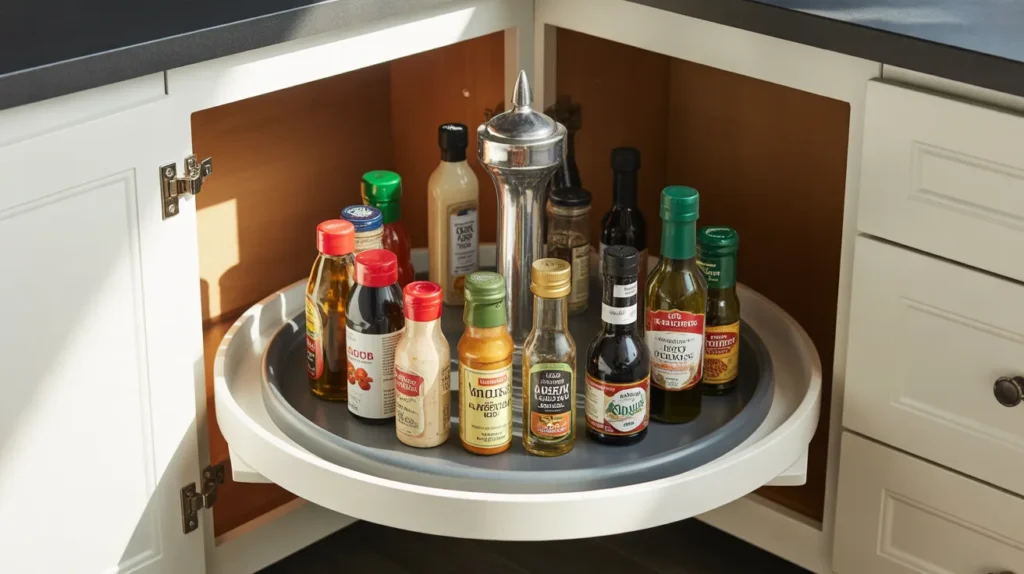
Deep or corner cabinets are where items go to disappear. A Lazy Susan fixes that in seconds.
This simple spinning tray lets you:
- see all your jars and bottles at once
- reach the back without moving everything in front
- stop knocking over items while hunting for one thing
It works especially well for:
- oils and vinegars
- condiments and sauces
- jars and canned goods
With a quick spin, you can see what you already have, which also helps you avoid buying duplicates.
5. Make Use of Tension Rods

Tension rods work brilliantly inside cabinets for vertical storage.
You can use them to:
- stand baking sheets upright
- separate cutting boards
- keep trays and lids from sliding
Instead of stacking everything in one heavy pile, tension rods create little “slots” so you can grab exactly what you need without a noisy avalanche.
6. Use Hooks or Over-the-Door Storage
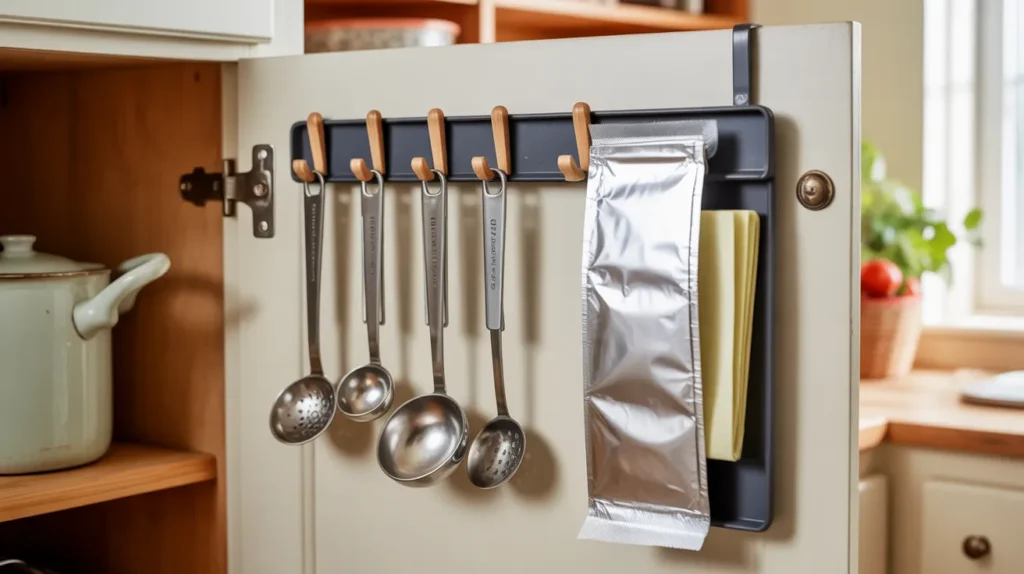
The back of your cabinet doors is prime storage space most people ignore.
You can:
- add adhesive hooks to hold measuring spoons, small tools, or oven mitts
- hang lightweight items like towels or pot holders
- use an over-the-door organizer for foil, plastic wrap, or sandwich bags
These quick additions free up shelf space for bigger items like dishes, pots, or food storage containers.
7. Use Drawer Organizers for Small Items
If your drawers turn into a cluttered jumble, drawer organizers are your new best friend.
They help you:
- separate spoons, spatulas, and gadgets
- keep small tools from getting lost
- see everything at a glance
Instead of digging for that one whisk or can opener, you’ll know exactly where everything lives. It also makes putting things away much easier.
8. Install Pull-Out Shelves or Drawers

Pull-out shelves slide forward so you can see what’s actually in the back of your cabinets.
They’re especially helpful for:
- pots and pans
- heavy mixing bowls
- small appliances like blenders or slow cookers
While they’re a bit more of an investment than basic bins, they make organizing and accessing your kitchen essentials so much more convenient.
9. Label Everything
If you really want to organize kitchen cabinets and keep them that way, labels make a huge difference.
You can:
- use simple masking tape and a marker
- use pre-made labels if you like things pretty
Label bins, jars, and containers with whatever makes sense: “baking,” “snacks,” “pasta & rice,” “spices,” etc.
Labels help everyone in your home know where things belong—so you’re not the only one trying to keep the system going.
10. Put Everyday Items Within Reach
Keep the things you use every single day in the easiest spots to reach.
For example:
- plates, bowls, and glasses on middle or lower shelves
- coffee, tea, and breakfast items near the front
- rarely used serving dishes or seasonal items on higher shelves
This simple shift means you’re not constantly stretching, bending, or moving things around just to get to your basics.
Make Your Kitchen Work for You
Tackling cabinet organization might feel like a big project at first, but once you break it into small steps, it becomes totally manageable.
Clear everything out.
Group like with like.
Use simple tools—bins, hooks, tension rods, Lazy Susans, labels—to support your system.
When you organize kitchen cabinets with intention, your kitchen stops fighting you and starts working with you. You’ll save time, reduce stress, and maybe even enjoy cooking a little more.