
15 Nighttime Habits to Transform Your Life
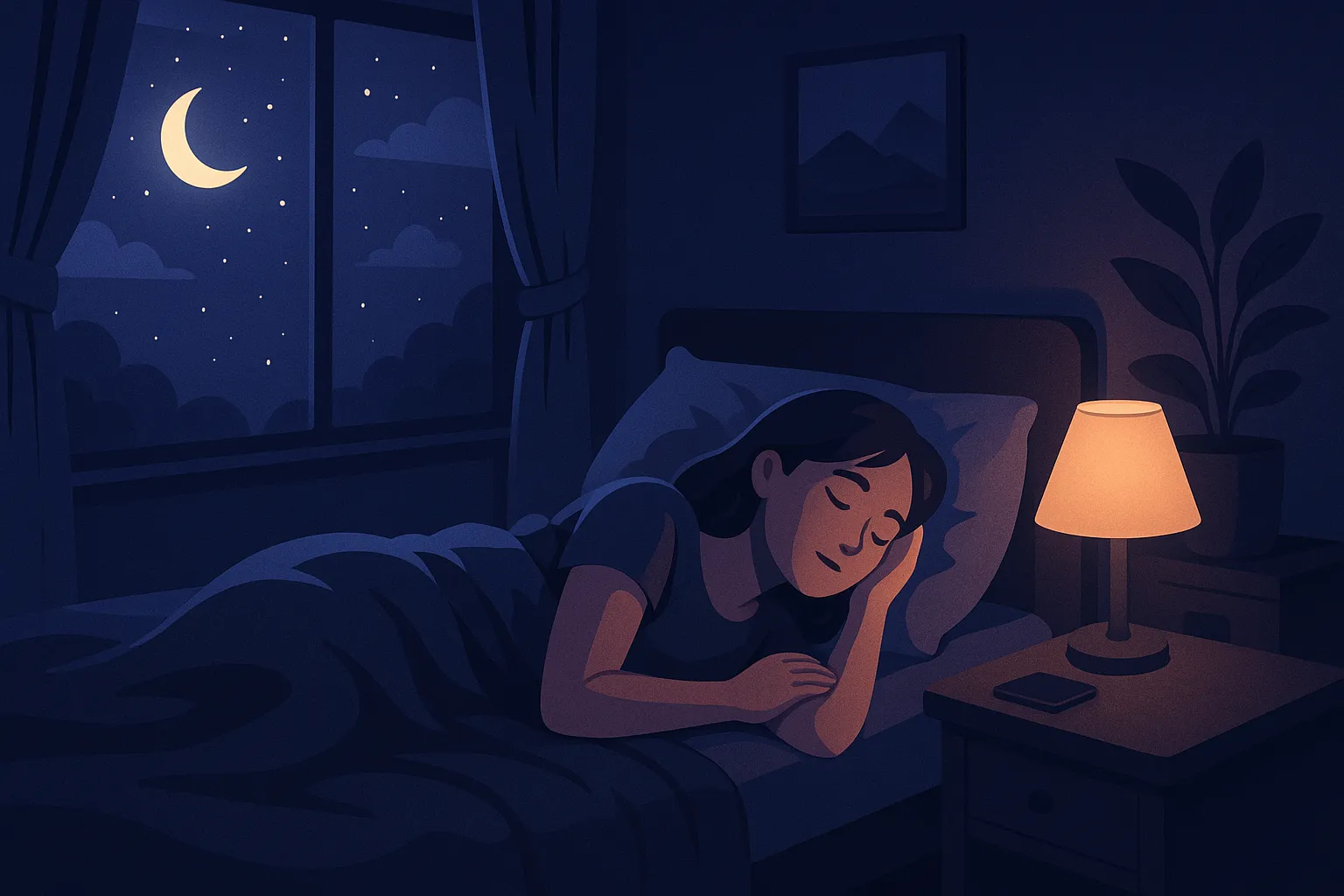
I spent months trying to “fix” my life with perfect mornings.
You know the drill—alarm at 5:00, lemon water, journal pages, sunrise walk… and yet by the time I got through late emails, dinner dishes, and locating a mysteriously missing homework folder, I had nothing left for a 6 a.m. reinvention. The math wasn’t mathing.
Then it clicked: I wasn’t broken—my timing was. I didn’t need harsher mornings; I needed kinder nights.
So I started small. I dimmed the lights after dinner. I parked my phone in the hallway. I wrote down three tiny things for tomorrow—nothing heroic, just real. I stretched for two songs, breathed slower than felt natural, and put a glass of water by the bed. That’s it. No glow-up montage, just a few nighttime habits to transform your life in the most ordinary way possible.
And wow—mornings got quieter. I woke up like a human, not a fire drill. The clothes were ready. The list was waiting. My brain wasn’t still scrolling at 2 a.m. Little by little, the evenings became the place I reset, reflected, and actually set myself up to win.
If your mornings keep slipping through your fingers, stop wrestling them. Shift the weight to tonight. In the next sections, I’ll share 15 nighttime habits to transform your life—practical, cozy, totally doable even on messy weeknights. No rigid schedules. No perfection. Just small moves that help you sleep deeper and start tomorrow already a step ahead.
Ready to make bedtime your quiet superpower?
How nighttime habits to transform your life actually work
I used to think change started at sunrise. Then I realized the real switch flips at night. When you wind down with small, repeatable steps—warm lamp, calmer breath, a tiny plan for tomorrow—your brain stops sprinting and your body gets the message: we’re safe, we can power down.
This isn’t about perfection or a 20-step ritual. It’s about a few cues you can repeat on messy weeknights. Do the same small things in the same easy order and watch what happens: deeper sleep, quieter mornings, fewer “where did the day go?” spirals.
If you want nighttime habits to transform your life, start tiny. Park the phone, soften the lights, pick tomorrow’s three. It’s amazing how different tomorrow feels when tonight lands softly.
Put Your Phone to Bed Before You Do
I used to swear scrolling was “me time.” Instagram, Pinterest, TikTok—if it glowed, I tapped it until my eyes stung. I’d tell myself it helped me unwind, but the truth? I woke up foggy, snappy, and somehow already behind before my feet hit the floor.
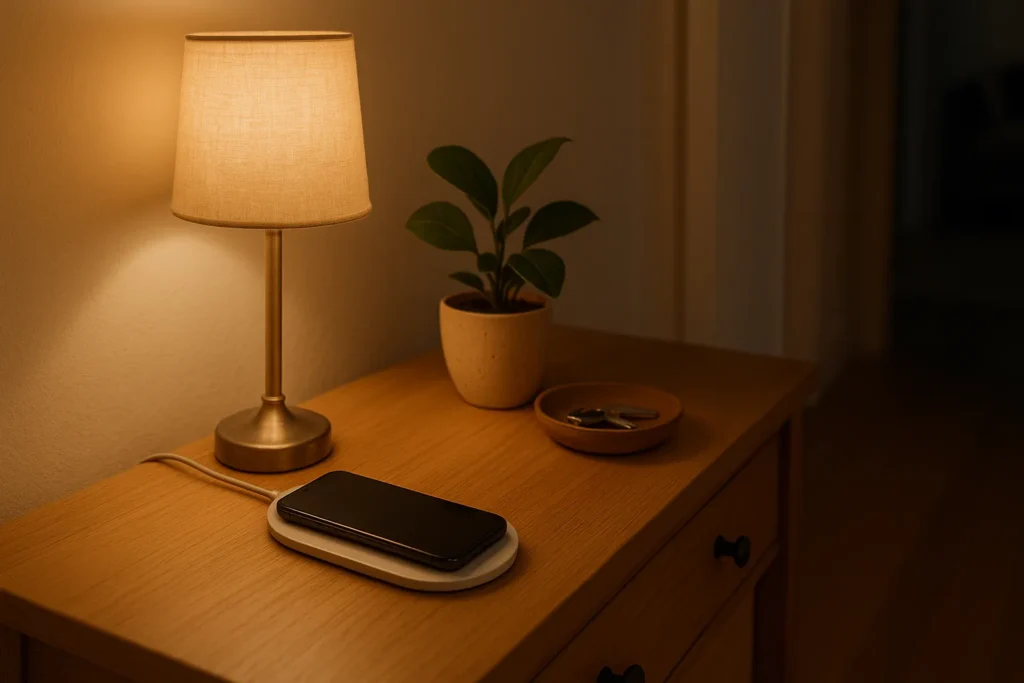
So I made one small, non-negotiable change: my phone “goes to bed” one hour before I do—in the hallway, on a charger, face down. The first few nights were rough. My hand kept reaching for a ghost that wasn’t there. But within a week, the itch softened. My brain got the memo: night is for shutting down, not spinning up.
What I do instead (simple, sleepy swaps):
📌 Read 6–8 minutes from a real book—paper pages only.
📌 Write two sleepy lines in my journal to empty the mental junk drawer.
📌 Stretch on the rug with a cozy throw and breathe out longer than I breathe in.
Tiny rules that make it stick:
- Phone sleeps outside the bedroom (alarm clock on the nightstand).
- Grayscale turns on after dinner—less shiny, less tempting.
- If I “need” to look something up, it goes on a sticky note for tomorrow.
And you know what? I started waking up like a person again. No more doom-scroll hangover. No more “why am I exhausted?” loop. If you’re tired of feeling wired at midnight and wrecked by morning, try parking your phone early. It’s one of those nighttime habits to transform your life that feels too small to matter—until it changes everything.
Need screen-free ideas for that last hour? Steal a few from 101 creative journal entry ideas and keep your hands busy without grabbing your phone.
Switch to Warm Light and Clear the View
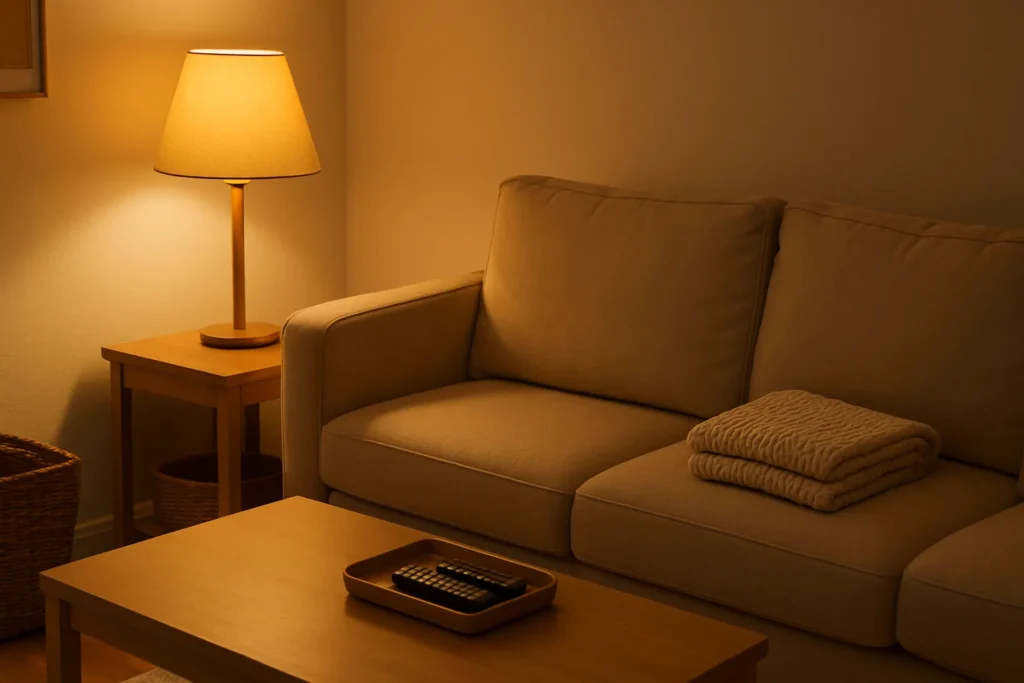
Overhead lights made my evenings feel like a grocery store—bright, busy, and somehow stressy. Now, as soon as dinner’s done, I flip to warm lamps and run a two-minute reset. Not a deep clean—just enough to tell my brain, “We’re landing the plane.”
My two-minute reset (set an actual timer):
👉 Rinse the mugs and leave the sink clear.
👉 Wipe one counter so there’s at least one calm surface.
👉 Fold the throw blanket and put remotes in a small tray.
Why it works: softer light + tidy sightlines = less visual noise. My shoulders drop. My thoughts quiet down. Bed feels inviting instead of like an escape.
Tiny upgrades that help:
- Swap one bulb to a warm/amber tone by the sofa or bed.
- Keep a small caddy under the sink with a cloth + spray so “one wipe” is easy.
- Use a catch-all basket for “deal with it tomorrow” clutter (keys, mail, hair ties).
I don’t chase perfection here—I chase calm on purpose. Two minutes, then stop when the timer dings. It’s amazing how waking up to a clear counter and a folded throw sets the tone for the whole day.
Five-Minute Face + One Cozy Cream
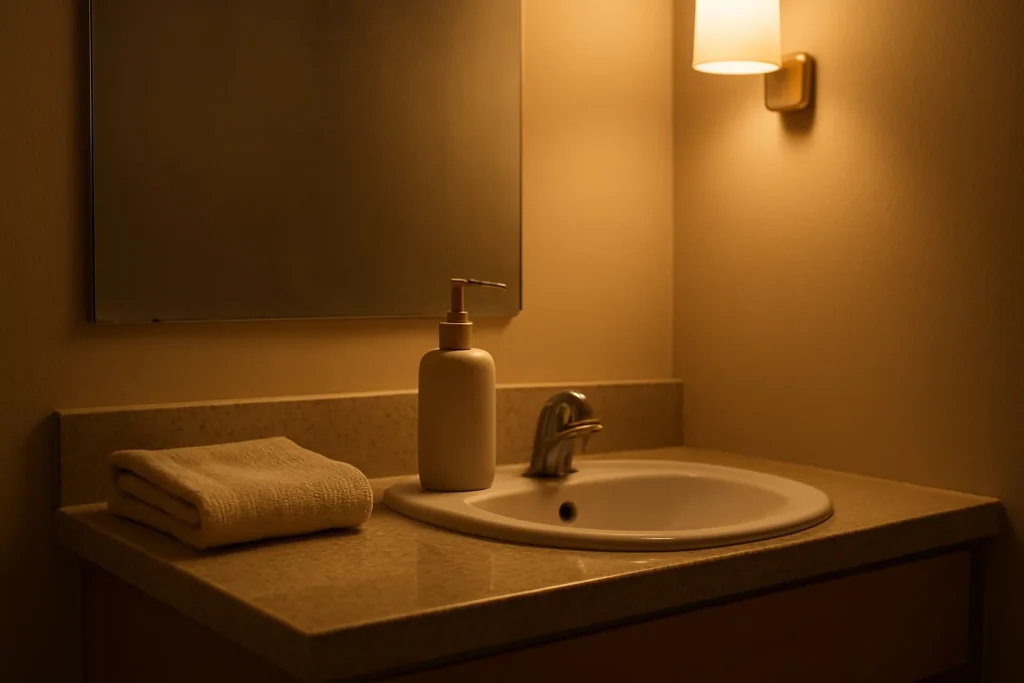
I used to “splash and hope.” Quick rinse, straight to bed, then wonder why my skin looked tired and my mornings felt blah. Turns out, giving myself five quiet minutes at the sink is less about skincare and more about telling my body, “We’re done for the day.”
What I do (zero-fuss):
👉 Double cleanse: balm/oil to melt makeup + sunscreen, then a gentle cleanser.
👉 Seal it in: one simple night cream—no 10-step circus.
👉 Body love: a quick pass of lotion on elbows, knees, and heels. Sock trick if I remember.
Tiny rules that keep me consistent:
- If I’m exhausted, I still do wash + moisturize. Bare minimum, non-negotiable.
- Products live within arm’s reach so I don’t talk myself out of it.
- Travel-size minis in the nightstand for “too tired to move” nights.
It’s wild how this tiny ritual changes the vibe—like I’ve clocked out. Stack it with warm lamplight and you’ve got quiet, repeatable nighttime habits to transform your life without buying a whole new vanity.
Stretch in Lamplight + Breathe Out Longer
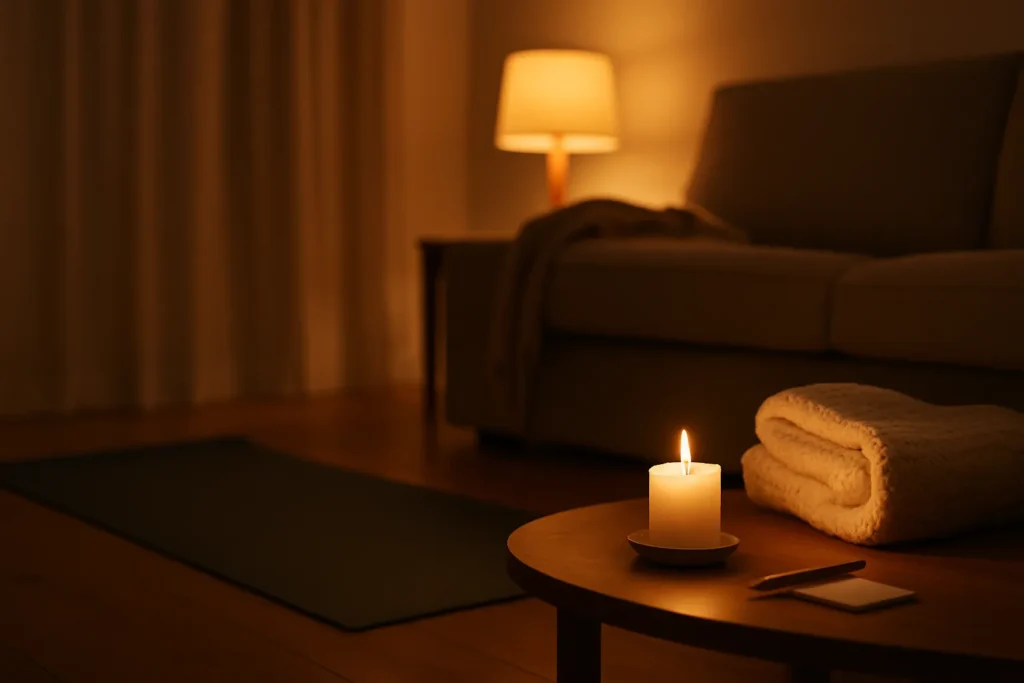
My brain used to sprint at bedtime. Now I dim the lamp, put on a 3-song “evening reset”, and do two poses on the rug. No sweat, no yoga perfection—just slow.
My 6–8 minute flow:
- Child’s pose (60–90 seconds): melt the jaw, drop the shoulders.
- Legs-up-the-wall (3–4 minutes): feet up, hands on belly.
- Breath pattern: inhale 4, exhale 6, repeat 5 rounds. The long exhale flips the calm switch.
Make it stick:
- Same playlist every night—teaches your body the cue.
- Folded towel under hips or head if anything feels crunchy.
- If thoughts start racing, I count the exhales: “one… two…” until they soften.
I’m not chasing flexibility here—I’m chasing quiet. Two songs later, my pulse is lower, my shoulders have dropped an inch, and bed feels like a choice, not a collapse. Tiny, repeatable moves like this are the kind of nighttime habits to transform your life that actually survive busy weeks.
When your brain still feels busy, switch to two lines from these night journal prompts for bedtime—they’re sleepy on purpose and take under a minute.
A 3-Line Wins List (Specific Beats Perfect)
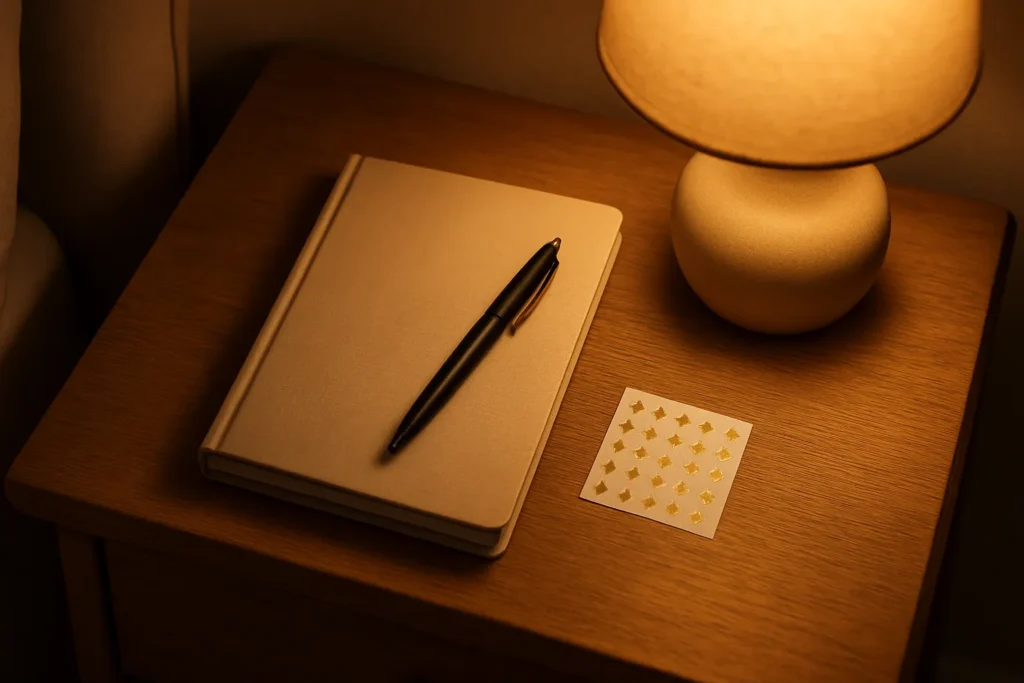
I used to write vague gratitude like “so thankful for life,” and… it never stuck. When I switched to oddly specific wins, my brain finally believed me. Three tiny lines, that’s it.
What I do (takes 60–90 seconds):
📌 “Texted Mom back.”
📌 “Walked 8 minutes after dinner.”
📌 “Sent the awkward email.”
Why it works: specific = memorable. My mind stops chasing “Was today even good?” because I’ve got receipts.
Tiny rules that help:
- Three bullets only—no essays.
- Small counts more than big.
- On Sundays, I skim the week and star a favorite. Instant mood lift.
Night Journal, But Make It Sleepy
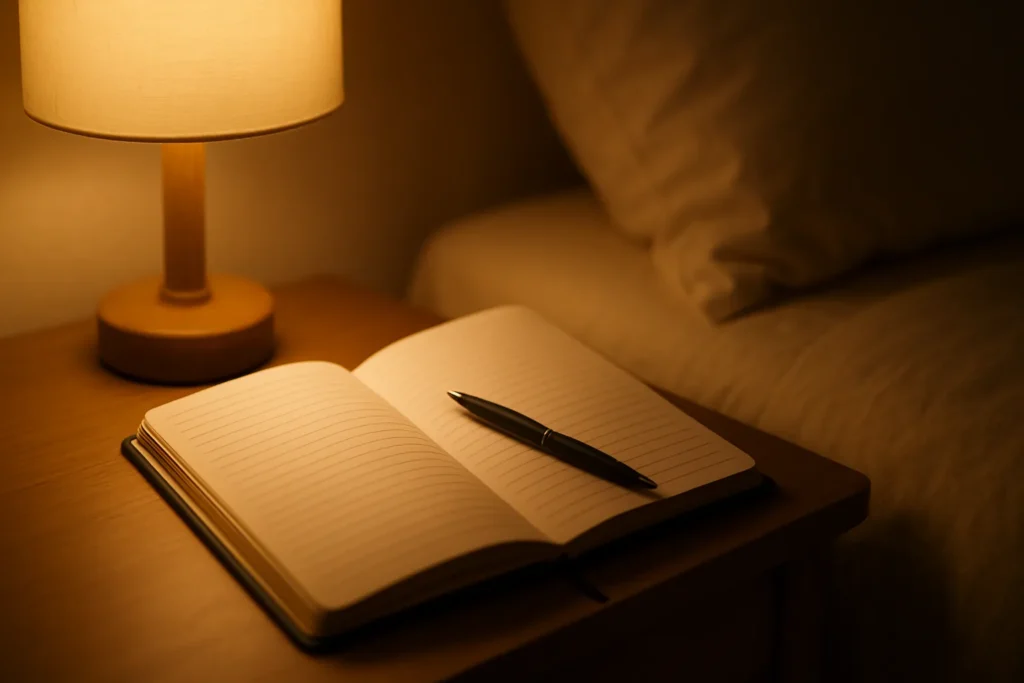
My head used to run a midnight highlight reel—every unfinished task, every weird convo. Now I give it a soft place to land: 2–3 lines, max. No pressure, no poetry.
How I do it (super simple):
👉 Prompt 1: What felt good today?
👉 Prompt 2: What can wait until tomorrow?
👉 Prompt 3: What needs kindness, not fixing?
If words won’t come, I doodle three boxes—good / meh / tomorrow—and drop one word in each. Good enough.
Tiny rules that keep me consistent:
- Stop while it’s easy (I close the notebook even if I want to keep going).
- If a worry sticks, I park it on a small card for the morning and close the drawer.
- Same pen, same spot, same lamp—my brain learns the cue.
Two sleepy lines later, the noise is on paper, not in my pillow. This is one of those nighttime habits to transform your life that looks too small to matter—until you fall asleep faster.
Tomorrow’s 3 (Micro-Plan = Macro Calm)
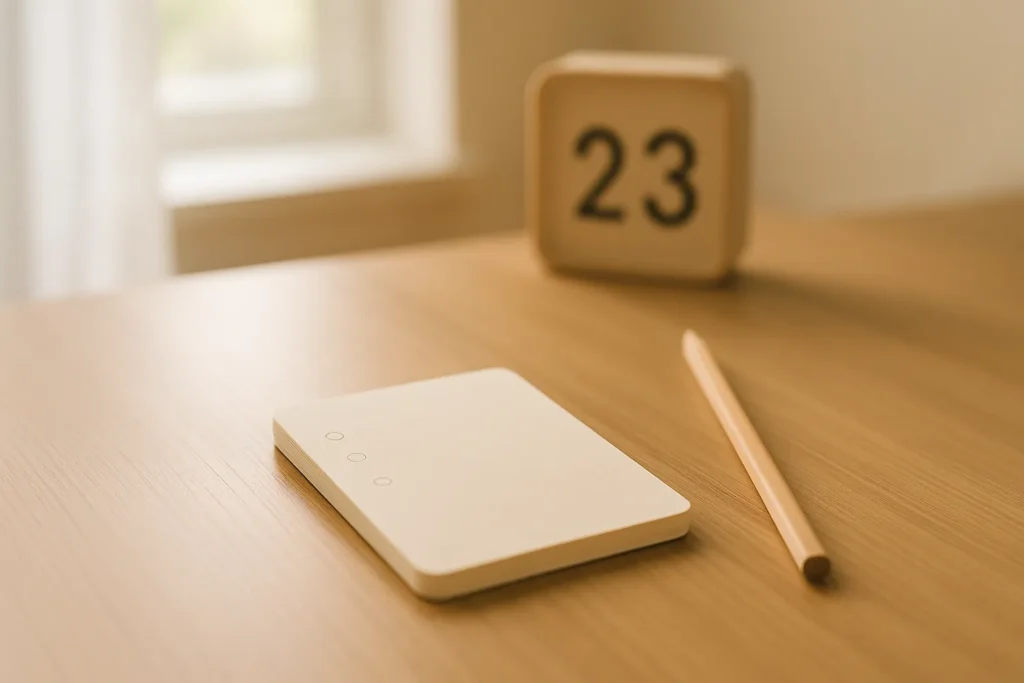
I used to wake up and negotiate with my to-do list like a hostage situation. Now I choose three tiny wins before bed and let the rest wait. It’s simple, but it changes my whole morning.
What I do (2–3 minutes):
📌 Write tomorrow’s 3: one must-do, one should-do, one nice-to-do.
📌 Lay out clothes or pack a bag so “what to wear/bring” isn’t a 7 a.m. debate.
📌 Set one proof step now—fill the water bottle, prep coffee, stage the laptop.
Tiny rules that help:
- Three only. If it’s not on the list, it’s a bonus, not a failure.
- Each task should fit in 20–40 minutes max—small wins stack.
- Add a one-line because to lock motivation (“Text Sarah because I miss her.”).
When I pick tomorrow’s 3 at night, I don’t wake up negotiating—I wake up executing. Quiet confidence beats chaotic productivity every time.
Give Your Worries a Drawer (Literally)
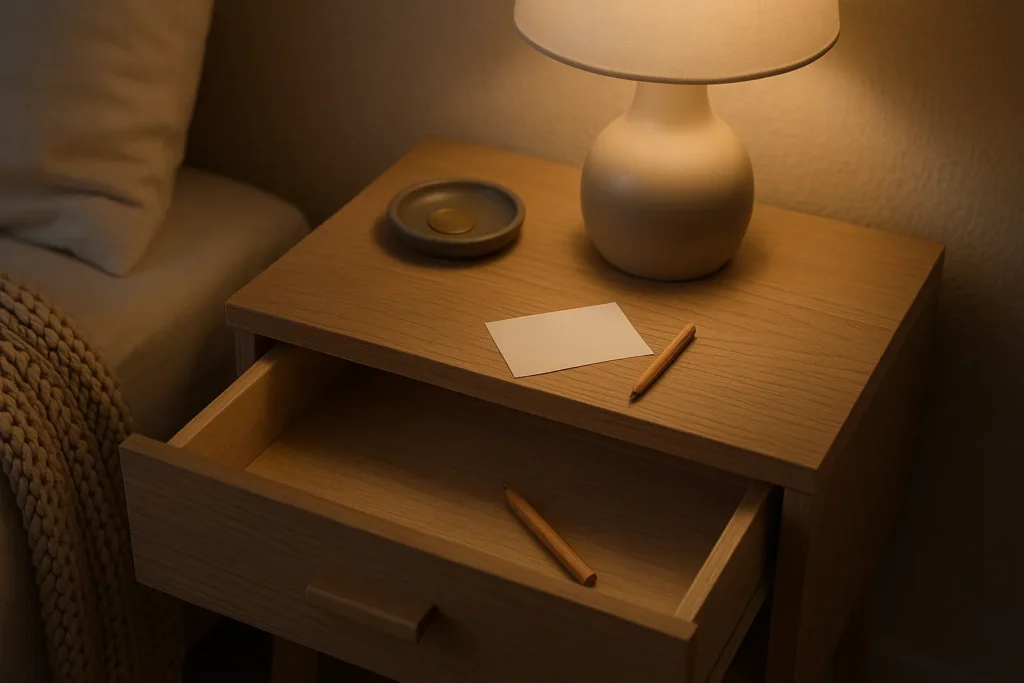
My brain used to replay everything at midnight—the email I didn’t send, the bill I need to check, that weird comment from three days ago. Now I give the worries a home so my head can rest.
How I do it (under 90 seconds):
👉 Grab a small card titled Worry Container.
👉 Write 1–3 sticky worries, then add: “I’ll revisit at 10 a.m.”
👉 Put the card in the nightstand and close the drawer—physically.
Tiny rules that keep it calm:
- This is not a to-do list—only the top stressors go on the card.
- If one worry needs action, I schedule a tiny next step (calendar reminder, draft email) and leave it there.
- No problem-solving after 9 p.m.—captured, not fixed.
The drawer trick sounds silly until your body feels it. The moment I close it, my mind lets go. It’s one of those nighttime habits to transform your life that works because it’s tangible: the thoughts have a place to stay that isn’t my pillow.
Cool, Dark, Quiet: Cheap Fixes First
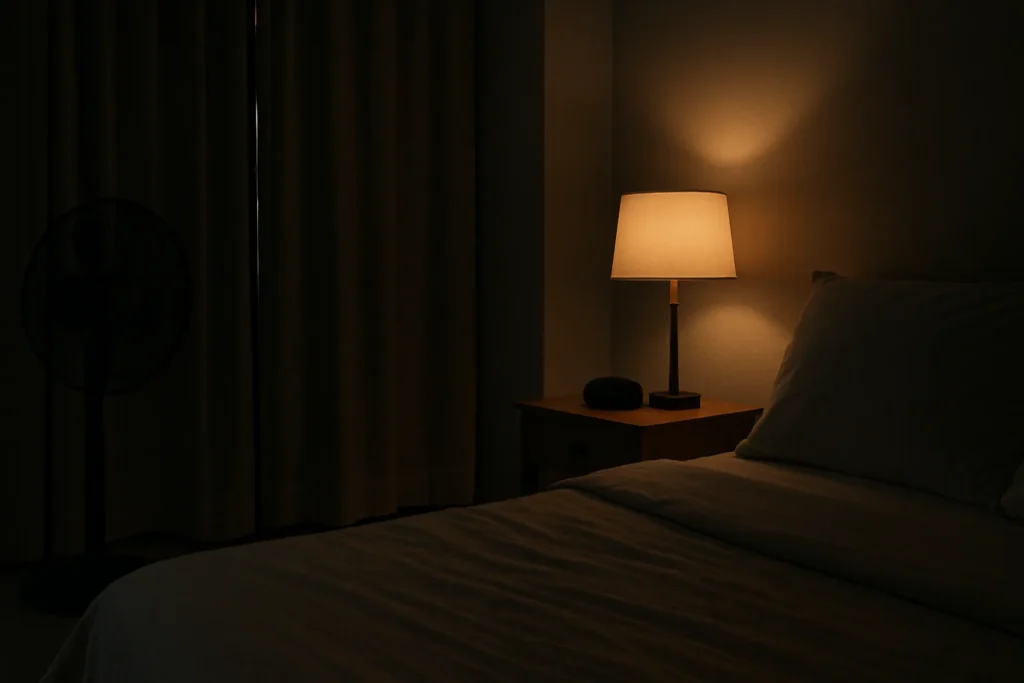
I used to think I needed a whole bedroom makeover to sleep better. Nope. A few tiny tweaks made a bigger difference than any fancy duvet. When my room is cool, dark, and quiet, my body finally gets the memo: sleep time.
What I changed (fast + inexpensive):
📌 Cool: crack a window or set the thermostat a little lower (65–68°F feels dreamy).
📌 Dark: drape a towel over bright LEDs, pull the curtains tight, keep an eye mask in the nightstand.
📌 Quiet: fan on low or simple white noise—soft hum, softer thoughts.
Tiny rules that help:
- If a light blinks, I cover it—tape, sticker, towel, whatever works tonight.
- No “I’ll fix it this weekend” excuses; I do a 60-second fix now.
- I keep a spare eye mask for laundry days so I never skip.
The vibe shift is instant. Cooler air, darker corners, gentle noise… my shoulders drop, and my brain finally stops scanning the room. Simple tweaks, serious sleep.
Read Paper for 6–8 Minutes
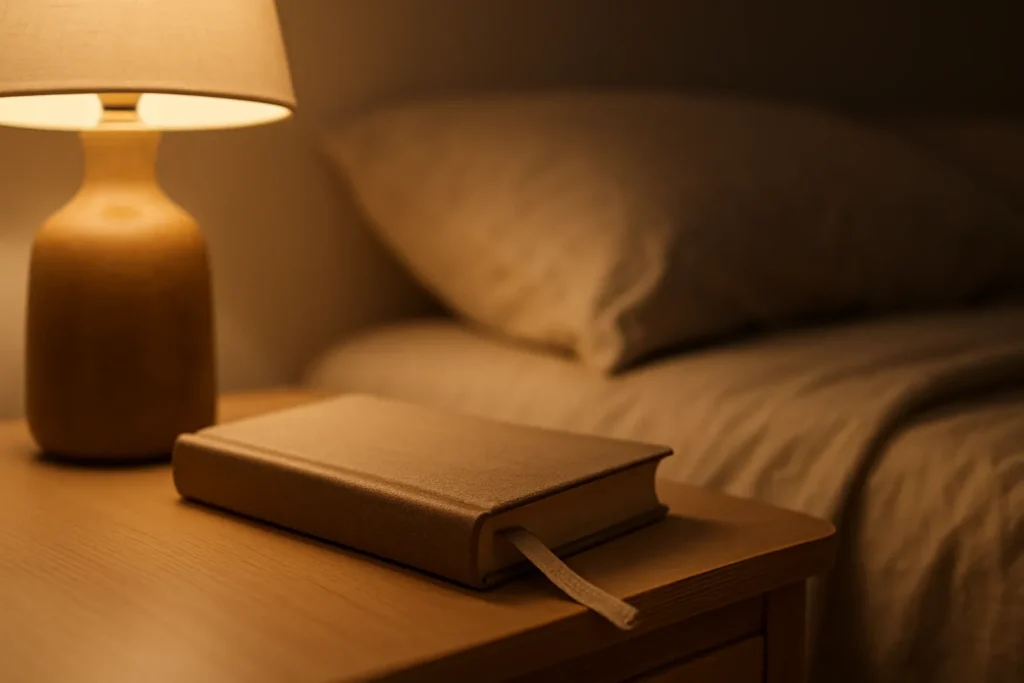
When I tried to “read on my phone,” I always ended up scrolling. Paper is different. It’s low-stimulus, a little boring (in a good way), and it gently nudges my brain toward sleep.
How I make it easy:
📌 Keep a paperback on the nightstand—spine up, ready to grab.
📌 Aim for one small section or 6–8 minutes—no pressure to finish chapters.
📌 If the book is too exciting, I switch to essays or a cozy magazine.
Tiny rules that help:
- Phone stays outside the room—no “quick lookups.” I jot curiosities on a sticky note for tomorrow.
- Boring is a feature, not a bug. If I yawn, I’m winning.
- On Sundays, I place library holds so something new shows up without effort.
A few quiet pages later, my eyes feel heavy in the best way. No blue light, no plot twists at 1 a.m.—just an easy glide into sleep.
Water Stays, Phone Goes
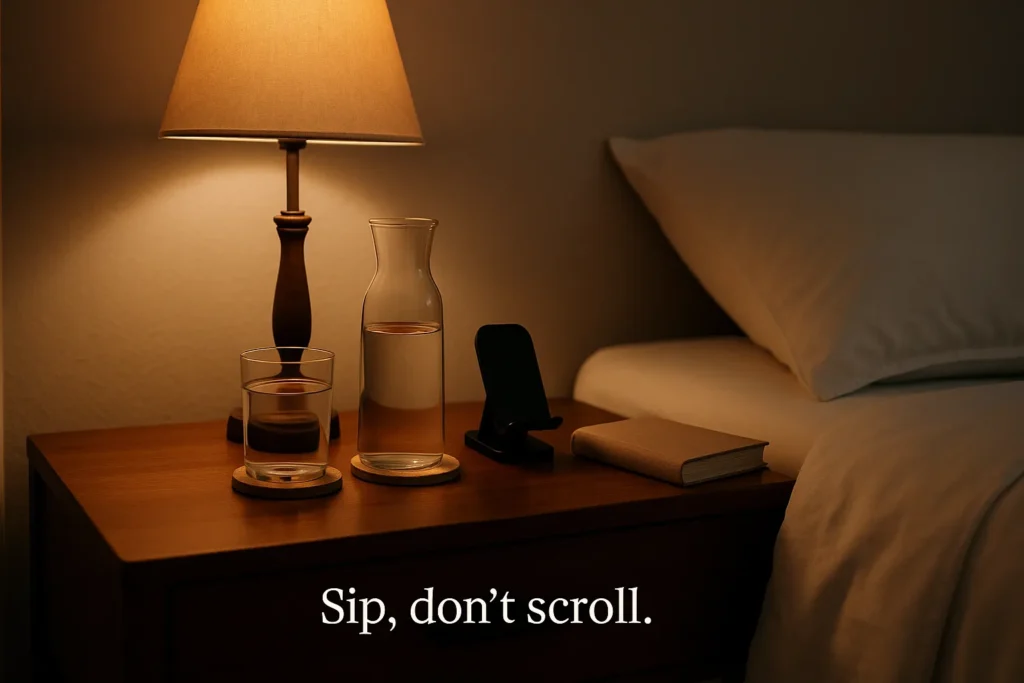
I used to keep my phone on the nightstand “for the alarm,” and shocker—I’d end up doom-scrolling at midnight. The simplest swap changed everything: water on the nightstand, phone in the hallway. I wake up less, and when I do, I sip and roll back to sleep instead of lighting up my brain.
How I set it up (takes 60 seconds):
📌 A real glass or carafe by the lamp—already filled.
📌 A basic alarm clock on the nightstand so I’m not “checking alarms” on my phone.
📌 Do Not Disturb scheduled nightly; phone charges outside the bedroom.
Tiny rules that help:
- If I wake up, I don’t check the time on my phone—I reach for water.
- Any “urgent thought” gets scribbled on a sticky note for tomorrow.
- If I need white noise, I use a fan or a plug-in machine—not my phone.
It’s such a small switch, but it’s one of those nighttime habits to transform your life that actually sticks—because it removes the temptation instead of trying to out-willpower it.
Two-Minute Reset Loop
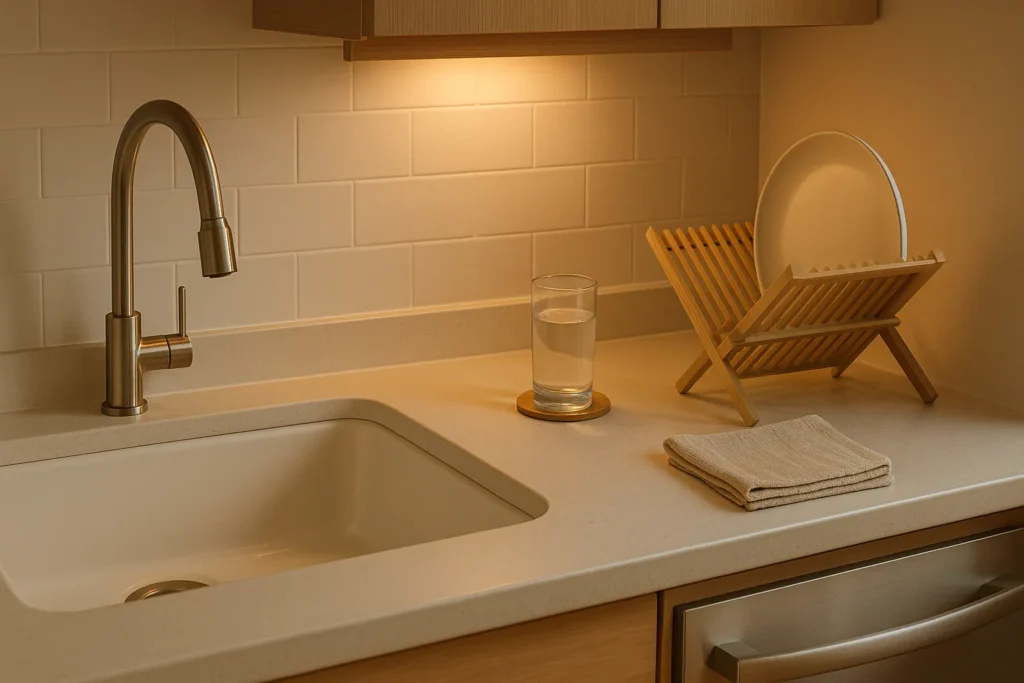
I used to either ignore the mess or clean way too much at night. Now I run a literal two-minute loop—timer on, move quick, stop at the ding. It’s not a chore; it’s a tiny favor for tomorrow-me.
My loop (same order every night):
👉 Rinse the sink clear.
👉 Wipe one surface so I see “calm” first thing.
👉 Shoes and stray stuff into the basket by the door.
Tiny rules that keep it light:
- Two minutes means two minutes—no “just one more thing.”
- If I miss it, I don’t “make up time” tomorrow; I just do it that night.
- The basket gets emptied on the weekend, not now.
Waking up to tidy corners changes my first thought of the day. It’s small, but stacked with the other steps, it’s one more quiet nudge toward a morning that feels easy.
Lights-Out Window (Not a Perfect Time)
I used to chase the “perfect bedtime” and then feel guilty when life didn’t cooperate. Now I use a 30-minute lights-out window—say, 10:00–10:30. When the window opens, I start landing the plane. No drama, no self-negotiation.
How I make it work (simple + flexible):
📌 I set a soft reminder 15 minutes before the window opens.
📌 Whatever I’m doing, I wrap it up and move to my last steps (book, breaths, lamp off).
📌 On Sundays, I adjust the window for real life—early meeting, kid event, travel.
Tiny rules that help:
- A window is permission, not pressure. If I miss the start, I still finish in the window.
- I don’t start new tasks inside the window. It’s landing time, not launch time.
- One cue, every night: same lamp, same playlist, same order.
Regular beats rigid. This tiny shift made bedtime feel like a promise I could actually keep.
The 15-Minute “Bad Day” Version
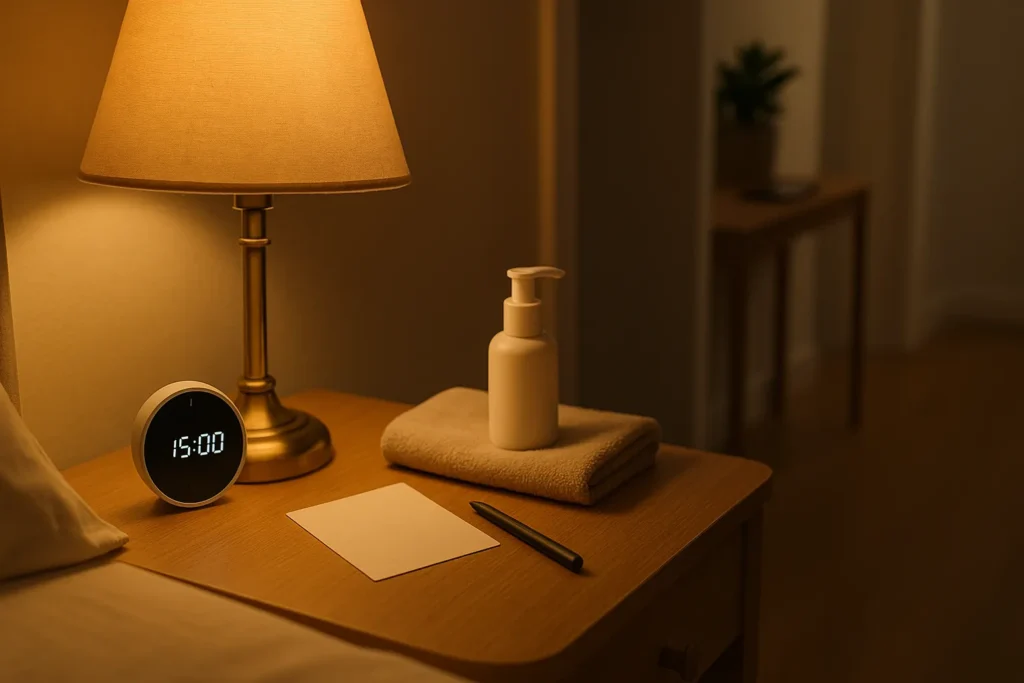
Some nights are chaos—late work, cranky kid, brain on fire. I don’t scrap the routine; I shrink it. Fifteen minutes buys me a better tomorrow.
My emergency sequence (set a timer):
👉 Lamp on, phone in the hallway (1 min)
👉 Face wash + moisturizer (4 min)
👉 Write 3 oddly specific wins (2 min)
👉 Tomorrow’s 3 + one proof step (4 min)
👉 Five slow breaths in bed—inhale 4, exhale 6 (4 min)
Tiny rules that keep it doable:
- No add-ons. If it’s not on the list, it waits.
- If I miss a step, I don’t spiral—I just move to the next.
- I end on the breath, even if the day felt messy.
It’s not perfect. It’s protective. And on hard days, that’s the difference between a reset and a spiral.
Troubleshooting (Because Real Life Is Messy)
I used to think one bad night ruined everything. Now I treat hiccups like speed bumps, not stop signs.
Shift work or odd hours: I keep the sequence, not the clock: lamp on → two-minute reset → face + cream → stretch + breath → tomorrow’s 3 → book → lights out. My body learns “this, then that,” even if bedtime moves.
Kids/roommates/noisy neighbors: I trade 15-minute hand-offs, dim the whole house after dinner, and keep earplugs + an eye mask in the nightstand. If bedtime slips, I run the 15-minute version and call it a win.
Anxiety spikes at night: I grab the Worry Container card, dump 1–3 thoughts, write “I’ll revisit at 10 a.m.,” and close the drawer. Then five rounds of inhale-4/exhale-6. No problem-solving after 9 p.m.—captured, not fixed.
Tiny apartment / studio life: I make “night mode” with props: one warm lamp, a basket for clutter, a yoga mat. When the lamp is on and the mat is out, my brain knows we’re winding down.
Phone keeps sneaking back in: I charge it outside the room and leave a sticky pad on my nightstand. Any “urgent” thought gets scribbled down for morning. No “quick checks,” because there’s no phone to check.
FAQ
Do I have to do every step?
Nope. Pick 3–5 that feel easiest and repeat them for a week. Consistency beats intensity.
How long until I notice a change?
Usually 3–5 nights for calmer evenings and about two weeks for mornings that feel lighter.
Can I still watch a show?
Sure—earlier in the night. In the last 30–45 minutes, switch to paper, stretch, and breath so your brain can power down.
What if I skip a night (or three)?
You’re human. Restart with the 15-minute “bad day” version tonight. The habit is the restart, not the streak.
What if my schedule changes every week?
Protect the order, not the exact time. Your body loves a predictable sequence.
Bring It Home
If you try one thing tonight, try three: put the phone to bed, write tomorrow’s 3, and take five long exhales before lights out. Keep the room cool and the lamp warm. Stop at “good enough.” Stack these nighttime habits to transform your life for seven quiet nights, and you’ll wake up with more calm than coffee can buy.