Mediterranean Garden Ideas: Your Complete Guide to Creating a Stunning Low-Maintenance Oasis
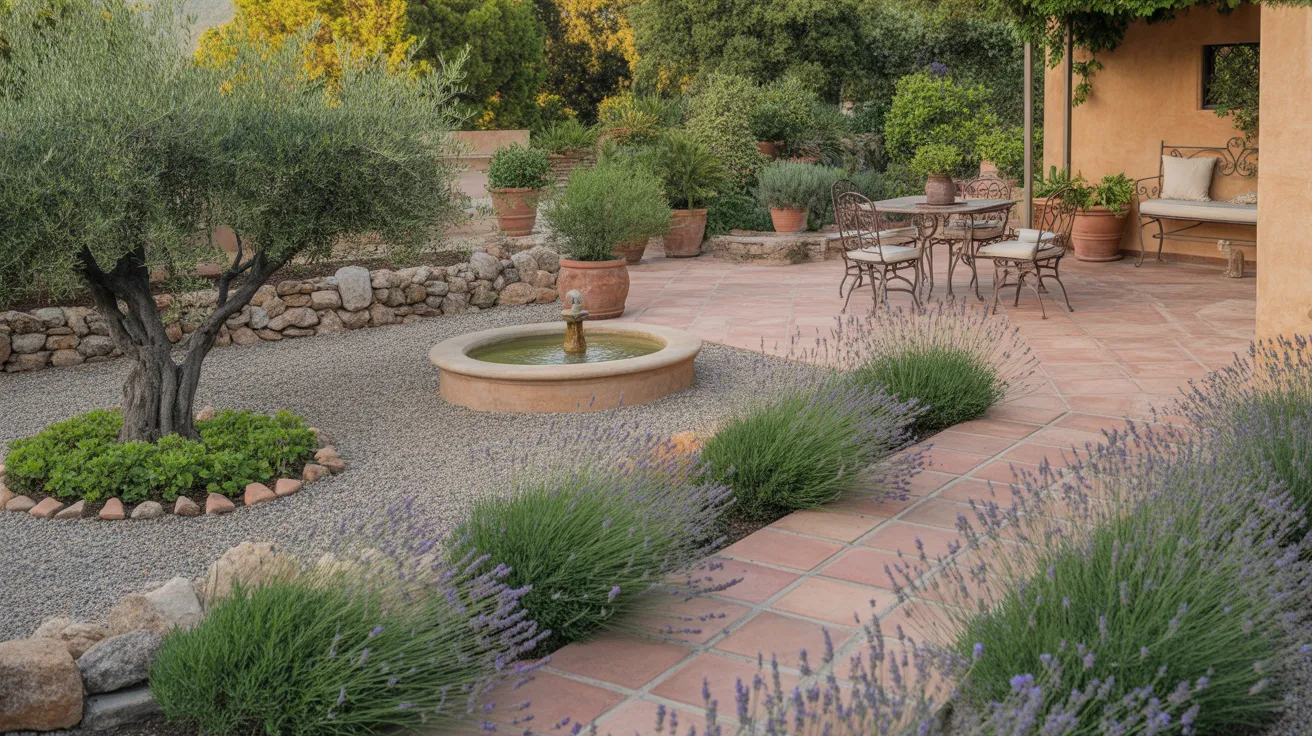
Transform your outdoor space into a sun-drenched sanctuary inspired by the coastal landscapes of Southern Europe. Mediterranean garden ideas blend timeless beauty with practical, water-wise design—perfect for modern homeowners seeking both elegance and sustainability.
Whether you’re working with a sprawling backyard or a compact urban patio, this comprehensive guide will walk you through everything you need to create an authentic Mediterranean garden that thrives in your climate.
What Makes a Garden Mediterranean?
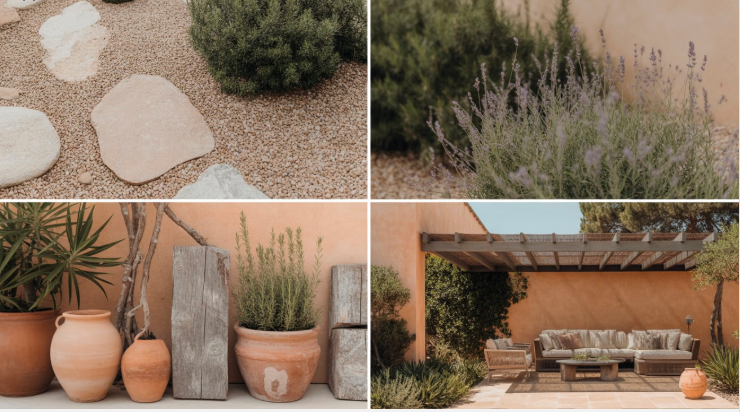
Mediterranean gardens capture the essence of regions surrounding the Mediterranean Sea—think the sun-baked hillsides of Provence, the terracotta-dotted landscapes of Tuscany, and the whitewashed courtyards of Santorini. These gardens share distinct characteristics:
If you love that soft, natural, storybook feeling indoors too, these cottagecore decor ideas are perfect for tying your cozy home aesthetic to your new Mediterranean-style outdoor space.
Climate Adaptation: Designed for hot, dry summers and mild winters, these gardens prioritize drought-tolerant plants and water-conserving techniques.
Natural Materials: Stone, gravel, terracotta, and weathered wood create an organic, timeless aesthetic that improves with age.
Layered Planting: Aromatic herbs, silvery foliage, and architectural plants create texture and year-round interest without excessive water needs.
Outdoor Living Focus: Mediterranean gardens blur the line between indoors and out, creating inviting spaces for dining, entertaining, and relaxation.
Can You Create a Mediterranean Garden in Your Climate?
Good news: Mediterranean garden ideas work in far more locations than you might think. While ideal for USDA zones 8-11, you can adapt these principles to cooler climates with smart plant selection and microclimate management.
For Warmer Climates (Zones 8-11): Embrace the full palette of Mediterranean plants, from citrus trees to bougainvillea.
For Cooler Climates (Zones 5-7): Focus on cold-hardy alternatives like Russian sage instead of lavender, and use container plantings for tender specimens that can winter indoors.
Key Success Factor: Well-drained soil is non-negotiable. Mediterranean plants despise wet feet, so amend clay soils heavily or build raised beds.
Essential Mediterranean Garden Design Principles
1. Create Defined Outdoor Rooms
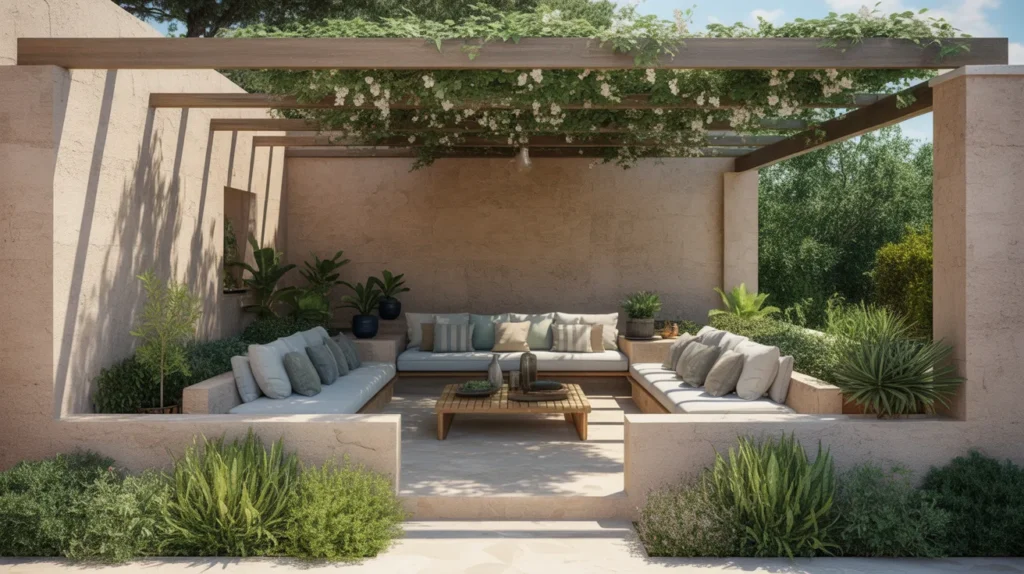
Mediterranean gardens excel at creating intimate, purposeful spaces within the larger landscape. Use these mediterranean garden ideas to define areas:
Low Stone Walls: Build 18-24 inch walls to separate seating areas from planting beds while maintaining sightlines.
Pergolas and Arbors: Overhead structures provide crucial shade while supporting climbing plants like jasmine or grapevines.
Level Changes: Terracing on slopes creates natural room divisions and improves drainage—essential for Mediterranean plants.
Strategic Paving: Use different materials (flagstone for dining areas, gravel for pathways) to visually distinguish spaces without barriers.
2. Master the Art of Mediterranean Pathways
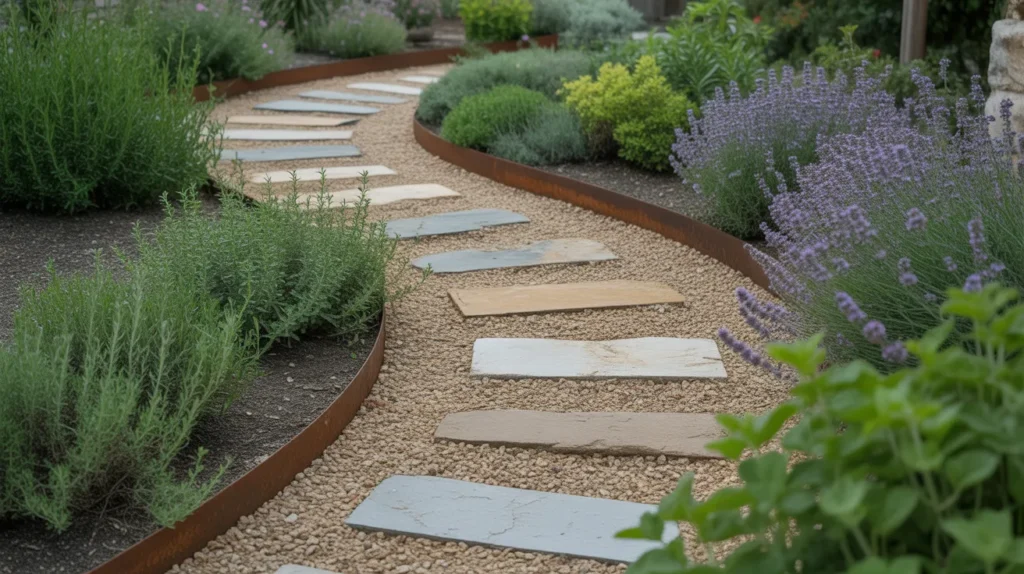
Pathways are the bones of your garden design. Here’s how to get them right:
Gravel Paths (Most Authentic): Use pea gravel or decomposed granite (3-4 inches deep over landscape fabric). Edge with stone or metal to prevent spreading. Cost: $2-4 per square foot.
Natural Stone: Irregular flagstone set in sand or gravel creates beautiful, organic pathways. Leave gaps for creeping thyme or Corsican mint. Cost: $15-25 per square foot.
Brick or Pavers: Choose warm terracotta tones and lay in herringbone or basket-weave patterns for traditional appeal. Cost: $10-20 per square foot.
Design Tip: Make paths curve gently rather than running straight. Width should be minimum 3-4 feet for comfortable two-person walking.
3. Incorporate Authentic Water Features
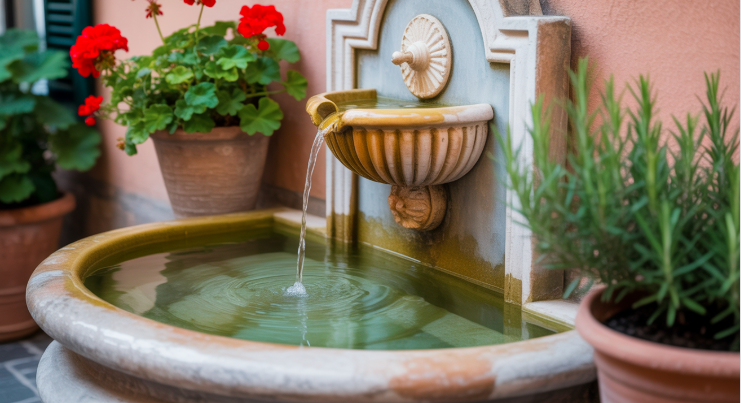
The sound of water transforms a garden from pleasant to magical. Mediterranean garden ideas for water features:
Wall Fountains: Mount a small fountain on a garden wall or fence. Choose simple terracotta or stone designs. These need only 2-3 square feet of space.
Tiered Fountains: Classic three-tier designs work beautifully as focal points. Place where they’re visible from indoor seating areas.
Recirculating Streams: If you have a slope, create a small stream with a hidden reservoir and pump. Line with river rocks and Mediterranean plantings.
Budget-Friendly Option: A large ceramic pot fountain costs $100-300 and needs only an electrical outlet.
Pro Tip: Use solar-powered pumps in sunny gardens to eliminate wiring and reduce operating costs.
4. Work With Natural Materials
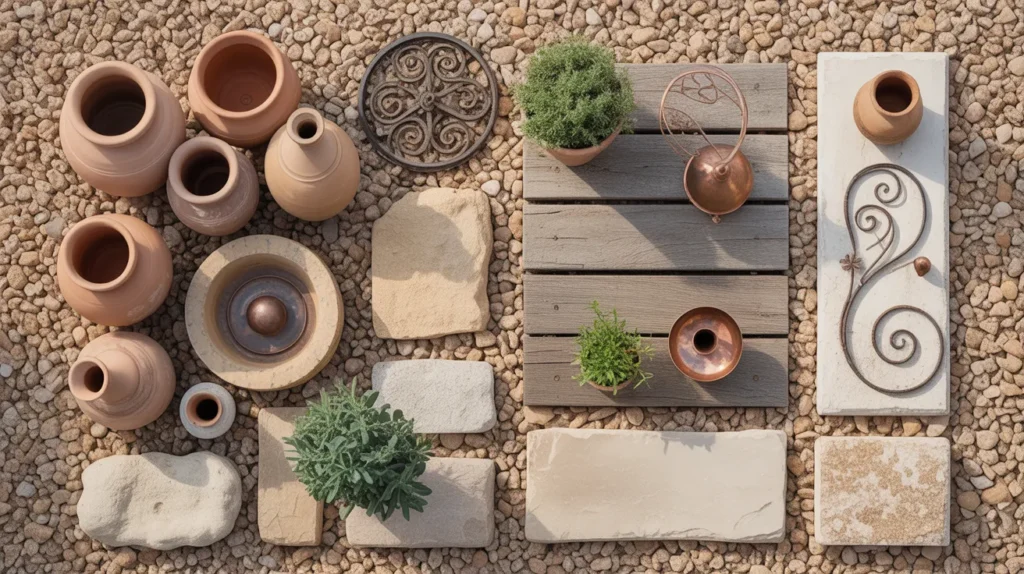
Authentic Mediterranean gardens celebrate weathered, natural materials:
Terracotta: Use for pots, edging, and decorative elements. Choose frost-resistant terracotta in cold climates.
Natural Stone: Limestone, sandstone, and travertine age beautifully. Local stone often costs less and suits your climate better.
Gravel and Pebbles: Beyond pathways, use as mulch around plants. This reflects heat, suppresses weeds, and improves drainage.
Weathered Wood: Use for pergolas, arbors, and rustic furniture. Let it age naturally to silvery gray rather than staining.
Aged Metal: Wrought iron, copper, and galvanized steel develop attractive patinas over time.
Best Plants for Mediterranean Garden Ideas
Signature Trees
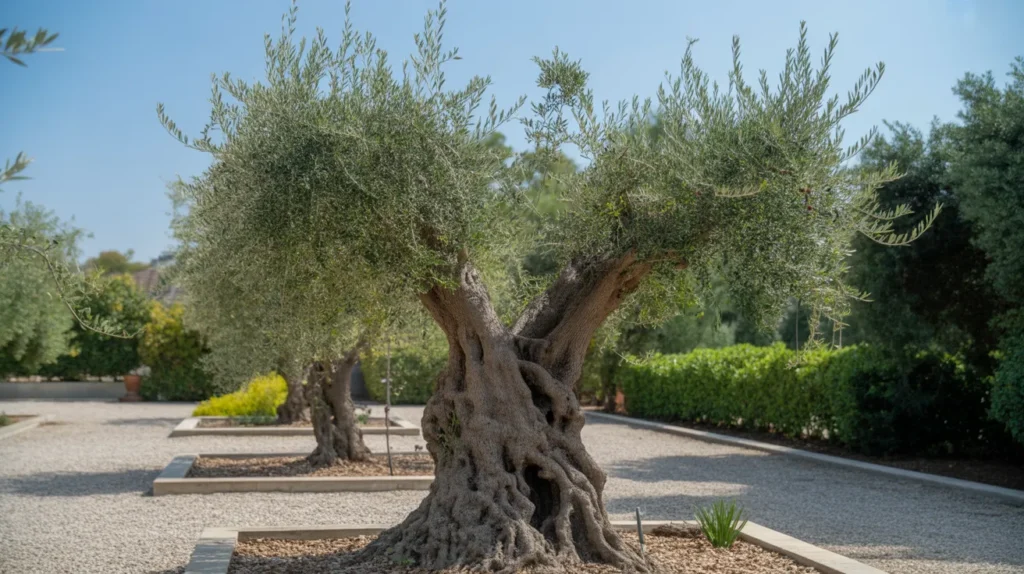
Olive Trees (Olea europaea, Zones 8-11): The quintessential Mediterranean tree. Grows 15-30 feet. Needs full sun and excellent drainage. Fruitless varieties available for less mess.
Italian Cypress (Cupressus sempervirens, Zones 7-10): Narrow, columnar evergreens perfect for creating vertical accents. Plant in groups of 3-5 for dramatic effect.
Citrus Trees (Zones 9-11, or containers): Lemons, oranges, and kumquats provide fragrant blooms, edible fruit, and glossy evergreen foliage. Container-grown citrus can summer outdoors in cold climates.
Mediterranean Fan Palm (Chamaerops humilis, Zones 8-11): Cold-hardy palm growing 10-15 feet. Excellent structural plant.
Crape Myrtle (Lagerstroemia, Zones 7-10): Summer blooms in white, pink, or purple. Attractive peeling bark provides winter interest.
Essential Herbs and Aromatic Plants
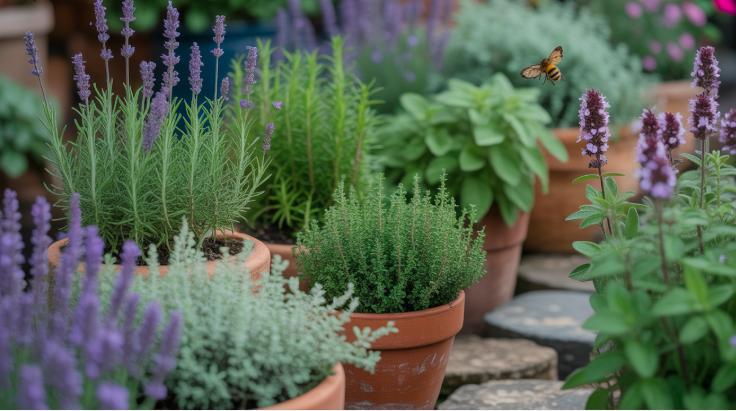
Lavender (Lavandula spp., Zones 5-9): The backbone of Mediterranean gardens. ‘Hidcote’ and ‘Munstead’ are compact and cold-hardy. Requires excellent drainage and full sun. Trim after flowering to maintain shape.
Rosemary (Salvia rosmarinus, Zones 8-11): Woody herb with needle-like leaves. Trailing varieties work beautifully in containers or over walls. Cold-climate gardeners can grow in pots and winter indoors.
Thyme (Thymus spp., Zones 5-9): Low-growing herb perfect for pathway edges. Creeping thyme tolerates light foot traffic and releases fragrance when stepped on.
Sage (Salvia officinalis, Zones 5-9): Gray-green foliage and purple flower spikes. Culinary and ornamental varieties available.
Oregano and Marjoram (Zones 5-10): Spreading herbs that fill gaps between stones beautifully.
Design Idea: Create a dedicated herb spiral using stacked stones. This provides excellent drainage and multiple microclimates for different herbs.
Flowering Mediterranean Plants
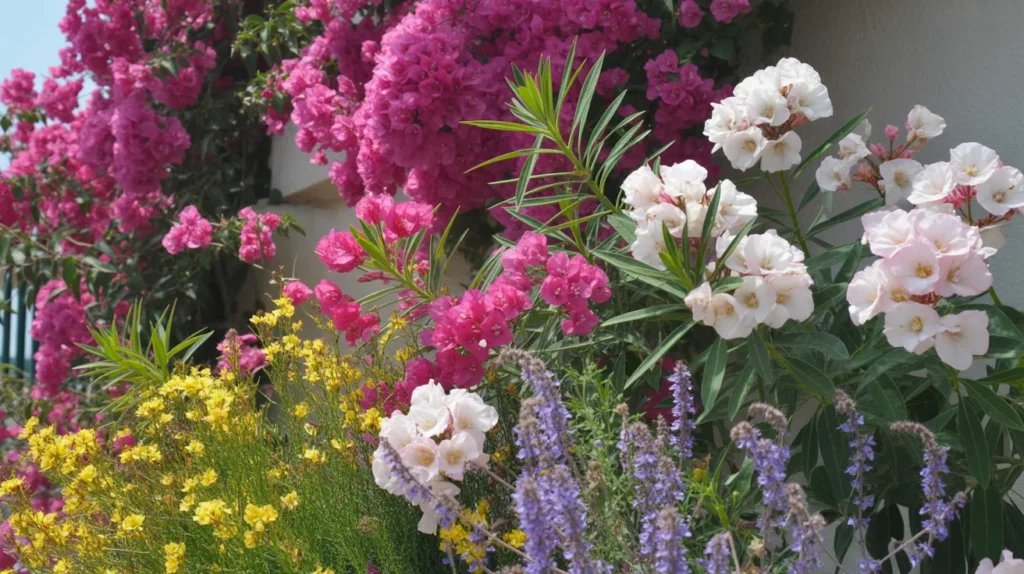
Bougainvillea (Zones 9-11): Explosive color in magenta, orange, red, or white. Requires full sun and blooms on new growth. Grow in containers in cold climates.
Oleander (Nerium oleander, Zones 8-11): Tough evergreen shrub with pink, white, or red flowers. All parts toxic, so avoid if you have pets or children.
Rock Rose (Cistus spp., Zones 8-10): Drought-tolerant shrubs with papery flowers in white or pink. Blooms prolifically in late spring.
Santolina (Zones 6-9): Silver-foliaged mounding plants with button-like yellow flowers. Excellent for edging and borders.
Gaura (Zones 5-9): Airy pink or white flowers that dance above foliage all summer. Extremely drought-tolerant once established.
Salvia (Various species, Zones vary): Huge family of Mediterranean-suitable plants. ‘May Night’ and ‘Caradonna’ are cold-hardy favorites.
Groundcovers and Texture Plants
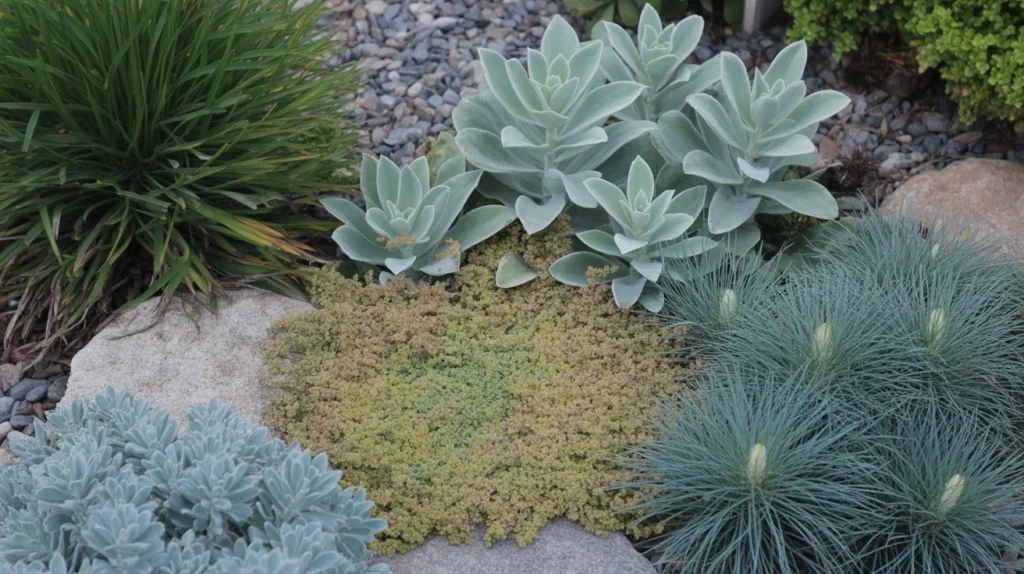
Lamb’s Ear (Stachys byzantina, Zones 4-9): Silvery, fuzzy foliage perfect for edging. Remove flower stalks to keep tidy.
Blue Fescue (Festuca glauca, Zones 4-8): Compact ornamental grass with steel-blue color. Use in masses or as edging.
Sedum (Zones 3-9): Succulent groundcovers in countless varieties. ‘Angelina’ has bright chartreuse foliage.
Euphorbia (Zones vary): Architectural plants with unique forms. Many have chartreuse or blue-gray foliage.
Agave and Aloe (Zones 9-11, or containers): Sculptural succulents that create bold focal points.
Designing Your Mediterranean Garden: Step-by-Step
Step 1: Assess Your Space and Conditions
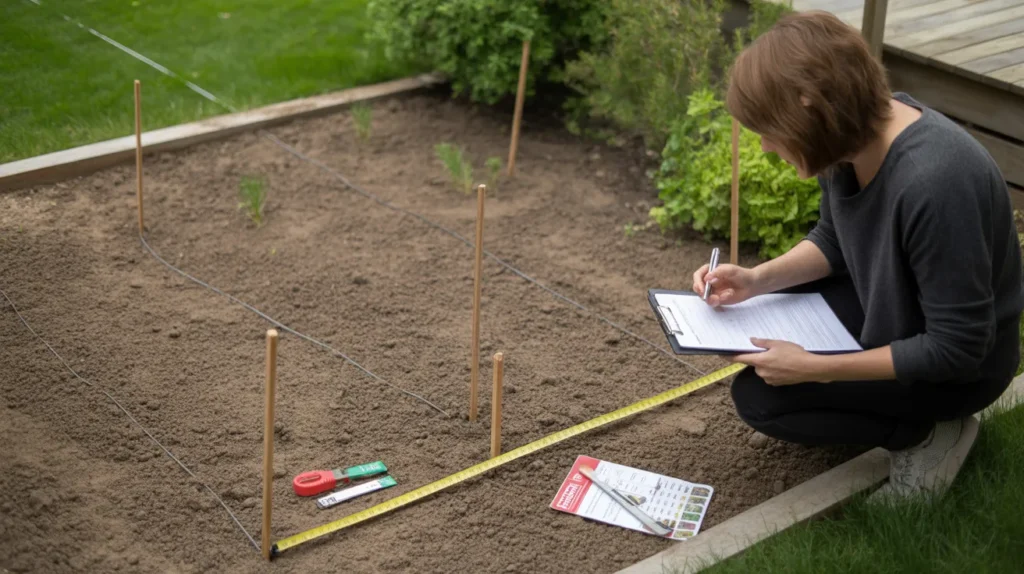
Measure everything: Create a scaled drawing (graph paper works great—1 square = 1 foot).
Note sun exposure: Full sun (6+ hours) is ideal for most Mediterranean plants. Morning sun with afternoon shade works in hot climates.
Test drainage: Dig a 12-inch hole, fill with water, and see how quickly it drains. Should empty in 1-3 hours.
Check soil pH: Mediterranean plants prefer slightly alkaline soil (7.0-8.0). Test kits cost $10-15.
Before you start shifting gravel and planting olives, it really helps to declutter what’s already in your yard or patio—these simple things to declutter this weekend can make the whole space feel lighter before you even add a single new plant.
Step 2: Create Zones
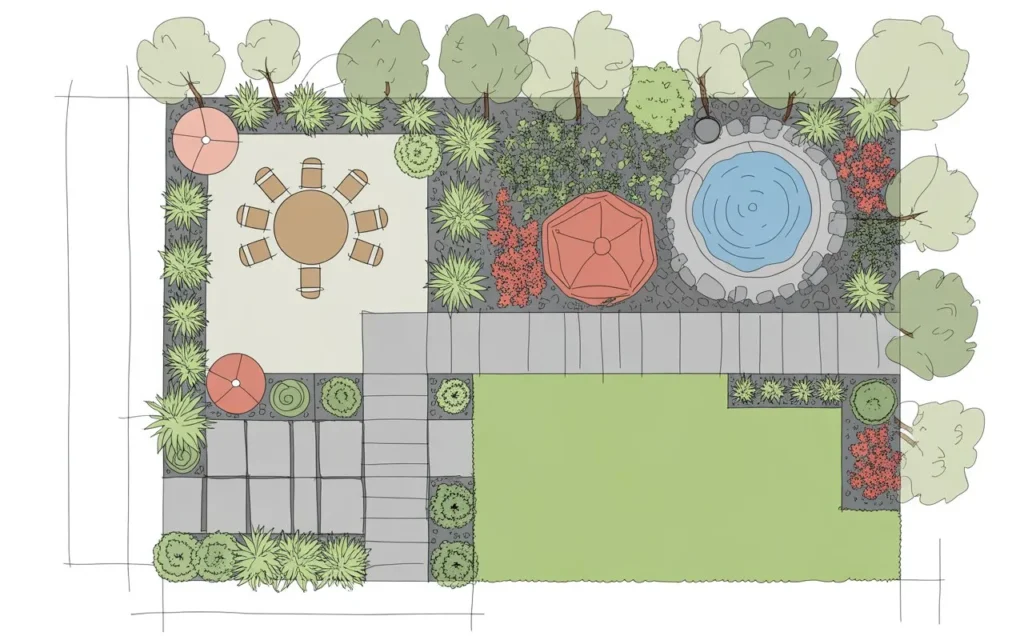
Divide your space into functional areas:
- Main seating/dining area: Place near the house for convenience
- Secondary sitting spot: Create a destination in a far corner
- Planting beds: Frame pathways and seating areas
- Focal point: Fountain, sculpture, or specimen tree
- Utility area: Screen composters, hoses, tools with tall plants or trellises
Step 3: Install Hardscaping First
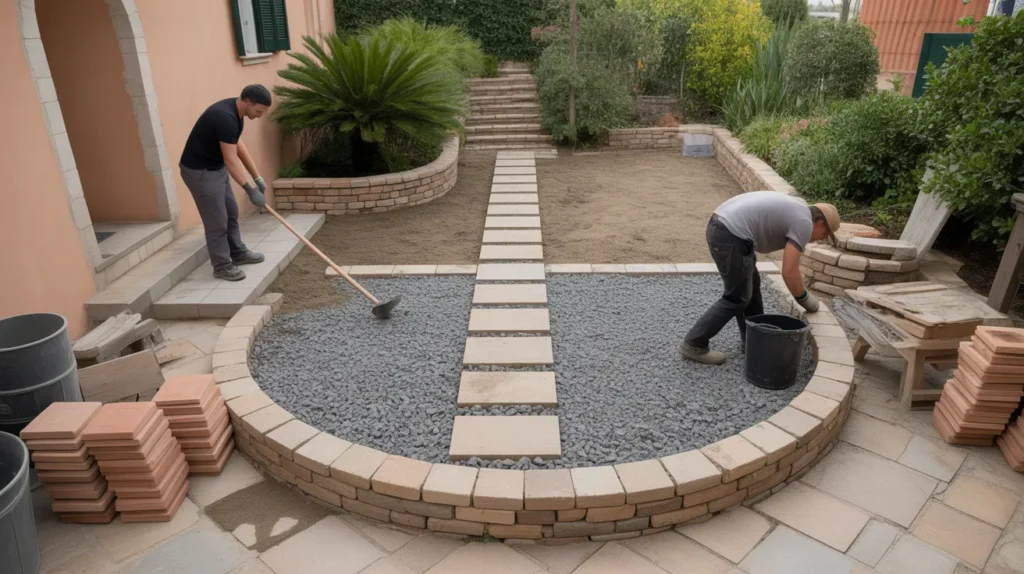
Always complete hard elements before planting:
- Grade and drainage: Ensure water flows away from structures
- Walls and terraces: Build any structural elements
- Pathways: Lay primary circulation routes
- Irrigation: Install drip systems or soaker hoses now
- Lighting: Run electrical lines while ground is open
- Water features: Plumb fountains or install reservoir systems
Step 4: Amend Soil and Prepare Beds
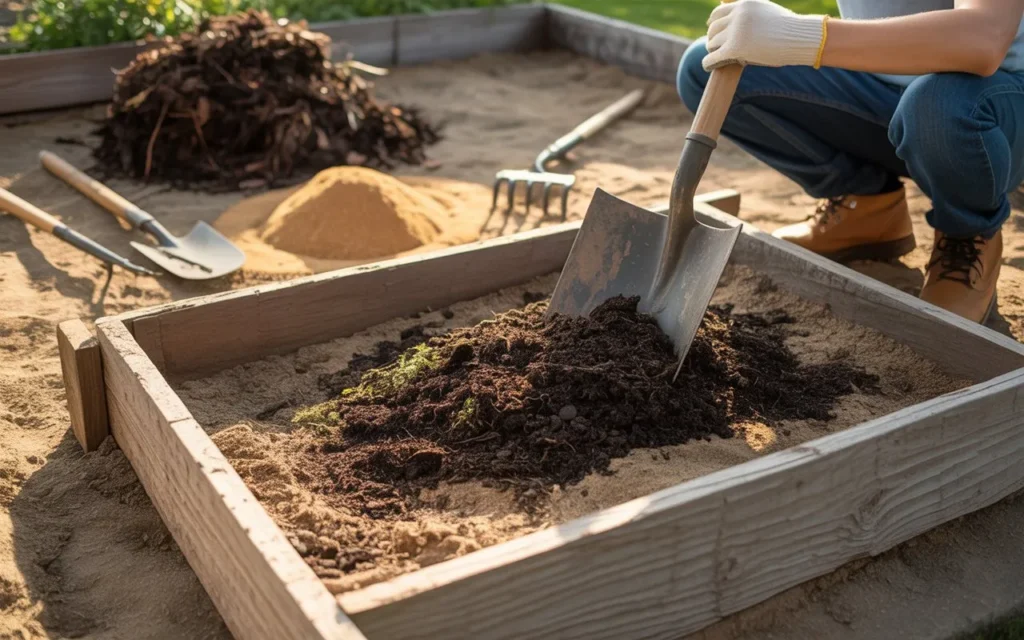
For clay soil: Add 3-4 inches of coarse sand and compost, till 12 inches deep. Consider raised beds instead.
For sandy soil: Add compost to improve water retention slightly.
For ideal drainage: Mix 1/3 native soil, 1/3 compost, 1/3 coarse sand or perlite.
Edge beds: Use stone, metal, or terracotta edging to keep gravel mulch in place.
Step 5: Plant Strategically
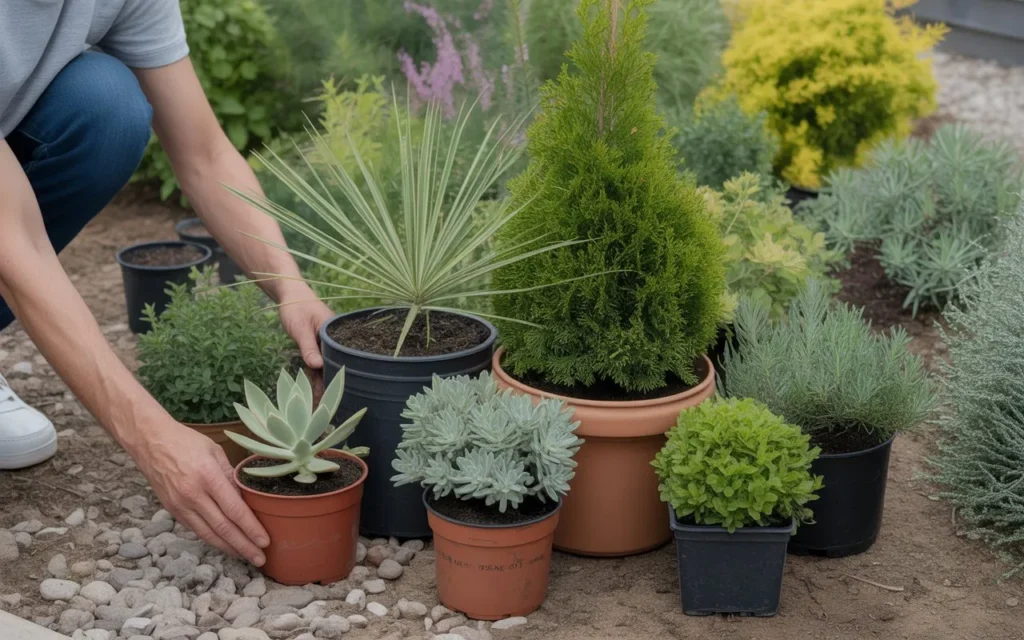
Trees first: Plant largest elements to establish scale. Space appropriately for mature size.
Shrubs and structure: Install medium-sized plants that define spaces.
Perennials and herbs: Fill in with flowering plants and aromatics.
Groundcovers last: Tuck in low-growing plants to complete the design.
Planting Tip: Set plants in their pots first and live with the arrangement for a few days before planting.
Step 6: Mulch and Maintain
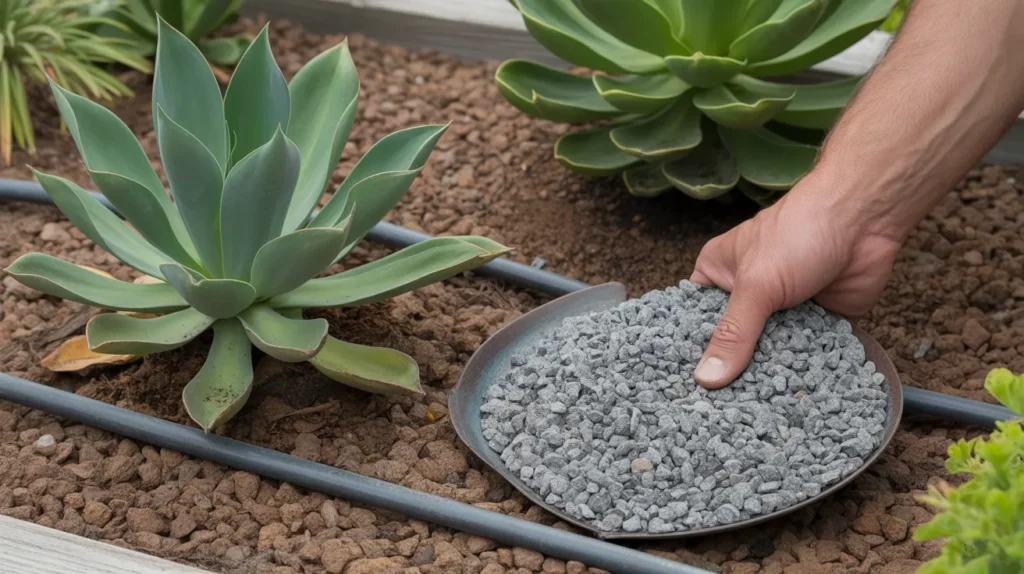
Apply gravel mulch: 2-3 inches of pea gravel or crushed stone around plants. Keep 2-3 inches away from plant stems.
Water deeply but infrequently: Encourage deep root growth. Most established Mediterranean plants need water only every 7-14 days in summer.
Trim regularly: Most Mediterranean plants benefit from light pruning to maintain shape and encourage bushiness.
Mediterranean Garden Ideas for Small Spaces
Limited space? These mediterranean garden ideas work beautifully in compact areas:
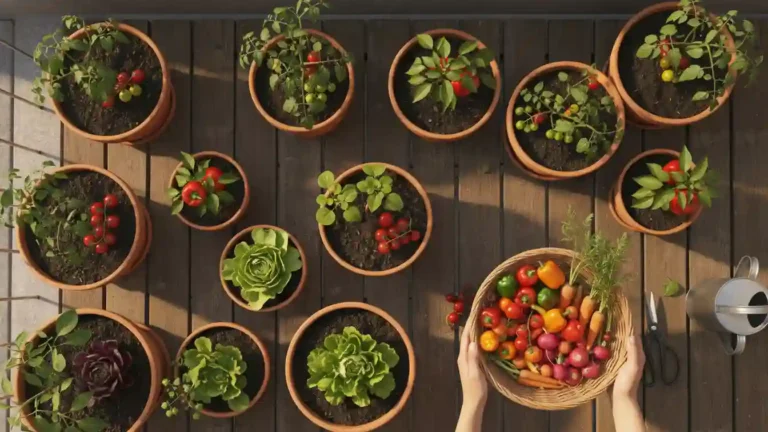
Container Gardens
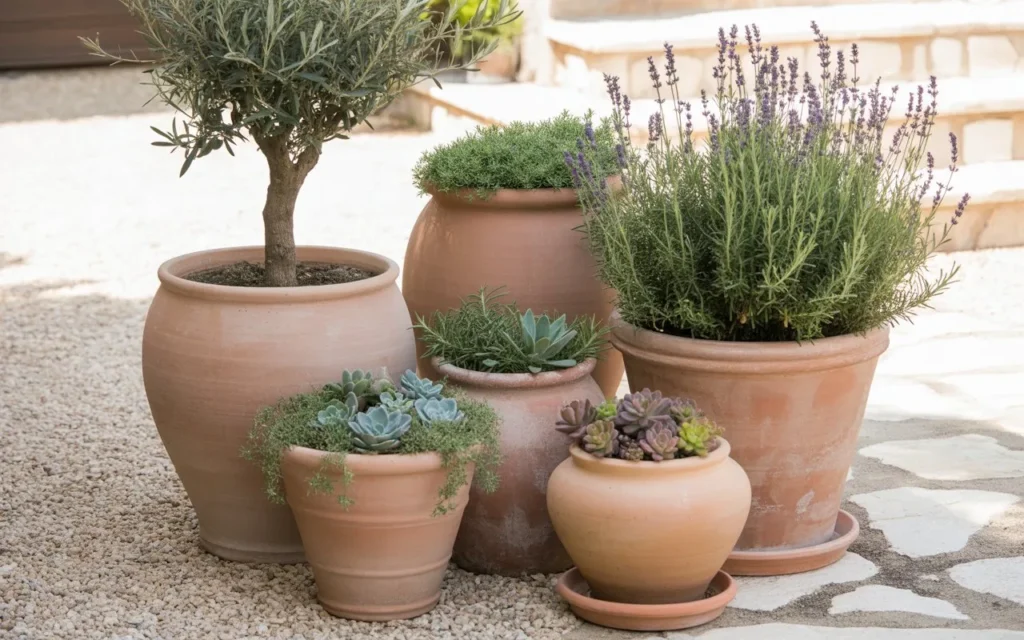
Choose large pots: 18-inch minimum diameter. Terracotta is traditional but dries quickly—consider glazed ceramic in hot climates.
Create height: Use tall containers for small trees like citrus or olive. Underpaint with trailing rosemary or thyme.
Group in odd numbers: Arrange 3, 5, or 7 pots of varying heights for visual interest.
Best small-space plants: Dwarf citrus, compact lavender varieties, rosemary, thyme, succulents, and ornamental grasses.
Vertical Growing
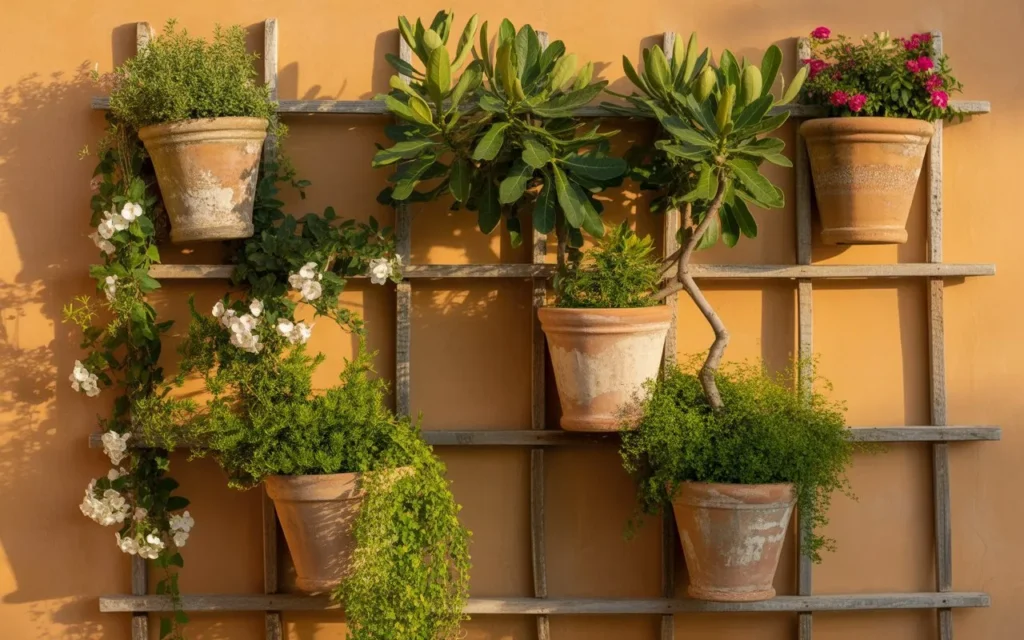
Wall-mounted planters: Install terracotta wall pots for herbs and trailing plants.
Espalier fruit trees: Train citrus, fig, or pomegranate flat against walls to save space.
Climbing plants: Use jasmine, bougainvillea, or grapevines on trellises or pergolas to add greenery without ground space.
Balcony Mediterranean Gardens
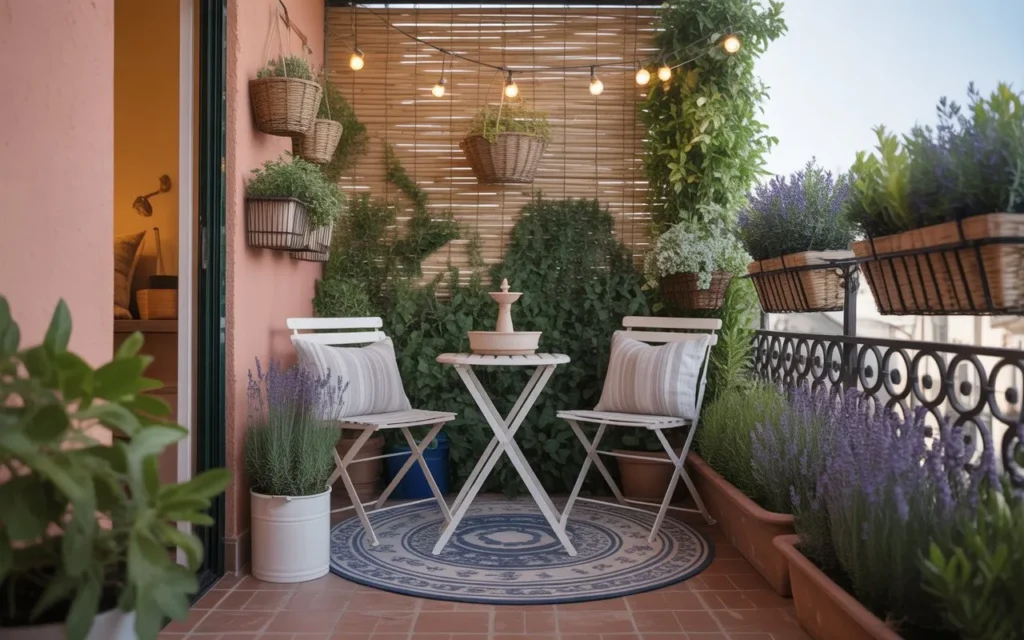
Prioritize seating: Choose compact furniture that folds or stacks.
Layer plants: Use rail planters, floor containers, and hanging baskets.
Create privacy: Install bamboo screens or lattice with climbing plants.
Add ambiance: String lights and a small tabletop fountain complete the atmosphere.
Budget-Friendly Mediterranean Garden Ideas
Create Mediterranean style without breaking the bank:
Start with gravel: One of the most affordable materials ($50-100 for 100 sq ft) that instantly evokes Mediterranean style.
Propagate lavender: Take cuttings from one plant to create dozens. Root in summer, plant in fall.
Use local stone: Skip expensive imported materials. Native stone often suits your climate better anyway.
Shop end-of-season sales: Buy perennials and shrubs at 50-75% off in fall. Mediterranean plants establish well in autumn.
DIY water features: Create a simple pot fountain for under $100 using a large ceramic container, small pump, and stones.
Repurpose materials: Old terracotta chimney flues make excellent planters. Broken concrete creates rustic pathways.
Prioritize hardscaping: Invest in quality paths and walls first. These define the space even before it’s fully planted.
Maintenance Calendar for Mediterranean Gardens
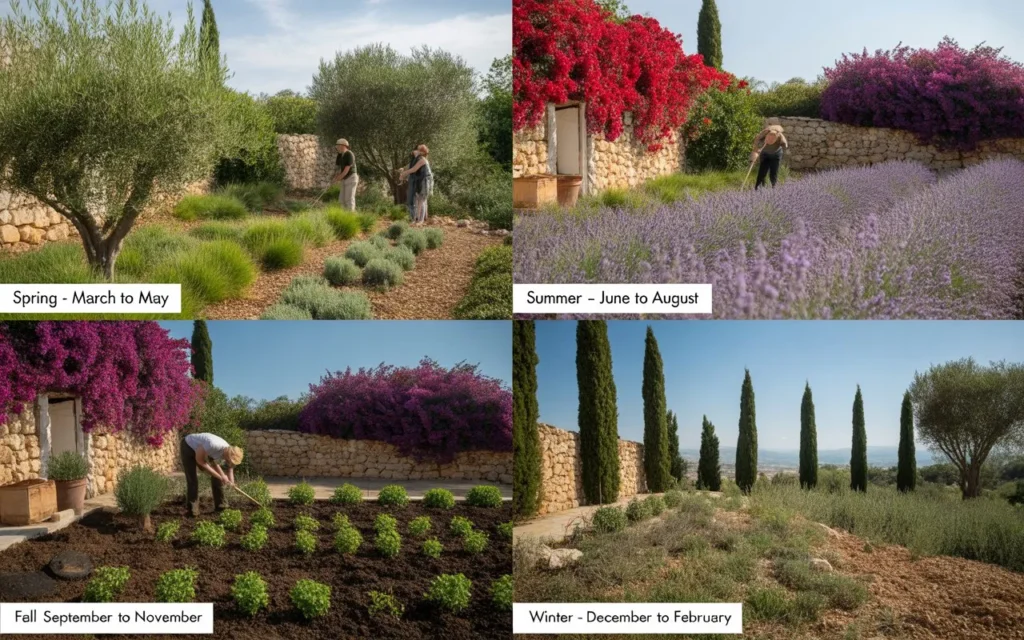
Spring
- Prune winter-damaged growth
- Apply slow-release fertilizer sparingly
- Refresh gravel mulch
- Divide overcrowded perennials
- Plant new additions
Summer
- Water deeply but infrequently
- Deadhead flowering plants
- Harvest herbs regularly to encourage bushiness
- Monitor irrigation systems
- Enjoy outdoor living spaces!
Fall
- Plant new perennials and shrubs (best time)
- Take herb cuttings before frost
- Reduce watering as temperatures cool
- Clean fountains before winter
- Prune back spent perennials
Winter
- Minimal maintenance required
- Protect tender plants in cold climates
- Plan next season’s additions
- Enjoy winter structure of evergreens and grasses
Common Mediterranean Garden Mistakes to Avoid
Overwatering: The number one killer of Mediterranean plants. When in doubt, wait another day.
Poor drainage: If water pools, plants will rot. Always amend soil or build raised beds.
Wrong plant choices: Don’t fight your climate. Choose cold-hardy alternatives if you’re not in a Mediterranean climate zone.
Too much fertilizer: These plants evolved in lean soils. Excessive feeding causes weak, floppy growth.
Planting too close: Mediterranean plants need air circulation. Space generously.
Skipping the hardscaping: Don’t plant first and pave later. Install pathways and features before planting.
Ignoring scale: A tiny fountain in a vast space looks lost. Size features appropriately.
Sustainable Mediterranean Garden Practices
Mediterranean gardens are inherently sustainable, but you can enhance their eco-friendly credentials:
Xeriscaping: Choose drought-tolerant plants to minimize water use. Established Mediterranean gardens may need zero supplemental water.
Rainwater harvesting: Install rain barrels or cisterns to collect water for occasional deep watering.
Drip irrigation: Delivers water directly to roots with minimal waste. Use timers for efficient scheduling.
Permeable paving: Gravel and flagstone with gaps allow water to percolate naturally.
Native plants: Where possible, choose plants native to your region with Mediterranean characteristics.
Organic practices: Mediterranean plants rarely need pesticides. Use compost tea and beneficial insects for any pest issues.
Wildlife support: Many Mediterranean plants support pollinators. Add bee houses and bird baths to enhance biodiversity.
Regional Adaptations: Mediterranean Garden Ideas by Climate
Hot, Arid Climates (Southwest US)
- Emphasize succulents and cacti alongside traditional Mediterranean plants
- Use light-colored gravel to reflect heat
- Create more extensive shade structures
- Consider desert-adapted alternatives like Texas ranger for lavender
Humid Subtropical (Southeast US)
- Ensure exceptional drainage to combat humidity
- Choose mildew-resistant plant varieties
- Increase air circulation with plant spacing
- Use raised beds extensively
Mediterranean Climate (California, parts of Oregon)
- Full palette of traditional plants available
- Focus on water conservation despite suitable climate
- Consider fire-resistant landscaping in wildfire-prone areas
- Native California plants blend beautifully with Mediterranean style
Cool Temperate (Pacific Northwest, Northern states)
- Choose cold-hardy substitutes: Russian sage for lavender, catmint for nepeta
- Grow tender plants in containers to winter indoors
- Embrace silver and gray foliage plants that tolerate more water
- Use microclimates near south-facing walls for borderline plants
Finishing Touches: Styling Your Mediterranean Garden
Furniture: Choose wrought iron, teak, or powder-coated aluminum in earthy tones. Add weatherproof cushions in terracotta, ochre, or Mediterranean blue.
Lighting: Install warm LED path lights, string lights over seating areas, and uplighting for trees and architectural features.
Decorative elements: Terracotta urns, ceramic tiles, rustic wooden shutters, and antique olive oil jars add authentic character.
Textiles: Use outdoor rugs in geometric patterns, weather-resistant throw pillows, and canvas umbrellas for shade.
Color palette: Stick to warm earth tones—terracotta, ochre, cream—with accents of Mediterranean blue and bright white.
Artwork: Consider mosaic accents, metal wall art, or a painted ceramic house number tile.
Conclusion: Your Mediterranean Garden Awaits
Creating a Mediterranean garden transforms your outdoor space into a timeless retreat that’s as practical as it is beautiful. These mediterranean garden ideas combine water-wise plantings, natural materials, and inviting outdoor living spaces into a cohesive design that works in various climates and spaces.
Start with the hardscaping fundamentals—pathways, walls, and water features—then layer in drought-tolerant plants that suit your specific climate zone. With proper planning and plant selection, you’ll create a low-maintenance sanctuary that improves with age and provides year-round beauty.
The best time to start your Mediterranean garden is now. Begin with one area—perhaps a gravel pathway edged with lavender—and expand from there. Before you know it, you’ll be sipping wine under your own olive tree, surrounded by the sights and scents of the Mediterranean.
Ready to begin? Choose three mediterranean garden ideas from this guide to implement this season. Your sun-drenched oasis is closer than you think.