How to Lose Weight Fast Without Moving Your Body: Science-Backed Methods That Actually Work

Introduction
Let’s be honest—you’ve probably heard it a million times: “Just exercise more!” But what if I told you that’s not the only way to lose weight fast?
Here’s the thing. Not everyone can hit the gym. Maybe you’re recovering from an injury. Perhaps you work long hours and barely have time to breathe, let alone work out. Or maybe, just maybe, you simply don’t enjoy exercise. And that’s completely okay.
I’m going to share something that might surprise you: weight loss is about 80% what you eat and only 20% physical activity. That means you can actually lose weight without exercise by focusing on the right strategies.
In my experience working with people who’ve successfully dropped pounds without traditional workouts, I’ve seen that understanding your body’s metabolism and making smart food choices matters way more than spending hours on a treadmill.
You might be wondering if this is even possible. The answer? Absolutely. And I’m going to show you exactly how.
Understanding Weight Loss Without Exercise
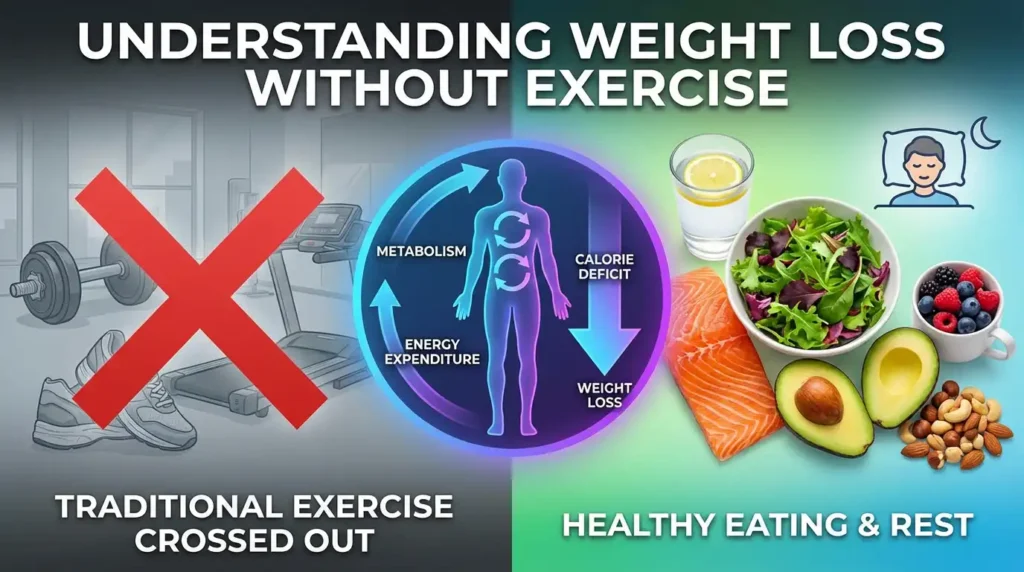
Before we dive into the how-to, let’s talk about what actually makes weight loss happen.
Your body burns calories all day long, even when you’re sleeping. This is called your basal metabolic rate (or BMR). It’s the energy your body needs just to keep your heart beating, lungs breathing, and organs functioning.
Now here’s where it gets interesting. If you consume fewer calories than your body burns, you create what’s called a caloric deficit. This is the golden rule of weight loss—no matter what diet or method you follow.
The Science Behind Losing Weight While Staying Still
Your body doesn’t actually need exercise to burn fat. It needs a caloric deficit. Exercise just helps create that deficit faster.
What I love about this approach is that it puts you back in control. Instead of forcing yourself to do workouts you hate, you can focus on strategies that work with your lifestyle.
Research shows that your metabolism can be influenced by several factors:
- What you eat and when you eat it
- Your sleep quality
- Your stress levels
- Your hydration status
- Even the temperature of your environment
Let me break this down in a way that makes sense. Think of your body like a car. You can either drive it more (exercise) to burn fuel, or you can simply put less fuel in the tank (eat fewer calories). Both approaches work.
Dietary Changes for Rapid Weight Loss
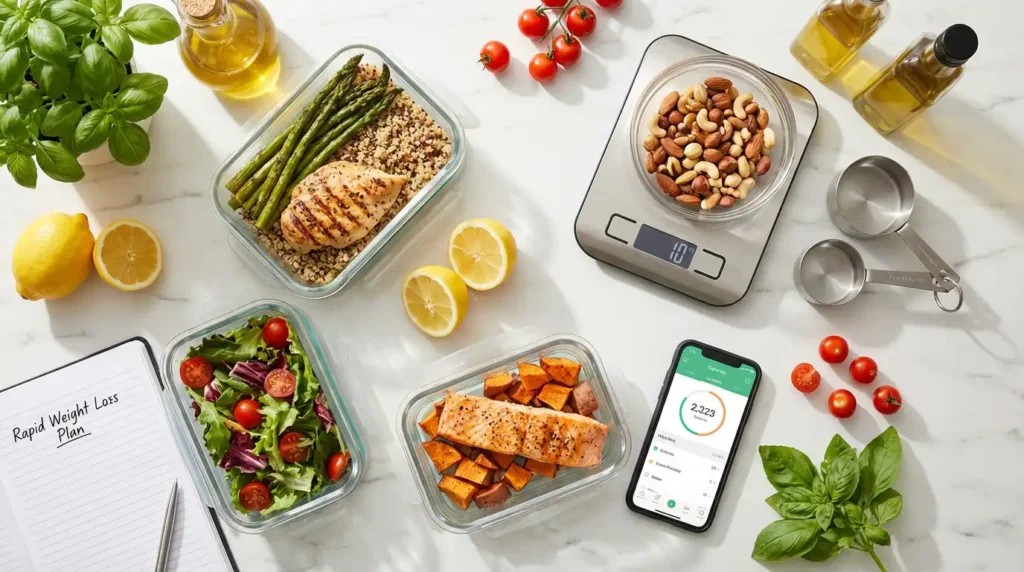
This is where the magic happens. If you want to lose weight fast without moving your body, your diet becomes your best friend.
Creating a Caloric Deficit Through Food
First things first—you need to know how many calories you’re actually eating. Most people underestimate this by about 30-40%. Seriously.
Start tracking your food for just three days. Use a simple app or even a notebook. You’ll probably be shocked at what you discover.
Here’s a simple formula: To lose weight, multiply your current weight (in pounds) by 10-12. That’s roughly how many calories you should eat daily to create a deficit.
For example, if you weigh 180 pounds, aim for about 1,800-2,160 calories per day. You might think that sounds like a lot, but trust me, it’s effective.
High-Protein Diet Benefits
Protein is your secret weapon for weight loss without exercise. It does three amazing things:
- It keeps you feeling full longer than carbs or fats
- It requires more energy to digest (this is called the thermic effect of food)
- It helps preserve your muscle mass while you lose fat
In my experience, people who increase their protein intake to about 30% of their daily calories see the best results. That means if you’re eating 2,000 calories, about 600 should come from protein sources.
Good protein sources include chicken breast, fish, eggs, Greek yogurt, cottage cheese, and legumes. Even if you’re vegetarian or vegan, there are plenty of options.
Low-Carb and Ketogenic Approaches
Now, you’ve probably heard about low-carb diets and the keto diet. These can work incredibly well for rapid weight loss.
Here’s why: When you drastically reduce carbohydrates, your body switches from burning glucose (sugar) to burning fat for fuel. This state is called ketosis.
The ketogenic diet typically involves eating less than 50 grams of carbs per day while increasing your fat intake. It sounds counterintuitive—eating more fat to lose fat—but it works because you’re changing your body’s primary fuel source.
However, I’ll be honest with you. Keto isn’t for everyone. Some people feel amazing on it. Others feel tired and cranky. You need to experiment and see what works for your body.
A less extreme option is simply reducing your carbohydrate intake to about 100-150 grams per day. This can still produce excellent weight loss results without the strict limitations of full keto.
Intermittent Fasting Methods
Intermittent fasting (or IF) has become incredibly popular, and for good reason. It’s one of the easiest ways to lose weight fast without changing what you eat—just when you eat it.
The most common approach is the 16:8 method. You fast for 16 hours and eat all your meals within an 8-hour window. For most people, this means skipping breakfast and eating between noon and 8 PM.
What I love about this is its simplicity. You’re not counting calories or avoiding certain foods. You’re just compressing your eating window.
During the fasting period, your insulin levels drop, which makes it easier for your body to access and burn stored fat. Plus, you naturally tend to eat fewer calories when you have less time to eat.
Other popular IF methods include:
- 5:2 diet (eat normally five days, restrict to 500-600 calories two days)
- Alternate day fasting (fast every other day)
- OMAD or “one meal a day” (exactly what it sounds like)
Metabolism-Boosting Strategies
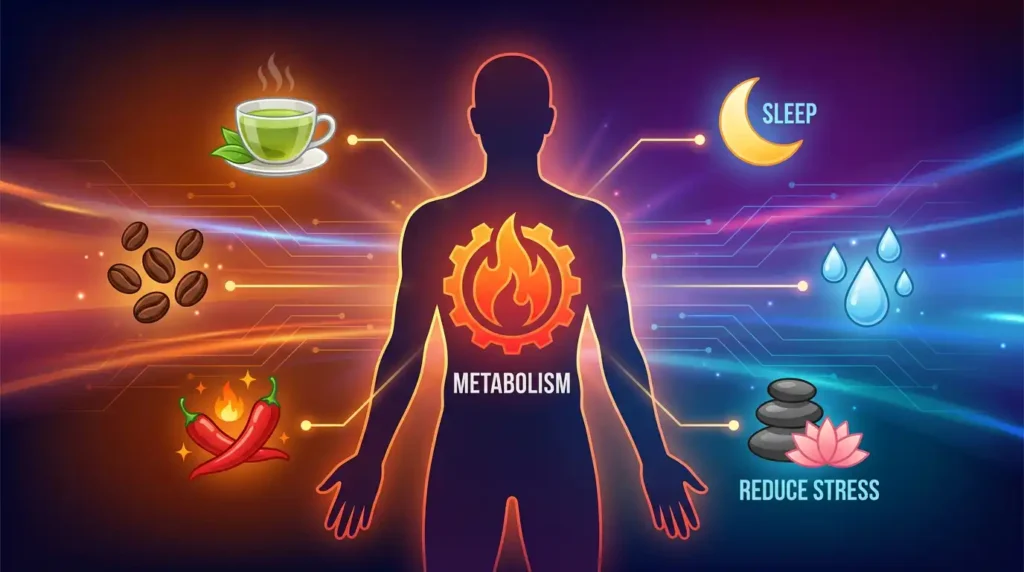
Your metabolism isn’t set in stone. You can actually influence it without any physical activity.
Foods That Naturally Increase Metabolic Rate
Certain foods can give your metabolism a slight boost. We’re talking about a 5-10% increase, which might not sound like much, but it adds up over time.
Green tea is probably the most well-known metabolism booster. It contains compounds called catechins that can help increase fat burning. Drinking 3-5 cups daily has been shown in studies to burn an extra 60-100 calories per day.
Coffee works similarly. The caffeine increases your metabolic rate temporarily. Just don’t load it up with sugar and cream, or you’ll defeat the purpose.
Spicy foods containing capsaicin (like chili peppers) can also give your metabolism a temporary kick. They slightly raise your body temperature, forcing your body to work harder to cool down.
Other metabolism-friendly foods include:
- Protein-rich foods (as mentioned earlier)
- Cold water (your body burns calories warming it up)
- Apple cider vinegar (may help improve metabolism)
- Coconut oil (contains medium-chain triglycerides that can boost metabolic rate)
The Role of Sleep in Weight Management
Here’s something most people completely overlook: sleep quality has a massive impact on your ability to lose weight.
When you don’t get enough sleep, two hormones go haywire. Ghrelin (the hunger hormone) increases, making you feel hungrier. Leptin (the satiety hormone) decreases, making it harder to feel satisfied after eating.
Studies show that people who sleep less than 7 hours per night are significantly more likely to be overweight or obese. In fact, poor sleep can make you crave high-calorie, high-carb foods.
Aim for 7-9 hours of quality sleep each night. Your weight loss efforts will thank you.
For more ideas, you can borrow gentle, science-friendly Japanese sleep habits that support deeper rest, better hormones, and easier weight loss over time.
Stress Reduction and Cortisol Management
Stress is a silent weight gain culprit. When you’re stressed, your body releases cortisol, a hormone that can increase appetite and promote fat storage, especially around your belly.
I’ve seen people do everything right with their diet but still struggle to lose weight because their stress levels were through the roof.
Some stress-reduction strategies that don’t require physical activity include:
- Meditation or deep breathing exercises
- Reading or listening to calming music
- Spending time in nature (just sitting, not hiking)
- Connecting with friends and family
- Journaling your thoughts and feelings
You might be wondering how to fit this into a busy schedule. Start with just 5 minutes a day. That’s it. Five minutes of intentional relaxation can make a difference.
Hydration and Weight Loss

Water is probably the most underrated weight loss tool. It’s free, it’s everywhere, and it works.
How Water Intake Affects Fat Burning
Drinking water can temporarily boost your metabolism by about 24-30% for up to an hour. This is called water-induced thermogenesis.
Here’s what happens: Your body needs to warm the water to body temperature, which requires energy (calories). If you drink cold water, the effect is even stronger.
Studies show that drinking about 500ml of water (about 17 ounces) can increase your metabolic rate by roughly 30% for about 30-40 minutes. Do this several times a day, and those extra burned calories add up.
But there’s more. Drinking water before meals can help you eat less. In one study, people who drank water before eating consumed about 75 fewer calories per meal. That might not sound like much, but over a month, that’s over 6,000 fewer calories—equivalent to almost 2 pounds of fat loss.
Optimal Hydration Strategies
So how much water should you actually drink? The old “8 glasses a day” rule is a decent starting point, but your needs depend on your size, climate, and diet.
A better guideline: Aim for half your body weight in ounces. If you weigh 160 pounds, drink about 80 ounces (10 cups) of water daily.
Pro tips for staying hydrated:
- Start your day with a large glass of water
- Keep a water bottle with you always
- Set reminders on your phone
- Drink a glass before each meal
- If you’re hungry between meals, try drinking water first—sometimes we mistake thirst for hunger
Supplements and Natural Aids

Now, I need to be upfront with you. Supplements aren’t magic pills. They won’t make you lose weight if your diet is terrible. But they can give you an edge when combined with the right eating habits.
Evidence-Based Weight Loss Supplements
Green tea extract is one of the few supplements with solid research behind it. It can help increase fat burning, especially when combined with a caloric deficit.
Caffeine is another proven option. It can boost your metabolism by 3-11% and increase fat burning by up to 29% in lean people (though the effect is less pronounced in obese individuals).
Glucomannan is a type of fiber that expands in your stomach, making you feel fuller. Some studies show it can help with weight loss when taken before meals.
Conjugated linoleic acid (CLA) has shown modest weight loss effects in some studies, though results are mixed.
Other supplements worth mentioning:
- Probiotics (for gut health, which affects weight)
- Omega-3 fatty acids (may help with fat metabolism)
- Apple cider vinegar pills (though liquid form is more studied)
Just remember: Always talk to a healthcare provider before starting any supplement regimen, especially if you have existing health conditions or take medications.
Herbal Remedies and Their Effectiveness
Some herbs have been used for centuries to support weight management. While the evidence isn’t as strong as for the supplements above, some people find them helpful.
Garcinia cambogia became popular a few years ago, but research results are inconsistent. Some studies show modest weight loss, others show no effect.
Green coffee bean extract contains chlorogenic acid, which may help slow the absorption of carbohydrates. It’s shown promise in some studies.
Forskolin (from the Coleus forskohlii plant) has been studied for weight loss, with some positive results in men, though more research is needed.
The bottom line? These might help a little, but they’re not going to make you lose weight fast on their own. Focus on diet first, then consider these as potential add-ons.
Lifestyle Modifications for Weight Loss
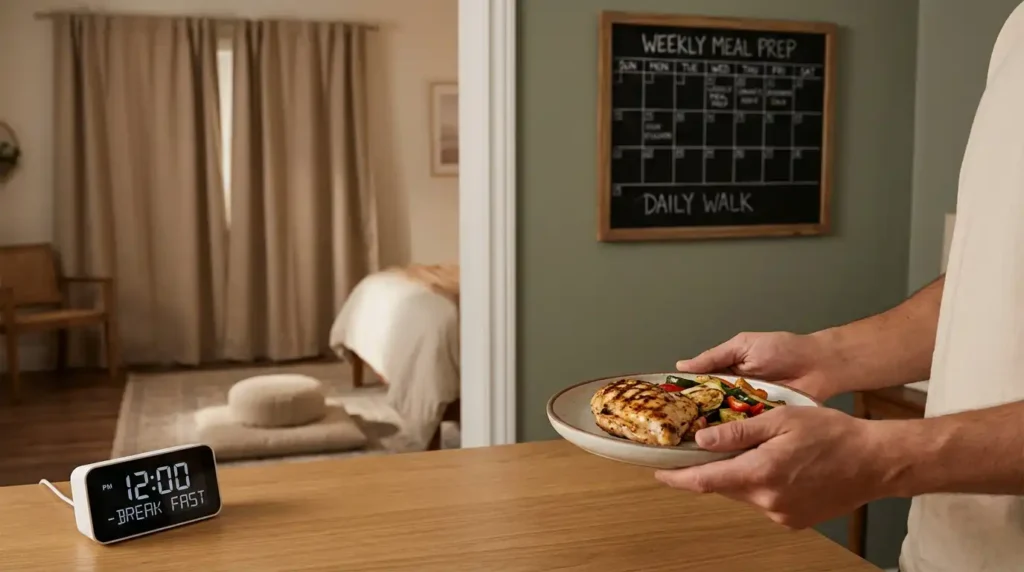
Sometimes it’s the small daily habits that make the biggest difference in losing weight without exercise.
Eating Habits and Meal Timing
How you eat matters almost as much as what you eat. Here are some game-changing habits:
Eat slowly. It takes about 20 minutes for your brain to register that you’re full. If you eat too fast, you’ll overconsume before your body catches up. Try putting your fork down between bites.
Use smaller plates. This psychological trick actually works. A moderate portion looks more satisfying on a smaller plate than it does on a large one.
Don’t eat in front of screens. When you’re distracted by TV or your phone, you pay less attention to your food and end up eating more.
Meal timing also matters. While there’s debate about whether eating late at night causes weight gain, there’s evidence that eating earlier in the day (front-loading your calories) can be beneficial for weight loss.
Sleep Hygiene for Better Weight Management
We touched on sleep earlier, but let’s get specific about how to improve your sleep quality:
Keep your bedroom cool (around 65-68°F is ideal). Your body temperature naturally drops when you sleep, and a cooler room supports this process.
Make your room as dark as possible. Even small amounts of light can disrupt your sleep hormones. Consider blackout curtains or an eye mask.
Avoid screens for at least an hour before bed. The blue light from phones and computers interferes with melatonin production.
Stick to a consistent sleep schedule, even on weekends. Your body loves routine.
If you love routines, stacking your weight loss habits with beauty habits before bed for real results can make your nights feel productive, calming, and genuinely good for your body.
Managing Portion Sizes Without Exercise
Portion control is crucial for weight loss without exercise. You could be eating healthy foods but still gaining weight if your portions are too large.
Here’s a simple visual guide for portions:
- Protein: Palm-sized portion
- Vegetables: Fist-sized portion (or two)
- Carbs: Cupped hand-sized portion
- Fats: Thumb-sized portion
Another strategy: Pre-portion your snacks. Don’t eat chips straight from the bag. Put a serving in a bowl and put the bag away.
Meal prep can also help tremendously. When you prepare meals in advance, you control the portions and you’re less likely to overeat.
The Psychology of Weight Loss

Losing weight isn’t just physical—it’s mental too. Your mindset can make or break your success.
Mindful Eating Practices
Mindful eating means paying full attention to your food and the experience of eating. It’s the opposite of mindless munching while watching Netflix.
Try this: For one meal, put away all distractions. Look at your food. Notice the colors, smells, and textures. Chew slowly. Really taste each bite. Notice when you start to feel satisfied.
This practice can help you recognize your body’s hunger and fullness signals, which many of us have lost touch with.
In my experience, people who practice mindful eating naturally eat less because they’re more attuned to their body’s actual needs rather than emotional or environmental eating triggers.
Setting Realistic Weight Loss Goals
Here’s where people often go wrong. They want to lose weight fast—like, unrealistically fast.
Healthy, sustainable weight loss is typically 1-2 pounds per week. I know that might not sound exciting, but let me put it in perspective: That’s 50-100 pounds in a year. That’s life-changing.
Set specific, measurable goals. Instead of “I want to lose weight,” try “I want to lose 20 pounds in 12 weeks by following a caloric deficit of 500 calories per day.”
Break big goals into smaller milestones. Celebrate each 5-pound loss. Acknowledge non-scale victories like clothes fitting better or having more energy.
Tracking Progress Without a Scale
Speaking of non-scale victories, the number on the scale doesn’t tell the whole story. Your weight can fluctuate by several pounds throughout the day based on water retention, food in your system, and hormonal changes.
Better ways to track fat loss progress:
- Take measurements (waist, hips, thighs, arms)
- Track how your clothes fit
- Take progress photos (front, side, back)
- Monitor your energy levels and how you feel
- Notice changes in your hunger patterns
I recommend weighing yourself no more than once a week, at the same time of day, preferably first thing in the morning.
You can turn your evenings into a soft reset for your body by building simple nighttime habits to transform your life that naturally support better sleep, lower stress, and easier weight control.
Common Mistakes to Avoid

Even with the best intentions, it’s easy to sabotage your weight loss efforts without realizing it.
Eating Too Few Calories
This might surprise you, but eating too little can actually prevent weight loss. When you severely restrict calories (below 1,200 for women or 1,500 for men), your body goes into conservation mode.
Your metabolism slows down. You feel tired and irritable. Your body starts breaking down muscle for energy instead of fat. And the worst part? Once you start eating normally again, you gain the weight back faster.
This is why crash diets don’t work long-term. They’re not sustainable, and they can actually damage your metabolic health.
Ignoring Hidden Calories
You know what sneaks up on people? Liquid calories. That “healthy” smoothie might have 500+ calories. Your morning latte with flavored syrup? Another 300 calories. That glass of juice? 120 calories with zero nutritional benefit.
If late-night cravings are sabotaging your progress, make sure you’re not reaching for any of the worst snacks to eat before bed that secretly load you up with sugar and extra calories.
Other hidden calorie sources:
- Cooking oils (120 calories per tablespoon)
- Salad dressings (100+ calories for 2 tablespoons)
- Condiments (ketchup, mayo, sauces)
- “Healthy” granola (often loaded with sugar)
- Alcohol (7 calories per gram, almost as much as fat)
Track everything for a few days. You’ll probably discover calorie sources you never considered.
Unrealistic Expectations
Here’s the truth: Those “lose 30 pounds in 30 days” claims are either lies or extremely unhealthy approaches that no reputable health professional would recommend.
Real, sustainable weight loss takes time. Your body didn’t gain the weight overnight, and it won’t lose it overnight either.
Be patient with yourself. Focus on building habits that you can maintain for life, not just until you hit your goal weight.
When to Consider Professional Help

Sometimes, losing weight is harder than it should be, and that might indicate an underlying issue.
Medical Conditions Affecting Weight
Certain medical conditions can make weight loss extremely difficult:
Hypothyroidism slows your metabolism, making it easy to gain weight and hard to lose it. If you’re experiencing unexplained weight gain, fatigue, and cold sensitivity, get your thyroid checked.
Polycystic ovary syndrome (PCOS) affects hormone levels and can lead to weight gain and difficulty losing weight.
Insulin resistance and prediabetes can make your body more likely to store fat, especially around your midsection.
Cushing’s syndrome causes elevated cortisol levels, leading to weight gain.
Certain medications can also cause weight gain or make weight loss harder, including some antidepressants, antipsychotics, diabetes medications, and steroids.
If you’re doing everything right but not seeing results, talk to your doctor. A simple blood test can identify many of these issues.
Working with a Nutritionist or Dietitian
A registered dietitian can create a personalized plan based on your specific needs, preferences, and health conditions. They can help you navigate food choices, portion sizes, and meal planning in a way that works for your lifestyle.
This is especially helpful if you have:
- Food allergies or intolerances
- Cultural or religious dietary requirements
- Specific health conditions requiring dietary modifications
- A history of disordered eating
Professional guidance can accelerate your weight loss journey and help you avoid common mistakes.
Maintaining Your Weight Loss
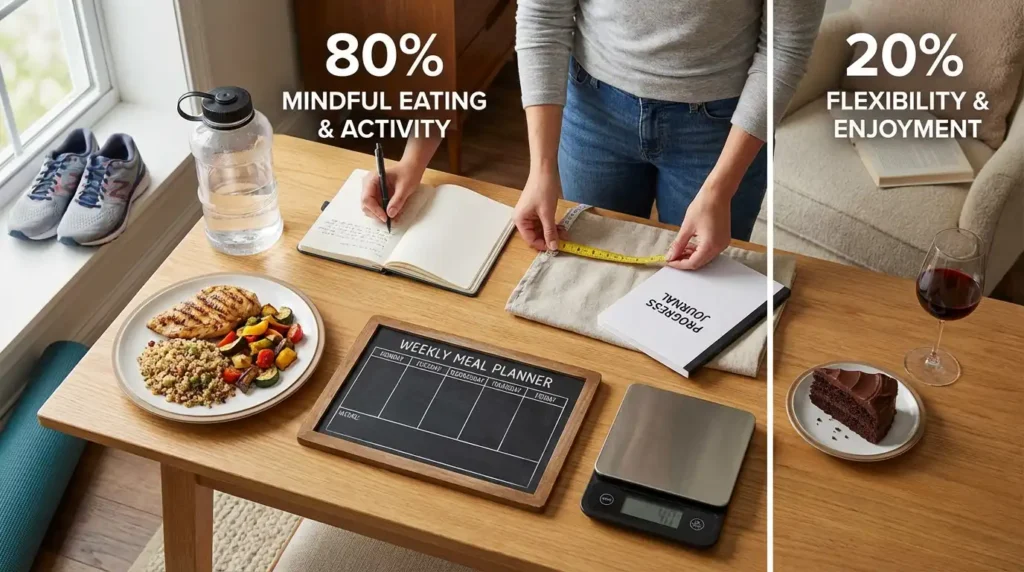
Here’s something nobody talks about enough: Maintaining weight loss is actually harder than losing the weight in the first place.
Long-term Strategies
The strategies that helped you lose weight need to become permanent lifestyle changes. This doesn’t mean you can never enjoy your favorite foods again—it means finding balance.
The 80/20 rule works well for maintenance: Eat nutritiously 80% of the time, and allow yourself flexibility the other 20%.
Continue tracking your food at least occasionally. Even checking in once a week can help you stay accountable.
Keep your environment supportive. Don’t stock foods that trigger overeating. Make healthy choices the easy, convenient choices.
Preventing Weight Regain
Statistics show that most people regain lost weight within 2-5 years. But you don’t have to be part of that statistic.
Keys to preventing regain:
- Stay vigilant even after reaching your goal
- Weigh yourself weekly (not daily, not never)
- Don’t abandon the habits that got you results
- Address emotional eating triggers
- Build a support system
Remember, weight maintenance requires fewer calories than weight loss, but it still requires awareness and effort.
Frequently Asked Questions
Can you really lose weight without any physical activity? Yes, absolutely. Weight loss is primarily about creating a caloric deficit through diet. While exercise helps and has many health benefits, it’s not required for losing weight.
How fast can I expect to lose weight without exercise? A safe, sustainable rate is 1-2 pounds per week. Rapid weight loss beyond this is typically water weight or muscle loss, which you want to avoid.
Will I lose muscle if I don’t exercise? You might lose some muscle, but you can minimize this by eating adequate protein (at least 0.7 grams per pound of body weight) and losing weight gradually.
What’s the best diet for losing weight without moving? There’s no single “best” diet. What works depends on your preferences and lifestyle. Low-carb, high-protein, and intermittent fasting approaches all work well for many people.
Comparison of Weight Loss Methods
| Method | Average Weekly Weight Loss | Difficulty Level | Sustainability | Best For |
|---|---|---|---|---|
| Caloric Deficit Only | 1-2 lbs | Easy to Moderate | High | Beginners, people with injuries |
| Ketogenic Diet | 2-3 lbs (initial), 1-2 lbs (long-term) | Moderate to Hard | Moderate | People who prefer high-fat foods |
| Intermittent Fasting | 1-2 lbs | Easy to Moderate | High | People who don’t enjoy breakfast |
| High-Protein Diet | 1-2 lbs | Easy | Very High | Anyone wanting to preserve muscle |
| Low-Carb Diet | 1-3 lbs (initial), 1-2 lbs (long-term) | Moderate | Moderate to High | Those with insulin resistance |
Key Takeaways for Losing Weight Without Exercise
Let me summarize the most important points:
Nutrition is king. Focus on creating a sustainable caloric deficit through smart food choices rather than deprivation.
Protein is your friend. It keeps you full, preserves muscle, and requires more energy to digest than other macronutrients.
Sleep and stress matter more than you think. Poor sleep and chronic stress can sabotage even the best diet.
Hydration supports weight loss. Drink water before meals and throughout the day to boost metabolism and reduce calorie intake.
Be consistent, not perfect. You don’t need to follow your plan flawlessly every day. You just need to be consistent most of the time.
Conclusion
So here we are. You now know that you absolutely can lose weight fast without moving your body. It’s not just possible—it’s actually quite achievable when you understand the science and apply the right strategies.
The truth is, weight loss doesn’t require suffering through workouts you hate. It requires understanding your body, making smart food choices, managing your sleep and stress, and staying consistent with habits that work for you.
Will it be easy? Not always. There will be days when you want to give up or when the scale doesn’t move as fast as you’d like. But I promise you, if you stick with the principles in this guide, you will see results.
Start with just one or two strategies from this article. Maybe try intermittent fasting this week. Or focus on increasing your protein intake. Or commit to drinking more water. Build from there.
Your body has an incredible ability to change when you give it the right tools. You don’t need a gym membership or fancy equipment. You just need knowledge, consistency, and patience.
Ready to start your weight loss journey? Pick one strategy from this article and implement it today. Track your progress for the next 30 days and watch what happens. Your future self will thank you.
Remember: You’ve got this. The power to change your body is in your hands—or rather, on your plate. Now go make it happen.
Disclaimer: This article is for informational purposes only and is not intended as medical advice. Always consult with a healthcare provider before making significant changes to your diet or lifestyle, especially if you have existing health conditions or take medications.