
How to Stop Buying Things: 12 Easy Rules

You don’t need iron willpower to spend less—you need fewer decisions. The more you remove “Do I buy this?” from your day, the calmer money feels. This guide is a gentle, real-life plan for how to stop buying things without feeling deprived. No shame, no spreadsheets at 2 a.m.—just small rules, quick scripts, and routines that make overspending rare and savings normal.
Think of these as guardrails, not handcuffs. You’ll still buy what matters. You’ll just stop buying the noise.
Why We Overspend (In Plain English)

Most impulse buys come from a few repeat triggers:
- Stress + dopamine. A cart click is a tiny mood lift when life feels loud.
- Boredom + habit loops. Scroll → see → add to cart → “ooh, package!”
- Identity hits. New thing = “new me,” for about 48 hours.
- FOMO + sales. A timer on a page hacks your brain’s urgency center.
- Frictionless checkout. Saved cards and one-click orders make “maybe” into “oops.”
Good news: each trigger has a simple counter-rule. Let’s set them up.
The 12 Rules to Stop Buying Things (Use Them Like a Menu)
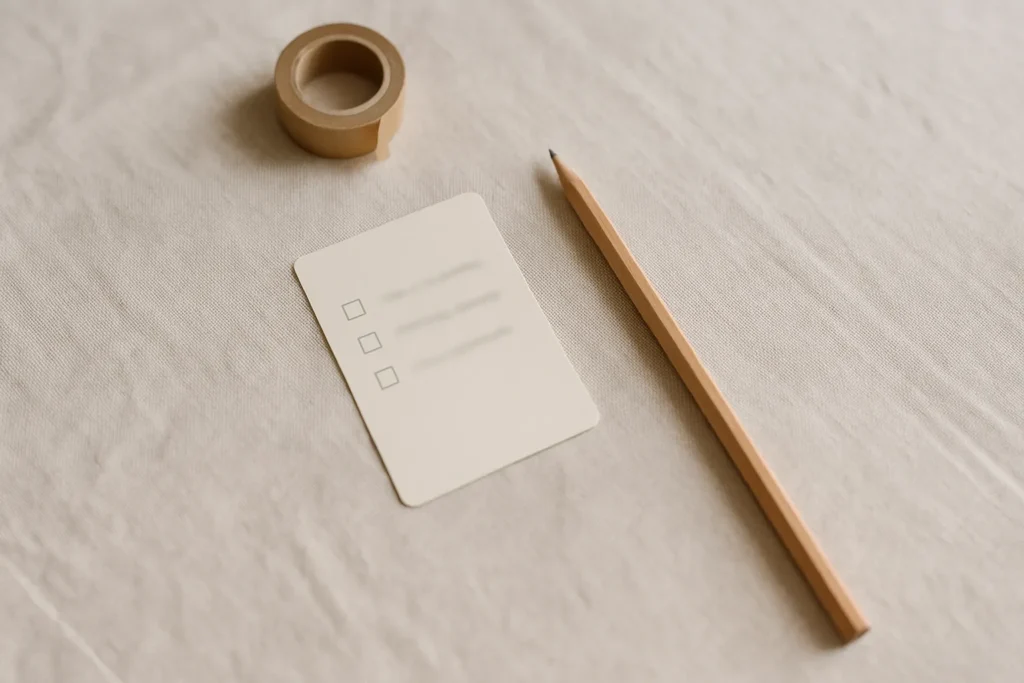
The 30-Day List (Park the Want)
What it is: Every non-essential goes on a dated list for 30 days before you even consider buying.
Why it works: Time cools novelty; 40–70% of wants evaporate.
How to do it: Create one running note (paper or phone). Add: item, date, price, why you want it, and what problem it solves.
Example: “Cream cardigan — $48 — 10/05 — want for fall wardrobe, solves ‘office chill’.”
Pitfalls: Moving items straight from list to cart on day 30. Re-check: do you still want it, and does the budget agree?
Make it stick: Calendar reminder: “Check 30-Day List” every Sunday.
Upgrade: “Two-Gate Rule”—after 30 days, it must pass Rule 8 (3×3 Test) before purchase.
The 48-Hour Cool-Off (Under $100)
What it is: A 2-day pause for any sub-$100 “ooh, I want it” purchase.
Why it works: Most impulses fade within 24–48 hours when the cue is removed.
How to do it: Add the item to your 30-Day List with a “48h” tag. Close tabs, walk away, log out.
Script: “If I still want this Friday, it will still exist.”
Example: Cute $35 water bottle at checkout → 48h tag → forgets it existed.
Pitfalls: “But it’s on sale!” Sales repeat. If it’s truly needed, it will pass again later.
Make it stick: Put your card in a different room at home; IRL friction beats intent.
Upgrade: Add a $/hour test: “Would I trade 2 hours of work for this?”
One-In, One-Out (Declutter as You Go)
What it is: Every new physical item forces one you own to leave.
Why it works: Exposes duplication and kills “closet creep.”
How to do it: Keep a labeled donation bag in your closet and a small “sell” bin by the door.
Example: Buy a new sweater → donate the pilled black one you never reach for.
Pitfalls: “I’ll do the out later.” Nope—do it before tags come off.
Make it stick: Photograph the out-item in the mirror; seeing the redundancy makes saying no easier next time.
Upgrade: One-in, two-out during “hotspot months” (holidays, seasonal resets).
Buy It Better (Fewer, Right Things)
What it is: Choose durable, repairable, fit-for-purpose items over multiples/dupes.
Why it works: Quality + longevity beats churn; cost per use drops.
How to do it: Ask: Will I repair it? Does it fix a real problem? Does it match 3 uses this month?
Example: Instead of 3 cheap pans, buy 1 quality skillet you’ll use daily.
Pitfalls: Equating “expensive” with “better.” Look for warranty/repairability and user reviews that match your use.
Make it stick: Track “cost-per-use” for big buys for 30 days—seeing the value curbs future noise.
Upgrade: A simple repairs budget (e.g., $10–$20/mo) to maintain what you already own.
Cash-Only Categories (Feel the Spend)
What it is: Convert problem categories (e.g., takeout, coffee, beauty) to cash/debit for 30 days.
Why it works: Physical money adds friction and a natural stopping point.
How to do it: Pick 1–2 categories; withdraw a weekly amount; when the envelope is empty, you’re done.
Example: $40/wk “Dining Out” envelope.
Pitfalls: “ATM top-ups.” Don’t refill; adjust next week.
Make it stick: Keep envelopes where the habit starts (wallet, car console).
Upgrade: Move unspent cash to a clear “Wins Jar” at month-end—visible progress = motivation.
Delete the Autobuy (Kill the Cue → Click Loop)
What it is: Remove the easiest purchase paths so a thought doesn’t become an order.
Why it works: Every extra tap reduces impulse completion.
How to do it: Delete shopping apps, log out, remove stored cards, unsubscribe or filter promos, turn your phone grayscale.
Example: Grayscale + no saved card = “Meh, I’ll check later” (you don’t).
Pitfalls: Keeping “just one” app. If it’s a weakness, it goes.
Make it stick: Rename a catch-all folder “Wait 24 Hours.”
Upgrade: Block shopping sites during your weak hours with screen-time limits.
The “Handle the Thing” Rule (Buy the Chore Too)
What it is: Before buying, name the maintenance: cleaning, returns, organizing, insurance, storage.
Why it works: You see the time cost, not just the dollar cost.
How to do it: Write the chore in your notes: “White rug → weekly vacuuming, stain panic.”
Example: Realizing the “cute juicer” is actually 10 minutes of cleanup every use = pass.
Pitfalls: Ignoring returns. If you won’t return, you’re pre-agreeing to keep it—so don’t buy.
Make it stick: Keep a “returns” tote by the door and a weekly errand block on your calendar.
Upgrade: Add a storage test: “Where will this live—and what gets displaced?”
The 3×3 Test (Shop Like a Pro)
What it is: Require 3 prices, 3 trustworthy reviews, and 3 real uses this month.
Why it works: Comparison and specificity beat marketing hype.
How to do it: Google “[item] + return policy,” read long-form reviews, write your 3 uses in your list.
Example: Blender: compare retailers, read 3 owner reviews, list “smoothies 3×/wk, soup 1×, sauces 2×.”
Pitfalls: Counting TikToks as reviews. Look for detailed user experiences.
Make it stick: If any “3” is missing, it defaults to a “not yet.”
Upgrade: Add a durability check (spare parts? repair guides?).
No-Buy Zones & Time Blocks (Make Safe Spaces)
What it is: Places and times where shopping is simply not allowed.
Why it works: Pre-decisions beat willpower.
How to do it: Zones: bed, couch, dining table. Times: first and last hour of the day. Put the phone on DND or in another room.
Example: On the couch? You can read, stretch, talk—no carts.
Pitfalls: “Just browsing.” Browsing is buying’s warm-up act.
Make it stick: Place a book/puzzle where your phone usually sits.
Upgrade: Add “errand blocks” 2×/week to handle all returns/pickups offline—shopping stays off the couch.
Scripts That Kill the Urge (Say Them Out Loud)
What it is: Short lines that interrupt the dopamine chase and bring logic online.
Why it works: Language changes state; a spoken pause resets the loop.
How to do it: Pick a favorite script and pair it with a breath: inhale 4, exhale 6, say the line.
Scripts:
- “If I hadn’t seen it today, would I want it?”
- “What problem does this actually solve?”
- “Can I borrow, repair, or wait?”
- “Would I trade two hours of work for this?”
Example: At checkout, whisper the line and add the item to your 30-Day List instead.
Make it stick: Tape one script on your wallet.
Upgrade: Pair with a 2-minute swap (walk, tea, text a friend) and the urge drops.
Replace the Habit (Don’t Leave a Void)
What it is: Pre-planned substitutes for the exact moments you shop.
Why it works: Habits need a new path, not just “no.”
How to do it: Map triggers → swaps.
- Bored night → 20-minute walk + playlist, or puzzle + tea
- Work stress → stretch + water + “one email”
- Lonely weekend → library run, community event, long call
- Decor itch → rearrange what you own; swap with a neighbor
Example: Friday night auto-scroll becomes “library + bakery” loop.
Pitfalls: Vague swaps (“I’ll do something else”). Make a printed list.
Make it stick: Put the swap tools in sight (puzzle, sneakers, library card).
Upgrade: Free list on the fridge: 10 things to do that cost $0.
Track Tiny Wins (Make Progress Visible)
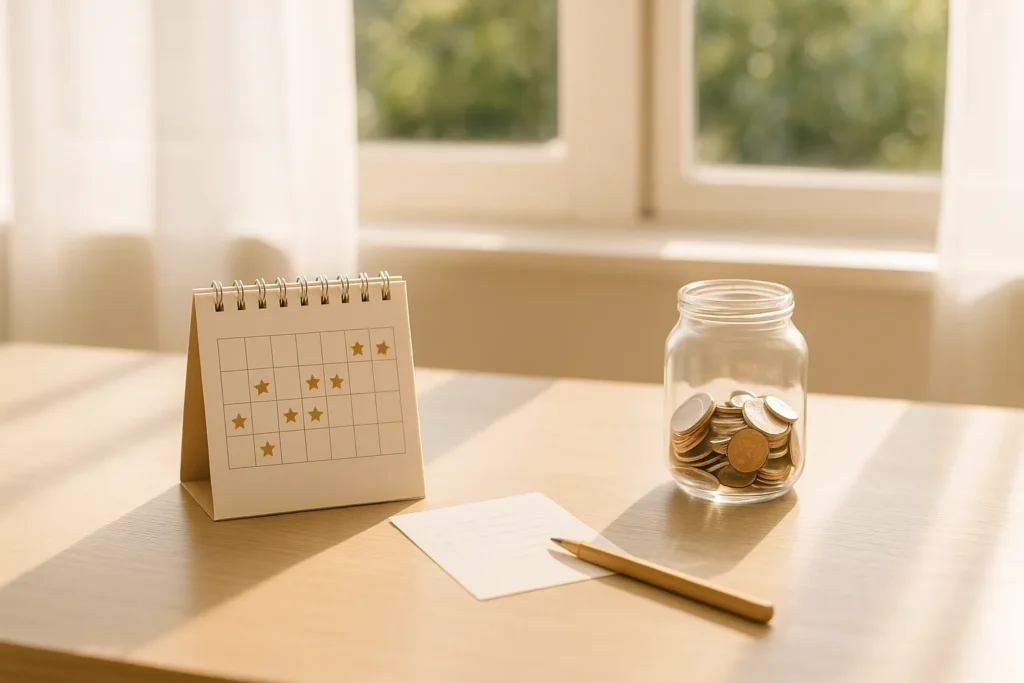
What it is: Document skipped purchases and celebrate them.
Why it works: Seeing savings beats vague “I should spend less.”
How to do it: Keep a “Things I Didn’t Buy” list with prices; star no-buy days on a calendar; drop $5 in a clear jar each time you resist.
Example: “Didn’t buy $28 candle, $19 tee, $12 latte set” → $59 to savings jar.
Pitfalls: Quiet wins. If you don’t track them, motivation fades.
Make it stick: First Sunday ritual: total the month and move that amount to a goal account.
Upgrade: Name the goal on the jar/account (e.g., “Summer trip,” “Emergency fund”).
Fix the Hotspots (Targeted Clean-Ups)
- Closet duplicates. Photograph your tops and shoes. If a new item doesn’t pair with 3 outfits you’ll wear this month, it’s noise.
- Skincare/beauty sprawl. Finish what you have before replacing. Create a “use-up” tray; put everything else out of sight.
- Home decor spirals. Re-style one surface weekly with what you already own. Snap a photo; you’ll crave fewer “refresh” orders.
- Sales season. Decide your budget and list before the sale. If it’s not on the pre-list, it’s a no.
- Returns. Put a tote by the door labeled “Returns.” Schedule one weekly errand block. If you won’t return, don’t buy.
When It’s Bigger Than Habits (You’re Not Broken)
Compulsive buying can be tied to anxiety, depression, ADHD, or trauma. If spending feels out of control—or it’s harming your relationships—talk to a therapist who understands money behaviors (CBT helps). Consider a money buddy you check in with weekly. You’re not bad with money; you’re human with patterns. Patterns can change.
A 30-Day Reset (Simple Plan, Big Calm)
- Week 1: Delete shopping apps, log out of accounts, start the 30-Day List, pick one cash-only category.
- Week 2: Set up No-Buy Zones/Times, start “Things I Didn’t Buy” list, practice the 3×3 Test.
- Week 3: Add One-In, One-Out and the “Handle the Thing” rule; create your return tote.
- Week 4: Audit hotspots (closet/beauty/decor); total your wins; buy one planned item with zero guilt.
Five minutes a day, max. You’ll feel lighter by the second week.
FAQ
Will I ever get to buy fun things again?
Yes—after the cool-off. You’re not banning joy; you’re filtering noise so the yeses feel better.
What if I blow it and impulse-buy anyway?
Note the trigger, return it if possible, and put one star on the calendar the next day. Momentum comes from the bounce-back.
Is a “no-buy year” a good idea?
For some people. For most, 30-day sprints with clear rules work better and stick longer.
What about groceries and essentials?
These rules target non-essentials. For essentials, plan ahead, make a list, and stick to store-brand defaults unless there’s a real reason not to.
Do I have to use cash?
Only in weak-spot categories. The goal is to feel the spend again.
Bring It Home (And Keep It Kind)
You’re not trying to spend nothing forever. You’re learning how to stop buying things you don’t need—so there’s room for what matters. Pick two rules to start this week: the 30-Day List and the 48-Hour Cool-Off are a strong pair. Add One-In, One-Out next week. Keep a visible “wins” list, and talk to yourself like a coach, not a critic. If you’re rebooting more than spending, here’s how to reset your life—gentle, doable steps that make every decision easier.