How To Protect Hair From Salt Water: 17 Game-Changing Hacks (That Actually Work)

There’s nothing quite like a beach day—the sun, the waves, the feeling of sand between your toes. But if you’ve ever come home from the ocean with hair that feels like straw, you know the struggle is real. Learning how to protect hair from salt water isn’t just about vanity—it’s about keeping your hair healthy, strong, and tangle-free.
I’ll be honest with you. The first time I went on a beach vacation, I didn’t think twice about my hair. By day three, I couldn’t even run my fingers through it without hitting knots. It was a disaster. That’s when I realized that salt water damage is no joke, and prevention is everything.
In my experience, the ocean is amazing for your soul but brutal on your hair. Salt water strips away natural oils, leaving your strands dry, brittle, and prone to breakage. But here’s the good news—you don’t have to choose between gorgeous hair and beach adventures. You can have both.
What Salt Water Actually Does To Your Hair (The Science Part)
Let me break down what’s really happening when you dive into the ocean. Understanding this makes all the difference in how to protect hair from salt water.
The Dehydration Effect
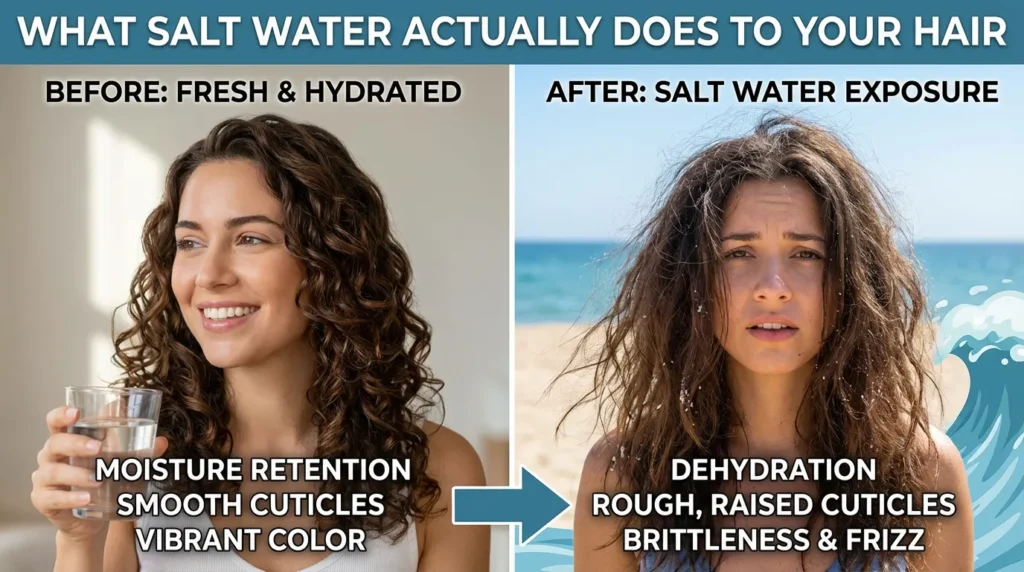
Salt water is hygroscopic, which is just a fancy way of saying it pulls moisture out of everything it touches—including your hair. When you swim in the ocean, the salt literally sucks the water out of your hair shaft, leaving it dry and damaged.
Think about it like this: your hair is made up of layers, kind of like roof shingles. When those layers (called cuticles) are hydrated and healthy, they lie flat and protect the inner hair shaft. But when salt water dehydrates them, they lift up and get rough. That’s why your hair feels rough after salt water—those cuticles are standing on end like angry porcupine quills.
Protein Breakdown
Here’s where it gets even more interesting. Salt doesn’t just dry out your hair—it actually breaks down the protein structure. Your hair is made primarily of a protein called keratin, and salt water can weaken those bonds over time. This leads to breakage, split ends, and that awful straw-like texture nobody wants.
The UV Multiplier Effect
Now add sunshine into the mix. UV rays are already tough on your hair, but when you combine them with salt water? It’s like a one-two punch that leaves your hair defenseless. The sun’s rays can fade your color, dry out your strands even more, and cause long-term damage to your hair’s structure.
17 Essential Ways To Protect Hair From Salt Water
Alright, now that you know what you’re up against, let’s talk solutions. These aren’t just random tips I found online—these are strategies I’ve personally tested during countless beach trips.
1. The Pre-Swim Fresh Water Soak (Your First Line of Defense)
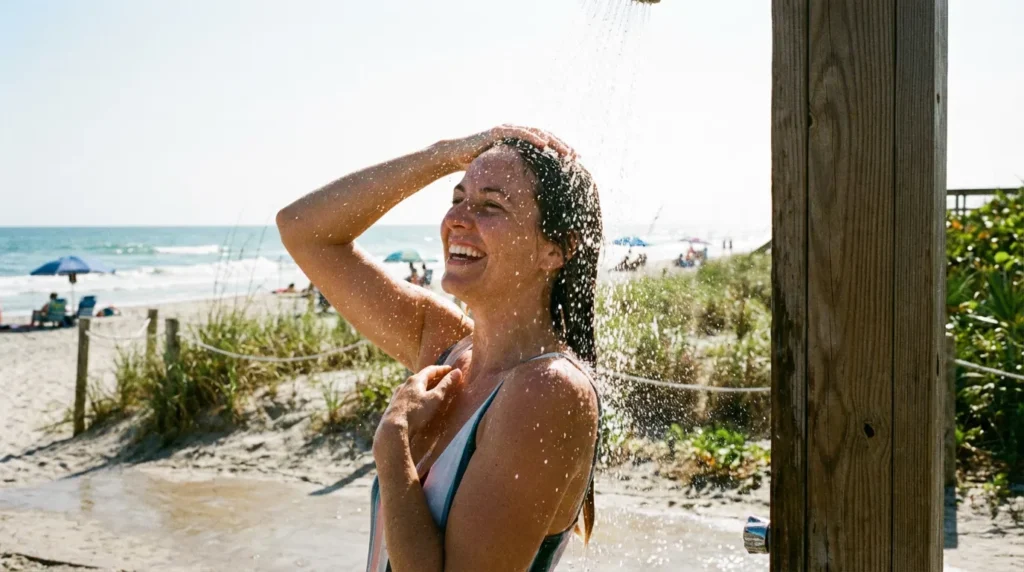
This is hands-down the most important hack for protecting hair from salt water, and it’s so simple it feels like cheating. Before you even think about jumping in the ocean, drench your hair with fresh water from a shower or water bottle.
Here’s why this works: your hair is like a sponge. It can only absorb so much water at once. If you saturate it with fresh water first, there’s less room for the salty ocean water to penetrate your hair shaft. Just like this hairstylist demonstrates, pre-soaking your hair can reduce salt absorption by up to 70%.
I do this every single time now, and the difference is incredible. My hair still gets wet in the ocean, obviously, but it doesn’t feel like I’ve been swimming in a vat of chemicals anymore.
2. Leave-In Conditioner: Your Protective Shield

A good leave-in conditioner creates a barrier between your hair and the salt water. Apply it generously before you hit the beach, focusing on your ends (they’re the oldest, driest part of your hair and need the most protection).
What I love about this method is that it does double duty—it protects your hair from salt damage AND keeps it detangled. When you come out of the water, you can actually run your fingers through your hair instead of dealing with a rat’s nest.
Look for leave-in conditioners with these ingredients:
- Coconut oil or argan oil
- Shea butter
- Glycerin (a humectant that locks in moisture)
- UV filters for sun protection
3. Protective Hair Oils (The Heavy-Duty Option)

For those of you with seriously dry or damaged hair, leave-in conditioner might not be enough. That’s where protective hair oils come in. Before swimming, coat your hair with coconut oil, argan oil, or jojoba oil.
Now here’s where it gets interesting—oils and water don’t mix, right? That’s exactly the point. The oil creates a waterproof barrier that literally repels salt water. It’s like giving your hair an invisible raincoat.
Pro tip: warm the oil between your palms before applying. It spreads more evenly and penetrates better. I learned this from my stylist, and it’s been a game-changer.
4. The Swim Cap Solution (Not Just For Serious Swimmers)

Okay, I know what you’re thinking. Swim caps aren’t exactly cute. But if you’re serious about how to protect hair from salt water, nothing beats a swim cap for complete protection.
Modern swim caps have come a long way. You can find:
- Silicone caps that don’t pull your hair
- Fashionable printed designs
- Caps specifically designed for long or thick hair
- Hybrid caps with built-in hair ties
I use one when I’m planning to spend hours in the water. Sure, I might look a little silly, but my hair stays completely dry and damage-free.
5. Braids and Buns: Minimize Exposure

If a swim cap feels too extreme, try this instead: braid your hair or tie it in a tight bun before swimming. This reduces the surface area exposed to salt water and prevents tangling.
I personally love french braids for beach days. They look cute, keep my hair contained, and limit how much salt water can penetrate each strand. Plus, when you take them out later, you get those gorgeous beach waves everyone loves.
6. UV Protection Spray (The Secret Weapon)
Most people don’t realize that sun damage and salt water damage work together to destroy your hair. That’s why I never go to the beach without a UV protection spray for hair.
These sprays contain filters that block harmful UV rays, just like sunscreen for your skin. Look for products with:
- Broad-spectrum UV protection
- Antioxidants like vitamin E
- Moisturizing ingredients
- Heat protection (for when you’re air-drying in the sun)
7. The Immediate Post-Swim Rinse (Don’t Skip This!)
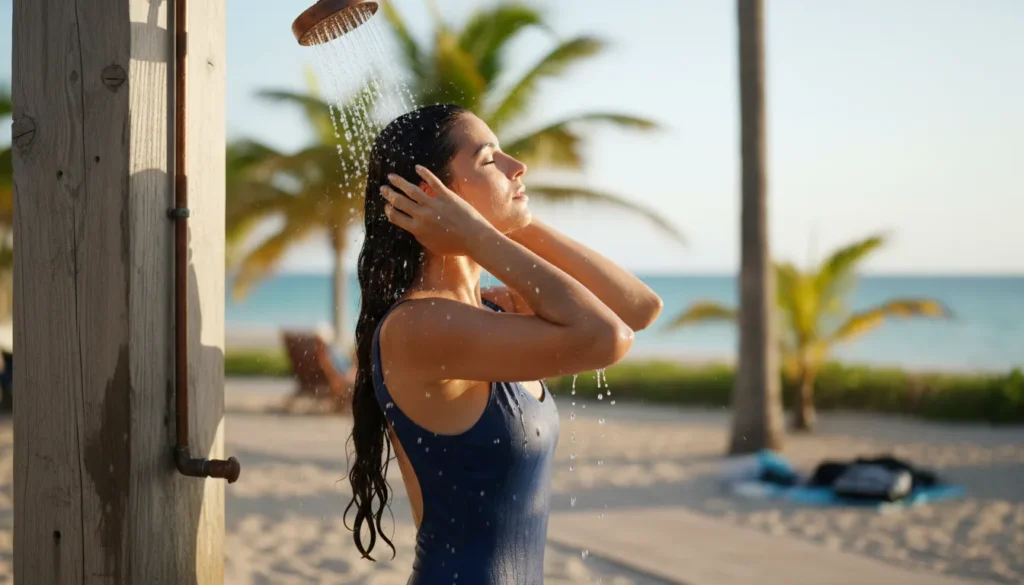
As soon as you’re done swimming, rinse your hair with fresh water. I’m talking immediately—don’t wait until you get back to your hotel. Most beaches have outdoor showers, and you need to use them.
Salt water damage gets worse the longer it sits on your hair. When salt water dries, it forms crystals that literally cut into your hair shaft like tiny knives. A quick rinse washes these away before they can do serious damage.
You might be wondering how long to rinse. I go for at least 2-3 minutes of thorough rinsing, making sure I get every strand. It’s worth the extra time.
8. Skip Heat Styling At The Beach

Listen, I get it. You want to look good in your beach photos. But combining salt water damage with heat styling is asking for trouble. The salt already weakens your hair’s protein structure—add heat, and you’re basically cooking your hair into submission.
Embrace your natural texture for the duration of your beach trip. Trust me, air-dried beach hair has its own appeal. And your hair will thank you later when it’s not breaking off in chunks.
9. Deep Conditioning Treatments (Your Hair’s Best Friend)
If you’re spending multiple days at the beach, you need to incorporate deep conditioning treatments into your routine. I do one every other night during beach vacations, and it makes a massive difference.
Apply a thick conditioning mask to your hair, wrap it in a towel or shower cap, and leave it on for at least 30 minutes. Some people sleep in it overnight—even better. The extra time allows the moisturizing ingredients to really penetrate your hair shaft.
10. Clarifying Shampoo: The Weekly Reset
Here’s something most people don’t think about: even with all these protective measures, salt and minerals can still build up on your hair over time. That’s where a good clarifying shampoo comes in.
Use a clarifying shampoo once a week to strip away:
- Salt residue
- Sunscreen buildup
- Excess oils and products
- Chlorine (if you’re swimming in pools too)
Don’t use it daily, though. Clarifying shampoos are strong and can strip too much moisture if overused. Once weekly is the sweet spot.
11. Hydrating Hair Masks (The Intensive Treatment)
This is different from regular deep conditioning. Hydrating hair masks are specially formulated with ingredients that specifically target dehydration and damage.
Look for masks containing:
- Aloe vera (nature’s hydrator)
- Honey (pulls moisture into the hair shaft)
- Avocado oil (rich in fatty acids)
- Keratin (rebuilds protein structure)
I use these masks the night before beach days and the night after. It’s like bookending your salt water exposure with intense moisture therapy.
12. Limit Your Time In The Water
Now here’s where it gets real—sometimes the best way to protect hair from salt water is simply to limit your exposure. I know, I know, you’re on vacation and you want to swim all day. But your hair has limits.
Try this approach:
- Swim for 30-45 minutes
- Take a break, rinse with fresh water
- Reapply protective products
- Repeat
This gives your hair periodic breaks from salt exposure and prevents the cumulative damage that comes from spending 6 hours straight in the ocean.
13. Silk Scarves and Hats (Stylish Protection)
A silk scarf or silk-lined hat serves multiple purposes. First, it protects your hair from direct UV exposure. Second, silk is gentle on your hair and won’t cause friction damage like cotton does. Third, it looks amazing in beach photos.
I wrap my hair in a silk scarf between swims, and it keeps my hair protected while I’m lounging on the beach. Plus, it absorbs less moisture than regular fabric, so your hair doesn’t stay damp for hours.
14. Wide-Tooth Comb Only (Never Brush Wet Hair)
After rinsing your hair, resist the urge to brush it. Wet hair is incredibly fragile, and brushing it—especially after salt water exposure—is a recipe for breakage.
Instead, use a wide-tooth comb and work through your hair gently:
- Start at the ends
- Work your way up slowly
- Hold the hair above where you’re combing to prevent pulling on the roots
- Be patient—rushing causes more damage
15. Internal Hydration Matters Too
Here’s something that might surprise you: drinking enough water actually helps protect your hair from salt water damage. When you’re properly hydrated, your hair is more resilient and better able to withstand environmental stressors.
Aim for at least 8 glasses of water daily at the beach. More if you’re in the sun all day. Your hair (and your skin, and your whole body) will thank you.
16. Coconut Water Rinse (The Natural Alternative)

This might sound weird, but hear me out. Coconut water is packed with minerals and electrolytes that can help restore your hair’s natural balance after salt water exposure.
After your fresh water rinse, pour coconut water over your hair, let it sit for 5 minutes, then rinse again. The minerals help counteract the dehydrating effects of salt. I discovered this trick on a trip to Hawaii, and I’ve been doing it ever since.
17. Protective Serums For Fine Hair
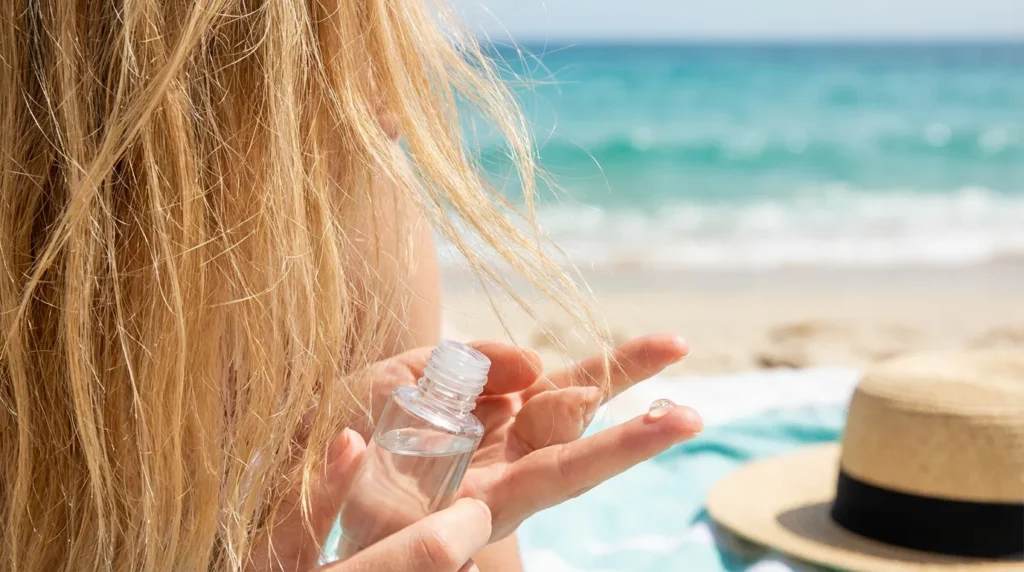
If you have fine hair, heavy oils might weigh it down too much. That’s where lightweight protective serums come in. These are silicone-based formulas that coat your hair without making it greasy.
Apply a small amount (seriously, a little goes a long way) before swimming. The silicone creates a barrier against salt water while keeping your hair light and bouncy.
Understanding Different Hair Types And Salt Water
Not everyone’s hair reacts to salt water the same way. Let me break down how different hair types should approach beach protection.
Fine or Thin Hair
Fine hair is the most vulnerable to salt water damage because:
- Individual strands are thinner and more fragile
- It has less natural oil production
- Damage shows up faster and more obviously
If you have fine hair, focus on lightweight protection methods. Heavy oils will weigh your hair down, so stick with leave-in conditioners and protective sprays. And seriously consider a swim cap—your fine hair will suffer the most from prolonged salt exposure.
Thick or Coarse Hair
Thick hair can handle more aggressive protection methods. Don’t be shy with the coconut oil—your hair can take it. You might also need more intensive treatments because the salt has more hair to penetrate.
The upside? Thick hair shows damage less quickly, giving you more time to treat it before it becomes obvious.
Curly or Textured Hair
Curly hair has special challenges at the beach. The natural curl pattern means your hair is already more prone to dryness (the oils from your scalp have a harder time traveling down spiral-shaped strands).
For curly hair protection:
- Use extra heavy moisturizing products
- Never brush or comb when dry—only when wet with conditioner
- Consider protective styles like braids or twists
- Deep condition after every beach day, not just once a week
Color-Treated Hair
If you’ve got color-treated hair, salt water is public enemy number one. It can strip color faster than anything else, leaving you with faded, brassy tones.
Must-do’s for colored hair:
- Always use UV protection products
- Wear a swim cap or keep your hair up
- Use color-safe, sulfate-free shampoos
- Deep condition with color-depositing masks
- Consider getting a gloss treatment before and after beach trips
The Comparison Table: Protection Methods Ranked
| Protection Method | Effectiveness | Ease of Use | Best For |
|---|---|---|---|
| Swim Cap | 100% (complete barrier) | Medium (not everyone’s style) | Long swimming sessions, color-treated hair |
| Pre-Swim Fresh Water Soak | 85% (limits absorption) | Very Easy | Everyone, all hair types |
| Protective Oils | 80% (creates barrier) | Easy | Thick, dry, or damaged hair |
| Leave-In Conditioner | 75% (moisture barrier) | Very Easy | Fine to medium hair |
| Braids/Updos | 70% (reduces exposure) | Easy | Long hair, curly hair |
| UV Protection Spray | 60% (protects from sun) | Very Easy | Color-treated, sun-sensitive hair |
| Post-Swim Rinse | 90% (prevents damage) | Very Easy | Everyone, essential practice |
Common Mistakes That Make Salt Water Damage Worse
Let me tell you what NOT to do, because I’ve made all these mistakes myself.
Mistake #1: Going To Bed With Salt Water In Your Hair
Never, ever do this. Sleeping with salt water in your hair is basically giving it 8 hours to destroy your hair shaft. The salt crystals form and cut into your hair all night long. Always rinse before bed, even if you’re exhausted.
Mistake #2: Using Regular Conditioner As A Protectant
Regular rinse-out conditioner doesn’t create the protective barrier you need. It’s formulated to wash out easily, which means it’ll wash right out in the ocean too. You need leave-in products specifically designed to stay put.
Mistake #3: Thinking Chlorine Is Better Than Salt
Some people avoid the ocean and stick to the pool, thinking it’s safer for their hair. Wrong. Chlorine is actually just as damaging as salt, if not worse. It strips color faster and can turn blonde hair green. You need protection either way.
Mistake #4: Skipping Protection Because You Have “Strong” Hair
I don’t care how healthy your hair is—salt water will damage it eventually. Even the strongest hair has limits. Prevention is always easier than repair.
Mistake #5: Over-Washing To Remove Salt
Washing your hair multiple times a day seems logical, right? Get that salt out ASAP. But actually, over-washing strips your hair’s natural oils, making it even more vulnerable to damage. One good rinse with fresh water, followed by one proper shampoo at the end of the day, is plenty.
How To Recover From Salt Water Damage (If It’s Too Late)
Maybe you’re reading this after a week at the beach, and your hair already feels like straw. Don’t panic. Here’s your recovery plan.
Week 1: Intensive Moisture Therapy
For the first week after beach exposure:
- Deep condition every other day
- Use hair masks with protein treatments twice this week
- Avoid all heat styling
- Sleep on a silk pillowcase
- Take hair vitamins with biotin and collagen
Week 2: Rebuild and Strengthen
- Cut back to deep conditioning twice a week
- Add a protein treatment once a week
- Get a trim to remove the most damaged ends
- Use leave-in treatments daily
- Continue avoiding heat
Week 3-4: Maintenance Mode
- Deep condition once weekly
- Resume normal hair care routine with extra moisture
- Monitor for continued dryness
- Consider a keratin treatment if damage is severe
The Aloe Vera Rescue Treatment
Here’s a natural treatment that works wonders for salt-damaged hair: pure aloe vera gel. Apply it directly from the plant (or use 100% pure gel) to your hair and scalp. Leave it on for 30 minutes, then rinse.
Aloe vera is incredibly hydrating and has properties that soothe your scalp and repair the hair shaft. I do this treatment twice a week after beach vacations, and it speeds up recovery significantly.
The Cold Water Final Rinse
After shampooing and conditioning, give your hair one final rinse with cold water. Yes, it’s uncomfortable, but it works. Cold water seals your hair cuticles, locking in all that moisture you just added and giving your hair incredible shine.
This is a trick professional stylists use, and once you see the results, you’ll never skip it again.
Creating Your Beach Hair Care Routine
Let me pull all this together into a practical routine you can actually follow.
The Day Before The Beach
- Deep condition your hair the night before
- Apply a light oil treatment to your ends
- Braid or twist hair before bed (gives you beach waves AND protection)
Beach Day Morning
- Don’t shampoo (natural oils help protect)
- Apply leave-in conditioner generously
- Add UV protection spray
- Coat hair with protective oil if you have dry hair
- Braid or put hair up
- Pack: fresh water bottle, wide-tooth comb, extra leave-in conditioner
At The Beach
- Drench hair with fresh water before first swim
- Reapply leave-in conditioner after each swim session
- Rinse with fresh water after every swim
- Wear a hat or scarf when not in the water
- Drink plenty of water
End Of Beach Day
- Final thorough rinse with fresh water
- Gentle detangle with wide-tooth comb
- Apply leave-in treatment
- Let hair air dry
- Apply light oil to ends
That Evening
- Shampoo once with a gentle, sulfate-free formula
- Condition thoroughly
- Apply hair mask or deep conditioner
- Cold water final rinse
- Apply leave-in treatment
- Air dry or use low heat if necessary
- Sleep on silk pillowcase
When Professional Help Is Needed
Sometimes, despite your best efforts, salt water damage goes beyond what home treatments can fix. Here’s when you should see a professional stylist:
- Your hair won’t hold moisture no matter what you do
- You have excessive breakage (more than usual)
- Your hair texture has permanently changed
- You’ve developed scalp issues or irritation
- Color damage is severe and uneven
- Split ends extend more than an inch up the hair shaft
A professional can assess the damage and recommend treatments like:
- Olaplex or similar bond-rebuilding treatments
- Professional keratin treatments
- Glossing services to restore color
- Precision cuts to remove damaged sections while maintaining length
Frequently Asked Questions About Salt Water And Hair
Q: Can salt water permanently damage hair? No, salt water damage isn’t usually permanent, but it can take months to fully recover if the damage is severe. Consistent care and treatments can restore your hair’s health.
Q: How long after swimming should I rinse my hair? Immediately. The longer salt water sits on your hair, the more damage it causes. Even a 10-minute delay allows salt crystals to start forming and cutting into your hair shaft.
Q: Is it better to swim with hair up or down? Definitely up. Braiding or bunning your hair reduces the surface area exposed to salt water and prevents tangling. Plus, it keeps hair out of your face while swimming.
Q: Can I use regular sunscreen in my hair? No! Regular sunscreen contains ingredients that can damage and dry out hair even more. Use products specifically formulated for hair with UV protection.
Q: Does salt water help or hurt dandruff? This is tricky. Salt water can temporarily reduce some scalp conditions because of its antibacterial properties, but it also dries out your scalp, which can make dandruff worse long-term. The drying effects usually outweigh any benefits.
Q: Should I wet my hair before swimming if I have dry hair? Absolutely yes. The pre-swim soak is even more important for dry hair because it prevents your already-compromised strands from absorbing damaging salt water.
Q: Can kids use the same protection methods? Yes! All these methods are safe for children. In fact, kids’ hair is often more delicate and needs even more protection. Make it fun—let them pick out colorful swim caps or fun protective hairstyles.
My Final Thoughts On Beach Hair Protection
Look, I love the beach. I’m not going to tell you to avoid it or stress about your hair the whole time you’re there. But learning how to protect hair from salt water has completely changed my beach experience.
I used to come home from vacations with hair so damaged it took months to recover. Now? My hair feels better after a beach trip than before, because I’m giving it so much TLC and protection.
The key is consistency. Don’t skip steps because you’re tired or it seems like too much effort. Your hair is worth the extra few minutes of care. Start with the basics—pre-swim rinse, leave-in conditioner, post-swim rinse. Those three things alone will protect your hair better than doing nothing.
And remember, the ocean isn’t your enemy. It’s the lack of preparation that causes problems. With the right routine, you can swim, surf, and splash to your heart’s content while keeping your hair healthy and gorgeous.
Now get out there and enjoy that beach. Your hair’s got this.
What’s your biggest challenge with beach hair? Drop a comment below and let me know what works for you!