
How to Make a Self Care Routine Stick: The 2026 Complete Guide to Building Lasting Habits

Learning how to make a self care routine stick is one of the most valuable skills you can develop in 2026. With burnout rates climbing and mental health challenges affecting millions, a consistent self-care practice isn’t just nice to have—it’s essential for thriving in our demanding world.
The truth? Most people struggle not because they don’t know what self-care is, but because they can’t make it stick. According to recent research, it takes an average of 66 days to form a new habit, yet 80% of people abandon their self-care routines within the first month.
This comprehensive guide reveals exactly how to make a self care routine stick, combining the latest behavioral science with practical strategies that work in real life. Whether you’re starting fresh or rebuilding after falling off track, you’ll discover the proven framework that makes self-care sustainable.
Why Traditional Self-Care Routines Fail (And How to Fix It)

Before diving into solutions, let’s address why most self-care routines crumble within weeks:
The Instagram Trap: You see influencers with elaborate morning routines involving meditation, journaling, yoga, green smoothies, and more—all before 7 AM. When your reality involves hitting snooze three times and rushing out the door, these aspirational routines feel impossible.
The All-or-Nothing Mindset: Missing one day spirals into quitting entirely. You think, “I already broke my streak, so why bother?”
Copying Others Instead of Personalizing: What energizes your best friend might drain you. Forcing yourself into activities you dislike guarantees failure.
Lack of Systems: Motivation fades fast. Without proper systems and environmental design, willpower alone won’t sustain you.
Understanding how to make a self care routine stick means addressing these core issues systematically.
The Science Behind Making Self-Care Stick
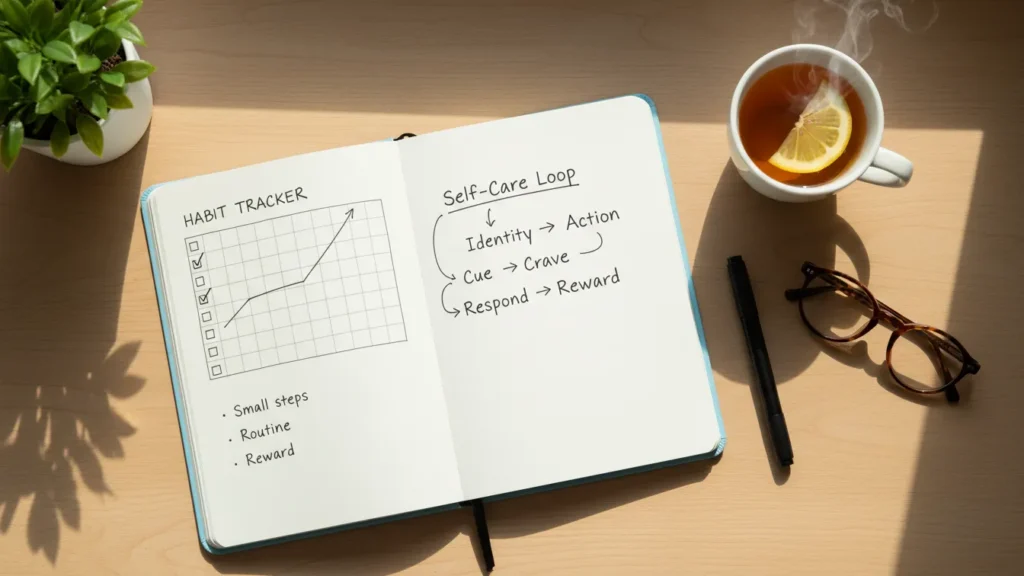
Research from behavioral psychology reveals three critical factors that determine whether habits last:
- Friction: The easier something is to start, the more likely you’ll do it. James Clear’s research shows that reducing friction by just 20 seconds dramatically increases follow-through rates.
- Identity: People who view self-care as part of their identity (“I’m someone who prioritizes my wellbeing”) stick with routines 3x longer than those who see it as something they “should do.”
- Immediate Rewards: Your brain craves instant gratification. Routines that deliver feel-good benefits within minutes have 60% higher adherence rates than those promising long-term benefits only.
When you design your self-care routine around these principles, you’re working with your brain’s natural wiring rather than against it.
If you want proof that tiny, consistent actions add up, just look at the habits of women who age slowly and how they approach daily self-care.
Step 1: Conduct Your Personal Self-Care Audit

To learn how to make a self care routine stick, start by understanding where you are right now:
Assess Your Current State
Ask yourself these crucial questions:
- Energy Patterns: When do you feel most energized vs. depleted throughout the day?
- Stress Triggers: What consistently drains or overwhelms you?
- Joy Inventory: What activities genuinely make you feel alive and restored?
- Time Reality Check: What does your actual schedule look like (not your ideal schedule)?
- Past Patterns: When have self-care efforts worked before? When haven’t they?
Take 15 minutes to journal your responses. This self-awareness forms the foundation of how to make a self care routine stick for your unique life.
Identify Your Non-Negotiables
Research from the National Institute of Mental Health shows that three foundational pillars predict 90% of wellbeing outcomes:
- Quality Sleep (7-9 hours for adults)
- Movement (30 minutes daily, any intensity)
- Meaningful Connection (regular interaction with supportive people)
These become your non-negotiables—the bedrock of any routine that sticks.
If money stress keeps hijacking your peace, working on your money mindset to attract more money fast can be a powerful form of self-care too.
Step 2: Design Your Minimum Viable Routine
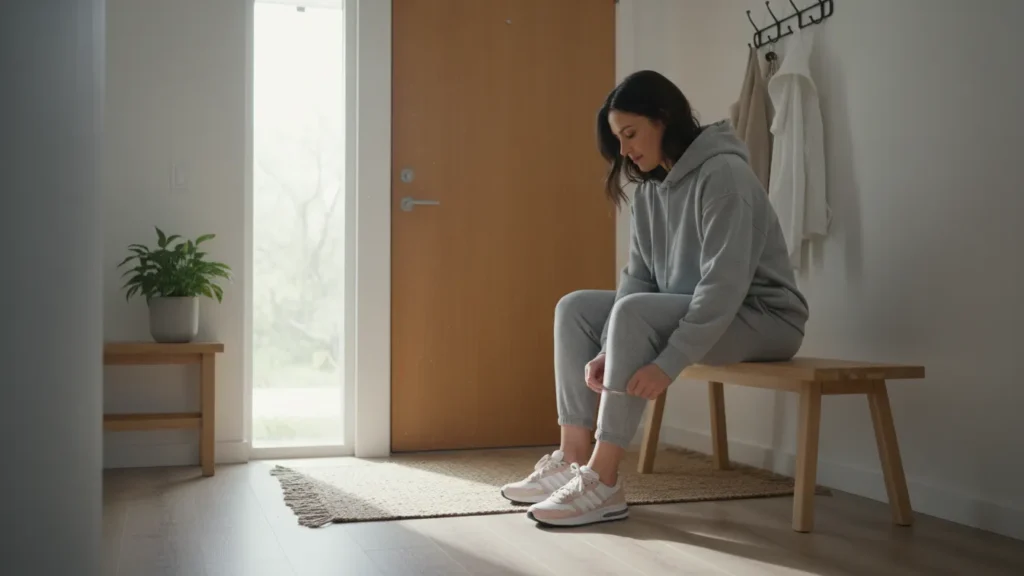
Here’s the counterintuitive secret to how to make a self care routine stick: Start absurdly small.
The 2-Minute Rule
James Clear’s 2-Minute Rule states: Any habit should take less than 2 minutes to start. This isn’t your end goal—it’s your entry point.
Examples:
- Instead of “Exercise 30 minutes daily” → “Put on workout shoes”
- Instead of “Meditate 20 minutes” → “Sit on meditation cushion for 2 minutes”
- Instead of “Cook healthy meals” → “Chop one vegetable”
- Instead of “Journal extensively” → “Write three sentences”
Why does this work? Because starting is the hardest part. Once you’ve begun, momentum naturally carries you forward. But even on your worst days, a 2-minute commitment remains doable.
Create Your Three-Level System
Build flexibility into your routine by creating three versions based on your energy level:
Level 1 – Survival Mode (3-5 minutes):
- Wash your face
- Drink one glass of water
- Take three deep breaths
- Step outside for 60 seconds
Level 2 – Normal Days (15-20 minutes):
- 10-minute walk
- 5-minute journaling
- Healthy breakfast
- Morning stretches
Level 3 – Optimal Days (30-45 minutes):
- Full workout
- Meditation session
- Nutritious meal prep
- Creative hobby time
This tiered approach is crucial for understanding how to make a self care routine stick. Instead of giving up when life gets chaotic, you scale down to Level 1 and maintain the thread of consistency.
Step 3: Engineer Your Environment for Success

Your environment shapes your behavior more than willpower ever will. To master how to make a self care routine stick, design your space strategically.
Reduce Friction for Good Habits
For Morning Routines:
- Lay out workout clothes the night before
- Prepare your coffee maker so you just press “start”
- Keep your journal and pen on your nightstand
- Place your meditation cushion where you’ll see it
For Evening Routines:
- Create a “wind-down kit” in your bathroom (face wash, moisturizer, etc.)
- Keep herbal tea and a favorite mug accessible
- Put your phone charger far from your bed
- Set up a cozy reading nook with a warm light
Increase Friction for Competing Behaviors
Make it harder to engage in activities that derail your routine:
- Delete social media apps from your phone (access via browser only)
- Store junk food on high shelves or don’t buy it
- Keep your TV remote in another room
- Use website blockers during designated self-care time
The National Science Foundation found that reducing friction for positive habits while increasing it for negative ones improves consistency by 64%.
Step 4: Choose Activities You Actually Enjoy

One of the most overlooked aspects of how to make a self care routine stick is genuine enjoyment. Self-care shouldn’t feel like punishment.
Ditch the “Should” Mentality
Stop forcing yourself into activities just because they’re trendy or someone else swears by them:
Don’t like yoga? Try dancing, hiking, swimming, or boxing instead.
Hate journaling? Record voice memos, draw, or simply reflect during your morning coffee.
Can’t stand green smoothies? Eat actual vegetables you enjoy in meals you love.
Find Your Self-Care Style
Research identifies four primary self-care styles:
1. Active Energizers: Thrive on movement, outdoor activities, and physical challenges
- Best practices: Running, hiking, sports, dance classes, active hobbies
2. Quiet Reflectors: Recharge through solitude, introspection, and calm activities
- Best practices: Reading, meditation, journaling, quiet walks, solo hobbies
3. Social Connectors: Restore energy through meaningful relationships and community
- Best practices: Coffee dates, group activities, volunteering, family time
4. Creative Explorers: Feel renewed through artistic expression and learning
- Best practices: Painting, music, cooking, crafting, skill-building
Most people blend multiple styles. Identify your primary and secondary styles, then build your routine accordingly. This personalization is essential for understanding how to make a self care routine stick long-term.
Create Your Self-Care Menu
List 10-15 activities you genuinely enjoy across different categories:
- Quick wins (5 minutes or less): Deep breathing, favorite song, stretching, tea ritual
- Standard practices (15-30 minutes): Walks, reading, bath, hobby time
- Extended care (1+ hour): Nature outings, creative projects, social activities, spa experiences
Having options prevents boredom and allows flexibility based on available time and energy.
Step 5: Implement Strategic Habit Stacking
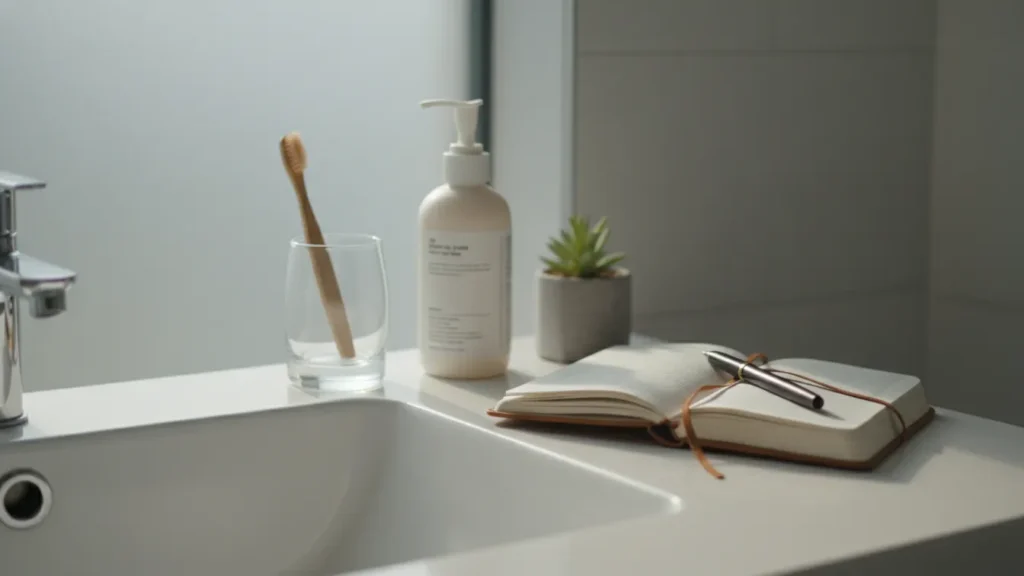
Habit stacking—attaching new behaviors to existing routines—dramatically increases the likelihood of making a self care routine stick.
The Habit Stacking Formula
“After [CURRENT HABIT], I will [NEW HABIT].”
Examples:
- “After I pour my morning coffee, I will write three gratitude statements”
- “After I brush my teeth at night, I will do a 2-minute skincare routine”
- “After I close my laptop for the day, I will take a 10-minute walk”
- “After I get into bed, I will read for 15 minutes”
Your existing habits serve as automatic triggers for new self-care practices. No need to remember or rely on motivation—the sequence becomes automatic.
Optimize Your Timing
Understanding how to make a self care routine stick requires honest assessment of when you’re most likely to follow through:
Morning People: Stack self-care before work when energy is high Night Owls: Create evening rituals when you’re naturally more active Lunch Breakers: Use midday for walks, meditation, or healthy eating practices
Don’t fight your chronotype. Work with your natural energy patterns.
Step 6: Build in Accountability and Tracking

Social accountability increases habit adherence by up to 95%, according to the American Society of Training and Development.
Find Your Accountability Strategy
Option 1: Accountability Partner
- Weekly check-ins with a friend also building self-care habits
- Share daily wins and challenges
- Celebrate milestones together
Option 2: Community Support
- Join online groups focused on self-care and wellbeing
- Share progress on social media if that motivates you
- Participate in local wellness groups or classes
Option 3: Professional Support
- Work with a therapist, coach, or wellness professional
- Invest financially to increase commitment
- Get expert guidance tailored to your needs
Track Progress Meaningfully
Tracking helps you see patterns and maintain motivation. But avoid obsessive tracking that becomes stressful:
Simple Tracking Methods:
- Check-mark calendar for completion
- Brief notes on energy and mood
- Weekly reflection journal entry
- Monthly self-care report card
What to Track:
- Consistency (Did you do something?)
- Energy levels before/after
- Mood patterns
- Which activities you enjoyed most
- Obstacles that arose
The goal isn’t perfection—it’s awareness and adjustment.
Step 7: Master the Art of Consistency Over Perfection

Perhaps the most crucial element of how to make a self care routine stick is embracing consistency over perfection.
The 80/20 Rule for Self-Care
Aim for 80% consistency, not 100%. Missing 1-2 days per week is normal and sustainable. Missing 4+ days signals you need to adjust your approach.
Never Miss Twice
Behavioral researcher Dan Ariely’s “never miss twice” rule is powerful: If you miss one day, make it a non-negotiable to show up the next day—even if only for your Level 1 minimum.
Missing once is life. Missing twice starts a pattern that derails your routine entirely.
Bounce Back Without Shame
When you fall off track (and you will), respond with self-compassion rather than self-criticism:
Instead of: “I’m so lazy, I can’t stick to anything” Try: “I got busy this week. What’s one small thing I can do today?”
Research from Dr. Kristin Neff shows that self-compassion predicts long-term behavior change far better than self-criticism. People who speak kindly to themselves about setbacks are 40% more likely to resume positive habits.
Step 8: Adjust and Evolve Your Routine

Your life changes, and your self-care routine should too. Understanding how to make a self care routine stick includes knowing when and how to adapt.
Schedule Monthly Check-Ins
Block 30 minutes at the end of each month to assess:
What’s working? Double down on these practices What’s not working? Eliminate or modify without guilt What’s missing? Add new elements to address gaps What needs adjustment? Tweak timing, duration, or approach
Recognize Life Season Changes
Different life phases require different self-care:
- High-stress periods: Focus on basics (sleep, nutrition, movement)
- Stable times: Expand into creative pursuits and social connection
- Grief or loss: Prioritize emotional support and gentle activities
- New routines (job, baby, move): Reduce expectations temporarily
Being flexible doesn’t mean lacking commitment. It means being realistic and sustainable.
Advanced Strategies: Taking Your Routine to the Next Level

Once you’ve mastered the basics of how to make a self care routine stick, consider these advanced approaches:
Layer Your Practices
Combine multiple self-care elements in one activity:
- Walking in nature (movement + nature exposure + mindfulness)
- Cooking with loved ones (nutrition + connection + creativity)
- Reading in a bath (mental stimulation + relaxation + sensory care)
This efficiency helps when time is limited.
Create Rituals, Not Just Routines
Transform activities into meaningful rituals by adding intentional elements:
- Lighting: Use candles or specific lamps
- Scent: Diffuse essential oils or light incense
- Sound: Play particular music or nature sounds
- Setting: Create a designated space
- Mindfulness: Begin with a intention or gratitude statement
Rituals engage your senses and signal to your brain that this time is sacred. They make the practice more memorable and enjoyable.
Practice Strategic Self-Care
Anticipate high-stress periods and increase self-care beforehand:
- Boost sleep before a demanding week
- Schedule recovery days after intense periods
- Front-load self-care when you know things will get hectic
Preventive care beats emergency repair every time.
Develop Your Self-Care Signature
Create a unique signature practice—something that’s distinctly yours:
- Sunday evening baths with a specific playlist
- Tuesday morning coffee shop writing sessions
- Friday afternoon nature walks
- Nightly gratitude ritual with your partner
These signature practices become anchors in your week, something you look forward to and protect fiercely.
Common Obstacles and Solutions
Even with the best strategies, you’ll encounter challenges. Here’s how to navigate them:
Obstacle 1: “I don’t have time”
Solution: You don’t need to “find” time—you need to protect it.
- Audit where your time actually goes (track for one week)
- Identify 15 minutes of scrolling, TV, or low-value activities
- Replace with Level 1 self-care practices
- Remember: You have time for what you prioritize
Obstacle 2: “I feel guilty putting myself first”
Solution: Reframe self-care as responsibility, not indulgence.
- You can’t pour from an empty cup
- Better self-care makes you more present and effective for others
- Modeling healthy habits teaches important life skills
- Self-care isn’t selfish—it’s self-preservation
Obstacle 3: “I lose motivation after a few days”
Solution: Build systems that don’t rely on motivation.
- Use environmental cues and habit stacking
- Connect with accountability partners
- Focus on identity (“I’m someone who prioritizes wellbeing”)
- Remember: Action creates motivation, not the other way around
You can even upgrade your sleep environment with bedroom plants that improve air health and wellness to support deeper rest.
Obstacle 4: “My routine feels boring or stale”
Solution: Inject variety while maintaining structure.
- Rotate activities within your self-care menu
- Try one new practice monthly
- Change locations (different parks, coffee shops, rooms)
- Join classes or groups for fresh energy
Obstacle 5: “I’m too exhausted to do anything”
Solution: Scale to Level 1 and prioritize restoration.
- Choose passive self-care (bath, gentle music, rest)
- Focus solely on sleep, nutrition, and hydration basics
- Consider whether chronic exhaustion needs professional support
- Remember: Rest IS productive
The Mental Health Connection

Understanding how to make a self care routine stick becomes even more critical when managing mental health challenges.
Self-Care as Mental Health Support
Research shows that consistent self-care practices:
- Reduce anxiety symptoms by 32%
- Decrease depressive symptoms by 28%
- Improve stress management by 45%
- Enhance overall life satisfaction by 40%
Important Note: Self-care complements professional mental health treatment but doesn’t replace it. If you’re struggling with depression, anxiety, or other mental health conditions, work with a qualified therapist or healthcare provider.
Warning Signs to Watch For
While building your routine, stay alert to signs you need additional support:
- Persistent sad or empty mood lasting weeks
- Loss of interest in previously enjoyed activities
- Significant sleep disturbances
- Difficulty concentrating or making decisions
- Thoughts of self-harm or suicide
If you notice these signs, reach out to mental health resources immediately. The National Suicide Prevention Lifeline (988) provides 24/7 confidential support.
Putting It All Together: Your 30-Day Self-Care Starter Plan
Ready to implement everything you’ve learned about how to make a self care routine stick? Follow this progressive 30-day plan:
Week 1: Foundation Building
- Days 1-3: Complete your self-care audit and choose your top 3 activities
- Days 4-7: Practice only your 2-minute versions at the same time daily
Week 2: Establishing Consistency
- Days 8-14: Maintain daily practice, gradually extending to 5-10 minutes
- Mid-week check-in: Assess what’s working and adjust as needed
Week 3: Adding Layers
- Days 15-21: Introduce your Level 2 practices on good days
- Begin tracking: Use a simple check-mark calendar
Week 4: Integration and Expansion
- Days 22-28: Implement habit stacking with 2-3 practices
- Add one social accountability element
Days 29-30: Reflection and Planning
- Review what stuck and what didn’t
- Design your ongoing routine based on actual data
- Set intentions for month two
Real-Life Success Stories
Understanding how to make a self care routine stick becomes easier when you see real examples:
Sarah, 34, Working Mother: “I tried elaborate morning routines for years and always failed. When I switched to just 5 minutes of stretching while my coffee brewed, everything changed. Now it’s been 8 months, and I’ve naturally expanded to 20 minutes including journaling. The key was starting tiny and being consistent.”
Marcus, 45, Healthcare Professional: “As an ER nurse, my schedule is chaos. I used to think self-care was impossible with my rotating shifts. Creating a flexible three-level system saved me. On 12-hour shifts, I do Level 1. On days off, I go to Level 3. I’ve stuck with it for over a year now because it adapts to my reality.”
Jenny, 28, Entrepreneur: “I’m a recovering perfectionist. If I missed one day, I’d quit entirely. The ‘never miss twice’ rule and self-compassion practice transformed my approach. I’ve maintained my routine for 6 months—not perfectly, but consistently. That’s what matters.”
Your Next Steps
Learning how to make a self care routine stick is a journey, not a destination. Here’s what to do right now:
Today:
- Complete your 15-minute self-care audit
- Choose ONE 2-minute practice
- Decide when you’ll do it tomorrow
This Week:
- Practice your chosen activity for 7 consecutive days
- Notice how you feel before and after
- Adjust timing or activity if needed
This Month:
- Add 1-2 more practices using habit stacking
- Find one accountability strategy that works for you
- Conduct your first monthly check-in
This Year:
- Build a comprehensive, flexible routine you love
- Navigate obstacles with self-compassion
- Watch your wellbeing transform sustainably
Conclusion: The Compound Effect of Consistent Self-Care
Mastering how to make a self care routine stick might be the most impactful skill you develop in 2026. The secret isn’t complexity or perfection—it’s sustainable consistency applied over time.
Start small. Build systems. Stay flexible. Show yourself compassion. Adjust as needed. Celebrate progress.
Remember: Every single day you show up for yourself—even in the smallest way—you’re casting a vote for the person you’re becoming. Those votes compound into a life of greater peace, energy, resilience, and joy.
You don’t need to overhaul everything tomorrow. You just need to start somewhere today.
Your future self will thank you for it.
Additional Resources:
- National Institute of Mental Health: www.nimh.nih.gov
- Crisis Text Line: Text “CONNECT” to 741741
- National Suicide Prevention Lifeline: 988
- Substance Abuse and Mental Health Services Administration: 1-800-662-4357
What’s your biggest challenge with making self-care stick? Share in the comments below, and let’s support each other in building sustainable routines that actually work.