
How to Improve Yourself: 21 Gentle Habits That Actually Fit Your Real Life

How to Improve Yourself (Without Turning Into a Different Person)

When most people talk about “improving yourself,” it can sound kind of brutal. Wake up at 5 a.m. Change your whole routine. Cut out every bad habit in one week. Suddenly become disciplined, confident, glowing, and never tired again. It’s intense—and honestly, it’s not built for someone who’s already juggling work, emotions, relationships, and an overstimulated brain.
Improving yourself doesn’t have to mean ripping your whole life apart and rebuilding it from scratch. It can simply mean making small, kind decisions that make your day feel a little lighter, your mind a little calmer, and your future self a little more supported. You don’t need to become “that girl” overnight. You just need a set of gentle habits that fit your real energy, schedule, and season.
These 21 ideas are for you if you want to grow without bullying yourself into a personality transplant.
How to Use These 21 Gentle Habits
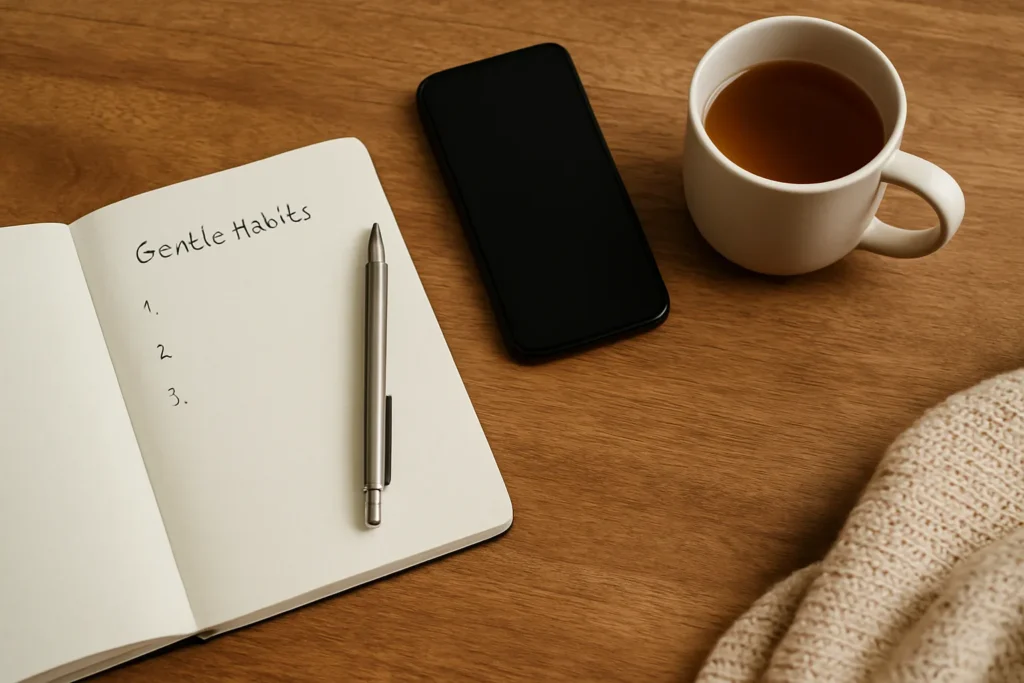
You’re not meant to adopt all 21 habits at once—that’s the fastest way to overwhelm yourself and then decide “self-improvement doesn’t work.” Think of this as a menu, not a checklist. Read through them and notice which habits make your shoulders relax a bit, or make you think, “Oh… that actually feels doable.” Start with one or two.
You can also create a “bare-minimum version” of improvement: the tiny set of habits you keep even on hard days. That might be water, one page of journaling, and going to bed 20 minutes earlier. Everything else is a bonus. Real change usually comes from things you quietly repeat, not things you do perfectly once and then drop.
21 Gentle Habits That Actually Fit Your Real Life

Start Your Day With One Small Act of Respect for Yourself
Before you grab your phone and rush into everyone else’s world, do one tiny thing that says, “Hey, I matter too.” Drink water before coffee. Open the curtains. Take three deep breaths. Make your bed in 45 seconds. It doesn’t have to be big or aesthetic—it just has to be a small choice that honors you before the noise starts. Over time, this simple act becomes the foundation for how you treat yourself all day.
Do a Five-Minute Feelings Check-In
Instead of immediately asking, “What do I need to do today?” try asking, “How am I actually feeling right now?” Set a timer for five minutes, grab your journal or Notes app, and just spill. You can write one word, a full paragraph, or bullet points. Naming your feelings doesn’t magically fix them—but it stops them from running the whole day in the background. This is one of the easiest ways to improve yourself emotionally without needing an hour-long routine.
Choose a “Theme Word” for Your Day
Perfection says, “You must be productive, happy, confident, and calm today.” A theme word says, “Let’s focus on one thing.” Maybe your word is “steady,” “gentle,” “brave,” or “present.” Write it at the top of your to-do list or on a sticky note. When the day feels chaotic, ask, “What’s the smallest choice I can make that matches this word?” This is how you improve yourself through tiny, repeatable alignment—not through sudden personality changes.
Set a Bare-Minimum Version of Your Routine
Self-improvement often dies because we build routines for our best, most energized self and forget about the tired, emotional, and overwhelmed version. Instead, describe a bare-minimum morning and night routine you can manage even on “I’m not okay” days. Maybe it’s brushing your teeth, washing your face, one glass of water, and a quick brain dump. When you hit those, you’ve already “shown up,” even if nothing else happens. That mindset alone is an upgrade.
Give Your Future Self One Tiny Gift Every Day
Ask yourself, “What could I do today that tomorrow-me would quietly thank me for?” It might be prepping clothes, putting your phone on charge in another room, loading the dishwasher, or sending that one awkward email. It doesn’t need to be big or glamorous. Improving yourself gets much easier when you stop being at war with your future self and start teaming up with her instead.
Put One “Life Admin” Task on a Weekly Reset
You don’t need a hyper-organized life to improve yourself—you just need slightly less chaos. Pick one day a week to handle a few small life admin tasks: deleting old emails, paying a bill, clearing your bag, planning 2–3 dinners, or checking your bank app without doom-spiraling. Make it gentle: light a candle, put music on, make it a 20-minute “reset” instead of a punishment. A calmer external world makes internal work much easier. yourselflovehub.com
Limit Inputs When You Wake Up and Before Bed
If you wake up to notifications and fall asleep to TikTok, your nervous system never gets a real break. Try setting one soft boundary in the morning and one at night: for example, no social media until after your first glass of water, and phone away 20–30 minutes before bed. You can fill that time with journaling, stretching, or just existing. This tiny habit helps your brain breathe—and a rested brain makes much better choices.
Perfect place to quietly mention your nighttime habits or night journal prompts here. yourselflovehub.com+1
Upgrade Your Self-Talk By Just 10%
You don’t have to go from “I hate myself” to “I am a radiant goddess” overnight. Start smaller. When you catch yourself saying something cruel in your head, don’t argue with it—just add a softer follow-up. “I messed that up… but I’m learning.” “I’m so behind… but I’m still trying.” This 10% upgrade in your inner voice might be the most powerful self-improvement habit you ever build.
If your inner critic feels especially loud right now, pairing these tiny mindset shifts with some soft, doable steps to love yourself again can make this part of your self-improvement feel a lot less harsh.
Practice Saying “Let Me Think About It”
If you say yes way too quickly and then regret it later, this is your habit. Instead of answering immediately when someone asks for your time, energy, or help, say, “Let me think about it and get back to you.” That one sentence gives you space to check in with your schedule and energy before committing. Improving yourself is not only about doing more; sometimes it’s about learning when not to say yes.
Add One Tiny Movement Habit You Can Actually Keep
Instead of forcing yourself into an intense workout plan, pick one small movement habit that feels kind and realistic: a 10-minute walk, stretching before bed, 5 squats while the kettle boils. Focus on consistency, not intensity. Movement becomes easier when it’s something your tired self can still say yes to. You’re not punishing your body into being better; you’re inviting it back into your life.
Make Your Environment 10% Calmer
You don’t need a full Pinterest makeover to improve yourself through your surroundings. Choose one small area—your bedside table, desk, or one shelf—and make it look how you want your brain to feel: calmer, clearer, softer. Remove obvious clutter, wipe it down, maybe add a candle or plant. Every time you see that little corner, it quietly reminds you: “I’m capable of creating ease.”
Create a Gentle “Mind Dump” Ritual
A lot of anxiety comes from holding too many thoughts in your head. Pick a time—morning, lunch, or night—to empty your brain onto paper: worries, ideas, to-dos, random feelings. Don’t organize it, just pour. Once it’s out, you can very quickly circle what actually needs action and what’s just noise. This habit alone can make you feel more in control of your life without changing anything on the outside.
Check In With Your Values, Not Just Your To-Do List
Improving yourself isn’t only about doing more—it’s about doing more of what actually matters to you. Once a week, ask: “What are my top 3 values right now?” (For example: peace, growth, connection.) Then ask, “Did my week reflect those at all?” This isn’t about judging yourself; it’s about noticing gaps gently. Over time, you’ll find ways to tweak your habits so your life looks more like your values, not just your calendar.
Choose One Relationship to Intentionally Nurture
You don’t have to “be a better friend/partner/daughter” to everyone at once. Pick one relationship you genuinely want to invest in this month. That might mean checking in more regularly, planning a small hangout, or simply listening with your full attention when they talk. Tiny consistent care often matters more than big, rare gestures. This is a quiet but powerful way to improve yourself in how you show up for others.
Learn to Notice Your “I’m Overstimulated” Signs
A huge part of self-improvement is knowing when you’re simply done. Maybe your signs are scrolling more, snapping at people, feeling foggy, or craving sugar. Instead of judging those reactions, treat them as signals: “My brain is full.” Then ask, “What would help—quiet, water, a break from screens, stepping outside?” This habit teaches you to respond to your nervous system instead of bulldozing over it.
When you’re ready to gently stretch yourself a bit more, you can turn some of these insights into emotional growth challenges you can actually do in real life, one tiny experiment at a time.
Replace One Harsh Coping Mechanism With a Softer One
We all have ways we numb out: endless scrolling, overworking, gossip, overspending, overthinking. You don’t have to cut everything off overnight. Choose one moment where you usually go into autopilot, and experiment with a slightly softer alternative—like journaling for five minutes before scrolling, walking before opening an app, or texting a friend instead of stalking someone online. It’s not about perfection. It’s about slowly giving yourself better options.
Set One Tiny Money or Career Habit
Self-improvement also touches your practical life. Pick one small habit that supports your future stability: checking your account once a week without shame, tracking one category of spending, reading one article about your field, updating your résumé once a month, or applying for one opportunity. You don’t have to overhaul your whole career or bank account to be “on your way”—sometimes the habit of looking honestly is the upgrade.
Give Yourself Permission to Be a Beginner
A lot of growth dies because we hate the feeling of being bad at something. Improving yourself will almost always mean starting somewhere messy: your first workout, your first language lesson, your first boundary conversation. Instead of expecting yourself to be good immediately, try saying, “I’m allowed to be new at this.” Write down the things you’d love to try if you weren’t afraid of looking silly—and choose one to be a beginner in.
Practice One Brave Conversation at a Time
Improving your life often means improving your communication. Make a list of uncomfortable but important conversations you’ve been avoiding: asking for clarity, apologizing, expressing hurt, asking for help. Choose one and prepare what you want to say, either in your journal or out loud. You don’t have to get it perfect; you just have to be a little braver than last time. Every honest conversation is a step toward a more aligned version of you.
Keep a “Proof I’m Growing” List
Your brain is wired to notice what’s wrong more than what’s right. Once a week, open a note or page titled “Proof I’m Growing” and jot down anything that shows progress: a boundary you set, a habit you kept for a few days, a reaction you handled better than last year. This habit helps you see yourself as someone who is changing, not someone who “always fails.” When you feel stuck, reading it back can be the push you need to keep going.
Let Rest Be Part of Your Self-Improvement Plan
If your idea of “how to improve yourself” doesn’t include rest, it’s not sustainable. Rest isn’t what you do when you’ve earned it with enough productivity. It’s part of the work. Decide what rest looks like in your real life—early nights a few times a week, one slow morning, one plan-free evening, screen breaks, or naps. When you honor your limits, you don’t just feel better; you make better decisions about everything else.
A Softer Way to Improve Yourself

Improving yourself doesn’t have to feel like rebuilding yourself from the ground up. It can be as simple as drinking more water, telling yourself a slightly kinder story, getting to bed a bit earlier, or finally having that honest conversation you’ve been rehearsing in your head. Tiny, gentle habits might not look impressive from the outside—but you’re the one living inside the results.
You’re allowed to grow slowly. You’re allowed to change your mind. You’re allowed to build a better life without announcing a “new you” era every time you take one step forward. If all you do after reading this is pick one habit and try it for a week, you’ve already started.