How to Decorate Your Living Room: The Complete Guide for Creating a Space You’ll Love

Your living room is where life happens. It’s where you curl up with a good book on Sunday mornings, host friends for game night, and maybe even sneak in a quick nap. So yeah, figuring out how to decorate your living room matters more than you’d think.
Here’s the thing though—decorating doesn’t have to be overwhelming. You don’t need a design degree or an unlimited budget. What you need is a solid plan and some practical advice that actually works in real life.
I’ve spent years helping people transform their living rooms, and I can tell you that most decorating “mistakes” come down to just a few common issues. Once you understand the basics, everything else clicks into place.
Understanding Your Space Before You Start
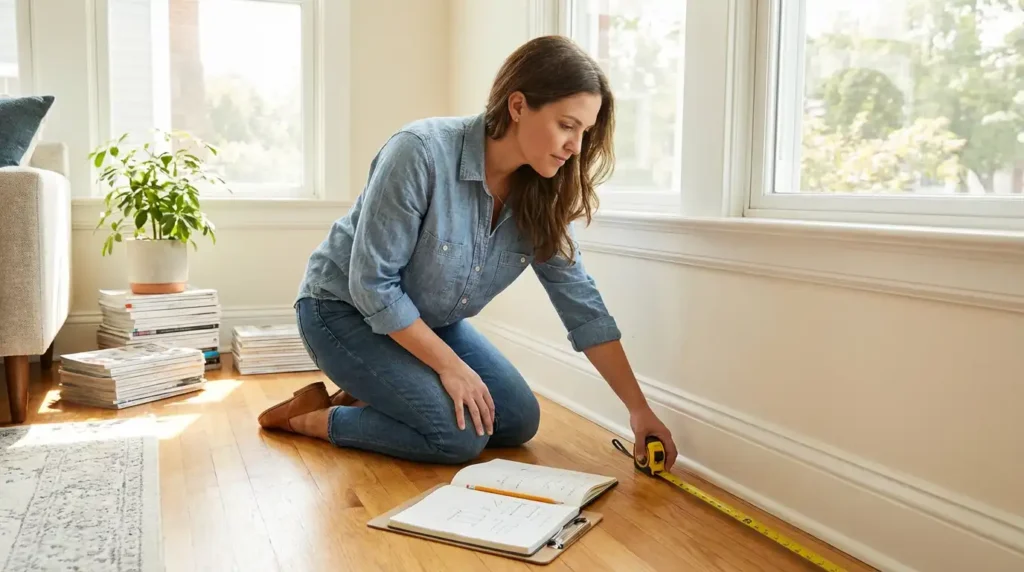
Before you buy a single throw pillow, let’s get real about your living room space.
Grab a tape measure—seriously, do it now. You’ll want to know your room’s exact dimensions. I’ve seen too many people fall in love with a massive sectional only to discover it won’t even fit through their doorway. Trust me, that’s a headache you don’t want.
In my experience, most decorating disasters happen because people skip this crucial step. They eyeball it, think “yeah, that’ll work,” and then wonder why their beautiful new rug looks like a postage stamp in their room.
Choosing Your Living Room Style

Now here’s where it gets interesting. Living room decor isn’t one-size-fits-all.
You might be drawn to modern minimalism with clean lines and neutral tones. Or maybe you love the cozy, layered look of English cottage style that’s trending big in 2025. There’s no wrong answer—just what feels right for you.
What I love about this process is how personal it becomes. Your living room should tell your story, not copy a showroom.
Start by creating a mood board. Pinterest works great for this, but even screenshots saved to a folder on your phone will do the trick. Collect at least 10-15 images of living rooms that make you stop scrolling. You’ll start noticing patterns in what draws your eye.
If your heart leans toward a softer, romantic aesthetic, these cottagecore decor ideas can help you bring that lived-in, storybook feel into your living room.
The Color Palette That Pulls Everything Together

Here’s a secret from professional designers: the 60-30-10 rule for color schemes.
Use your dominant color for 60% of the room (think walls and large furniture). Your secondary color covers 30% (accent chairs, curtains, larger décor). The final 10%? That’s your pop of personality—bold throw pillows, artwork, or that gorgeous vase you can’t stop thinking about.
But don’t stress too much about being exact. The rule’s just a guideline, not a law. I’ve seen stunning rooms that break every rule in the book.
Green is trending everywhere right now, and these gorgeous green kitchen ideas show how calming earthy tones work beautifully across the entire home—including living rooms.
Quick Color Scheme Ideas
- Neutral foundation with colorful accessories (easiest to change over time)
- Monochromatic with varying shades of one color (surprisingly sophisticated)
- Complementary colors like navy and rust (adds visual interest)
- Warm earthy tones with greens and terracottas (very 2025)
Essential Furniture Pieces for Living Room Design

Let’s talk about the big stuff—your living room furniture.
Start with the sofa. This is where you’ll probably blow most of your budget, and honestly, you should. A quality sofa lasts 10-15 years if you treat it right. Look for hardwood frames, eight-way hand-tied springs, and fabric that can handle your actual life.
Those cheap sofas from big-box stores? They’ll look sad in about three years. I’m not saying you need to spend five grand, but don’t go for the cheapest option either.
Additional seating matters more than you think. Two chairs facing your sofa create what designers call a conversation area—and it’s way more inviting than having everyone lined up on one couch staring at a TV.
Coffee tables and side tables anchor your space. Here’s a handy sizing chart:
| Furniture Piece | Ideal Measurement | Why It Matters |
|---|---|---|
| Coffee table length | About half your sofa length | Keeps proportions balanced |
| Coffee table height | Within 4 inches of seat height | Makes reaching comfortable |
| Side table height | Same as or slightly lower than armrest | Easy access to drinks, books |
| Rug size (living room) | Front legs of all furniture on it | Grounds the seating area |
| Space between furniture | 18-30 inches | Allows comfortable movement |
The Rug Rule You Can’t Ignore
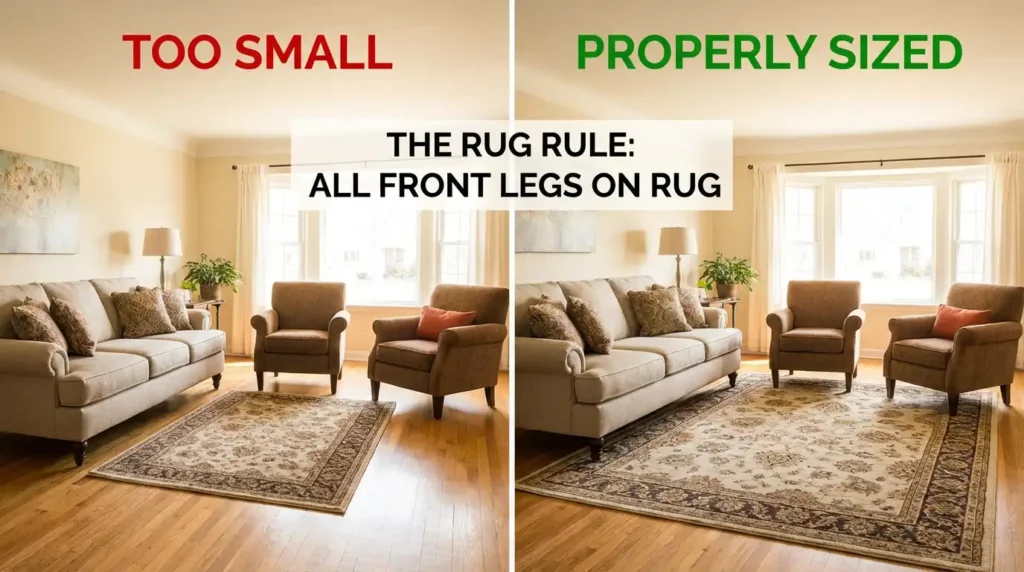
Listen, I’m going to be blunt here: too-small rugs are the number one design mistake I see. Like, it’s not even close.
Your rug needs to be big. Bigger than you think. At least the front legs of every piece of furniture should rest on it—preferably all the legs.
For most living rooms, you’re looking at a 9×12 or even 10×14. Yes, large area rugs are expensive. But they’re also the difference between a room that feels pulled together and one that looks… off.
If budget’s tight, consider layering a smaller patterned rug over an inexpensive large jute rug from places like Overstock. It’s a designer trick that looks intentional and costs way less.
A properly sized rug instantly adds warmth, which is why these warm apartment aesthetic ideas rely heavily on layered textures and grounding pieces.
Lighting: The Secret Ingredient
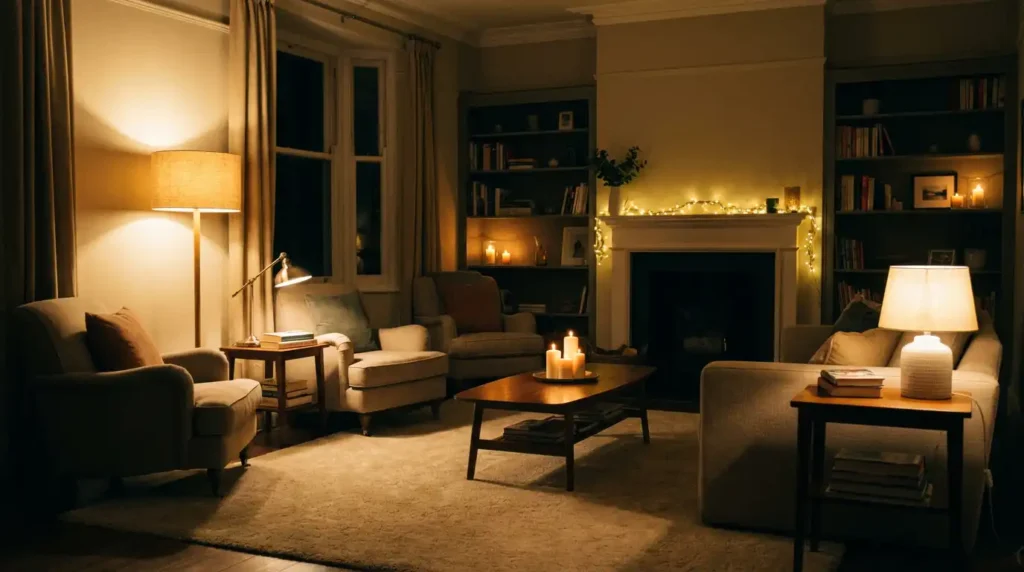
You might be wondering why your perfectly decorated room still feels “meh.” The answer’s probably lighting.
Layer your lighting like this:
- One floor lamp for ambient light
- At least one (preferably two) table lamps for task lighting
- Candles or accent lighting for mood
Here’s the thing about overhead lighting—it’s harsh. Sure, you need it sometimes, but creating atmosphere means having multiple light sources you can mix and match throughout the day.
Pro tip: Put your lamps on dimmer switches or use smart bulbs. Being able to adjust brightness changes everything.
Living Room Wall Decor That Makes an Impact

Your walls shouldn’t be an afterthought.
Artwork should be hung at eye level—roughly 57-60 inches from the floor to the center of the piece. And please, don’t hang a tiny 16×20 print above your sofa. You need something substantial. Think 2/3 to 3/4 the width of your sofa.
Can’t afford large art? Create a gallery wall with smaller pieces. Mix frames, sizes, and art styles for an collected-over-time vibe.
Wall color matters too. White walls are safe, but painting just one accent wall or even your ceiling can completely transform the space without overwhelming it.
Storage Solutions That Don’t Look Like Storage

Nobody talks about this enough, but living room storage makes or breaks your daily life.
Built-ins are amazing if you’ve got the budget. Custom shelving around a fireplace or TV provides tons of storage while looking intentional. But if DIY isn’t your thing, there are other options:
- Console tables with drawers behind your sofa
- Ottomans with hidden storage inside
- Bookshelves styled to hide clutter in pretty baskets
- Media consoles with closed cabinets
The goal? Keep surfaces relatively clear so your eye can rest. Display what you love, hide everything else.
The Finishing Touches That Matter

Now here’s where you add personality.
Throw pillows shouldn’t match your sofa—that’s the fastest way to look boring. Mix patterns, textures, and sizes. Two or three on a standard sofa, more on a sectional.
Throw blankets need to be styled, not just tossed. Fold neatly over an armrest, drape casually over the back, or keep in a basket. Just no “hot dog fold” down the middle of your sofa cushions, please.
Plants bring life to any space. Even if you’ve killed every plant you’ve ever owned, try starting with hardy options like snake plants or pothos. Or hey, high-quality faux plants work too—no judgment here.
Coffee table styling follows the rule of three: Stack a couple books, add a small decorative object, and include something living or textured. Use a tray to corral it all and make it look intentional.
Living Room Layout Mistakes to Avoid
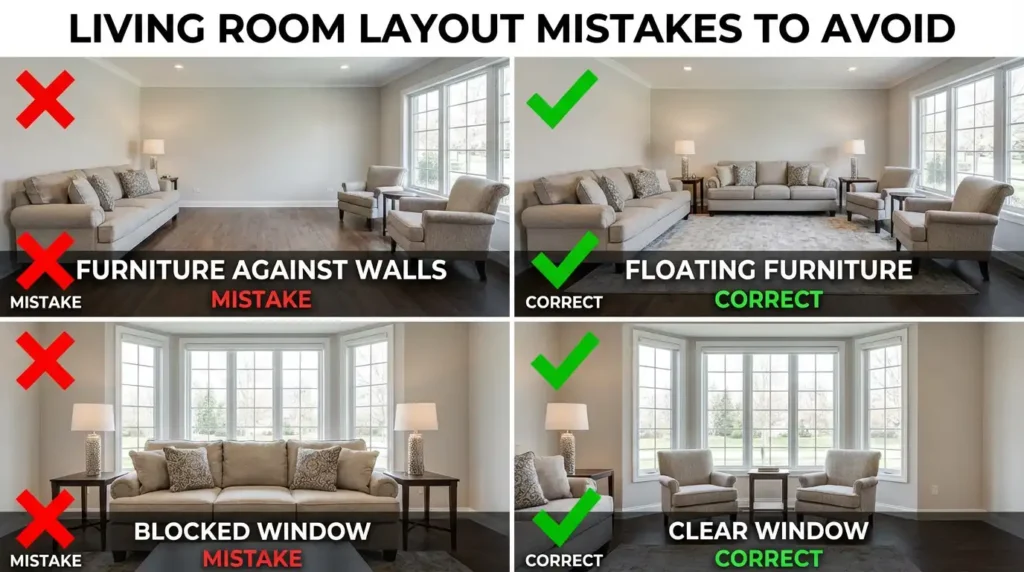
Let’s talk about what not to do.
Don’t push all furniture against the walls. Floating your seating actually makes a room feel bigger by creating defined spaces and better flow.
Don’t block windows or doorways. I mean, this seems obvious, but you’d be surprised. Make sure you’ve got at least 30 inches of clearance for main walkways.
Don’t forget about the TV (if you have one). Your seating should be 1.5 to 2.5 times the diagonal screen size away from the TV for comfortable viewing.
Don’t buy matching furniture sets. They look like hotel lobbies. Mix wood tones, styles, and eras for a room that feels collected rather than bought all at once.
Decorating on a Budget: Smart Splurges and Saves
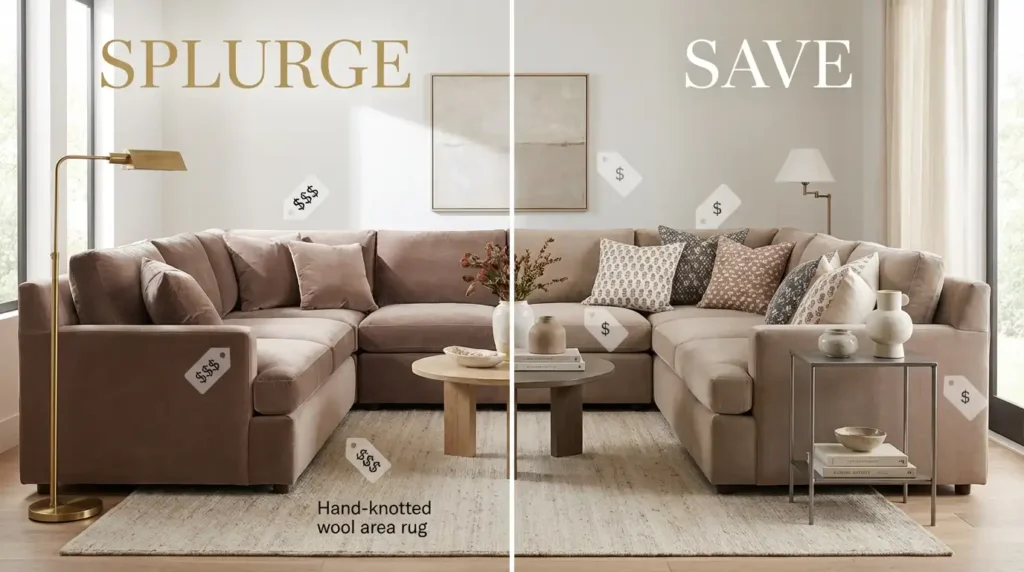
You don’t need unlimited funds to create a beautiful space.
Splurge On:
- Your sofa (you’ll use it daily for years)
- A quality rug (it sets the tone)
- Good lighting fixtures
- One statement piece of art
Save On:
- Throw pillows (Target and HomeGoods are goldmines)
- Side tables (thrift stores, Facebook Marketplace)
- Accessories and décor
- Picture frames
Watch for Crate & Barrel and West Elm sales—they happen regularly and savings can be substantial.
Small Living Room Ideas That Actually Work
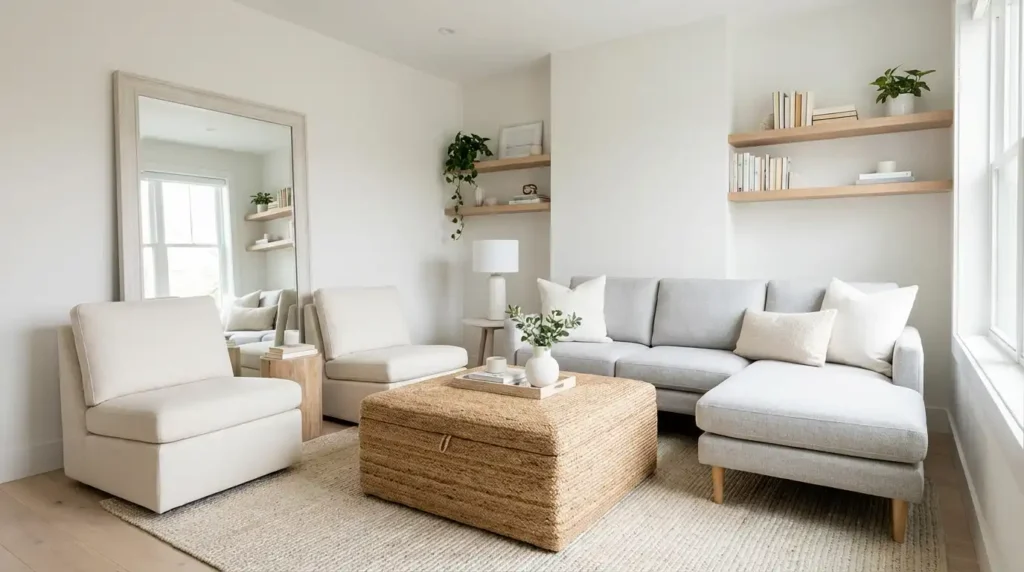
Working with limited space? You’ve got options.
Choose furniture carefully. Skip the sectional. Instead, opt for a smaller sofa with a couple of armless chairs or a bench that can tuck under a console.
Use mirrors strategically to bounce light and create the illusion of more space. A large mirror across from a window? Chef’s kiss.
Vertical storage is your friend. Floor-to-ceiling bookshelves draw the eye up and provide tons of storage without eating floor space.
Multi-functional pieces save you. Ottomans with storage, nesting tables you can spread out when needed, and console tables that work as desks all earn their keep.
Living Room Decor Trends Worth Considering for 2025
You might be curious what’s popular right now.
Curved furniture is having a major moment—rounded sofas and chairs feel softer and more inviting than harsh straight lines.
Jewel tones paired with neutrals create depth without overwhelming. Think emerald green accent chairs with a cream sofa.
Vintage and antique pieces mixed with modern elements add character. Thrift a vintage side table, pair it with a contemporary lamp.
Natural materials like wood, stone, and linen bring warmth. The biophilic design movement isn’t going anywhere.
But here’s the thing—trends come and go. Build your room around timeless pieces you genuinely love, then layer in trending elements through easily changeable items like pillows and art.
Pulling It All Together: Your Action Plan
Okay, so where do you actually start?
Week 1: Measure your space and identify your style. Create that mood board.
Week 2: Plan your layout. Use painter’s tape on the floor to map out furniture placement before buying anything.
Week 3: Invest in your major pieces—sofa and rug first.
Week 4: Add lighting, tables, and seating.
Week 5: Layer in accessories, art, and personal touches.
Take your time. Rooms that feel authentic don’t happen overnight. The best spaces are collected over months or even years.
Common Living Room Decorating Questions
How much should I budget for decorating my living room?
Expect $5,000-$15,000 for a complete makeover with new furniture. But you can do a refresh for $1,000-$3,000 by keeping major pieces and updating accessories, paint, and lighting.
What’s the best color for a living room?
The one you love living with. Seriously. Neutrals are safe and timeless, but don’t be afraid of color if that’s your thing. Test paint samples in your actual lighting before committing.
How often should I update my living room decor?
Refresh accessories every 2-3 years to keep things feeling current. Update major furniture every 7-10 years or when it shows wear. Seasonal switches of pillows and throws keep things interesting without breaking the bank.
Do I really need an interior designer?
Not necessarily. Many people successfully decorate their own homes with research and planning. But if you’re overwhelmed or have a weird layout, a few hours with a designer for a consultation can save you thousands in mistakes.
Final Thoughts on Living Room Design
Learning how to decorate your living room isn’t about following rigid rules or copying magazine spreads.
It’s about creating a space that works for your actual life. A room where you want to spend time. Where guests feel welcome. Where your daily routine just… flows.
Start with the basics—good furniture, proper scale, adequate lighting. Build from there with pieces that make you happy. And give yourself permission to experiment. Hung that art too high? Move it. Hate that throw pillow you thought you’d love? Return it.
Your living room will evolve over time, and that’s exactly how it should be.
Now, what are you waiting for? Grab that tape measure and let’s get started on creating a living room you absolutely love.