Best Hair Color for Thin Hair: The Ultimate Guide to Making Your Hair Look Fuller and Healthier (2025)
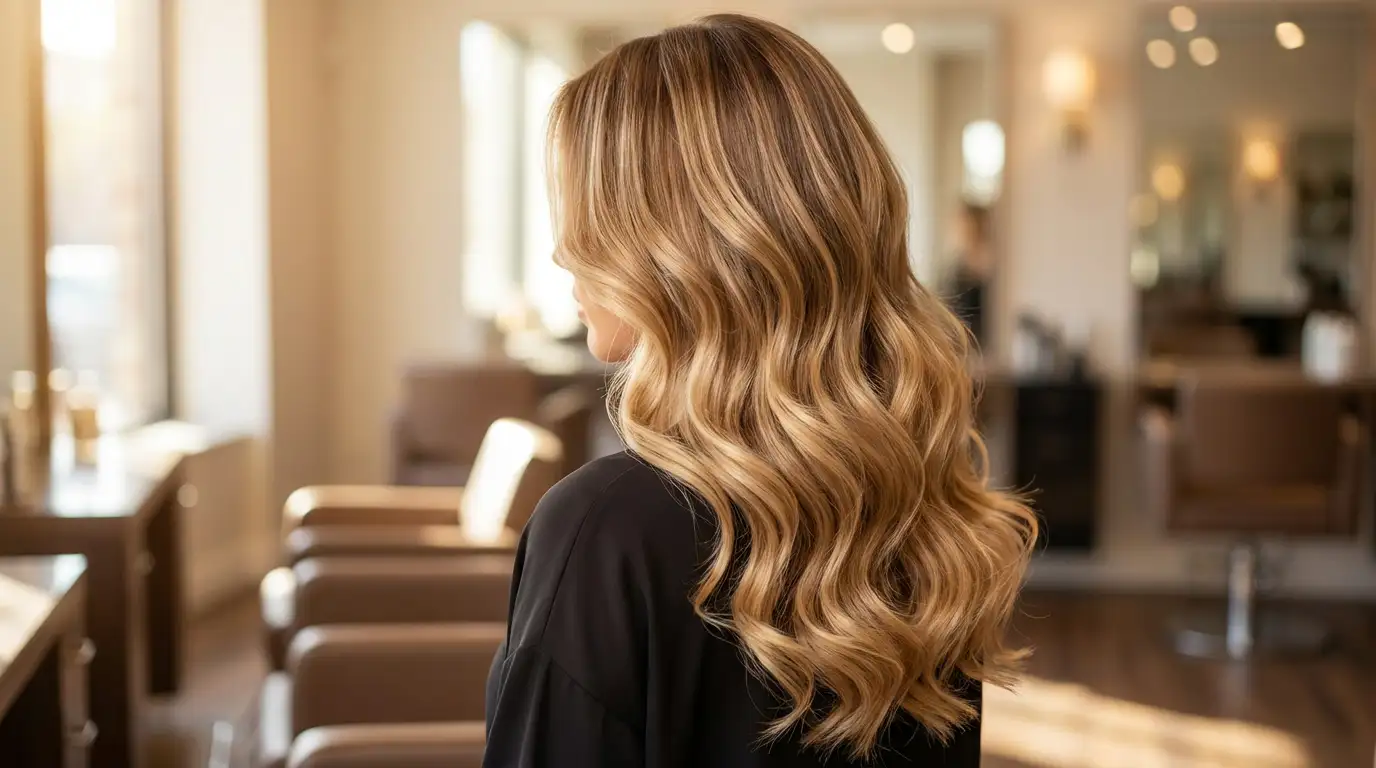
If you’re dealing with thin hair, you already know the frustration. Styling feels like a constant battle, and finding the right hair color for thin hair can feel impossible. Here’s the truth: the wrong color can make your hair look even thinner, while the right one can create the illusion of fullness and body you’ve been dreaming about.
I’ve spent years researching this topic and talking to professional colorists, and what I’ve learned might surprise you. It’s not just about picking a pretty shade—it’s about understanding how color interacts with your hair texture, scalp visibility, and overall appearance.
In this comprehensive guide, I’ll walk you through everything you need to know about choosing the best hair color for thin hair, from specific shades to professional techniques and at-home coloring tips. You’ll also learn which ingredients to avoid and how to maintain your color without causing further damage.
Understanding Thin Hair vs. Fine Hair: What’s the Difference?

Before we dive into color recommendations, let’s clear up some confusion. Many people use “thin” and “fine” interchangeably, but they’re actually different.
Fine hair refers to the diameter of each individual strand. If you have fine hair, each strand is smaller in width compared to medium or coarse hair types. You might have a full head of fine hair that looks voluminous.
Thin hair (or thinning hair) refers to hair density—the actual number of hair follicles on your scalp. When you have thin hair, there are fewer strands per square inch, which often leads to more visible scalp.
Now here’s where it gets interesting: many people have both fine AND thin hair, which presents unique challenges when it comes to coloring. The good news? Strategic color application can address both issues simultaneously.
Why Hair Color Matters More Than You Think for Thin Hair
You might be wondering why hair color for thin hair deserves its own guide. Can’t you just pick any color you like?
Well, not exactly. Here’s what happens when you color thin hair:
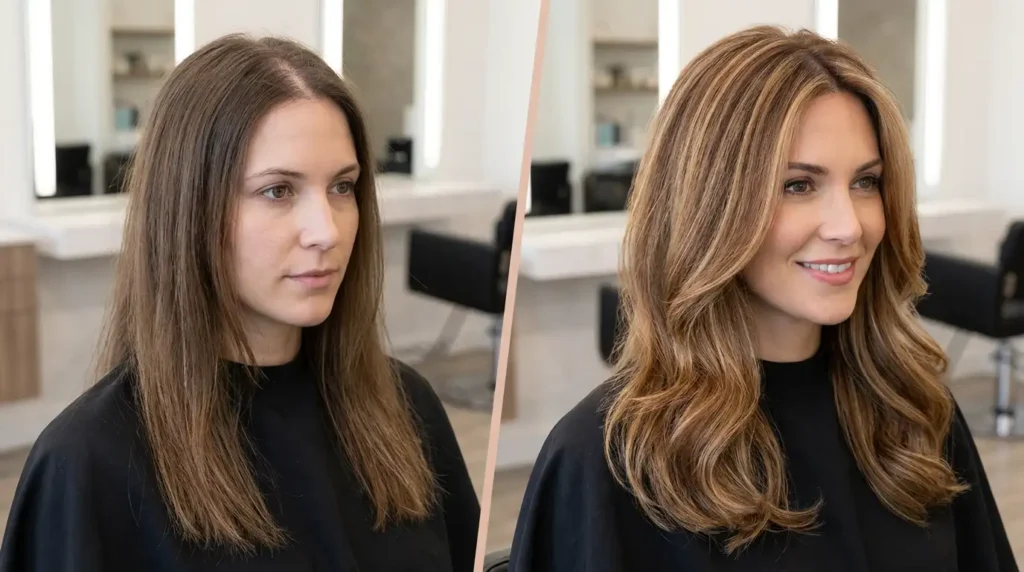
The color process itself actually expands the hair shaft slightly, making each strand appear thicker. That’s why colored hair often looks fuller than virgin hair. However, the wrong technique or shade can backfire dramatically.
For instance, harsh contrast between your hair and scalp makes thinning areas more obvious. If you have pale skin and jet black hair, every bit of scalp show-through becomes immediately noticeable. Similarly, over-bleached platinum blonde on dark roots creates a stark line that screams “thinning” rather than “trendy.”
In my experience, the best hair color for thin hair works with your natural coloring while creating optical illusions of depth and dimension.
The Science Behind Color and Volume Perception
Light reflects differently off various hair colors, and professional colorists use this to their advantage. Multi-dimensional color (think highlights, lowlights, and varying tones) creates shadows and depth that trick the eye into seeing more hair than actually exists.
This technique, called hair contouring, uses lighter and darker shades strategically placed to add visual volume. Dark colors create shadows (making areas recede), while light colors catch the light (making areas appear fuller). When done correctly, this can make your hair look up to 40% fuller.
For even more inspiration, these dimensional highlight ideas show exactly how multi-tonal color creates the illusion of thicker, fuller hair.
Best Hair Colors for Thin Hair: Specific Shades That Actually Work
1. Warm Honey Blonde

Honey blonde is one of the most flattering shades for thin hair, and there’s science behind it. This warm, golden tone reflects light beautifully without washing out your complexion or making your scalp too visible.
What I love about this shade is its versatility. It works particularly well when blended into a darker base—like warm brunette—creating natural dimension. The warm undertones give hair that healthy, sun-kissed glow that makes it look naturally fuller.
If you have pale or cool-toned skin, opt for a neutral honey blonde rather than overly golden tones to avoid looking washed out.
If you love warm honey tones, you’ll also want to explore these honey brown balayage ideas for short hair—they’re especially flattering for fine and thin hair.
2. Rich Chocolate Brown
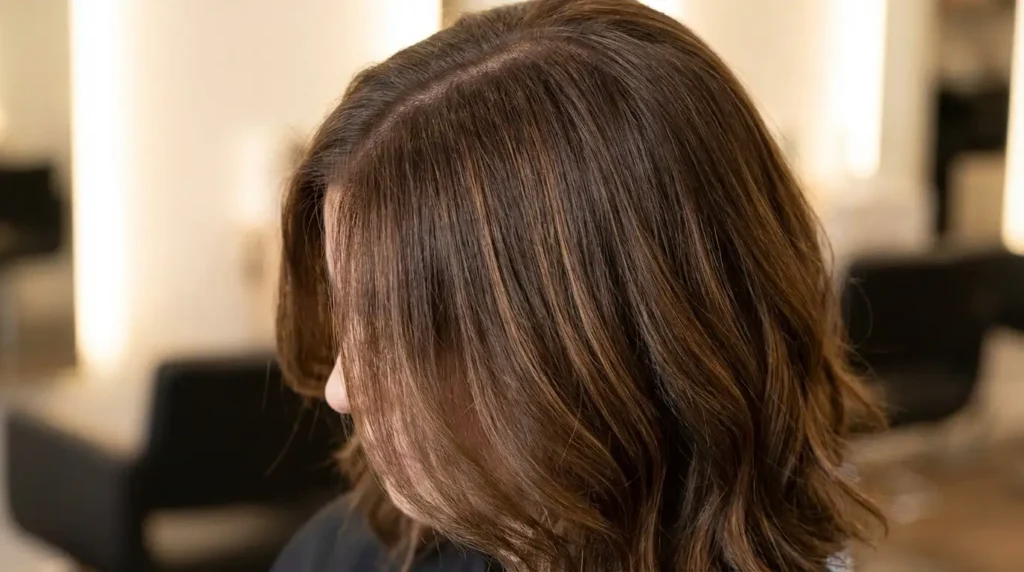
For brunettes, chocolate brown is a solid foundation color. It looks naturally healthy, adds shine, and isn’t as harsh as jet black (which can make your scalp painfully noticeable).
The key is asking for some caramel or toffee highlights to add warmth and movement. A single-process dark brown can look flat and heavy on thin hair, but when you add dimension with lighter pieces, suddenly your hair has life and apparent volume.
Professional colorists often recommend keeping brunette shades slightly lighter than you might initially choose—this makes hair look fuller without sacrificing that rich, dark aesthetic you’re after.
3. Neutral to Warm Blonde Variations
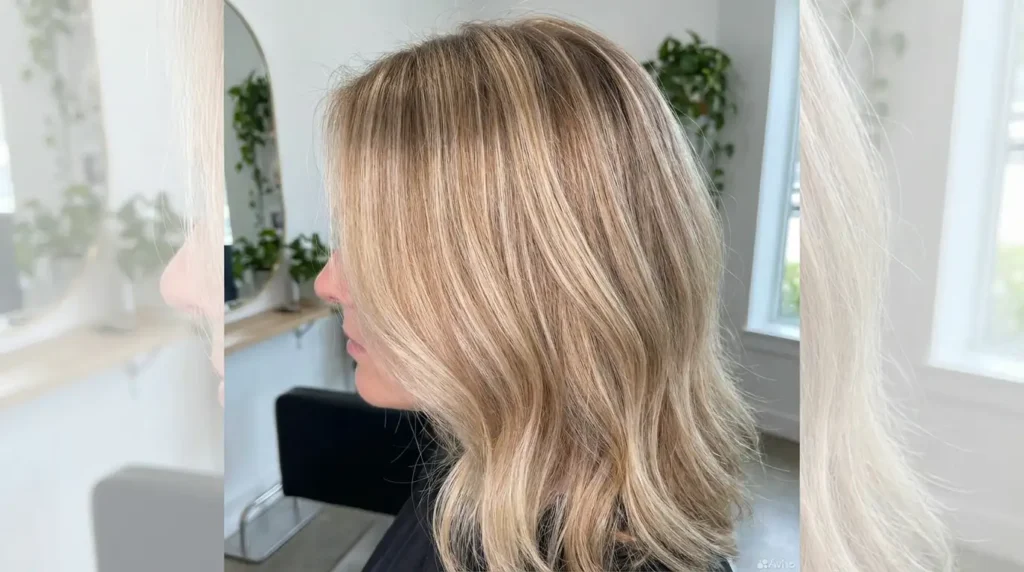
Going lighter can absolutely work for thin hair, but there’s a catch: you need to stay within the warm to neutral spectrum. Icy, cool-toned platinum can make hair look flat, dull, and even more see-through.
Warm, soft blondes or light browns strike that perfect balance between brightness and body. They catch the light beautifully while still providing enough contrast with your scalp to hide thinning areas.
I’d recommend avoiding full-head bleach if your hair is already fragile. Instead, opt for partial highlights or balayage that leave some of your natural base intact.
4. Caramel and Toffee Tones

These warm, mid-range shades are absolute winners for hair color for thin hair. Whether you’re blonde, brunette, or somewhere in between, caramel and toffee tones add richness without overwhelming your face.
They blend beautifully with various skin tones and don’t create harsh root lines as they grow out. Plus, these shades have enough warmth to reflect light while still providing definition and dimension.
5. Soft Auburn and Copper
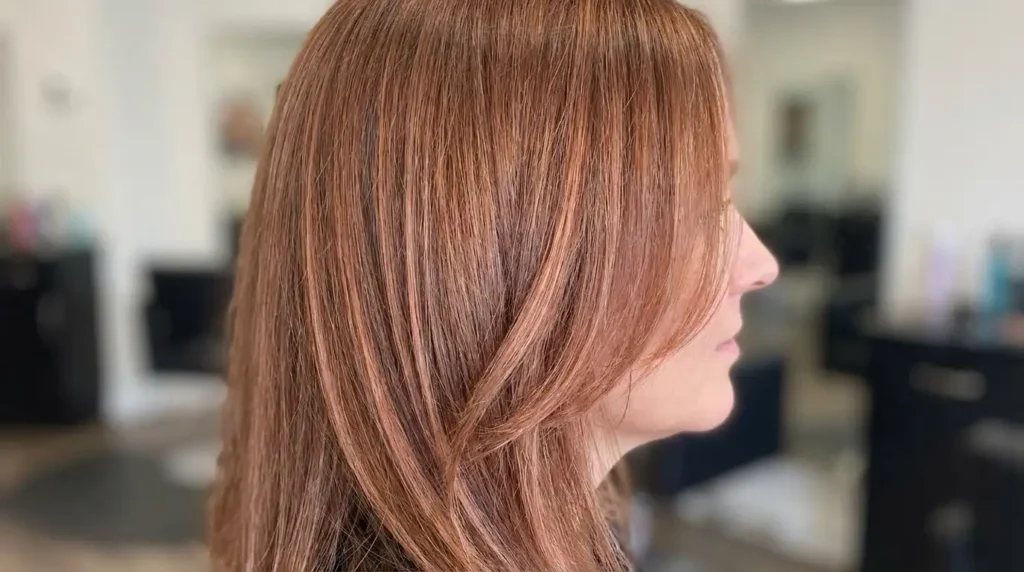
If you’re feeling a bit adventurous, auburn or soft copper tones can make fine hair pop without looking harsh. These shades add warmth, catch the light beautifully, and create the illusion of thickness when paired with the right cut.
The key word here is “soft.” Going too bold or too red can veer into cartoon territory and actually draw attention to thin areas. A subtle auburn gloss or copper balayage, however, can be absolutely stunning.
What’s great about red-based colors is that they naturally reflect more light than other shades, which helps create that coveted appearance of fullness.
6. Muted Dark Blonde

This underrated shade sits between light brown and blonde—what some people call “bronde.” It’s lighter than brunette but not quite blonde, making it one of the lowest-maintenance options.
Muted dark blonde adds the illusion of density without requiring frequent touch-ups. Ask your stylist for a shadow root to create depth at the root area for that desirable 3D effect.
Hair Color Techniques That Create Volume
Choosing the right shade is only half the battle. How that color is applied makes an enormous difference in the final result. Let’s talk about specific hair color for thin hair techniques that professional colorists swear by.
Balayage: The Hand-Painted Magic

Balayage is one of the absolute best techniques for thin hair. Instead of traditional foil highlighting that can create harsh lines, balayage involves hand-painting color onto the hair for a soft, natural gradient.
Why it works for thin hair: The gradual color transition creates depth without harsh demarcation lines. As your hair grows, the roots blend naturally, so you can go longer between appointments—which means less processing and less damage to already-fragile hair.
The technique adds dimension by placing lighter pieces strategically throughout your hair, typically concentrating the lightest tones around the face and ends. This draws the eye to the length and movement rather than the scalp.
Babylights: Micro-Fine Perfection

Think of babylights as the delicate, subtle cousin of traditional highlights. These ultra-fine highlights mimic the soft, natural dimension found in children’s hair (hence the name).
For thin hair, babylights are brilliant because they create texture and visual fullness without overwhelming delicate strands. They’re typically woven very thinly and placed throughout the hair, creating a soft halo of light that makes hair look naturally thicker.
A skilled colorist can place babylights anywhere from half a shade to three shades lighter than your base color, immediately building tons of visual volume throughout your hair.
Highlights and Lowlights: The Dynamic Duo

If your hair’s looking flat, combining highlights with lowlights is one of the best tricks in the book. This technique creates contrast and dimension that makes hair appear layered and full.
Highlights are lighter pieces that catch the light, while lowlights are darker strands that create shadow and depth. The contrast between these tones tricks the eye into seeing more volume and body than actually exists.
Make sure the colors are well-blended to avoid that stripey, outdated look. Modern application techniques create soft, seamless transitions between tones.
Shadow Roots: Low-Maintenance Dimension

Shadow roots (also called root shadowing or root smudging) involve applying a slightly darker color at the roots that gradually blends into your lighter lengths. This technique has multiple benefits for thin hair:
First, it creates instant depth and the illusion of volume right where you need it most—at the scalp. That subtle shadow makes your hair look fuller at the roots.
Second, it’s incredibly low-maintenance. As your natural hair grows, there’s no harsh line of demarcation. Your color stays beautiful for longer, meaning fewer salon visits and less processing damage.
Third, it allows you to go lighter on your ends without the high-maintenance upkeep that typically comes with light hair colors.
Face-Framing Highlights
Sometimes you don’t need full-head color—just strategic placement makes all the difference. Face-framing highlights brighten your look while creating the illusion of thicker hair near your part and temples.
This is especially helpful if your hair is thinning around the crown or hairline. A few well-placed light strands around your face can work wonders, especially when paired with a side part to maximize volume up front.
Pairing face-framing highlights with the right cut makes a huge difference—these side part haircuts are especially helpful for adding instant volume to thin hair.

Hair Contouring: The Advanced Technique
Remember how I mentioned hair contouring earlier? This advanced hair color for thin hair technique deserves its own section because it’s truly transformative.
Hair contouring works just like makeup contouring: light colors bring areas forward, dark colors make them recede. A skilled colorist places colors strategically based on your face shape and hair density patterns.
For example, if you have thinning at the crown, your colorist might place a horizontal layer of darker color an inch or two below your part (where a small crown would sit). Then they’d add highlights on top of this darker layer. The contrast creates the appearance of fullness right where you need it.
Worst Hair Colors for Thin Hair (What to Avoid)

Just as important as knowing what works is understanding what doesn’t. These hair color for thin hair mistakes can actually make your situation worse:
All-Over Single Color
A single, flat color is usually not your friend when you have thin hair. Why? Because it lacks dimension, making your hair look one-dimensional and flat, even if it’s freshly styled.
All-over color is also high-maintenance. If you can’t visit the salon often enough to keep it fresh, you’ll end up with faded, grown-out color that’s particularly unflattering on thinning hair.
Jet Black (Usually)
Jet black can be stunning, but on thin hair, it often does more harm than good. The dark color creates maximum contrast with your scalp, making every bit of thinning painfully obvious.
Additionally, true black reflects less light than softer shades, which can make hair seem flatter than it is. If you love dark hair, consider soft black or dark brown with warm undertones instead. The slight warmth gives more visual softness and shine.
Over-Bleached Platinum
If your hair is already thin or fragile, heavy bleaching is one of the fastest ways to make things worse. Bleach is incredibly damaging—it strips away the hair’s natural protein structure, leading to breakage, split ends, and further thinning.
Over-bleached hair often looks see-through and wispy, which is the opposite of what you want. If you’re determined to go very light, work with a professional who can minimize damage and consider options like partial highlights rather than all-over bleach.
Cool Ash Tones Without Balance
Cool-toned colors like ash blonde or ash brown can sometimes make fine hair look flat and dull. These shades lack the warmth that gives hair that healthy, light-reflecting boost.
That said, if you absolutely love ashy tones, balance them with some warmer lowlights or a glossing treatment. The combination prevents your color from looking too one-dimensional or washed out.
Strong Ombré or Dip-Dye
While beautiful on thick hair, strong ombré effects (especially with a distinct dark-to-light line) can actually draw attention to thin hair. The harsh contrast between dark roots and light ends makes dimensionless tips more obvious.
If you love the surfer look, go for a very soft version (sometimes called “sombré” or lived-in color) where the transition is gradual and subtle.
Safest Hair Dye Ingredients for Thin Hair
Let’s talk about what’s actually in your hair dye, because this matters tremendously when your hair is already fragile. The right ingredients can strengthen and condition while coloring; the wrong ones can accelerate thinning and damage.
Ingredients to Look For
Keratin: This naturally occurring protein is what hair is made of. Quality hair dyes include additional keratin to strengthen and fortify hair, restoring elasticity and helping prevent breakage.
Argan Oil: Rich in antioxidants, vitamin E, and essential fatty acids, argan oil nourishes and moisturizes hair during the coloring process. It helps maintain hair’s natural moisture balance, leaving it feeling silky rather than stripped.
Ginseng Root Extract: This ingredient has been shown to improve scalp circulation and may even support healthier hair growth. In hair dye formulations, it adds nourishing properties.
Coconut Oil and Aloe Vera: These natural moisturizers help protect hair from the drying effects of coloring. They condition strands and soothe the scalp.
Bond Builders: Some modern hair dyes include bond-building technology that helps protect and repair the inner structure of hair strands during coloring. These are game-changers for thin, fragile hair.
Ingredients to Avoid
Ammonia: While effective at opening the hair cuticle to allow color penetration, ammonia is harsh and has that distinctive, unpleasant smell. Over time, it leads to dry, damaged hair and can irritate the scalp and respiratory system.
PPD (P-phenylenediamine): This chemical sensitizer can cause severe allergic reactions, ranging from itchiness and redness to life-threatening anaphylaxis. Many safer dyes eliminate PPD entirely.
Resorcinol: This chemical can be harsh on both hair and scalp, potentially causing irritation and sensitivity over time.
Parabens: These preservatives have been linked to various health concerns and can cause scalp irritation in sensitive individuals.
SLS (Sodium Lauryl Sulfate): This surfactant strips protein from hair and depletes beneficial protective oils. It can also contribute to color fade and scalp irritation.
High Levels of Peroxide: While some peroxide is necessary for permanent color, excessive amounts can severely dry out and damage hair, especially when it’s already thin.
Safest Hair Dye Brands for Thinning Hair
Based on extensive research and professional recommendations, these brands formulate their dyes with hair color for thin hair in mind:
Madison Reed: Free from ammonia, PPD, resorcinol, parabens, phthalates, and gluten. Contains keratin, argan oil, and ginseng root extract.
Tints of Nature: Uses 75% certified organic and 95% naturally derived ingredients. Ammonia-free and PPD-free.
Clairol Natural Instincts: Ammonia-free semi-permanent color with coconut oil and aloe vera. Available in 35+ shades.
L’Oréal Paris Excellence Crème: Ammonia-free options embedded with pro-keratin for strengthening.
Revlon ColorSilk: Ammonia-free with 3D color gel technology and silk protein after-color conditioner.
Garnier Olia: Oil-based formula that’s ammonia-free and PPD-free, providing intense hydration.
At-Home vs. Salon: Making the Right Choice
The safest option for coloring thin hair is always going to a professional colorist who understands fine and thinning hair. They can apply advanced techniques like balayage, contouring, and strategic highlighting that are nearly impossible to replicate at home.
However, I understand that salon visits aren’t always feasible—whether due to budget, time, or accessibility. If you’re coloring at home, here are expert tips to minimize damage:
At-Home Coloring Tips for Thin Hair
Do a patch test: Always test the dye on a small section of hair first. This verifies that your hair and scalp won’t have adverse reactions and shows you how the color will turn out.
Mind the timing: Hair dye works faster on fine, thin hair. It has a tendency to come out darker or more extreme if you leave it on as long as the instructions say for normal hair. Start checking earlier.
Section your hair: Divide hair into multiple sections and color small areas at a time. This ensures even, precise application—especially important for thin hair where patchiness is more obvious.
Stay close to your natural shade: Dramatic color changes require more processing, which means more damage. Stick within 1-2 shades of your natural color for the safest results.
Consider semi-permanent: If you’re nervous about damage, semi-permanent dyes are gentler options. They don’t contain ammonia and won’t cause the same level of breakage. You won’t get dramatic changes, but you will get added shine and depth.
Mix tones for dimension: Even at home, you can create dimension by using two different tones or adding highlights with a highlighting kit separate from your base color.
Maintaining Your Color Without Damaging Thin Hair
Getting the perfect hair color for thin hair is only half the battle. Maintaining it properly ensures your hair stays healthy while your color stays vibrant.
Post-Color Hair Care Essentials
Use color-safe, sulfate-free shampoos: Sulfates strip color and natural oils. Color-safe formulas preserve vibrancy while protecting your hair.
Wash with cool water: Hot water opens the hair cuticle, allowing color to escape. Cool or lukewarm water seals the cuticle, locking in color and moisture.
Deep condition weekly: Colored hair needs extra moisture. Invest in a quality deep conditioning mask or treatment designed for color-treated hair.
Limit heat styling: Heat accelerates color fade and causes damage. When you must use heat tools, always apply a heat protectant spray first.
Protect from UV: The sun’s rays fade color and damage hair. Wear hats or use hair products with UV filters when spending time outdoors.
Extend time between washes: Washing too frequently strips color. Try dry shampoo or volumizing powder between washes to maintain freshness while preserving color.
Get regular glosses: Clear or tinted glosses add shine and refresh color between dye jobs without the damage of full color processing.
Root Touch-Up Solutions
For thin hair, frequent all-over coloring accelerates damage. Instead, use these smart alternatives for maintenance:
Root touch-up spray or powder: Products like Color Wow Root Cover Up instantly cover regrowth and create the illusion of thicker hair at the part and hairline. They wash out with shampoo.
Root smudging technique: Have your colorist use this blending method so roots grow out gradually rather than creating harsh lines.
Shadow roots from the start: Build this technique into your initial color so regrowth is already part of the look.
Complete Hair Color Strategy for Maximum Fullness
| Element | Best Practice | Why It Works |
|---|---|---|
| Base Color | Stay within 2 shades of natural color | Minimizes processing damage and harsh regrowth lines |
| Technique | Balayage, babylights, or highlights + lowlights | Creates dimension that tricks eye into seeing volume |
| Tone | Warm to neutral (avoid cool ash tones alone) | Reflects more light, makes hair appear fuller |
| Root Treatment | Shadow roots or root smudging | Adds depth at scalp, reduces maintenance |
| Maintenance | Color-safe products, cool water, UV protection | Preserves color vibrancy and hair health |
| Ingredients | Ammonia-free, keratin-enriched formulas | Conditions while coloring, prevents further damage |
Additional Strategies to Make Thin Hair Look Thicker
While choosing the right hair color for thin hair is crucial, combining it with other techniques creates even more dramatic results:
The Right Haircut Makes All the Difference
Long, one-length hair makes thin hair look even thinner. The weight pulls everything down flat against your head. Better choices include:
- Blunt bobs or lobs: The sharp, even line creates the illusion of density
- Soft layers: Internal layering (not too many!) adds movement without removing bulk
- Face-framing angles: Draws attention to your features rather than thinning areas
Styling Products for Volume
Volumizing mousse or root-lifting spray: Apply to damp roots before blow-drying. These create lift without adding heavy product buildup.
Texturizing powder or spray: Adds grit and texture that makes hair look fuller. Great for refreshing second-day hair.
Hair building fibers: Products like Toppik contain electrostatically charged fibers that cling to your hair, instantly creating the appearance of thickness.
Parting Tricks
Your hair lays flat when parted in the same place every day. Switch your part to the opposite side, or try a zigzag part for instant root lift. This simple trick creates immediate volume with zero effort.
Common Questions About Hair Color for Thin Hair
Q: Will coloring my hair make it fall out?
A: Quality hair dye won’t cause hair loss directly. However, harsh chemicals and over-processing can weaken hair structure, leading to breakage. Choose gentler formulas and limit frequency to protect thin hair.
Q: How often should I color thin hair?
A: Ideally, space out full-color applications to every 6-8 weeks minimum. Use root touch-up products or strategic techniques like shadow roots to extend time between colorings.
Q: Can I go from dark to blonde with thin hair?
A: It’s risky. Going light requires heavy bleaching that damages hair. If you’re determined, work with a professional who can do it gradually over multiple sessions with bond-building treatments.
Q: Do highlights or lowlights work better for thin hair?
A: The combination works best! Highlights alone can look flat; lowlights alone can look heavy. Together, they create the dimensional contrast that makes hair look fuller.
Q: Should I use permanent or semi-permanent dye?
A: For thin hair, semi-permanent is often safer. It’s less damaging and won’t leave harsh regrowth lines. However, if you need gray coverage or dramatic changes, permanent color with gentle ingredients is your better bet.
Final Thoughts: Your Personalized Hair Color Strategy
The best hair color for thin hair isn’t one-size-fits-all. It’s about working with your natural coloring, hair texture, and lifestyle to create a sustainable color strategy that makes your hair look its absolute fullest.
Here’s your action plan:
Step 1: Determine if you want to stay close to your natural shade or go lighter/darker (remember: stay within 1-2 levels for least damage).
Step 2: Choose warm to neutral tones rather than cool ash shades for better light reflection.
Step 3: Select a dimensional technique (balayage, babylights, highlights + lowlights) rather than all-over color.
Step 4: Find a colorist experienced with thin hair, or choose a gentle at-home dye with nourishing ingredients.
Step 5: Commit to proper maintenance with color-safe products and minimal heat styling.
If you’re unsure where to start, book a consultation with a colorist who specializes in fine or thinning hair. Bring reference photos and be honest about your hair concerns. A skilled professional can assess your hair’s condition and recommend the safest, most flattering approach.
Remember, your hair doesn’t have to be thick to be beautiful. With the right hair color for thin hair strategy, you can create the illusion of fullness while keeping your hair healthy and vibrant. The key is making smart, informed choices about shade, technique, and maintenance—and now you have all the information you need to do exactly that.
Your journey to fuller-looking, healthier hair starts with that first color decision. Make it a good one.