27 Gorgeous Green Kitchen Ideas That Will Transform Your Space (2026 Guide)

Green kitchens are having a major moment, and for good reason. This versatile color brings the calming essence of nature indoors while creating a space that feels both timeless and contemporary. Whether you’re planning a complete renovation or a simple cabinet refresh, green offers endless possibilities to transform your kitchen into a stunning focal point of your home.
In this comprehensive guide, you’ll discover 27 gorgeous green kitchen ideas spanning every shade from soft sage to dramatic emerald, complete with actionable tips, specific paint colors, and budget-friendly alternatives to help you create the kitchen of your dreams.
Why Green Kitchens Are More Than Just a Trend

Green has emerged as the most requested kitchen color among interior designers, and the data backs this up. Unlike fleeting trends, green kitchens offer psychological benefits that make them particularly suited for the heart of your home.
The Science Behind Green in Kitchens:
- Reduces eye strain and promotes relaxation during meal preparation
- Connects indoor spaces with nature, creating a biophilic design effect
- Increases perceived value of homes by up to 8% according to real estate studies
- Works harmoniously with nearly every material from marble to wood
Green also offers unmatched versatility. Light greens can make small kitchens feel more spacious and airy, while deeper shades add sophistication and drama to larger spaces. The color pairs beautifully with warm metals like brass and copper, cool stainless steel, natural wood tones, and both classic white and modern black accents.
Choosing Your Perfect Shade of Green

Not all greens are created equal. The shade you select will dramatically impact your kitchen’s atmosphere, perceived size, and overall aesthetic. Here’s how to choose the right green for your space.
Light & Airy Greens (Best for Small Kitchens)
Sage Green – The most popular choice for 2025, sage offers a muted, grayish-green that feels sophisticated and calming. It reflects light beautifully and creates an airy feel even in kitchens with limited natural light.
Recommended Paint Colors:
- Sherwin Williams “Clary Sage” (SW 6178)
- Benjamin Moore “Saybrook Sage” (HC-114)
- Farrow & Ball “Vert De Terre” (234)
Mint Green – Fresh and vintage-inspired, mint brings a retro charm that works exceptionally well in cottage-style and mid-century modern kitchens.
Recommended Paint Colors:
- Benjamin Moore “Guilford Green” (HC-116)
- Sherwin Williams “Mint Condition” (SW 6743)
- Behr “Grasscloth” (PPU11-10)
Pistachio – Softer than mint but livelier than sage, pistachio creates a nurturing, gentle atmosphere perfect for family kitchens.
Recommended Paint Colors:
- Benjamin Moore “Pale Pistachio” (2035-60)
- Sherwin Williams “Liveable Green” (SW 6176)
Medium & Balanced Greens (Most Versatile)
Olive Green – Earthy and grounded, olive green brings warmth and depth without overwhelming a space. It’s particularly stunning in kitchens with wood elements and natural textures.
Recommended Paint Colors:
- Sherwin Williams “Olive Grove” (SW 7734)
- Benjamin Moore “Rosemary Sprig” (2144-30)
- Farrow & Ball “Olive” (13)
Hunter Green – Classic and refined, hunter green walks the line between traditional and contemporary. It pairs beautifully with brass hardware and marble countertops.
Recommended Paint Colors:
- Benjamin Moore “Hunter Green” (2041-10)
- Sherwin Williams “Hunt Club” (SW 6468)
Dark & Dramatic Greens (Statement-Making)
Forest Green – Rich and moody, forest green creates an intimate, jewel-box effect that’s perfect for larger kitchens with ample natural light.
Recommended Paint Colors:
- Sherwin Williams “Evergreens” (SW 2743)
- Benjamin Moore “Forest Green” (2047-10)
- Farrow & Ball “Studio Green” (93)
Emerald Green – Bold and luxurious, emerald makes a powerful statement. This shade requires confidence but delivers maximum impact.
Recommended Paint Colors:
- Benjamin Moore “Deep Green” (2039-10)
- Sherwin Williams “Billiard Green” (SW 0016)
- Farrow & Ball “Emerald Green” (W54)
Quick Reference: Matching Green Shades to Kitchen Size & Light
| Kitchen Characteristics | Best Green Shades | Avoid |
|---|---|---|
| Small, limited natural light | Sage, mint, pistachio, pale olive | Forest, emerald, very dark greens |
| Medium, moderate light | Olive, hunter, medium sage | Extremely pale or extremely dark |
| Large, abundant light | Any shade, especially forest, emerald | None – experiment freely |
| North-facing (cool light) | Warm-toned greens: olive, sage with yellow undertones | Cool mint, blue-greens |
| South-facing (warm light) | Cool-toned greens: sage, sea foam, blue-greens | Very yellow-based greens |
27 Gorgeous Green Kitchen Ideas to Inspire Your Design
Sage Green Kitchen Ideas

1. Soft Sage Shaker Cabinets with Brass Hardware
The quintessential modern farmhouse look, sage shaker cabinets create a serene foundation that works with virtually any countertop material. The clean lines of shaker-style doors keep the look timeless while sage adds just enough color to prevent the kitchen from feeling sterile.
How to Achieve This Look:
- Paint cabinets in Sherwin Williams “Clary Sage” or similar
- Install antique brass cup pulls and knobs (consider Rejuvenation or Schoolhouse Electric)
- Pair with white quartz countertops like Caesarstone “Pure White” or quartzite for more natural variation
- Add a white subway tile backsplash with gray grout for subtle contrast
- Include natural wood floating shelves for warmth
Budget Breakdown:
- DIY cabinet painting: $200-400
- Professional cabinet painting: $2,000-4,000
- Brass hardware: $5-15 per pull, $3-8 per knob
- Total estimate (DIY): $500-1,500 | (Professional): $3,000-6,000
2. Two-Toned Sage and White Kitchen
Create visual interest by painting lower cabinets in sage while keeping upper cabinets white or cream. This approach adds color without overwhelming the space and makes ceilings appear higher.
Design Tips:
- Use sage on base cabinets and island
- Paint upper cabinets in Benjamin Moore “White Dove” or “Simply White”
- Add a complementary backsplash that bridges both colors (cream zellige tile works beautifully)
- Consider a wood or butcher block island top for added warmth
3. Sage Green Open Shelving with Natural Wood
For a more casual, lived-in feel, combine sage painted walls or lower cabinets with natural wood open shelving. This creates an organic, collected look perfect for displaying ceramics and plants.
Implementation Strategy:
- Paint walls or lower cabinets sage
- Install white oak or walnut floating shelves
- Mix in rattan, wicker, or woven baskets for texture
- Display a mix of practical items (dishes, glasses) with decorative pieces (plants, cookbooks)
Emerald Green Kitchen Ideas
4. Moody Emerald Cabinets with Gold Accents
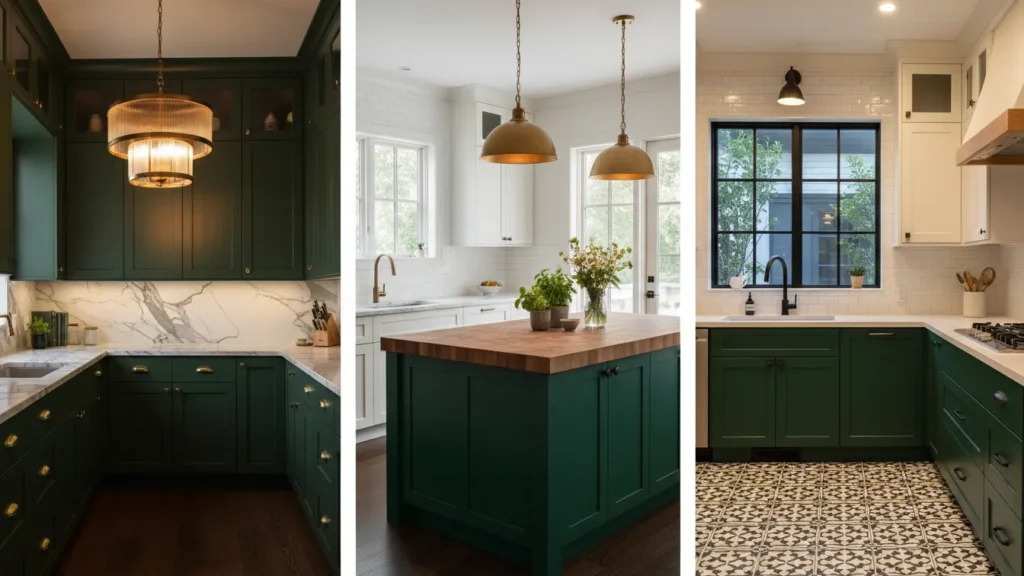
For those who love drama, emerald cabinets create a jewel-box effect that’s undeniably luxurious. The key is balancing the intensity with lighter elements and warm metallics.
Essential Elements:
- Deep emerald cabinets in a satin or semi-gloss finish
- Unlacquered brass or gold hardware that will develop a patina over time
- Light countertops (white marble, quartzite, or light quartz) to prevent the space from feeling too dark
- Adequate lighting – this look requires excellent task and ambient lighting
- Consider glass-front uppers to break up the solid color
Best Paired With:
- Calacatta or Statuario marble
- Warm wood floors in medium to dark tones
- Brass or gold light fixtures
- Natural fiber rugs for texture
5. Emerald Island as a Statement Piece
Not ready to commit to full emerald cabinets? Make your island the star by painting it emerald while keeping perimeter cabinets neutral.
Design Formula:
- White, cream, or light gray perimeter cabinets
- Emerald painted island
- Brass or black hardware throughout for cohesion
- Butcher block or marble island top
- Pendant lights that draw the eye to the island
6. Emerald with Black and White Contrast
Create a sophisticated, high-contrast look by combining emerald with black window frames, black hardware, and white walls.
Key Components:
- Emerald lower cabinets
- White or cream upper cabinets (or none for an open feel)
- Matte black window frames and door frames
- Black hardware and light fixtures
- White subway or zellige tile backsplash
- Black and white patterned floor tile for added drama
Olive Green Kitchen Ideas
7. Olive Green Cottage Kitchen with Farmhouse Sink
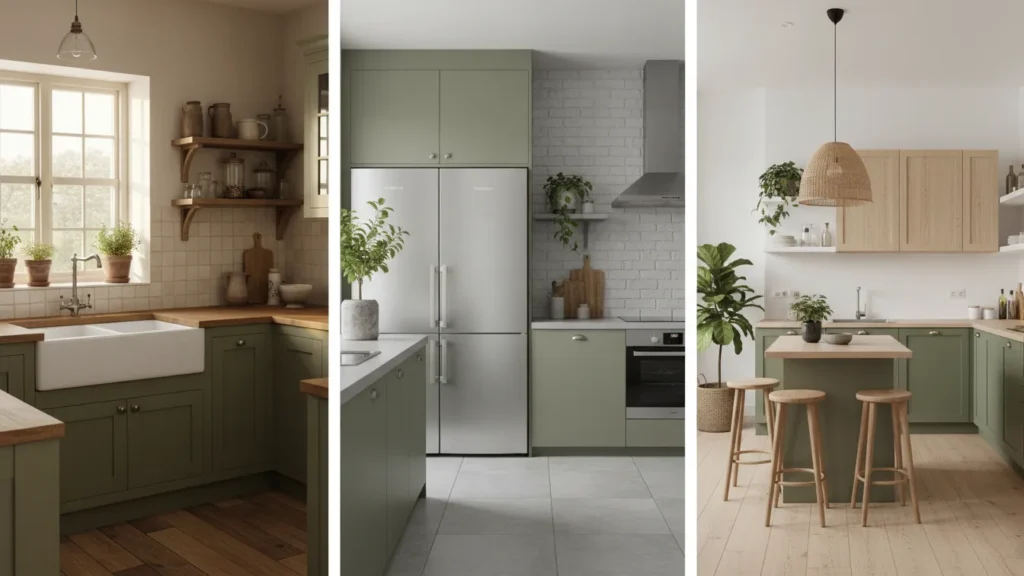
Olive green brings an earthy, grounded quality perfect for cottage and country-style kitchens. It pairs beautifully with apron-front sinks and traditional details.
Design Recipe:
- Olive green cabinets with inset or shaker doors
- White fireclay farmhouse sink (Kohler Whitehaven or IKEA Havsen for budget)
- Butcher block countertops for warmth
- White or cream zellige tile backsplash
- Oil-rubbed bronze or aged brass hardware
- Open upper shelving to display dishes
8. Modern Olive with Concrete Countertops
Take olive in a more contemporary direction by pairing it with industrial elements like concrete or soapstone countertops.
Contemporary Elements:
- Flat-panel olive cabinets for clean lines
- Polished concrete or leathered granite countertops
- Minimal or integrated hardware (consider push-to-open cabinets)
- Stainless steel appliances
- Simple white tile or even painted brick backsplash
- Concrete or large-format tile flooring
9. Olive and Natural Wood Fusion
Celebrate organic materials by combining olive cabinets with extensive wood elements for a Scandinavian-inspired look.
Natural Elements to Include:
- Olive painted cabinets on lowers
- Natural wood uppers (white oak is ideal)
- Wood countertops or wood-look quartz
- Light wood floors
- Wooden bar stools
- Woven pendant lights
- Abundant plants
Mint Green Kitchen Ideas
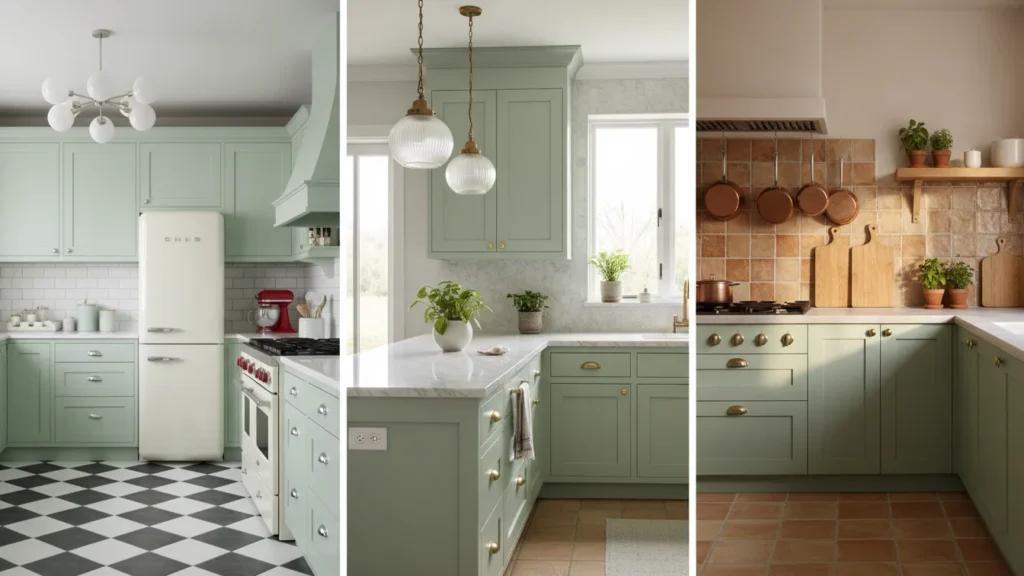
10. Retro Mint Kitchen with Checkerboard Floor
Embrace vintage charm with a playful mint kitchen that nods to the 1950s without feeling like a time capsule.
Retro Elements Done Right:
- Mint cabinets with chrome or nickel hardware
- Black and white checkerboard floor tile
- White subway tile with contrasting grout
- Vintage-inspired appliances (Big Chill or BlueStar offer colorful options)
- Chrome light fixtures
- Display vintage pyrex or colorful dishware on open shelving
11. Soft Mint with Marble and Brass
Elevate mint from retro to refined by pairing it with luxurious materials like marble and brass.
Upscale Approach:
- Soft mint cabinets in a quality finish
- White marble countertops with subtle veining
- Brass hardware and fixtures
- White or cream zellige or handmade tile backsplash
- Brass or glass pendant lights
- Incorporate plants and natural elements
12. Mint and Terracotta Warmth
Create an unexpected but delightful combination by pairing cool mint with warm terracotta tones.
Color Palette:
- Mint cabinets
- Terracotta tile backsplash or terracotta accents
- Warm wood tones
- Cream or white countertops
- Copper or brass accents
- Terra cotta pots for plants
Forest Green Kitchen Ideas

13. Forest Green with White Marble Drama
Dark forest green cabinets create the perfect backdrop for dramatic white marble with heavy veining.
Luxe Materials:
- Forest green cabinets floor to ceiling
- White marble with dramatic veining (Calacatta Viola, Arabescato, or affordable quartz alternatives)
- Brass or unlacquered brass hardware
- Under-cabinet lighting to illuminate the marble
- Glass-front uppers or open shelving to prevent heaviness
- Light-colored floors to balance the dark cabinets
14. Forest Green Cottage with Exposed Brick
Combine forest green with rustic exposed brick for a cozy, characterful kitchen perfect for older homes.
Rustic Charm Elements:
- Forest green cabinets
- Exposed brick wall or brick backsplash (paint existing brick if needed)
- Butcher block or wood countertops
- Open shelving with reclaimed wood
- Vintage or antique lighting
- Traditional hardware in brass or black
15. Monochromatic Forest Green
For maximum impact, take green throughout the space – cabinets, walls, even ceiling – in varying tones of forest green.
Monochromatic Strategy:
- Darkest forest green on cabinets
- Slightly lighter shade on walls
- Lightest shade on ceiling or keep ceiling white
- Break it up with natural wood, brass, and white marble or quartz
- Ensure excellent lighting throughout
- Add plenty of texture through materials and textiles
Hunter Green Kitchen Ideas

16. Traditional Hunter Green with Glass Fronts
Hunter green brings traditional elegance, especially when combined with glass-front cabinets that showcase beautiful dishware.
Classic Elements:
- Hunter green cabinets with some glass-front uppers
- White or cream marble-look countertops
- White subway tile or classic backsplash
- Polished nickel or brass hardware
- Traditional chandelier or pendant lighting
- Display beautiful china or glassware in glass cabinets
17. Hunter Green and Stainless Steel Modern
Take hunter green contemporary by pairing it with sleek stainless steel and minimalist details.
Modern Approach:
- Flat-panel hunter green cabinets
- Stainless steel countertops or appliances
- Minimal or no hardware (push-to-open)
- Simple white or gray tile backsplash
- Stainless steel or chrome lighting
- Clean lines throughout
18. Hunter Green with Soapstone Countertops
Create a sophisticated, organic look by pairing hunter green with the natural beauty of soapstone.
Natural Pairing:
- Hunter green cabinets
- Soapstone countertops (or soapstone-look quartz for easier maintenance)
- Simple backsplash or soapstone backsplash
- Oil-rubbed bronze or matte black hardware
- Natural wood floors
- Potted herbs on windowsill
Pistachio Green Kitchen Ideas

19. Pistachio Cabinets with Blush Accents
Create a soft, feminine kitchen by pairing pistachio with blush pink accents for an unexpected color story.
Soft Color Scheme:
- Pistachio cabinets
- White or cream countertops
- Blush pink walls or blush tile accents
- Brass or gold hardware
- White or cream tile backsplash
- Blush textiles (tea towels, runner)
- Cream or brass light fixtures
20. Pistachio and Natural Wood Scandinavian Style
Embrace Scandinavian simplicity with pistachio cabinets and light wood elements.
Nordic Elements:
- Pistachio lower cabinets
- Light wood uppers or open shelving
- White or light gray countertops
- Simple white tile backsplash
- Minimal hardware
- Light wood floors
- Simple pendant lights
- Lots of natural light and plants
21. Pistachio with Black Hardware and Fixtures
Add unexpected edge to soft pistachio by incorporating matte black hardware and fixtures throughout.
Contrast Strategy:
- Pistachio cabinets
- Matte black hardware on all cabinets
- Black light fixtures
- Black faucet and sink
- White or light countertops
- Simple backsplash
- The contrast creates visual interest without additional color
Mixed Green Kitchen Ideas

22. Ombre Green Cabinets
For the adventurous, create an ombre effect using multiple shades of green from light to dark.
Gradient Approach:
- Lightest green on upper cabinets
- Medium green on lower cabinets
- Darkest green on island
- Keep all other elements neutral
- Use consistent hardware throughout for cohesion
23. Green Island with White Perimeter
The most popular approach: make the island the focal point with green while keeping perimeter cabinets white or cream.
Balanced Design:
- White or cream perimeter cabinets
- Green island in your chosen shade
- Can use different countertop on island for added interest
- Consistent hardware throughout
- Backsplash that complements both colors
24. Patterned Green Tile Backsplash with Neutral Cabinets
Not ready for green cabinets? Incorporate green through a stunning tile backsplash instead.
Tile-Focused Approach:
- Neutral cabinets (white, cream, gray, or wood)
- Green patterned tile backsplash (zellige, encaustic, or hand-painted)
- Hardware that picks up tones from the tile
- Simple countertops that don’t compete
- This allows for bold pattern without overwhelming commitment
Green Kitchen Accent Ideas

25. Green Walls with Wood Cabinets
Paint walls green while keeping natural wood cabinets for an organic, forest-inspired feel.
Natural Materials Focus:
- Green walls in your chosen shade
- Natural wood cabinets (no paint)
- Simple countertops
- Minimal backsplash or wood backsplash
- Plants and natural textiles
- Warm lighting
26. Green Lower Cabinets with Open Upper Shelving
Create an airy, modern farmhouse look with green lowers and no uppers, just floating shelves.
Open Concept Strategy:
- Green lower cabinets
- Remove upper cabinets entirely or replace with 2-3 floating shelves
- Painted or tiled backsplash area
- Display beautiful dishes, plants, and decor on shelves
- Ensures space feels open and larger
27. Green Kitchen with Terracotta and Warm Wood
Create a Mediterranean-inspired space by combining green with terracotta and warm wood tones.
Mediterranean Elements:
- Green cabinets (olive works especially well)
- Terracotta tile backsplash or floor
- Warm wood elements (cutting boards, open shelving)
- Brass or copper hardware
- Natural fiber accents
- Potted herbs and plants
- Warm, ambient lighting
Material Pairings: What Works Best with Green Kitchens
Countertop Materials
Marble – The classic pairing. White marble with gray veining looks stunning against any shade of green and adds luxury.
- Best with: Sage, emerald, hunter green
- Top choices: Carrara, Calacatta, Statuario
- Budget alternative: Quartz that mimics marble (Caesarstone, Cambria, Silestone)
Butcher Block – Warm wood countertops bring organic texture that complements green’s natural vibe.
- Best with: Olive, sage, forest green
- Wood types: Maple, walnut, cherry
- Maintenance: Requires regular oiling but develops beautiful patina
Quartz – Practical and beautiful, quartz offers the look of natural stone without the maintenance.
- Best with: All shades of green
- Top choices: White and cream colors, or colors with green veining
- Benefits: Durable, low-maintenance, wide variety of options
Soapstone – Dark, moody soapstone creates drama against green cabinets.
- Best with: Hunter, forest, emerald green
- Characteristics: Darkens over time, develops patina, naturally antibacterial
- Budget alternative: Soapstone-look quartz
Concrete – Industrial concrete brings modern edge to green kitchens.
- Best with: Olive, sage, forest green
- Finish options: Polished, matte, or textured
- Considerations: Requires sealing, can develop patina
Backsplash Materials
Subway Tile – Timeless white subway tile works with every shade of green.
- Grout color: White for classic look, gray for contrast, matching green for seamless look
- Layout options: Traditional running bond, herringbone, vertical stack
Zellige Tile – Handmade Moroccan tile adds artisanal charm and subtle variation.
- Best with: Sage, mint, pistachio green
- Colors: White, cream, or coordinating green shades
- Characteristics: Each tile is unique, creates beautiful organic look
Marble Slab – Continuous marble from countertop to backsplash creates seamless luxury.
- Best with: Emerald, hunter, sage green
- Benefits: Easy to clean, visually expands space, showcases natural beauty
Patterned Tile – Encaustic or hand-painted tile adds personality.
- Best with: Sage, olive, mint green
- Patterns: Geometric, floral, or abstract designs incorporating green
- Application: Full backsplash or as an accent band
Wood – Shiplap or wood planks create casual, cottage charm.
- Best with: Sage, olive green
- Treatment: Seal properly for kitchen use
- Style: Farmhouse, cottage, Scandinavian
Hardware and Fixture Finishes
Brass (Polished, Antique, or Unlacquered) – The most popular choice for green kitchens.
- Best with: All shades of green
- Unlacquered brass: Develops patina over time for authentic vintage look
- Polished brass: Stays shiny, more formal
- Antique brass: Pre-aged for instant vintage charm
Matte Black – Modern and dramatic, black creates strong contrast.
- Best with: Sage, pistachio, mint (creates striking contrast)
- Style: Modern, contemporary, industrial
- Application: Hardware, faucets, light fixtures
Brushed Nickel – Subtle and sophisticated, nickel is more understated than brass.
- Best with: Hunter green, forest green, emerald
- Benefits: Hides fingerprints, works with many styles
- Temperature: Cool-toned, pairs well with whites and grays
Oil-Rubbed Bronze – Rich and traditional, bronze brings warmth.
- Best with: Olive, hunter, forest green
- Style: Traditional, transitional, cottage
- Characteristics: Dark finish with bronze highlights
Chrome – Classic and clean, chrome brings vintage or modern vibes.
- Best with: Mint (retro), sage (modern)
- Style: Retro kitchens or contemporary spaces
- Benefits: Easy to clean, widely available
Flooring Options
Hardwood – Warm wood floors ground green kitchens beautifully.
- Best wood tones: Light to medium (white oak, natural oak) with any green; dark woods (walnut) with lighter greens
- Finish: Matte or satin for contemporary look
White Oak Floors – The most popular choice, white oak’s neutral tone complements any green shade.
- Stain options: Natural, light gray, or whitewash
- Benefits: Timeless, durable, works with any style
Tile – Durable and practical for kitchen floors.
- Patterns: Checkerboard (with mint), hexagon, large format
- Materials: Ceramic, porcelain, cement
- Colors: White, cream, gray, or terracotta
Concrete – Industrial concrete floors bring modern edge.
- Best with: Olive, forest, hunter green
- Finishes: Polished, stained, or sealed matte
- Benefits: Extremely durable, can include radiant heating
Style Guide: Green Kitchens by Design Aesthetic

Modern Farmhouse Green Kitchen
Key Characteristics:
- Sage or olive cabinets in shaker style
- White quartz or marble countertops
- Farmhouse sink
- Mixed metals (brass and black)
- Shiplap or subway tile backsplash
- Open shelving
- Industrial or vintage-inspired lighting
- Natural wood accents
Traditional Green Kitchen
Key Characteristics:
- Hunter or forest green cabinets with raised panel doors
- White marble countertops
- Glass-front upper cabinets
- All brass hardware
- Classic backsplash (subway tile or marble)
- Crown molding and decorative details
- Traditional chandelier or pendant lights
- Symmetrical design
Contemporary Green Kitchen
Key Characteristics:
- Emerald or sage cabinets with flat-panel doors
- Minimal or integrated hardware
- Quartz or concrete countertops
- Simple, clean-lined backsplash
- Sleek appliances
- Modern lighting
- Mixed materials (metal, glass, stone)
- Asymmetrical design
Once the big pieces are in place, you can style your kitchen like a boutique café with cozy lighting, pretty mugs, and small styling details that make your green cabinets feel intentionally designed, not just painted.
Cottage/Country Green Kitchen
Key Characteristics:
- Soft sage or mint cabinets
- Butcher block or marble countertops
- Apron-front sink
- Beadboard or tongue-and-groove details
- Vintage or antique hardware
- Open shelving with displayed dishes
- Natural textures (wood, wicker, linen)
- Casual, collected feel
If you’re leaning into that soft, romantic look, these French country kitchen ideas pair beautifully with sage or olive cabinets and help you pull the whole style together.
Scandinavian Green Kitchen
Key Characteristics:
- Pistachio or sage cabinets
- Light wood elements throughout
- White or light gray countertops
- Minimal hardware
- Simple white tile
- Abundant natural light
- Clean lines
- Functional, uncluttered design
Industrial Green Kitchen
Key Characteristics:
- Olive or forest green cabinets
- Concrete or soapstone countertops
- Minimal or metal hardware
- Exposed brick or concrete backsplash
- Metal shelving
- Edison bulb or metal lighting
- Stainless steel appliances
- Raw, honest materials
Practical Considerations: Making Your Green Kitchen Work
Lighting Your Green Kitchen
Green can absorb light, especially darker shades, so proper lighting is crucial.
Layered Lighting Approach:
Ambient Lighting:
- Recessed ceiling lights on dimmer switches
- Flush mount or semi-flush ceiling fixtures
- Under-cabinet lighting that also serves as task light
Task Lighting:
- Under-cabinet LED strips (critical for green kitchens)
- Pendant lights over island or peninsula
- Focused lighting over sink area
Accent Lighting:
- Interior cabinet lighting for glass-front cabinets
- Toe-kick lighting for modern touch
- Display lighting for open shelving
Lighting Temperature:
- Warm white (2700-3000K) brings out yellow undertones in olive and sage
- Bright white (3500-4100K) keeps cooler greens fresh
- Daylight (5000K+) can make some greens look muddy – test first
Natural Light Considerations:
- North-facing kitchens: Choose warmer greens (olive, sage with yellow undertones)
- South-facing kitchens: Any shade works, cooler greens stay fresh
- East/West-facing: Test paint samples at different times of day
- Limited natural light: Stick with lighter greens and maximize artificial lighting
Paint vs. Professionally Painted vs. New Cabinets
DIY Cabinet Painting
Pros:
- Most budget-friendly option ($200-500)
- Complete control over timeline
- Satisfaction of DIY project
Cons:
- Time-intensive (2-4 weeks for proper process)
- Requires proper prep for durability
- Learning curve for spray painting
- Limited space during project
Best for: Budget-conscious homeowners willing to invest time
Professional Cabinet Painting
Pros:
- High-quality, durable finish
- Done correctly with proper equipment
- Usually completed in 5-10 days
- Warranty typically included
Cons:
- More expensive ($2,000-6,000 average)
- Kitchen out of commission during work
- Finding quality painter crucial
Cost: $2,000-6,000 depending on kitchen size and cabinet complexity
Best for: Those wanting transformation without full renovation
New Green Cabinets
Pros:
- Fresh start with modern features
- Can change layout and configuration
- Latest cabinet technology and materials
- Longest-lasting option
Cons:
- Most expensive option ($8,000-30,000+)
- Longest timeline
- Most disruptive to daily life
Cost: $8,000-30,000+ depending on quality and size
Best for: Full renovations or kitchens needing structural updates
Best Paint Products for Green Kitchen Cabinets
Top-Rated Cabinet Paints:
Premium Options:
- Benjamin Moore Advance ($55-65/gallon) – Self-leveling, ultra-durable, beautiful finish
- Sherwin Williams Emerald Urethane ($85-95/gallon) – Extremely hard finish, excellent coverage
- Farrow & Ball Modern Eggshell ($110-125/gallon) – Luxury finish, incredible depth of color
Quality Mid-Range:
- Benjamin Moore Cabinet Coat ($45-55/gallon) – Good durability, easy application
- Sherwin Williams ProClassic ($50-60/gallon) – Professional favorite, reliable results
Budget-Friendly:
- Benjamin Moore Aura ($70-80/gallon) – One coat coverage often possible
- Behr Premium Plus Ultra ($35-45/gallon) – Good results with proper prep
Application Tips:
- Always use a bonding primer first (KILZ, Zinsser, or BIN)
- Apply 2-3 thin coats rather than one thick coat
- Sand lightly between coats (320-grit)
- Use foam roller or spray for smoothest finish
- Allow proper cure time (30 days) before heavy use
Maintaining Your Green Kitchen
Cabinet Care:
- Clean with soft cloth and mild soap solution
- Avoid harsh chemicals that can strip finish
- Dry immediately after cleaning
- Touch up chips promptly to prevent moisture damage
- Recoat every 5-7 years in high-traffic areas
Preventing Color Fade:
- Use window treatments to limit direct sunlight
- Choose UV-resistant paint when possible
- Keep cabinets away from heat sources
- Clean regularly to prevent buildup that dulls color
When to Repaint:
- Visible wear on high-touch areas
- Color has faded or changed
- Chips or scratches become numerous
- You’re ready for a color change
- Typically every 7-10 years with proper care
Once your cabinets are freshly painted, it’s the perfect time to organize kitchen cabinets so the inside feels just as calm and intentional as the new green color on the outside.
Budget Breakdown: Green Kitchen Transformation Costs
Budget-Friendly Green Kitchen Refresh ($500-2,000)
What You Can Do:
- DIY cabinet painting
- New hardware
- Peel-and-stick backsplash or painted backsplash
- Updated lighting
- New accessories
Breakdown:
- Paint and supplies: $300-500
- Hardware: $100-300
- Backsplash: $50-200
- Light fixture: $50-500
- Accessories: $100-300
- Total: $600-1,800
Budget Breakdown: Green Kitchen Transformation Costs (Continued)
Mid-Range Green Kitchen Renovation ($2,000-8,000)
What You Can Do:
- Professional cabinet painting or refacing
- Quality hardware upgrade
- Real tile backsplash installation
- New countertops (laminate or budget quartz)
- Updated lighting fixtures
- New sink and faucet
- Professional design consultation
Breakdown:
- Professional cabinet painting: $2,000-4,000
- Hardware (quality brass/black): $300-600
- Tile backsplash (materials + install): $800-2,000
- Countertops (laminate or budget quartz): $1,500-3,500
- Lighting: $200-800
- Sink and faucet: $300-800
- Design consultation: $200-500
- Total: $5,300-12,200
Best Value Moves:
- Professional painting gives you that flawless finish
- Invest in quality hardware – it’s the “jewelry” of your kitchen
- Choose quartz over marble for durability and lower maintenance
- Splurge on one statement light fixture
Luxury Green Kitchen Renovation ($10,000-30,000+)
What You Can Do:
- Custom new cabinetry in green
- Premium countertops (marble, quartzite)
- Designer tile or slab backsplash
- High-end appliances
- Custom lighting design
- Luxury hardware and fixtures
- Professional interior designer
- Structural changes if needed
Breakdown:
- Custom cabinets: $8,000-20,000+
- Premium countertops: $3,000-8,000
- Designer backsplash: $1,500-5,000
- Appliances: $3,000-10,000+
- Lighting package: $1,000-3,000
- Luxury hardware/fixtures: $800-2,000
- Interior designer: $2,000-8,000
- Installation and labor: $3,000-8,000
- Total: $22,300-64,000+
Where to Splurge:
- Custom cabinetry with soft-close mechanisms and custom features
- Real marble or quartzite countertops
- Unlacquered brass hardware that develops patina
- Statement lighting that becomes art
- Professional design to get it right the first time
Cost-Saving Tips Without Sacrificing Style
Strategic Spending:
- Paint existing cabinets instead of replacing (saves $5,000-15,000)
- Mix materials – marble on island, quartz on perimeter (saves $1,000-3,000)
- DIY the backsplash if you’re handy (saves $800-1,500)
- Shop remnant stone for smaller kitchens (saves 30-50%)
- Buy hardware in bulk from wholesale suppliers (saves 40-60%)
Splurge vs. Save Guide:
| Splurge On | Save On |
|---|---|
| Quality paint or professional painting | Trendy accessories you’ll replace |
| Good hardware that you touch daily | Decorative items |
| Durable countertops | Backsplash (can DIY or use affordable tile) |
| Professional installation of permanent fixtures | Labor you can safely DIY |
| Statement lighting | Basic recessed lights (choose affordable) |
Common Mistakes to Avoid with Green Kitchens
Mistake #1: Not Testing Paint Samples
The Problem: Green is highly affected by lighting and can look completely different in your space than on a paint chip or online.
The Solution:
- Order sample pots of at least 3-5 shades
- Paint large poster boards (2′ x 2′ minimum) with each color
- Move samples around your kitchen throughout the day
- Observe in morning light, afternoon light, and artificial evening light
- Look at samples next to your countertops, flooring, and backsplash
- Live with samples for at least 3-5 days before deciding
Pro Tip: Paint samples on the actual cabinet doors if possible, not just on boards.
Mistake #2: Choosing Green Without Considering Undertones
The Problem: Some greens have blue, yellow, or gray undertones that can clash with your existing elements or look muddy in your lighting.
The Solution:
- Identify your existing undertones (warm vs. cool)
- Warm kitchens (honey oak, warm metals): Choose greens with yellow/olive undertones
- Cool kitchens (gray counters, stainless steel): Choose greens with blue/gray undertones
- Use the white paper test: hold white paper next to your sample to see undertones clearly
Green Undertone Guide:
- Yellow undertones: Olive, sage with warmth, chartreuse
- Blue undertones: Sea foam, teal-green, blue-green
- Gray undertones: Gray-green, muted sage, celadon
- Brown undertones: Forest green, hunter green, deep olive
Mistake #3: Going Too Dark in a Small or Dark Kitchen
The Problem: Dark greens can make small kitchens feel claustrophobic and even darker if natural light is limited.
The Solution:
- Reserve dark greens (forest, emerald, hunter) for kitchens over 150 sq ft with good natural light
- In small/dark kitchens, use dark green only on lower cabinets or island
- Keep upper cabinets white or remove them entirely
- Maximize lighting with under-cabinet lights, pendants, and recessed lighting
- Use reflective materials (marble, glossy tile, brass) to bounce light
Mistake #4: Skimping on Prep Work
The Problem: Poor preparation leads to paint that chips, peels, or looks streaky – wasting your money and effort.
The Solution:
- Clean cabinets thoroughly with TSP or degreaser
- Sand all surfaces (220-grit for existing paint, 150-grit for wood)
- Fill any holes, dents, or imperfections with wood filler
- Apply quality bonding primer (don’t skip this!)
- Use proper paint designed for cabinets
- Apply thin, even coats (2-3 coats minimum)
- Allow proper drying time between coats
- Let cure for 30 days before heavy use
Time Investment: Proper prep and painting takes 2-4 weeks – don’t rush!
Mistake #5: Ignoring the Hardware
The Problem: Cheap or mismatched hardware can make even beautiful green cabinets look cheap.
The Solution:
- Budget at least $5-15 per pull and $3-8 per knob for quality hardware
- Choose one finish and stick with it throughout (brass OR black, not both)
- Consider the style: traditional kitchens need traditional hardware, modern needs sleek pulls
- Ensure proper sizing: measure existing holes or be prepared to fill and redrill
- Buy a few extra pieces for future needs
Hardware Scale Guide:
- Small cabinets (12-18″): 3-4″ pulls or knobs
- Medium cabinets (18-24″): 5-6″ pulls
- Large cabinets/drawers (24″+): 8-12″ pulls
- Oversized drawers: Consider two pulls
Mistake #6: Forgetting About Resale Value
The Problem: While you love bold emerald, extremely bold choices might limit your buyer pool.
The Solution:
- If resale is a concern within 5 years, stick with sage, olive, or muted greens
- Keep permanent fixtures (tile, counters) neutral
- Make green the changeable element (paint, which future owners can change)
- In luxury markets, bold color is often an asset – know your market
- If you plan to stay 7+ years, choose what you love – you’ll enjoy it longer
Most Resale-Friendly Greens:
- Sage green (universally appealing)
- Soft olive (earthy and neutral)
- Gray-green (reads almost neutral)
- Muted mint (fresh but not too bold)
Mistake #7: Not Accounting for Color Shift Over Time
The Problem: Paint can fade or shift color due to UV exposure, heat, and cleaning products.
The Solution:
- Use UV-resistant paint formulas when possible
- Install window treatments to limit direct sunlight
- Keep paint can for touch-ups (note the batch number)
- Use gentle, non-abrasive cleaners
- Expect to refresh paint every 7-10 years
- Take photos of your fresh color for reference
Mistake #8: Matching Everything Too Perfectly
The Problem: Overly matched kitchens (all the same shade of green, same wood tone, etc.) can look flat and one-dimensional.
The Solution:
- Use varying shades of green (darker island, lighter uppers)
- Mix materials (wood + marble + brass)
- Incorporate different textures (matte cabinets + glossy tile)
- Add contrast with white, black, or natural wood
- Include unexpected elements (copper pot rack, vintage rug)
The Rule of Three: Use at least three different materials/finishes for visual interest.
Green Kitchen Trends for 2025 and Beyond
Trend #1: Sage Green Everywhere
What’s Happening: Sage green has officially overtaken white and gray as the most-requested kitchen cabinet color. Its soft, sophisticated tone works in virtually any home style.
Why It’s Lasting: Unlike trendy colors that feel dated quickly, sage has historical precedent (used in colonial and Victorian homes) and connects to our desire for nature-inspired spaces.
How to Use It:
- Full sage kitchen with brass and marble
- Sage lowers with white uppers
- Sage walls with wood cabinets
- Even sage appliances are entering the market
Trend #2: Two-Toned Green Kitchens
What’s Happening: Designers are pairing two different shades of green in the same kitchen – typically a lighter shade on uppers and darker on lowers or island.
Why It Works: Creates visual interest and depth while staying in the same color family for cohesion.
Popular Combinations:
- Mint uppers + olive lowers
- Sage uppers + forest green island
- White uppers + sage lowers (technically two-toned)
- Pistachio cabinets + olive island
Trend #3: Green + Warm Metals (Brass, Copper, Gold)
What’s Happening: The green and brass pairing has reached peak popularity, with unlacquered brass (that develops patina) being especially coveted.
Why It’s Timeless: This combination has centuries of design precedent and feels both traditional and fresh.
Modern Takes:
- Mixed metals: brass pulls with copper range hood
- Matte brass for contemporary spaces
- Oversized brass fixtures as statement pieces
- Brass integrated into tile (brass inlay strips)
Trend #4: Maximalist Green Kitchens
What’s Happening: After years of minimalism, maximalist kitchens packed with color, pattern, and personality are having a moment.
What This Looks Like:
- Green cabinets + patterned tile backsplash
- Multiple shades of green throughout
- Abundant plants and natural elements
- Open shelving displaying colorful dishware
- Wallpaper or bold paint on walls
- Mixed patterns (striped runner + floral curtains)
Who It’s For: Those ready to embrace color and personality over “safe” neutral spaces.
Trend #5: Green Appliances
What’s Happening: Manufacturers are finally offering appliances in colors beyond stainless steel and black, with sage and mint green leading the charge.
Available Now:
- Big Chill: Retro-style refrigerators in custom greens
- Smeg: Small appliances in soft green
- BlueStar: Professional ranges in custom colors including greens
- La Cornue: Luxury ranges in custom greens
The Impact: Colored appliances instantly make a kitchen feel custom and unique.
Trend #6: Sustainable and Natural Materials with Green
What’s Happening: Green’s connection to nature makes it the perfect pairing for sustainable materials like reclaimed wood, recycled glass counters, and natural linoleum.
Popular Combinations:
- Green cabinets + reclaimed wood open shelving
- Sage cabinets + recycled glass concrete counters
- Olive green + cork flooring
- Green paint + natural plaster or lime wash walls
Why It Matters: Creates a holistic, eco-conscious design story.
Trend #7: Dark, Moody Green Kitchens
What’s Happening: While sage dominates, there’s a strong countertrend toward dramatic, moody spaces using deep forest and emerald greens.
Who’s Embracing This: Design-forward homeowners in urban areas and those with large, well-lit kitchens.
Key Elements:
- Dark green floor to ceiling
- Layered lighting for drama
- Brass or gold accents
- Marble or light counters for contrast
- Often paired with black windows and fixtures
The Vibe: Sophisticated, intimate, restaurant-quality aesthetic.
Frequently Asked Questions About Green Kitchens
What color green is best for kitchen cabinets?
There’s no one “perfect” green, but sage green is the safest bet for most kitchens.
It works in small and large spaces, suits modern, farmhouse, and traditional styles, and shows well for resale.
- Small kitchens: sage, mint, pistachio
- Large kitchens: anything from sage to forest or emerald
- Best for resale: sage and soft olive
Do green kitchen cabinets go out of style?
Not really. Green has been used in homes for well over a century, so it behaves more like a classic than a fad.
If you stick to muted shades like sage, olive, hunter, or forest, your kitchen will age well. Super bright or neon greens are the ones that date quickly.
What colors go well with a green kitchen?
Green plays nicely with a lot of shades.
- Neutrals: white, cream, gray, beige, black
- Accents: brass, gold, copper, blush, terracotta, navy, and warm wood tones
Just go easy on strong red, orange, purple, and bright yellow – they’re easy to overdo.
Should I paint my kitchen cabinets green or buy new green cabinets?
Paint if your cabinets are solid, the layout works, and you’re watching your budget. It’s cheaper and faster than a full replacement.
Buy new if the boxes are poor quality, damaged, or you’re changing the layout anyway.
Middle ground: refacing – keep the boxes, replace just doors and drawer fronts.
What is the most popular shade of green for kitchens in 2025?
Sage green is the clear winner.
Popular examples are:
- Sherwin Williams “Clary Sage”
- Benjamin Moore “Saybrook Sage” or “October Mist”
- Farrow & Ball “Vert De Terre”
It looks good in almost any space, pairs with loads of finishes, and feels calm and sophisticated.
How do I choose between sage, olive, and emerald green?
- Pick sage if your kitchen is small, a bit dark, or you want something soft, safe, and resale-friendly.
- Pick olive if you love warm, earthy, grounded color and already have wood and brass in the mix.
- Pick emerald if your kitchen is big, bright, and you’re going for drama and personality rather than playing it safe.
If you still can’t decide, get samples of all three and look at them in your own light for a few days.
Can I have a green kitchen in a rental?
Yes, totally. You just have to think “reversible.”
Ideas: peel-and-stick wallpaper, removable cabinet film, green rugs, curtains, art, plants, and small appliances.
If your landlord allows paint, you can paint cabinets and agree to return them to the original color before you move out.
What countertop material looks best with green cabinets?
It depends on the mood you want:
- Bright + fresh: white marble or white quartz
- Warm + cozy: butcher block
- Moody + dramatic: black granite or dark soapstone
- Budget-friendly: simple white/cream quartz
All of these work beautifully with sage, olive, and deeper greens.
How do I maintain green painted cabinets?
Treat them gently and keep them dry.
- Daily: wipe spills right away with a soft, damp cloth and dry after
- Weekly: clean with mild dish soap and water, then dry well
Avoid harsh chemicals, abrasive sponges, steam, and “magic eraser” scrubbing on the paint.
Keep some touch-up paint handy and expect a refresh every 7–10 years in busy kitchens.
Will green kitchen cabinets look good with stainless steel appliances?
Yes, green and stainless look very fresh and modern. Sage, gray-green, and blue-green tones pair especially well, and olive can warm up the cool metal.
To keep it from feeling too cold, mix in warm elements like wood, brass or gold hardware, and light countertops.
Can I paint my kitchen cabinets green myself?
You can, as long as you’re patient and a bit handy. It’s cheaper but takes time.
Basic steps: clean, sand, repair, prime, then do 2–3 thin coats of paint and let everything cure properly. A sprayer or foam roller gives the smoothest finish.
Hire a pro if you want a factory-smooth look, don’t have the time, or your cabinets are detailed and tricky.
Conclusion: Creating Your Dream Green Kitchen
Green kitchens offer the perfect blend of timeless elegance and fresh, contemporary style. Whether you’re drawn to the soft sophistication of sage, the earthy warmth of olive, or the bold drama of emerald, there’s a shade of green that will transform your kitchen into the heart of your home.
Key Takeaways:
✓ Test before committing – Always sample multiple shades in your actual lighting ✓ Consider your lifestyle – Choose darker greens if you plan to stay long-term, softer greens for better resale ✓ Invest wisely – Splurge on quality paint and hardware, save on trendy accessories ✓ Layer your lighting – Green absorbs light, so proper illumination is crucial ✓ Embrace the details – Hardware, countertops, and backsplash make or break the look ✓ Don’t rush – Proper prep and curing time ensure lasting beauty
Your Next Steps:
- Save your favorite green kitchen ideas from this article
- Order paint samples of 3-5 shades you love
- Create a mood board with your chosen green, materials, and hardware
- Set your budget and prioritize where to spend vs. save
- Get quotes from painters or plan your DIY timeline
- Start your transformation and create the kitchen you’ll love for years to come
Remember, your kitchen should reflect your personality and work for your lifestyle. While trends come and go, a well-designed green kitchen with quality materials and timeless pairings will remain beautiful and relevant for decades.
Ready to start your green kitchen journey? Pin your favorite ideas, order those paint samples, and take the first step toward the kitchen of your dreams. Your gorgeous green kitchen is waiting!
Have you transformed your kitchen with green cabinets? Share your experience in the comments below! We’d love to see your before and after photos and hear which shade you chose.