
27 Genius Decluttering Ideas for the Living Room (That Actually Work)
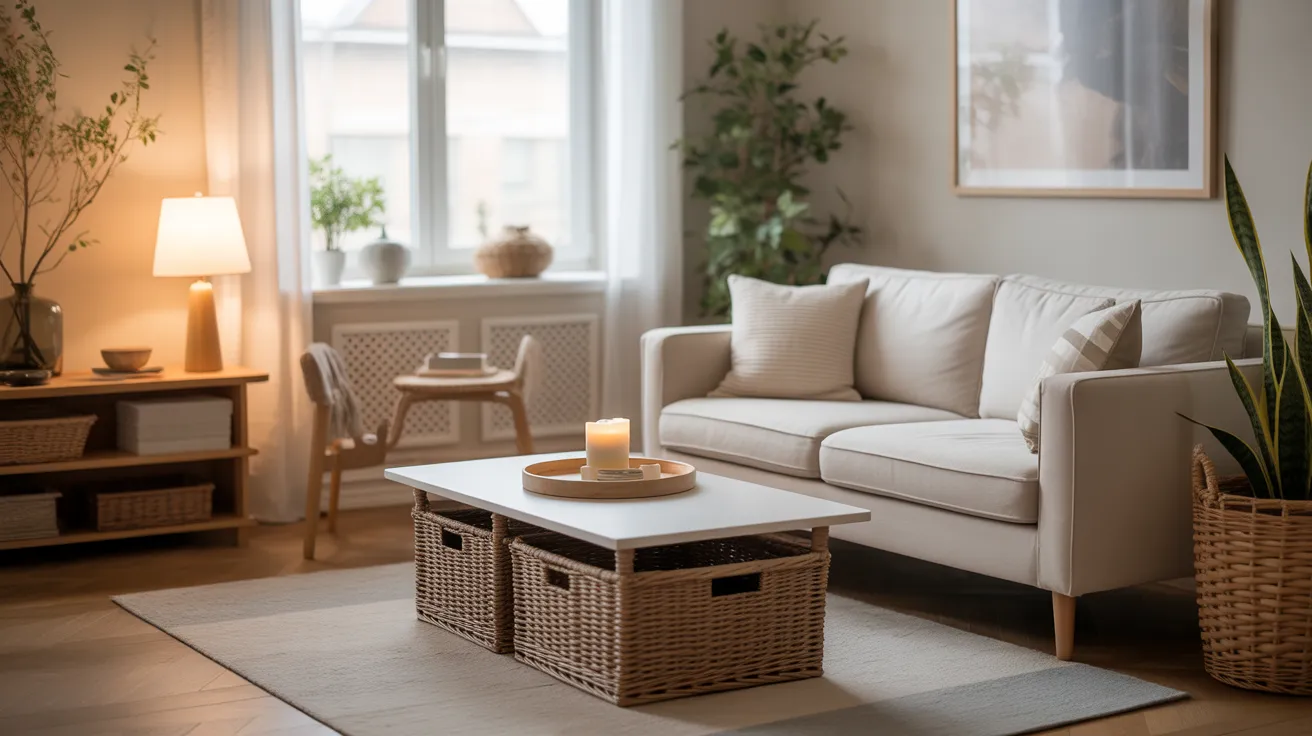
Is your living room drowning in stuff despite your best efforts to keep it tidy? You’re not alone.
The living room is the heart of the home—a space where we relax, entertain guests, binge our favorite shows, and unwind after long days. But it’s also a magnet for clutter that seems to multiply overnight.
While basic decluttering advice tells you to “just get rid of stuff,” genius decluttering ideas for the living room go deeper. They address why clutter accumulates in the first place and create systems that prevent it from returning.
In this guide, you’ll discover 27 clever strategies that transform your living room from chaotic to calm—without spending hours cleaning or sacrificing the things you love.
Why Your Living Room Gets Cluttered (And Why It Matters)
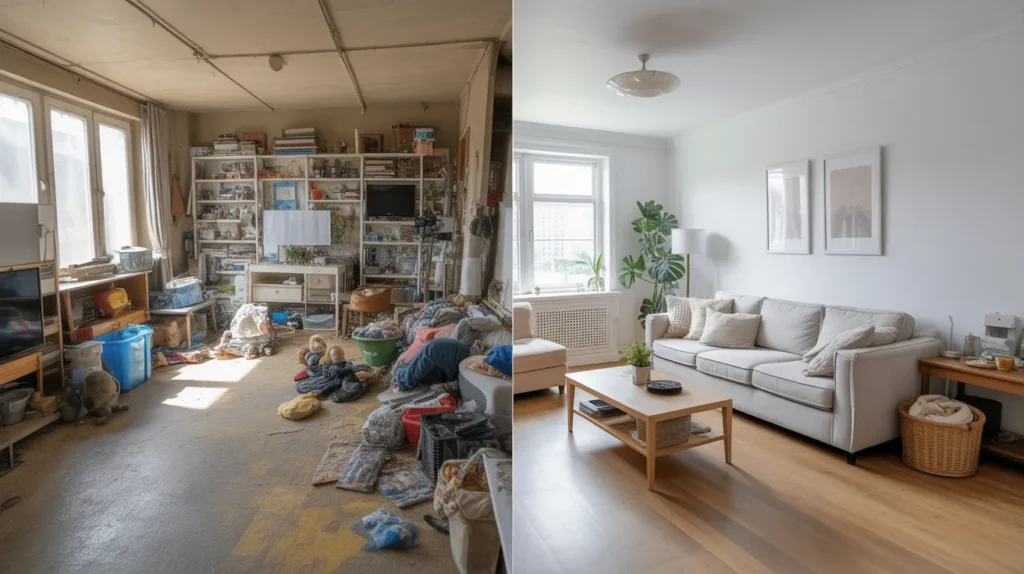
Before diving into solutions, let’s address the elephant in the room: why does the living room get so messy?
The real culprits behind living room clutter:
- High traffic zone: Everyone passes through, leaving items behind
- Multiple purposes: It’s a TV room, reading nook, play area, and guest space all in one
- No clear homes: Items lack designated spots, so they land wherever
- Emotional attachment: We display sentimental objects that add visual noise
- Invisible clutter: Small items blend into the background until suddenly, everything feels overwhelming
A lot of the mess you see in your living room actually comes from tiny habits you barely notice, and these home clutter habits show exactly what might be making your whole house feel messier than it really is.
The hidden costs of a cluttered living room:
Research shows that clutter doesn’t just look bad—it affects your wellbeing. A cluttered living room can decrease home value if you’re selling, lower your mood and energy levels, trap dust, pollen, and mould spores that trigger allergies, reduce indoor air quality and cause respiratory issues, and make the space feel smaller and less inviting.
When the room where you’re supposed to relax actually stresses you out, it’s time for a change.
The 3-Zone Method: A Genius Framework for Living Room Organization
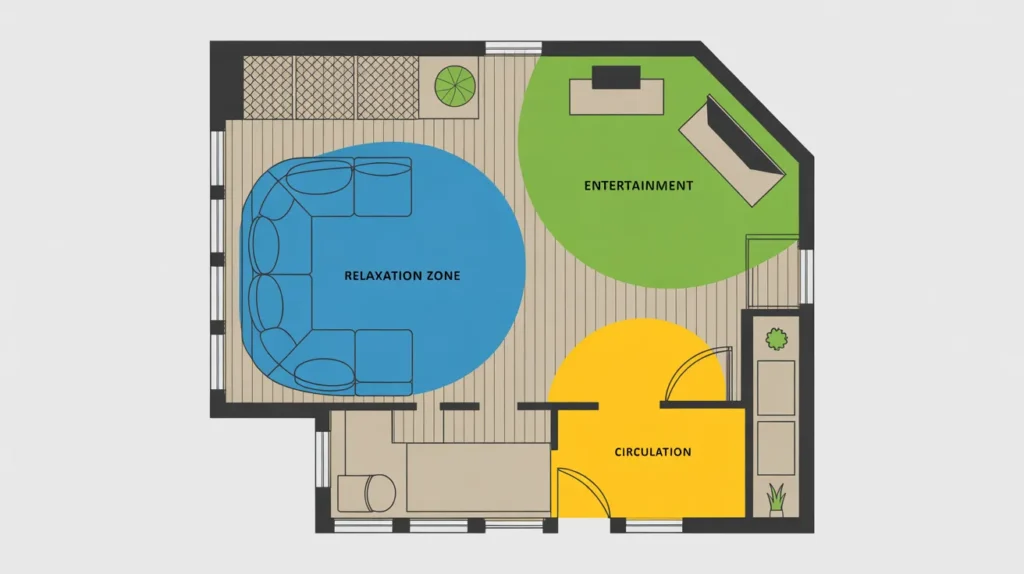
One of the most genius decluttering ideas for the living room is to stop treating it as one big space and start thinking in zones.
Zone 1: The Relaxation Zone (sofa, coffee table, side tables) This is your comfort headquarters. Keep only what enhances relaxation: a few throw pillows, one cozy blanket, current reading material, and remote controls in a dedicated holder.
Zone 2: The Entertainment Zone (TV stand, media console, shelving) Streamline your electronics and media. Store only devices you use weekly, hide cords with cable management solutions, and display a curated selection of books or decorative items.
Zone 3: The Circulation Zone (walkways, floor space, entries) This zone should remain completely clear. No furniture blocking paths, no shoes by the door, and no bags or backpacks on the floor.
By maintaining clear boundaries between zones, clutter becomes easier to spot and address immediately.
Genius Decluttering Ideas: The 20-Minute Power Purge

Don’t have hours for a deep clean? Try this genius speed-decluttering method that works in just 20 minutes.
Here’s how it works:
- Set a timer for 20 minutes
- Grab a laundry basket or large bin
- Move quickly through your living room collecting anything that doesn’t belong
- Use the “would I buy this twice?” rule—if not, it goes in the basket
- When the timer ends, immediately sort items into three piles: return to proper home, donate/sell, or trash
The key is momentum. Don’t overthink decisions—trust your gut instinct. You’ll be amazed at how much lighter your living room feels after just one session.
For ongoing maintenance, repeat this power purge every Sunday evening to start your week with a clean slate.
If you want a simple way to keep that fresh feeling going after your first big clear-out, this 15 minute living room reset routine is perfect for turning these decluttering ideas into an easy daily habit.
27 Items and Categories to Declutter From Your Living Room Right Now

Now let’s get specific. These are the most common clutter culprits in living rooms—and genius solutions for each.
1. Excessive Throw Pillows and Cushions
While decorative pillows add personality and comfort, too many create visual chaos and make your sofa unusable.
The genius solution: Follow the rule of odds. Keep three pillows for smaller sofas and five for larger sectionals. Choose pillows with removable, washable covers. If cushions are flat, lumpy, or stained beyond repair, replace just the pillow inserts rather than buying entirely new pillows.
Store seasonal pillows in vacuum-sealed bags in your closet and rotate them quarterly for a fresh look without permanent clutter.
2. Exercise Equipment Taking Up Valuable Space
That treadmill or workout bike seemed like a great idea when you placed it in front of the TV, but now it’s just an expensive coat rack.
The genius solution: Be honest about your workout habits. If you haven’t used the equipment in three months, it needs to go. Sell large items on Facebook Marketplace or donate to a local gym or community center.
If you genuinely use the equipment weekly, create a dedicated workout corner with a folding screen or room divider to hide it when not in use. Better yet, invest in compact, storable options like resistance bands, yoga mats, or adjustable dumbbells that fit in a decorative basket.
3. Outdated, Broken, or Unused Electronics
Old DVD players, VHS players, outdated streaming devices, unused tablets, bulky stereo systems, tangled cords for devices you no longer own—sound familiar?
The genius solution: Conduct an electronics audit. Unplug everything and only reconnect what you’ve used in the past month. Trade oversized, cumbersome items for smaller, smarter alternatives. A soundbar replaces an entire stereo system. A streaming stick replaces multiple boxes.
For old electronics, find an e-waste recycling center rather than throwing them in the trash. Many electronics stores offer free recycling programs.
Create a charging station in a drawer or decorative box to corral all cords, chargers, and small devices in one hidden spot.
4. Oversized Furniture That Swallows the Room
If you’re turning sideways, squeezing between pieces, or jumping over the coffee table to cross your living room, your furniture is too big for the space.
The genius solution: Measure your room and create a floor plan before buying any furniture. As a rule, you should have at least 30 inches of walking space around furniture pieces.
If you’re stuck with oversized pieces, consider replacing one large sofa with a loveseat and two chairs, swapping a bulky entertainment center for a wall-mounted TV and floating shelf, or exchanging a huge coffee table for nesting tables that can be tucked away.
To dispose of old furniture, check if your local jurisdiction offers free oversized item pickup, sell on Craigslist or Facebook Marketplace, donate to Habitat for Humanity or similar charities, or take it to a recycling depot yourself.
5. Paperwork, Mail, and Documents
Bills, school papers, mail, magazines, receipts, instruction manuals—paper clutter multiplies like rabbits.
The genius solution: Implement the “touch it once” rule. When mail arrives, immediately sort it into action, file, or recycle. Don’t let it sit “temporarily” on the coffee table.
Set up a paper management station with a shredder, recycle bin, and simple filing system in a nearby room—not in your living room. Go digital wherever possible by scanning important documents and opting for electronic bills and statements.
For magazines and catalogs, keep only the current issue. When the new one arrives, recycle the old one immediately.
6. Laundry Items and Clothing
Clean clothes waiting to be folded, dirty laundry heading to the wash, random socks, jackets draped over chairs—laundry has no place in your living room.
The genius solution: Never fold laundry in the living room unless you have a specific system to immediately put it away. Use the bedroom or laundry room instead.
Install attractive hooks near the entrance for coats and bags so they don’t end up on your sofa. Keep a small decorative basket for items in transit, but empty it daily. Make it a house rule that clothing stays in bedrooms and closets, period.
7. CDs, DVDs, and Vinyl Records You Don’t Use
If you haven’t watched or listened to them in three years, they’re just taking up valuable space.
The genius solution: Digitize what you want to keep. Services can transfer home videos and music to cloud storage. For store-bought media, check if you already have streaming access to your favorite content.
Sell valuable collections on Decluttr, eBay, or local record stores. Donate the rest to libraries, nursing homes, or thrift shops.
If you’re a true vinyl enthusiast, invest in vertical storage that displays records as art rather than letting them pile horizontally on shelves.
8. Office Supplies Scattered Everywhere
Pens, notepads, staplers, scissors, tape—office supplies migrate to the living room and never leave.
The genius solution: Designate one drawer or decorative box as your “living room command center” for the absolute essentials (one pen, one notepad, scissors). Everything else belongs in your home office or a dedicated storage area.
Use drawer dividers or small containers to keep supplies organized and easy to find. The rule is simple: if you use it less than once a week in the living room, it doesn’t live there.
9. Endless Toys Taking Over
Plastic bits, stuffed animals, building blocks, action figures—toys have a way of colonizing every surface.
The genius solution: Implement the “toy rotation system.” Keep only 25-30% of toys accessible in the living room at a time. Store the rest in labeled bins in a closet or the child’s room, then rotate every few weeks.
Use attractive storage solutions that blend with your decor: woven baskets, ottomans with hidden storage, or a storage bench that doubles as seating. Make cleanup a game by setting a timer and seeing who can pick up the most toys before it buzzes.
Establish a firm rule: toys must be picked up before dinner or before bed. No exceptions. Consistency is key.
10. Random Objects, Trinkets, and Knick-Knacks
Souvenirs, figurines, decorative objects, sentimental items—they accumulate on every flat surface until your living room looks like a thrift store.
The genius solution: Adopt the “one in, one out” rule for decorative items. When something new arrives, something old must go.
Embrace negative space. Not every shelf needs to be full. Group items in odd numbers (3, 5, 7) and leave breathing room between displays.
Create a memory box for sentimental items that don’t deserve prime real estate on your shelves. Take photos of items before letting them go—you keep the memory without the clutter.
Rotate seasonal decor rather than displaying everything year-round. This keeps your living room feeling fresh and intentional.
More Living Room Clutter Culprits to Tackle
11. Drinking Glasses and Mugs
The problem: Half-empty water glasses and coffee mugs multiply on side tables and the coffee table.
Genius solution: Implement a “one cup per person” rule. Before getting a new drink, take the old cup to the kitchen. Keep a small tray on the coffee table as a designated spot for drinks to contain the clutter visually.
12. Broken or Unused Toys
The problem: Toys with missing pieces or that children have outgrown stick around “just in case.”
Genius solution: Do a monthly toy audit. If it’s broken and can’t be fixed in 5 minutes, toss it. If your child hasn’t played with it in two months, donate it to someone who will love it.
13. Blankets and Throw Pillows From Other Rooms
The problem: Every blanket in the house ends up on the living room sofa.
Genius solution: Keep only one or two throws in the living room. Use a decorative ladder, basket, or ottoman storage to hold them. All other blankets live in bedrooms.
14. Books and Magazines
The problem: Stacks of unread books, old magazines, and last year’s catalogs pile up on every surface.
Genius solution: Keep only what you’re currently reading (limit: 3 books maximum). Create a small “library station” with a basket for current reads. Donate finished books to Little Free Libraries or thrift stores. Cancel magazine subscriptions you don’t read within a week of arrival.
15. Old Receipts and Random Papers
The problem: Receipts from shopping trips, take-out menus, business cards, and random notes scatter everywhere.
Genius solution: Place a small dish or decorative box near your main entrance for receipts and papers in transit. Empty it weekly—scan what you need, recycle the rest.
16. Food Wrappers and Trash
The problem: Candy wrappers, chip bags, takeout containers, and drink bottles accumulate faster than you realize.
Genius solution: Keep a small, attractive waste bin in your living room. Make it a nightly routine to empty it before bed. Better yet, establish a “no eating in the living room” rule except for designated snack times.
17. Instruction Manuals
The problem: Manuals for every device you’ve ever owned sit in drawers “just in case.”
Genius solution: Most manuals are available online. Photograph the model number of each device, then recycle the paper manual. For the few you want to keep, store them in a slim binder in a closet—not in your living room.
18. Video Games and Gaming Accessories
The problem: Game cases, controllers, headsets, and charging stations create tech clutter.
Genius solution: Use a media console with closed storage for games. Keep only currently-played games accessible; archive the rest. Use a charging dock for controllers to keep them organized and powered.
19. Extra Gaming Accessories You Don’t Use
The problem: Old controllers, cables for previous consoles, and accessories for games you no longer play.
Genius solution: If you haven’t used it in six months, sell it or donate it. Gamers love buying used equipment.
20. Board Games and Puzzles
The problem: Stacks of board games with missing pieces or puzzles you’ll “eventually complete.”
Genius solution: Check all games for missing pieces. If incomplete, recycle them. Store only frequently-played games (played at least once a season) in the living room. Move the rest to a closet or donate them.
21. Chargers and Cords
The problem: Tangled charging cables for phones, tablets, and other devices snake across every surface.
Genius solution: Create one central charging station using a multi-port USB hub inside a decorative box. Use cable clips or velcro ties to manage cord length. Label each cable with colored tape so everyone knows which is theirs.
22. Shoes, Handbags, and Accessories
The problem: Shoes pile up by the door, purses get tossed on chairs, and accessories scatter everywhere.
Genius solution: Use a shoe rack or bench with storage in your entryway—before items reach the living room. Install hooks for bags and jackets. Make a rule: outdoor items never enter the living room.
23. Bathroom Supplies and Personal Care Items
The problem: Hand lotion, nail clippers, hair ties, chapstick, and other personal items migrate to side tables.
Genius solution: Keep one hand lotion in a small decorative tray if needed; everything else belongs in the bathroom. Use a small caddy to collect wayward items and return them to proper rooms daily.
24. In-Progress Work, Hobbies, or Projects
The problem: Knitting projects, craft supplies, work documents, or hobby materials spread across the coffee table.
Genius solution: Use a portable caddy or tote bag that can be easily moved when not in use. Establish a “pack up before company” rule. Better yet, dedicate a different room or corner for hobbies so they don’t interrupt your relaxation space.
25. Art Supplies, Markers, and Crayons
The problem: Kids’ art supplies end up everywhere, creating colorful chaos.
Genius solution: Use a rolling cart or caddy that can be moved between rooms. Art time happens at the table, not on the sofa. All supplies get put away immediately after use—make it part of the activity.
26. Pet Supplies and Toys
The problem: Dog toys, leashes, pet beds, and grooming supplies take over your living space.
Genius solution: Designate one attractive basket for pet toys and keep it in a corner. Hang leashes and harnesses by the door. Choose a pet bed that coordinates with your decor or use a decorative crate as both a pet space and side table.
27. Seasonal Decorations That Never Get Stored
The problem: Holiday decorations, seasonal throw pillows, and themed items stay out months past their time.
Genius solution: Set calendar reminders to swap seasonal decor. Use labeled storage bins that are easy to access. Keep your rotation simple—minimal is better than overwhelming.
Where to Focus Your Decluttering Efforts

Don’t try to tackle everything at once. Focus on these high-impact areas first:
The Coffee Table: This is prime real estate. Keep it clear except for one decorative item or a small tray for remotes.
Consoles and Sofa Tables: These shouldn’t become dumping grounds. Display only intentional decor items.
Side Tables: One lamp, one coaster, one current book maximum. That’s it.
Under and Around the Sofa: Nothing should live under your sofa except maybe a storage bin for extra blankets. Check weekly.
Entertainment Center: Only display items you use or love. Everything else gets stored behind closed doors.
The Floor: The only things touching your floor should be furniture and a rug. No piles, no baskets of “stuff,” no temporary storage.
Shelves and Window Sills: Follow the 60/40 rule—60% empty space, 40% displayed items.
If you’re in the mood to go a bit deeper once you’ve cleared the obvious clutter in your living room, these things to declutter this weekend will help you tackle the rest of your home step by step.
Creating Systems That Prevent Clutter From Returning
Decluttering once is great. Keeping it that way requires smart systems.
The One-Minute Rule: If something takes less than one minute to put away, do it immediately. No exceptions.
The Sunday Reset: Spend 15 minutes every Sunday evening resetting your living room. Put away stray items, fluff pillows, wipe surfaces, and prepare for the week ahead.
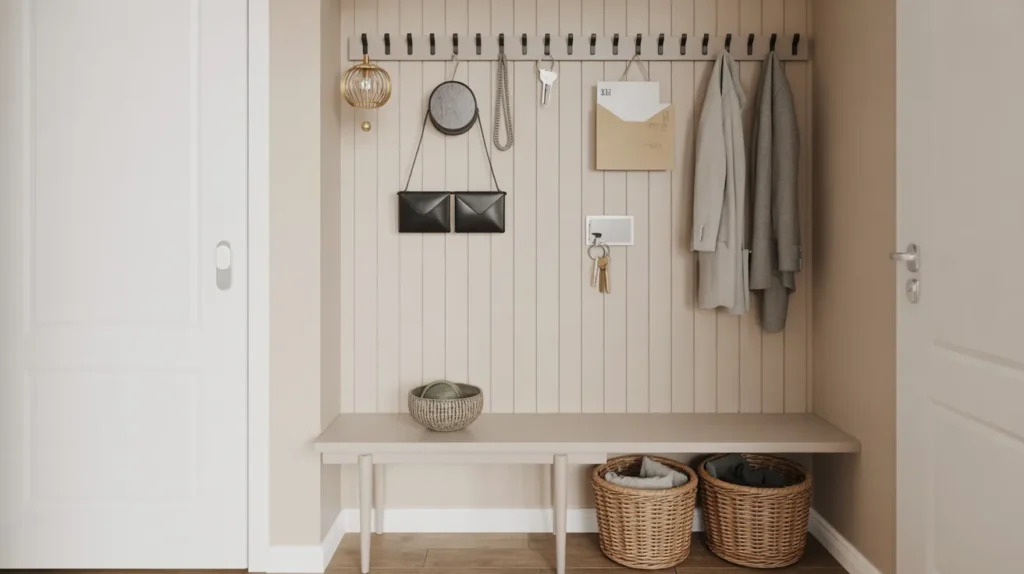
The Landing Strip: Create a designated spot near your entrance with a small table, bowl, or tray for keys, sunglasses, and other daily items so they don’t scatter across your living room.
The “Out” Basket: Keep a donation basket in your closet. Throughout the month, add items you no longer need. When it’s full, immediately take it to donate.
The Nightly 10-Minute Tidy: Before bed, spend 10 minutes resetting the living room. Everyone in the household participates. Put items back where they belong, place dishes in the kitchen, and straighten cushions.
Storage Solutions That Actually Work

The right storage can make or break your decluttering efforts.
Closed Storage is Your Friend: Open shelving looks beautiful but requires constant curation. Use cabinets, storage ottomans, and benches with lids to hide everyday items.
Multi-Functional Furniture: A storage ottoman serves as seating, a footrest, and hidden storage. A lift-top coffee table provides workspace and storage. Choose pieces that work hard.
Vertical Storage: Use walls with floating shelves, tall bookcases, or wall-mounted cabinets to maximize space without cluttering the floor.
Decorative Baskets and Bins: They contain clutter while looking intentional. Use them for blankets, magazines, remotes, or toys. Choose neutral colors that blend with your decor.
Drawer Dividers: Don’t let drawers become junk drawers. Use dividers to create homes for small items like remotes, coasters, pens, and notepads.
The Marie Kondo Exception: Keep What Sparks Joy

After all this decluttering advice, here’s the most important rule: if you absolutely love something and it brings you genuine joy, keep it.
Marie Kondo revolutionized decluttering by making it about more than just minimalism—it’s about surrounding yourself with items that make you happy.
That quirky pillow your grandmother made? Keep it. The vintage record player that reminds you of college? Display it proudly. The stack of art books you actually flip through? They deserve shelf space.
The key is being honest about what truly brings joy versus what you’re keeping out of guilt, obligation, or “just in case” thinking.
Real Living Room Transformation: Less is More
When you implement these genius decluttering ideas for the living room, the transformation is dramatic.
Imagine walking into a living room where surfaces are clear and breathing room exists between furniture. Soft lighting highlights a few meaningful objects rather than competing with clutter. Comfortable seating invites you to actually sit and relax. Everything has a home, and you can find what you need in seconds.
This isn’t about creating a sterile showroom—it’s about making space for what matters most: connection, relaxation, and comfort.
Your Action Plan: Getting Started Today
Feeling overwhelmed? Start here:
Week 1: Do the 20-minute power purge and tackle your coffee table and side tables.
Week 2: Address your entertainment center and media storage. Declutter electronics and cords.
Week 3: Focus on textiles—pillows, blankets, and furniture that doesn’t fit the space.
Week 4: Implement your new systems and storage solutions. Make it easy to maintain.
The goal isn’t perfection—it’s progress. Even decluttering one zone transforms how your living room feels.
Final Thoughts
Your living room should be a sanctuary, not a storage unit. By implementing these genius decluttering ideas for the living room, you’re not just clearing physical space—you’re creating mental space, improving your mood, and making room for the experiences that matter most.
Remember: a clutter-free living room doesn’t mean an empty one. It means an intentional one where every item serves a purpose or brings you joy.
Start small, stay consistent, and watch as your living room transforms from overwhelming to inviting. You’ve got this.
What’s your biggest living room clutter challenge? Share in the comments below, and let’s solve it together!