Easy Vegetables That Grow on a Trellis: Complete Guide for Maximum Harvest
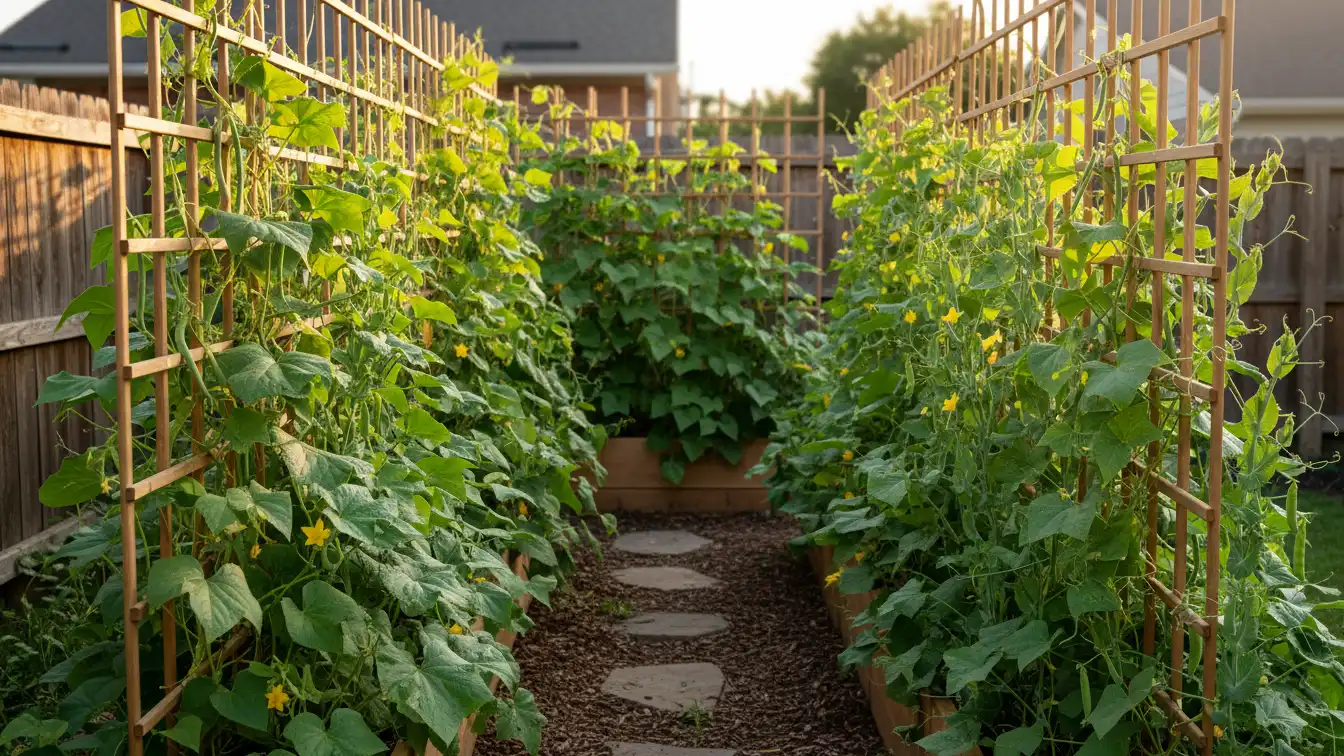
Growing easy vegetables that grow on a trellis is one of the smartest decisions you can make for your garden. Whether you’re working with limited space or simply want to maximize your harvest, vertical gardening transforms how you cultivate fresh produce at home.
This comprehensive guide reveals the most productive easy vegetables that grow on a trellis, proven techniques for success, and expert tips to help you create a thriving vertical garden—even if you’re just starting out.
Why Growing Vegetables on a Trellis Changes Everything
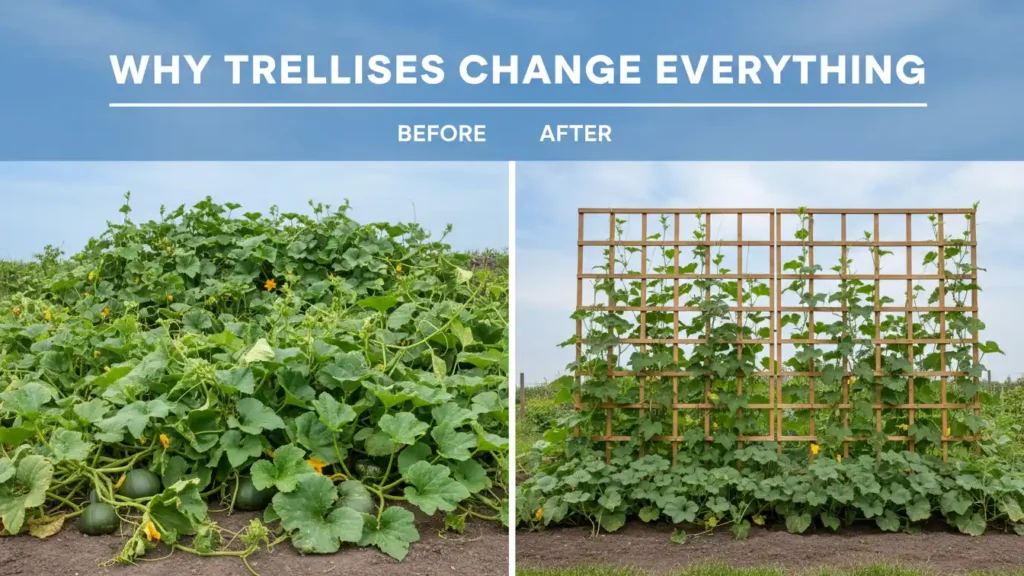
Before diving into specific crops, understanding the benefits of trellis gardening helps you appreciate why this method produces superior results.
If you love relaxed but productive outdoor spaces, you can easily blend these trellised crops into your existing Mediterranean garden ideas for a warm, sun-kissed look that still feels practical.
Space Efficiency That Actually Works
Vertical growing multiplies your garden’s productivity without expanding its footprint. According to Cornell University research, pole beans grown on trellises yield two to three times more harvest than bush varieties in the same ground space. This dramatic increase applies to many easy vegetables that grow on a trellis.
For small gardens, balconies, patios, or raised beds, trellising allows you to grow multiple crops where only one would fit otherwise. The vertical dimension becomes valuable real estate that most gardeners overlook.
Disease Prevention Through Better Airflow
Plants sprawling on the ground stay moist longer, creating perfect conditions for fungal diseases like powdery mildew, blight, and rot. When you grow easy vegetables that grow on a trellis, improved air circulation keeps foliage dry and significantly reduces disease pressure.
Keeping vegetables off the soil also minimizes contact with soil-borne pathogens that cause devastating crop losses. This protective benefit alone justifies the minimal effort required for vertical gardening.
Effortless Harvesting at Eye Level
Bending, stooping, and searching through tangled vines becomes exhausting—especially during peak harvest season. Easy vegetables that grow on a trellis hang at comfortable heights where you can easily spot ripe produce and harvest without strain.
This accessibility encourages more frequent picking, which actually stimulates plants to produce more. Regular harvesting signals plants to keep flowering and setting fruit throughout the growing season.
Natural Pest Deterrence
Ground-dwelling pests like slugs, snails, rodents, and certain insects cause less damage when vegetables grow vertically. The physical barrier of elevation protects developing fruits and reduces the need for pest control interventions.
Additionally, trellised plants dry faster after rain or watering, making them less attractive to moisture-loving pests and their predators can more easily access them.
Cleaner, Straighter, More Attractive Produce
Cucumbers, squash, and melons grown on trellises develop straight, uniform shapes because gravity naturally elongates them. They also stay clean—no dirt splatters, mud, or ground contact to wash away before eating.
This aesthetic and practical advantage makes trellised vegetables more appealing for fresh eating, preserving, or selling at farmers markets.
Understanding What Makes a Vegetable “Trellis-Friendly”
Not all vegetables naturally climb, but many easy vegetables that grow on a trellis fall into three categories:
Natural Climbers: These plants evolved tendrils or twining stems that automatically grab and spiral around supports. Peas, cucumbers, and pole beans belong to this category and require minimal guidance once they contact the trellis.
Assisted Climbers: Plants like indeterminate tomatoes and squash produce long vines but don’t naturally attach to structures. They need gentle training, tying, or weaving through trellis materials but thrive with this support.
Compact Vertical Growers: Some vegetables don’t climb but grow well in vertical containers, wall planters, or stacked systems. Lettuce, herbs, and strawberries fit this category.
Understanding these distinctions helps you choose appropriate trellis designs and know how much maintenance each crop requires.
10 Best Easy Vegetables That Grow on a Trellis
1. Pole Beans: The Ultimate Beginner’s Trellis Vegetable
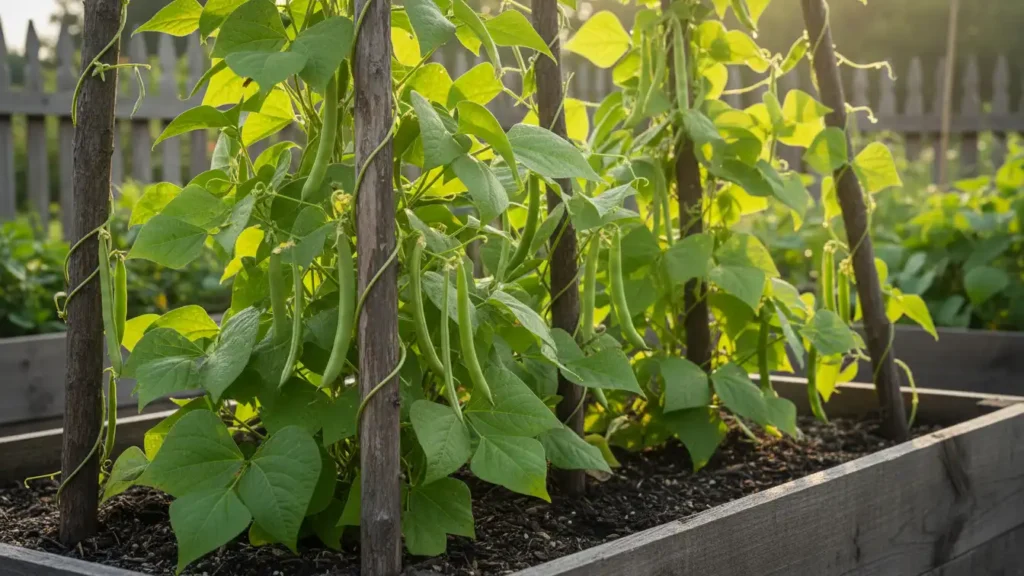
Pole beans top every list of easy vegetables that grow on a trellis for excellent reasons. Their natural twining growth habit spirals around any vertical support without assistance, making them perfect for new gardeners.
Why Pole Beans Excel on Trellises:
- Naturally climb 6-10 feet without guidance
- Produce continuously throughout the season
- Yield 2-3 times more than bush bean varieties
- Require minimal ground space
- Come in multiple varieties: green beans, wax beans, Romano beans, and runner beans
How to Grow Pole Beans Vertically:
Plant seeds 1 inch deep at the base of sturdy supports—tepee trellises, bamboo poles, or netting work beautifully. Space seeds 3-6 inches apart. Young seedlings may need initial direction toward the trellis, but once they start climbing, they’re self-sufficient.
Choose tall, strong structures since mature bean vines become heavy with foliage and pods. Tepee trellises offer excellent wind resistance as their weight pushes down, anchoring the structure.
Harvest regularly when pods are tender and before seeds bulge noticeably. Frequent picking encourages continuous production for months. Popular varieties include ‘Kentucky Wonder,’ ‘Fortex,’ ‘Cobra,’ and ‘Romano.’
2. Cucumbers: Crisp, Clean, and Incredibly Productive
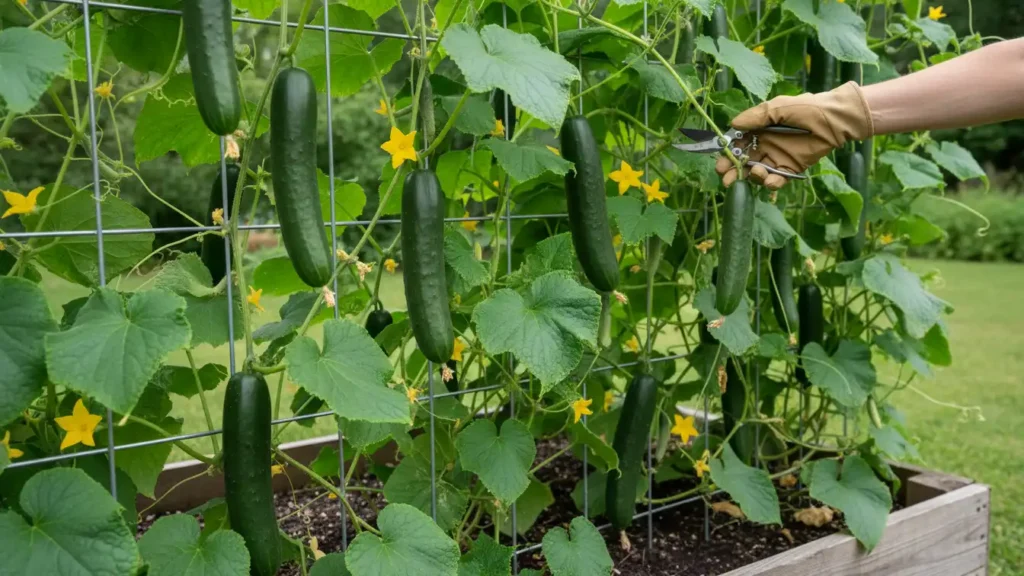
Cucumbers rank among the most rewarding easy vegetables that grow on a trellis. Their natural tendrils actively seek vertical supports, and elevated growing prevents many common cucumber problems.
Trellis Benefits for Cucumbers:
- Reduces powdery mildew and fungal diseases
- Produces straighter, more uniform fruits
- Makes harvesting visible and effortless
- Saves 4-6 square feet per plant
- Improves pollination access for better yields
Growing Cucumbers on a Trellis:
Choose vining varieties rather than bush types—check seed packets for terms like “climbing” or “vining.” Plant 2 plants per 4-foot trellis section, spacing them 12 inches apart. Cucumbers prefer A-frame trellises, cattle panels, or sturdy netting.
Water consistently to keep soil evenly moist, especially during hot weather and fruit development. Inconsistent watering causes bitter-tasting cucumbers. Apply balanced fertilizer every 2-3 weeks.
Watch for tendrils grabbing neighboring plants—cucumbers can choke out companions if not monitored. Guide aggressive vines back to their designated trellis sections.
Harvest slicing cucumbers at 6-8 inches and pickling types at 3-5 inches. Daily picking during peak season maintains production and prevents oversize, bitter fruits.
Recommended Varieties:
- ‘Burpless’ – Long, mild-flavored slicers
- ‘Marketmore 76’ – Disease-resistant and productive
- ‘Armenian’ – Actually a melon, grows 2+ feet long
- ‘Parisian Pickling’ – Crisp, perfect for preserving
3. Peas: Cool-Season Vertical Garden Stars
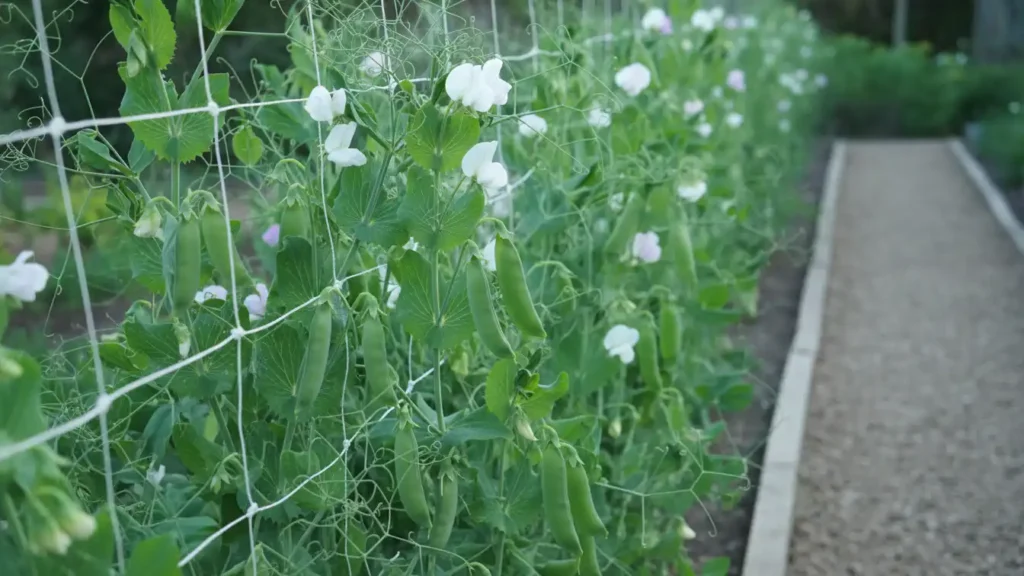
Peas represent the easiest early-season crop among easy vegetables that grow on a trellis. Their tendrils naturally curl around supports, and they tolerate cool temperatures that stress many vegetables.
Types of Peas for Vertical Growing:
Sugar Snap Peas: Plump, sweet pods eaten whole—the most popular type. Varieties like ‘Super Sugar Snap’ produce heavily for 3+ weeks on 6-foot vines.
Snow Peas: Flat pods harvested young, perfect for stir-fries. ‘Golden Sweet’ offers beautiful purple flowers followed by yellow pods.
Shelling Peas: Traditional garden peas requiring podding. ‘Tall Telephone’ grows to 6 feet, creating impressive vertical displays.
Growing Peas Successfully:
Plant in early spring (or late summer for fall crops) when soil reaches 45°F. Peas actually prefer cool weather and struggle in heat. Sow seeds 1 inch deep, 2 inches apart along lightweight supports like netting, wire fencing, or bamboo stakes.
Provide sturdy support—mature pea vines with heavy pods weigh more than most gardeners expect. Inadequate trellises often collapse under the load.
Water moderately to keep soil moist but not waterlogged. Use low-nitrogen fertilizer since peas fix their own nitrogen; excess nitrogen promotes leafy growth over pod production.
Harvest when pods feel plump but remain tender. Peas taste sweetest picked young. Regular harvesting extends the season and encourages more flowering.
4. Indeterminate Tomatoes: Maximize Your Harvest Window
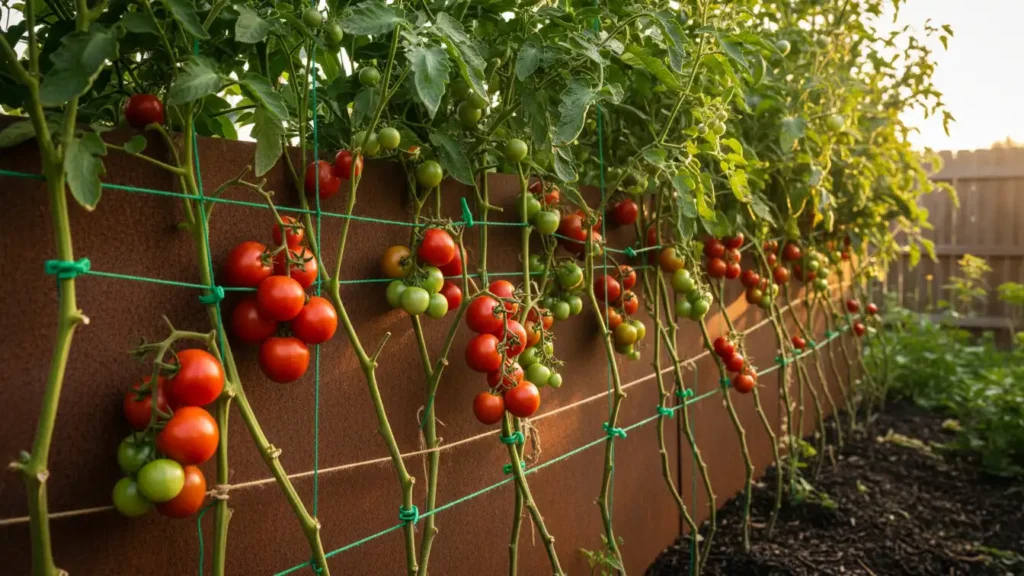
While tomatoes don’t naturally climb, indeterminate (vining) varieties are exceptional easy vegetables that grow on a trellis with proper support. They produce fruit continuously until frost, unlike determinate types that ripen all at once.
Trellising Advantages for Tomatoes:
- Reduces diseases by 40-60% through improved airflow
- Increases fruit size and quality
- Makes pruning and inspection easier
- Extends harvest season significantly
- Prevents branch breakage from heavy fruit
How to Support Tomatoes Vertically:
Plant seedlings 18-24 inches apart at the trellis base. Use sturdy structures—tomato plants become very heavy. String trellises, cattle panels, or strong stakes all work well.
Unlike natural climbers, tomatoes need assistance. Use soft plant ties, tomato clips, or fabric strips to loosely attach the main stem to the trellis every 8-12 inches. Never tie tightly—stems need room to expand.
Prune lower leaves and suckers (shoots between main stem and branches) to improve airflow and direct energy toward fruit production. Remove foliage touching the ground to prevent disease transmission.
Water at soil level, avoiding foliage. Inconsistent watering causes blossom end rot and fruit cracking. Apply high-potassium fertilizer to promote fruiting.
Top Indeterminate Varieties for Trellising:
- ‘Sungold’ – Intensely sweet cherry tomatoes
- ‘Brandywine’ – Legendary heirloom flavor
- ‘Cherokee Purple’ – Large, dusky purple fruits
- ‘San Marzano’ – Perfect for sauces
5. Summer Squash and Zucchini: Vining Varieties Save Space
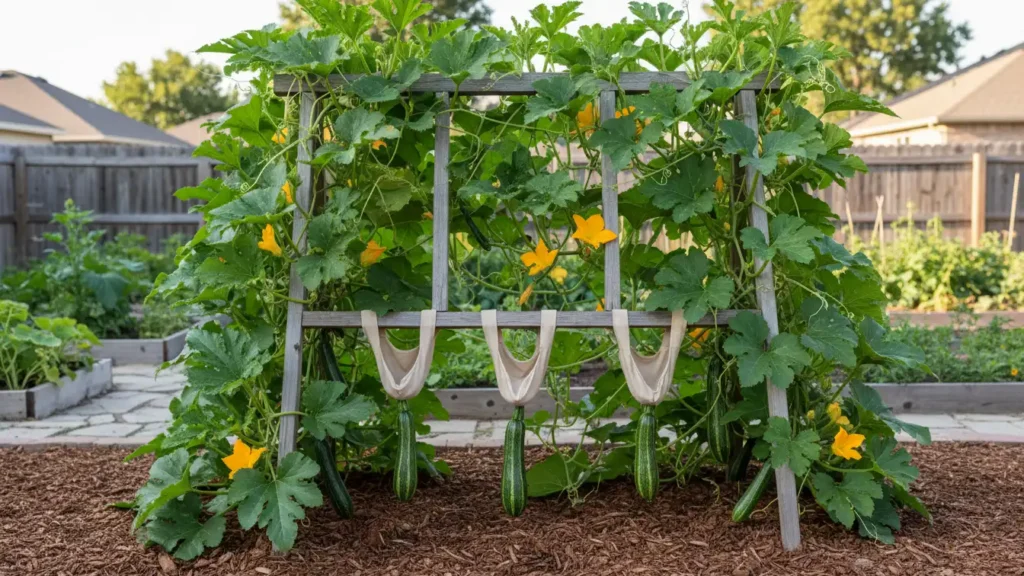
Most summer squash grows as space-hogging bushes, but vining varieties are surprisingly productive easy vegetables that grow on a trellis. Growing squash vertically reclaims valuable garden real estate.
Best Vertical Squash Varieties:
- ‘Tromboncino’ – Vining zucchini growing 6+ feet
- ‘Zephyr’ – Yellow summer squash, semi-vining
- ‘Cocozelle’ – Italian heirloom, climbing habit
- Small acorn and delicata squash
Growing Squash Vertically:
Plant 2 feet apart at the base of very sturdy trellises—A-frames, cattle panels, or robust wooden structures. Squash vines and fruits are heavy, requiring strong support.
Unlike natural climbers, squash needs training. Carefully weave young vines through trellis openings or use soft ties. Be gentle—squash stems break easily.
For larger fruits, create slings from old pantyhose, fabric strips, or mesh bags. Secure slings to the trellis to support developing squash and prevent vine breakage.
Water deeply and regularly, especially during fruit development. Drought stress affects fruit quality and yield. Mulch around plants to conserve moisture.
Harvest summer squash at 6-8 inches when skins are still tender. Winter squash varieties should remain on vines until skins harden and can’t be easily punctured.
6. Small Melons: Sweet Success Growing Upward
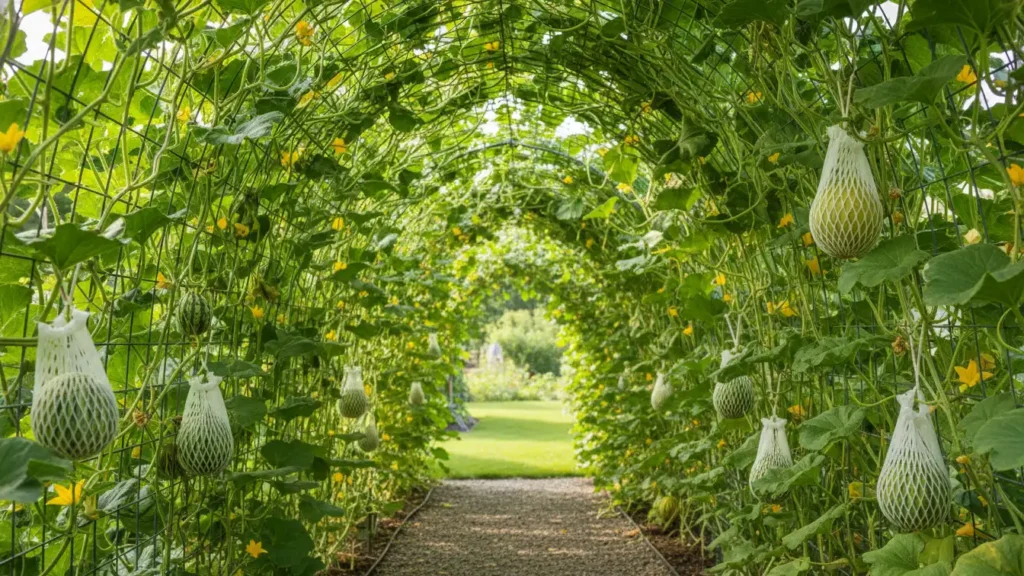
Growing melons vertically seems counterintuitive given their size, but smaller varieties are excellent easy vegetables that grow on a trellis. Personal-sized melons work particularly well.
Trellis-Friendly Melon Types:
- Cantaloupe (muskmelon) – 2-4 pounds each
- Honeydew – Small varieties under 4 pounds
- ‘Minnesota Midget’ watermelon – 6-inch diameter
- ‘Sugar Baby’ watermelon – 8-10 pounds
- ‘Kajari’ melon – Striped Indian variety
Vertical Melon Growing Techniques:
Build exceptionally sturdy trellises—melons are the heaviest easy vegetables that grow on a trellis. A-frames, cattle panels, or custom wooden structures work best.
Plant seeds 2 feet apart in nutrient-rich, well-draining soil. Melons are heavy feeders requiring fertile ground and consistent moisture.
Create slings before fruits reach softball size. Use old T-shirts, pantyhose, or breathable fabric. Support each melon individually—don’t rely on vines to hold them.
Reduce watering slightly as melons ripen to concentrate sugars and intensify flavor. Overwatering near harvest creates bland, watery melons.
Harvest when melons smell sweet, the stem slips easily from the vine, and the blossom end yields slightly to gentle pressure. Ripe cantaloupes develop golden color between the netting.
7. Winter Squash: Long-Season Vertical Rewards
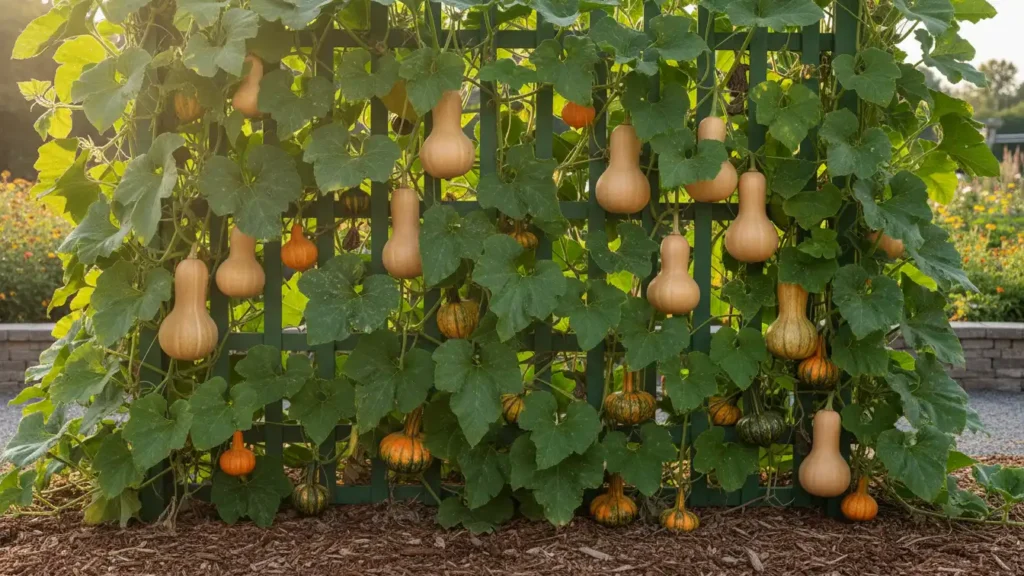
Vining winter squash varieties—butternut, acorn, and spaghetti squash—are productive easy vegetables that grow on a trellis when properly supported. They require longer growing seasons but store for months after harvest.
Training Winter Squash Vertically:
These plants produce 15-20 foot vines requiring substantial trellis space. Use the sturdiest structures available. Plant 2-3 feet apart with excellent sun exposure.
Weave young vines through trellis openings as they grow. Winter squash doesn’t climb naturally, so regular training is necessary. Handle vines carefully to avoid damage.
Create strong slings for developing squash—these fruits grow large and heavy. Check supports regularly and reinforce as needed. A falling squash can damage both the fruit and nearby plants.
Fertilize with high-phosphorus formulas to encourage fruit development. Consistent watering prevents blossom end rot but reduce watering 2 weeks before expected harvest.
Winter squash is ready when skins harden, stems dry and become cork-like, and colors deepen fully. Cure harvested squash in warm, dry conditions for 10-14 days to improve storage life.
8. Climbing Spinach (Malabar Spinach): Heat-Loving Greens
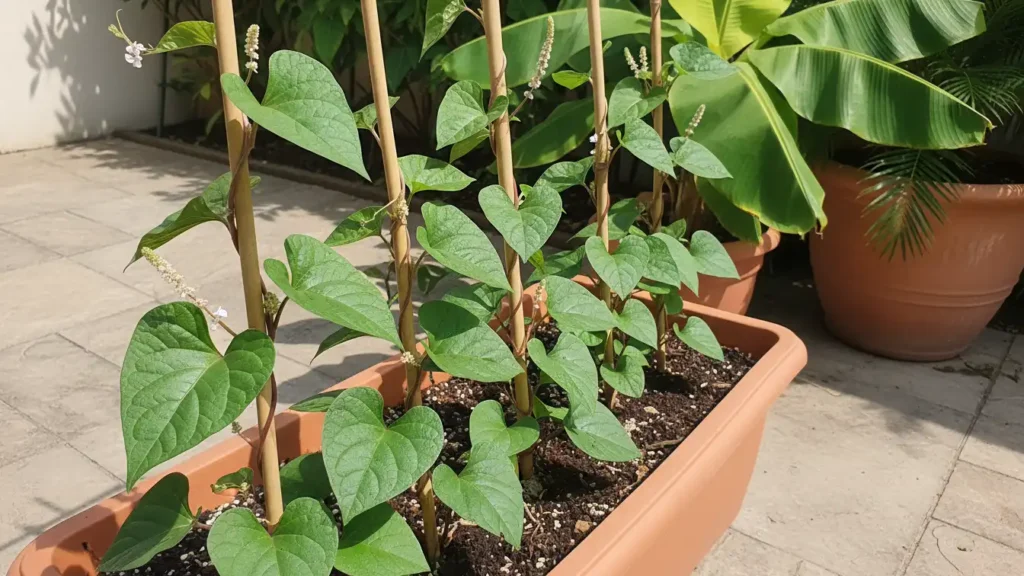
Malabar spinach isn’t true spinach but offers similar nutritional benefits while thriving in hot weather when regular spinach fails. It’s one of the most unique easy vegetables that grow on a trellis.
Why Grow Malabar Spinach:
- Grows vigorously in heat (70-90°F)
- Produces continuously for 6-8 weeks
- Beautiful red stems and glossy leaves
- Natural climber with minimal training
- Highly nutritious with vitamin A and C
Growing Climbing Spinach:
Plant after all frost danger passes and soil warms. Malabar spinach is tropical and cold-sensitive. Provide full sun and any trellis type—it’s not picky about support.
This fast grower can reach 10+ feet, quickly covering trellises. Start harvesting leaves when plants reach 3-4 feet tall. Regular picking encourages bushier growth.
Water consistently but avoid overwatering—Malabar spinach tolerates some drought. Use balanced fertilizer monthly.
Harvest leaves and tender stem tips regularly. The more you pick, the more it produces. Use fresh in salads or cooked like traditional spinach. The flavor is slightly earthier with a hint of citrus.
9. Edible Gourds and Luffa: Unusual Vertical Crops
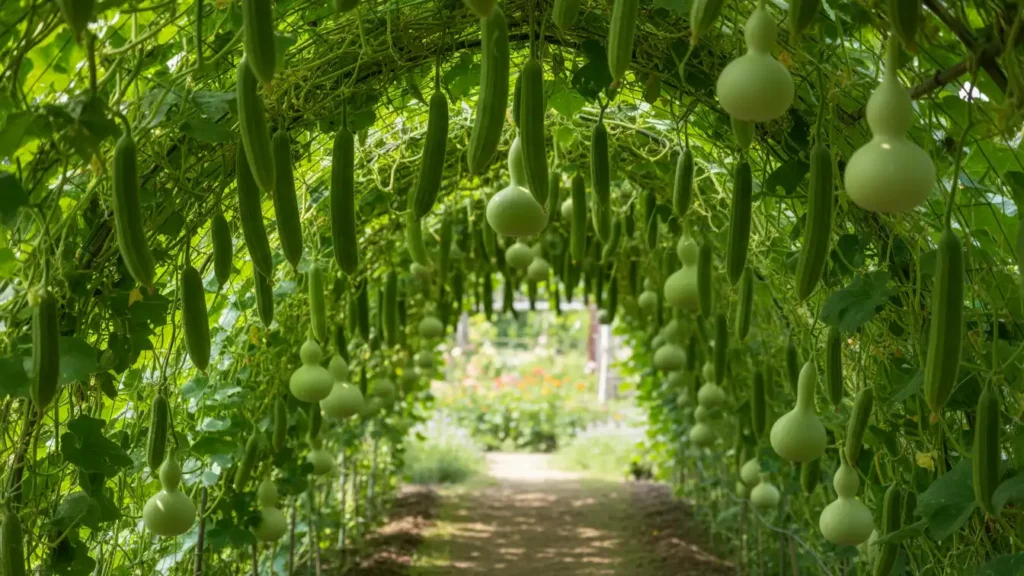
Edible gourds, including luffa (loofah), are fascinating easy vegetables that grow on a trellis. Luffa vines can reach 30 feet, making vertical growing essential rather than optional.
Growing Luffa and Edible Gourds:
These warm-season crops need long growing seasons—100+ days for luffa. Start seeds indoors in cold climates. Plant at the base of the tallest, strongest trellises available.
Luffa’s vigorous vines climb naturally via tendrils. Provide ample trellis height and length—these plants are extremely productive. One vine can produce 10-15 gourds.
Harvest young luffa gourds (6-8 inches) for eating—they taste like mild zucchini. Let fruits mature on vines for 150+ days to create natural sponges. Mature gourds feel lightweight and rattle when shaken.
Other edible gourds like bottle gourds, snake gourds, and bitter melon grow similarly. Research specific varieties for culinary uses and growing requirements.
10. Scarlet Runner Beans: Ornamental and Edible
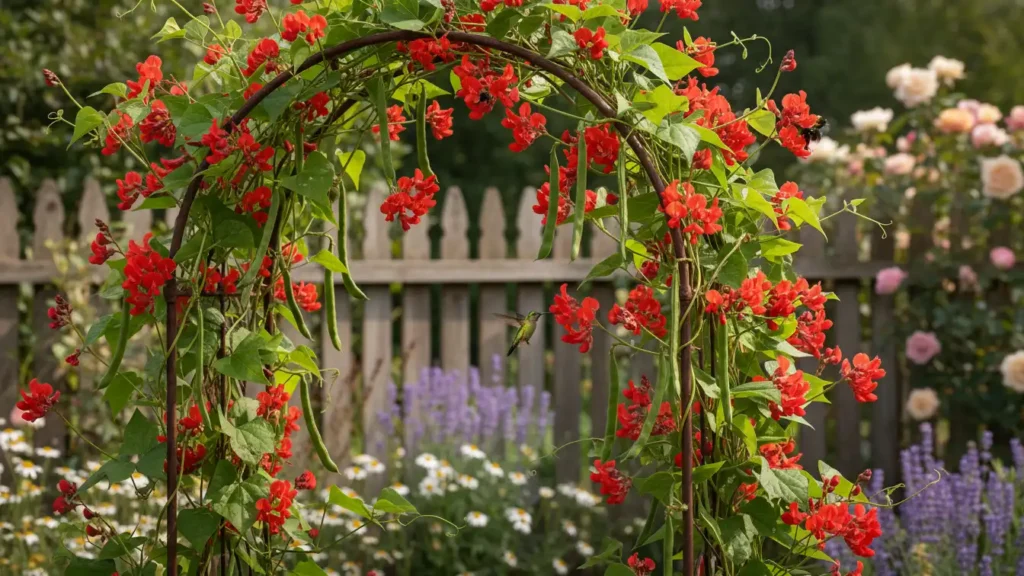
Scarlet runner beans combine beauty and productivity, making them exceptional easy vegetables that grow on a trellis for gardens where aesthetics matter. Brilliant red-orange flowers attract hummingbirds and bees while producing edible pods and beans.
Why Choose Runner Beans:
- Stunning flowers create vertical garden focal points
- Attract pollinators to benefit entire gardens
- Tolerate cooler temperatures than regular pole beans
- Produce both fresh pods and dried beans
- Grow 10-15 feet tall on any support
Growing Scarlet Runner Beans:
Plant after last frost in rich, well-draining soil. Provide tall, sturdy supports—these become very heavy. Tepees, arches, or strong fencing work well.
Water consistently, especially during flowering and pod development. Inconsistent moisture reduces yields.
Harvest pods young (6 inches) for fresh eating or let beans mature for drying. The large beans are excellent in soups, stews, and casseroles.
Flowers are also edible—use them fresh in salads for peppery flavor and gorgeous color.
Choosing the Right Trellis for Your Vegetables
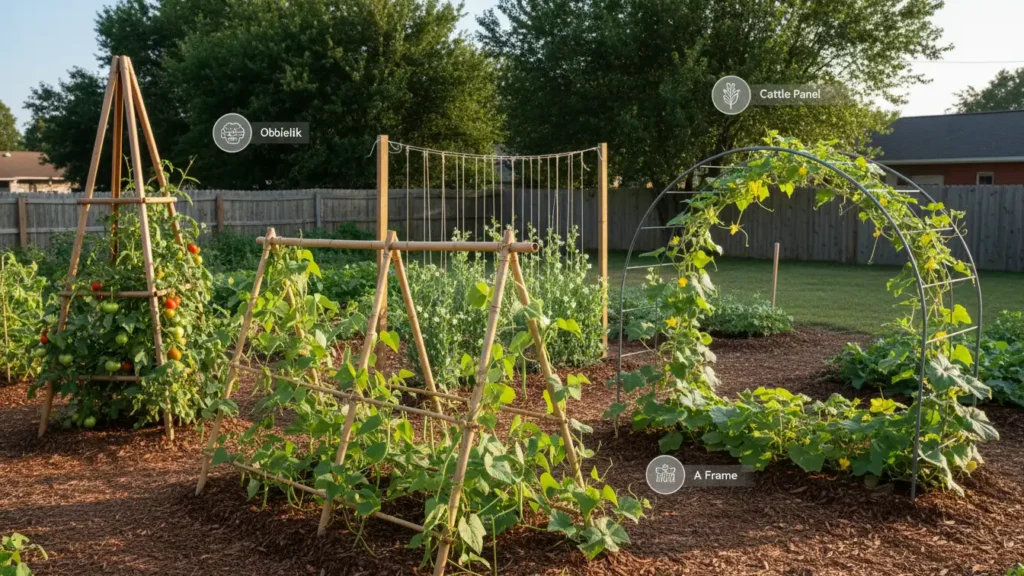
Success with easy vegetables that grow on a trellis depends significantly on proper support structures. Different crops have different needs.
A-Frame Trellises
These tent-shaped structures excel for beans, peas, and lighter crops. They’re wind-resistant, provide support from both sides, and create attractive garden features. Build them 5-8 feet tall using wood, metal, or strong bamboo.
Best for: Pole beans, peas, lightweight cucumbers, summer squash
Cattle Panel Trellises
Heavy-gauge welded wire panels (typically 16 feet long, 4 feet tall) create incredibly sturdy supports lasting decades. Bend them into arches or use them flat. Their strength handles heavy crops easily.
Best for: Melons, winter squash, cucumbers, tomatoes
Vertical String or Netting
Lightweight and inexpensive, string or netting trellises work perfectly for crops with tendrils. Install between sturdy posts or attach to existing fences. Easy to remove and store.
Best for: Peas, cucumbers, light tomatoes, climbing spinach
Tepee Trellises
Three or more poles tied together at the top create classic tepees. Kids love them, and they’re extremely wind-resistant. The weight of plants actually strengthens the structure.
Best for: Pole beans, runner beans, small gourds
Obelisk Trellises
Tall, pyramid-shaped structures add vertical drama and work beautifully in decorative gardens. Purchase metal versions or build custom designs from wood.
Best for: Tomatoes, beans, scarlet runners, smaller cucumbers
DIY Trellis Ideas on a Budget
You don’t need expensive materials to grow easy vegetables that grow on a trellis successfully:
- Bamboo poles: Lash together with twine for custom configurations
- Branch tepees: Forage straight branches for natural-looking supports
- Livestock panels: One-time investment lasting 20+ years
- Repurposed ladders: Old wooden ladders make charming trellises
- Pallets: Stand upright or mount against walls
- Wire fencing: Attach to posts for simple, functional supports
Expert Planting and Spacing Guidelines
Proper spacing maximizes yields while maintaining plant health. Recommendations differ from seed packet instructions because vertical growing changes space requirements.
Spacing for 4-Foot Wide Trellises:
Pole Beans: 4-6 inches apart, single row on each side Cucumbers: 2 plants per side, 12 inches in from edges Peas: 2-3 inches apart, single or double rows Tomatoes: 18-24 inches apart, single row on one side Squash: 2-3 feet apart, one plant per trellis (some varieties) Melons: 2 feet apart, 2-3 plants per side depending on variety
The goal is dense enough for full trellis coverage but spaced adequately for airflow and preventing disease. Overcrowding creates competition for water, nutrients, and light.
Essential Care Tips for Trellised Vegetables
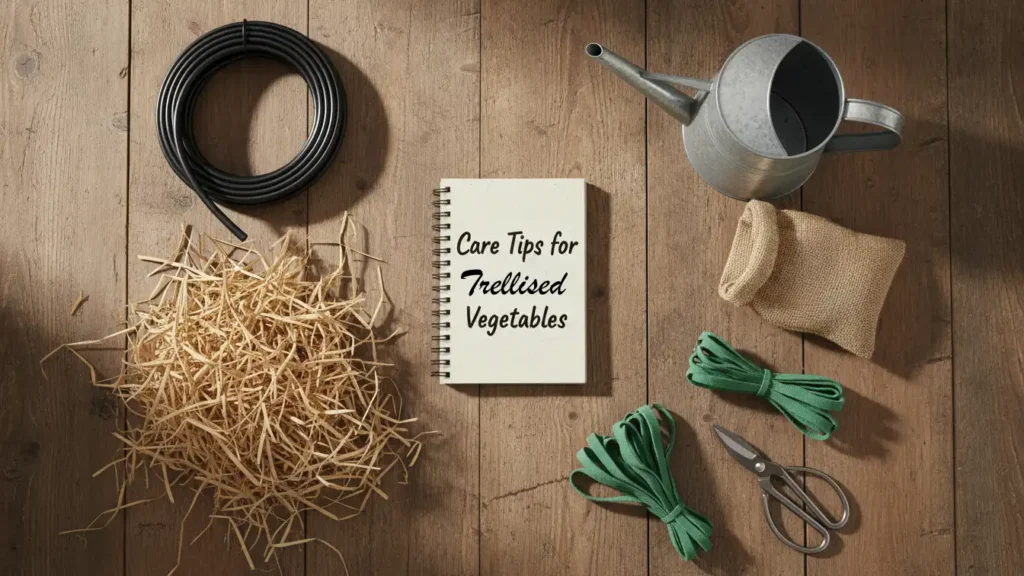
Watering Strategies
Easy vegetables that grow on a trellis often need more consistent watering than ground crops. Elevated roots dry faster, and plants work harder supporting vertical growth.
Install drip irrigation or soaker hoses at soil level for efficient, targeted watering. Overhead watering promotes disease and wastes water. Water deeply 2-3 times weekly rather than light daily watering.
Mulch around plant bases to conserve moisture, suppress weeds, and regulate soil temperature. Organic mulches like straw or shredded leaves work excellently.
Fertilizing for Vertical Growth
Vertical vegetables are productive plants requiring adequate nutrition. Use balanced fertilizers every 2-3 weeks for most crops. Tomatoes benefit from high-potassium formulas during fruiting. Peas and beans need little nitrogen since they fix their own.
Incorporate compost or well-rotted manure into soil before planting. This slow-release nutrition supports season-long growth.
Training and Maintenance
Check plants 2-3 times weekly during peak growing season. Guide new growth toward trellises, secure loose vines, and prune as needed.
For plants requiring tying (tomatoes, squash), use soft materials that won’t cut into stems. Tomato clips, strips of old T-shirts, or jute twine work well. Never use wire or thin string.
Remove yellowing lower leaves from tomatoes and cucumbers to improve airflow and reduce disease pressure. Prune tomato suckers to concentrate energy into fruit production.
Monitoring for Problems
Elevated growing reduces many pest and disease issues but doesn’t eliminate them. Regular inspection catches problems early when they’re easiest to address.
Watch for:
- Powdery mildew (white coating on leaves)
- Cucumber beetles (yellow-green beetles with spots or stripes)
- Aphids (tiny insects clustering on new growth)
- Tomato hornworms (large green caterpillars)
- Blossom end rot (dark, sunken spots on fruit bottoms)
Address issues promptly using organic methods when possible—hand picking pests, removing diseased leaves, adjusting watering, or applying organic sprays.
Companion Planting with Vertical Vegetables
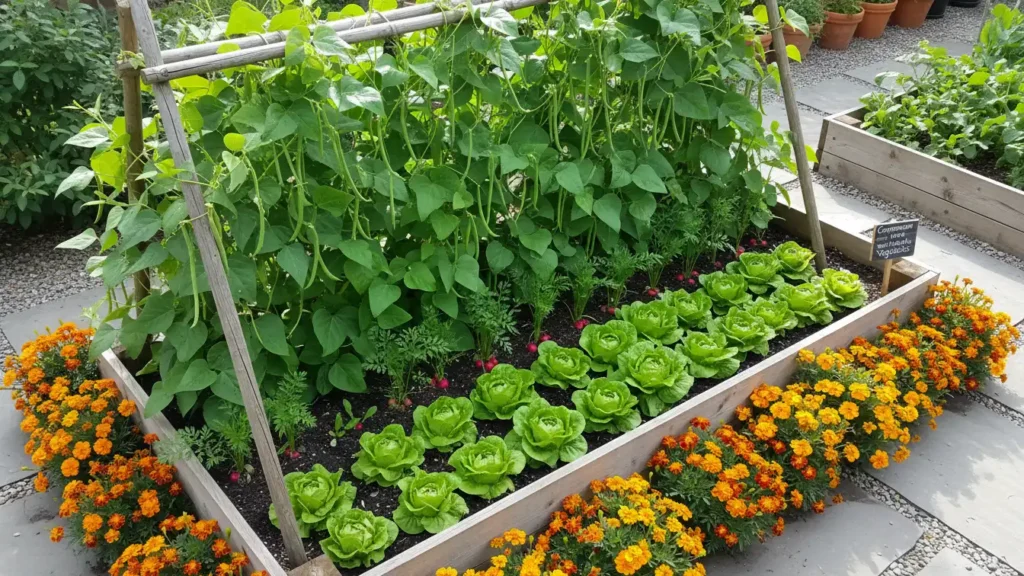
Maximize space further by planting compatible crops beneath easy vegetables that grow on a trellis. The trellis creates microclimates offering partial shade and wind protection.
Successful Companion Combinations:
Under Pole Beans:
- Lettuce and other salad greens
- Radishes (fast-maturing, harvested before beans peak)
- Carrots (appreciate light shade from bean foliage)
- Beets (tolerate some shade, benefit from nitrogen fixation)
Under Cucumber Trellises:
- Nasturtiums (repel cucumber beetles, edible flowers)
- Marigolds (pest deterrent with pretty blooms)
- Bush basil varieties (complement cucumbers, repel some insects)
Under Tomato Trellises:
- Basil (classic companion, may improve flavor)
- Parsley (fills space, different nutrient needs)
- Carrots (mature before tomatoes need full space)
Under Pea Trellises:
- Spring lettuce (harvested before peas shade heavily)
- Spinach (cool-season crop matching pea timing)
- Radishes (quick crop finished before peas expand)
Avoid planting beneath squash or melons—their large leaves create too much shade for most companions.
Extending Your Vertical Garden Season
Succession planting maximizes trellis productivity by filling spaces as early crops finish.
Spring to Summer Transitions:
- Follow peas with cucumbers or beans on same trellis
- Replace early lettuce with Malabar spinach for heat tolerance
- Transition from cool-season crops to warm-season climbers
Summer to Fall:
- Plant fall peas after removing spent cucumber vines
- Add late-season beans when early plantings decline
- Grow cool-season crops in shade created by late-summer trellises
This strategy keeps easy vegetables that grow on a trellis producing from spring through fall, dramatically increasing yields from the same ground space.
If you’re drawn to that soft, romantic farm-inspired vibe, pairing these trellised crops with my Cottagecore Aesthetic Guide for Your Dream Countryside Home gives you both the look and the homegrown food.
Common Mistakes to Avoid
Using Inadequate Support
The most common error is underestimating how heavy trellised plants become. A fully loaded bean trellis or melon vine can weigh 50+ pounds. Flimsy structures collapse, damaging plants and fruits.
Build stronger than seems necessary. Anchor posts 18-24 inches deep. Use heavy-gauge materials. Brace against strong winds.
Overcrowding Plants
Cramming too many vegetables onto trellises creates competition, poor airflow, and disease. Follow spacing recommendations even when it seems wasteful of space. Healthy, productive plants always outperform overcrowded ones.
Neglecting Training
Assuming vegetables will climb perfectly without guidance disappoints many gardeners. Even natural climbers occasionally need direction. Check plants regularly and guide growth where you want it.
Inconsistent Watering
Vertical vegetables can’t access deep soil moisture like ground plants. Irregular watering stresses plants, reduces yields, and causes quality issues like bitter cucumbers or cracked tomatoes.
Establish consistent watering schedules and stick to them.
Ignoring Harvest Windows
Peak production occurs when you harvest regularly. Leaving overripe vegetables on plants signals them to stop producing new flowers and fruits.
Check daily during peak season and harvest anything ready. This simple practice can double yields.
Maximizing Small Spaces with Vertical Techniques
Urban and container gardeners especially benefit from easy vegetables that grow on a trellis. A 4×8 foot raised bed can produce:
- 20-30 pounds of pole beans
- 40-60 cucumbers
- 50-75 pounds of tomatoes
- Plus underplanted companions
This productivity rivals traditional gardens 3-4 times larger.
Small Space Strategies:
Mount trellises on balcony railings or walls using brackets. Grow in large containers (15+ gallon) with sturdy trellis supports. Use narrow trellises between walkways. Install removable trellis sections that store flat.
Every vertical surface becomes potential growing space when you master easy vegetables that grow on a trellis.
And if you’re working with a balcony or enclosed porch, you can borrow layout tricks from my sunny sunroom ideas post and treat your vertical veggie corner like a tiny indoor–outdoor garden room.
Getting Started: Your First Vertical Garden
For beginning gardeners, start simple and expand as you gain experience and confidence.
Beginner’s First-Year Plan:
- Build or buy one A-frame trellis (4 feet wide, 5-6 feet tall)
- Choose 2 crops: pole beans and cucumbers
- Plant beans on one side, cucumbers on the other
- Add lettuce or radishes underneath
- Water consistently and monitor progress
This manageable approach teaches fundamental techniques without overwhelming. Success builds confidence for expanding your vertical garden next season.
Second-Year Expansion:
Add tomato supports, try peas in spring followed by beans, experiment with small melons or squash, incorporate succession planting.
Within 2-3 years, you’ll master the art of growing easy vegetables that grow on a trellis and wonder how you ever gardened any other way.
Conclusion: Growing Up for Bigger Harvests
Easy vegetables that grow on a trellis transform gardens of any size into productive food sources. The combination of space efficiency, disease prevention, harvest convenience, and increased yields makes vertical gardening one of the most valuable techniques available.
Whether you’re working with a sprawling backyard or a small balcony, incorporating trellises multiplies what’s possible. The ten vegetables covered here—pole beans, cucumbers, peas, tomatoes, squash, melons, winter squash, Malabar spinach, gourds, and runner beans—offer something for every gardener’s taste and growing conditions.
Start with one trellis and a couple of easy vegetables that grow on a trellis. Experience the satisfaction of harvesting clean, abundant produce from vertical spaces. As your skills develop, expand your vertical garden and enjoy the rewards of growing up instead of out.
Your most productive gardening seasons lie ahead—straight up!