
Cozy Farmhouse Dining Room Ideas: Transform Your Space Into a Warm Gathering Place
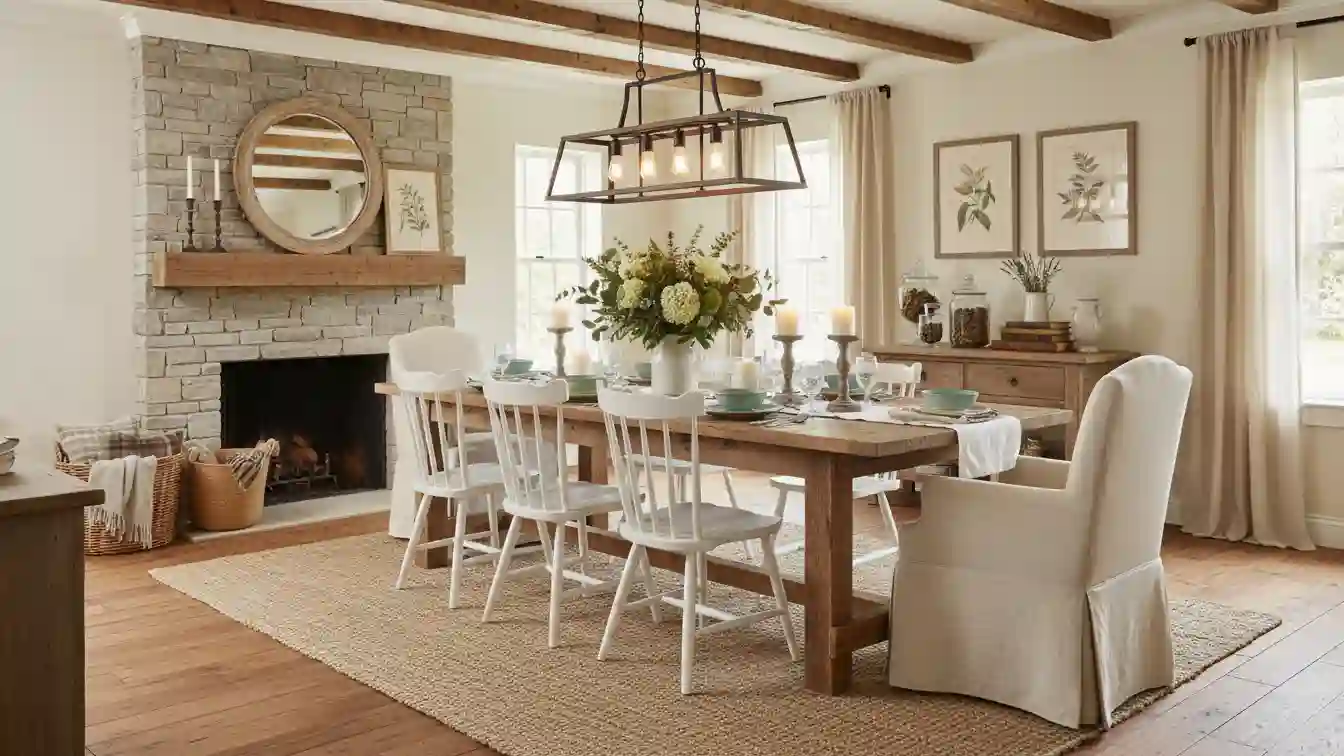
Creating a cozy farmhouse dining room isn’t just about following trends—it’s about crafting a space where memories unfold over shared meals, where every element whispers comfort, and where rustic charm meets everyday functionality.
Whether you’re working with a spacious dining area or a compact corner, these farmhouse dining room ideas will help you design a haven that feels authentically lived-in and genuinely inviting.
If you love layered textures and collected pieces, my Maximalist living room decor ideas guide will give you even more inspo for creating a cozy, lived-in home.
Understanding the Cozy Farmhouse Aesthetic
The magic of farmhouse style lies in its ability to balance rustic simplicity with deliberate warmth. Unlike minimalist approaches that can feel stark, or maximalist designs that overwhelm, the farmhouse aesthetic occupies that perfect middle ground where every piece serves both form and function.
At its heart, cozy farmhouse design celebrates authenticity. It honors the beauty of natural materials showing their age, the comfort of well-worn textiles, and the charm of collected treasures that tell a story. This isn’t about pristine showroom perfection—it’s about creating a dining space that invites you to pull up a chair and stay awhile.
If you’re drawn to warm wood tones and soft earthy colors, you’ll love these Gorgeous green kitchen ideas that use the same cozy farmhouse vibe in the kitchen.
The Foundation: Choosing Your Farmhouse Dining Table

Your dining table anchors the entire room, so selecting the right one sets the tone for everything that follows.
What Makes a Table Feel Farmhouse
Look for substantial wood tables with visible grain patterns and character marks. The best farmhouse tables bear the gentle marks of time—knots, slight variations in color, even small imperfections that add personality rather than detract from beauty.
Reclaimed wood tables bring instant history to your space. Each scratch and weathered spot tells a story, creating conversation pieces that new furniture simply cannot replicate. If reclaimed isn’t accessible, choose solid wood options in warm tones like oak, pine, or walnut.
Size and Shape Considerations
Rectangular tables dominate farmhouse style for good reason—they accommodate larger gatherings while maintaining that communal feeling central to farmhouse living. However, round pedestal tables work beautifully in smaller spaces, creating intimacy without sacrificing the farmhouse vibe.
Consider your room’s proportions carefully. A table that’s too large makes movement difficult and feels cramped, while one that’s too small leaves the room feeling empty and disconnected.
Seating That Invites Lingering
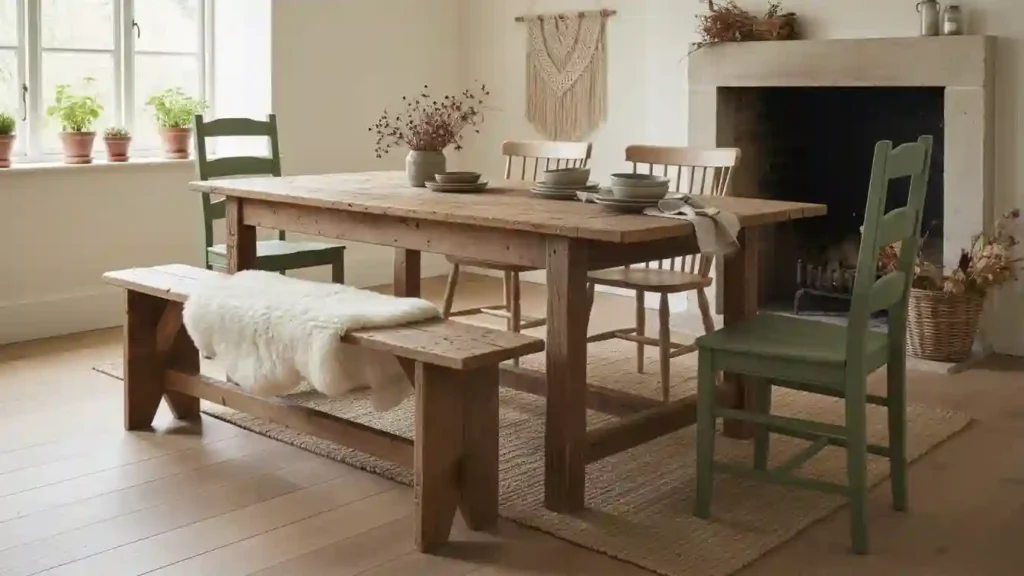
Farmhouse dining room seating offers wonderful opportunities for creativity and personal expression.
The Mixed Seating Approach
One of the most charming cozy farmhouse dining room ideas involves mixing different chair styles around your table. Pair Windsor-back chairs with upholstered parsons chairs, or combine painted ladder-backs with a rustic bench on one side.
This collected-over-time look feels authentic and intentional. It suggests a space that evolved naturally, where pieces were chosen for comfort and character rather than strict matching.
The Bench Advantage
Adding a bench to one side of your table instantly enhances the cozy factor. Benches encourage closeness, accommodate extra guests easily, and add visual interest through their horizontal lines. Top your bench with sheepskin throws or cushions in natural linen for added comfort.
Color Through Painted Chairs
While natural wood dominates farmhouse style, painted chairs in soft colors inject personality without overwhelming the space. Consider sage green, dusty blue, creamy white, or even charcoal gray. These muted tones complement wood while adding subtle visual interest that keeps the room from feeling too monochromatic.
Lighting That Sets the Mood

Lighting transforms any dining room from functional to magical, and farmhouse spaces deserve fixtures that enhance their cozy character.
Overhead Statement Pieces
A chandelier or pendant light serves as jewelry for your dining room. For farmhouse style, consider fixtures in wrought iron, weathered wood, or aged brass. Wagon wheel chandeliers, Mason jar pendants, or lantern-style fixtures all work beautifully.
Hang your fixture approximately 30-36 inches above the table surface to create intimate illumination without obstructing sight lines across the table.
Layering Light Sources
Don’t rely solely on overhead lighting. Wall sconces add dimension and warmth, while a collection of pillar candles in varied heights creates ambiance for evening meals. Battery-operated LED candles offer the glow without the worry, perfect for families with young children.
Consider adding a vintage floor lamp in one corner, or string Edison bulbs along a wall for soft, flattering light that enhances the cozy atmosphere.
Storage Solutions That Add Character
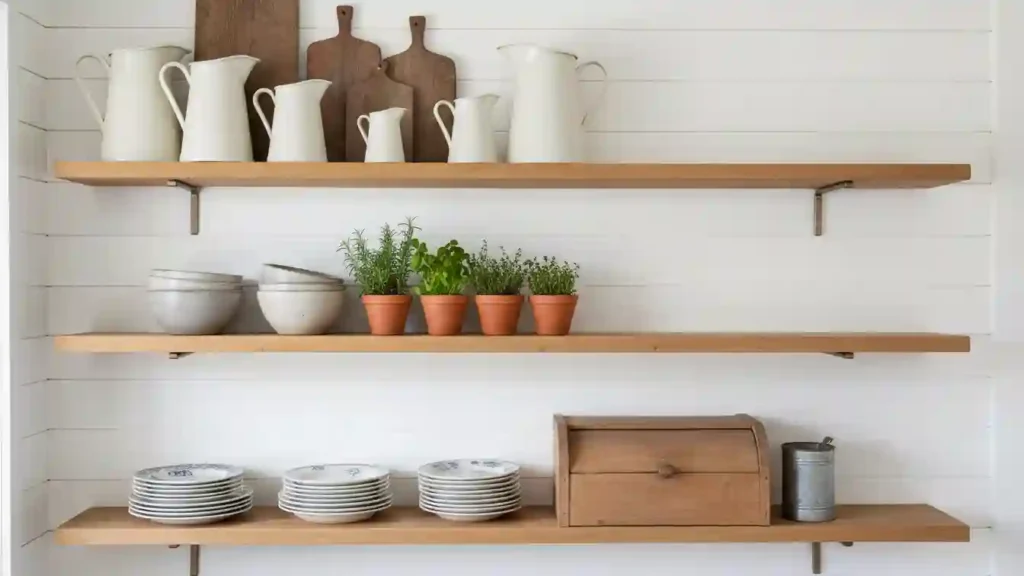
Practical storage doesn’t have to be boring—in fact, in farmhouse dining rooms, storage becomes a key design element.
Open Shelving Done Right
Floating shelves or rustic brackets with reclaimed wood planks create display space for your prettiest dishware, vintage finds, and seasonal decor. The key to making open shelving work is thoughtful styling that balances function with aesthetics.
Display white ironstone or stoneware for a classic farmhouse look, interspersed with small potted herbs, vintage cutting boards, or collections of wooden spoons. Keep at least 40% of your shelving open or minimally styled to avoid visual clutter.
For even more greenery inspo beyond the dining room, you can also explore my guide to bedroom plants that improve air health and wellness and keep the whole home feeling fresh.
The Hutch or Cabinet Advantage

A vintage hutch or antique cabinet brings instant farmhouse credibility while offering enclosed storage for less photogenic necessities. Look for pieces with glass doors that allow you to showcase pretty items while hiding everyday clutter behind closed doors.
Painted cabinets in colors like robin’s egg blue, soft mint, or weathered gray add personality without competing with your table. Don’t shy away from pieces with chipped paint or worn spots—these imperfections enhance authenticity.
Sideboards and Buffets
A sideboard serves triple duty: storage, serving surface, and styling opportunity. Use yours to create vignettes that change with the seasons, always anchored by a large mirror, vintage artwork, or architectural salvage piece above it.
Textiles That Invite Touch

The difference between a dining room and a cozy dining room often comes down to textiles that soften hard surfaces and invite tactile interaction.
Table Linens with Purpose
Layer textures for maximum impact. Start with a jute or burlap runner down the table’s center, then add individual linen placemats at each setting. For special occasions, drape a vintage grain sack or flour sack cloth across the table.
Natural fiber napkins in linen or cotton feel substantial and wash beautifully over time, developing that perfectly worn character that synthetic fabrics never achieve.
Rugs That Ground the Space

An area rug defines your dining zone while adding warmth underfoot. For farmhouse style, consider natural fiber options like jute, sisal, or seagrass. These durable materials withstand heavy traffic while maintaining their casual, organic aesthetic.
Alternatively, a vintage-inspired Persian or Turkish rug in muted colors adds pattern and softness. Just ensure your rug extends at least 24 inches beyond your table on all sides so chairs remain on the rug even when pulled out.
Window Treatments That Frame Views
Sheer linen curtains filter natural light beautifully while maintaining privacy. For a more relaxed look, hang them on simple wrought iron rods and let them puddle slightly on the floor. This casual approach feels appropriately unfussy for farmhouse style.
If your dining room overlooks an attractive view, consider skipping curtains altogether or using cafe curtains that cover only the lower half of windows.
Wall Treatments That Add Warmth

Your walls set the backdrop for all your farmhouse dining room ideas, so choose treatments that enhance rather than compete.
Shiplap and Board-and-Batten
Classic shiplap remains popular for good reason—its horizontal lines add architectural interest while creating that quintessential farmhouse look. Install it on all walls or create an accent wall behind your hutch or sideboard.
Board-and-batten wainscoting adds vertical interest and protects lower walls from chair damage. Paint it the same color as your upper walls for subtle texture, or create contrast with a darker lower section.
Paint Colors That Embrace Comfort
Soft, warm whites remain the farmhouse favorite, but don’t feel limited to white. Consider warm grays, soft beiges, or even muted sage or dusty blue for walls. These colors create cozy envelopes that make the space feel intimate without being dark.
If you’re nervous about color, paint just one accent wall or use colored paint below a chair rail with white above.
Gallery Walls and Vintage Finds
A gallery wall of vintage frames, antique mirrors, and agricultural prints adds personality and visual interest. Mix frame styles and finishes for that collected-over-time look, but maintain some cohesion through your mat board colors or the tones within your art.
Other wall decor ideas include vintage windows repurposed as frames, antique signs, barn wood panels, or even a collection of vintage plates arranged in a grid or organic cluster.
Centerpieces That Anchor Your Table

The center of your farmhouse dining table deserves thoughtful styling that changes with seasons while maintaining core farmhouse elements.
Year-Round Foundation Pieces
Start with substantial items that remain consistent: a long dough bowl filled with seasonal items, a vintage wooden toolbox planted with herbs, or a collection of ironstone pitchers in varying heights.
These foundational pieces provide structure while allowing flexibility for seasonal updates without completely restyling your table.
Seasonal Swaps
Spring calls for fresh flowers in vintage mason jars, bird nests, and soft pastels. Summer embraces lemons in wire baskets, fresh herbs, and bright whites. Fall introduces pumpkins, wheat bundles, and warm metallics. Winter features evergreen clippings, pinecones, and cozy candlelight.
The key is editing—choose three to five elements maximum for your centerpiece to avoid clutter.
The Power of Candlelight

Candlesticks in varied heights create ambiance and visual interest. Mix materials—brass with wood, iron with glass—while maintaining a consistent color palette. Battery-operated candles offer the same warm glow without the fire risk.
Bringing Nature Indoors

Farmhouse style celebrates the connection between indoor and outdoor spaces, and your dining room should reflect this relationship.
Fresh Greenery
Potted herbs like rosemary, thyme, or basil serve double duty as decor and cooking ingredients. Display them in vintage containers along your windowsill or as part of your table centerpiece.
Eucalyptus stems, olive branches, or simple supermarket flowers in ironstone pitchers bring life and freshness to your space without elaborate or expensive arrangements.
Natural Elements
Incorporate wood, stone, and metal in their most organic forms. A bowl of river rocks, a collection of driftwood pieces, or pinecones gathered from your yard all work beautifully in farmhouse styling.
These natural elements ground your space and remind us of the agricultural roots of farmhouse style.
Small Space Cozy Farmhouse Dining Room Ideas

Living with limited square footage doesn’t mean sacrificing farmhouse charm—it just requires thoughtful space planning.
Round Tables for Tight Spaces
A round pedestal table maximizes seating while allowing easier traffic flow in compact rooms. The lack of corners means you can tuck it into awkward nooks while still accommodating guests.
Vertical Storage Solutions
When floor space is limited, build upward. Tall, narrow cabinets or corner hutches provide substantial storage without eating up valuable square footage. Wall-mounted shelves keep the floor clear while offering display space.
Light Colors and Mirrors
Maximize natural light and create the illusion of more space through light paint colors and strategically placed mirrors. A large mirror opposite a window bounces light around the room while making the space feel larger.
Multi-Functional Pieces
Choose furniture that works harder. A storage bench provides seating while hiding table linens and seasonal decor. A drop-leaf table expands for gatherings but tucks away to save space during everyday use.
Budget-Friendly Farmhouse Dining Room Ideas
Creating a cozy farmhouse dining room doesn’t require unlimited funds—creativity and patience often matter more than budget.
DIY Distressing Techniques
Transform thrift store finds or builder-grade furniture through simple distressing. Apply chalk paint in farmhouse-appropriate colors, then use sandpaper to gently wear edges and high-touch points for an authentically aged appearance.
Thrifting and Flea Market Finds
Vintage farmhouse pieces live at thrift stores, estate sales, and flea markets waiting for discovery. Look for solid wood furniture with good bones, even if the finish needs work. Vintage frames, crockery, and architectural salvage pieces cost a fraction of new items while offering exponentially more character.
Simple Swaps That Transform
Sometimes the smallest changes create the biggest impact. Swap modern drawer pulls for vintage glass knobs, replace a contemporary light fixture with a farmhouse chandelier, or exchange synthetic placemats for natural linen versions.
Free Decor from Nature
The outdoors provides endless free decorating materials. Gather branches for vases, collect pinecones for bowl fillers, cut garden flowers for arrangements, or forage interesting leaves and stems for seasonal displays.
Maintaining Your Cozy Farmhouse Dining Room

A beautiful farmhouse dining room works best when it remains functional for daily life, not just special occasions.
Embrace Patina and Wear
Remember that farmhouse style celebrates the beauty of use. Don’t stress over new scratches on your wood table—they add character. Water rings become part of the story. This lived-in quality is what makes farmhouse spaces feel genuinely cozy rather than contrived.
Seasonal Refreshes
Keep your space feeling fresh through small seasonal updates. Swap throw pillows on your bench, change out centerpiece elements, or rotate vintage finds on your shelves. These small changes prevent design fatigue while maintaining your core farmhouse aesthetic.
Quality Over Quantity
Resist the urge to over-decorate. The coziest farmhouse dining rooms feel curated rather than crowded. Each piece should earn its place through beauty, function, or meaning. If something doesn’t bring you joy or serve a purpose, edit it out.
Final Thoughts on Creating Your Cozy Farmhouse Dining Room
The most successful farmhouse dining rooms share one quality: they feel like homes rather than showrooms. They invite gathering, encourage lingering, and embrace the beautiful imperfection of real life.
Your cozy farmhouse dining room should reflect your family’s needs, your personal style, and the way you actually live. Don’t feel pressured to include every farmhouse element—choose the ones that resonate with you and ignore the rest.
Start with the fundamentals—a solid wood table, comfortable seating, warm lighting—then layer in character through vintage finds, natural textures, and personal touches that tell your story. Trust your instincts, embrace imperfection, and create a space where your favorite memories will unfold.
After all, the coziest farmhouse dining rooms aren’t the ones that look perfect in photographs—they’re the ones that feel perfect for Sunday morning pancakes, homework sessions, holiday dinners, and all the ordinary extraordinary moments that make up a life well-lived.