The Complete Guide to Cottagecore Aesthetic: Transform Your Home Into a Countryside Sanctuary
What Is the Cottagecore Aesthetic?
The cottagecore aesthetic represents more than interior design—it’s a lifestyle philosophy celebrating pastoral simplicity, natural harmony, and slow living. This aesthetic romanticizes rural countryside living through deliberate design choices that emphasize handmade craftsmanship, vintage charm, and environmental consciousness.
Unlike fleeting design trends, the cottagecore aesthetic taps into timeless human desires: connection with nature, escape from urban chaos, and appreciation for traditional crafts. It creates spaces that feel like warm embraces, where every element tells a story and invites you to pause, breathe, and simply be.
The Psychology Behind Cottagecore’s Appeal

Escapism Meets Authenticity
In our hyperconnected digital age, the cottagecore aesthetic offers psychological refuge. Research shows that natural elements in living spaces reduce stress hormones and improve mental wellbeing. This aesthetic provides that connection through deliberate material choices and nature-inspired color schemes.
The Nostalgia Factor
The cottagecore aesthetic draws from collective nostalgia for simpler times—not necessarily times we’ve lived, but idealized versions of agrarian life. This emotional resonance explains why millennials and Gen Z particularly embrace this aesthetic, seeking antidotes to digital overwhelm and economic uncertainty.
Sustainable Living as Self-Care
Choosing the cottagecore aesthetic often reflects deeper values around sustainability and intentional consumption. Thrifting vintage pieces, repurposing materials, and creating handmade decor become acts of environmental stewardship and creative expression simultaneously.
Core Design Principles of Cottagecore Aesthetic
1. Natural Materials as Foundation

The cottagecore aesthetic prioritizes materials directly from nature:
Wood: Reclaimed barn wood, weathered oak, distressed pine for furniture and accent walls. Each grain pattern and imperfection adds character.
Stone & Brick: Exposed stone fireplaces, brick backsplashes, or stone accent walls ground spaces in earthy permanence.
Natural Textiles: Linen curtains filter light beautifully while cotton bedding, wool throws, and jute rugs add tactile warmth.
Ceramic & Clay: Handthrown pottery, terracotta planters, and stoneware dishes feel substantial and artisanal.
Wicker & Rattan: Woven baskets for storage, rattan chairs, and wicker lampshades introduce organic texture.
2. Color Psychology in Cottagecore Spaces
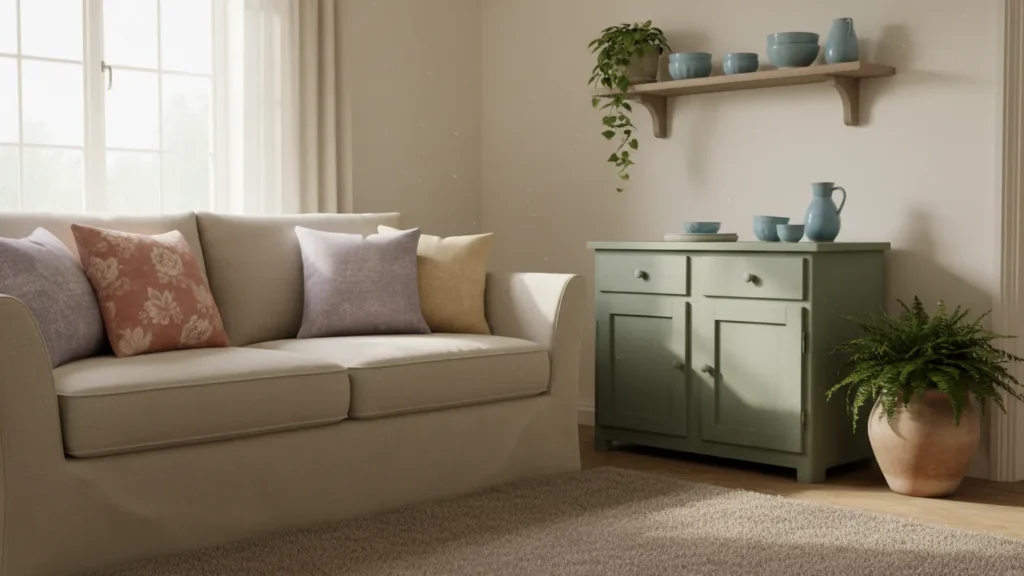
The cottagecore aesthetic palette mimics nature’s softer moments:
Foundational Neutrals: Warm ivory, cream, oatmeal, and soft taupe create serene backdrops that never overwhelm.
Garden-Inspired Accents: Sage green, dusty rose, lavender, buttercream yellow, and sky blue mirror flowers and foliage.
Earthy Grounding Tones: Terracotta, warm browns, and soft grays anchor spaces without heaviness.
This restricted palette creates visual harmony while allowing patterns and textures to shine. Avoid stark whites or bold primaries—they conflict with the aesthetic’s gentle, aged quality.
3. Vintage & Antique Furniture Selection

Authentic cottagecore aesthetic embraces furniture with history:
Where to Source:
- Estate sales and auctions for quality pieces
- Thrift stores for hidden gems requiring minor restoration
- Antique shops for investment pieces
- Online marketplaces for specific styles
Key Furniture Styles:
- Farmhouse tables with turned legs
- Windsor chairs and ladder-back seating
- Distressed dressers and wardrobes
- Iron bed frames with brass details
- Roll-top desks and secretary cabinets
The Art of Imperfection: Scratches, paint wear, and patina aren’t flaws—they’re badges of authenticity. Resist over-refinishing vintage pieces. Light cleaning and wood conditioning often suffice.
4. Bringing Nature Indoors

The cottagecore aesthetic blurs boundaries between interior and exterior:
Living Plants: Create miniature indoor gardens with herbs (rosemary, thyme, lavender) on windowsills. Group potted plants at varying heights for visual interest.
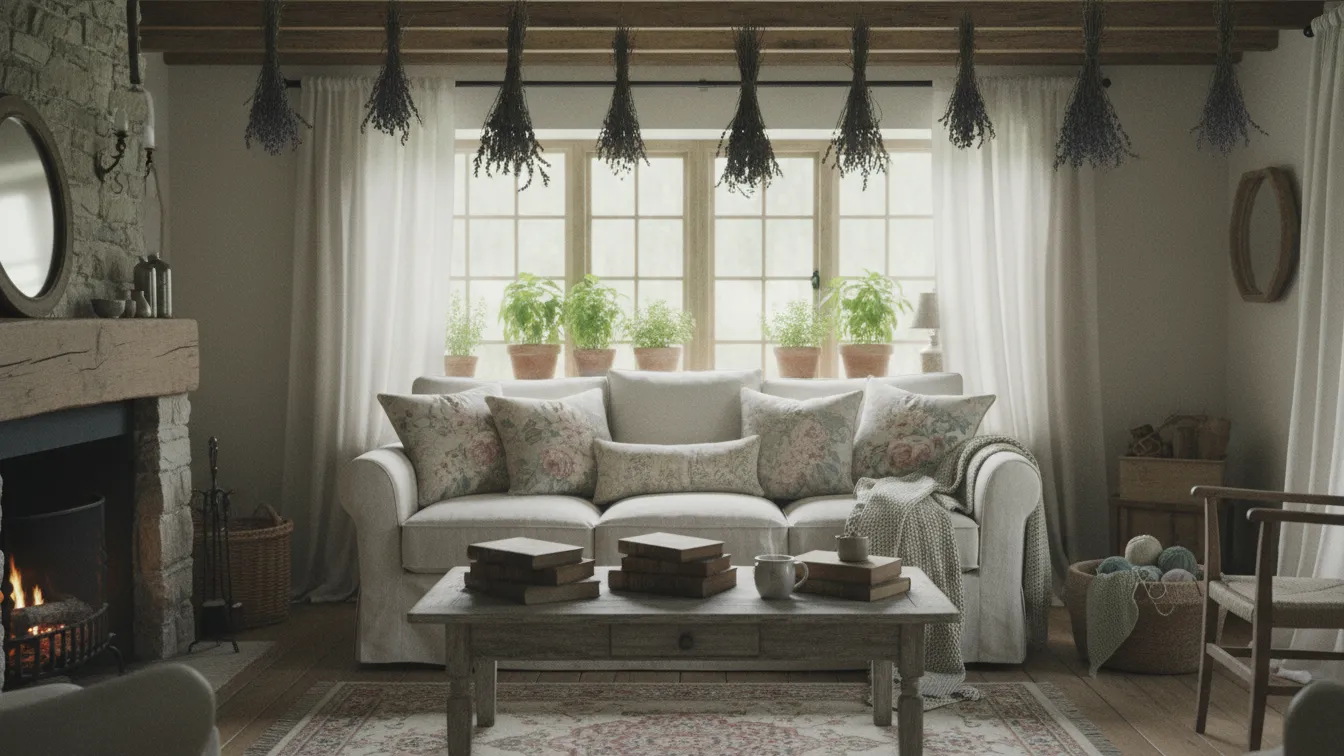
Dried Botanicals: Hang lavender bundles, eucalyptus branches, and wheat stalks from ceiling beams. Display dried hydrangeas in vintage pitchers.
Natural Light Optimization: Replace heavy curtains with sheer linen panels. Keep windows unobstructed during daylight hours. Position seating near natural light sources.
Floral Integration: Fresh wildflowers in mismatched vintage bottles create charming centerpieces. Pressed flowers in frames become affordable botanical art.
5. Textile Layering for Depth
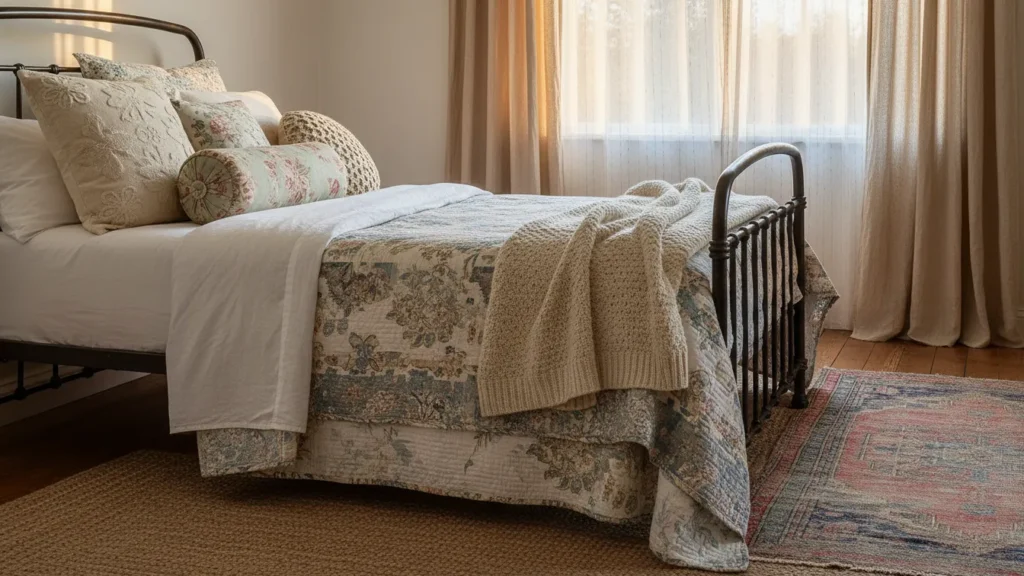
Master the cottagecore aesthetic through strategic textile layering:
Bedding: Start with crisp linen sheets, add a cotton quilt, layer a wool throw at the foot, finish with embroidered pillows in varying sizes.
Seating: Drape vintage quilts over sofas, add velvet cushions, toss knit blankets over chair arms.
Windows: Layer sheer curtains under heavier linen drapes for light control and visual interest.
Floors: Place vintage rugs atop natural fiber rugs for unexpected dimension.
This layering creates visual richness while serving practical comfort purposes—essential for authentic cottagecore living.
Room-by-Room Cottagecore Aesthetic Guide

The Cottagecore Kitchen
Transform your kitchen into a farmhouse haven:
Key Elements:
- Open shelving displaying mismatched vintage dishes
- Butcher block or wooden countertops
- Apron-front farmhouse sink
- Glass-front cabinets with simple hardware
- Hanging copper pots and cast iron cookware
- Fresh herbs in terracotta pots along windowsills
- Vintage scales and kitchen tools as decor
Color Palette: Cream cabinets, sage green accents, warm wood tones, and brass fixtures.
Finishing Touches: Display homemade preserves in mason jars, keep fresh bread in a bread box, hang dried herbs from a wooden drying rack.
The Cottagecore Bedroom
Create a sanctuary for restorative sleep:
Foundational Pieces:
- Iron or wooden bed frame with ornate details
- Vintage nightstands in mismatched styles
- Antique dresser or wardrobe
- Overstuffed reading chair near window
Bedding Strategy: White or cream linen sheets, floral duvet cover or quilt, multiple pillows with embroidered cases, chunky knit throw.
Lighting: Vintage brass table lamps, string lights for soft ambiance, maximize natural morning light.
Personal Touches: Stack beloved books on nightstand, display vintage hand mirror, hang pressed botanical prints.
The Cottagecore Living Room
Design a gathering space that invites lingering:
Seating Arrangement: Overstuffed sofa with slipcover, mismatched vintage armchairs, ottoman for extra seating and footrest.
Focal Point: Stone fireplace, antique bookshelf, or large window overlooking garden.
Textiles: Layered vintage rugs, throw pillows in florals and checks, draped quilts.
Decor Elements:
- Stacks of old books on coffee table
- Vintage botanical prints in ornate frames
- Ceramic vases with fresh or dried flowers
- Wooden bowls and woven baskets
- Candles in brass holders
Lighting: Avoid harsh overhead lights. Use table lamps, floor lamps with fabric shades, and candles for warm illumination.
The Cottagecore Bathroom
Even practical spaces deserve cottagecore charm:
Simple Upgrades:
- Replace plastic containers with glass apothecary jars
- Display rolled towels in wire baskets
- Add vintage mirror with ornate frame
- Keep fresh lavender in small vase
- Use wooden bath caddy across tub
- Hang linen hand towels on vintage hooks
Color Scheme: Soft whites, pale blues, sage green, with natural wood accents.
Cottagecore Aesthetic Beyond Decor: Lifestyle Integration

Mindful Homemaking Activities
Living the cottagecore aesthetic means engaging in traditional domestic arts:
Bread Baking: The ritual of mixing, kneading, waiting for dough to rise, and filling your home with baking aromas embodies cottagecore values. Start with simple no-knead recipes.
Gardening: Whether growing vegetables, herbs, or cutting flowers, nurturing plants from seed to harvest connects you to seasonal rhythms. Even small balcony container gardens count.
Preserving: Making jams, pickling vegetables, or drying herbs extends summer’s bounty and fills your pantry with homemade provisions.
Handicrafts: Knitting, embroidery, sewing, or crocheting creates both functional items and meditative practice. Imperfect handmade items add authentic personality to cottagecore spaces.
Nature Walks: Regular walks to observe seasonal changes, collect interesting stones or fallen branches, and gather wildflower bouquets deepen your nature connection.
Slow Living Practices
The cottagecore aesthetic naturally encourages pace reduction:
Morning Rituals: Replace scrolling with tea in a favorite mug, journaling with fountain pen, or tending window herbs.
Analog Activities: Choose physical books over screens, write letters to friends, listen to records on vintage player.
Seasonal Awareness: Decorate with seasonal elements, cook with seasonal produce, celebrate solstices and harvests.
Intentional Consumption: Buy fewer, better quality items. Repair before replacing. Choose items with stories over mass-produced goods.
Achieving Cottagecore Aesthetic on Any Budget

Thrifting Strategy
What to Prioritize:
- Vintage dishes and glassware (often very affordable)
- Wooden furniture needing minor refinishing
- Vintage linens and quilts (check for holes)
- Picture frames for DIY botanical prints
- Ceramic and pottery pieces
- Wicker baskets in all sizes
What to Avoid:
- Particle board furniture (won’t last)
- Heavily damaged textiles (repair costs exceed value)
- Trendy interpretations of cottagecore (won’t age well)
DIY Projects for Authentic Cottagecore Charm
Beginner Projects:
- Press wildflowers and frame them
- Distress new furniture with sandpaper and paint
- Sew simple pillow covers from vintage fabric
- Create dried flower arrangements
- Paint terracotta pots
- Make natural beeswax candles
Intermediate Projects:
- Reupholster vintage chairs
- Build simple floating shelves from reclaimed wood
- Create patchwork quilts from fabric scraps
- Install open kitchen shelving
- Paint cabinets with chalk paint
Advanced Projects:
- Restore antique furniture pieces
- Install shiplap or beadboard accent walls
- Create built-in bookshelves
- Refinish hardwood floors
Free Ways to Enhance Cottagecore Aesthetic
- Rearrange furniture to maximize natural light
- Declutter to let remaining pieces breathe
- Collect wildflowers and branches for arrangements
- Display collections (vintage books, bottles) intentionally
- Swap decor items seasonally from storage
- Forage natural elements for seasonal displays
Avoiding Common Cottagecore Aesthetic Mistakes
Mistake 1: Over-Theming
Cottagecore works best when it feels lived-in rather than staged. Avoid creating spaces that look like museum displays. Mix eras, incorporate personal treasures, allow for practical modern conveniences.
Mistake 2: Sacrificing Comfort for Aesthetics
Every vintage chair needn’t be uncomfortable. Add cushions, choose supportive seating, ensure adequate lighting for reading. The aesthetic should enhance daily life, not hinder it.
Mistake 3: Ignoring Personal History
Don’t feel pressured to only include “perfect” cottagecore pieces. Your grandmother’s mismatched china, children’s artwork, or modern coffee maker all belong in your authentic cottagecore home.
Mistake 4: Fast Fashion Cottagecore
Mass-produced “farmhouse” decor from big box stores often lacks the soul authentic cottagecore requires. These items feel flat compared to genuine vintage finds or handmade pieces.
Mistake 5: Forgetting Functionality
Woven baskets look charming but need to actually store things. Vintage crocks should hold utensils. Beauty and function must coexist in successful cottagecore spaces.
Sustainability at the Heart of Cottagecore Aesthetic
Ethical Sourcing
- Prioritize secondhand and vintage over new production
- Support local artisans and craftspeople
- Choose natural, biodegradable materials
- Select quality items built to last decades
- Repair and restore rather than replace
Reducing Waste Through Cottagecore
- Compost kitchen scraps for garden
- Use cloth napkins and towels instead of paper
- Store food in glass containers and beeswax wraps
- Mend clothing and textiles
- Repurpose jars and containers
Natural Cleaning Products
Align cleaning with cottagecore values using simple ingredients:
- Vinegar and water for surfaces
- Baking soda for scrubbing
- Essential oils for scent
- Castile soap for general cleaning
The Evolution of Cottagecore Aesthetic

Historical Influences
While cottagecore emerged as a named aesthetic around 2018, its roots extend deep into design history:
Arts and Crafts Movement (1880s-1920s): Rejected industrialization, celebrated handcraftsmanship and natural materials.
Back-to-the-Land Movement (1960s-70s): Promoted rural self-sufficiency and environmental consciousness.
Shabby Chic (1980s-90s): Popularized distressed furniture and vintage textiles in contemporary settings.
Modern Cottagecore: Diverse Perspectives
Contemporary cottagecore aesthetic embraces broader cultural influences:
Global Cottage Traditions: Japanese wabi-sabi imperfection, Scandinavian hygge coziness, Mediterranean farmhouse warmth.
Urban Cottagecore: Adapting the aesthetic to apartments through vertical gardens, potted herbs, vintage finds, and nature-inspired color palettes.
Inclusive Narratives: Expanding beyond romanticized Western rural imagery to include diverse cultural relationships with land and traditional living.
Frequently Asked Questions About Cottagecore Aesthetic
Is cottagecore aesthetic only for rural homes? Absolutely not. Urban apartments and suburban homes can embrace cottagecore through vintage furniture, natural materials, potted plants, and nature-inspired colors. The aesthetic adapts to any space.
How is cottagecore different from farmhouse style? While both celebrate rural influences, farmhouse style often skews more rustic and utilitarian, sometimes incorporating industrial elements. Cottagecore tends softer, more romantic, with emphasis on florals, pastels, and delicate vintage pieces.
Can I mix cottagecore with other aesthetics? Yes! Cottagecore blends beautifully with vintage, bohemian, Scandinavian, and even maximalist aesthetics. The key is maintaining natural materials and soft colors as foundations.
Is cottagecore aesthetic expensive to achieve? It can be quite budget-friendly. Thrifting, DIY projects, and natural elements like foraged branches cost little. Investing in a few quality vintage pieces over time creates authentic spaces affordably.
How do I start transitioning to cottagecore aesthetic? Begin with textiles—add linen curtains, vintage quilts, natural fiber rugs. Bring in plants and fresh flowers. Gradually replace plastic and synthetic items with natural materials. Shop thrift stores for vintage pieces. The transition should feel organic, not rushed.
Creating Your Personal Cottagecore Sanctuary
The cottagecore aesthetic ultimately invites you to slow down, connect with nature, and find beauty in simplicity. It’s permission to value handmade over mass-produced, quality over quantity, and presence over productivity.
Your cottagecore space should reflect your unique story—family heirlooms alongside thrift store finds, modern necessities nestled among vintage treasures. The aesthetic provides a framework, but your personal touches make a house feel like home.
Start small: a vase of wildflowers, a cozy reading nook, fresh herbs on your windowsill. Let the aesthetic evolve organically as you discover what brings you joy and peace. The goal isn’t perfection—it’s creating a sanctuary that nourishes your soul and celebrates the simple, beautiful moments that make life meaningful.
Welcome to cottagecore living. Welcome home.