27 Botanical Bedroom Ideas That Transform Your Space Into a Natural Sanctuary

Imagine waking up surrounded by lush greenery, breathing cleaner air, and feeling instantly calmer the moment you enter your bedroom. This isn’t a fantasy—it’s what a well-designed botanical bedroom delivers every single day.
Studies show that indoor plants can reduce stress by up to 37% and boost productivity by 15%. But creating a botanical bedroom goes far beyond randomly placing a few plants around your room. This comprehensive guide reveals different Botanical Bedroom Ideas, and exactly how to design a nature-inspired sanctuary that’s both beautiful and functional.
What Is a Botanical Bedroom? (And Why Everyone’s Obsessed)
A botanical bedroom brings the outdoors inside through strategic use of plants, natural materials, organic textures, and earth-toned color palettes. Unlike generic plant decor, botanical design creates a cohesive ecosystem where every element works together to promote relaxation and wellbeing.
The style draws from biophilic design principles—the science-backed concept that humans have an innate need to connect with nature. When done right, your bedroom becomes more than just a sleeping space; it transforms into a restorative retreat.
If you’re obsessed with nature-inspired spaces in general, you might also love my Mediterranean garden ideas for carrying those lush, organic vibes beyond the bedroom.
The Science-Backed Benefits of Botanical Bedrooms

Before diving into design ideas, let’s understand why this trend has staying power:
Air Quality Improvement: NASA research identified plants like snake plants and pothos as natural air purifiers, removing toxins such as formaldehyde and benzene from indoor air.
Better Sleep Quality: Plants release oxygen at night, and certain varieties like lavender and jasmine promote deeper sleep through their natural aromatherapy effects.
Reduced Stress and Anxiety: A University of Technology Sydney study found that indoor plants reduced psychological stress by 37% and negative mood states by 58%.
Enhanced Cognitive Function: Research from the Royal College of Agriculture demonstrates that plants in interior spaces increase concentration and memory retention by up to 20%.
Faster Recovery: Hospital patients with views of nature recover faster and require less pain medication—your bedroom can replicate these healing effects.
If you want a ready-made plant list to boost air quality even more, my guide to bedroom plants that improve air health and wellness breaks down the best varieties to start with.
5 Botanical Bedroom Styles to Match Your Personality
1. Tropical Jungle Paradise

Transform your bedroom into a lush rainforest escape with oversized monstera plants, banana leaf prints, and deep green accent walls. Layer in rattan furniture, bamboo blinds, and tropical-print textiles for maximum impact.
Best for: Bold personalities who love dramatic, Instagram-worthy spaces
Key plants: Monstera deliciosa, bird of paradise, rubber plant, philodendrons
2. Minimalist Zen Garden
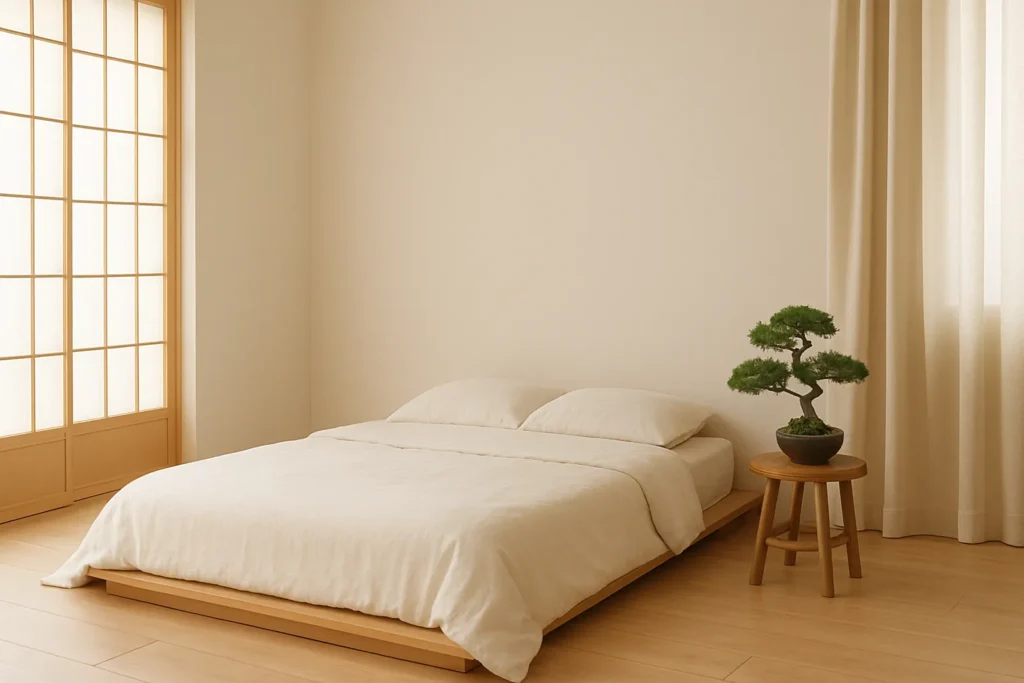
Embrace Japanese-inspired simplicity with carefully selected statement plants, neutral tones, and clean lines. Think single orchid displays, bonsai trees, and plenty of negative space.
Best for: Those who want tranquility without visual clutter
Key plants: Bonsai, peace lily, snake plant, single orchid
3. English Cottage Garden
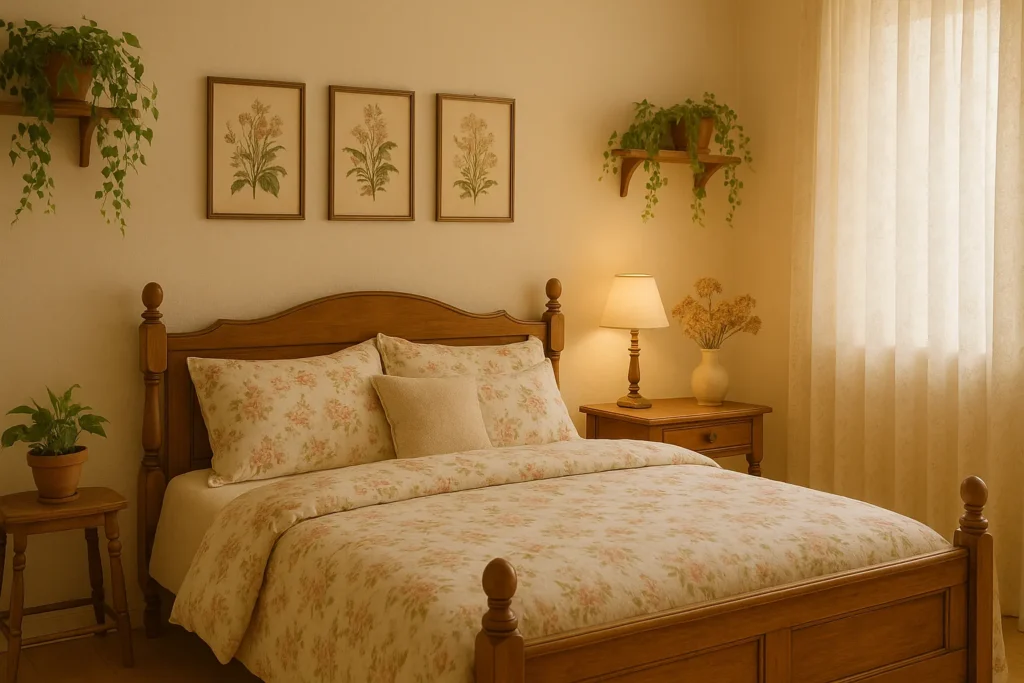
Soft florals, vintage botanical prints, and cascading plants create a romantic, countryside feel. Mix dried flower arrangements, floral wallpaper, and antique plant stands.
Best for: Romantic souls who love vintage aesthetics
Key plants: English ivy, ferns, flowering plants like cyclamen, hanging pothos
4. Desert Oasis Modern
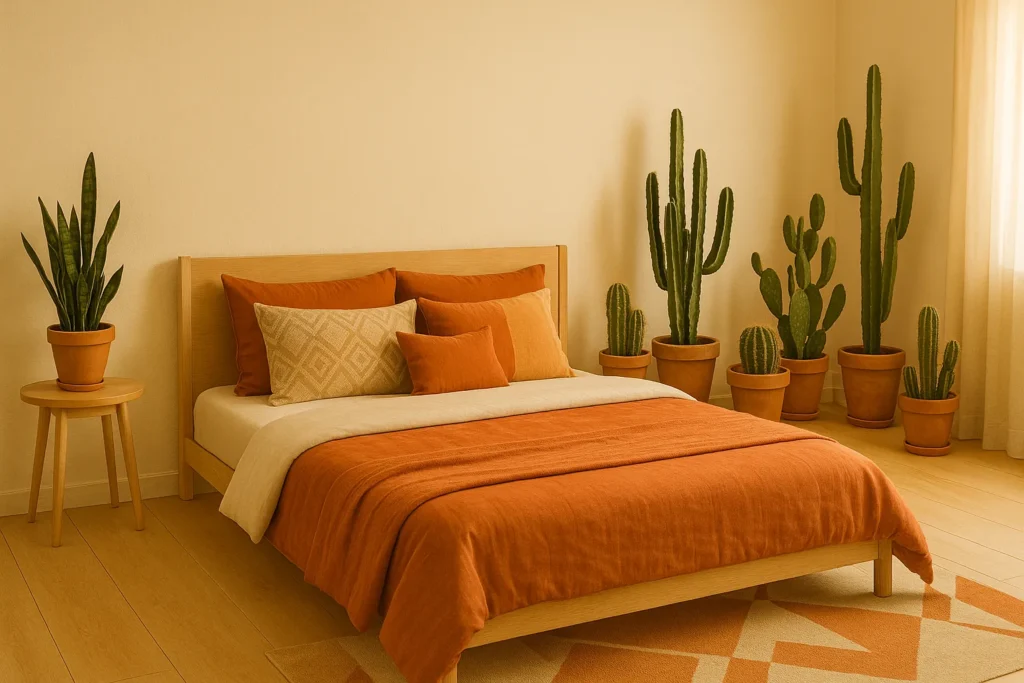
Cacti, succulents, and architectural plants paired with terracotta pots and warm earth tones. Add woven textiles and geometric patterns for contemporary desert vibes.
Best for: Low-maintenance lovers with modern taste
Key plants: Various cacti, snake plant, aloe vera, jade plant
5. Scandinavian Forest Retreat
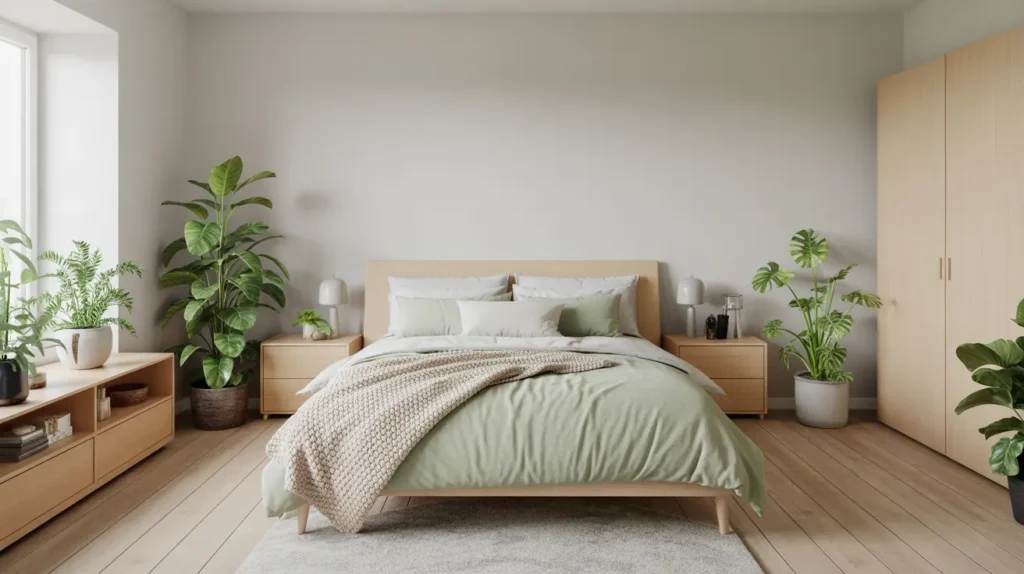
Light woods, muted greens, and simple leafy plants create Nordic calm. Focus on functional design with plants as thoughtful accents rather than overwhelming features.
Best for: Fans of cozy, functional Scandinavian design
Key plants: Pothos, ferns, fiddle-leaf fig, small herb garden
The Complete Plant Selection Guide for Bedrooms
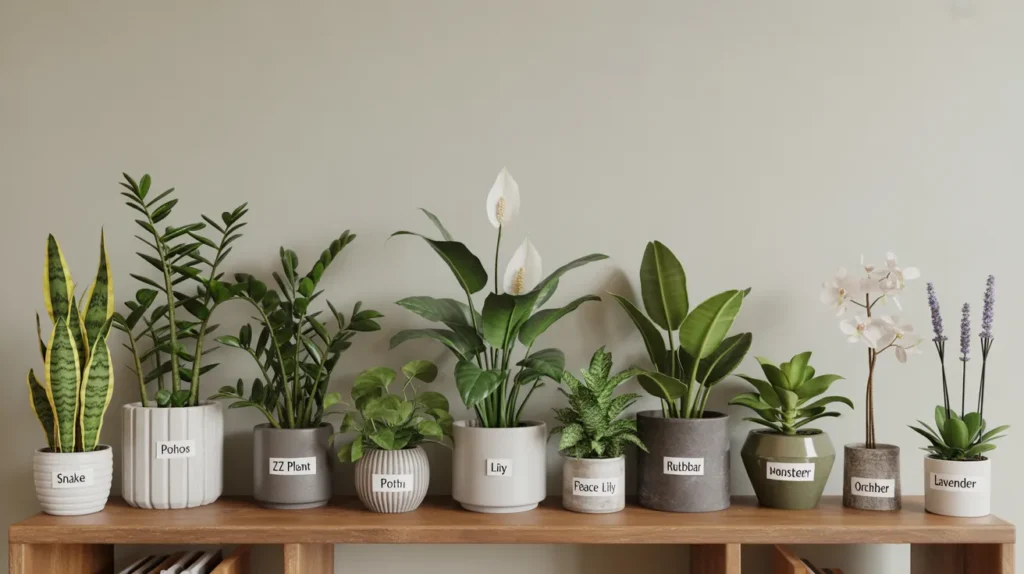
Low-Light Champions (North-Facing or Dark Rooms)
Snake Plant (Sansevieria): Releases oxygen at night, requires watering only every 2-3 weeks. Perfect for beginners.
Pothos: Thrives in low light, purifies air, virtually indestructible. Great for hanging displays.
ZZ Plant: Tolerates neglect, low light, and irregular watering. Ideal for busy professionals.
Peace Lily: Blooms even in shade, excellent air purifier, signals when it needs water by drooping.
Bright Light Lovers (South or West-Facing Windows)
Fiddle-Leaf Fig: Makes a stunning floor statement, needs bright indirect light, moderate watering.
Rubber Plant: Bold architectural leaves, tolerates various light conditions, easy care.
Bird of Paradise: Dramatic tropical statement, needs bright light, creates instant jungle vibes.
Monstera Deliciosa: Iconic split leaves, moderate care, grows quickly in good light.
Best Flowering Plants for Bedrooms
Orchids: Long-lasting blooms, elegant appearance, prefer bright indirect light and weekly ice cube watering.
African Violets: Compact size, continuous blooms, thrive on windowsills with moderate light.
Jasmine: Natural aromatherapy, promotes sleep quality, needs bright light and consistent moisture.
Lavender: Calming scent, improves sleep, requires bright light and careful not to overwater.
Plants to Avoid in Bedrooms
❌ Strongly scented flowers (like lilies) can cause headaches ❌ Plants toxic to pets if you have cats or dogs (philodendrons, certain lilies) ❌ Mold-prone plants in humid environments without proper ventilation ❌ High-maintenance plants if you travel frequently
Color Psychology: Choosing Your Botanical Bedroom Palette
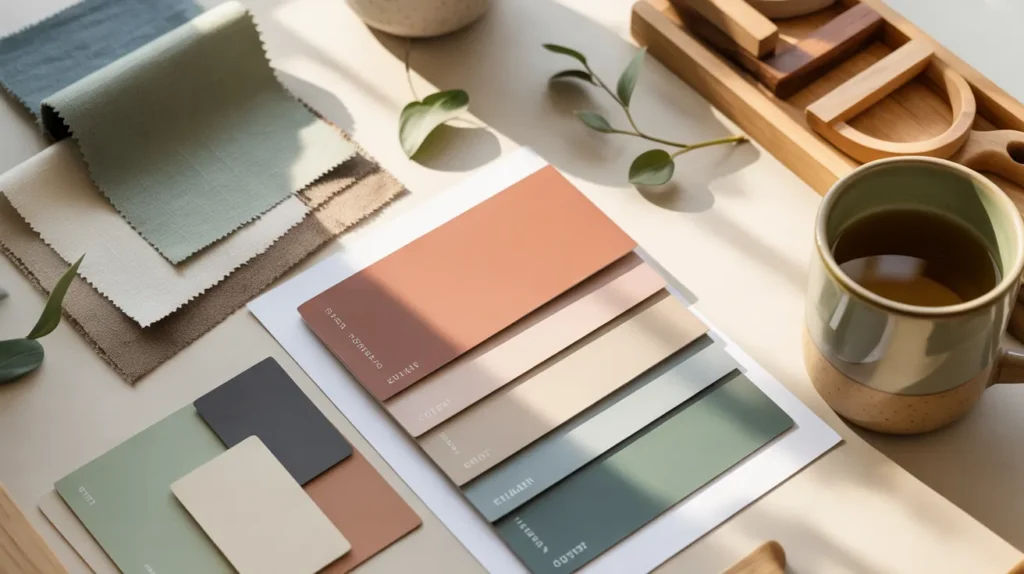
The Core Botanical Color Wheel
Sage Green (Primary): Promotes calm and balance, reduces anxiety, pairs beautifully with whites and woods.
Terracotta and Clay (Accent): Adds warmth without overwhelming, grounds the space, perfect for pots and textiles.
Soft Whites and Creams (Base): Reflects light, makes rooms feel larger, provides clean backdrop for greenery.
Warm Wood Tones (Neutral): Brings organic texture, adds coziness, complements all green shades.
Dusty Blue (Accent): Adds tranquility, works well with green-gray combinations, evokes sky and water.
Three Proven Color Schemes
Scheme 1: Forest Serenity
- Walls: Soft sage or muted olive
- Bedding: Cream linen with forest green accents
- Furniture: Medium-toned walnut or oak
- Accents: Terracotta pots, brass fixtures
Scheme 2: Airy Greenhouse
- Walls: Pure white or warm cream
- Bedding: White with subtle botanical embroidery
- Furniture: Light natural wood or whitewashed
- Accents: All colors come from plants and natural textures
Scheme 3: Earthy Oasis
- Walls: Warm terracotta or clay pink
- Bedding: Oatmeal linen and woven textures
- Furniture: Rattan and light woods
- Accents: Deep green plants, woven baskets
Essential Materials and Textures for Authentic Botanical Design

Natural Materials Priority List
- Solid Wood Furniture: Choose oak, walnut, teak, or bamboo over particle board
- Natural Fiber Textiles: Linen, organic cotton, jute, hemp—avoid synthetics
- Rattan and Wicker: Perfect for headboards, chairs, baskets, and light fixtures
- Stone and Ceramic: For plant pots, decorative objects, and accent pieces
- Cork and Bamboo: For flooring, wall panels, or accessories
Texture Layering Formula
Foundation Layer: Smooth wood floor or natural fiber rug Soft Layer: Linen or cotton bedding with subtle texture Accent Layer: Chunky knit throws, macramé wall hangings, woven baskets Living Layer: Mix of plant leaf textures (broad leaves, delicate ferns, trailing vines)
27 Actionable Botanical Bedroom Ideas You Can Implement This Weekend
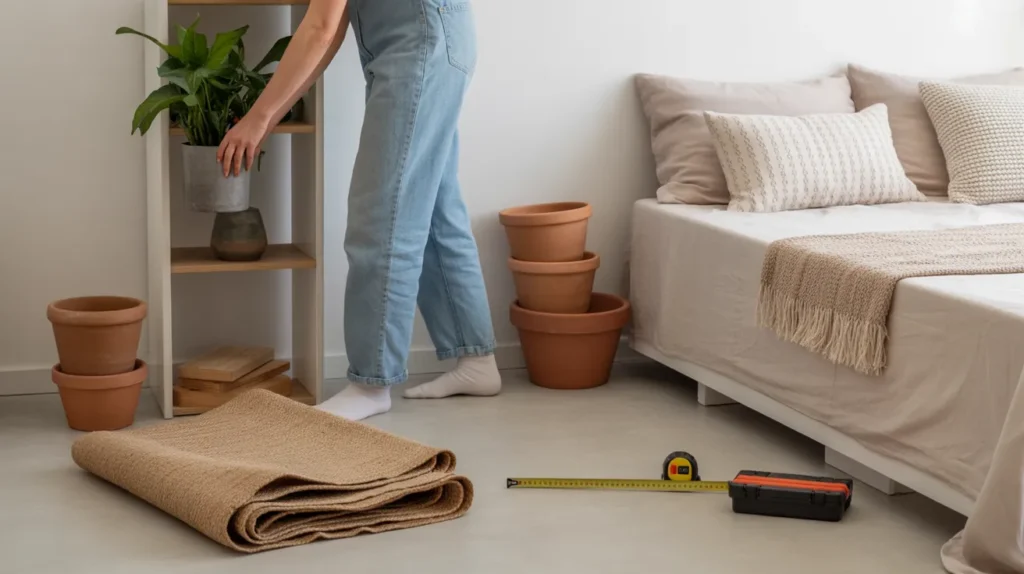
Wall Treatments (Ideas 1-6)
- Create a Living Plant Wall: Install modular wall planters with pothos, ferns, and philodendrons for a vertical garden effect
- Botanical Gallery Wall: Frame pressed flowers, botanical prints, and vintage herbarium illustrations in mismatched frames
- Statement Botanical Wallpaper: Choose one accent wall with palm leaf, fern, or watercolor floral patterns
- Hanging Macramé Plant Display: Suspend multiple plants at varying heights near a bright window
- Floating Shelves Plant Ladder: Install 3-5 floating shelves in a staggered pattern to create a cascading plant display
- Nature-Inspired Paint Technique: Use ombre or color-washing techniques with sage to forest green gradients
Furniture and Layout (Ideas 7-12)
- Natural Wood Platform Bed: Choose a low-profile bed in natural wood to ground the space organically
- Rattan Headboard Statement: Install a woven rattan or wicker headboard for instant botanical texture
- Vintage Plant Stand Collection: Place varying heights of mid-century plant stands in room corners
- Woven Storage Baskets: Replace plastic bins with seagrass or rattan baskets for clothes and accessories
- Wooden Bench at Bed Foot: Add a simple wooden bench styled with plants and folded linens
- Repurposed Ladder Plant Shelf: Lean a vintage wooden ladder against the wall as a unique plant display
Lighting Solutions (Ideas 13-16)
- Rattan Pendant Light: Replace overhead lighting with a woven pendant fixture in natural tones
- String Lights with Plants: Weave fairy lights through hanging plants for magical evening ambiance
- Himalayan Salt Lamp: Add warm, natural glow while purifying air (perfect bedside companion)
- Bamboo Floor Lamp: Choose a floor lamp with bamboo or wooden elements near reading nooks
Textile and Soft Goods (Ideas 17-20)
- Linen Everything: Switch to linen sheets, duvet covers, and pillowcases in earthy neutrals
- Botanical Print Pillows: Layer 3-5 pillows with leaf prints, subtle florals, and solid greens
- Chunky Knit Throw: Drape an oversized knit blanket in cream or sage across the bed foot
- Natural Fiber Rug: Ground the space with jute, sisal, or wool rug in neutral tones
Decorative Details (Ideas 21-27)
- Dried Flower Arrangements: Create everlasting displays with pampas grass, eucalyptus, and dried florals
- Terracotta Pot Collection: Display plants in various sizes of unglazed terracotta for cohesive look
- Nature-Inspired Artwork: Hang large-scale botanical photography or watercolor plant illustrations
- Essential Oil Diffuser: Choose a ceramic diffuser with eucalyptus, lavender, or cedarwood oils
- Woven Wall Hanging: Add a large macramé or woven textile piece above the bed
- Wooden Tray Styling: Organize nightstand with a wooden tray holding plants, candles, and books
- Fresh Eucalyptus Bundle: Hang eucalyptus in the shower or near the bed for natural aromatherapy
The 7-Day Botanical Bedroom Transformation Plan
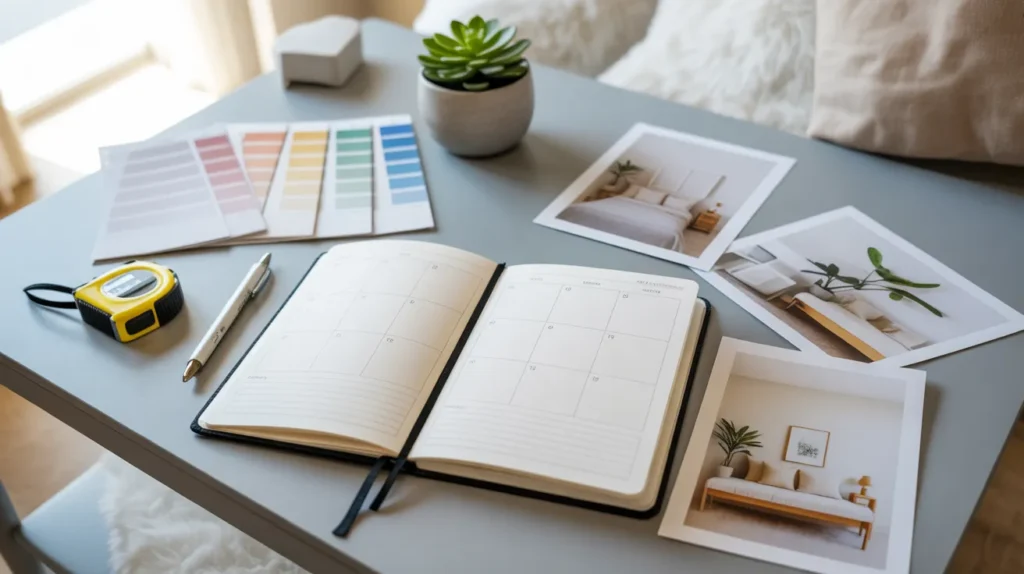
Day 1: Declutter and Plan
- Remove all non-essential items
- Measure windows, walls, and furniture
- Create a mood board with inspiration images
- List plants suitable for your light conditions
If decluttering feels overwhelming, these genius decluttering ideas for the living room are full of quick mindset shifts you can easily apply to your bedroom too.
Day 2: Paint and Prep
- Paint accent wall or entire room in chosen botanical color
- Clean windows thoroughly to maximize natural light
- Repair any damage to walls or furniture
Day 3: Furniture Arrangement
- Position bed for optimal natural light
- Identify plant placement zones (high light, medium, low)
- Arrange existing furniture in new configuration
Day 4: Textile Transformation
- Switch out bedding for natural fiber options
- Add new rug if needed
- Hang natural fiber curtains
Day 5: Plant Shopping and Installation
- Purchase 5-7 plants in varying sizes
- Install shelves or hanging hardware
- Pot plants in terracotta or natural containers
Day 6: Decorative Details
- Hang artwork and wall decor
- Style surfaces with natural objects
- Add lighting elements
Day 7: Final Touches
- Style plants with decorative elements
- Add finishing touches (books, candles, trays)
- Create plant care schedule
Budget Breakdowns: Botanical Bedroom for Every Price Point
Budget Tier 1: $100 Transformation
- 3-4 small plants from local nursery: $40
- DIY botanical prints (downloaded and framed): $20
- Thrifted rattan basket and wooden items: $25
- Eucalyptus bundle and terracotta pots: $15
Priority: Focus on plants and DIY botanical art
Budget Tier 2: $500 Makeover
- 6-8 plants including one statement floor plant: $150
- Linen duvet cover and pillowcases: $120
- Rattan pendant light or accent furniture: $100
- Botanical wallpaper for accent wall: $80
- Natural fiber rug: $50
Priority: Add quality textiles and lighting
Budget Tier 3: $1,500+ Complete Redesign
- 10-15 plants with professional pots and stands: $400
- Complete bedding set (organic linen): $350
- New natural wood furniture piece: $400
- Custom botanical artwork: $200
- Living wall installation kit: $150
Priority: Invest in statement pieces and longevity
Plant Care Schedule for Busy People
Weekly Tasks (5 minutes)
- Check soil moisture with finger test
- Water plants that need it (typically 2-3 per week)
- Rotate plants 90 degrees for even growth
- Remove dead leaves
Monthly Tasks (20 minutes)
- Wipe dust from large leaves with damp cloth
- Check for pests (underside of leaves)
- Fertilize during growing season (spring/summer)
- Prune dead growth
Quarterly Tasks (1 hour)
- Repot any root-bound plants
- Deep clean pots and saucers
- Trim back overgrown plants
- Refresh topsoil if needed
Pro Tip: Set phone reminders for each task to build habit
Common Mistakes That Ruin Botanical Bedrooms (And How to Avoid Them)
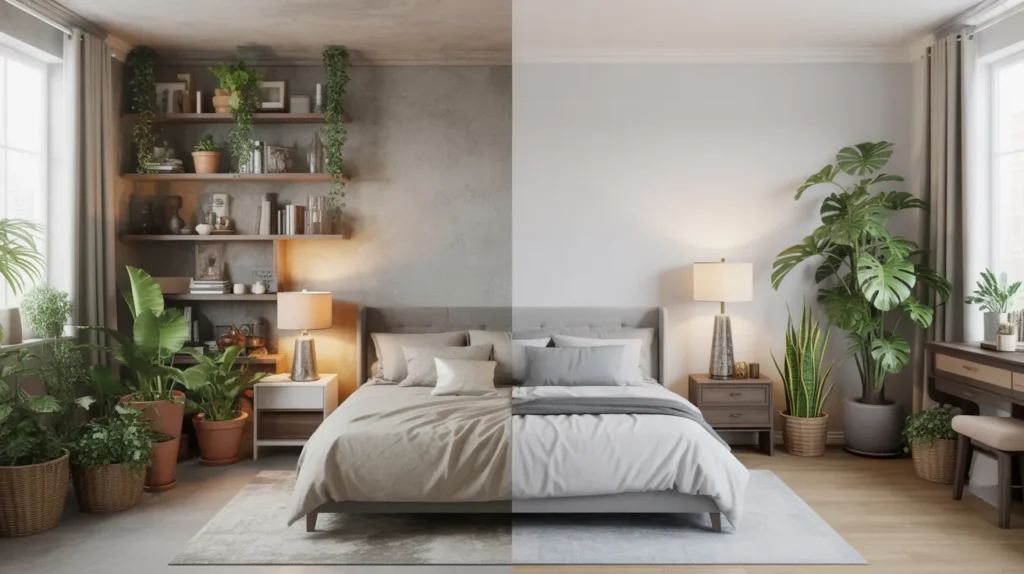
Mistake 1: Overwatering Plants
The Fix: Stick your finger 2 inches into soil—only water if completely dry. Most bedroom plants die from overwatering, not underwatering.
Mistake 2: Too Many Small Plants
The Fix: Use the “rule of three sizes”—include at least one large floor plant, 2-3 medium plants, and fill in with smaller accents.
Mistake 3: Ignoring Light Requirements
The Fix: Observe your room’s natural light throughout the day before buying plants. Match plants to your specific conditions.
Mistake 4: Plastic Everything
The Fix: Invest in natural materials even if it means having fewer items. One quality rattan piece beats ten plastic look-alikes.
Mistake 5: No Cohesive Color Scheme
The Fix: Choose 3 core colors maximum (typically green + one earth tone + white/cream) and stick to them ruthlessly.
Mistake 6: Forgetting Texture Variety
The Fix: Mix smooth (wood), rough (jute), soft (linen), and living (plant leaves) textures in every view.
Mistake 7: Trendy Over Timeless
The Fix: Invest in classic botanical elements (wood, plants, neutral colors) and use inexpensive items for trendier touches.
Seasonal Botanical Bedroom Adaptations
Spring: Fresh and Renewed
- Swap heavy textiles for lighter linens
- Add flowering plants like orchids
- Introduce soft pastels through pillows
- Open windows for fresh air circulation
Summer: Lush and Tropical
- Layer in darker greens and tropical prints
- Increase watering frequency
- Add ceiling or floor fan for air circulation
- Switch to lighter weight bedding
Fall: Warm and Cozy
- Introduce terracotta and rust accents
- Add dried grasses and seed pods
- Layer warmer textiles (knit throws)
- Display fall-blooming plants
Winter: Serene and Restful
- Focus on evergreen plants
- Add extra humidity for plants (misting or humidifier)
- Layer cozy textiles in earth tones
- Increase reliance on warm lighting
Maximizing Small Bedrooms with Botanical Design
Vertical Growing Strategy
Use walls and ceiling space for hanging plants rather than valuable floor space. Install floating shelves, wall-mounted planters, or ceiling hooks.
Mirrors + Plants = Magic
Position mirrors opposite windows to reflect both light and greenery, making the space feel twice as large.
Dual-Purpose Furniture
Choose plant stands that double as nightstands, or use a large plant as a room divider in studio apartments.
Light Color Domination
Stick to whites and light sage on walls to prevent the botanical elements from making the space feel closed in.
Careful Plant Selection
Choose 3-5 impactful plants rather than many small ones. One large fiddle-leaf fig creates more impact than ten tiny succulents.
Pet-Safe Botanical Bedroom Guide
Safe Plants for Cats and Dogs
- Spider plant
- Boston fern
- Areca palm
- Prayer plant
- Calathea varieties
- African violet
- Orchids
- Bamboo palm
Toxic Plants to Avoid
- Pothos (all varieties)
- Philodendrons
- Peace lily
- Snake plant
- Rubber plant
- Monstera
- Most true lilies
Safety Strategies
- Elevate toxic plants completely out of reach
- Use hanging planters for trailing varieties
- Consider a small pet gate for plant corner
- Choose pet-safe options for floor and nightstand placement
Allergies and Botanical Bedrooms: What You Need to Know
Low-Allergen Plant Choices
- Snake plant
- Spider plant
- Dracaena
- Bamboo palm
- Peace lily (pollen-free once blooms are removed)
Avoid If Allergic
- Strongly scented flowering plants
- Plants producing pollen (chrysanthemums, chamomile)
- Ferns (can harbor mold in moist soil)
- Plants requiring high humidity (can promote mold growth)
Allergy-Proof Strategies
- Use well-draining soil to prevent mold
- Avoid overwatering (leads to mold)
- Ensure good ventilation
- Wipe down large leaves weekly to remove dust
- Choose artificial plants if allergies are severe (modern faux plants look remarkably real)
FAQ: Everything Else You Need to Know
Q: How many plants should be in a bedroom? A: Start with 3-5 plants and add more if you can maintain them. The key is quality over quantity—well-cared-for plants look better than many neglected ones.
Q: Do plants in bedrooms steal oxygen at night? A: This is a myth. Plants release minimal CO2 at night, far less than a sleeping human. Some plants like snake plant actually release oxygen at night.
Q: Can botanical bedrooms work with modern or minimalist design? A: Absolutely. Choose architectural plants (snake plant, ZZ plant), stick to white or concrete pots, and use plants as sculptural elements rather than abundant decor.
Q: What’s the best plant for someone who travels frequently? A: Snake plant or ZZ plant. Both tolerate neglect, low light, and infrequent watering. They can survive 2-3 weeks without water.
Q: How do I prevent bugs from coming with my plants? A: Inspect plants carefully before buying, quarantine new plants for 2 weeks, and use neem oil as a preventative treatment.
Q: Should I use real or fake plants? A: Real plants offer air purification and authentic biophilic benefits, but high-quality faux plants work well for supplementing difficult spots or if you travel often.
Q: What if my bedroom gets almost no natural light? A: Focus on low-light champions (pothos, snake plant, ZZ plant) or invest in a full-spectrum grow light. Alternatively, embrace faux plants for zero-light areas.
Q: How long does it take to see the stress-reduction benefits? A: Studies show measurable stress reduction within 5 minutes of viewing plants, with cumulative benefits increasing over weeks of daily exposure.
Q: Can I create a botanical bedroom on a rental-friendly budget? A: Yes! Focus on plants, removable wallpaper, adhesive hooks for hanging plants, and furniture you can take with you. Avoid permanent changes.
Q: What’s the single best investment for a botanical bedroom? A: One stunning statement floor plant (5-6 feet tall). A large fiddle-leaf fig or bird of paradise provides maximum impact for the investment.
Your Botanical Bedroom Journey Starts Now
Creating a botanical bedroom isn’t just about following a trend—it’s about designing a space that fundamentally improves your daily life. The combination of cleaner air, reduced stress, and connection to nature makes your bedroom the sanctuary it should be.
Start small if you’re overwhelmed. Pick just three ideas from this guide that resonate most, implement them this weekend, and build from there. The beauty of botanical design is that it evolves with you—add plants as you gain confidence, layer in natural materials as your budget allows, and adjust the style to match your changing preferences.
Remember, the perfect botanical bedroom isn’t about perfection. It’s about creating a space where you feel calm, rested, and connected to the natural world. Whether you choose minimalist Zen or maximalist jungle vibes, the goal is the same: a bedroom that makes you breathe easier the moment you walk through the door.
Now grab that first plant, choose your color palette, and start transforming your bedroom into the botanical sanctuary you deserve.