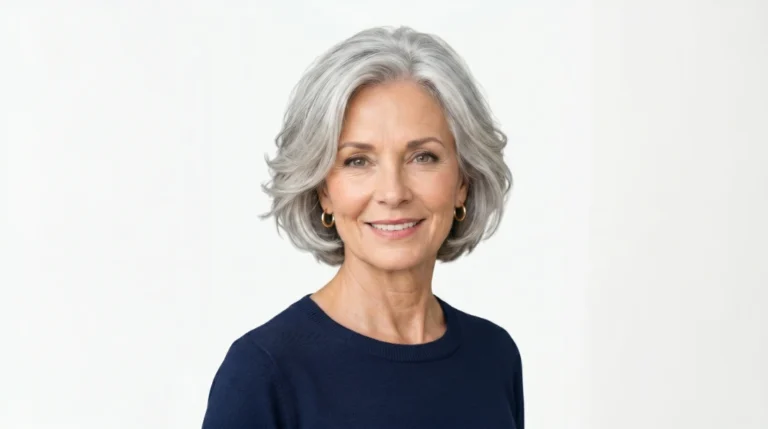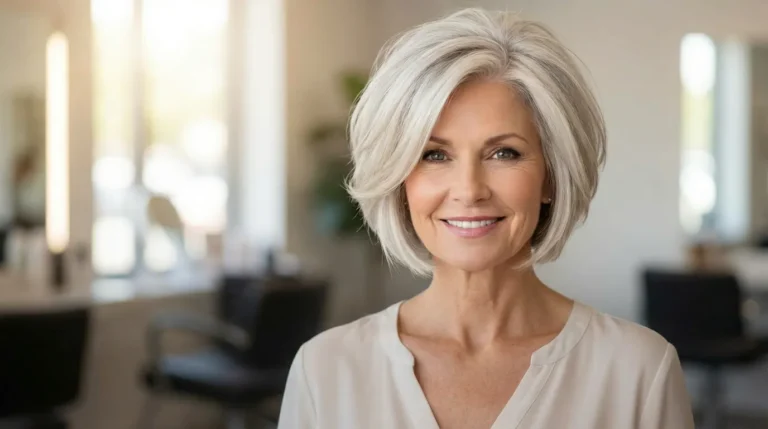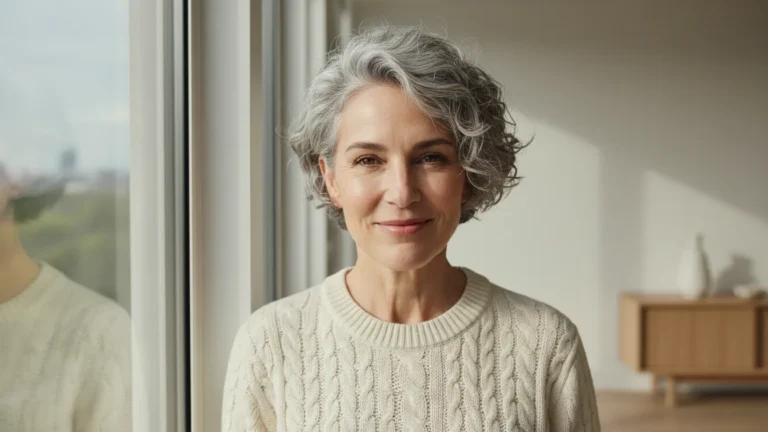
The Ultimate Guide to Bangs for Women Over 60: Look Younger, Feel Confident
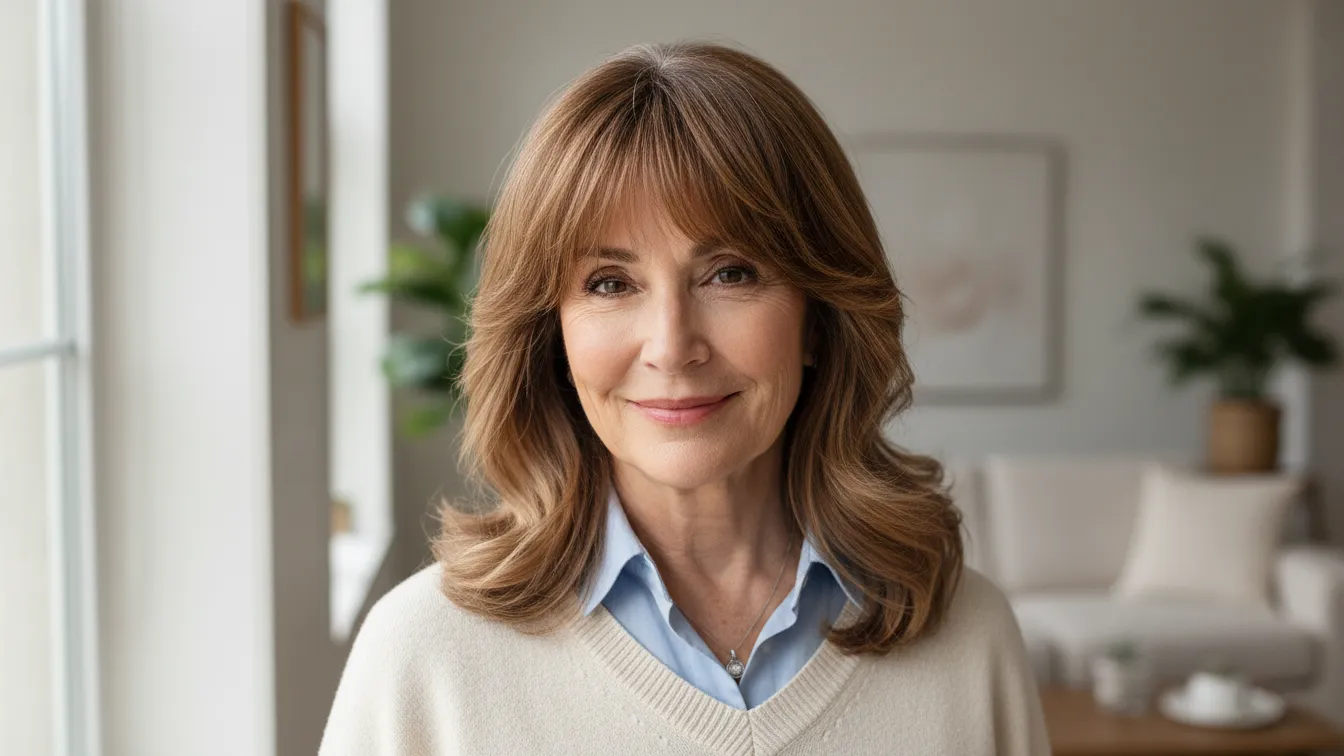
You know what? There’s this persistent myth that bangs for women over 60 are somehow off-limits. I’ve heard it all—”You’re too old for that,” or “Bangs are for young women.” Well, I’m here to tell you that’s complete nonsense.
Bangs for women over 60 aren’t just acceptable—they’re actually one of the smartest style moves you can make. They soften facial features, disguise forehead wrinkles, and can genuinely take years off your appearance. In my experience working with mature women, I’ve seen how the right fringe can transform not just how you look, but how you feel about yourself.
Here’s the thing: choosing the right bangs isn’t about following what’s trendy. It’s about understanding your face shape, hair texture, and lifestyle. That’s exactly what we’re diving into today.
Why Bangs Work Beautifully for Mature Women
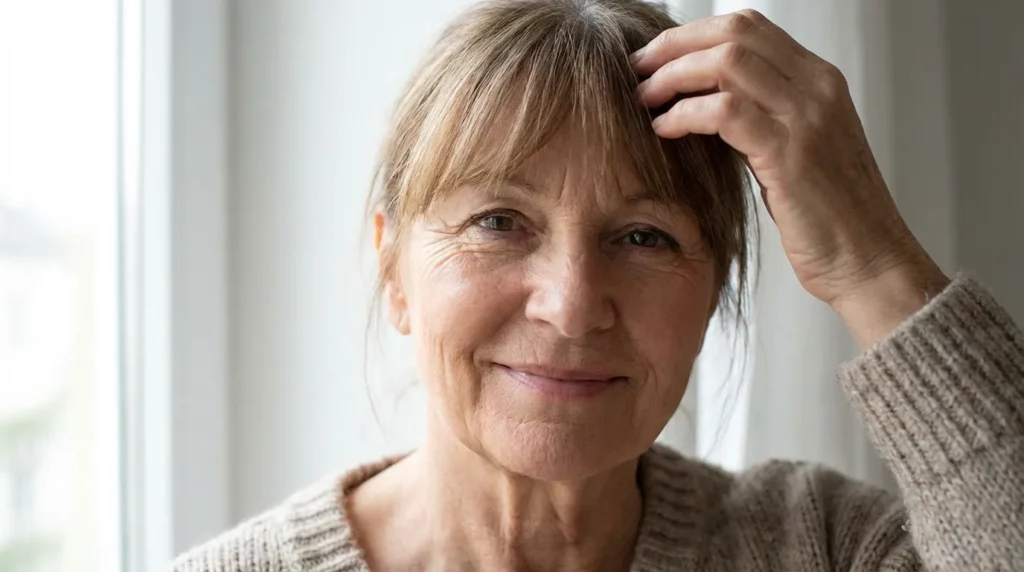
Let’s start with the elephant in the room. Why are bangs for older women such a game-changer?
First off, they’re the ultimate multitasker. Bangs for women over 60 can hide forehead lines, draw attention to your eyes, and add volume where you might be losing it. As we age, our hairline naturally recedes a bit, and our hair gets finer. Bangs create the illusion of fuller, thicker hair.
Now here’s where it gets interesting. The right fringe actually changes the proportions of your face. It can make a long face appear shorter, soften angular features, or balance out a prominent chin. What I love about this is that it’s not about hiding your age—it’s about highlighting your best features.
The Anti-Aging Benefits of Bangs
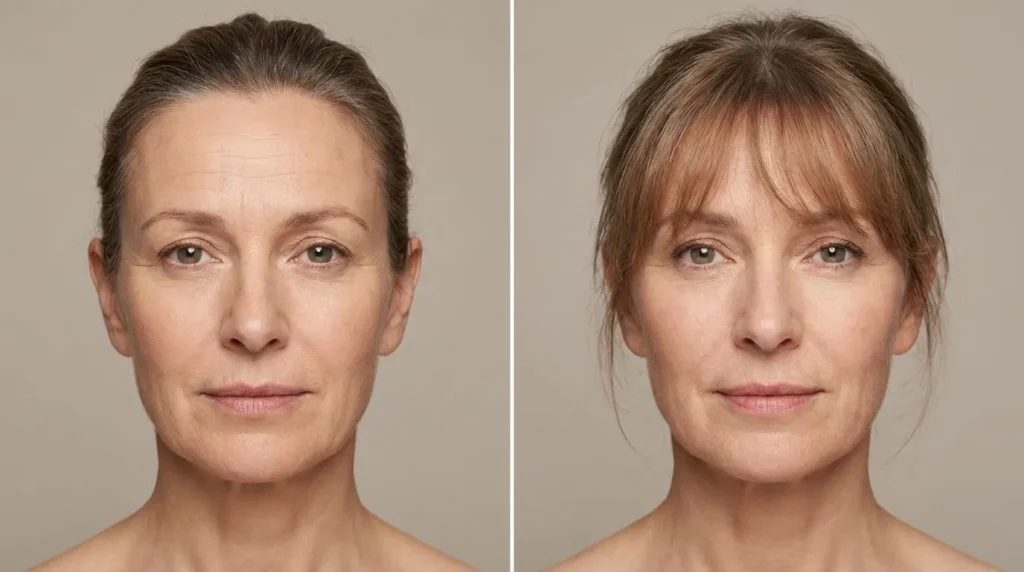
You might be wondering what makes bangs so effective at creating a more youthful appearance. There are several reasons:
Bangs draw the eye upward and inward, focusing attention on your eyes rather than any lines or age spots on your forehead. They create a frame around your face, similar to how a good picture frame enhances a photograph.
The softness of face-framing hair creates movement and dimension. This contrasts beautifully with bare skin and adds visual interest. Plus, when you’ve got bangs for mature women, you’re making a style statement that says you’re still experimenting and having fun with your look.
Understanding Your Face Shape and Hair Type
Before we jump into specific bang styles for women over 60, let’s talk about the foundation: knowing your face shape and hair texture.
This matters more than you might think. The same bang style can look completely different on two women depending on these factors.
Determining Your Face Shape
Stand in front of a mirror and pull your hair back completely. What shape do you see?
Oval faces are the most versatile—almost any bang style works. If you’ve got an oval face, count yourself lucky. You can experiment freely with curtain bangs, blunt bangs, or wispy bangs.
Round faces benefit from side-swept or angled bangs that create length. You’ll want to avoid heavy, straight-across bangs that emphasize width.
Square faces look amazing with soft, textured bangs that soften angular jawlines. Wispy bangs or side bangs work particularly well here.
Heart-shaped faces pair beautifully with side-swept or piece-y bangs that balance a wider forehead with a narrower chin.
Long or rectangular faces can handle fuller, heavier bangs that shorten the face visually. Blunt bangs or thick bangs are your friends.
Working With Your Hair Texture
Your hair texture plays a huge role in which bang styles will work best for you.
Fine hair needs lighter, piece-y bangs to avoid looking flat. You don’t want heavy bangs that weigh down already-fine hair. Wispy bangs or feathered bangs create the illusion of thickness without the weight.
Thick hair can handle most bang styles, but you’ll need regular trimming to prevent them from becoming too heavy. Blunt bangs look particularly striking with thick hair.
Wavy or curly hair works beautifully with longer, side-swept bangs that work with your natural texture rather than against it. Fighting your natural curl pattern is a losing battle, trust me.
Thinning hair benefits from layered, textured bangs that create volume and movement. Avoid blunt, heavy cuts that emphasize thinness.
The Best Bang Styles for Women Over 60
Now let’s get into the good stuff—the actual styles that look phenomenal on mature women.
Curtain Bangs: The Universally Flattering Choice
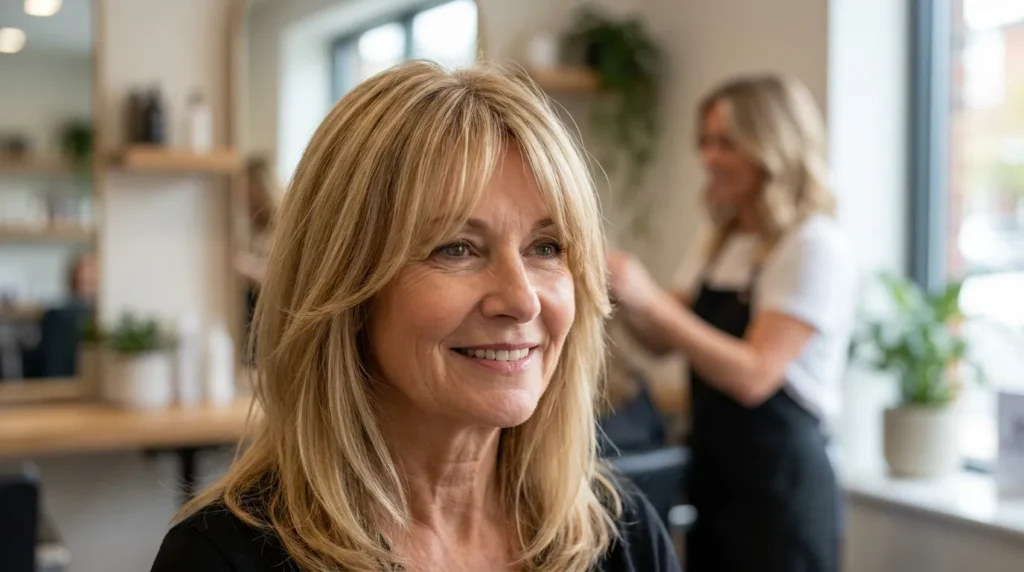
Curtain bangs for women over 60 are hands-down one of the most flattering options out there. These are parted down the middle (or slightly off-center) and frame both sides of your face.
What I love about curtain bangs is their versatility. They’re long enough to tuck behind your ears when you want them out of the way, but they still provide that softening effect around your face. They work with virtually any hair length—short, medium, or long.
Curtain bangs are particularly forgiving if you wear glasses. They peek out around your frames without competing with them. Plus, they’re low-maintenance compared to full bangs. You can let them grow out gracefully without that awkward in-between stage.
Here’s a pro tip: ask your stylist to cut your curtain bangs slightly longer than you think you want them. They’ll shrink up a bit when styled, and it’s easier to go shorter than to wait for regrowth.
Wispy Bangs: Soft and Age-Appropriate
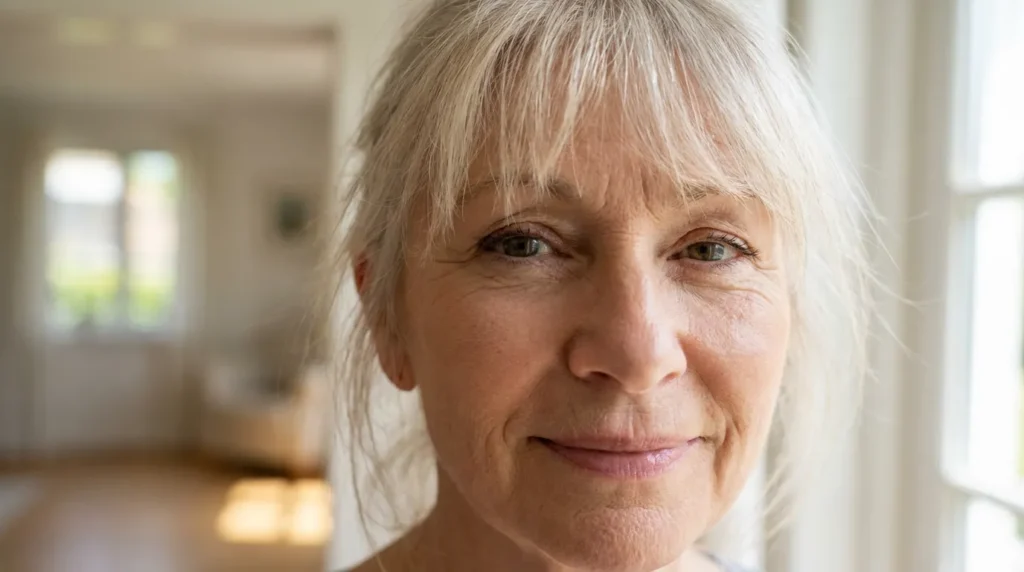
Wispy bangs are the epitome of soft, feminine styling. These are cut with texturizing shears or a razor to create a feathered, see-through effect.
For women over 60, wispy bangs offer several advantages. They’re lightweight and won’t make fine hair look thinner. They move beautifully and catch light in a flattering way. And they soften your features without hiding them completely.
The key with wispy bangs is maintaining them properly. You’ll need trims every three to four weeks to keep that piece-y texture. Let them grow too long, and they lose their shape and start to look stringy.
Side-Swept Bangs: Classic and Elegant
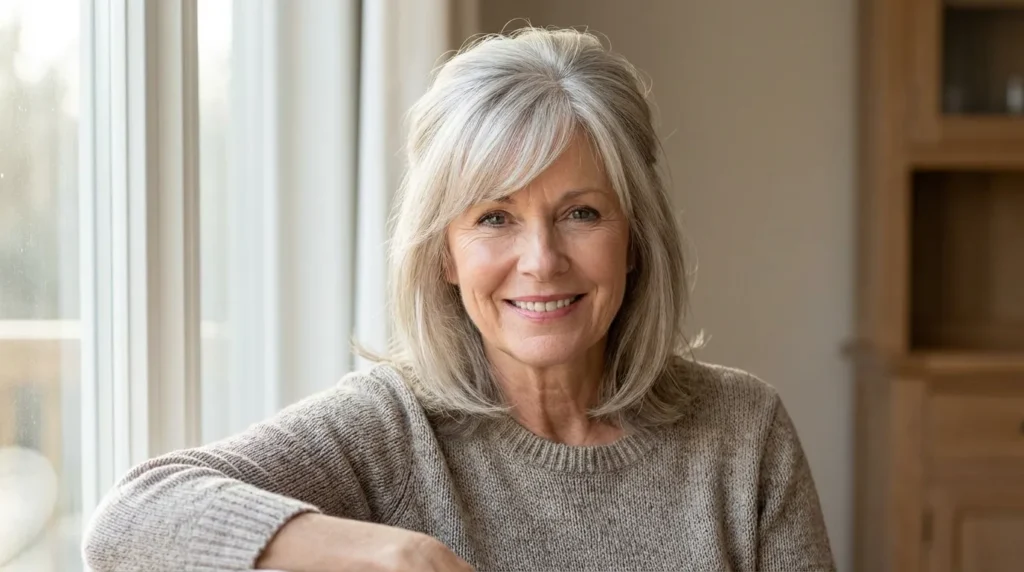
Side-swept bangs are the ultimate classic. They’ve been flattering women for decades because they simply work.
These bangs are cut longer and styled to sweep across your forehead at an angle. They’re incredibly versatile—you can wear them smooth and sleek or tousled and textured. Side-swept bangs elongate your face and draw attention to your eyes while covering one side of your forehead.
For mature women, I particularly recommend side-swept bangs if you have a prominent forehead or if you want something easy to manage. They’re also perfect if you’re not quite ready to commit to full bangs—they feel less dramatic.
Blunt Bangs: Bold and Modern
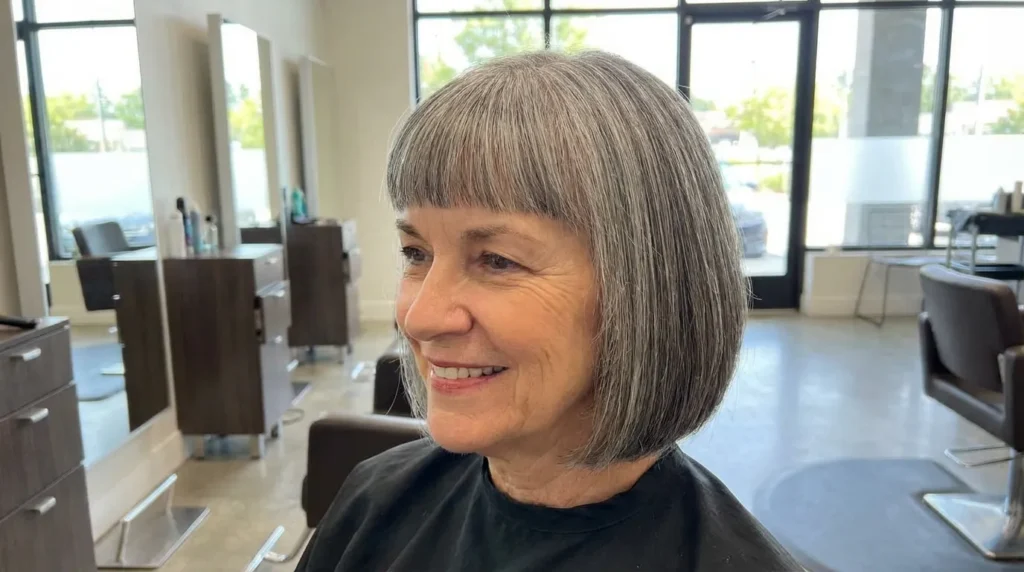
Now, some stylists will tell you that blunt bangs are too harsh for older women. I disagree. Done right, blunt bangs can look incredibly chic and modern.
Blunt bangs are cut straight across, typically at or just above eyebrow level. They make a strong style statement and can actually be quite flattering if you have good hair density and an oval or long face shape.
The trick is keeping them slightly piece-y rather than super-heavy. Your stylist should use point-cutting or texturizing techniques to prevent them from looking too solid. Blunt bangs require more maintenance than other styles—you’re looking at trims every two to three weeks to keep them at the right length.
Feathered Bangs: Retro and Flattering
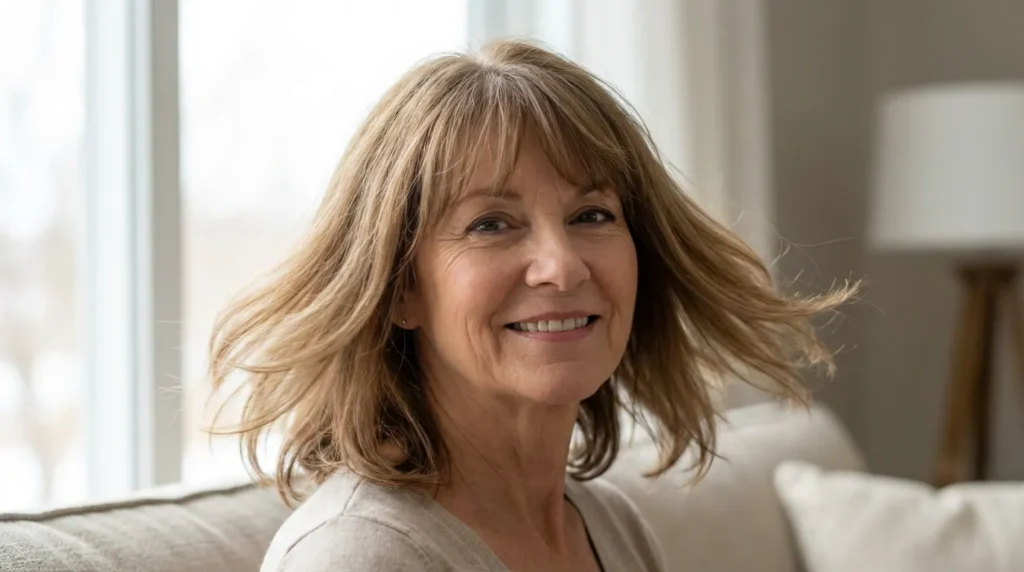
Feathered bangs harken back to the ’70s, but they’ve been updated for modern sensibilities. These are layered and textured to flip outward slightly at the ends.
For women over 60, feathered bangs offer wonderful movement and dimension. They’re particularly flattering if you have medium to thick hair that can support the layering. The feathering technique softens the edges and creates a breezy, effortless vibe.
Feathered bangs work beautifully with layered haircuts and can help blend your bangs seamlessly into the rest of your hair.
Baby Bangs: For the Adventurous
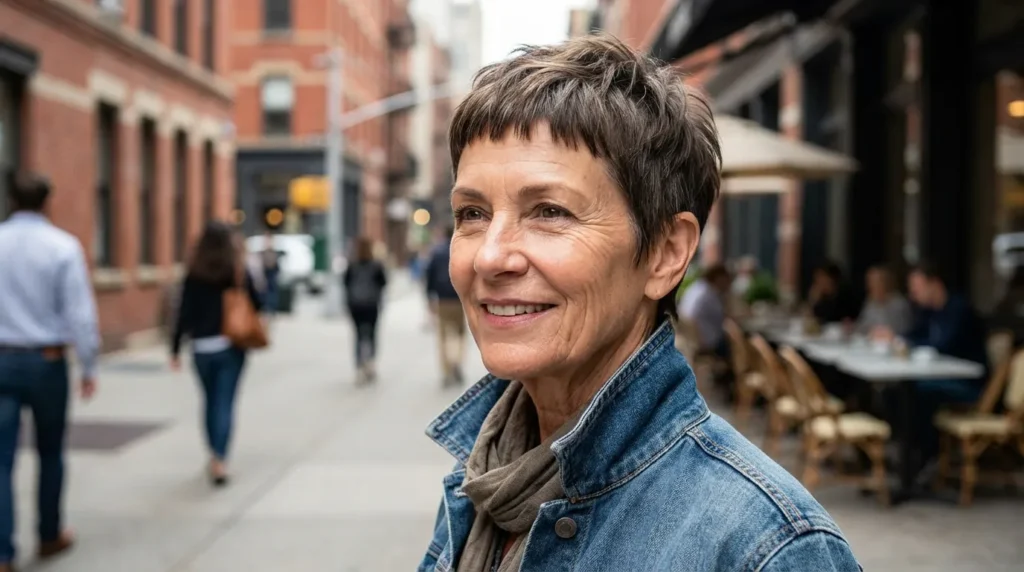
Let me be honest—baby bangs aren’t for everyone. These ultra-short bangs sit well above the eyebrows and make a dramatic statement.
However, if you’ve got the confidence to pull them off, baby bangs can look absolutely stunning on mature women. They’re unexpected, youthful, and completely chic. You’ll need a good forehead (minimal wrinkling) and strong facial features to carry them off.
Baby bangs are definitely high-maintenance. They grow quickly and look terrible when they’re even slightly too long. You’re committing to frequent trims and careful styling.
Layered Bangs: Adding Dimension
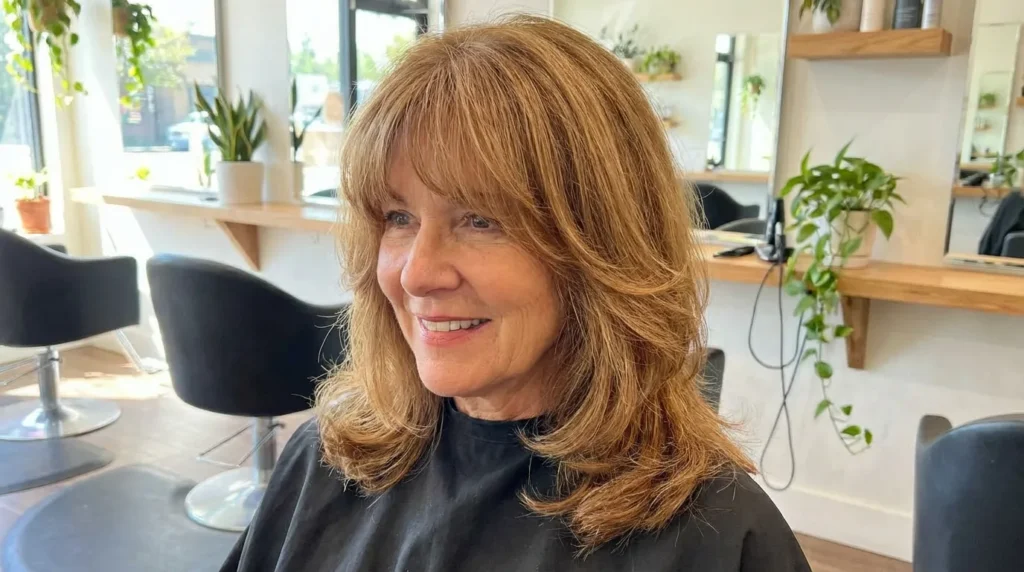
Layered bangs feature multiple lengths, creating depth and movement. They’re cut in layers that gradually blend into the rest of your hair.
For women over 60 with fine or thinning hair, layered bangs are excellent because they create the illusion of volume. The varying lengths catch light differently and add visual interest. They’re also forgiving as they grow out—there’s no harsh line between your bangs and the rest of your hair.
Bang Styles Based on Hair Length
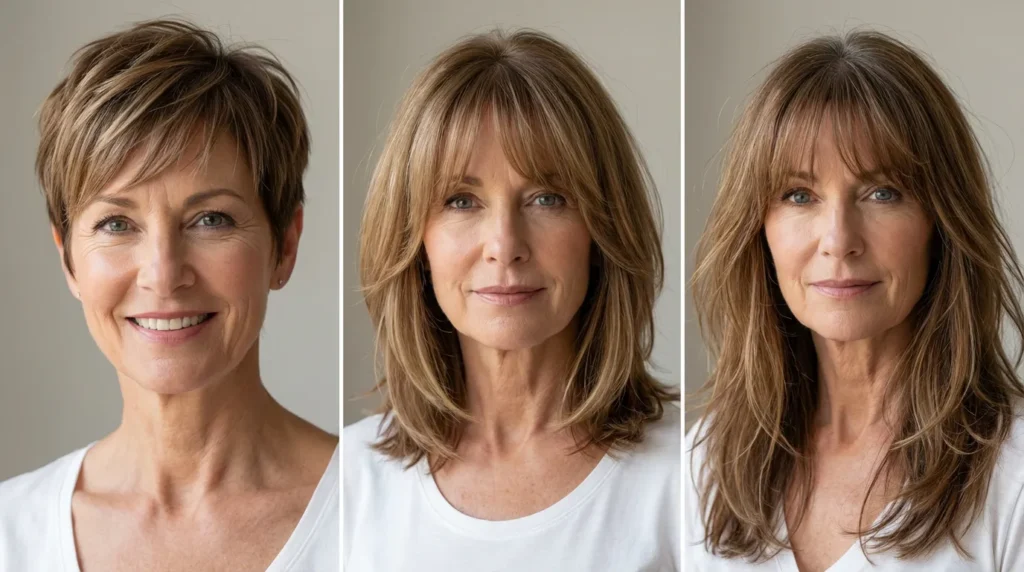
Your overall hair length influences which bang styles will look best on you. Let’s break this down.
Bangs with Short Hair
Bangs for women over 60 with short hair—like pixie cuts or cropped bobs—can look incredibly chic. The key is proportion.
With a pixie cut, you’ll want shorter, piece-y bangs that don’t overwhelm your face. Think textured and swept to the side rather than heavy and blunt.
For a short bob, you have more options. Blunt bangs can create a sophisticated, geometric look. Side-swept bangs add softness. Curtain bangs can frame your face beautifully.
Bangs with Medium-Length Hair
Medium-length hair (shoulder-length to collarbone) is the sweet spot for bangs. You’ve got enough length to create balance, but your bangs won’t get lost.
Curtain bangs shine with medium-length hair. They frame your face while blending beautifully into longer layers. Side-swept bangs work gorgeously here too, creating an elegant, flowing look.
Layered bangs are perfect with a medium-length layered haircut—everything flows together cohesively.
Bangs with Long Hair
Long hair and bangs create a youthful, romantic combination. The length of your hair balances out the bangs, so they don’t dominate your look.
With long hair, you can go bold with blunt bangs or keep things soft with wispy bangs. Curtain bangs look especially beautiful with long, flowing hair—very ’70s California cool.
Just make sure your long hair has some layers or movement. Long, heavy, one-length hair plus heavy bangs can look dated rather than youthful.
How to Style and Maintain Your Bangs
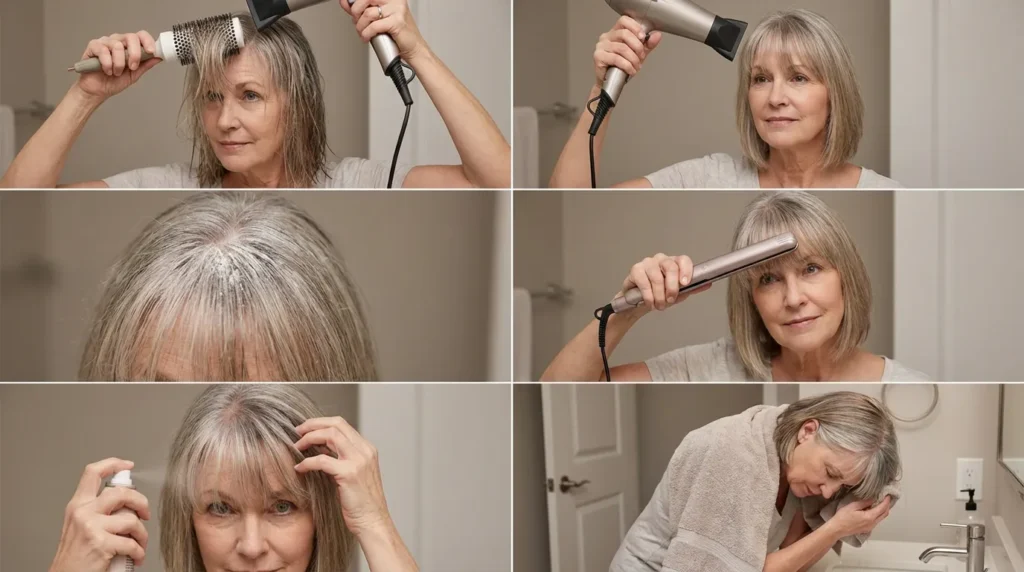
Getting the right cut is only half the battle. You’ve got to know how to style and maintain your bangs at home.
Daily Styling Tips
Here’s the truth: bangs require daily attention. But don’t let that scare you off. With the right techniques, styling takes just a few minutes.
Start with damp, not wet, bangs. Your bangs should be slightly damp, not dripping. Towel-dry them gently after washing.
Use a round brush for volume. For most bang styles, a small round brush (about 1-2 inches in diameter) works best. Blow-dry your bangs by pulling them forward and up, then rolling the brush under slightly.
Cool air sets your style. After blow-drying with warm air, blast your bangs with cool air to set them. This helps them hold their shape throughout the day.
Dry shampoo is your friend. Bangs get oily faster than the rest of your hair because they’re near your forehead. A light dusting of dry shampoo at the roots keeps them fresh.
Straightening irons for sleekness. If you want sleek side-swept bangs or blunt bangs, run a flat iron through them gently. Use low heat to avoid damage.
Texture spray for piece-y looks. For wispy or feathered bangs, a light texture spray adds definition and separation.
Dealing with Cowlicks and Awkward Growth Patterns
You might be wondering what to do if your hair grows in odd directions. Cowlicks are the bane of many women’s existence, but they’re manageable.
The secret is working with your natural growth pattern rather than against it. If you have a strong cowlick, position your part accordingly. If your hair naturally wants to go left, embrace that direction with side-swept bangs.
When blow-drying, first dry your bangs in the opposite direction of where you want them to sit, then switch directions. This counteracts stubborn growth patterns.
Trim Schedules and Maintenance
Bangs grow fast—about half an inch per month. To keep them looking sharp, you’ll need regular trims.
Blunt bangs: Trim every 2-3 weeks Side-swept bangs: Trim every 3-4 weeks
Curtain bangs: Trim every 4-6 weeks Wispy bangs: Trim every 3-4 weeks Feathered bangs: Trim every 4-5 weeks
Many salons offer free bang trims between regular haircuts. Take advantage of this. Or learn to trim them yourself—just be conservative. You can always cut more, but you can’t glue hair back on.
Between-Wash Styling
Now here’s where it gets interesting. You don’t need to wash your entire head to refresh your bangs.
Try this: bend over the sink and just wet your bangs with water. Blow-dry them as usual. This mini-reset takes two minutes and gives you fresh-looking bangs without a full hair wash.
Alternatively, use dry shampoo and a light once-over with your flat iron. This method works particularly well for side-swept or blunt bangs.
Common Mistakes to Avoid
Let me share some pitfalls I’ve seen over the years. Avoiding these common mistakes will help you get the most from your bangs.
Cutting Them Too Short
The biggest mistake? Chopping your bangs too short. Remember, hair shrinks when it dries, and curly or wavy hair springs up even more.
When trying bangs for the first time, start longer than you think you want them. You can always go shorter. What I love about this approach is that it gives you time to adjust to having bangs before committing to a more dramatic length.
Ignoring Your Hair Texture
Fighting your natural hair texture is exhausting and usually unsuccessful. If you have wavy hair, embrace bangs that work with waves—like curtain bangs or side-swept bangs. Don’t torture yourself trying to maintain pin-straight blunt bangs.
Similarly, if you have super-fine hair, heavy bangs will fall flat and separate. Choose wispy or layered bangs that work with your hair’s natural tendencies.
Over-Styling
This is particularly common with mature women who remember the heavily styled bangs of decades past. Modern bangs should look effortless, not shellacked.
Use minimal product—too much will make your bangs look greasy and separated. A light touch with your styling tools creates more natural results than aggressive blow-drying or flat-ironing.
Skipping Regular Trims
Once your bangs reach your eyes, they’re too long. Don’t wait until they’re poking you to schedule a trim. Mark your calendar and stick to a regular trim schedule.
Long, overgrown bangs don’t look intentionally grown-out—they just look neglected. If you’re growing them out, tell your stylist so they can shape them strategically during the process.
Styling Bangs for Different Occasions
Your bangs don’t have to look the same every day. Here’s how to adapt them for different situations.
Everyday Casual Style
For daily wear, keep your bangs soft and natural. Blow-dry them with minimal product, allowing them to sit naturally on your forehead.
Curtain bangs can be swept slightly to each side. Side-swept bangs can curve gently across your forehead. Wispy bangs look best with a piece-y, lived-in texture.
Elegant Evening Looks
For special occasions, you can dress up your bangs along with the rest of your hair.
Sweep them dramatically to one side and pin behind your ear for an elegant updo. Use a bit more hairspray than usual to keep them perfectly positioned. Add a decorative clip or barrette for extra glamour.
Blunt bangs look stunning when styled sleek and straight for evening wear. The clean lines create a sophisticated, polished appearance.
Active and Sporty Styling
You might be wondering how to handle your bangs during exercise or outdoor activities. Here’s what works:
For workouts, pull your bangs back with a thin headband. This keeps them off your face without creating a weird bump under a wider headband.
If you’re doing yoga or activities where you’re upside down, bobby pins are your friend. Pin your bangs back strategically so they don’t fall in your face during downward dog.
Bangs and Glasses: Making Them Work Together
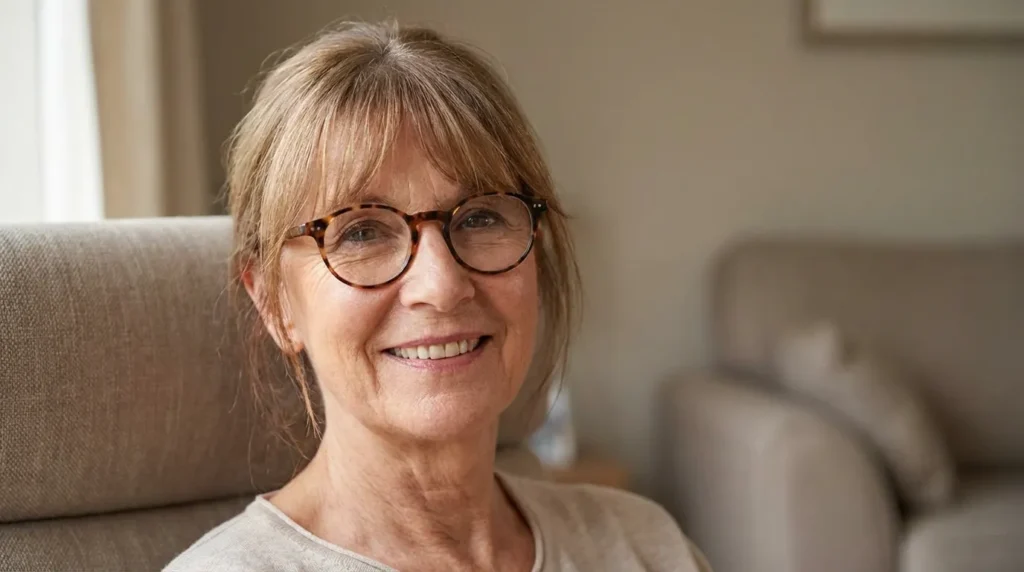
Lots of women over 60 wear glasses, and bangs and frames can either complement each other beautifully or compete for attention.
The key is proportion. If you wear bold, thick frames, keep your bangs on the lighter, piece-ier side. Wispy bangs or curtain bangs pair beautifully with statement glasses.
If your glasses are more subtle or rimless, you can go bolder with your bangs. Blunt bangs or side-swept bangs work well here.
Curtain bangs are particularly great with glasses because they frame your face on the sides rather than right where your frames sit. They peek out from behind your glasses in a flattering way.
Make sure your bangs don’t constantly catch on your glasses. They should sit just above your frames or skim them lightly. If they’re constantly getting caught, they’re the wrong length.
Hair Color Considerations for Bangs
Here’s something interesting: bangs can affect how your hair color looks, and vice versa.
Gray Hair and Silver Bangs
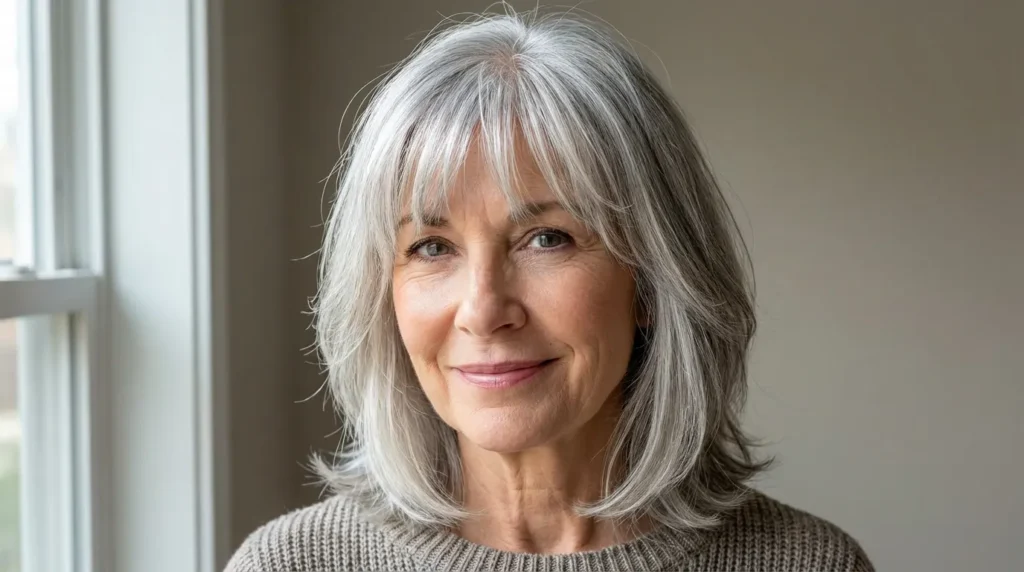
If you’re rocking your natural gray hair, congratulations! Gray can be absolutely gorgeous, and bangs look stunning with silver hair.
Gray hair tends to be coarser and sometimes wiry. Layered bangs or feathered bangs work particularly well because the texturizing prevents them from looking too heavy.
One thing to keep in mind: gray hair can sometimes lack dimension. Adding some highlights or lowlights around your bangs creates depth and makes them pop.
Adding Highlights to Your Bangs
Speaking of highlights, strategic highlighting around your bangs can be incredibly flattering. Face-framing highlights draw attention to your features and add dimension.
Ask your colorist for balayage or subtle highlights that are slightly lighter around your face and bangs. This creates a soft, sun-kissed effect that’s youthful and fresh.
Covering Roots
If you color your hair, bangs mean your roots show up right in front. This is just reality. You might need to touch up your roots slightly more frequently than before you had bangs.
Root touch-up products like sprays or powders are lifesavers between colorings. A quick spray along your part and at your hairline keeps your bangs looking fresh.
The Transition: Growing Out or Getting Bangs
Change is scary, I get it. Let’s talk about both sides of this transition.
Trying Bangs for the First Time
If you’re considering bangs but feel nervous, here’s my advice: start with longer, less dramatic options.
Curtain bangs are the perfect gateway bang. They’re forgiving, versatile, and if you hate them, they grow out gracefully. You can pin them back while they’re growing without that awkward in-between stage.
Another option is getting “faux bangs” first. Pull your hair forward and clip it to create temporary bangs. Wear this style for a few days to see how you feel before committing to cutting.
Talk to your stylist about your concerns. A good stylist will show you photos, discuss what will work with your face shape and hair texture, and start conservatively.
Growing Out Bangs Gracefully
Decided bangs aren’t for you? Growing them out doesn’t have to be painful.
First, be patient. It takes about three to six months to grow bangs long enough to tuck behind your ears or blend with the rest of your hair.
During the awkward phase, use these strategies:
Side-part them deeply. Sweep them dramatically to one side and pin behind your ear.
Embrace headbands. A stylish headband keeps growing bangs off your face while looking intentional.
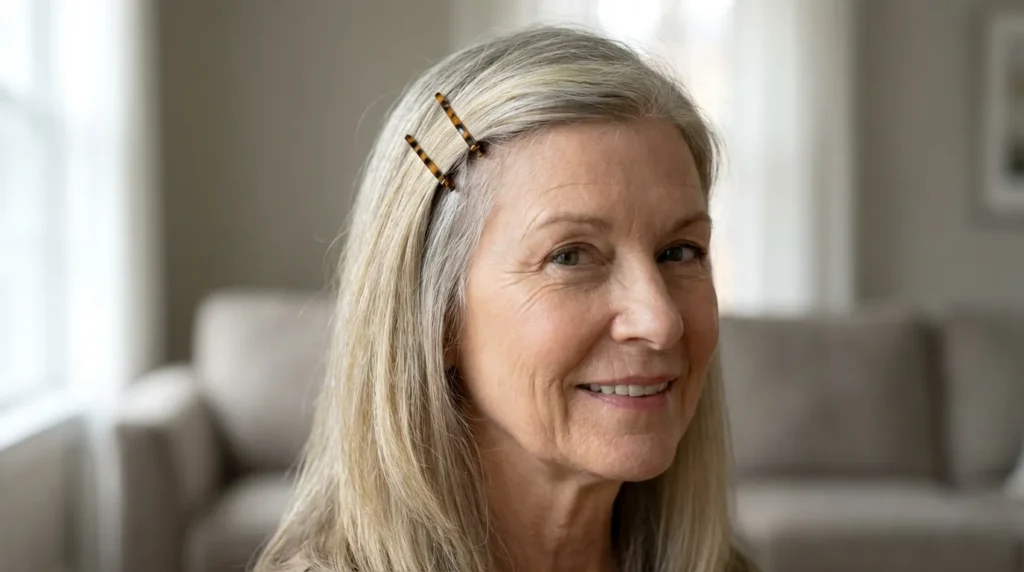
Use bobby pins strategically. Pin them back in a slight poof for volume, or sleek them back for a more polished look.
Get regular trims. Have your stylist gradually blend them into layers as they grow. This prevents that obvious “growing-out-bangs” look.
Table: Bang Style Quick Reference Guide
| Bang Style | Best Face Shapes | Hair Texture | Maintenance Level | Best Age Range | Key Benefit |
|---|---|---|---|---|---|
| Curtain Bangs | All shapes (especially oval, heart) | All textures | Low to Medium | All ages | Universally flattering, versatile |
| Wispy Bangs | Oval, round, heart | Fine to medium | Medium | 50+ | Soft, lightweight, feminine |
| Side-Swept Bangs | All shapes (especially round, square) | All textures | Low | All ages | Classic, easy to manage |
| Blunt Bangs | Oval, long, square | Medium to thick | High | All ages | Bold, modern statement |
| Feathered Bangs | Oval, heart, long | Medium to thick | Medium | 50+ | Retro-chic, adds movement |
| Layered Bangs | All shapes | Fine to thick | Medium | 60+ | Creates volume illusion |
Expert Tips from Professional Stylists
I’ve consulted with numerous hairstylists who specialize in mature hair, and here’s what they emphasize:
Communication is Key
Before your stylist makes the first cut, have a thorough conversation. Show photos of bang styles you like, but also discuss your daily routine, how much time you have for styling, and your comfort level with maintenance.
Be honest about your hair habits. If you’re someone who washes hair once a week, certain bang styles won’t work for you. If you hate using heat tools, say so. Your stylist can adapt their recommendations accordingly.
Start Conservative
Every stylist I’ve spoken to says the same thing: it’s easier to cut more than to wait for regrowth. Start with longer bangs and shorter styling time. You can always go shorter at your next appointment once you’re comfortable with the maintenance routine.
Consider Face-Framing Layers
Bangs look best when they’re part of an overall cohesive style. Face-framing layers that start at chin-length and blend with your bangs create a polished, intentional look.
These layers also help transition your bangs into the rest of your hair, so there’s no harsh line where your bangs end and your regular hair begins.
Real Women, Real Results: Testimonials
Nothing speaks louder than real experiences. Here’s what some women over 60 have shared about getting bangs:
Sarah, 64, got curtain bangs six months ago: “I was so nervous, but honestly, these bangs took years off my appearance. My daughter said I looked like my younger self again. The best part? They’re so easy to maintain. I just blow-dry them forward and they fall into place.”
Linda, 68, tried side-swept bangs: “I have glasses, and I was worried about my bangs getting in the way. My stylist recommended side-swept bangs, and they’re perfect. They frame my face without interfering with my frames. I feel more put-together, even on casual days.”
Patricia, 62, went bold with blunt bangs: “Everyone told me I was too old for blunt bangs. I did it anyway, and I’ve never felt more stylish. Yes, they need regular trims, but they make such a statement. I love that they’re unexpected at my age.”
Margaret, 71, loves her wispy bangs: “My hair has gotten so fine over the years. These wispy bangs make my hair look fuller without weighing it down. They’re soft and feminine—exactly what I wanted.”
Budget-Friendly Options and At-Home Care
Professional styling is wonderful, but let’s be real—it adds up. Here are ways to maintain your bangs between salon visits.
DIY Bang Trimming
With proper technique and the right tools, you can trim your own bangs at home. You’ll need sharp hair-cutting scissors (not regular scissors), a fine-tooth comb, and good lighting.
The key is trimming less than you think you need to. Cut vertically into your bangs rather than straight across—this creates a softer edge and is more forgiving if you make a mistake.
There are excellent tutorials on YouTube showing proper bang-trimming techniques. Watch several before attempting it yourself.
Affordable Styling Tools
You don’t need expensive tools to style bangs beautifully. A basic paddle brush, a small round brush, and a drugstore blow dryer work perfectly fine.
Invest in these essentials:
- Small round brush (1-2 inch diameter): around $10-15
- Quality hair-cutting scissors: around $15-20
- Dry shampoo: around $5-8
- Light hairspray: around $6-10
Product Recommendations on a Budget
High-end products are nice, but drugstore alternatives work beautifully for bang styling.
Dry shampoo: Batiste or Not Your Mother’s (both under $8) work wonderfully for refreshing bangs between washes.
Texture spray: Garnier Fructis Texture Tease or TRESemmé Perfectly (Un)Done (both under $6) add piece-y definition to wispy or feathered bangs.
Heat protectant: TRESemmé Thermal Creations (under $5) protects your bangs if you’re using heat tools.
Health and Hair: What Affects Bang Success
Your overall health impacts how your bangs look and behave. Here’s what to consider.
Hormonal Changes and Hair Texture
Menopause and hormonal changes affect hair texture, density, and growth patterns. You might notice your once-thick hair thinning, or your straight hair developing waves.
These changes can affect which bang styles work best for you. If your hair has gotten finer, switch to lighter bang styles like wispy or curtain bangs. If it’s gotten coarser, you might be able to try bolder styles you couldn’t before.
Medications and Hair Health
Some medications cause hair thinning or changes in texture. If you’re on medications that affect your hair, discuss this with your stylist before committing to bangs.
Thyroid medications, blood pressure medications, and antidepressants can all impact hair. This doesn’t mean you can’t have bangs—just that you need to choose styles that work with your current hair condition.
Nutritional Support for Healthy Bangs
Healthy hair starts from within. For the best-looking bangs, make sure you’re getting adequate:
- Protein: Essential for hair strength
- Biotin: Supports hair growth
- Iron: Prevents hair loss
- Omega-3 fatty acids: Promotes scalp health
- Vitamin D: Supports follicle health
Consider a hair-supporting supplement after consulting your doctor, especially if you’re experiencing thinning.
Seasonal Considerations for Bang Styling
Different seasons present different challenges for bang maintenance.
Summer Bang Care
Heat and humidity are the enemies of good bang days. In summer, lightweight products are essential—heavy products will make your bangs greasy and limp.
Use an anti-humidity spray on your bangs before styling. Avoid touching them throughout the day, as your hands transfer oil. Keep blotting papers handy to absorb excess oil without disturbing your style.
If you’re very active in summer, consider pulling your bangs back with a thin headband rather than fighting the humidity.
Winter Bang Management
Cold, dry air can make bangs static-y and brittle. Use a moisturizing shampoo and conditioner, and consider a leave-in conditioner specifically on your bangs.
Static spray or a tiny amount of hand lotion rubbed between your palms and smoothed over your bangs tames flyaways.
Hat hair is real. If you wear winter hats, clip your bangs up before putting your hat on, then release them when you remove the hat. This prevents that flattened, weird shape.
Bang Inspiration from Celebrities Over 60
Sometimes seeing bangs on women you admire helps you visualize yourself with them.
Jane Fonda’s Iconic Bangs
Jane Fonda has worn various bang styles throughout her 80s, proving age is just a number. Her side-swept bangs with her signature shag cut are effortlessly chic.
Diane Keaton’s Timeless Fringe
Diane Keaton has made curtain bangs her signature. They perfectly complement her personal style—classic with a modern edge.
Helen Mirren’s Bold Choices
Helen Mirren has experimented with everything from blunt bangs to wispy bangs. What I love about this is her willingness to try different styles and own them completely.
Jamie Lee Curtis’s Pixie with Bangs
Jamie Lee Curtis rocks a short pixie with piece-y bangs that’s become iconic. It proves bangs work beautifully with very short hair.
Conclusion: Embrace the Change
Here’s what I want you to take away from this: bangs for women over 60 aren’t just acceptable—they’re a powerful styling tool that can genuinely transform your appearance.
The right bangs soften your features, draw attention to your eyes, and create a more youthful frame for your face. They hide forehead lines, add volume where you might be losing it, and make a style statement that says you’re still evolving and experimenting with your look.
Yes, bangs require maintenance. They need regular trims and daily styling. But for most women who take the plunge, the benefits far outweigh the extra few minutes in the morning.
Whether you choose soft wispy bangs, classic side-swept bangs, trendy curtain bangs, or bold blunt bangs, there’s a style that will work beautifully with your face shape, hair texture, and lifestyle.
Ready to Take the Plunge?
Book a consultation with a stylist who specializes in mature hair. Bring photos of styles you love, discuss your concerns honestly, and start with a conservative cut you can adjust over time.
Remember: hair grows back. If you try bangs and don’t love them, they’ll grow out. But you’ll never know how great they could look unless you give them a chance.
Don’t let anyone tell you you’re too old for bangs. Style has no age limit, and confidence looks good at every age. Take that step, make that appointment, and discover how the right bangs can make you look—and feel—absolutely amazing.
Have you tried bangs recently? What style works best for you? Share your experiences in the comments below, and let’s continue this conversation about embracing style at every age!