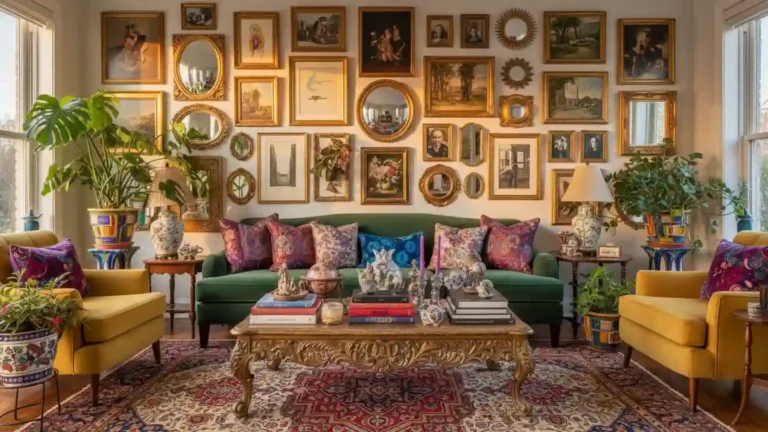
15 Genius Ways to Make Your Small Bedroom Feel Twice Its Size

Living in a small bedroom doesn’t mean you’re stuck with cramped quarters. In my experience, the right design choices can completely transform how spacious your room feels—without knocking down a single wall.
Now here’s where it gets interesting. Most people think they need to move to a bigger place to solve their space problems. But the truth? Small bedroom ideas that make your room feel bigger are all about smart design tricks that work with what you’ve got.
I’ve seen tiny bedrooms transformed into airy retreats that feel twice their actual size. And you know what? It’s not complicated or expensive.
Let’s dive into the practical strategies that’ll make your small bedroom breathe again.
Why Your Small Bedroom Feels Even Smaller

You might be wondering why your bedroom feels so cramped. It’s usually not just about square footage.
The problem often comes down to three things: too much furniture blocking natural pathways, dark colors absorbing all the light, and clutter sitting out in plain sight.
What I love about this is that all three issues are totally fixable. You don’t need a bigger room. You just need smarter choices.
The Psychology Behind Spacious Rooms
Here’s something most people don’t realize: our brains judge room size based on visual cues, not actual measurements.
When light bounces around freely, when you can see the floor beneath furniture, and when your eye travels smoothly from one end of the room to the other—that’s when spaces feel open.
This is where optical illusions come into play. Smart designers have used these tricks for decades.
Top Small Bedroom Ideas That Actually Work
1. Choose Furniture With Exposed Legs

This one’s a game-changer. Furniture with visible legs lets light flow underneath, creating the illusion of more floor space.
Instead of bulky pieces that sit flat on the ground, look for bed frames, dressers, and nightstands with slim, tapered legs. The difference is immediate.
You can suddenly see more of your floor. And more visible floor equals a bigger-looking room.
Pro tip: Mid-century modern furniture is perfect for this because it’s designed with those slender, elevated legs that work magic in tight spaces.
2. Paint Your Ceiling the Same Color as Your Walls
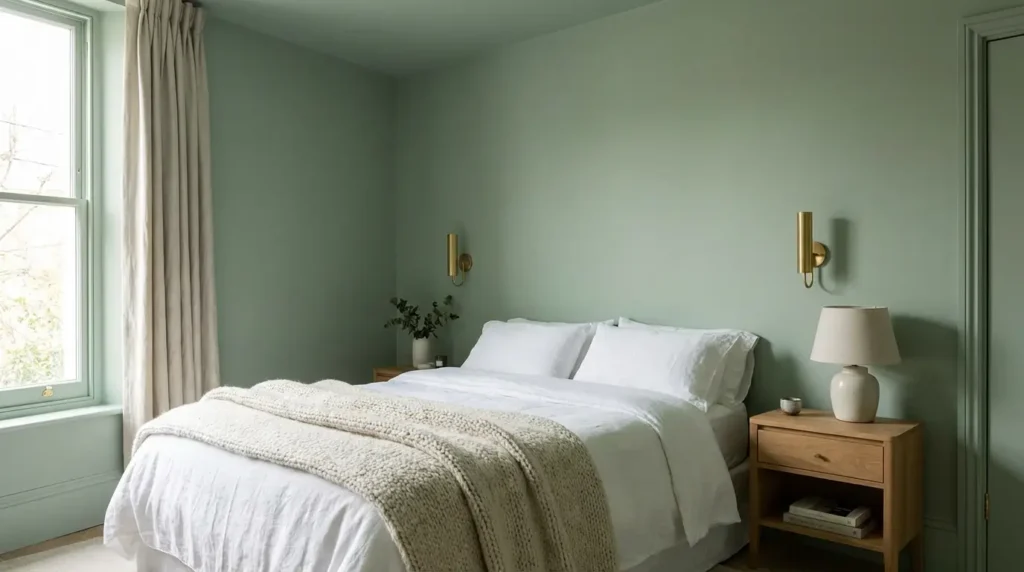
Want to know a designer secret? Painting your ceiling the same shade as your walls makes the boundaries disappear.
Your eye can’t tell where the wall ends and ceiling begins. This visual trick creates a seamless, expansive feeling that makes the room feel taller and more open.
It sounds counterintuitive, but it works beautifully. Even dark colors can make rooms feel bigger when you eliminate those harsh corner lines.
3. Go Vertical With Your Storage
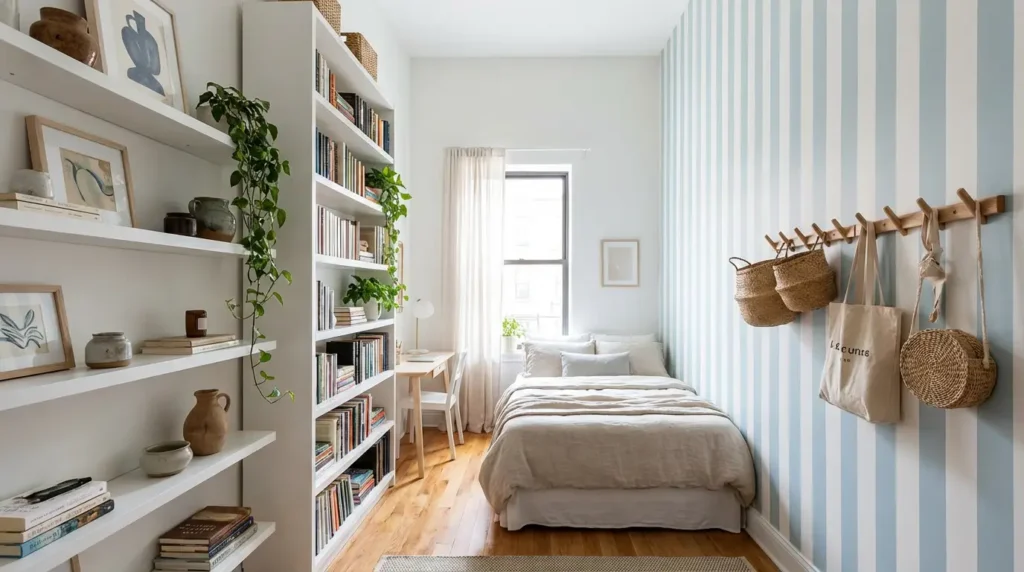
Floor space is precious in a small bedroom. That’s why vertical storage is your best friend.
Instead of a bulky dresser, consider:
- Floating shelves mounted above your bed or near the doorway
- Wall-mounted hooks behind the door for bags, robes, and tomorrow’s outfit
- Tall bookcases that draw the eye upward and maximize unused wall space
When you build up instead of out, you free up walking room and create better flow.
4. Lower Your Bed to Create Height
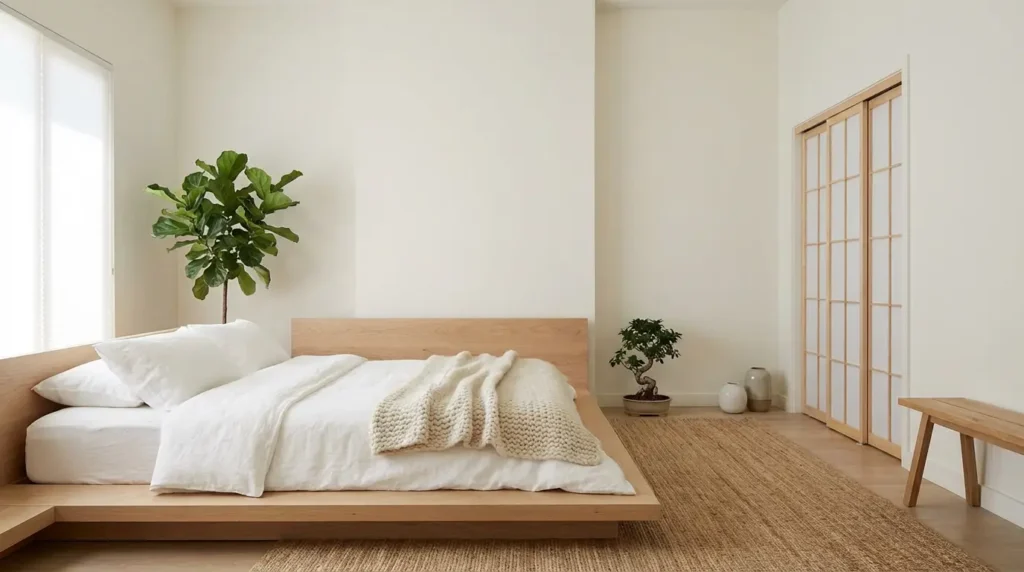
Here’s a trick that surprises everyone: lowering your mattress makes your ceiling feel higher.
Swap your traditional box spring for a low-profile 3-inch version. Or choose a platform bed that sits closer to the ground.
When your bed isn’t towering in the middle of the room, the vertical space opens up. Your walls look taller. The room breathes.
5. Hang Curtains High and Wide
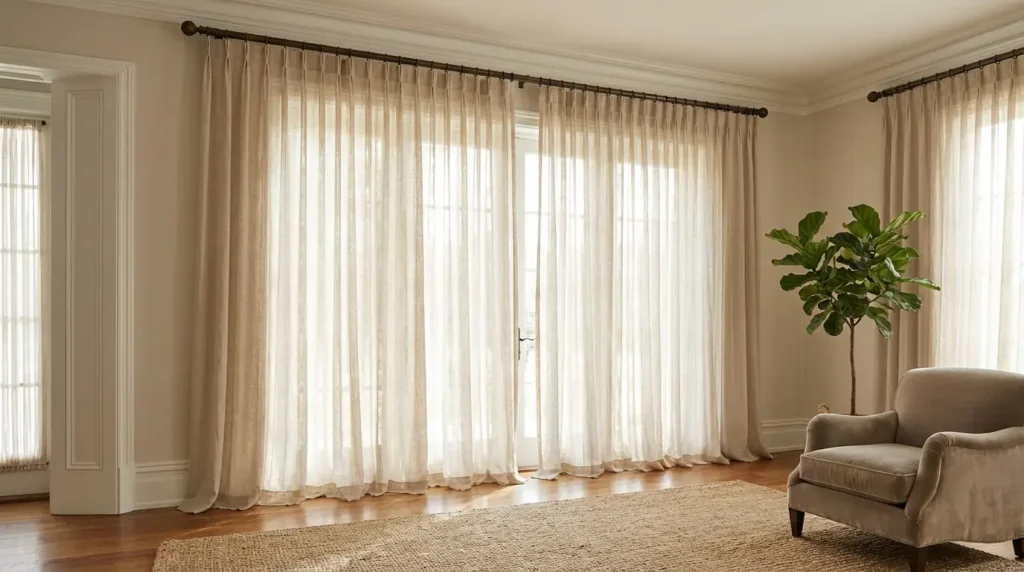
This curtain hack transforms rooms instantly. Mount your curtain rod 2-3 inches below your crown molding, not at the window frame.
And here’s the key: extend the rod 12 inches beyond each side of your window.
Why? This creates the illusion of much larger windows and taller ceilings. When you pull the curtains open, you get maximum natural light flooding your small bedroom.
Make sure your curtains just “kiss” the floor. Too short looks awkward, but puddling fabric can make the space feel cluttered.
6. Strategic Mirror Placement

Mirrors are like windows that don’t exist. They reflect light and create depth where there isn’t any.
Place a large mirror opposite your window to bounce natural light around the room. Or lean a floor-to-ceiling mirror against a wall to add instant height.
What I’ve found works best? Round or arched mirrors soften small spaces, while rectangular mirrors emphasize height or width depending on their orientation.
Just avoid mirror overload. One statement mirror works better than several small ones scattered around.
7. Master the Art of Light Colors (Or Go Daringly Dark)
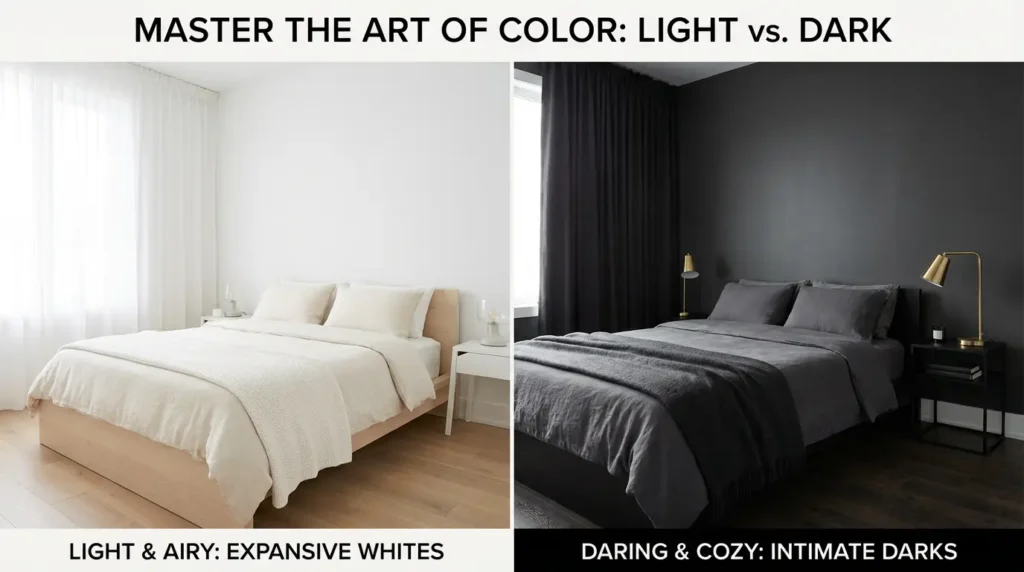
The traditional advice says stick with light, neutral colors. And yes, soft whites, pale grays, and warm beiges do make small bedrooms feel more spacious.
But here’s the twist: deep, dark colors can work too. When you paint everything—walls, ceiling, trim—in the same dark shade, the boundaries blur. Your eye can’t tell where the room ends.
This creates a cozy, sophisticated vibe with surprising depth.
8. Use Under-Bed Storage Wisely
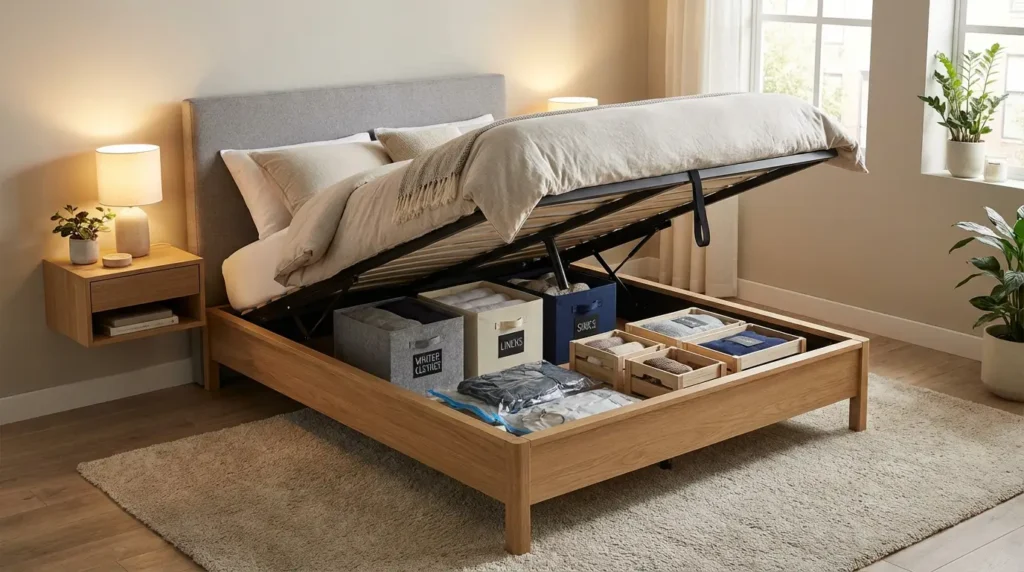
That space under your bed is prime real estate. Don’t waste it.
Bed frames with built-in drawers or hydraulic storage can eliminate the need for an entire dresser. Store out-of-season clothes, extra linens, or shoes down there.
If your bed doesn’t have built-in storage, use slim containers or vacuum storage bags to maximize every inch underneath.
9. Keep Nightstands Clear and Minimal
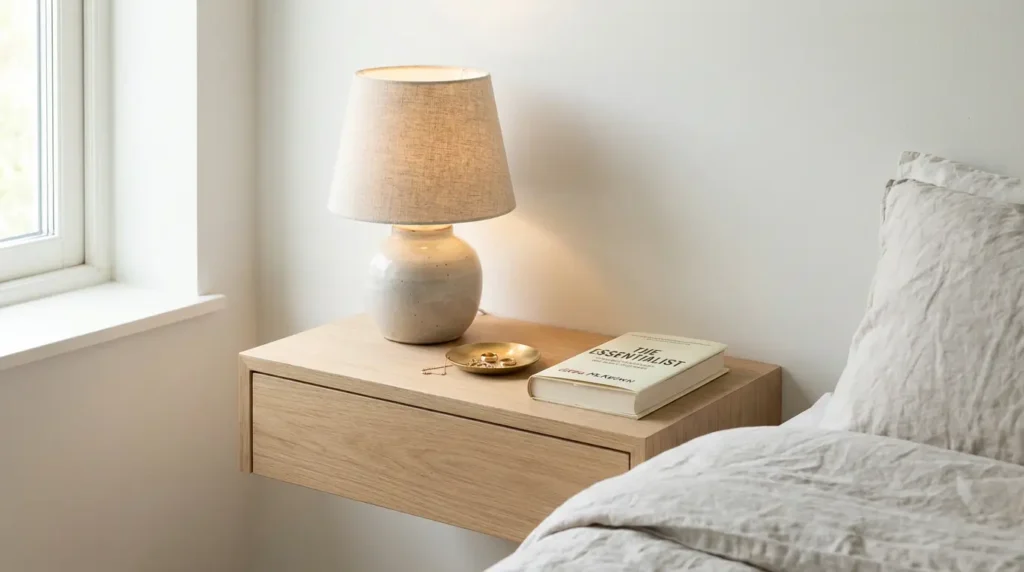
A cluttered nightstand makes the entire room feel cramped. Trust me on this.
Keep only the essentials: a simple lamp, maybe a glass of water, and one book you’re currently reading.
Everything else? Tuck it in a drawer or find another home. That clear surface creates visual breathing room that ripples through your whole small bedroom.
10. Scale Your Artwork Up, Not Down

Here’s where most people get it wrong. Small rooms don’t need small art.
One large statement piece actually makes a space feel bigger than a gallery wall of tiny frames.
A single oversized canvas or print draws the eye, creates a focal point, and gives the illusion of more expansive walls.
Color Strategies for Small Bedrooms
| Color Approach | Effect | Best For |
|---|---|---|
| All-white or light neutrals | Reflects maximum light, creates airiness | Naturally dark rooms, minimal decor styles |
| Soft pastels (blush, pale blue) | Adds warmth while maintaining brightness | Creating cozy yet spacious feel |
| Monochromatic dark | Blurs boundaries, adds depth | Rooms with good natural light, dramatic style |
| Two-tone contrast | Defines zones, adds interest | Multi-functional spaces |
The Ceiling Color Trick
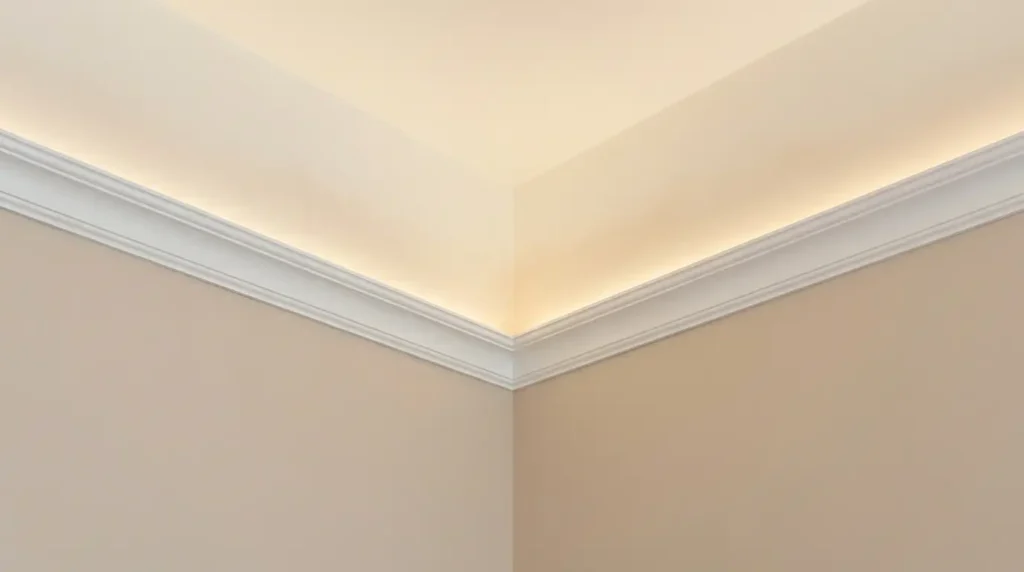
Don’t forget about that fifth wall above you. Painting your ceiling in a lighter shade than your walls makes it feel higher.
Or try the opposite: bring a pale ceiling color 10-15 centimeters down onto your walls for a subtle shot of color without overwhelming the space.
Furniture Layout That Maximizes Space
Position Your Bed on the Longest Wall
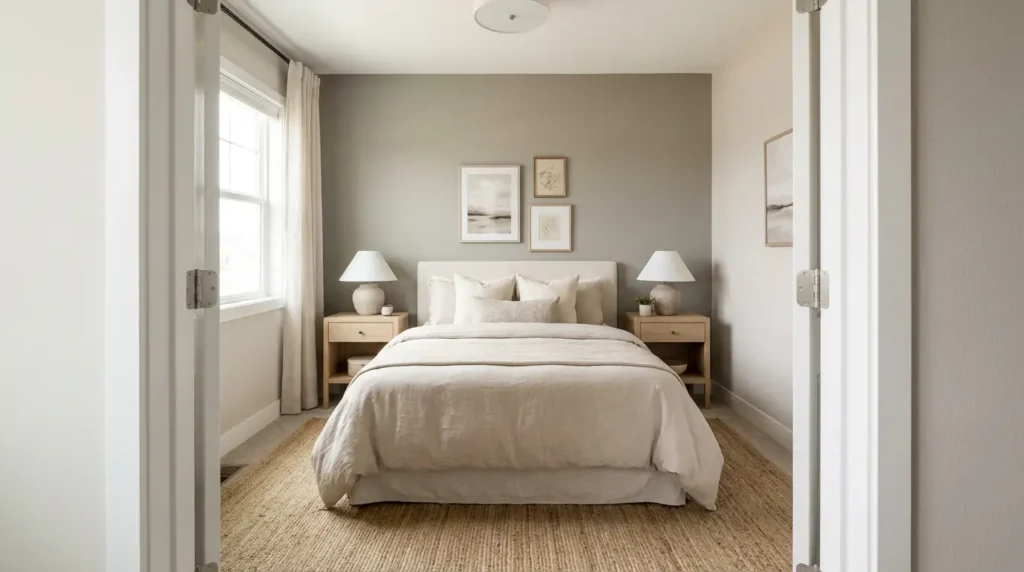
In my experience, this simple move changes everything about how a small bedroom functions.
When your bed sits against the longest wall, you create clearer walkways. The flow improves. You don’t feel like you’re squeezing around corners anymore.
Many people never experiment with furniture placement. They assume there’s only one way to arrange things. But moving your bed might be all it takes to make the room feel 30% more spacious.
Create Clear Pathways
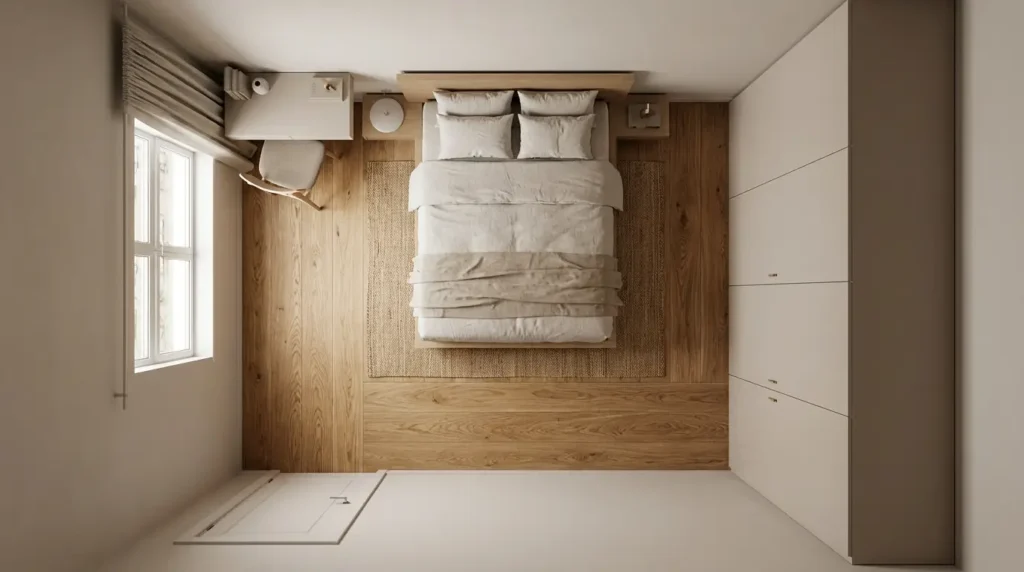
You should be able to walk from your door to your bed without turning sideways or bumping into furniture.
If you can’t, it’s time to rethink your layout. Consider removing that extra chair or switching to a slimmer dresser.
Multi-Functional Furniture Is Your Friend
Look for pieces that work double-duty:
- Storage ottomans that serve as seating and hide clutter
- Nightstands with drawers instead of open shelves
- Desks that double as vanities with a mirror propped on top
When every piece earns its place through multiple functions, you can have what you need without the crowding.
Lighting Solutions for Small Spaces

Ditch the Table Lamps for Wall Sconces
Wall-mounted lighting frees up your nightstand completely. No more bulky lamp bases taking up precious surface area.
Look for plug-in sconces if you’re renting or don’t want to deal with electrical work. They give you that hotel-luxe vibe while maximizing space.
Layer Your Light Sources
One harsh overhead light makes any room feel smaller. Instead, combine:
- Soft overhead lighting (think statement pendant or flush-mount)
- Task lighting near your bed for reading
- Ambient lighting like string lights or candles for warmth
Multiple light sources at different heights create depth and dimension.
Smart Storage Solutions
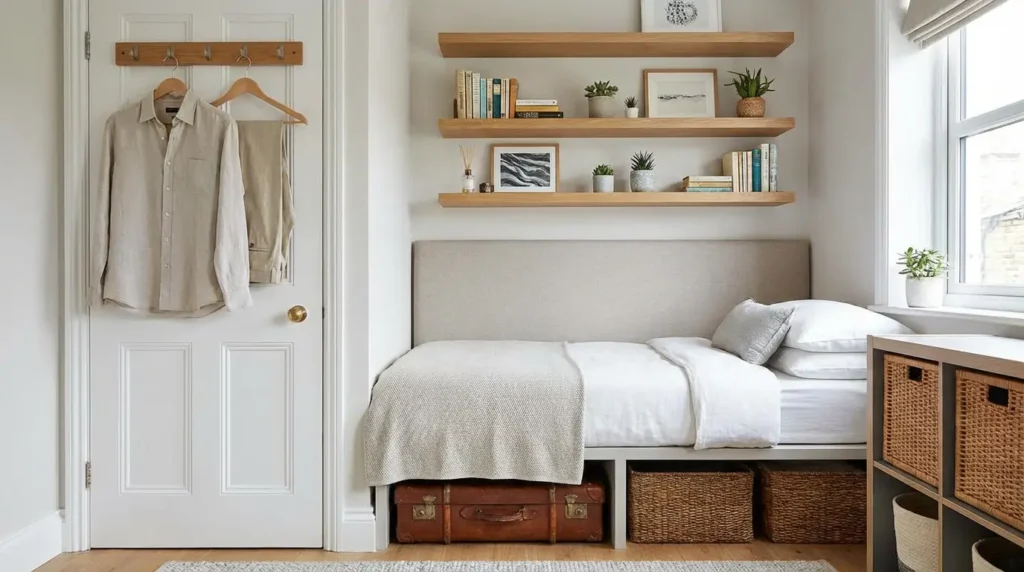
Behind-the-Door Storage
The back of your bedroom door is incredibly valuable real estate. Add some hooks and suddenly you’ve got space for:
- Tomorrow’s outfit (no more digging through drawers half-asleep)
- Robes and pajamas
- Bags and accessories
This one change can reduce closet crowding significantly.
Floating Shelves Above the Headboard
Instead of a bulky headboard, install a floating shelf or two above your bed. This gives you display space for books, plants, and decorative items without eating into your floor space.
Store Off-Season Clothes in Suitcases
Your suitcases are just taking up closet space when you’re not traveling. Fill them with winter sweaters in summer (or summer dresses in winter) and slide them under your bed or into your closet.
It’s hidden storage that doesn’t require buying anything new.
Bedding and Textile Choices
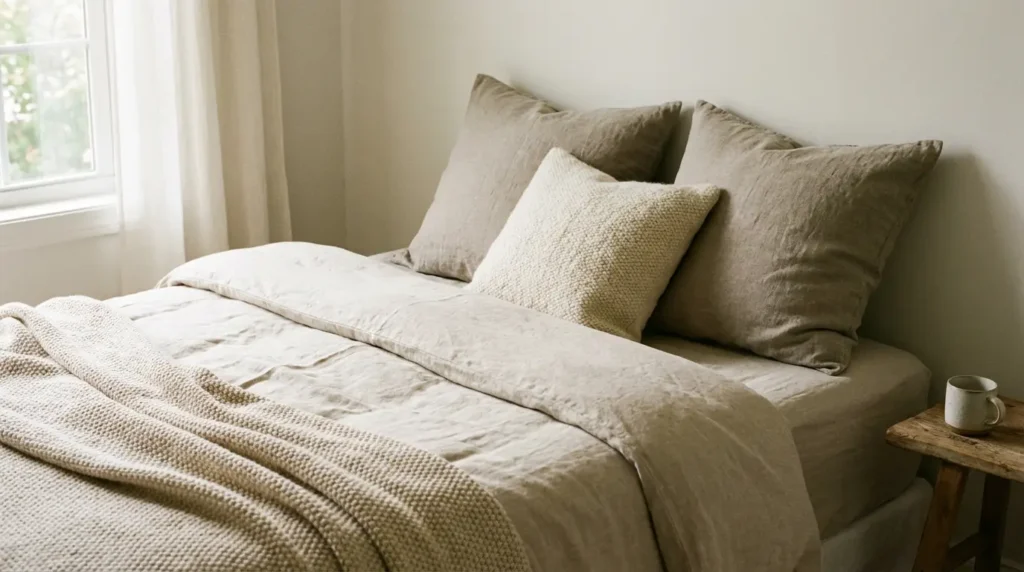
Keep Bedding Simple and Light
Too many throw pillows make your bed look bulky. Heavy quilts can overwhelm a small bedroom.
Stick with lightweight fabrics like cotton or linen. Choose a simple color palette. Maybe two or three coordinating pillows instead of seven.
Your bed should feel like a peaceful anchor, not a mountain of fabric.
Add One Area Rug
A well-placed rug defines your sleeping area and adds warmth without cluttering.
Don’t go too small though. A rug that’s too tiny makes the room feel choppy. Aim for something that extends at least 18 inches beyond each side of your bed.
The Decluttering Connection
Let’s be honest: no amount of design tricks will make a cluttered room feel spacious.
If you want the fastest win, start with declutter your bedroom by banning these bedroom items because visual clutter is the #1 reason small rooms feel smaller.
Keep surfaces mostly clear. Have designated homes for everything. A basket by the door catches random items that would otherwise end up on your dresser.
The less visual noise competing for attention, the bigger your small bedroom will feel.
For a calm, airy look that naturally suits small spaces, you’ll love these best Scandinavian bedroom design ideas too.
Window Treatment Tips
Choose Sheer or Simple Curtains
Heavy, dark curtains eat up visual space and block precious natural light.
Swap them for sheer panels that provide privacy while letting light filter through. Or go with simple, light-colored curtains that slide all the way back during the day.
Natural light is one of the best (and cheapest) ways to make any room feel bigger.
Common Mistakes to Avoid
Don’t Block Your Windows
Furniture in front of windows blocks light and makes the room feel closed in. Even moving a piece 6 inches can make a difference.
Avoid Too Many Small Decorative Items
A bunch of knick-knacks scattered around creates visual clutter. Choose a few meaningful pieces instead.
Don’t Use Furniture That’s Too Large
Scale matters. A king bed in a 10×10 room will dominate everything. Sometimes downsizing to a queen makes the space work better.
Frequently Asked Questions
What colors make a small bedroom look bigger?
Light, neutral colors like soft white, warm beige, and pale gray reflect the most light and create an airy feel. But don’t discount dark colors entirely—when used as a monochromatic scheme, deep blues and greens can add surprising depth.
How do I arrange furniture in a small bedroom?
Place your bed on the longest wall to create better flow. Keep walkways clear. Choose multi-functional furniture and pieces with exposed legs that don’t block floor space.
Should I use a large or small mirror in a small bedroom?
Go larger. One statement mirror creates more impact than several small ones. Place it opposite a window to maximize natural light reflection.
Can dark colors work in a small bedroom?
Yes! When you paint the entire room—walls, ceiling, and trim—in the same dark shade, it blurs visual boundaries and creates unexpected depth. Just make sure you have good lighting.
What’s the best bed height for a small room?
Lower beds make ceilings feel taller. But if you need under-bed storage, aim for a frame that’s about 18 inches off the ground—high enough for storage bins but not so high that it dominates the room.
How much stuff should I keep in a small bedroom?
Only what you actively use and truly love. Storage solutions help, but the real answer is being selective about what earns a place in your limited square footage.
Final Thoughts
Making a small bedroom feel bigger isn’t about expensive renovations or moving to a new place. It’s about understanding how our eyes perceive space and using simple design principles to your advantage.
Start with one or two changes—maybe raise your curtains or clear off your nightstand. See how it feels. Then layer on more tricks from this list.
Before you know it, your cramped little room will feel like the calm, open retreat you’ve been dreaming about. And you didn’t have to move a single wall to get there.
If you want it to feel spacious and like you, read how to make your bedroom feel like you and steal a few simple styling ideas.
What small bedroom ideas have worked best for you? Have you tried any of these tricks? Let me know in the comments below!