The Ultimate Guide to the Best Clinging Vines for Your Garden
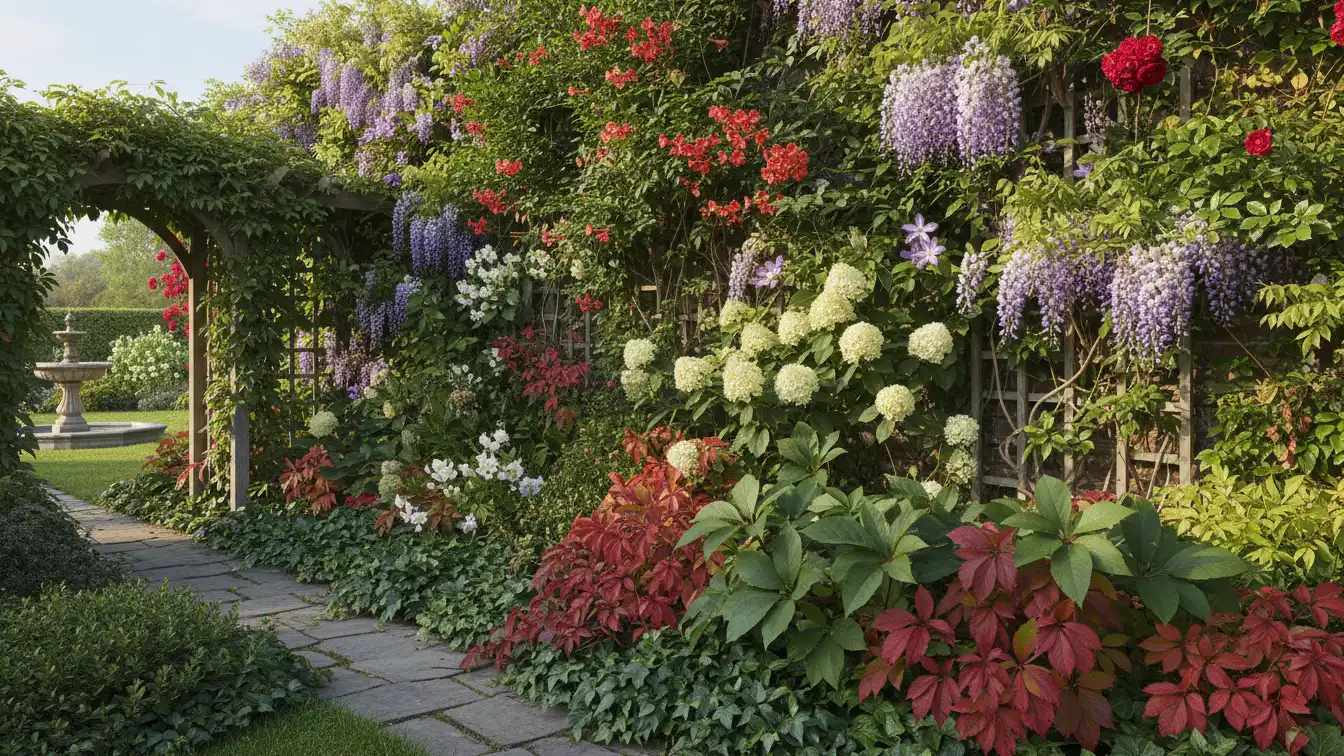
You know what? There’s something almost magical about watching a clinging vine slowly transform a bare wall into a living tapestry. I’ve been growing these incredible climbers for years now, and I’m still amazed at how they can turn even the most boring fence into a stunning vertical garden.
But here’s the thing – not all vines are created equal. If you’re looking for plants that’ll actually cling to surfaces without needing constant help, you’ll want to focus on what I call “true clingers.” These are the best clinging vines that use aerial rootlets, adhesive pads, or holdfasts to grab onto surfaces all by themselves.
What Makes Clinging Vines Different?
Now here’s where it gets interesting. While many people use “climbing vine” and “clinging vine” interchangeably, there’s actually a big difference. Clinging vines are self-sufficient climbers that attach directly to surfaces using specialized structures. They don’t need wires, strings, or constant training like twining vines do.
In my experience, understanding how these plants actually work makes all the difference in choosing the right one for your space. Let me break down the three main ways clinging vines attach themselves:
Climbing Mechanisms of Self-Clinging Vines:
- Aerial Rootlets: These tiny root-like structures grow along the stem and burrow into cracks and crevices. Plants like English ivy and climbing hydrangea use this method brilliantly.
- Adhesive Discs (Holdfasts): Think of these as nature’s suction cups. Virginia creeper and Boston ivy produce disc-shaped pads that secrete sticky substances to grip smooth surfaces.
- Modified Tendrils with Pads: Some vines combine both approaches, using tendrils tipped with adhesive pads for extra grip.
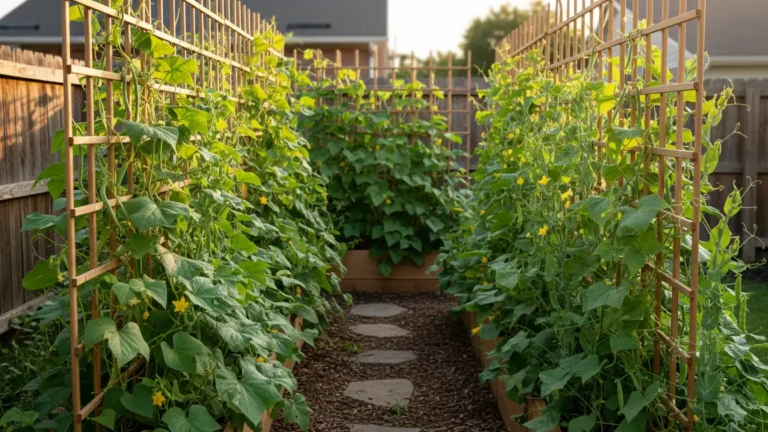
If you want the same vertical-growing concept for food, check out my easy vegetables that grow on a trellis guide.
Benefits of Growing the Best Clinging Vines
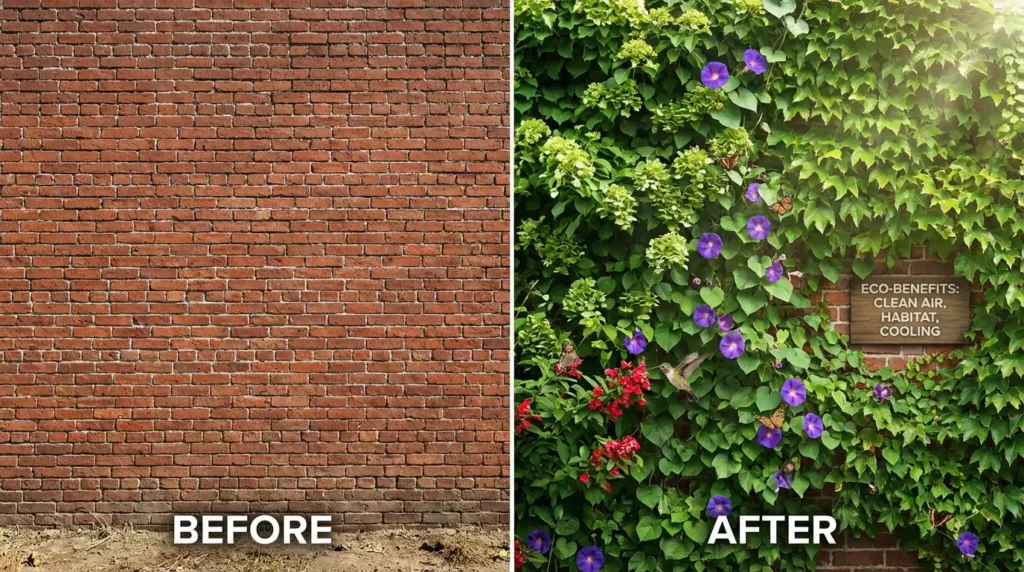
What I love about these plants is how much they give back. They’re not just pretty faces – they’re workhorses that transform your outdoor space in multiple ways.
Environmental Benefits
These vines are natural air purifiers. They absorb carbon dioxide, produce oxygen, and create mini-ecosystems that support local wildlife. I’ve noticed more butterflies and hummingbirds visiting my garden since I started growing trumpet vine.
Plus, clinging vines act as natural insulators. When properly placed on building walls, they can reduce heat absorption by up to 50% in summer. That translates to real money saved on cooling costs.
To make the whole space feel even more magical, pair vines with best white flowers to plant in gardens for contrast and softness.
Practical Advantages
You might be wondering about maintenance. Here’s the good news: self-clinging varieties require less work than other climbers. Once established, they find their own way up surfaces without ties or constant redirection. They’re perfect for:
- Creating natural privacy screens along property lines
- Covering unsightly concrete walls or masonry structures
- Adding vertical interest in small spaces
- Reducing noise pollution (dense foliage acts as sound barrier)
- Controlling erosion on slopes
- Softening harsh architectural lines
Important Considerations Before Planting
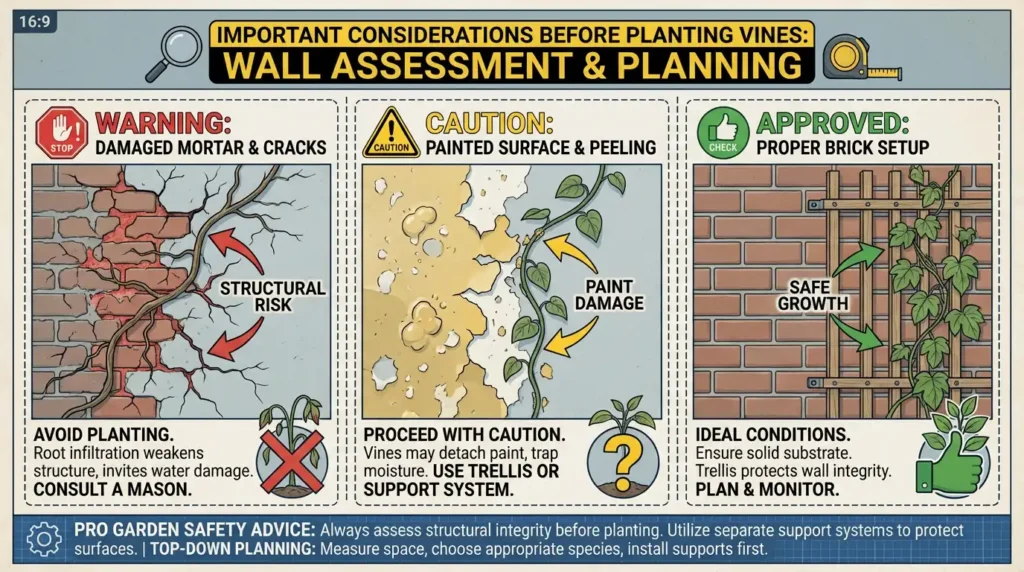
Let’s be honest – clinging vines aren’t for everyone. Before you rush out to buy one, there are some critical things you need to know.
Potential Structural Concerns
I learned this the hard way with my first English ivy planting. While these plants won’t damage solid, intact masonry, they can exploit existing weaknesses. Their aerial rootlets will squeeze into cracks and crevices, potentially widening them over time.
Never plant self-clinging vines on:
- Wooden siding or shingles
- Painted surfaces (adhesive pads can pull off paint)
- Structures with existing cracks or damage
- Areas near roof tiles or gutters without regular pruning
For wooden structures, install a trellis at least 6-8 inches away from the siding. This allows air circulation and prevents moisture damage.
If you’re improving curb appeal beyond vines, these front porch decor ideas help tie everything together.
Managing Growth
Some clinging vines grow aggressively. What starts as a tiny plant can become overwhelming within a few seasons. Regular pruning isn’t optional – it’s essential. I prune mine at least twice yearly, cutting back growth around windows, doors, and rooflines.
The 10 Best Clinging Vines for Every Garden
After years of trial and error, these are the best clinging vines I recommend. Each has unique characteristics that make it perfect for specific situations.
1. English Ivy (Hedera helix)
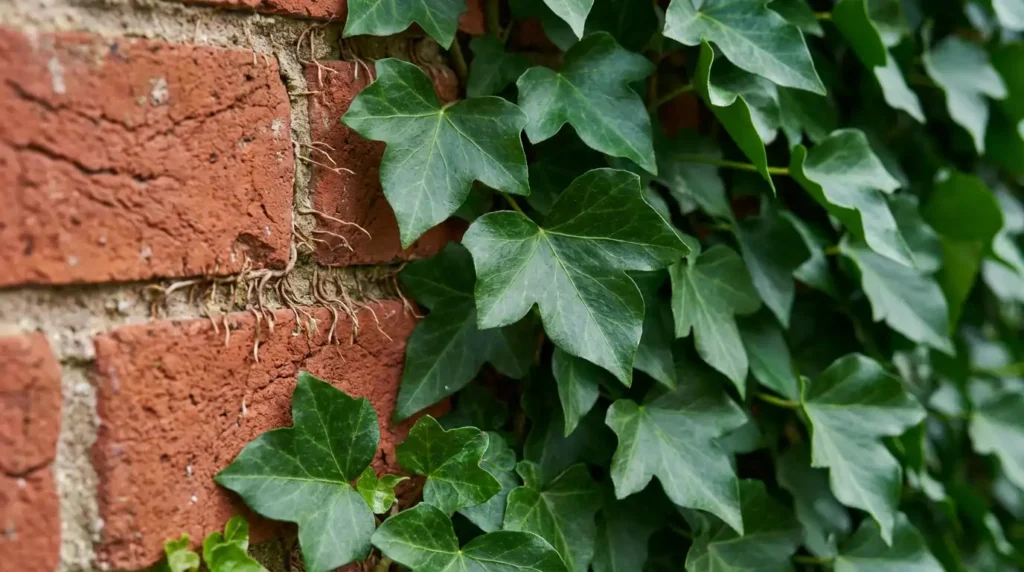
This is the classic clinging vine – the one everyone recognizes. English ivy uses thousands of tiny aerial rootlets to grip surfaces with incredible tenacity.
Growing Characteristics:
- USDA Zones: 4-9
- Growth Rate: Moderate to fast (6-8 feet per year once established)
- Light Requirements: Shade to partial sun
- Mature Height: 50-100 feet
- Climbing Method: Aerial rootlets
What I love about this plant is its versatility. It thrives in shade where other vines struggle, making it perfect for north-facing walls. The evergreen foliage provides year-round coverage and comes in dozens of variegated cultivars.
Best Uses: Ground cover, erosion control, covering brick walls, shade gardens
Important Note: English ivy can become invasive in some regions. Check with your local extension office before planting. Never let it climb trees, as it can eventually strangle them.
2. Boston Ivy (Parthenocissus tricuspidata)
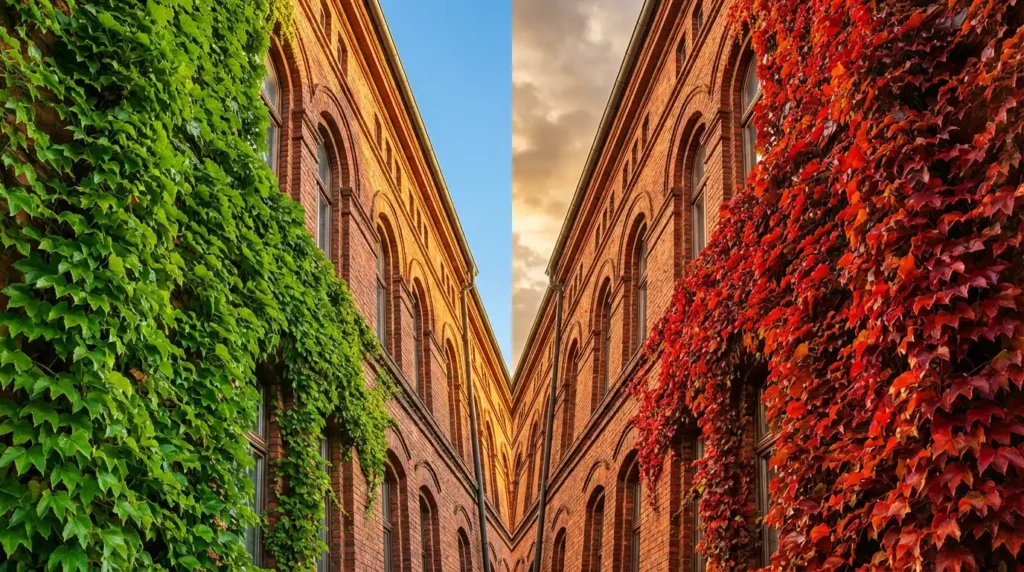
Don’t let the name fool you – this isn’t actually an ivy at all! Boston ivy is one of the fastest-growing clinging vines you can grow, and its fall color is absolutely spectacular.
Growing Characteristics:
- USDA Zones: 4-8
- Growth Rate: Very fast (10-15 feet per year)
- Light Requirements: Full sun to partial shade
- Mature Height: 30-50 feet
- Climbing Method: Adhesive discs
This plant climbs using small adhesive discs that can grip even smooth surfaces like glass or metal. I’ve seen it climb painted concrete walls with ease. The three-lobed leaves overlap beautifully, creating a dense screen. In fall, they transform into brilliant shades of scarlet, orange, and burgundy.
Best Uses: Masonry walls, large buildings, quick coverage, spectacular fall display
Pro Tip: Plant it 12-18 inches from the wall base. Water deeply during establishment. Once mature, it’s remarkably drought-tolerant.
3. Virginia Creeper (Parthenocissus quinquefolia)
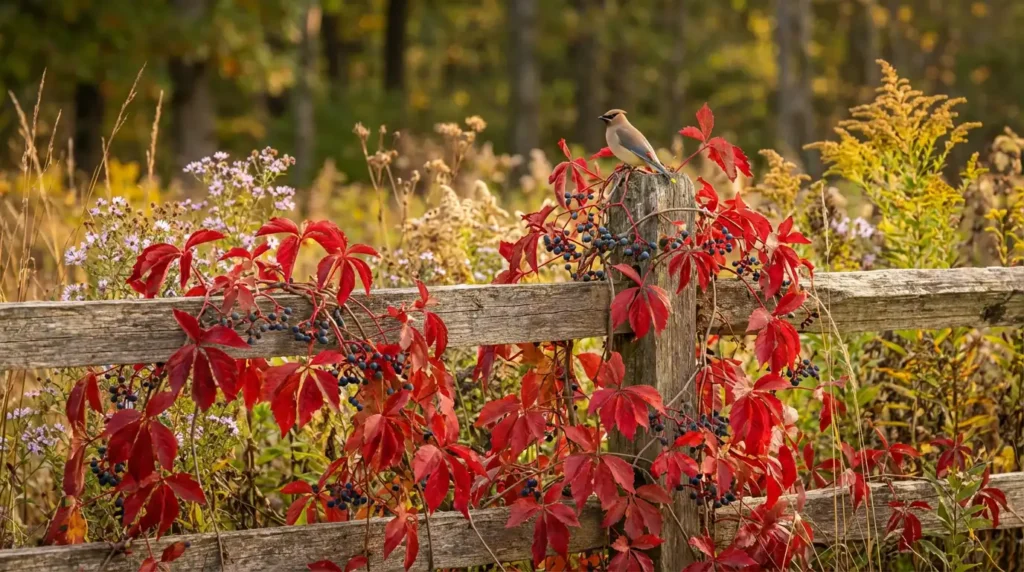
Here’s a native North American clinging vine that doesn’t get enough credit. Virginia creeper is incredibly adaptable and provides stunning seasonal color while supporting local wildlife.
Growing Characteristics:
- USDA Zones: 3-10
- Growth Rate: Fast (10-20 feet per year)
- Light Requirements: Full sun to full shade
- Mature Height: 30-50 feet
- Climbing Method: Adhesive discs and tendrils
The five-leaflet compound leaves distinguish this from poison ivy (which has three leaflets). Those leaves turn brilliant crimson in autumn – truly breathtaking against brick walls.
Best Uses: Native gardens, wildlife habitat, erosion control, fast coverage, slopes
In my experience, Virginia creeper is one of the most forgiving clinging vines. It tolerates poor soil, drought, pollution, and various light conditions. The blue-black berries attract birds in fall and winter.
Word of Caution: Some people experience minor skin irritation from the sap. Wear gloves when pruning.
4. Climbing Hydrangea (Hydrangea anomala subsp. petiolaris)
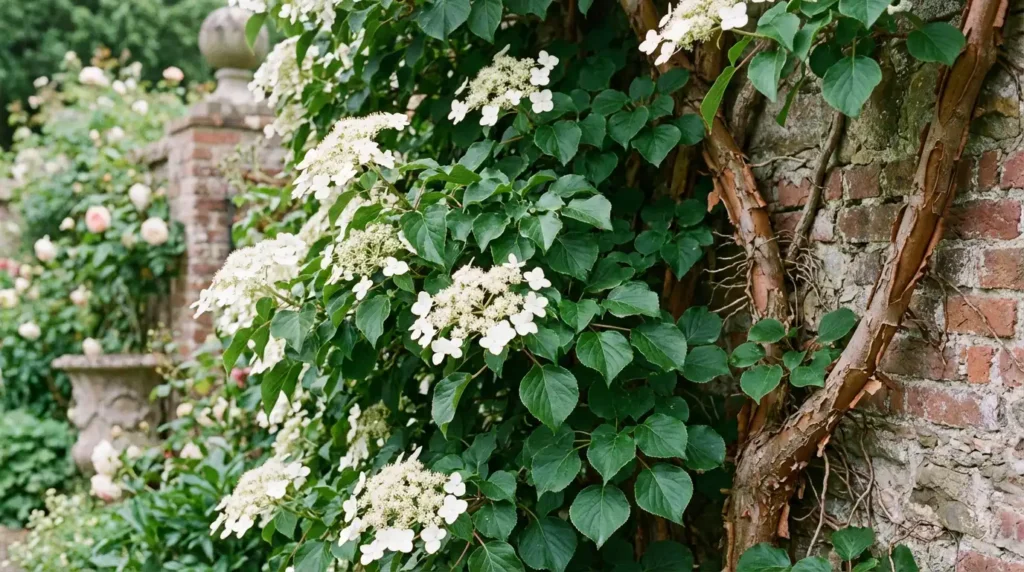
If you want elegance combined with fragrance, look no further. Climbing hydrangea is slow to start but becomes one of the most beautiful clinging vines you can grow.
Growing Characteristics:
- USDA Zones: 4-8
- Growth Rate: Slow to moderate (initially sluggish, then 3-5 feet per year)
- Light Requirements: Partial shade to full shade
- Mature Height: 30-50 feet
- Climbing Method: Aerial rootlets
The lacecap white flowers appear in early summer and smell absolutely divine. They’re followed by attractive exfoliating cinnamon-colored bark that provides winter interest. I planted one seven years ago, and it’s finally hitting its stride – completely worth the wait.
Best Uses: Shade gardens, north-facing walls, woodland gardens, specimen plant
Patience Required: Don’t give up on this one. It often takes 3-5 years to establish before showing significant growth. But once it takes off, you’ll understand why it’s considered one of the best clinging vines for shade.
5. Trumpet Vine (Campsis radicans)
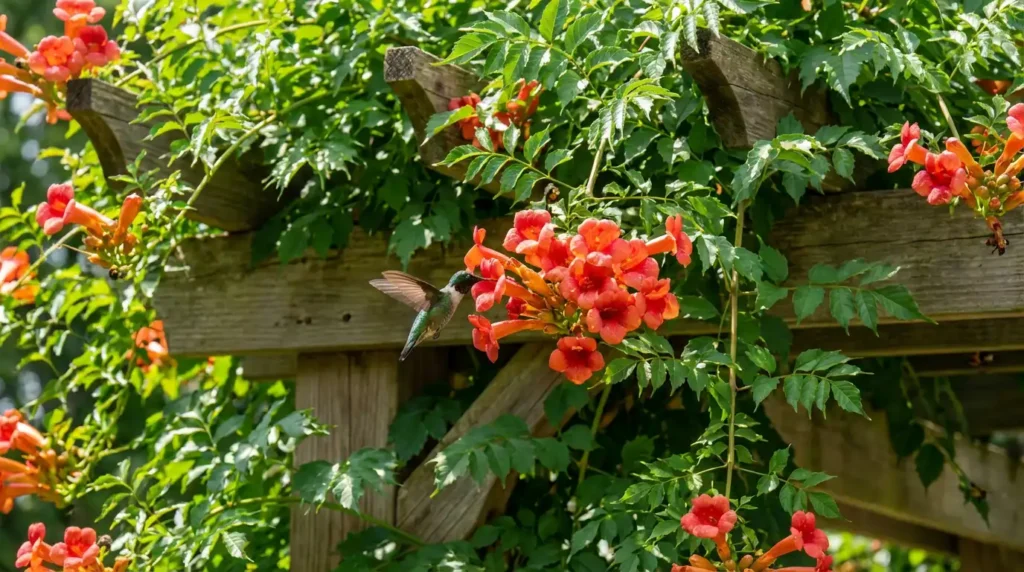
Need to attract hummingbirds? Trumpet vine is your answer. Those vibrant orange-red tubular flowers are hummingbird magnets.
Growing Characteristics:
- USDA Zones: 4-9
- Growth Rate: Very fast (can grow 10-30 feet in one season)
- Light Requirements: Full sun to partial shade
- Mature Height: 30-40 feet
- Climbing Method: Aerial rootlets
Here’s where I need to be straight with you – this vine is aggressive. What I love about this is its unstoppable nature when you need quick coverage. What you need to watch out for is that same unstoppable nature when it starts spreading via underground runners.
Best Uses: Fast privacy screens, hummingbird gardens, rural properties, fences
Critical Warning: Plant trumpet vine only where you can control it. Use root barriers. Prune ruthlessly. Consider planting the less invasive Chinese variety (Campsis grandiflora) instead of the native species.
6. Creeping Fig (Ficus pumila)
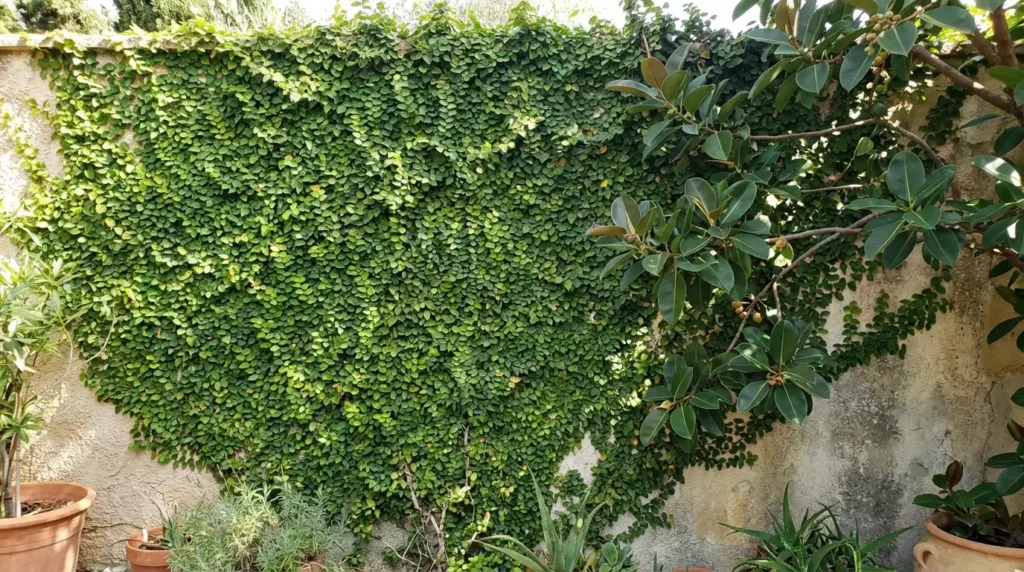
For warm climate gardeners, creeping fig creates that romantic Mediterranean look. This delicate-looking vine is tougher than it appears.
Growing Characteristics:
- USDA Zones: 8-11
- Growth Rate: Fast once established
- Light Requirements: Full sun to partial shade
- Mature Height: 15-20 feet
- Climbing Method: Aerial rootlets
The small heart-shaped leaves create a fine-textured carpet against walls. Young foliage is tiny and delicate; mature growth produces larger leaves. It’s evergreen in frost-free areas.
Best Uses: Warm climate gardens, container growing in cold areas, textured walls, tropical aesthetics
Cold Sensitivity: This vine won’t tolerate frost. In borderline zones, plant in protected microclimates or grow in containers you can move indoors.
7. Wintercreeper (Euonymus fortunei)
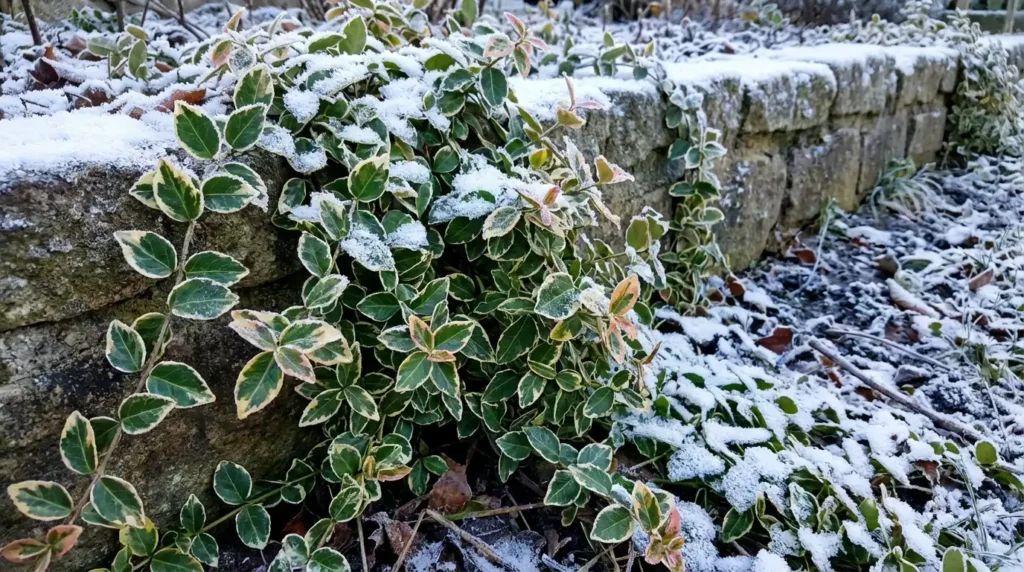
Looking for an evergreen clinging vine that handles cold like a champion? Wintercreeper might be your solution.
Growing Characteristics:
- USDA Zones: 4-9
- Growth Rate: Moderate
- Light Requirements: Full sun to shade
- Mature Height: 40-70 feet (but easily controlled with pruning)
- Climbing Method: Aerial rootlets
The glossy evergreen leaves often have white or gold variegation. It’s incredibly cold-hardy and maintains color through winter. While slower than Boston ivy, it provides reliable year-round coverage.
Best Uses: Evergreen screening, cold climate gardens, ground cover, low walls
Cultivar Recommendations: ‘Coloratus’ has purple winter foliage. ‘Emerald Gaiety’ features white-edged leaves that turn pink in winter.
8. Climbing Roses (Rosa spp. – selected varieties)
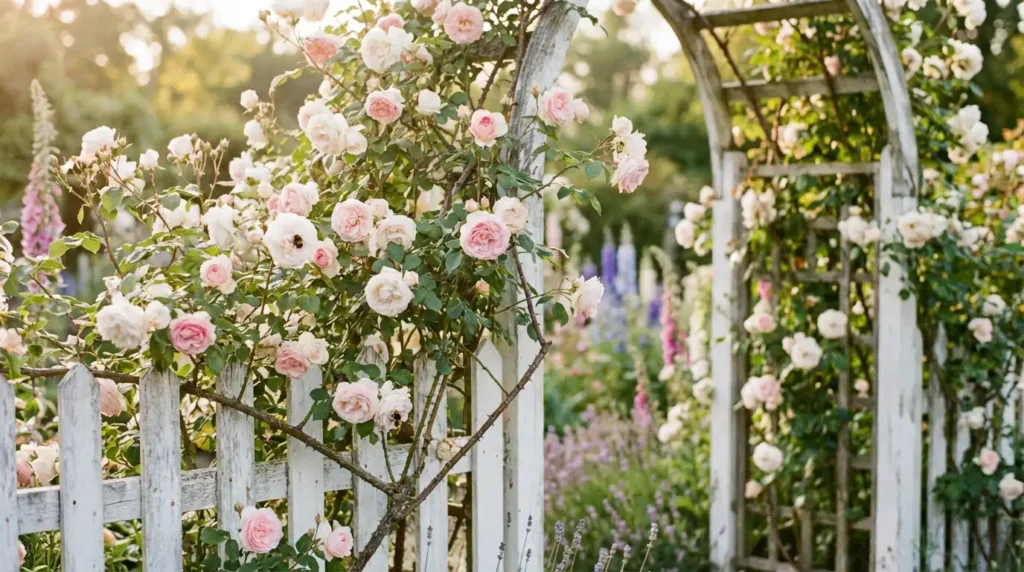
Now, most climbing roses aren’t true clinging vines – they need support. However, some varieties have enough thorns and scrambling ability to grab onto rough surfaces.
Growing Characteristics:
- USDA Zones: Varies by variety (typically 5-9)
- Growth Rate: Moderate to fast
- Light Requirements: Full sun (6+ hours)
- Mature Height: 8-20 feet depending on variety
- Climbing Method: Thorns (hooks)
While they’ll need some initial training, varieties like ‘New Dawn’ and ‘Climbing Iceberg’ can grip chain-link fences and rough wood surfaces reasonably well.
Best Uses: Romantic gardens, pergolas, fences, traditional landscapes
Reality Check: These require more maintenance than other clinging vines – pruning, disease management, and occasional tying. But those blooms? Absolutely worth it.
9. Cross Vine (Bignonia capreolata)
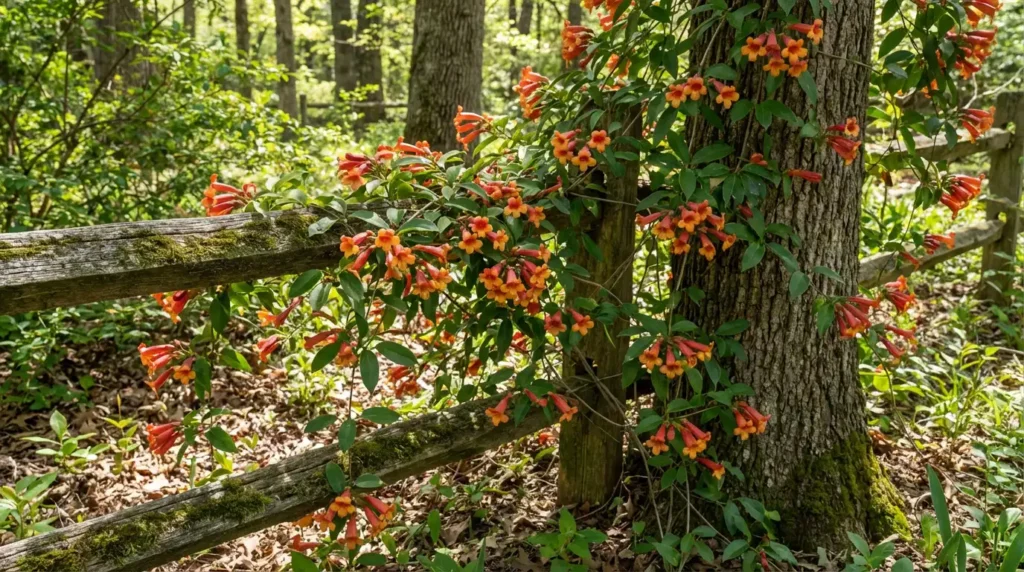
This southeastern native deserves more attention. Cross vine is a semi-evergreen clinging vine with unique characteristics.
Growing Characteristics:
- USDA Zones: 6-9
- Growth Rate: Fast
- Light Requirements: Full sun to partial shade
- Mature Height: 30-50 feet
- Climbing Method: Tendrils with adhesive tips
The tubular flowers bloom in spring in shades ranging from orange to red. The name comes from the cross-shaped pattern revealed when you cut the stem. ‘Tangerine Beauty’ is an exceptional cultivar with vibrant orange blooms.
Best Uses: Native gardens, pollinator gardens, southern landscapes, wildlife habitat
Native Advantage: Being a native plant, it supports local pollinators better than exotic species. It’s also naturally resistant to regional pests and diseases.
10. Decumaria (Decumaria barbara)
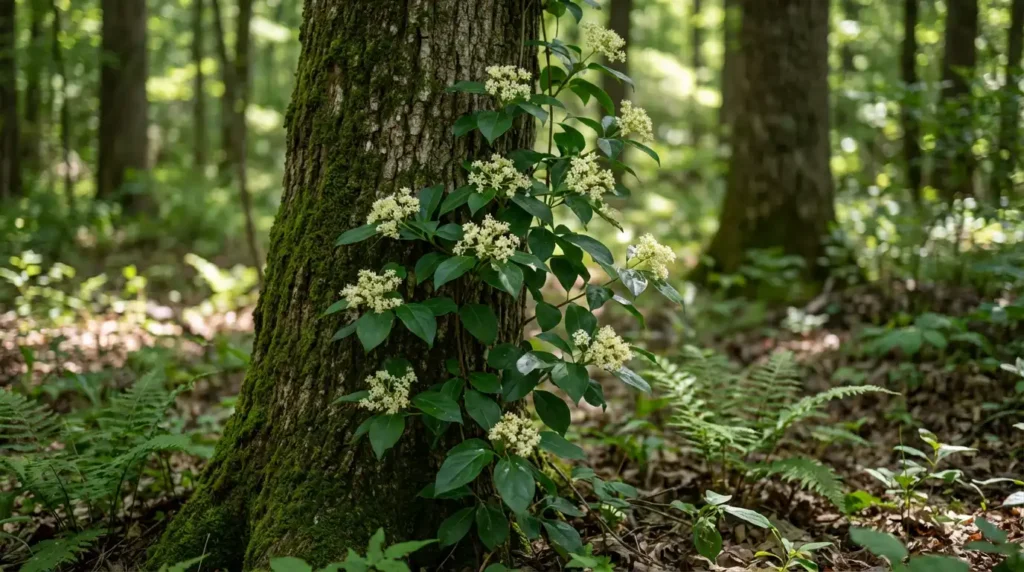
Here’s a lesser-known gem – decumaria is a native climbing hydrangea relative that deserves recognition among the best clinging vines.
Growing Characteristics:
- USDA Zones: 5-9
- Growth Rate: Moderate
- Light Requirements: Partial shade to full shade
- Mature Height: 20-30 feet
- Climbing Method: Aerial rootlets (but may need initial support)
The creamy white flower clusters appear in late spring, followed by attractive seed capsules. It’s semi-evergreen in mild climates and completely deciduous in colder areas.
Best Uses: Shade gardens, native plantings, tree trunks, naturalistic landscapes
Helpful Tip: Give it extra support initially on smooth walls. Once established on rough bark or textured surfaces, it clings well.
Matching Vines to Your Needs: A Comparison Table
| Vine Name | Growth Rate | Zones | Flowers | Fall Color | Evergreen? | Best For |
|---|---|---|---|---|---|---|
| English Ivy | Moderate-Fast | 4-9 | Insignificant | No | Yes | Shade, year-round coverage |
| Boston Ivy | Very Fast | 4-8 | Insignificant | Brilliant red | No | Fast coverage, fall display |
| Virginia Creeper | Fast | 3-10 | Insignificant | Crimson | No | Native gardens, wildlife |
| Climbing Hydrangea | Slow-Moderate | 4-8 | White, fragrant | Yellow | No | Shade, elegance |
| Trumpet Vine | Very Fast | 4-9 | Orange-red | No | No | Hummingbirds, quick screen |
| Creeping Fig | Fast | 8-11 | Insignificant | No | Yes | Warm climates, texture |
| Wintercreeper | Moderate | 4-9 | Insignificant | No | Yes | Cold areas, evergreen |
| Cross Vine | Fast | 6-9 | Orange-red | Bronze | Semi | Native, pollinators |
How to Plant and Establish Clinging Vines Successfully
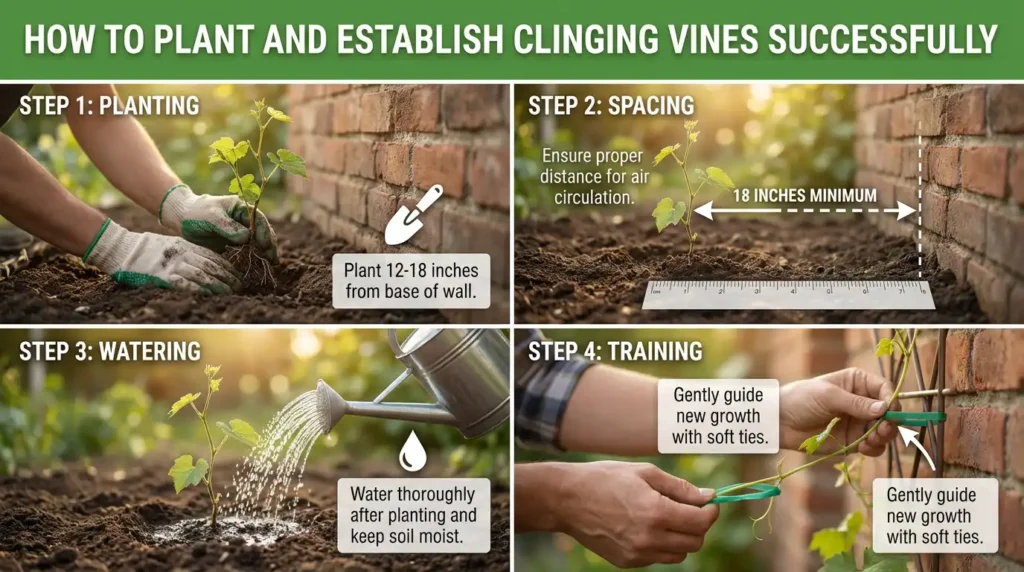
You might be wondering how to get these plants started. Here’s my proven method for successful establishment:
Site Selection and Preparation
Assess Your Structure: Not all surfaces are suitable for clinging vines. Inspect walls for existing damage. Ensure masonry structures have sound mortar. For wooden structures, install independent trellises.
Soil Preparation: Even though these vines climb walls, they root in soil. Amend planting areas with compost. Most clinging vines prefer well-draining soil with neutral to slightly acidic pH.
Location Considerations:
- Match light requirements to your site
- Consider mature size and pruning access
- Think about roof overhangs blocking rainfall
- Plan for seasonal maintenance from ladders
Planting Process
- Timing: Plant container-grown vines in spring or early fall. This gives roots time to establish before extremes.
- Spacing: Plant 8-12 inches from the wall base. This allows root development and prevents plants from sitting in runoff from walls.
- Planting Depth: Set plants at the same depth they were growing in containers. Don’t bury stems.
- Initial Support: Even self-clinging varieties need help at first. Use soft ties or tape to guide initial stems toward the wall.
- Watering: Water deeply and consistently during the first growing season. Once established, most clinging vines are remarkably drought-tolerant.
Training and Early Care
In my experience, those first few months determine long-term success. Guide stems toward desired climbing surfaces. Some vines produce climbing structures only after reaching a certain maturity.
For aerial rootlet climbers like climbing hydrangea, mist the stems occasionally during establishment. This encourages rootlet production.
Maintaining Your Clinging Vines
Let’s talk maintenance – because even the best clinging vines need attention.
Pruning Strategies
Annual Pruning (Most Species):
- Late winter or early spring before new growth
- Remove dead, damaged, or diseased stems
- Cut back growth encroaching on windows, gutters, or rooflines
- Maintain 6-12 inches clearance from roof edges
Renovation Pruning: Every 3-5 years, most clinging vines benefit from more aggressive pruning. Cut back to 6-12 inches from the ground in late winter. This sounds drastic, but it rejuvenates growth and prevents the heavy, woody buildup that can damage walls.
Pest and Disease Management
Most clinging vines are remarkably pest-resistant. However, watch for:
- Aphids: Wash off with strong water spray
- Scale insects: Treat with horticultural oil
- Spider mites: Increase humidity, remove affected foliage
- Powdery mildew: Improve air circulation through pruning
Seasonal Care Tips
Spring:
- Apply balanced fertilizer
- Inspect for winter damage
- Begin guiding new growth
Summer:
- Water during drought
- Monitor for pests
- Prune summer-bloomers after flowering
Fall:
- Reduce watering as plants go dormant
- Clean up fallen leaves to prevent disease
- Prune fall-bloomers if needed
Winter:
- Major structural pruning
- Remove ice and snow accumulation from stems
- Plan spring improvements
Common Mistakes to Avoid
I’ve made most of these mistakes myself, so you don’t have to!
Mistake #1: Planting on Inappropriate Surfaces Never plant clinging vines directly on wood siding, painted surfaces, or damaged masonry. You’ll regret it.
Mistake #2: Underestimating Growth Rate That cute little vine at the nursery? It’ll be 20 feet tall next year if it’s Boston ivy or trumpet vine. Plan accordingly.
Mistake #3: Neglecting Pruning “I’ll just let it grow naturally” seems like a good idea until vines block your gutters or pull off roof shingles. Prune consistently from year one.
Mistake #4: Poor Initial Training Guide stems toward climbing surfaces when young. Once woody stems develop, redirecting them is nearly impossible.
Mistake #5: Planting Too Close to Trees English ivy and other aggressive clinging vines can eventually strangle trees. Keep them on structures, not living plants.
Creating Privacy with Clinging Vines
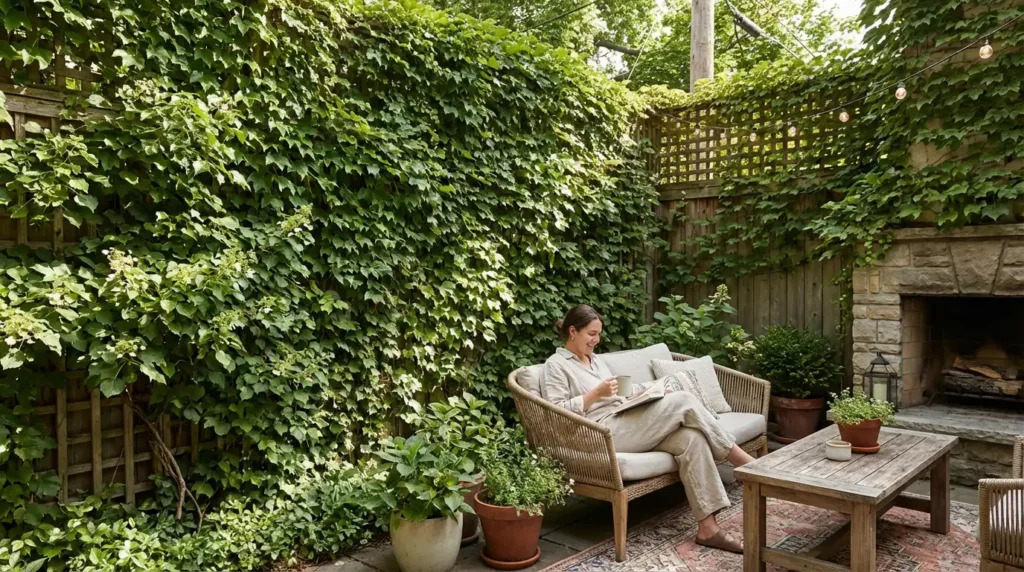
One of the most common reasons people choose clinging vines is for privacy screening. Here’s how to maximize effectiveness:
Privacy Screen Strategies
Fence Coverage: Plant Boston ivy or Virginia creeper every 3-4 feet along chain-link or metal fences. Within 2-3 years, you’ll have complete coverage.
Living Walls: Install sturdy wire mesh or livestock panels several inches from walls. Plant climbing hydrangea or English ivy at base. This creates privacy while protecting structures.
Year-Round Screening: For continuous coverage, choose evergreen options like wintercreeper or creeping fig (in appropriate zones). These maintain foliage through winter.
Layered Approach: Combine fast growers like Boston ivy with evergreen options. The deciduous vine provides summer density and fall color, while the evergreen maintains winter screening.
Frequently Asked Questions About Clinging Vines
Will clinging vines damage my brick wall? Properly maintained clinging vines won’t damage sound masonry. They can, however, exploit existing cracks. Inspect walls first and keep vines away from damaged areas.
How fast do clinging vines grow? Growth rates vary dramatically. Trumpet vine and Boston ivy can add 10-20 feet annually. Climbing hydrangea grows just 2-3 feet yearly for the first few years. Check the specific variety.
Can I remove a clinging vine without damaging the wall? Removing established clinging vines is challenging. Aerial rootlets and adhesive pads leave stubborn residue. You’ll need to scrub walls with brushes and might need pressure washing. Plan this as a major project.
Do clinging vines attract pests or snakes? Dense vines provide wildlife habitat – that’s actually a benefit! They attract beneficial insects and birds. Regarding snakes, they’re no more likely to attract them than any dense plantings. Keep vines trimmed away from entry points if you’re concerned.
Which is the best clinging vine for shade? Climbing hydrangea and English ivy excel in shade. Decumaria also performs well. These shade-tolerant options open up north-facing walls and areas under tree canopies.
Final Thoughts
After years of growing various clinging vines, I’m still discovering new favorites and learning better techniques. These remarkable plants transform vertical spaces like nothing else. They provide privacy, beauty, wildlife habitat, and even climate control – all while requiring relatively minimal care once established.
The key is choosing the right vine for your specific situation and committing to regular maintenance. Don’t let the warnings scare you off. Yes, some clinging vines grow aggressively. Yes, they need pruning. But with proper selection and care, they’re among the most rewarding plants you can grow.
Start with one of the easier varieties like Boston ivy or Virginia creeper. Experience their growth habits firsthand. Then you can experiment with more challenging but equally rewarding options like climbing hydrangea or cross vine.
Your boring wall or fence is just waiting to become a living masterpiece. Which of these best clinging vines will you choose to transform your outdoor space?