Transform Your Health: Four Unique Bathroom Plants That Can Boost Your Health
Introduction
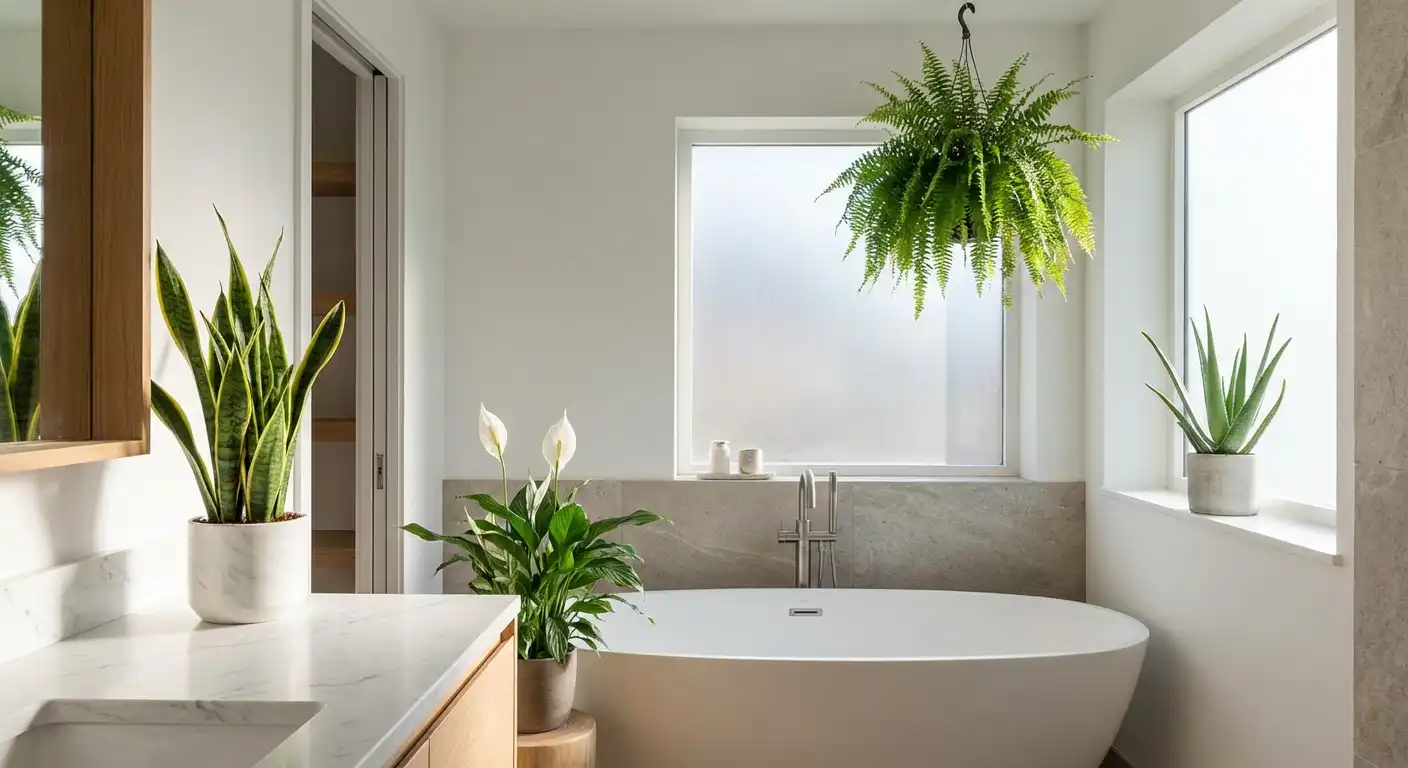
You know that feeling when you walk into a spa and instantly feel… calmer? Well, here’s a secret: you don’t need to drop $200 on a spa day to get that vibe. Your bathroom can become that sanctuary, and it starts with adding the right bathroom plants.
Now, I’ll be honest with you. When I first heard about keeping plants in the bathroom, I thought it was just another Pinterest trend that’d die out in a week. But here’s where it gets interesting—indoor plants for bathrooms aren’t just pretty decorations. They’re actually tiny health-boosting machines that work overtime to purify air, reduce stress, and even help you breathe better while you’re brushing your teeth. In this guide, I’m breaking down four unique bathroom plants that can boost your health while also making your space look like a mini home spa.
In my experience, most people don’t realize their bathroom is basically a plant paradise waiting to happen. The humidity levels are perfect, the warmth from showers creates an ideal microclimate, and many low-light plants actually prefer these conditions over your sunny windowsill.
You might be wondering: which plants actually work in bathrooms? That’s exactly what we’re diving into today. I’m going to walk you through four unique houseplants that’ll transform your bathroom from a basic washroom into a health-boosting retreat. And trust me, these aren’t your grandma’s spider plants (though those are great too).
Let’s get started.
Why Your Bathroom Is the Perfect Environment for Health-Boosting Plants
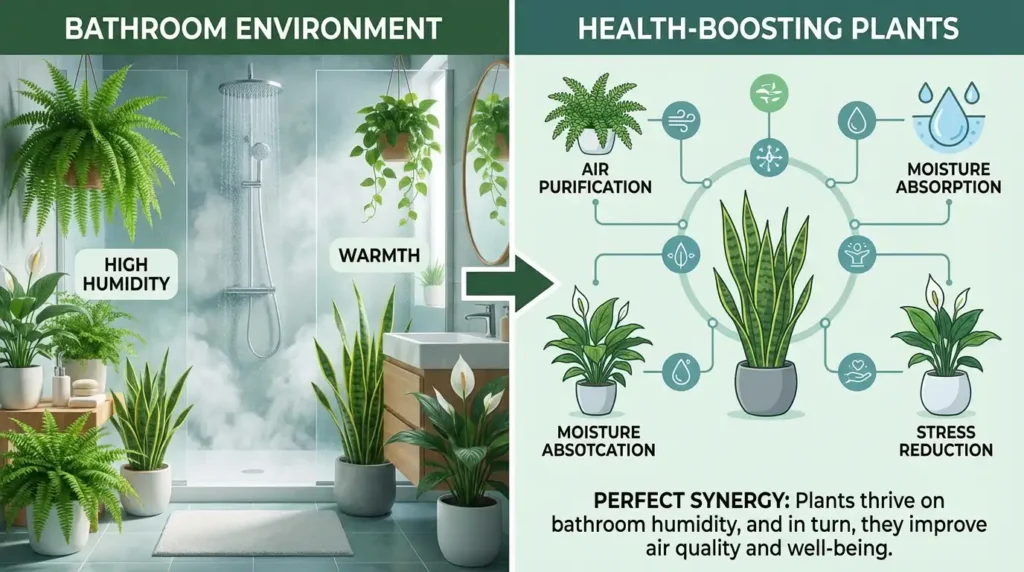
Before we jump into specific plants, let’s talk about why bathrooms are actually plant heaven.
The Science Behind Bathroom Microclimates
Here’s the thing most people miss: bathroom plants don’t just survive in your loo—they thrive there. The combination of high humidity, moderate temperatures, and often low-light conditions mimics the natural environment of many tropical and subtropical plants.
When you take a hot shower, you’re creating a mini rainforest environment. The moisture levels spike, the air gets warm, and steam settles on leaves just like morning dew in nature. What I love about this is that you’re literally recreating nature’s perfect growing conditions without even trying.
According to research from NASA’s Clean Air Study, certain indoor plants can remove up to 87% of air toxins in 24 hours. In a bathroom—where we use cleaning products, aerosols, and deal with mold issues—this becomes incredibly valuable.
Health Benefits of Bathroom Plants You Can’t Ignore
Now here’s where it gets really interesting. Plants in bathrooms offer specific health benefits that go beyond just looking nice:
Air Purification: Bathrooms often have poor ventilation. Plants naturally filter out volatile organic compounds (VOCs) from cleaning products, air fresheners, and personal care items. They absorb harmful chemicals and release fresh oxygen.
Humidity Regulation: While plants add moisture through transpiration, certain species actually help balance humidity levels. This is crucial for respiratory health, especially during winter when indoor air gets dry.
Stress Reduction: Multiple studies show that simply being around greenery reduces cortisol levels. Starting your morning routine surrounded by plants sets a calmer tone for your entire day.
Mold Prevention: Here’s something not many people know—some plants actually compete with mold for resources and can help reduce mold growth in damp bathroom environments.
Better Air Quality: Plants remove carbon dioxide and release oxygen, improving the overall air quality in an often-enclosed space.
Understanding Your Bathroom’s Unique Growing Conditions
Not all bathrooms are created equal, and that matters for your plants.
You’ve got three main factors to consider:
- Light levels: Does your bathroom have a window? Is it north-facing or south-facing? Many bathrooms have little to no natural light, which is actually perfect for certain shade-loving plants.
- Humidity levels: How often is your bathroom used? More showers mean more humidity. Most tropical plants love this, but you need to match the plant to your specific conditions.
- Temperature fluctuations: Bathrooms can swing from cool to steamy hot pretty quickly. The best bathroom plants are adaptable to these changes.
In my experience, even a windowless bathroom can support plant life beautifully with the right choices. You just need to work with what you’ve got.
Plant #1 – Snake Plant (Sansevieria): The Ultimate Air-Purifying Powerhouse
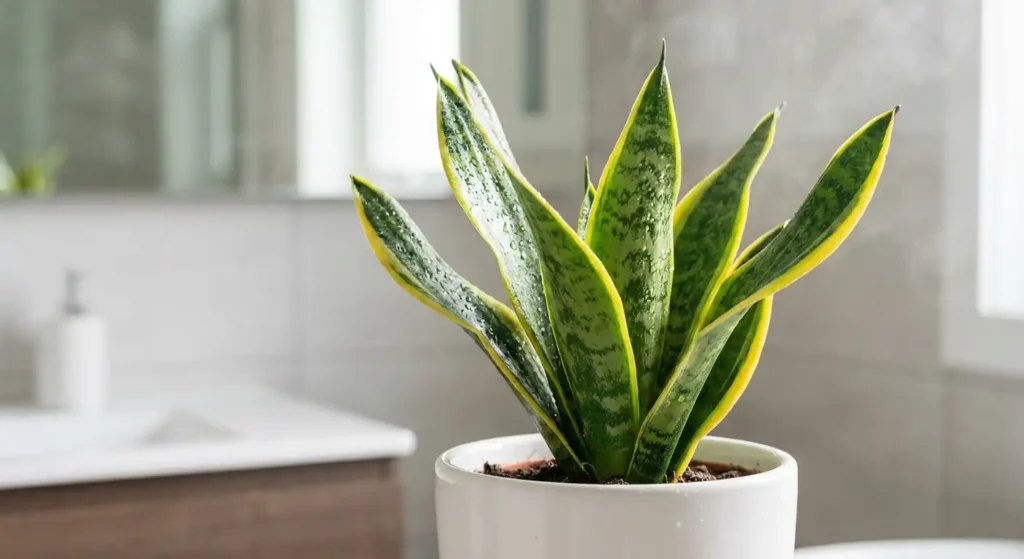
Let’s start with my absolute favorite bathroom plant—the Snake Plant, also called Sansevieria or Mother-in-Law’s Tongue.
Why Snake Plants Are Perfect for Bathrooms
Here’s what makes Snake Plants so special: they’re basically indestructible, and they work the night shift.
Unlike most plants that only produce oxygen during the day, Snake Plants release oxygen at night through a process called Crassulacean Acid Metabolism (CAM). This means while you’re sleeping, your Snake Plant is actively improving your air quality. Pretty cool, right?
What I love about this plant is that it thrives on neglect. Seriously. Forget to water it for three weeks? It’s fine. Bathroom has zero natural light? No problem. The Snake Plant is the plant equivalent of that friend who’s always chill no matter what happens.
Specific Health Benefits of Snake Plants
Let’s get into the science. Snake Plants are certified rockstars at removing toxins:
- Formaldehyde removal: Found in toilet paper, tissues, and personal care products
- Benzene filtration: Present in many cleaning products
- Trichloroethylene elimination: Common in synthetic materials and adhesives
- Xylene removal: Found in nail polish and hair dyes
According to research published in the Journal of Environmental Health, Snake Plants can reduce airborne toxins by up to 52.6% in enclosed spaces. In a bathroom where you’re using various products daily, this matters more than you might think.
The plant also releases moisture into the air through transpiration, which can help combat dry skin and respiratory irritation. During winter months when indoor humidity drops, this becomes especially beneficial.
Snake Plant Care Guide for Bathroom Success
Now here’s where it gets practical. Snake Plant care in bathrooms is ridiculously easy:
Watering: This is where most people mess up. Water only when the soil is completely dry—usually every 2-4 weeks in a bathroom. Overwatering is the only way to kill this plant. Stick your finger two inches into the soil; if it’s dry, water it. If not, wait.
Light requirements: Snake Plants tolerate low light beautifully, but they’ll grow faster with indirect bright light. If your bathroom has a window, place it nearby. If not, the ambient light from your bathroom fixture is usually enough.
Soil and drainage: Use a well-draining potting mix, preferably one designed for succulents or cacti. Make absolutely sure your pot has drainage holes. Standing water is your enemy here.
Temperature: These plants are happy anywhere between 55-85°F (13-29°C). Bathroom temperature fluctuations won’t bother them at all.
Humidity: While they tolerate low humidity, they’ll actually appreciate your bathroom’s higher moisture levels. Just don’t let water sit on the leaves for extended periods.
Placement tips: Keep them out of direct water spray from the shower, but the ambient humidity is perfect. A bathroom countertop, shelf, or even the toilet tank works great.
Common Snake Plant Mistakes to Avoid
You might be wondering what can go wrong. Here are the big three:
- Overwatering: I can’t stress this enough. More Snake Plants die from too much water than anything else. When in doubt, don’t water.
- Cold drafts: While they’re tough, they don’t love cold air blowing directly on them. Keep them away from AC vents if possible.
- Too much direct sunlight: In rare cases where you have a very sunny bathroom, too much direct sun can actually bleach the leaves. Indirect light is better.
Plant #2 – Boston Fern (Nephrolepis Exaltata): The Humidity-Loving Health Guardian
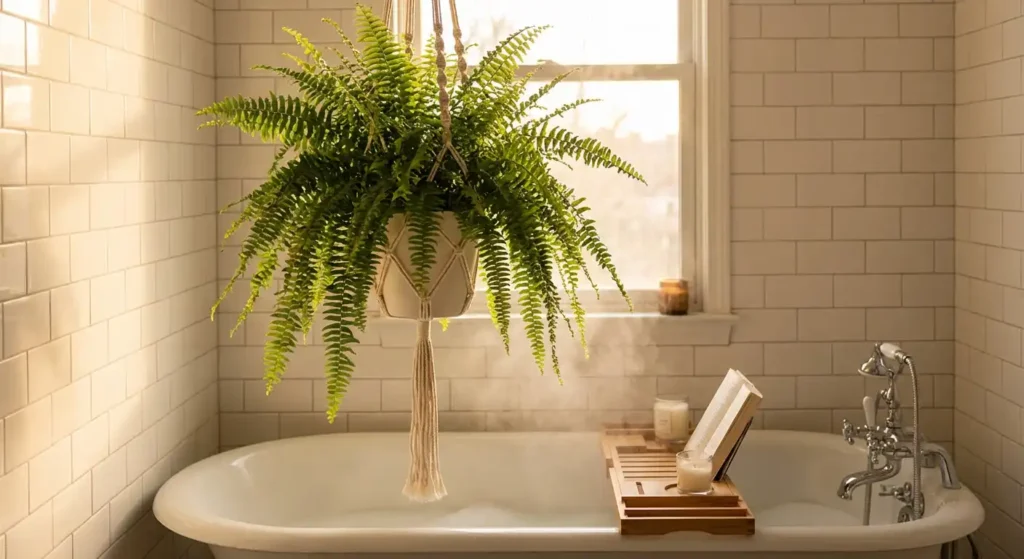
Next up is the Boston Fern, and let me tell you—if the Snake Plant is low-maintenance, the Boston Fern is its more demanding (but equally rewarding) cousin.
Why Boston Ferns Excel in Bathroom Environments
Boston Ferns are native to tropical regions where humidity is consistently high. Your steamy bathroom? That’s basically their natural habitat.
What I love about Boston Ferns is that they’re one of the most effective natural air purifiers on the planet. NASA rated them as one of the best plants for removing formaldehyde from indoor air. Given that formaldehyde is in everything from toilet paper to cosmetics, having a Boston Fern in your bathroom is like having a living air filter running 24/7.
These plants are also gorgeous. Their cascading fronds create a lush, jungle-like atmosphere that instantly makes your bathroom feel more spa-like. In my experience, they’re the plant that gets the most compliments from guests.
The Remarkable Health Benefits of Boston Ferns
Here’s where Boston Ferns really shine for your health:
Superior air purification: They remove formaldehyde, xylene, and toluene from the air more effectively than almost any other houseplant. These chemicals are common in hair products, nail polish, and cleaning supplies.
Natural humidifiers: Boston Ferns release significant moisture through transpiration—up to several cups of water per day. This natural humidification helps with:
- Dry skin and chapped lips
- Respiratory health
- Reducing static electricity
- Preventing dry sinuses
Stress reduction: Studies show that being around ferns can lower blood pressure and reduce anxiety. Starting your day surrounded by their lush greenery sets a peaceful tone.
Mood enhancement: The vibrant green color and delicate fronds have been shown to improve mood and mental clarity. This is partly due to biophilic design principles—humans are hardwired to feel calmer around plants.
Boston Fern Care: Meeting Their Needs Successfully
Now here’s the real talk: Boston Ferns require more attention than Snake Plants, but it’s totally worth it.
Watering: This is the opposite of Snake Plants. Boston Ferns want consistently moist soil—not soggy, but moist. Check the soil daily and water when the top inch feels dry. In a humid bathroom, this might be every 3-5 days.
Humidity requirements: They need 50-80% humidity to really thrive. Your bathroom’s post-shower humidity is perfect. If you notice brown, crispy fronds, the humidity is too low.
Light conditions: Boston Ferns prefer indirect bright light but can tolerate low light conditions. A bathroom with a north-facing window is ideal. They’ll survive in a windowless bathroom with good artificial lighting, but they’ll grow more slowly.
Temperature: Keep them between 60-75°F (15-24°C). They don’t love extreme temperature swings, but normal bathroom fluctuations are fine.
Soil and feeding: Use a peat-based potting mix that retains moisture well. Feed with a diluted liquid fertilizer monthly during spring and summer.
Maintenance: Trim brown fronds regularly to encourage new growth. Give the plant a gentle shower or misting weekly to keep the fronds clean and hydrated.
Troubleshooting Common Boston Fern Issues
You might be wondering what to do when problems arise:
Brown, crispy fronds: This is the number one issue. It means either not enough humidity or inconsistent watering. Increase watering frequency and ensure the bathroom stays humid.
Yellow fronds: Usually indicates overwatering or poor drainage. Let the soil dry out a bit more between waterings.
Sparse growth: Not enough light or nutrients. Move to a brighter location and start a regular feeding schedule.
Plant #3 – Aloe Vera: The Medicinal Marvel for Your Medicine Cabinet
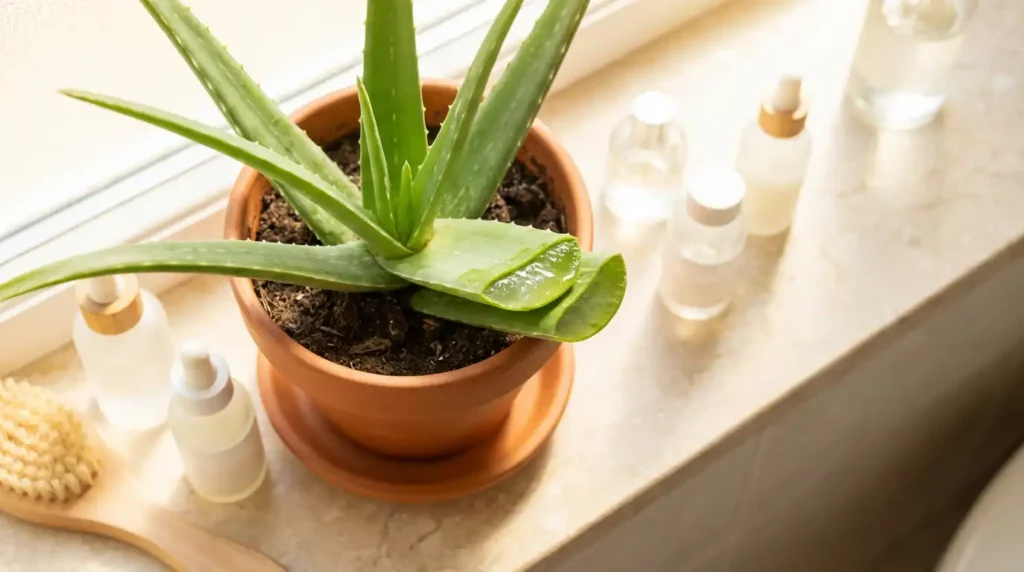
Here’s where we get into plants that do double duty. Aloe Vera isn’t just a plant—it’s a living first aid kit sitting in your bathroom.
Why Aloe Vera Belongs in Every Bathroom
Aloe Vera is one of those plants that’s been used for thousands of years for good reason. The ancient Egyptians called it the “plant of immortality.” Now, I don’t know about immortality, but I do know it’s incredibly useful.
What makes Aloe Vera perfect for bathrooms is its dual nature: it’s both an air-purifying plant and a ready source of medicinal gel. Got a minor burn while straightening your hair? Snap off a leaf. Sunburn after a day at the beach? Aloe’s got you covered. Dry skin? You guessed it—aloe.
In my experience, having fresh Aloe Vera beats any store-bought gel. The fresh plant gel contains over 75 active compounds including vitamins, minerals, amino acids, and enzymes that lose potency during commercial processing.
The Dual Health Benefits: Air Quality and Skin Care
Let’s break down what Aloe Vera does for your health:
Air purification capabilities: Aloe Vera removes formaldehyde and benzene from indoor air. These chemicals are in conventional cleaning products, cosmetics, and synthetic materials. The plant works continuously to filter these toxins.
Skin healing properties: The gel inside Aloe Vera leaves contains:
- Vitamins A, C, and E: Powerful antioxidants that support skin health
- Enzymes: Help reduce inflammation and promote healing
- Polysaccharides: Moisturize skin and stimulate growth of new cells
- Salicylic acid: Natural anti-inflammatory and antibacterial
Specific skin applications:
- Minor burns and scalds
- Sunburn relief
- Dry or irritated skin
- Minor cuts and scrapes
- Acne treatment (the salicylic acid helps)
- After-shave soother
Research published in the Journal of Environmental Science and Health found that Aloe Vera can remove up to 90% of formaldehyde in the air within 24 hours. That’s impressive for a plant you can also slather on your skin.
Complete Aloe Vera Care Instructions
Aloe Vera care is refreshingly simple:
Watering: Like Snake Plants, Aloe Vera is a succulent that prefers to dry out between waterings. Water deeply but infrequently—every 2-3 weeks is usually enough. The bathroom humidity means you might water even less often.
Light requirements: Aloe Vera loves bright indirect light. A bathroom with a sunny window is ideal. They can tolerate low light but will grow more slowly and might get leggy.
Soil needs: Use a cactus or succulent potting mix with excellent drainage. Regular potting soil holds too much moisture and can cause root rot.
Container choice: Always use a pot with drainage holes. Terracotta pots are ideal because they allow the soil to dry out faster.
Temperature: They’re happy between 55-80°F (13-27°C). Bathroom temperatures are perfect.
Humidity: While they tolerate high humidity, make sure water doesn’t collect in the center of the plant, which can cause rot.
How to Harvest and Use Aloe Vera Gel Safely
Now here’s where it gets practical. When you need that medicinal gel:
- Choose a mature outer leaf (at least 3-4 inches long)
- Cut it close to the base at a slight angle
- Let the yellow sap (aloin) drain for 10-15 minutes—this can irritate skin
- Rinse the leaf
- Slice off the spiny edges
- Peel away the green skin
- Scoop out the clear gel
- Apply directly to skin or store in the fridge for up to a week
Important safety note: Always do a patch test first if you’ve never used Aloe Vera on your skin before. Some people have sensitivities.
Plant #4 – Peace Lily (Spathiphyllum): The Beautiful Toxin Eliminator
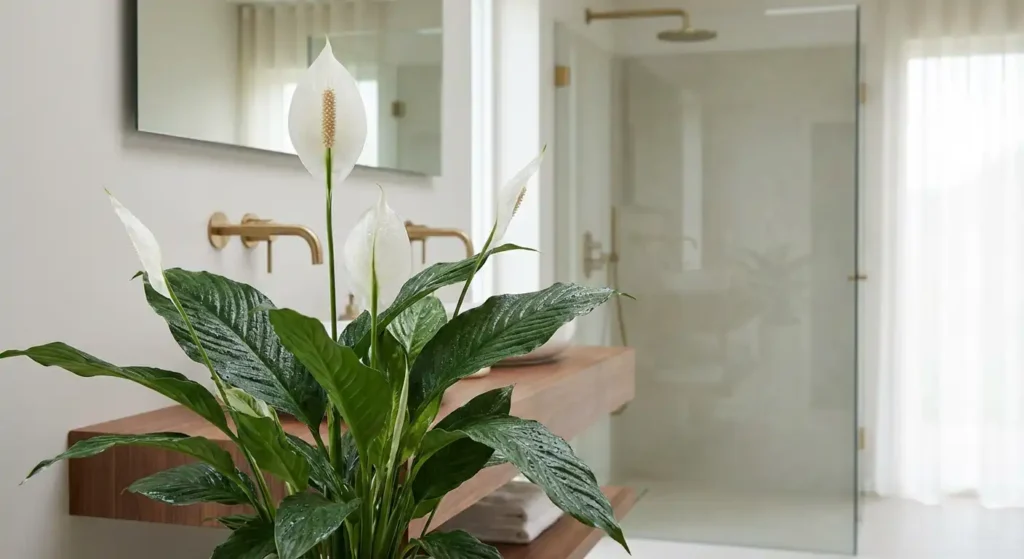
Last but definitely not least, we have the Peace Lily—a plant that combines stunning beauty with serious air-purifying power.
What Makes Peace Lilies Ideal for Bathrooms
Peace Lilies are one of the few flowering plants that actually prefer low-light conditions and high humidity. Your bathroom is basically their dream home.
What I love about Peace Lilies is that they tell you when they need water—they’ll droop dramatically when thirsty, then perk right back up within hours of watering. It’s like having a plant that communicates with you.
The elegant white flowers (which are actually specialized leaves called spathes) add a touch of elegance that other bathroom plants don’t quite match. And unlike many flowering plants that need tons of light and fuss, Peace Lilies bloom reliably with minimal effort.
The Exceptional Air-Cleaning Power of Peace Lilies
Here’s where Peace Lilies really earn their keep. NASA’s research found them to be among the top plants for removing indoor air pollutants.
Toxins removed:
- Formaldehyde: From personal care products and toilet paper
- Benzene: In detergents and cosmetics
- Trichloroethylene: Found in cleaning products
- Xylene: In nail polish and markers
- Ammonia: In cleaning solutions
- Acetone: In nail polish remover
Peace Lilies can remove all five of these toxins simultaneously, making them one of the most comprehensive air-purifying plants available. They improve indoor air quality by filtering out VOCs at a rate of about 10 micrograms per hour per square foot of leaf surface.
Beyond air purification, Peace Lilies offer:
Humidity enhancement: They release significant moisture through transpiration, helping to combat dry indoor air. This can help with respiratory health and skin hydration.
Mold suppression: By competing for resources and releasing compounds that inhibit mold growth, Peace Lilies can help reduce bathroom mold issues.
Stress reduction: Their lush foliage and elegant flowers create a calming visual environment that reduces anxiety and promotes relaxation.
Peace Lily Care Guide for Maximum Health Benefits
Caring for Peace Lilies in your bathroom is straightforward:
Watering: Peace Lilies like consistently moist soil but not waterlogged. Water when the top inch of soil is dry, or when the plant starts to droop slightly. In a humid bathroom, this is usually weekly.
Light requirements: They thrive in low to medium indirect light. A bathroom with filtered light from a window is perfect, but they’ll grow fine with just artificial light. Avoid direct sunlight, which can scorch the leaves.
Humidity: They love humidity levels of 50% or higher, making bathrooms ideal. The higher the humidity, the happier the plant.
Temperature: Keep them between 65-80°F (18-27°C). They don’t appreciate cold drafts or temperature extremes.
Soil and fertilizer: Use a well-draining potting mix rich in organic matter. Feed monthly during growing season with a balanced liquid fertilizer diluted to half strength.
Cleaning: Wipe the leaves monthly to remove dust and maximize photosynthesis and air purification.
Repotting: Repot every 1-2 years in spring when the plant becomes root-bound.
Important Peace Lily Safety Considerations
Now here’s something important: Peace Lilies are toxic to pets and children if ingested. They contain calcium oxalate crystals that can cause mouth irritation, excessive drooling, and stomach upset.
If you have curious cats, dogs, or small children who might chew on plants, you’ll want to either:
- Place the plant completely out of reach
- Choose a different plant from our list
- Use a hanging planter
This doesn’t mean Peace Lilies aren’t safe for bathrooms—just that you need to be thoughtful about placement. In my experience, keeping them on a high shelf or hanging basket solves this issue completely.
Comparison Table: Which Bathroom Plant Is Right for You?
Here’s a practical comparison to help you choose between these four unique bathroom plants that can boost your health based on your space and lifestyle:
| Plant | Light Needs | Water Frequency | Maintenance Level | Top Health Benefits | Best For |
|---|---|---|---|---|---|
| Snake Plant | Low to bright indirect | Every 2-4 weeks | Very low | Removes formaldehyde, benzene; produces nighttime oxygen | Beginners, forgetful waterers, windowless bathrooms |
| Boston Fern | Medium to bright indirect | Every 3-5 days | Moderate to high | Superior formaldehyde removal, natural humidifier | High-humidity bathrooms, those with window access |
| Aloe Vera | Bright indirect | Every 2-3 weeks | Low to moderate | Air purification plus medicinal gel for skin | Sunny bathrooms, those wanting dual-purpose plants |
| Peace Lily | Low to medium indirect | Weekly | Low to moderate | Removes 5+ toxins, mold suppression, humidity boost | Low-light bathrooms, those wanting elegant flowers |
How to Create Your Optimal Bathroom Plant Setup
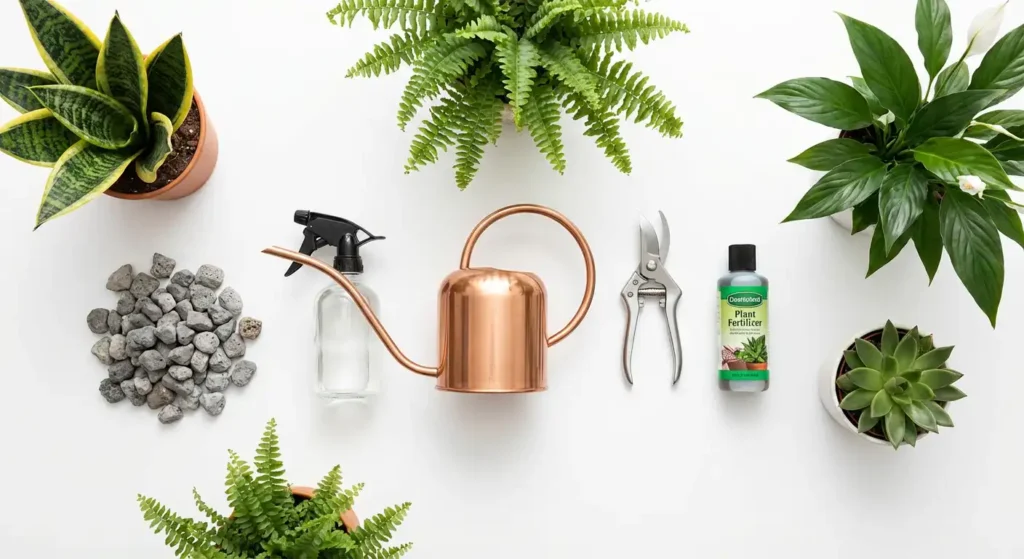
Now let’s talk about bringing all this together. You don’t have to choose just one plant—in fact, combining plants can maximize the health benefits.
Strategic Plant Placement for Maximum Benefits
Think vertical: Use different levels to create visual interest and maximize your plants’ exposure to light and humidity:
- High shelves: Perfect for trailing Boston Ferns
- Countertops: Ideal for Snake Plants and Peace Lilies
- Window sills: Best spot for Aloe Vera
- Hanging planters: Great for ferns or trailing varieties
If you’re working with a tiny space, pairing these plants with a few small bathroom updates that make a big impact can completely change how your bathroom feels and functions.
Consider the water zones: Place plants that need more water closer to the shower where they’ll benefit from residual humidity and mist. Put drought-tolerant plants like Snake Plants and Aloe Vera farther from water sources.
For a true spa-like transformation, you can combine lush greenery with soft, pattern-rich bathroom wallpaper ideas to create a space that feels curated instead of cluttered.
Rotation strategy: If you have multiple plants and limited light, rotate them monthly to ensure each gets adequate light exposure.
Combining Plants for Synergistic Health Effects
Here’s where it gets interesting. Different plants offer different benefits, so combining them creates a more comprehensive health boost:
The Complete Purifier Setup (for maximum toxin removal):
- 1 Peace Lily for broad-spectrum toxin removal
- 1 Snake Plant for nighttime oxygen production
- 1 Boston Fern for formaldehyde filtration
The Low-Maintenance Setup (for busy people):
- 2 Snake Plants in different sizes
- 1 Aloe Vera for medicinal backup
The Humidity-Loving Setup (for very humid bathrooms):
- 1-2 Boston Ferns
- 1 Peace Lily
- 1 Snake Plant for contrast
Maintenance Schedule for Healthy Bathroom Plants
Create a simple routine to keep your plants thriving:
Weekly tasks:
- Check soil moisture on all plants
- Water as needed
- Wipe dust from leaves
Monthly tasks:
- Fertilize during growing season (spring/summer)
- Rotate plants if needed for even light exposure
- Inspect for pests or disease
- Trim dead or damaged foliage
Seasonal tasks:
- Reduce watering in winter when growth slows
- Repot if plants have become root-bound
- Deep clean leaves to remove buildup
Common Mistakes to Avoid When Growing Bathroom Plants
You might be wondering what can go wrong. Here are the pitfalls I see most often:
Overwatering: The Number One Plant Killer
This is the big one. More plants die from too much love (water) than neglect. In bathrooms, the high humidity can make it seem like plants need less water than they actually do—but soil moisture is what matters, not air moisture.
The fix: Always check soil before watering. Stick your finger 1-2 inches into the soil. If it’s moist, wait. Only water when it’s dry at that depth.
Poor Drainage and Root Rot
Bathrooms often have limited space, leading people to use decorative pots without drainage holes. This is a disaster waiting to happen.
The fix: Always use pots with drainage holes, or use a nursery pot inside a decorative cache pot. Empty water from the cache pot after watering.
Ignoring Light Requirements
Not all bathroom plants are the same. While many tolerate low light, they still need some light to survive.
The fix: If your bathroom has zero natural light, consider adding a small grow light or choosing the most low-light-tolerant option (Snake Plant or Peace Lily).
Neglecting Cleaning and Maintenance
Dust accumulation on leaves reduces photosynthesis and the plant’s ability to purify air.
The fix: Wipe leaves monthly with a damp cloth. Give plants an occasional lukewarm shower to remove dust and pests.
Frequently Asked Questions About Bathroom Plants and Health
Do bathroom plants really improve air quality?
Yes, absolutely. Research from NASA and multiple university studies confirms that indoor plants remove toxins from air through both absorption and microbial action in the soil. While you’d need several plants to dramatically impact a large space, even one plant in a small bathroom makes a measurable difference.
The key is consistency—the plants work continuously, gradually improving air quality over time.
How many plants do I need for health benefits?
For a standard bathroom (50-100 square feet), 2-3 plants provide noticeable benefits. NASA research suggests one plant per 100 square feet for effective air purification, but bathrooms are typically smaller and more enclosed, so fewer plants can be effective.
In my experience, start with one or two and see how you feel. You can always add more.
Will bathroom plants help with mold issues?
Indirectly, yes. Some plants compete with mold for resources and release compounds that inhibit mold growth. However, plants aren’t a substitute for proper ventilation and moisture control. Think of them as part of a comprehensive approach to bathroom health, not a magic solution.
The Peace Lily and Boston Fern are particularly good at reducing mold spores in the air.
Can I grow bathroom plants with no natural light?
Yes, but you’ll need to choose carefully. Snake Plants and Peace Lilies can survive with just artificial lighting if the lights are on for at least 8-10 hours daily. Alternatively, consider adding a small LED grow light—they’re inexpensive and highly effective.
Are all bathroom plants safe for pets?
No. Peace Lilies and Aloe Vera are toxic to cats and dogs if ingested. Snake Plants can also cause mild toxicity. Boston Ferns are non-toxic and pet-safe.
If you have pets that chew plants, choose Boston Ferns or place other plants completely out of reach.
How long until I notice health benefits?
For air purification, studies show measurable improvements within 24-48 hours. For psychological benefits like stress reduction, many people notice effects immediately. The cumulative health benefits increase over time as plants mature and your body adapts to cleaner air.
Taking Your Bathroom Plant Journey Further
Now here’s where we talk about next steps.
Starting Small and Building Your Collection
Don’t feel pressured to transform your bathroom into a jungle overnight. Start with one plant—I recommend a Snake Plant for beginners—and see how it goes. Once you’re comfortable with care routines, add another.
In my experience, building slowly leads to better long-term success. You learn what works in your specific bathroom environment before investing in multiple plants.
Sourcing Healthy Plants
Where to buy:
- Local nurseries often have healthier plants than big box stores
- Online specialty retailers for specific varieties
- Plant swaps with friends (free and fun!)
What to look for:
- Vibrant color without yellowing
- No signs of pests or disease
- Firm, healthy stems
- Moist (not soggy) soil
- Good root development (check the drainage holes)
Red flags:
- Wilted or drooping foliage
- Brown or black spots on leaves
- Visible pests or webbing
- Mushy stems
- Foul-smelling soil
Connecting With the Plant Community
There’s a massive community of plant lovers online who share tips, troubleshoot problems, and celebrate successes. Reddit’s r/houseplants and r/plantclinic are excellent resources. Instagram’s plant community is inspiring and educational.
Don’t hesitate to ask questions—plant people are generally incredibly helpful and enthusiastic.
Conclusion: Transform Your Bathroom Into a Health Sanctuary
Adding four unique bathroom plants that can boost your health is one of the simplest ways to upgrade your air quality, mood, and daily routine—without much effort.
We’ve covered four unique plants that work beautifully in bathroom environments:
The Snake Plant offers effortless care and nighttime oxygen production—perfect for beginners or anyone who wants maximum benefit with minimal effort.
The Boston Fern provides superior air purification and natural humidification for those willing to give a bit more attention.
Aloe Vera gives you both air-cleaning properties and a ready source of medicinal gel for skin care.
The Peace Lily combines elegant beauty with comprehensive toxin removal and mold suppression.
Each plant offers unique health benefits, from removing VOCs to reducing stress, improving air quality, and supporting respiratory health. The best part? These benefits accumulate over time, continuously improving your bathroom environment and your wellbeing.
You don’t need a green thumb or extensive gardening knowledge. Start simple, choose plants that match your bathroom conditions and lifestyle, and watch as your space transforms into a health-boosting retreat.
Ready to Get Started?
Pick one plant from this guide today. Visit your local nursery, order online, or ask a friend for a cutting. Place it in your bathroom and commit to learning its needs. I promise you’ll notice the difference—both in your space and how you feel.
Your bathroom isn’t just a functional room anymore. It’s a daily opportunity to improve your health, naturally. And that’s worth cultivating.
What’s your next step? Share this article with someone who’d benefit from healthier indoor air, and let’s grow a community of people who understand that wellness starts with the small changes—like adding a plant to your bathroom.