The Ultimate Guide to Creating a Stunning Neoclassical Living Room in 2025
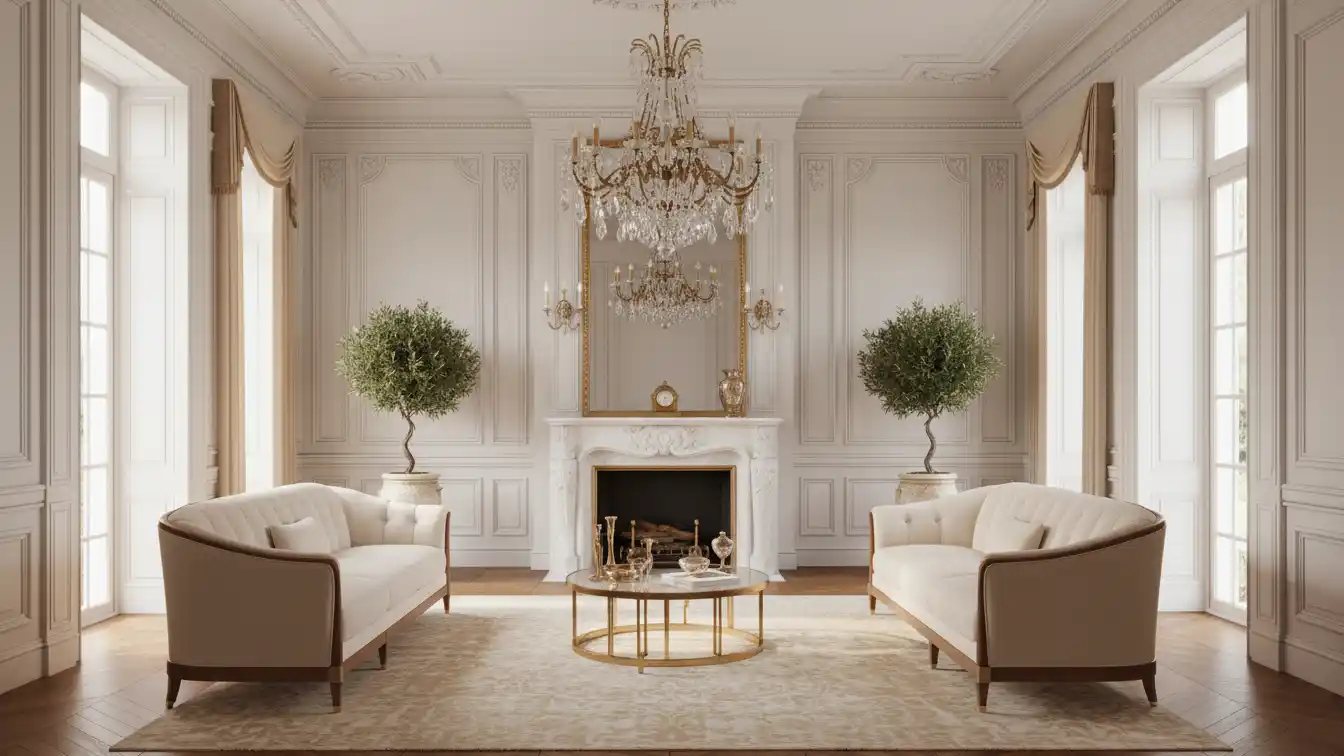
Transform your living space into a sanctuary of timeless elegance with neoclassical design—where ancient Greek and Roman grandeur meets contemporary sophistication.
What is Neoclassical Living Room Design?
A neoclassical living room embodies refined elegance through the marriage of 18th-century classical aesthetics with modern functionality. Born as a reaction to the excessive ornamentation of Rococo design, neoclassicism emphasizes symmetry, restraint, and timeless beauty inspired by ancient Greek and Roman architecture.
Historical Context & Modern Revival
The neoclassical style emerged during the Age of Enlightenment (mid-1700s to early 1800s) when archaeological discoveries at Pompeii and Herculaneum sparked renewed interest in classical antiquity. Today’s interpretation preserves these classical principles while incorporating contemporary comfort and minimalist sensibilities.
Core Design Philosophy
The Golden Ratio of Neoclassical Design:
- 60% Architectural elegance (moldings, columns, proportions)
- 30% Curated furnishings (quality over quantity)
- 10% Decorative accents (sculptures, artwork, textiles)
This balanced approach prevents the overwhelming ornamentation of traditional styles while maintaining sophisticated grandeur.
Essential Elements of Neoclassical Living Room Style
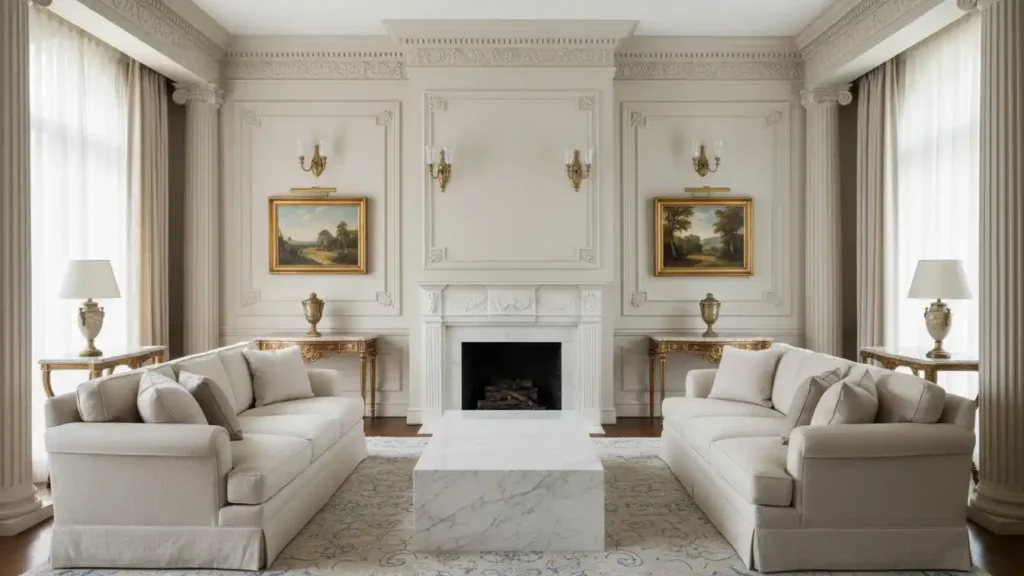
1. Architectural Symmetry & Balance
Symmetry is the backbone of neoclassical design. Every element should have a visual counterpart:
Practical Applications:
- Place matching console tables on either side of doorways
- Flank fireplaces with identical armchairs or decorative urns
- Position wall sconces at equal distances
- Center coffee tables between paired sofas
- Hang artwork at identical heights across walls
Pro Tip: Use a laser level and measuring tape to ensure perfect symmetry. Even 2-3 inches of misalignment disrupts the balanced aesthetic neoclassical design demands.
2. Decorative Boiserie & Wall Paneling
Boiserie—ornate French wood paneling—is perhaps the most defining characteristic of authentic neoclassical interiors.
Types of Boiserie:
- Full-height panels: Floor-to-ceiling treatment for maximum impact
- Wainscoting: Lower wall panels (typically 3-4 feet high)
- Chair rail panels: Mid-wall decorative frames
- Linear molding: Simplified rectangular panels for modern interpretations
DIY Alternative: Pre-fabricated MDF or polyurethane molding strips (available at Home Depot or Lowe’s) can create a boiserie effect at 1/10th the cost of custom millwork.
3. Crown Molding & Ceiling Details
Crown molding adds vertical interest and emphasizes ceiling height.
Ceiling Enhancement Options:
- Deep crown molding (5-8 inches) for traditional grandeur
- Ceiling roses (circular medallions) as chandelier mounts
- Coffered ceilings with geometric recessed panels
- Cornice details with Greek key or acanthus leaf motifs
Budget Option: Lightweight foam crown molding costs $1-3 per linear foot versus $8-15 for wood, yet looks identical when painted.
4. Classical Columns & Pilasters
Columns evoke the temples of ancient Greece and Rome.
Integration Strategies:
- Freestanding columns: Flank doorways or define room sections
- Half-columns (pilasters): Mounted on walls as decorative elements
- Column-style door frames: Create grand entryways
- Decorative capitals: Add Ionic, Doric, or Corinthian details
Modern Interpretation: Sleek, minimalist columns in matte finishes provide classical structure without overwhelming contemporary spaces.
5. Interior Archways & Architectural Details
Arched openings add romance and visual flow.
Archway Applications:
- Room dividers: Separate living and dining areas elegantly
- Alcove framing: Highlight artwork or built-in shelving
- Doorway enhancement: Replace standard rectangular frames
- Window treatments: Arched transoms above tall windows
Small Space Solution: Even in apartments, adding curved molding to standard doorway corners creates the archway aesthetic without structural changes.
6. Marble & Natural Stone Elements
Marble epitomizes luxury while maintaining classical restraint.
Strategic Marble Applications:
- Fireplace surrounds and mantels
- Coffee table and side table tops
- Decorative wall panels (accent walls)
- Flooring (real or porcelain marble-look tiles)
- Window sills and decorative columns
Cost-Effective Alternatives:
- Porcelain tiles with marble veining (Calacatta, Carrara patterns)
- Marble-look laminate for tabletops
- Marble-patterned wallpaper for accent walls
Step-by-Step Neoclassical Living Room Design Process
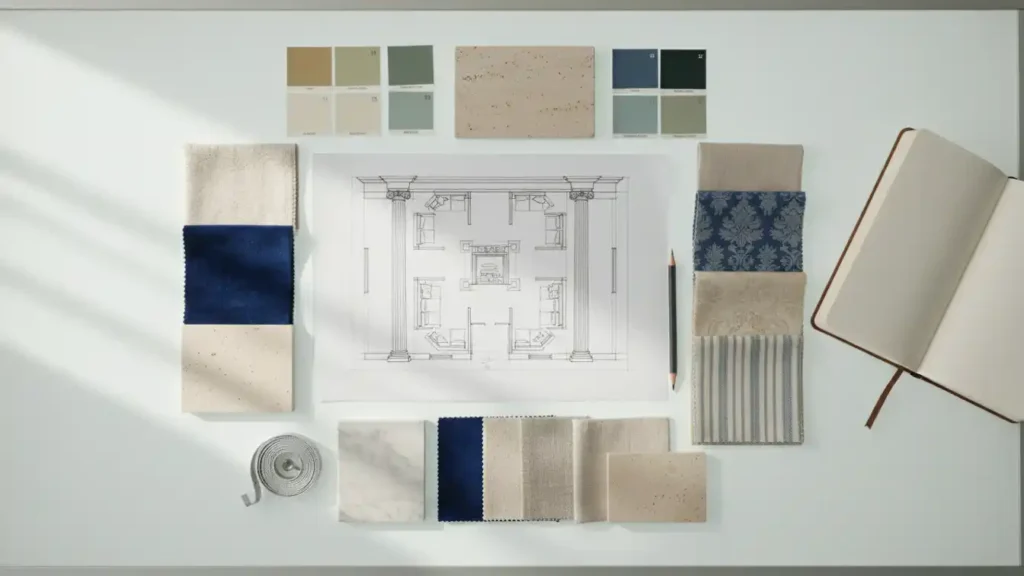
Phase 1: Assess Your Space (Week 1)
Measurements to Record:
- Room dimensions (length, width, ceiling height)
- Window sizes and placement
- Doorway locations and widths
- Existing architectural features
- Natural light patterns throughout the day
Space Analysis Checklist:
- Ceiling height suitable for crown molding? (minimum 8 feet recommended)
- Existing fireplace to enhance?
- Wall space for boiserie panels?
- Adequate natural light or need for supplemental lighting?
- Structural walls that can support columns/pilasters?
Before you start adding moldings, panels or new furniture, it really helps to clear visual noise—my spring declutter checklist walks you through simple steps to reset your living room before a full neoclassical makeover.
Phase 2: Establish Your Color Foundation (Week 1-2)
Primary Color Selection:
Choose ONE dominant neutral:
- Pure white (Benjamin Moore “Chantilly Lace”)
- Warm cream (Sherwin Williams “Alabaster”)
- Soft beige (Farrow & Ball “Skimming Stone”)
- Pale gray (Benjamin Moore “Classic Gray”)
- Light greige (Sherwin Williams “Agreeable Gray”)
Secondary & Accent Colors:
Add depth with 1-2 complementary hues:
- Soft blues (powder blue, French blue, dusty cerulean)
- Muted greens (sage, celadon, seafoam)
- Elegant grays (dove, charcoal, slate)
- Jewel tones as accents (burgundy, navy, emerald)
- Metallic accents (antique gold, brass, bronze, silver)
Color Distribution Formula:
- 70% Primary neutral (walls, ceiling, large furniture)
- 20% Secondary color (upholstery, drapery, rugs)
- 10% Accent colors (pillows, artwork, decorative objects)
Phase 3: Install Architectural Elements (Week 3-6)
Priority Order:
- Crown molding installation (2-3 days)
- Hire professional carpenter or skilled DIYer
- Cost: $4-12 per linear foot installed
- Boiserie/wainscoting panels (3-5 days)
- Can be phased room-by-room if budget limited
- Cost: $800-3,000 for average living room
- Fireplace enhancement (2-4 days)
- Add marble surround or decorative mantel
- Cost: $1,500-5,000 depending on materials
- Column/pilaster installation (1-2 days)
- Optional but impactful
- Cost: $200-800 per column
Phase 4: Furniture Selection & Placement (Week 7-8)
Furniture Layout Principles:
For rectangular rooms:
- Position sofa perpendicular to longest wall
- Place matching chairs opposite, creating conversation square
- Center coffee table at intersection point
- Add symmetrical side tables with matching lamps
For square rooms:
- Float furniture away from walls for intimacy
- Create circular arrangement around central coffee table
- Use area rug to define seating zone
For L-shaped spaces:
- Use furniture to define separate zones (seating vs. dining)
- Maintain sight lines between areas
- Repeat materials across zones for cohesion
Essential Furniture Pieces (Priority Order):
- Statement sofa ($1,200-4,000)
- Tufted velvet in neutral or jewel tone
- Curved or straight contemporary profile
- Exposed wooden legs (optional carved details)
- Matching armchairs (pair, $600-2,000)
- Symmetrical placement is crucial
- Upholstered or bergère style
- Consider contrasting fabric for visual interest
- Coffee table ($400-2,000)
- Marble top preferred (or marble-look)
- Wood, metal, or mixed material base
- Round, oval, or rectangular with curved edges
- Side tables (pair, $300-800)
- Identical tables for symmetry
- Marble, wood, or gilded metal
- Scale appropriate to seating height
- Console table ($500-1,500)
- Behind sofa or against wall
- Display decorative objects symmetrically
Phase 5: Lighting Design Implementation (Week 9)
Layered Lighting Strategy:
Layer 1: Ambient (Overhead) Lighting
- Crystal chandelier as centerpiece
- Recessed lighting for even illumination
- Ceiling-mounted fixtures with dimmer controls
Layer 2: Task Lighting
- Matching table lamps on side tables
- Floor lamps in reading corners
- Wall sconces flanking artwork or mirrors
Layer 3: Accent Lighting
- Picture lights highlighting classical artwork
- Uplighting for columns or architectural features
- LED strips inside display cases or behind molding
Lighting Fixture Guide:
- Chandelier size: Room width (ft) + length (ft) = diameter in inches
- Hang chandelier 30-36 inches above coffee table
- Wall sconces at 60-66 inches from floor
- Table lamps 58-64 inches tall when placed on side tables
Phase 6: Window Treatments & Soft Furnishings (Week 10)
Drapery Selection:
Fabric Options:
- Silk or silk-blend for luxe sheen
- Linen for relaxed elegance
- Velvet for dramatic weight
- Damask for classical patterns
Installation Guidelines:
- Mount curtain rods at ceiling height (not window frame)
- Panels should extend 8-12 inches beyond window on each side
- Puddle drapes on floor (1-2 inches) or precise hem (grazing floor)
- Layer sheers behind heavier panels
Area Rug Selection:
Pattern Options:
- Greek key border designs
- Medallion patterns (Persian or Aubusson inspired)
- Subtle geometric patterns
- Tone-on-tone damask patterns
Size Guidelines:
- All furniture legs ON rug, or
- Front legs ON, back legs OFF rug
- Minimum 8×10 feet for standard living rooms
- Leave 12-24 inches between rug edge and walls
Phase 7: Decorative Accessories & Finishing Touches (Week 11-12)
Accessory Placement Strategy:
Mantel Styling:
- Large mirror or artwork centered
- Symmetrical pairs: candlesticks, urns, decorative boxes
- Odd number groupings for visual interest (groups of 3 or 5)
Coffee Table Vignette:
- Stack 2-3 oversized art books
- Decorative bowl or tray
- Fresh flowers or sculptural object
- Maintain negative space (don’t clutter)
Console Table Display:
- Table lamps at each end (matching)
- Central decorative object (sculpture, vase, clock)
- Framed family photos in matching frames
Wall Art Curation:
- Classical portraits or figure studies
- Architectural prints (Greek/Roman ruins)
- Landscape paintings in gilded frames
- Gallery wall with symmetrical arrangement
Neoclassical Color Palettes & Material Selection Guide
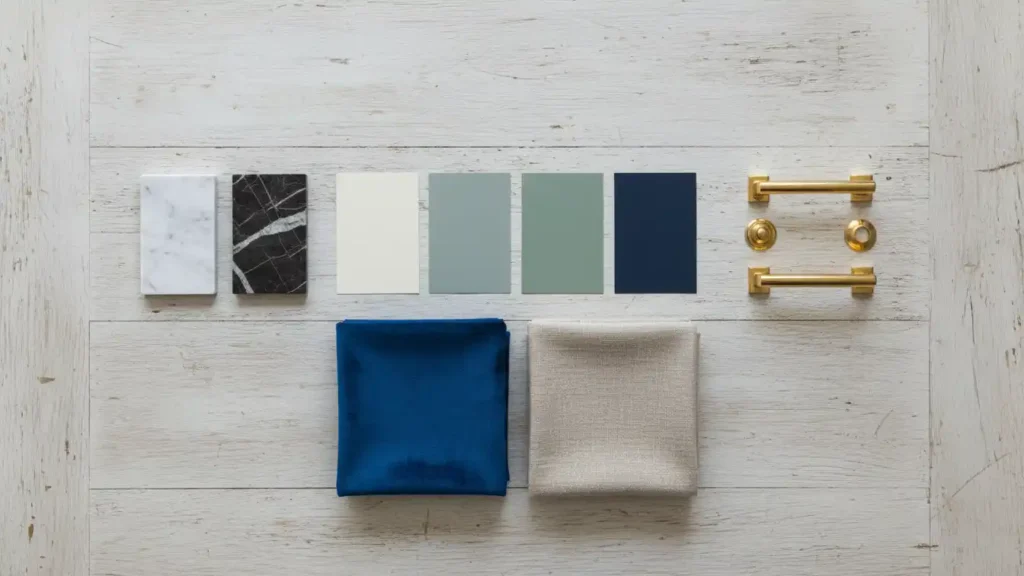
Signature Color Schemes
1. Classic Parisian White
The most iconic neoclassical palette emphasizes purity and light.
Formula:
- Walls: Bright white or soft cream
- Molding: Crisp white (high-contrast) or matching wall color
- Upholstery: Ivory, linen, or soft gray
- Accents: Antique gold, brushed brass
Best For: Maximizing natural light, small spaces, traditional purists
Paint Colors:
- Benjamin Moore: “Simply White” OC-117
- Sherwin Williams: “Pure White” SW 7005
- Farrow & Ball: “All White” No. 2005
2. Sophisticated Gray Scale
Modern interpretation with timeless appeal.
Formula:
- Walls: Warm gray or greige
- Molding: White for contrast
- Upholstery: Charcoal, dove gray, taupe
- Accents: Silver, chrome, crystal
Best For: Contemporary homes, urban apartments, minimalist aesthetics
Paint Colors:
- Benjamin Moore: “Revere Pewter” HC-172
- Sherwin Williams: “Mindful Gray” SW 7016
- Farrow & Ball: “Pavilion Gray” No. 242
3. Regal Blue & Gold
Dramatic elegance inspired by French Empire style.
Formula:
- Walls: Soft white or pale blue-gray
- Feature elements: Navy, royal blue, or French blue
- Upholstery: Navy velvet, blue damask
- Accents: Antique gold, brass hardware
Best For: Formal living rooms, traditional homes, statement-makers
Paint Colors:
- Benjamin Moore: “Hale Navy” HC-154 (accent wall)
- Sherwin Williams: “Naval” SW 6244 (furniture)
- Background: White or “Gray Owl” by Benjamin Moore
4. Sage & Ivory Garden
Serene palette evoking classical garden rooms.
Formula:
- Walls: Warm ivory or cream
- Feature color: Sage green, celadon, or seafoam
- Upholstery: Green velvet or linen
- Accents: Brass, natural wood tones
Best For: Rooms with garden views, nature lovers, calming atmospheres
Paint Colors:
- Benjamin Moore: “Saybrook Sage” HC-114
- Sherwin Williams: “Clary Sage” SW 6178
- Background: “White Dove” OC-17 by Benjamin Moore
If you’re drawn to soft greens and calming spaces, you’ll probably love the mood of my gorgeous green kitchen ideas too—it has lots of sage, celadon and earthy tones that translate beautifully into a neoclassical living room palette.
5. Luxe Jewel Tones
Opulent interpretation with rich, saturated colors.
Formula:
- Walls: Neutral backdrop (white, cream, or light gray)
- Feature colors: Emerald, burgundy, or deep navy
- Upholstery: Rich jewel-toned velvet
- Accents: Burnished gold, antique brass
Best For: Evening entertainment spaces, dramatic personalities, heritage homes
Material Selection Matrix
Premium Options (High Budget)
| Element | Material | Cost Range | Characteristics |
|---|---|---|---|
| Flooring | Carrara marble | $15-25/sq ft | Classic veining, timeless |
| Wall Panels | Custom wood boiserie | $80-150/sq ft | Authentic, hand-carved details |
| Fireplace | Solid marble surround | $2,000-6,000 | Permanent, luxurious statement |
| Furniture | Solid hardwood | $2,000-8,000 | Heirloom quality, hand-carved |
| Drapery | Pure silk dupioni | $50-100/yard | Luxurious sheen, elegant drape |
Mid-Range Options (Moderate Budget)
| Element | Material | Cost Range | Characteristics |
|---|---|---|---|
| Flooring | Porcelain marble-look tile | $5-12/sq ft | Durable, realistic veining |
| Wall Panels | MDF pre-fab molding | $3-8/linear ft | Paintable, easy install |
| Fireplace | Cast stone surround | $800-2,000 | Lightweight, customizable |
| Furniture | Engineered wood + hardwood | $800-2,500 | Quality construction, accessible |
| Drapery | Faux silk or linen-cotton | $15-35/yard | Beautiful drape, easy care |
Budget-Friendly Options (DIY/Value)
| Element | Material | Cost Range | Characteristics |
|---|---|---|---|
| Flooring | Luxury vinyl plank (LVP) | $2-5/sq ft | Easy install, waterproof |
| Wall Panels | PVC/foam molding strips | $1-3/linear ft | Lightweight, DIY-friendly |
| Fireplace | Painted wood mantel | $200-500 | Personal customization |
| Furniture | Solid wood/upholstered mix | $400-1,200 | Smart shopping required |
| Drapery | Cotton or polyester | $8-20/yard | Washable, budget-conscious |
Furniture Selection Guide for Neoclassical Living Rooms
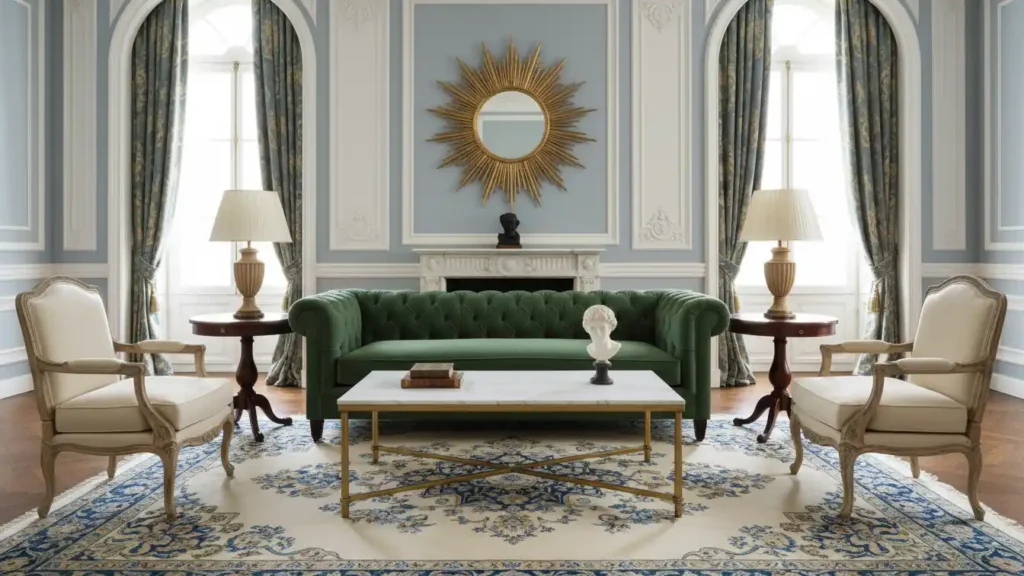
Sofa Styles That Work
1. Tufted Chesterfield Sofa
Characteristics:
- Deep button tufting across back and arms
- Scrolled arms at same height as back
- Exposed turned wooden legs
- Available in leather or velvet
Best Colors: Navy, emerald, charcoal, ivory, burgundy
Ideal Room Size: Medium to large (minimum 14′ width)
Price Range: $1,200-4,500
Top Retailers:
- Article (modern interpretations)
- Pottery Barn (classic styles)
- Wayfair (budget options)
2. Curved Modern Sofa
Characteristics:
- Gentle curved or semi-circular profile
- Clean lines without excessive ornamentation
- Low-profile back
- Exposed slim legs
Best Colors: Cream, beige, soft gray, blush
Ideal Room Size: Any size (scales well)
Price Range: $1,500-5,000
Top Retailers:
- West Elm (contemporary curves)
- CB2 (modern minimalism)
- AllModern (budget-friendly)
3. Linear Tuxedo Sofa
Characteristics:
- Arms and back at equal height
- Straight, boxy silhouette
- Tailored upholstery
- Minimalist aesthetic
Best Colors: White, light gray, navy, black
Ideal Room Size: Small to medium spaces
Price Range: $1,000-3,000
Top Retailers:
- Crate & Barrel
- Room & Board
- IKEA (budget alternative: Kivik series)
Armchair Options
1. Bergère Chair
French-inspired classic with exposed wood frame and upholstered seat/back.
Key Features:
- Carved wooden frame (often painted white or cream)
- Caned back or fully upholstered
- Curved arms
- Cabriole legs
Typical Cost: $600-2,000 each
Style Note: Perfect symmetrical pairs flanking fireplaces
2. Wingback Chair
Traditional silhouette with contemporary interpretations.
Key Features:
- High back with “wing” sides
- Tight or loose cushions
- Straight or carved wooden legs
- Modern versions have sleeker profiles
Typical Cost: $500-1,800 each
Style Note: Excellent reading chairs in corners
3. Slipper Chair
Armless, low-profile seating for versatility.
Key Features:
- No arms (space-saving)
- Upholstered in one continuous piece
- Exposed wooden legs
- Compact footprint
Typical Cost: $300-900 each
Style Note: Use as accent chairs or extra seating
Coffee & Side Table Guidelines
Essential Specifications
Coffee Table Proportions:
- Height: 16-18 inches (level with sofa seat)
- Length: 2/3 the length of sofa
- Width: 18-24 inches
- Clearance: 14-18 inches from sofa edge
Side Table Proportions:
- Height: Equal to or 2-3 inches below arm height
- Width: 18-24 inches
- Clearance: Within arm’s reach of seating
Top Material Choices
1. Marble Top Tables
- Pros: Luxurious, classical aesthetic, heat-resistant
- Cons: Heavy, can stain if not sealed, expensive
- Best For: Traditional neoclassical rooms
- Price: $400-3,000
2. Wood Tables with Carved Details
- Pros: Warm, traditional, durable
- Cons: Can scratch, requires maintenance
- Best For: Warmer color palettes
- Price: $300-2,000
3. Glass & Metal Combination
- Pros: Modern interpretation, lightweight feel
- Cons: Shows fingerprints, requires cleaning
- Best For: Contemporary neoclassical spaces
- Price: $250-1,500
4. Mirrored/Gilded Tables
- Pros: Reflects light, glamorous
- Cons: High maintenance, formal aesthetic
- Best For: Hollywood Regency-neoclassical blend
- Price: $400-2,500
Console Tables & Storage Solutions
Console Table Functions:
- Behind sofa (floating furniture arrangements)
- Against walls (entry way or focal wall)
- Under windows (display surface)
- Room dividers (open floor plans)
Recommended Dimensions:
- Height: 30-36 inches
- Length: 48-72 inches
- Depth: 12-18 inches
Storage Integration:
- Drawers for hidden storage
- Open shelving for display
- Cabinets for closed storage
- Combination designs
Top Styles:
- Carved wood with gilded accents
- Marble top with metal base
- Mirrored surfaces
- Painted wood in soft neutrals
Architectural Features to Include or Enhance
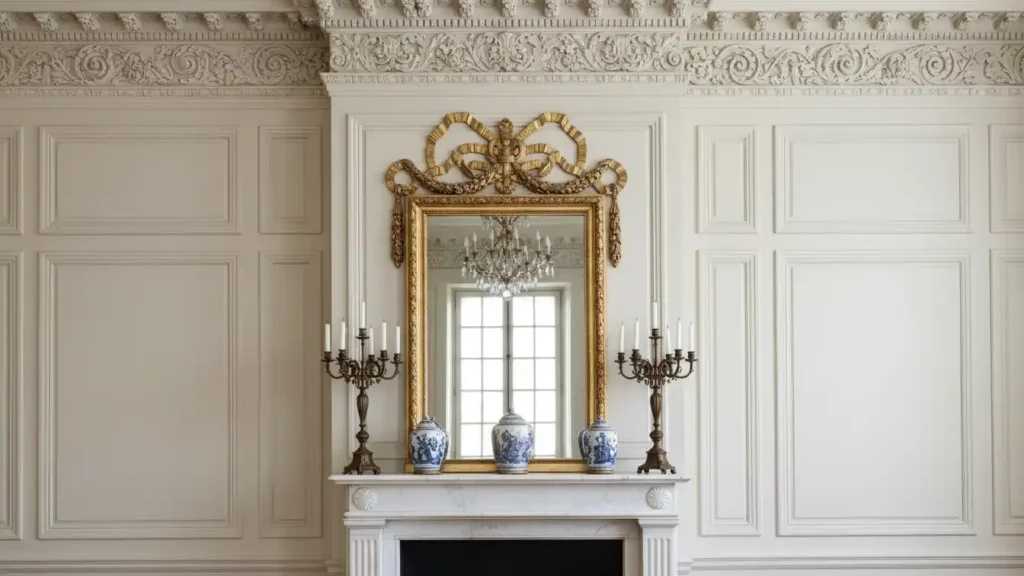
Crown Molding Installation Guide
Selecting the Right Profile
For 8-9 foot ceilings:
- 3.5-5 inch crown molding
- Simple profiles (avoid overly ornate)
- Single-piece installation
For 10-12 foot ceilings:
- 5-7 inch crown molding
- More elaborate profiles acceptable
- Can layer multiple molding pieces
For 12+ foot ceilings:
- 7-10 inch crown molding
- Dramatic, multi-layered profiles
- Consider adding picture rail molding
DIY vs. Professional Installation
DIY Feasibility:
- ✓ Simple rooms with few corners
- ✓ Standard 90-degree angles
- ✓ Pre-painted PVC or foam molding
- ✓ Good carpentry skills
Hire Professional For:
- ✗ Cathedral or vaulted ceilings
- ✗ Irregular angles or octagonal rooms
- ✗ Intricate multi-piece applications
- ✗ Matching existing historical molding
Cost Comparison:
- DIY materials: $150-400 for average room
- Professional install: $600-1,500 for average room
Creating Faux Boiserie (Budget Method)
Step-by-Step Process:
Materials Needed:
- MDF chair rail molding
- MDF panel molding or flat trim
- Wood glue + brad nailer
- Caulk
- Primer + paint
- Measuring tape + level
Installation Steps:
- Plan Panel Layout (2-3 hours)
- Measure wall dimensions
- Sketch panel arrangement
- Aim for symmetry and proportion
- Standard panels: 24-36 inches wide x 48-72 inches tall
- Install Chair Rail (3-4 hours)
- Mark level line at 32-36 inches from floor
- Nail chair rail along line
- Miter corners at 45 degrees
- Fill nail holes with wood filler
- Create Panel Frames (4-6 hours)
- Cut trim pieces to create rectangles
- Attach to wall with adhesive + brad nails
- Maintain even spacing between panels
- Ensure all corners are square
- Finish Work (4-5 hours)
- Caulk all seams
- Apply primer
- Paint 2 coats (walls + molding)
- Touch up as needed
Total Project Time: 1-2 weekends
Total Cost: $300-800 for 12×15 room
Fireplace Enhancements
Non-Working Fireplace Conversions
Option 1: Electric Fireplace Insert
- Cost: $400-1,200
- Provides realistic flames + heat
- Easy DIY installation
- Instant ambiance
Option 2: Decorative Display
- Fill with stacked birch logs
- Arrange candles of varying heights
- Install decorative screen
- Add seasonal greenery
Option 3: Book Storage
- Build shelving inside opening
- Paint backing wall contrasting color
- Display leather-bound books
- Add reading lamp
Mantel Upgrades
Budget Mantel Enhancement:
- Sand and repaint existing mantel
- Add decorative corbels underneath
- Install shelf above for layered display
- Cost: $50-200
Mid-Range Mantel Replacement:
- Pre-fabricated wood mantel kit
- Choose from various styles/finishes
- Professional installation recommended
- Cost: $500-1,500
Premium Marble Surround:
- Custom marble fabrication
- Professional installation required
- Heirloom quality investment
- Cost: $2,000-6,000
Column & Pilaster Applications
Where to Add Columns
High-Impact Locations:
- Flanking room entrances
- Defining living/dining area boundaries
- Corner accents in large rooms
- Framing fireplace alcoves
- Supporting archway openings
Column Styles & Proportions
Classical Orders:
Doric: Simple, unadorned capitals; sturdy proportions
- Best For: Minimalist neoclassical, modern interpretations
- Typical Height: 8-10 feet
- Cost: $200-600 each
Ionic: Scroll-shaped capitals (volutes); more elegant
- Best For: Traditional neoclassical, formal spaces
- Typical Height: 8-12 feet
- Cost: $300-800 each
Corinthian: Elaborate acanthus leaf capitals; most ornate
- Best For: Grand, luxurious spaces
- Typical Height: 10-14 feet
- Cost: $400-1,200 each
Installation Considerations
Structural vs. Decorative:
- Load-bearing: Requires engineering, permits
- Decorative: Can be hollow fiberglass or PVC
- Most residential columns are decorative
Material Options:
- Fiberglass (lightweight, paintable)
- PVC (budget-friendly, durable)
- Wood (traditional, expensive)
- Polyurethane (detailed molding, affordable)
Lighting Design Strategies for Neoclassical Living Rooms
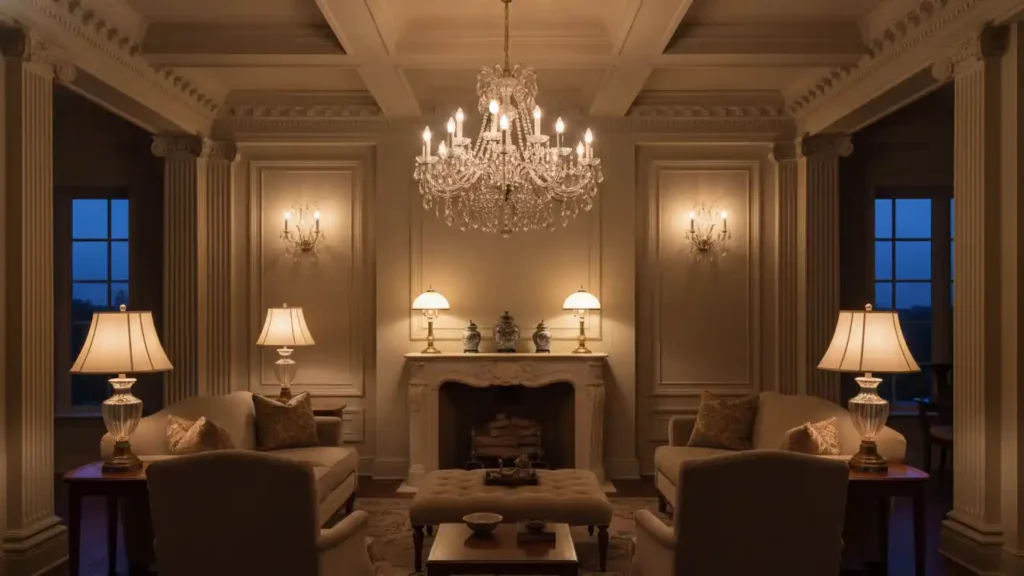
Chandelier Selection & Sizing
The Perfect Chandelier Formula
Size Calculation: Room Length (feet) + Room Width (feet) = Chandelier Diameter (inches)
Example:
- 15′ x 18′ room = 33-inch diameter chandelier
Height Considerations:
- For 8-9′ ceilings: 20-24″ tall chandelier
- For 10-12′ ceilings: 24-32″ tall chandelier
- For 12’+ ceilings: 32-48″ tall chandelier
Hanging Height:
- 7 feet minimum clearance from floor (in center of room)
- 30-36 inches above coffee table
- 12-18 inches from ceiling (if not centered over furniture)
Chandelier Styles for Neoclassical Spaces
1. Crystal Chandelier Characteristics:
- Multi-tiered crystal prisms
- Brass or chrome frame
- 6-12+ light bulbs
- Maximum traditional elegance
Best For: Traditional neoclassical, formal spaces Price Range: $600-5,000+ Recommended Brands: Schonbek, Waterford, Crystorama
2. Modern Crystal Chandelier Characteristics:
- Simplified geometric forms
- Crystal elements with clean lines
- Chrome or brushed nickel finish
- Contemporary interpretation
Best For: Contemporary neoclassical, transitional spaces Price Range: $400-2,500 Recommended Brands: Z-Lite, Kichler, Eurofase
3. Candelabra-Style Chandelier Characteristics:
- Candle-shaped bulbs
- Curved or straight arms
- Minimal ornamentation
- Classic simplicity
Best For: Any neoclassical style, versatile Price Range: $300-2,000 Recommended Brands: Quoizel, Kichler, Progress Lighting
4. Drum Shade Chandelier Characteristics:
- Fabric drum shade
- Concealed bulbs for soft light
- Clean, modern silhouette
- Crystal accents optional
Best For: Modern neoclassical, contemporary spaces Price Range: $250-1,500 Recommended Brands: Safavieh, Hudson Valley, Uttermost
5. Linear Chandelier Characteristics:
- Elongated rectangular form
- Multiple lights in row
- Modern and architectural
- Ideal over rectangular furniture
Best For: Contemporary neoclassical, open floor plans Price Range: $400-3,000 Recommended Brands: West Elm, CB2, Tech Lighting
Wall Sconce Placement & Selection
Strategic Sconce Locations
1. Flanking Artwork
- Mount 6-12 inches from frame edge
- Height: 60-66 inches from floor (eye level)
- Use matching pairs
- Direct light at 30-degree angle
2. Flanking Fireplaces
- Mount 12-24 inches from mantel edge
- Height: 60-72 inches from floor
- Maintain symmetry
- Consider swing-arm for flexibility
3. Hallway Lighting
- Space 6-8 feet apart
- Height: 60-66 inches from floor
- Alternate sides for visual interest
- Coordinate with overhead lighting
4. Beside Mirrors
- Position 28-36 inches apart (mirror center)
- Height varies with mirror placement
- Creates flattering illumination
- Enhances room’s sense of space
Sconce Style Guide
Traditional Candle Sconces
- Single or double arm design
- Brass, bronze, or painted finish
- Ideal for classic neoclassical
- Price: $80-400 per pair
Modern Linear Sconces
- Sleek rectangular or cylindrical form
- Chrome, brushed nickel, or matte black
- Perfect for contemporary neoclassical
- Price: $100-500 per pair
Empire-Style Sconces
- Classical motifs (Greek key, acanthus)
- Antiqued gold or silver finish
- Ornate but refined
- Price: $150-600 per pair
Table Lamp Strategy
Lamp Sizing Guidelines
For Side Tables:
- Lamp height: 24-27 inches (total with shade)
- Shade width: 14-16 inches at bottom
- Proportion: Lamp should be roughly 1.5x table height
For Console Tables:
- Lamp height: 28-34 inches
- Shade width: 16-20 inches at bottom
- Use matching pair for symmetry
Bulb Wattage:
- Living room ambient: 60-75W equivalent LED
- Reading areas: 75-100W equivalent LED
- Accent lighting: 40-60W equivalent LED
Lamp Base Materials & Styles
Classical Options:
- Marble column bases – Traditional, substantial
- Crystal bases – Elegant, reflective
- Brass candlestick style – Refined, timeless
- Ceramic with classical motifs – Versatile, painted
- Turned wood with gilt accents – Warm, traditional
Modern Options:
- Glass cylinder – Clean, contemporary
- Brushed metal – Sleek, minimalist
- White ceramic – Versatile, fresh
- Sculptural abstract – Artistic statement
- Mixed materials – Metal + marble combination
Lampshade Selection
Classic Neoclassical:
- Cream or ivory silk
- Pleated or empire shape
- Optional trim (ribbon, braid)
- Soft, warm glow
Modern Neoclassical:
- White linen or cotton
- Drum or rectangular shape
- Clean, no embellishments
- Crisp, bright light
Lighting Control Systems
Dimmer Switch Installation:
- Essential for all lighting circuits
- Creates mood flexibility
- LED-compatible dimmers required
- Cost: $15-60 per switch
Smart Lighting Options:
- Philips Hue bulbs for color temperature control
- Lutron Caseta wireless dimming system
- Voice control integration (Alexa, Google)
- Scheduling and scene programming
Lighting Scenes to Program:
- Daytime – All lights at 60-70%
- Evening entertainment – Chandelier 40%, sconces 60%
- Movie watching – Minimal ambient, accent only
- Reading – Task lighting 100%, ambient 30%
- Romantic – Chandelier 20%, candles
Budget-Friendly Neoclassical Living Room Ideas
DIY Projects Under $100
1. Faux Marble Contact Paper Accent Wall
Materials:
- Marble-look contact paper ($30)
- Squeegee tool ($5)
- Utility knife ($8)
Steps:
- Clean wall surface thoroughly
- Measure and cut contact paper panels
- Apply from top to bottom, smoothing bubbles
- Trim excess with utility knife
- Seal edges for durability
Total Cost: $45-60 Time Required: 4-6 hours
2. Painted Faux Boiserie Panels
Materials:
- Painter’s tape ($12)
- Paint samples in 2 shades ($8)
- Small foam roller ($6)
Steps:
- Plan panel layout with pencil marks
- Tape rectangular panel outlines
- Paint inside panels lighter shade
- Paint “frame” areas darker shade
- Remove tape while paint wet
Total Cost: $30-40 Time Required: 3-4 hours
3. Thrift Store Furniture Transformation
Target Pieces:
- Coffee tables → Paint + marble contact paper top
- Wooden chairs → Paint cream/white + reupholster
- Old mirrors → Spray paint frames gold
- Side tables → Distress + antique glaze
Average Cost Per Piece: $20-80 Transformation Cost: $15-35
4. DIY Greek Key Border Stencil
Materials:
- Greek key stencil ($18)
- Metallic gold paint ($10)
- Stencil brush ($8)
Applications:
- Around doorways and windows
- Along crown molding base
- Picture frame mats
- Furniture embellishments
Total Cost: $35-45 Time Required: 2-3 hours per room
Shopping Smart: Where to Save vs. Splurge
SPLURGE ON (High-Impact Investments):
1. Sofa ($1,500-3,000) Why: Central focal point, daily use, affects entire room Where to Buy: Article, Pottery Barn, Room & Board
2. Area Rug ($400-1,200) Why: Defines space, high-traffic durability needed Where to Buy: Rugs USA, Loloi, Safavieh
3. Chandelier ($400-1,500) Why: Dramatic impact, difficult to change later Where to Buy: Lumens, Build.com, Lamps Plus
4. Crown Molding Installation ($600-1,500) Why: Permanent architectural enhancement, professional results Where to Buy: Local carpenter, contractor
SAVE ON (Smart Budget Alternatives):
1. Side Tables ($100-300 each) Why: Easy to DIY or thrift and refinish Where to Buy: Facebook Marketplace, Wayfair, Overstock
2. Table Lamps ($50-150 each) Why: Easy to update, many affordable options Where to Buy: Target, HomeGoods, Amazon
3. Decorative Pillows ($15-40 each) Why: Seasonal changes, trend-driven Where to Buy: H&M Home, Target, TJ Maxx
4. Wall Art & Mirrors ($30-150 each) Why: DIY-friendly, thrift store treasures available Where to Buy: Etsy, Society6, thrift stores
5. Curtains ($50-150 per panel pair) Why: Standard sizes widely available Where to Buy: Ikea, Target, Amazon Basics
Room Makeover Budget Breakdowns
$1,000 Budget (Cosmetic Refresh)
| Item | Cost | Source |
|---|---|---|
| Paint (walls + trim) | $150 | Sherwin Williams |
| Foam crown molding | $120 | Home Depot |
| 2 table lamps | $120 | Target |
| Throw pillows (4) | $80 | H&M Home |
| Area rug (8×10) | $250 | Rugs USA |
| Curtain panels (2 sets) | $100 | Ikea |
| DIY supplies/decor | $180 | Various |
| TOTAL | $1,000 |
What You’ll Achieve:
- Fresh painted walls
- Architectural detail (crown molding)
- New soft furnishings
- Defined space with rug
- Updated window treatments
$3,000 Budget (Significant Upgrade)
| Item | Cost | Source |
|---|---|---|
| Paint + supplies | $200 | Sherwin Williams |
| Professional crown molding | $800 | Local contractor |
| Chandelier | $450 | Wayfair |
| Accent chairs (2) | $600 | Article |
| Coffee table | $350 | West Elm |
| Area rug (9×12) | $400 | Loloi |
| Curtains + hardware | $200 | Pottery Barn |
| TOTAL | $3,000 |
What You’ll Achieve:
- Professional architectural work
- Statement lighting
- New key furniture pieces
- Complete soft furnishing refresh
- Cohesive, designed look
$5,000+ Budget (Complete Transformation)
| Item | Cost | Source |
|---|---|---|
| Paint + professional painter | $800 | Professional |
| Crown molding + boiserie | $1,500 | Local contractor |
| Crystal chandelier | $800 | Lumens |
| Statement sofa | $2,000 | Pottery Barn |
| Accent chairs (2) | $800 | Article |
| Coffee + side tables (3) | $900 | Mix of retailers |
| Area rug (10×14) | $1,000 | Loloi |
| Lighting (sconces, lamps) | $500 | Various |
| Curtains + installation | $400 | Pottery Barn |
| Decor + accessories | $300 | Mix of retailers |
| TOTAL | $9,000 |
(Adjust individual items to meet exact budget)
Common Mistakes to Avoid in Neoclassical Design
Mistake #1: Over-Ornamentation
The Problem: Adding too many decorative elements creates visual chaos rather than elegant sophistication.
Signs You’ve Gone Too Far:
- Every surface covered with objects
- Multiple competing patterns in close proximity
- Excessive gilding and metallic accents
- Inability to rest your eyes anywhere
- More than 3 decorative pillow patterns on one sofa
The Fix:
- Edit ruthlessly: Remove 30% of accessories
- Choose ONE statement element per wall/zone
- Limit metallics to 2 finishes (brass + crystal, not brass + silver + gold + copper)
- Embrace negative space as a design element
- Apply “rule of three” for grouped objects
Mistake #2: Wrong Scale Furniture
The Problem: Furniture that’s too large overwhelms the space; too small looks sparse and awkward.
Common Scale Errors:
- Oversized sectional in small living room
- Tiny coffee table with large sofa
- Short curtains that don’t reach floor
- Undersized chandelier in grand space
- Side tables lower than sofa arms
The Fix:
- Use furniture templates (paper cutouts) before buying
- Measure ceiling height and scale molding accordingly
- Follow chandelier sizing formula (length + width = diameter in inches)
- Ensure coffee table is 2/3 length of sofa
- Hang curtains at ceiling height, not window frame
Mistake #3: Ignoring Symmetry
The Problem: Asymmetrical arrangements feel chaotic in neoclassical design, which relies on balance.
Symmetry Violations:
- Single sconce on one side of fireplace
- Mismatched side tables
- Off-center artwork
- Unbalanced furniture groupings
- Random pillow arrangement
The Fix:
- Invest in matching pairs (lamps, chairs, sconces)
- Use measuring tape to center artwork precisely
- Mirror furniture placement on opposite sides
- Balance visual weight if exact symmetry impossible
- Create symmetrical vignettes on mantels and consoles
Mistake #4: Poor Lighting Layering
The Problem: Relying only on overhead lighting creates harsh shadows and lacks ambiance.
Single-Source Lighting Issues:
- Flat, unflattering illumination
- Dark corners and dead spaces
- Inability to adjust mood
- Shadows under faces during conversation
- Harsh overhead glare
The Fix:
- Implement 3-layer lighting system:
- Ambient: Chandelier + recessed lights
- Task: Table lamps + reading lights
- Accent: Sconces + picture lights
- Install dimmers on ALL circuits
- Use 2700-3000K warm white bulbs
- Place lamps at multiple heights throughout room
- Ensure every seating area has dedicated task light
There’s a big difference between intentional layering and random clutter—if you prefer a “more is more” aesthetic done right, my Maximalist Living Room Decor Ideas: Embrace the Art of More is More breaks down how to do that in a deliberate, design-first way.
Mistake #5: Wrong Paint Sheens
The Problem: Using flat paint on trim or high-gloss on walls creates wrong aesthetic and maintenance issues.
Incorrect Sheen Choices:
- Flat paint on crown molding (shows damage)
- High-gloss walls (emphasizes imperfections)
- Matte finish in high-traffic areas
- Mismatched sheens on walls vs. trim
The Fix: Proper Sheen Selection:
- Walls: Eggshell or satin (wipeable, subtle sheen)
- Crown molding: Semi-gloss or satin (traditional contrast)
- Boiserie panels: Same as walls OR one sheen higher
- Doors/trim: Semi-gloss (durable, cleanable)
- Ceilings: Flat (minimizes imperfections)
Mistake #6: Trendy Over Timeless
The Problem: Incorporating too many current trends dates the space and contradicts neoclassical philosophy.
Trend Traps:
- Overly Instagrammable moments
- Fast-furniture pieces that won’t last
- Neon or ultra-saturated colors
- Too-modern art that clashes
- Disposable decor accessories
The Fix:
- Choose classic furniture silhouettes
- Invest in quality over quantity
- Stick to traditional color palette
- Update through accessories (pillows, throws) not furniture
- Ask: “Will I love this in 10 years?”
Mistake #7: Neglecting Window Treatments
The Problem: Bare windows or improper curtains diminish elegance and waste opportunity for drama.
Window Treatment Mistakes:
- Mounting rods at window frame (not ceiling)
- Panels too short (hovering above floor)
- Wrong width (not enough fullness)
- Cheap-looking hardware
- No lining (light shows through)
The Fix:
- Mount curtain rods at ceiling height (adds vertical emphasis)
- Panels should puddle on floor OR graze perfectly
- Total panel width should be 2-2.5x window width
- Invest in quality hardware (wood or metal, not plastic)
- Always use lined panels for luxury drape and light control
Mistake #8: Forgetting the Ceiling
The Problem: Treating the ceiling as an afterthought when it’s prime real estate for neoclassical detail.
Missed Opportunities:
- Plain white ceiling with no molding
- Missing ceiling medallion for chandelier
- No crown molding transition
- Overlooked architectural details
- Wrong paint color (stark white can be harsh)
The Fix:
- Paint ceiling in softer white or match walls
- Install crown molding as priority
- Add ceiling medallion under chandelier
- Consider coffered ceiling treatment
- Use picture rail molding for added detail
Adapting Neoclassical Style to Different Room Sizes
Small Living Rooms (Under 150 sq ft)
Space Challenges:
- Limited floor space for furniture
- Risk of overwhelming with large-scale elements
- Difficult to achieve symmetry
- Can feel cramped with heavy details
Smart Solutions:
1. Selective Architectural Details
- Add crown molding ONLY (skip boiserie)
- Install half-height wainscoting instead of full panels
- Use simplified molding profiles
- Paint everything same color for cohesion
2. Furniture Scaling
- Choose apartment-sized sofa (72-76″ long)
- Use armless chairs or slipper chairs
- Select glass or acrylic coffee table (visual lightness)
- Wall-mount console instead of floor piece
- Opt for nesting side tables
3. Visual Expansion Tricks
- Large mirror above sofa (creates depth)
- Vertical striped curtains (emphasizes height)
- Light, monochromatic color palette
- Minimal decorative objects
- Reflective surfaces (glass, mirrors, metallics)
4. Lighting Strategy
- Wall sconces instead of table lamps (saves surface space)
- Flush-mount or semi-flush chandelier
- Recessed lighting for clean ceiling
- Under-console lighting for drama
Sample Small Room Layout (12′ x 14′):
- 72″ sofa centered on longest wall
- Two slipper chairs opposite (angled slightly)
- 36″ round glass coffee table
- 48″ console table behind sofa
- Wall-mounted TV above console
- Single chandelier centered in room
Medium Living Rooms (150-250 sq ft)
Space Advantages:
- Ideal for classic neoclassical proportions
- Room for symmetrical furniture groupings
- Can incorporate multiple architectural details
- Balanced scale throughout
Design Approach:
1. Full Architectural Treatment
- Crown molding + boiserie wainscoting
- Decorative fireplace surround
- Arched doorways or alcoves
- Ceiling medallion with chandelier
2. Complete Furniture Set
- Standard sofa (84-90″)
- Pair of matching armchairs
- Coffee table + two side tables
- Console table or bookcase
- Storage ottoman or bench
3. Defined Zones
- Primary seating area (conversation zone)
- Secondary seating (reading nook)
- Display area (console or built-ins)
- Clear traffic pathways
Sample Medium Room Layout (15′ x 18′):
- 84″ sofa on long wall
- Two bergère chairs opposite, flanking fireplace
- 48″ x 30″ rectangular coffee table
- Side tables beside sofa
- 60″ console table on opposite wall
- Chandelier centered in main seating area
Large Living Rooms (Over 250 sq ft)
Space Challenges:
- Can feel empty without proper planning
- Need multiple furniture groupings
- Risk of looking like furniture showroom
- Difficult to maintain intimate feel
Smart Solutions:
1. Create Distinct Zones
- Zone 1: Primary conversation area (sofa + chairs)
- Zone 2: Secondary seating (loveseat + chairs)
- Zone 3: Functional area (desk, piano, bar cart)
- Zone 4: Display/storage (built-ins, console)
2. Anchor with Area Rugs
- Large rug (10′ x 14′ or bigger) for main seating
- Secondary rug for additional zone
- Leave 12-24″ between rug edges
- Ensure all furniture front legs on each rug
3. Architectural Grandeur
- Floor-to-ceiling boiserie panels
- Multiple columns or pilasters
- Ornate crown molding + picture rail
- Coffered or tray ceiling treatment
- Grand fireplace with full marble surround
4. Lighting Complexity
- Multiple chandeliers or one large statement piece
- Several pairs of wall sconces
- Floor lamps for reading zones
- Accent lighting for artwork/architecture
- Dimmer controls for each zone
5. Scale Up Everything
- Oversized sofa (96-108″)
- Larger coffee table (60″ x 36″)
- Taller lamps (32-36″)
- Bigger artwork (48″ x 60″+)
- Substantial window treatments
Sample Large Room Layout (20′ x 24′):
- Main zone: 96″ sofa + two large armchairs + 60″ coffee table
- Secondary zone: Loveseat + two accent chairs around round table
- Functional zone: Writing desk + chair in corner
- Display zone: Pair of étagères flanking doorway
- Two area rugs defining primary zones
- Two coordinating chandeliers
Open Floor Plan Considerations
Challenges:
- Defining living room boundaries
- Coordinating with adjacent spaces
- Maintaining neoclassical elegance throughout
- Traffic flow management
Solutions:
1. Visual Boundaries
- Area rugs define each zone clearly
- Furniture arrangement creates implied walls
- Columns or half-walls separate areas
- Consistent flooring with rug layering
2. Cohesive Design Language
- Repeat molding details in all zones
- Use consistent color palette throughout
- Coordinate lighting fixtures
- Match furniture styles across spaces
3. Sightlines Matter
- Arrange furniture considering all viewing angles
- Ensure back-of-sofa styling (console + decor)
- Coordinate dining and living room aesthetics
- Use symmetry throughout open space
Complete Neoclassical Living Room Shopping Checklist
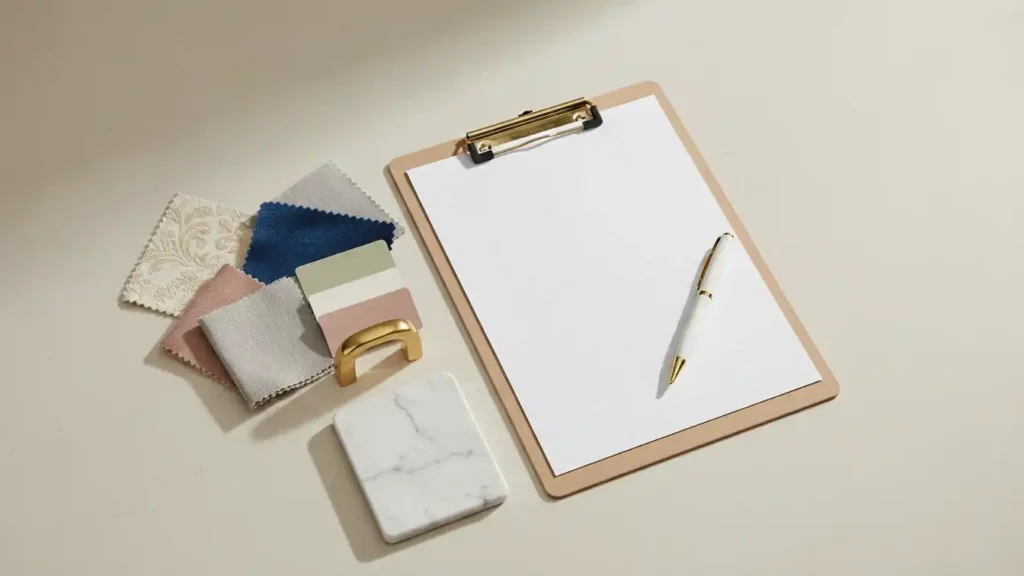
Essential Furniture Items
Priority 1: Seating
- [ ] Sofa (measure space first: 72-108″ depending on room size)
- [ ] Accent chairs – pair of 2 (bergère, wingback, or slipper style)
- [ ] Ottoman or bench (optional additional seating)
Priority 2: Tables
- [ ] Coffee table (marble, wood, or glass top)
- [ ] Side tables – pair of 2 (matching for symmetry)
- [ ] Console table (behind sofa or against wall)
Priority 3: Storage
- [ ] Bookcase or étagère (1-2 pieces)
- [ ] Media console (if TV in room)
- [ ] Storage ottoman or decorative trunks
Architectural Elements
Permanent Installations
- [ ] Crown molding (materials + installation or DIY supplies)
- [ ] Boiserie panels or wainscoting materials
- [ ] Baseboard molding (coordinate with crown)
- [ ] Door/window trim upgrades
- [ ] Fireplace surround enhancement
- [ ] Columns or pilasters (if applicable)
- [ ] Ceiling medallion for chandelier
Paint & Finishes
- [ ] Wall paint (main color)
- [ ] Trim paint (white or contrasting color)
- [ ] Ceiling paint (soft white or color-match walls)
- [ ] Primer
- [ ] Painter’s tape, drop cloths, supplies
Lighting Fixtures
Overhead Lighting
- [ ] Chandelier (calculate size: room length + width = diameter in inches)
- [ ] Ceiling medallion or canopy plate
- [ ] Dimmer switches for all light circuits
- [ ] Recessed lighting (if needed for even illumination)
Supplemental Lighting
- [ ] Table lamps – pair of 2 minimum (for side tables)
- [ ] Floor lamp (for reading area or dark corner)
- [ ] Wall sconces – 2-4 (flanking fireplace, artwork, or mirrors)
- [ ] Picture lights (if displaying artwork)
Light Bulbs
- [ ] LED bulbs, 2700-3000K warm white
- [ ] Multiple wattages for different fixtures
- [ ] Dimmable bulbs for all fixtures with dimmers
Window Treatments
Curtain Hardware
- [ ] Curtain rods (extend 8-12″ beyond window on each side)
- [ ] Mounting brackets and anchors
- [ ] Finials (decorative rod ends)
- [ ] Tiebacks or holdbacks (optional)
Curtain Panels
- [ ] Main curtain panels – 2-4 per window (silk, velvet, linen, or faux)
- [ ] Sheer panels – 2 per window (optional layering)
- [ ] Extra length for floor-to-ceiling mounting
- [ ] Blackout lining (optional for light control)
Soft Furnishings
Area Rugs
- [ ] Main area rug (8×10, 9×12, or larger depending on room size)
- [ ] Rug pad (extends rug life, prevents slipping)
- [ ] Secondary rug (if multiple zones)
Throw Pillows
- [ ] 4-8 decorative pillows for sofa
- [ ] 1-2 pillows per accent chair
- [ ] Mix of sizes: 22″, 20″, 18″
- [ ] Mix of textures: velvet, silk, linen
Throws & Blankets
- [ ] 1-2 throw blankets for sofa
- [ ] Luxe materials: cashmere, faux fur, chunky knit
Decorative Accessories
Mirrors
- [ ] Large mirror (over sofa, mantel, or console)
- [ ] Matching smaller mirrors (for symmetry)
- [ ] Ornate gilt or carved wood frames
Artwork & Wall Decor
- [ ] Large statement piece (48″ x 36″ or larger)
- [ ] Gallery wall pieces (if creating collection)
- [ ] Frames in coordinating finishes
- [ ] Hanging hardware and level
Mantel & Console Styling
- [ ] Pair of candlesticks or decorative urns
- [ ] Central decorative object (clock, sculpture, vase)
- [ ] Coffee table books (3-5 large format)
- [ ] Decorative bowl or tray
- [ ] Fresh flowers or faux botanicals
Sculptural Objects
- [ ] Classical busts or figurines
- [ ] Decorative obelisks
- [ ] Ceramic or porcelain vases
- [ ] Decorative boxes (for storage)
Finishing Touches
Textural Elements
- [ ] Decorative storage baskets
- [ ] Ceramic or brass planters
- [ ] Fresh or high-quality faux greenery
- [ ] Decorative trays (for organizing small objects)
Practical Items
- [ ] Coasters for coffee table
- [ ] Remote control storage
- [ ] Magazine holder or basket
- [ ] Fireplace tools (if applicable)
Frequently Asked Questions
Q: Can neoclassical design work in modern homes without original architectural details?
Yes! Neoclassical style can be successfully incorporated into contemporary homes. Add architectural elements through crown molding, DIY boiserie panels, or decorative columns. Focus on symmetrical furniture arrangements, classical color palettes, and refined accessories to achieve the aesthetic without extensive renovations.
Q: How do I balance neoclassical elegance without making my living room feel like a museum?
The key is restraint and livability. Choose comfortable, well-scaled furniture in classical silhouettes. Incorporate modern conveniences (hidden TV, contemporary lighting) while maintaining symmetry and architectural details. Layer in personal touches through family photos in elegant frames, contemporary art, and cozy textiles.
Q: What’s the difference between neoclassical and traditional design?
Neoclassical design is more restrained than traditional style. While traditional embraces heavy ornamentation, dark woods, and layered patterns, neoclassical favors lighter colors, simplified architectural details, cleaner lines, and selective ornamentation. Think “less is more” with classical inspiration versus “more is more” traditional maximalism.
Q: How much does it cost to create a neoclassical living room?
Costs vary dramatically based on room size and existing architecture:
- Budget refresh: $1,000-3,000 (paint, DIY molding, new accessories)
- Moderate renovation: $5,000-10,000 (professional molding, quality furniture, lighting)
- Luxury transformation: $15,000-50,000+ (custom millwork, marble, designer furniture)
Q: What colors are most authentic to neoclassical design?
Traditional neoclassical palettes feature soft neutrals: whites, creams, light grays, beiges, and taupes. Accent with muted jewel tones (sage green, dusty blue, soft burgundy) and metallic touches (antique gold, brass, silver). Avoid bright, saturated colors or bold contemporary palettes.
Q: Can I mix neoclassical with other design styles?
Yes! Neoclassical pairs beautifully with:
- Modern: Clean-lined furniture with classical architecture
- Transitional: Balanced blend of traditional and contemporary
- Scandinavian: Simplified neoclassical with Nordic minimalism
- Hollywood Regency: Glamorous interpretation with more metallics
Avoid mixing with: rustic farmhouse, industrial, bohemian (creates conflicting aesthetics).
Q: How do I incorporate technology (TV, speakers) in neoclassical design?
Conceal when possible: hide TV in cabinet, use projector with hidden screen, install in-wall or in-ceiling speakers. If TV must be visible, frame it with classical architectural elements (columns, boiserie panels) or mount above console styled symmetrically. Choose wireless speakers in neutral colors.
Q: What type of flooring works best in neoclassical living rooms?
Ideal options:
- Hardwood: Light oak, walnut, or painted white floors
- Marble or stone: Carrara, Calacatta, or travertine
- Large-format porcelain tiles: Marble-look or wood-look
- Herringbone or chevron patterns: Adds classical detail
Avoid: Heavily distressed wood, rustic wide planks, bold tile patterns.
Final Thoughts: Creating Your Timeless Neoclassical Living Room
Neoclassical design offers the perfect bridge between historical grandeur and contemporary livability. By focusing on symmetry, restraint, and quality over quantity, you can create a living room that feels both timeless and fresh.
Key Takeaways:
- Start with architecture: Crown molding and boiserie create instant elegance
- Embrace symmetry: Balanced furniture placement and paired accessories are essential
- Choose quality pieces: Invest in key furniture that will last decades
- Layer lighting: Three-tier lighting (ambient, task, accent) creates ambiance
- Maintain restraint: Edit accessories ruthlessly for sophisticated simplicity
- Stay neutral: Soft color palettes never go out of style
- Add personal touches: Make the space livable, not museum-like
Your Next Steps:
Week 1-2: Assess your space, take measurements, create mood board, select color palette
Week 3-6: Begin architectural improvements (paint, molding installation)
Week 7-10: Purchase and arrange furniture
Week 11-12: Add lighting fixtures, window treatments, and accessories
Ongoing: Edit and refine as you live in the space
Additional Resources:
Books:
- “Classical Architecture: The Living Tradition” by Joseph Rykwert
- “The Elements of Classical Architecture” by Georges Gromort
- “Interior Design Master Class” by Carl Dellatore
Online Resources:
- Architectural Digest (classical interiors inspiration)
- Traditional Home Magazine
- Houzz (neoclassical living room photos)
Shopping Destinations:
- High-End: RH (Restoration Hardware), Pottery Barn, Arhaus
- Mid-Range: West Elm, Crate & Barrel, Ballard Designs
- Budget: Target Home, Wayfair, Overstock
- Antiques: 1stDibs, Chairish, local antique shops
Remember: Neoclassical design is about creating a space that honors the past while embracing the present. Your living room should feel elegant yet comfortable, formal yet inviting, timeless yet distinctly yours.
Take your time, invest wisely, and enjoy the process of creating a sophisticated sanctuary that will remain beautiful for generations to come.