The Ultimate Guide to Shower Plants: Transform Your Bathroom Into a Lush Spa Oasis
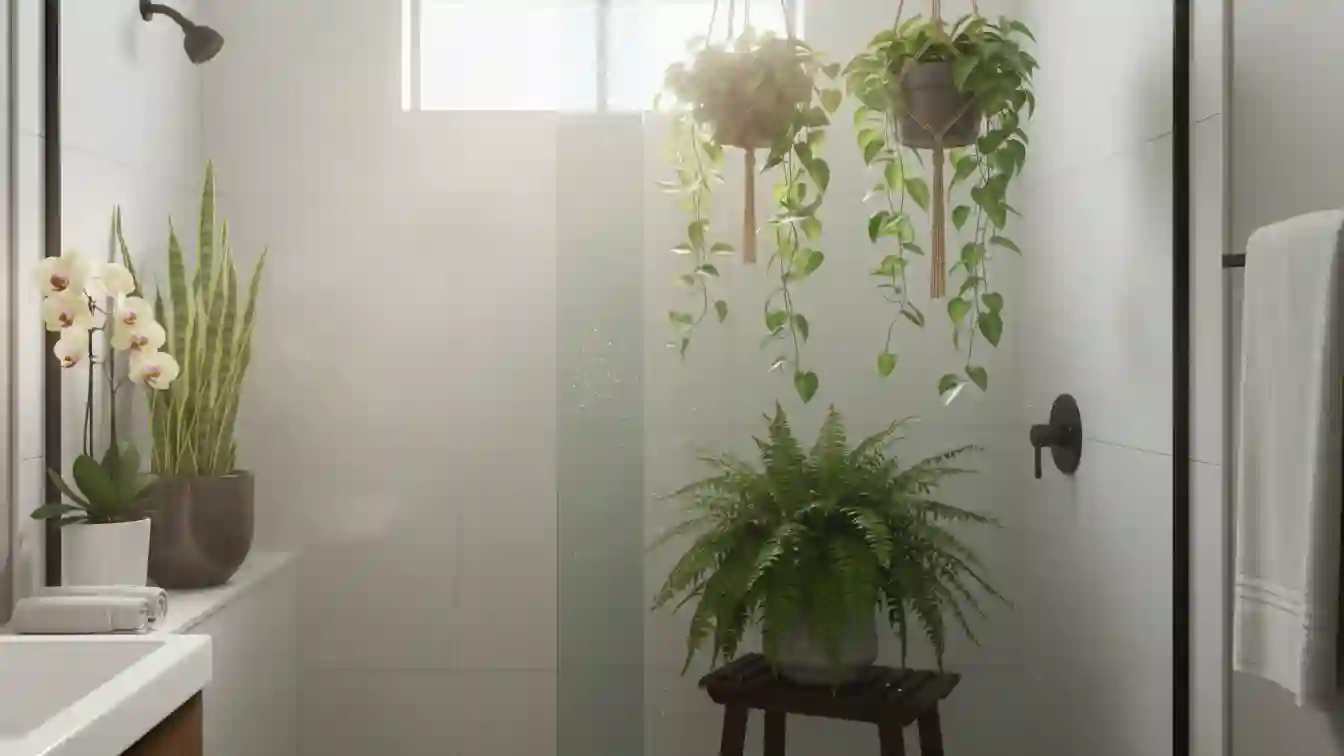
Want to turn your ordinary bathroom into a relaxing spa sanctuary? Discover how shower plants can create a stunning tropical retreat while purifying your air and boosting your wellness—right where you start and end each day.
What Are Shower Plants? Understanding the Bathroom Plant Trend

Shower plants are humidity-loving houseplants that thrive in the warm, steamy environment of your bathroom. Unlike typical indoor plants that struggle with moisture, these botanical beauties actually flourish in the conditions created by hot showers and baths.
Think of your bathroom as a mini rainforest. The steam, warmth, and moisture mirror the tropical environments where many of these plants originate. When you place the right plants in or near your shower, you’re giving them exactly what they need to grow lush and vibrant.
Why Shower Plants Are Taking Over Bathrooms Worldwide
The shower plant trend isn’t just about aesthetics. These green companions offer genuine benefits that transform your daily routine:
Create an Instant Spa Atmosphere: Surrounding yourself with lush greenery and natural scents turns a mundane shower into a rejuvenating retreat. Research shows that exposure to plants reduces stress, lowers blood pressure, and improves overall mood.
Natural Air Purification: Many bathroom plants absorb harmful toxins like formaldehyde, benzene, and xylene while releasing fresh oxygen. NASA’s Clean Air Study identified several plants as powerful natural air filters—perfect for enclosed bathroom spaces.
If you also want cleaner air where you sleep my bedroom plants that improve air health and wellness guide shows you the best plants to pair with your shower plants for a whole home refresh.
Combat Excess Moisture and Mold: Certain shower plants absorb moisture from the air, potentially reducing mold and mildew growth in damp bathrooms. This natural dehumidifying effect keeps your space fresher and healthier.
Low-Maintenance Care: Since shower plants benefit from the humidity of your daily routine, they often require less frequent watering. The steam does much of the work for you, making them ideal for busy lifestyles or beginner plant parents.
Boost Mental Wellness: Studies consistently show that indoor plants increase happiness, sharpen focus, and reduce anxiety. Starting your day surrounded by greenery sets a positive, energizing tone.
The Science Behind Shower Plants: Why Your Bathroom Is Perfect
Understanding Bathroom Microclimates
Your bathroom creates unique growing conditions that many plants love:
- High Humidity (50-80%): Most bathrooms naturally maintain humidity levels similar to tropical rainforests
- Consistent Warmth: Hot showers raise temperatures to optimal ranges (65-85°F)
- Indirect Light: Many bathrooms offer the filtered, indirect light that tropical understory plants prefer
- Stable Environment: Unlike other rooms, bathrooms experience fewer temperature fluctuations
How Steam Activates Plant Benefits
When hot water creates steam, it doesn’t just add moisture to the air. For aromatic plants like eucalyptus, the steam helps release volatile essential oils from the leaves. These compounds then disperse through the air, creating a natural aromatherapy experience that can clear sinuses, reduce inflammation, and promote mental clarity.
The 15 Best Shower Plants for Every Bathroom Type
Easy-Care Shower Plants for Beginners
1. Snake Plant (Sansevieria trifasciata)
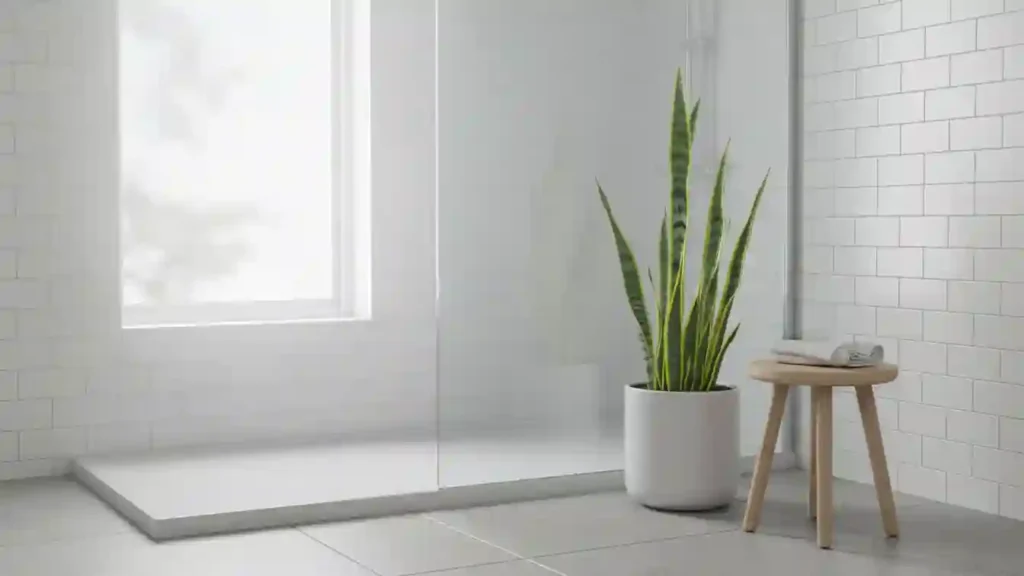
Why It’s Perfect: Nearly indestructible and tolerant of neglect, the snake plant is ideal for first-time plant parents. Its tall, architectural leaves add modern elegance while filtering indoor air pollutants.
Light Requirements: Low to bright indirect light Water Needs: Minimal—let soil dry completely between waterings Humidity: Tolerates low to high humidity Special Benefits: Removes toxins including formaldehyde and benzene; produces oxygen at night
Care Tips: Use well-draining soil and avoid overwatering. This plant is more likely to die from too much water than too little. Perfect for windowless bathrooms or those with minimal natural light.
2. Golden Pothos (Epipremnum aureum)
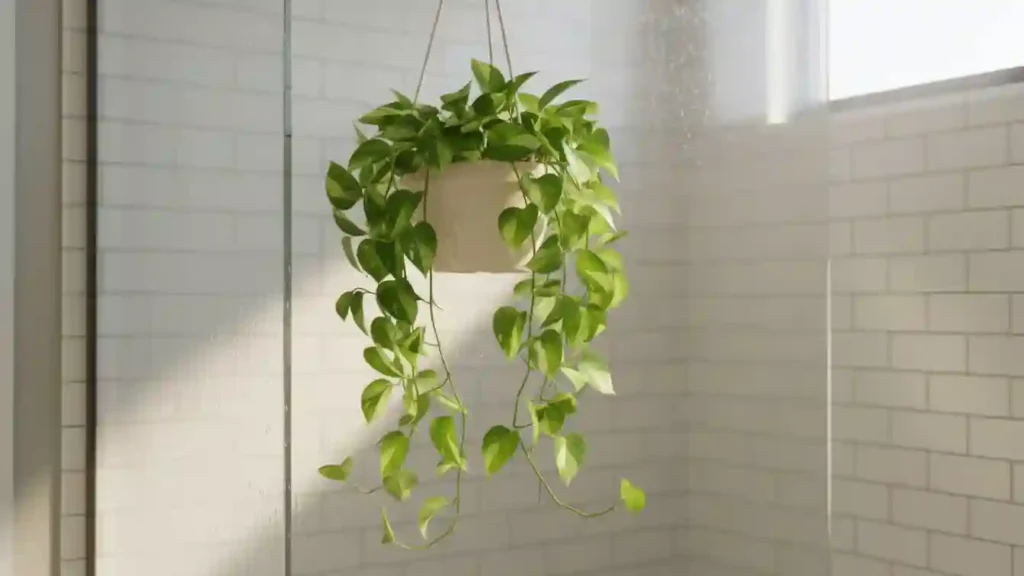
Why It’s Perfect: Known as “Devil’s Ivy” for its ability to survive in nearly any condition, pothos is the ultimate low-maintenance trailing plant. Its heart-shaped leaves cascade beautifully from hanging baskets or shelves.
Light Requirements: Low to bright indirect light Water Needs: Water when top soil feels dry Humidity: Thrives in high humidity Special Benefits: Excellent air purifier; grows rapidly; easy to propagate
Care Tips: Hang above your shower or place on a high shelf to showcase its trailing vines. Brown leaf tips indicate air is too dry—increase misting frequency. Can grow in water alone, making it foolproof for beginners.
3. Spider Plant (Chlorophytum comosum)
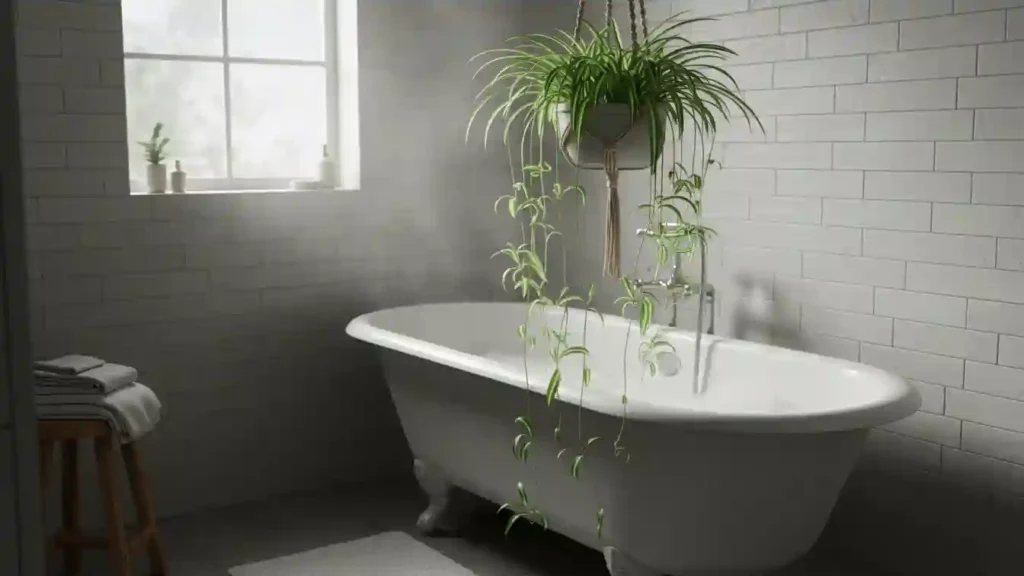
Why It’s Perfect: This charming plant produces adorable “baby” plants (spiderettes) on long stems, creating a cascading fountain of green and white striped foliage. It’s nearly impossible to kill and grows quickly in bathroom humidity.
Light Requirements: Bright indirect light preferred Water Needs: Moderate—keep soil slightly moist Humidity: Loves high humidity Special Benefits: Removes formaldehyde and xylene; produces baby plants for propagation; pet-safe
Care Tips: Hang in a basket to display trailing spiderettes. The babies can be separated and potted to expand your bathroom jungle or share with friends.
4. ZZ Plant (Zamioculcas zamiifolia)

Why It’s Perfect: Drought-tolerant and thriving in low light, the ZZ plant features thick, glossy leaves that add a bold statement. It’s the ultimate plant for forgetful waterers.
Light Requirements: Low to bright indirect light Water Needs: Very minimal—water only when soil is bone dry Humidity: Adapts to any humidity level Special Benefits: Tolerates neglect; removes toxins; grows up to 3 feet tall
Care Tips: Perfect for walk-in showers with limited light. Water sparingly—this plant stores water in its rhizomes and can go weeks without watering.
Humidity-Loving Tropical Shower Plants
5. Boston Fern (Nephrolepis exaltata)
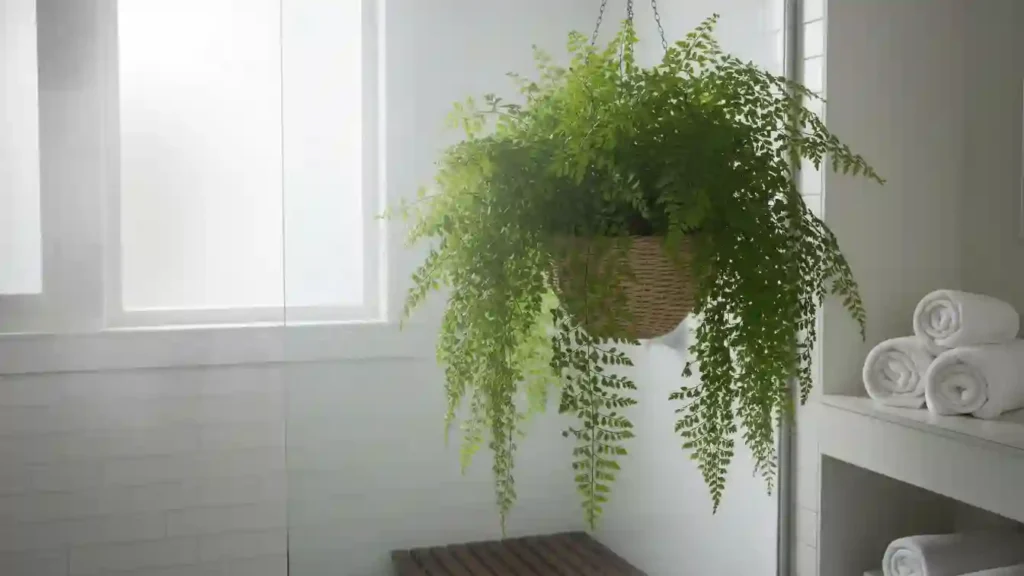
Why It’s Perfect: With its feathery, delicate fronds, the Boston fern brings classic elegance and lush texture to any bathroom. It absolutely thrives in steamy conditions.
Light Requirements: Bright indirect light Water Needs: Keep soil consistently moist Humidity: Requires high humidity (60-80%) Special Benefits: Excellent natural humidifier; removes formaldehyde and xylene; pet-friendly
Care Tips: Hang in a basket near—but not directly under—the shower head. Mist regularly between showers. This is one plant that truly loves bathroom steam and will reward you with vibrant green growth.
6. Peace Lily (Spathiphyllum wallisii)
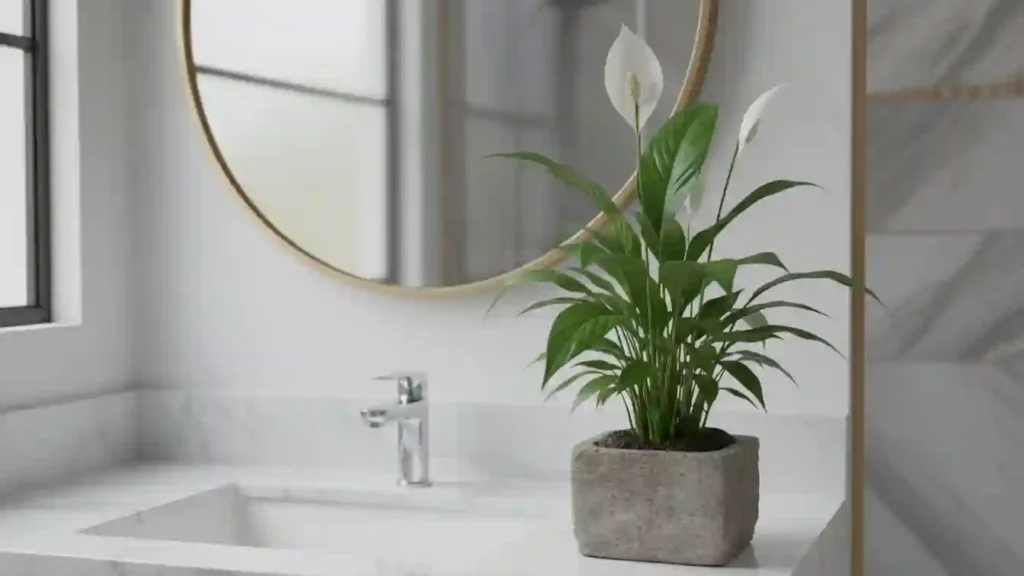
Why It’s Perfect: Elegant white blooms emerge from glossy dark green foliage, creating a sophisticated look. Peace lilies are among the best air-purifying plants while tolerating low light conditions.
Light Requirements: Low to medium indirect light Water Needs: Moderate—water when leaves droop slightly Humidity: Prefers high humidity Special Benefits: Produces beautiful white flowers; removes multiple toxins; indicates when it needs water
Care Tips: Place on a bathroom counter or windowsill. The plant will visibly droop when thirsty—simply water thoroughly and it will perk up within hours. Perfect for bathrooms with minimal natural light.
7. Monstera Deliciosa (Swiss Cheese Plant)
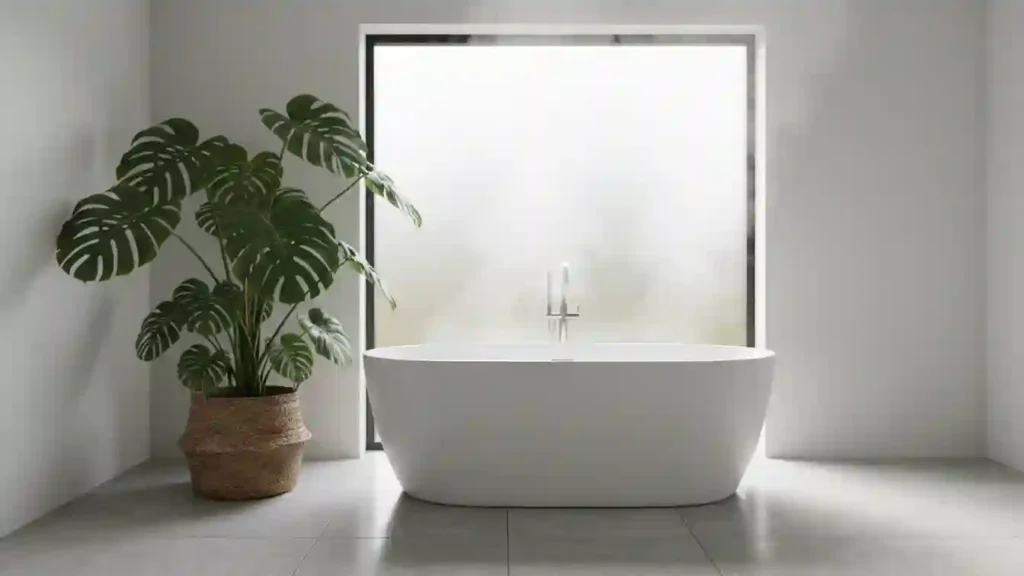
Why It’s Perfect: If you have space, the Monstera makes a dramatic statement with its iconic fenestrated leaves. In high humidity, the holes in mature leaves become larger and more impressive.
Light Requirements: Bright indirect light Water Needs: Water when top 2 inches of soil dry Humidity: Thrives in 60%+ humidity Special Benefits: Stunning tropical aesthetic; air purifying; grows into impressive specimen
Care Tips: Best for spacious bathrooms with windows. Provide a moss pole for support as it grows. The high bathroom humidity will encourage larger, more fenestrated leaves.
8. Philodendron (Various Species)
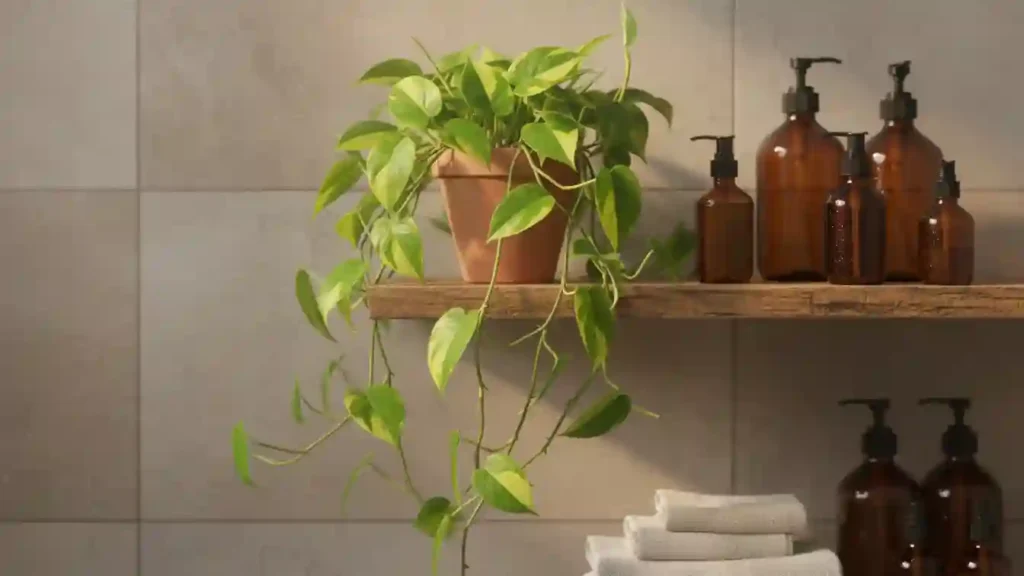
Why It’s Perfect: Available in trailing and climbing varieties, philodendrons are incredibly adaptable and forgiving. Philodendron scandens (heartleaf) and Philodendron Brasil are particularly stunning in bathrooms.
Light Requirements: Low to bright indirect light Water Needs: Water when top inch of soil dries Humidity: Loves high humidity Special Benefits: Fast-growing; easy to propagate; tolerates neglect; air purifying
Care Tips: Train climbing varieties up a moss pole or let trailing varieties cascade from hanging baskets. Thrives in bathroom steam and grows vigorously.
9. Calathea (Prayer Plant)
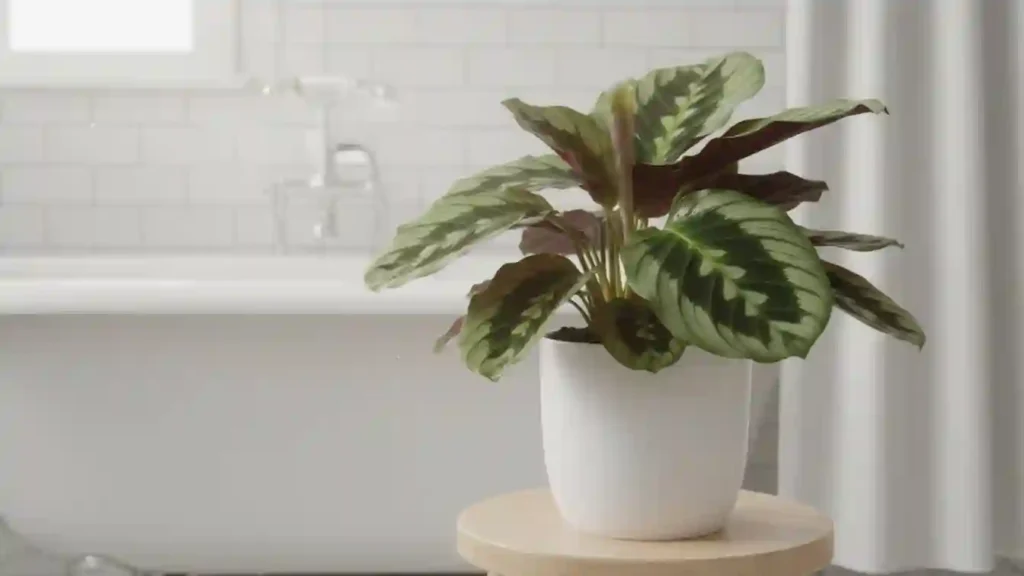
Why It’s Perfect: Calatheas feature some of the most stunning foliage patterns in the plant world—stripes, spots, and vibrant colors in shades of green, purple, and pink. Their leaves fold up at night in a prayer-like motion.
Light Requirements: Medium indirect light (no direct sun) Water Needs: Keep soil consistently moist Humidity: Requires 50-80% humidity Special Benefits: Dramatic decorative foliage; non-toxic to pets; natural air purifier
Care Tips: Bathrooms are ideal for these humidity-loving beauties. Use filtered or distilled water to prevent brown leaf edges. Varieties like Calathea orbifolia, medallion, and rattlesnake thrive in steamy conditions.
Space-Saving and Hanging Shower Plants
10. Air Plants (Tillandsia)
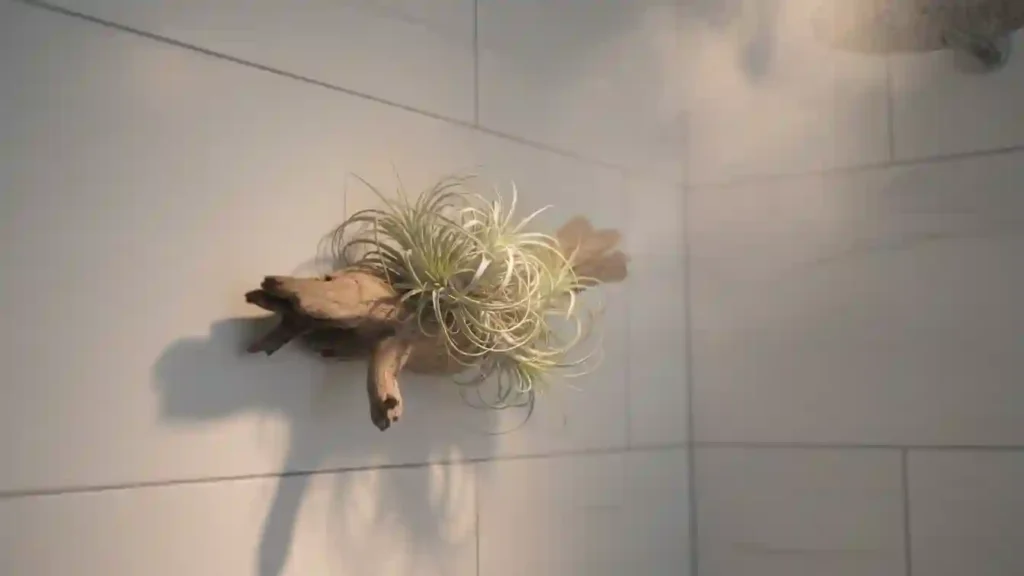
Why They’re Perfect: These fascinating plants need no soil whatsoever—they absorb all their water and nutrients from the air through specialized structures on their leaves. Perfect for creative displays and tiny spaces.
Light Requirements: Bright indirect light Water Needs: Mist 2-3 times weekly or soak weekly Humidity: Love humidity but need air circulation Special Benefits: No soil required; incredibly low maintenance; versatile placement options
Care Tips: Attach to driftwood, place in decorative holders, or hang with suction cups near (not under) the shower head. The steam provides much of their moisture needs, but ensure good air circulation to prevent rot.
11. English Ivy (Hedera helix)
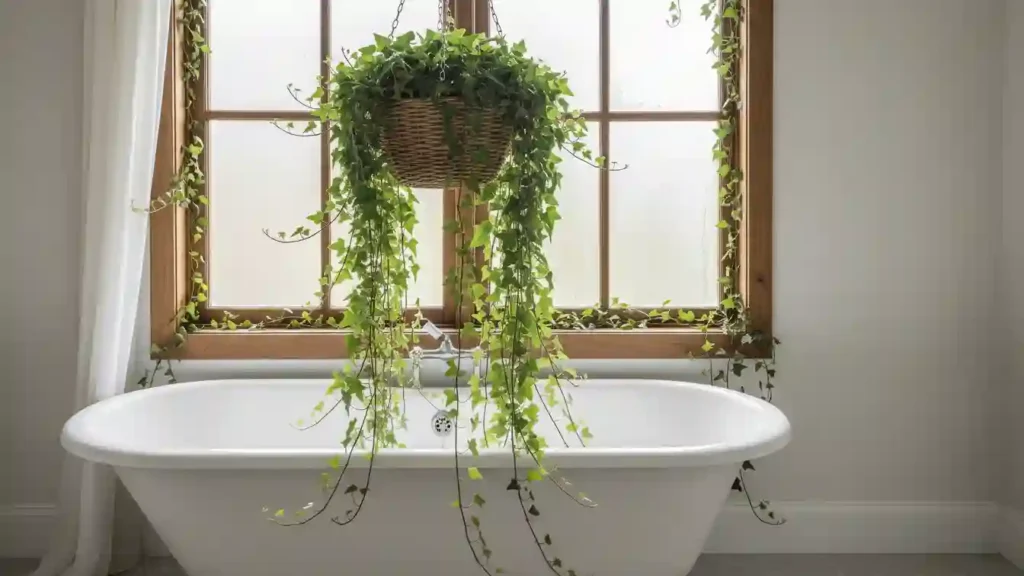
Why It’s Perfect: This classic trailing plant creates romantic, cascading greenery. NASA identified it as one of the top air-purifying plants for removing airborne mold and toxins.
Light Requirements: Medium to bright indirect light Water Needs: Keep soil evenly moist Humidity: Thrives in high humidity Special Benefits: Excellent air purifier; fast-growing; creates dramatic trailing effect
Care Tips: Hang high in baskets or train along a bathroom mirror or window frame. Monitor for pests occasionally. Note: Keep away from pets as it’s toxic if ingested.
12. String of Pearls (Senecio rowleyanus)
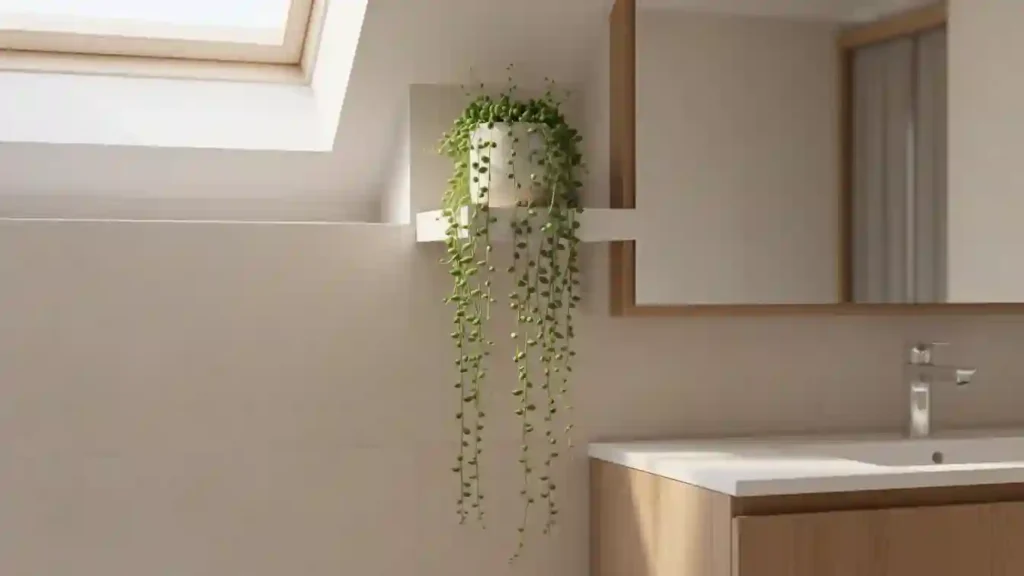
Why It’s Perfect: This quirky succulent features spherical leaves on trailing stems that look like strings of beads. It’s perfect for adding whimsical charm to bathroom shelves.
Light Requirements: Bright indirect light Water Needs: Allow to dry completely between waterings Humidity: Tolerates both low and high humidity Special Benefits: Unique appearance; extremely low maintenance; pet-friendly
Care Tips: Place on a high shelf where stems can trail down. Despite being a succulent, it adapts well to bathroom humidity as long as it’s not overwatered.
Aromatic and Therapeutic Shower Plants
13. Eucalyptus (Fresh Bundles)
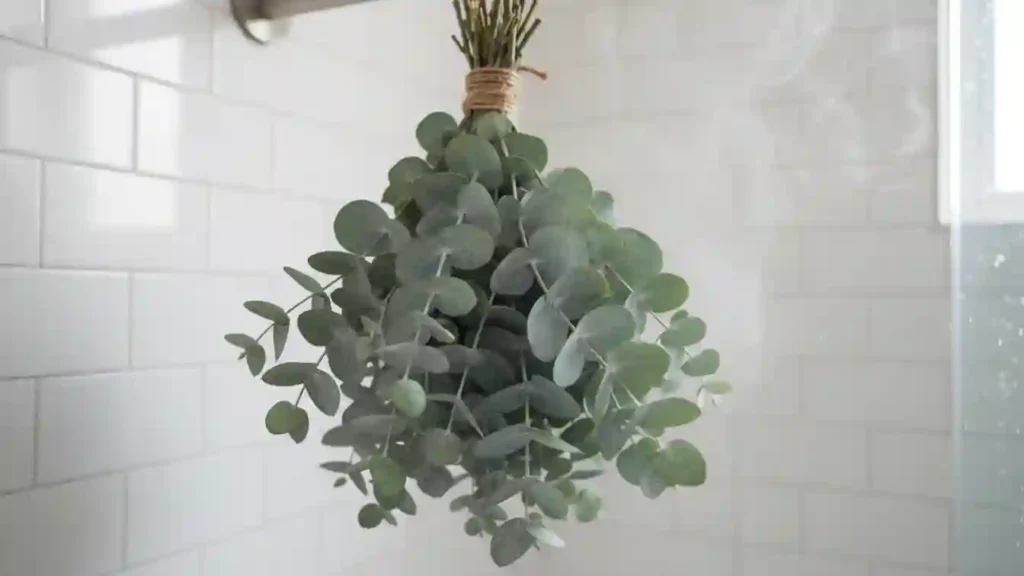
Why It’s Perfect: Hanging fresh eucalyptus in your shower creates an instant spa experience. The steam releases natural essential oils that offer genuine therapeutic benefits.
Benefits:
- Clears congestion and sinuses
- Reduces inflammation in respiratory tract
- Promotes mental clarity and alertness
- Relieves stress and anxiety
- Creates natural aromatherapy
How to Hang Eucalyptus:
- Purchase 4-8 fresh stems from florists, farmer’s markets, Trader Joe’s, or Whole Foods
- Gently roll stems with a rolling pin to bruise leaves and release oils
- Rinse under water to remove dust or debris
- Bundle stems together with twine, rubber band, or hair tie
- Hang from shower head or hook—away from direct water stream but within steam reach
- Replace every 1-2 weeks when scent fades
Pro Tips: Combine eucalyptus with lavender sprigs for enhanced relaxation. Keep out of reach of pets as eucalyptus is toxic to animals.
14. Lucky Bamboo (Dracaena sanderiana)
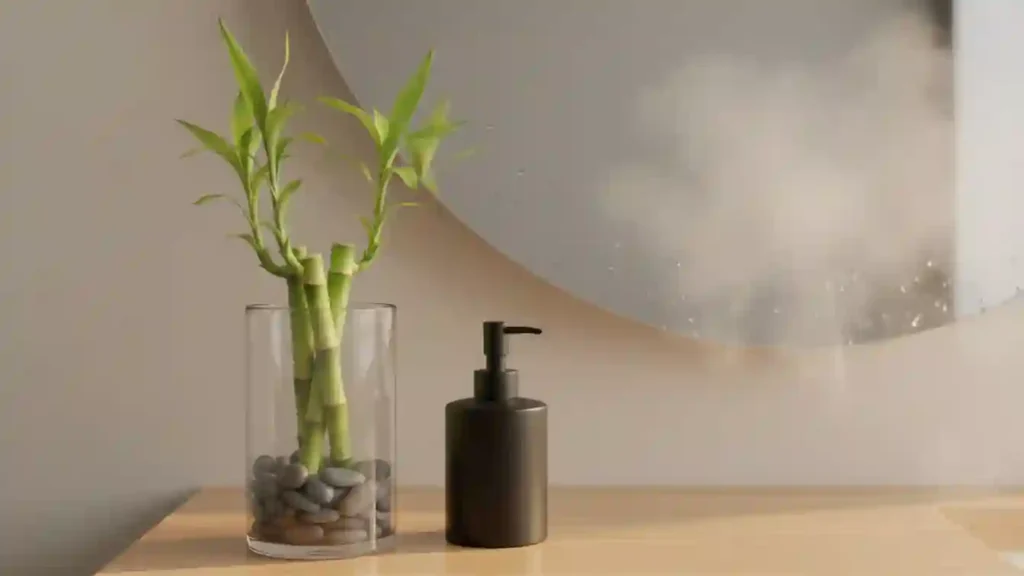
Why It’s Perfect: Despite its name, lucky bamboo isn’t actually bamboo—it’s a resilient tropical plant that can grow in water alone. It’s believed to bring positive energy and good fortune.
Light Requirements: Low to bright indirect light Water Needs: Can grow in water; change water weekly Humidity: Loves high humidity Special Benefits: Grows in water alone; symbolizes good luck; low maintenance; pet-safe
Care Tips: Place in a decorative vase with pebbles and water on your bathroom counter. Perfect for bathrooms with limited counter space.
15. Orchids (Phalaenopsis – Moth Orchids)
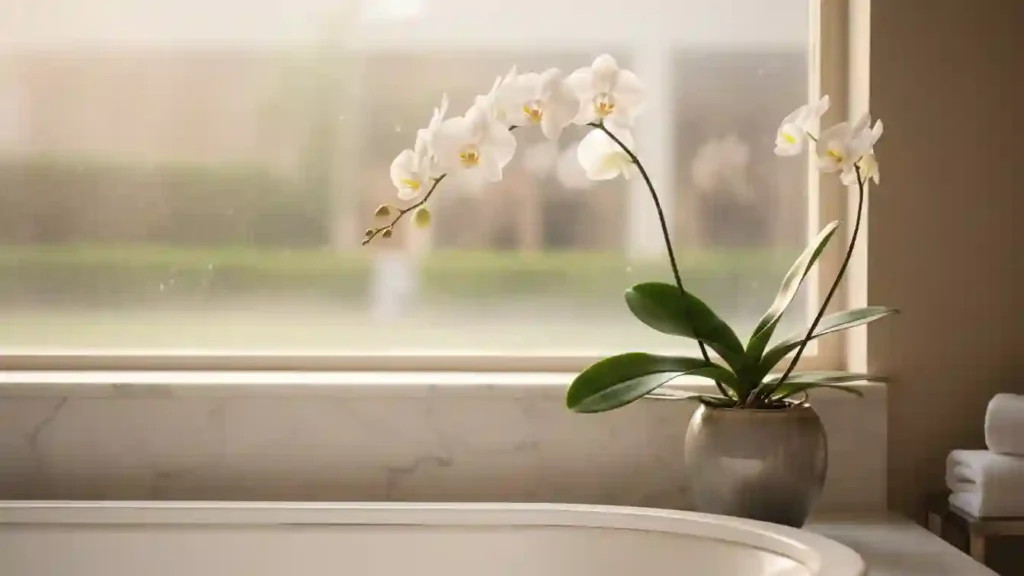
Why They’re Perfect: Elegant and exotic, orchids produce stunning blooms that can last for months. Despite their delicate appearance, they’re easier to care for than most people think—especially in humid bathrooms.
Light Requirements: Bright indirect light Water Needs: Water weekly; allow to dry between waterings Humidity: Thrive in 50-70% humidity Special Benefits: Beautiful long-lasting flowers; air-purifying; sophisticated aesthetic
Care Tips: Place on the bathroom windowsill or countertop where they’ll receive bright indirect light. Water by soaking roots for 15 minutes weekly. The bathroom humidity encourages reblooming.
How to Successfully Grow Plants in Your Shower
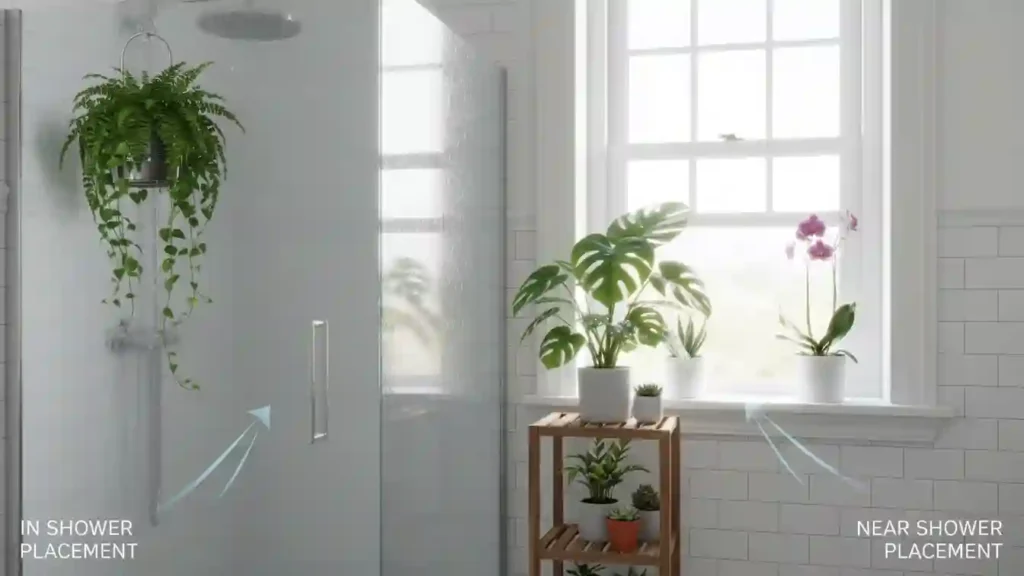
Choosing the Right Location
In-Shower Placement:
- Hang plants from shower head hooks or ceiling hooks
- Place on corner shelves or caddies
- Use suction cup hooks on tiles
- Ensure plants are exposed to steam but not direct water spray
Near-Shower Placement:
- On windowsills (if available)
- Bathroom counters or vanity
- Hanging from curtain rods
- On wall-mounted shelves
- In corners on plant stands
Essential Care Guidelines for Thriving Shower Plants
Lighting Strategies
For Bathrooms with Windows:
- Place plants that need bright indirect light near windows
- Use sheer curtains to diffuse direct sunlight
- Rotate plants monthly for even growth
For Windowless Bathrooms:
- Choose low-light tolerant plants (snake plant, pothos, ZZ plant, peace lily)
- Install LED grow lights (full spectrum)
- Rotate plants to sunny rooms periodically
- Keep bathroom door open during daytime to allow natural light
Best Grow Light Options:
- LED grow light bulbs (fits in standard fixtures)
- Clip-on grow lights for shelves
- Full-spectrum fluorescent bulbs
- Timer-controlled automatic lights
Smart Watering Techniques
Checking Soil Moisture:
- Insert finger 1-2 inches into soil
- Soil should feel dry at top but slightly moist below
- Different plants have different needs—learn each plant’s preferences
Preventing Overwatering:
- Use pots with drainage holes
- Empty saucers after watering
- Allow soil to dry appropriately between waterings
- Remember: bathroom humidity reduces watering frequency
Signs of Overwatering:
- Yellow leaves
- Musty smell from soil
- Soft, brown roots
- Mold on soil surface
Signs of Underwatering:
- Crispy, brown leaf edges
- Wilting or drooping
- Dry, pulling-away soil
- Slow growth
Maintaining Optimal Humidity
Natural Humidity Sources:
- Daily showers and baths
- Steam from hot water
- Damp towels
- Running sink water
Boosting Humidity:
- Group plants together (creates microclimate)
- Place plants on pebble trays filled with water
- Use a small humidifier
- Mist plants with spray bottle (though less effective than other methods)
Humidity Monitoring:
- Use a hygrometer to measure levels
- Aim for 50-80% for tropical plants
- Ensure bathroom ventilation to prevent mold
Preventing Common Problems
Ensuring Air Circulation:
- Run exhaust fan occasionally after showers
- Leave bathroom door open periodically
- Avoid completely sealed spaces
- Prevent stagnant, overly moist air
Cleaning Plant Leaves:
- Wipe leaves with damp cloth every 2-3 weeks
- Removes dust, soap residue, and mineral deposits
- Improves light absorption and photosynthesis
- Prevents pest infestations
Temperature Considerations:
- Maintain 65-85°F for most tropical plants
- Avoid cold drafts from windows
- Keep away from heat vents or radiators
- Monitor temperature fluctuations
Fertilizing Bathroom Plants
When to Fertilize:
- Spring and summer (growing season): monthly
- Fall and winter: every 2-3 months or not at all
- Always fertilize after watering, never on dry soil
Best Fertilizer Types:
- Balanced liquid houseplant fertilizer (10-10-10 or 20-20-20)
- Dilute to half strength for bathroom plants
- Organic options: fish emulsion, worm castings tea
- Slow-release granules for low-maintenance feeding
Pest Management in Humid Environments
Common Bathroom Plant Pests:
- Spider mites (tiny red/brown specks)
- Fungus gnats (small flying insects)
- Mealybugs (white cottony clusters)
- Scale (brown bumps on stems)
Prevention:
- Inspect new plants before bringing into bathroom
- Maintain good air circulation
- Don’t overwater (prevents fungus gnats)
- Wipe leaves regularly
Natural Treatment:
- Neem oil spray
- Insecticidal soap
- Isopropyl alcohol on cotton swabs
- Increase air circulation
Design Ideas: Creating a Stunning Bathroom Jungle
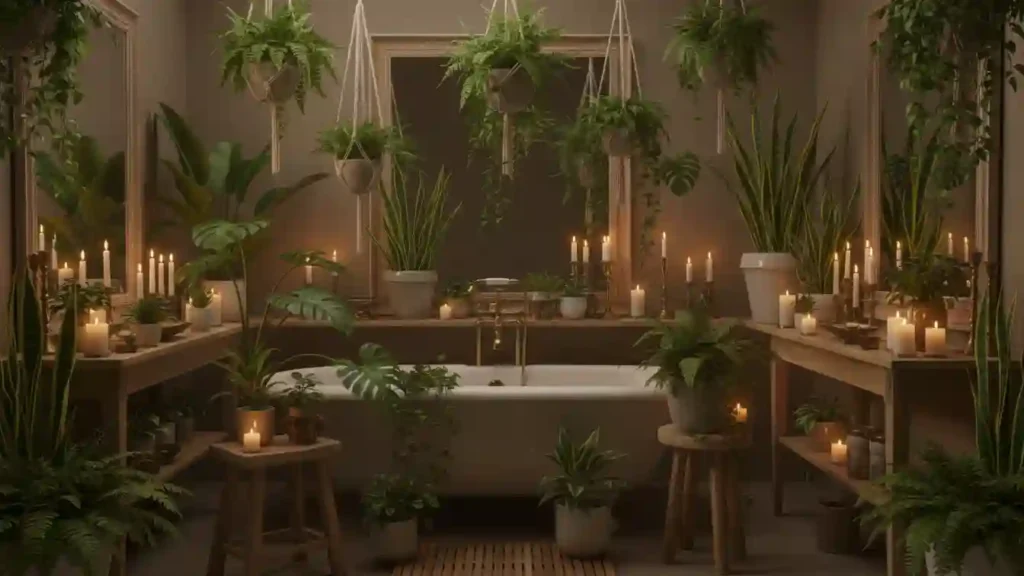
Styling Different Bathroom Types
Small Bathrooms:
- Utilize vertical space with hanging plants
- Choose compact varieties (air plants, small pothos, string of pearls)
- Install floating shelves
- Hang from shower curtain rods or hooks
Large Bathrooms:
- Create a corner plant display with multiple species
- Add floor plants (monstera, large snake plants, ferns)
- Mix heights and textures for visual interest
- Use plant stands for elevation
Walk-In Showers:
- Install built-in shelves during construction/renovation
- Use corner caddies for multiple plants
- Hang trailing plants from ceiling
- Create a living wall effect
Windowless Bathrooms:
- Install quality LED grow lights
- Choose extremely low-light plants
- Use decorative grow light fixtures
- Consider this setup temporary with plant rotation
If you love tying every room together you can mix the same relaxed natural vibe from my cozy farmhouse dining room ideas with your shower plants to create a consistent calm feeling through your whole home.
Color and Texture Combinations
Monochromatic Green:
- Mix various shades and textures of green foliage
- Combine broad leaves (monstera) with delicate fronds (ferns)
- Add trailing plants for movement
Variegated Varieties:
- Pothos ‘Marble Queen’ (white and green)
- Snake plant ‘Moonshine’ (silvery green)
- Philodendron ‘Brasil’ (yellow and green)
- Calathea varieties (pink, purple, cream patterns)
Flowering Accents:
- Peace lily (white flowers)
- Orchids (various colors)
- Anthurium (red, pink, white)
- African violets (purple, pink, white)
Container and Display Options
Hanging Solutions:
- Macramé plant hangers
- Decorative hanging baskets
- Suction cup hooks for tiles
- Over-shower-door hangers
Countertop Displays:
- Decorative ceramic pots
- Minimalist white planters
- Natural materials (woven baskets, wood)
- Waterproof trays or saucers
Wall-Mounted Options:
- Floating shelves
- Wall-mounted planters
- Magnetic tile holders
- Vertical garden systems
Materials That Work Best:
- Ceramic with drainage (+ saucer)
- Plastic pots (lightweight for hanging)
- Self-watering planters
- Waterproof materials resistant to bathroom humidity
Advanced Tips: Maximizing Your Shower Plant Success
Seasonal Care Adjustments
Spring and Summer:
- Increase watering frequency as plants grow actively
- Fertilize monthly
- Prune and propagate
- Monitor for pest increases
Fall and Winter:
- Reduce watering as growth slows
- Decrease or eliminate fertilizing
- Move plants closer to light sources
- Watch for cold drafts from windows
Propagation in the Bathroom
Many shower plants are easy to propagate, allowing you to expand your bathroom jungle for free:
Water Propagation:
- Pothos: Cut 4-6″ stems below leaf node
- Philodendron: Same method as pothos
- Spider plant: Separate and root spiderettes
- Lucky bamboo: Divide stalks
Division:
- Snake plants: Separate offsets
- Peace lily: Divide root clumps
- Ferns: Divide root ball
The bathroom’s humidity creates ideal conditions for rooting new plants!
Troubleshooting Common Issues
Brown Leaf Tips:
- Cause: Low humidity, mineral buildup from tap water, or overfertilizing
- Solution: Increase humidity, use filtered or distilled water, reduce fertilizer
Yellow Leaves:
- Cause: Overwatering or insufficient light
- Solution: Check soil moisture, improve drainage, move to brighter location
Leggy Growth:
- Cause: Insufficient light
- Solution: Move closer to window or add grow lights, prune back for bushier growth
Mold on Soil:
- Cause: Overwatering, poor air circulation, too much humidity
- Solution: Let soil dry more between waterings, improve ventilation, scrape off mold
Dropping Leaves:
- Cause: Temperature fluctuations, drafts, or watering issues
- Solution: Maintain consistent environment, adjust watering schedule
Creating a Self-Sustaining Ecosystem
Layering Plant Types:
- Canopy layer: Tall plants (monstera, large snake plants)
- Understory layer: Medium plants (ferns, peace lilies)
- Ground cover: Trailing plants (pothos, philodendron)
- Epiphytes: Air plants on walls or shelves
Companion Planting Benefits:
- Grouped plants create higher humidity microclimates
- Different root depths prevent competition
- Varied water needs allow staggered watering
- Aesthetic diversity creates visual interest
Frequently Asked Questions About Shower Plants
Q: Will shower plants really thrive in my bathroom? A: Yes! If you choose plants suited to your bathroom’s specific conditions (light, humidity, space), they will thrive. The key is matching the right plant to your environment rather than forcing plants to adapt to unsuitable conditions.
Q: How often should I water shower plants? A: Less frequently than you think. Because bathroom humidity provides moisture, most shower plants need watering every 7-14 days. Always check soil moisture first—stick your finger 1-2 inches into the soil. If it’s moist, wait to water.
Q: What if my bathroom has no window? A: Choose extremely low-light tolerant plants (snake plant, ZZ plant, pothos, peace lily) and install LED grow lights. Alternatively, rotate plants between your bathroom and a sunny location weekly.
Q: Can I put plants directly in the shower spray? A: Not recommended. While plants love humidity and steam, direct water spray can damage delicate leaves and oversaturate soil. Position plants to receive steam without direct spray.
Q: How do I prevent mold with high humidity and plants? A: Ensure good air circulation by running the exhaust fan after showers and opening the door periodically. Use well-draining soil and pots with drainage holes. Don’t overwater.
Q: Are shower plants safe with pets and children? A: Some are, some aren’t. Pet-safe options include: spider plants, Boston ferns, air plants, orchids, and prayer plants. Toxic plants include: pothos, philodendron, peace lily (mild), snake plant, and English ivy. Keep toxic plants out of reach or choose only pet-safe varieties.
Q: How long does eucalyptus last in the shower? A: Fresh eucalyptus typically lasts 1-2 weeks before the scent fades. Some bundles can last up to 3-4 weeks with proper care. Replace when aromatic oils are depleted.
Q: What’s the best plant for complete beginners? A: Snake plant or pothos. Both are incredibly forgiving, tolerate low light, and won’t die if you forget to water them occasionally. They’re virtually indestructible.
Q: Can I use artificial plants instead? A: While artificial plants add visual appeal, they don’t offer any of the health benefits: no air purification, no humidity control, no mental wellness benefits. Plus, manufacturing fake plants is environmentally harmful. Real plants are worth the minimal effort.
Q: Do shower plants help with bathroom odors? A: Yes, indirectly. Many plants help purify air and some (like eucalyptus) add pleasant natural scents. However, proper bathroom ventilation and cleaning remain essential.
Q: Should I use tap water or filtered water? A: It depends on your tap water quality. Many plants (especially calatheas and prayer plants) are sensitive to chlorine, fluoride, and minerals in tap water. If you notice brown leaf tips, switch to filtered, distilled, or rainwater. Otherwise, letting tap water sit out overnight allows chlorine to dissipate.
Q: Can I grow herbs in my shower? A: Some herbs can work if you have enough light. Mint, basil, and oregano might survive with adequate bright indirect light or grow lights. However, most herbs prefer drier conditions than typical shower plants.
Shopping Guide: Where to Buy Shower Plants and Supplies
Best Places to Buy Bathroom Plants
Local Options:
- Garden centers and nurseries (best plant health)
- Home Depot, Lowe’s (affordable, variety)
- Trader Joe’s (great deals on pothos, snake plants)
- Whole Foods (orchids, eucalyptus bundles)
- Farmer’s markets (fresh eucalyptus, herbs)
Online Retailers:
- The Sill (quality plants, stylish pots, care guides)
- Bloomscape (larger plants, delivered in decorative pots)
- Costa Farms (affordable, widely available)
- Etsy (unique varieties, local sellers)
- Amazon (convenience, but check seller reviews)
Essential Supplies Checklist
Must-Have Items:
- Appropriate pots with drainage holes
- Waterproof saucers or trays
- Quality potting mix (well-draining)
- Liquid houseplant fertilizer
- Spray bottle for misting
- Soft cloth for leaf cleaning
- Pruning shears or scissors
Optional But Helpful:
- Moisture meter
- Hygrometer (measures humidity)
- LED grow lights
- Humidifier
- Decorative plant hangers
- Pebble trays
- Plant poles or trellises
Once your bathroom feels like a mini jungle you can use my front porch decor ideas to carry that welcoming green energy all the way to your entry.
Conclusion: Your Journey to a Botanical Bathroom Oasis
Creating a lush shower plant sanctuary is one of the most rewarding ways to enhance your daily routine. Whether you start with a single beginner-friendly snake plant or transform your entire bathroom into a verdant jungle, these green companions will elevate your space aesthetically, improve your air quality, and boost your mental wellbeing.
Remember, successful shower plants aren’t about perfection—they’re about finding the right plants for your specific bathroom conditions and giving them basic care. Start small, learn as you grow, and don’t be afraid to experiment.
Your Action Plan:
- Assess your bathroom conditions (light, humidity, space)
- Choose 1-3 plants from our recommendations that match your environment
- Gather essential supplies (pots, soil, care items)
- Start with easy-care varieties if you’re a beginner
- Monitor and adjust care based on plant response
- Expand gradually as you gain confidence
Transform your bathroom from a purely functional space into a personal wellness retreat where you can recharge, breathe clean air, and connect with nature every single day.
Your shower—and your mood—will thank you.
Ready to bring the spa home? Start your shower plant journey today and discover how a touch of green can transform your entire bathroom experience.