Bedroom Plants That Improve Air Health and Wellness: The Complete Guide
Let me tell you something that changed my bedroom (and honestly, my sleep) forever: discovering bedroom plants that improve air health and wellness. I know, I know—it sounds almost too simple, right? But hear me out.
About a year ago, I was struggling with restless sleep, waking up with a stuffy nose, and just generally feeling… blah in my own bedroom. A friend suggested I try adding some plants, and I’ll admit, I was skeptical. Fast forward to now, and my bedroom has become this peaceful, oxygen-rich sanctuary that I actually look forward to retreating to every night.
When you’re ready to go even deeper, pair bedroom plants with Japanese sleep habits that help you rest deeper and wake up fresh for a full night routine reset.
The best part? You don’t need to have a green thumb or turn your bedroom into a jungle (unless that’s your vibe—no judgment!). Just a few strategically chosen plants can dramatically improve your air quality, help you sleep better, reduce stress, and even soothe your skin.
So if you’ve been thinking about adding some greenery to your sleep space, or if you’re just curious about which bedroom plants that improve air health and wellness actually deliver on their promises, you’re in exactly the right place. Let’s dive into the best options—and I promise to keep it real about what works, what doesn’t, and what you actually need to know.
Why Your Bedroom Needs Plants (The Science-Backed Truth)
Before we get into specific plants, let’s talk about why bedroom plants are such a game-changer for your health.
They Actually Purify Your Air
This isn’t just wellness industry hype—NASA did actual research on this back in the 1980s (they needed to figure out how to keep air clean in space stations). Their Clean Air Study found that certain plants can remove harmful toxins like formaldehyde, benzene, and trichloroethylene from indoor air.
Now, here’s the real talk: you’d need a LOT of plants to completely purify a room (we’re talking like 10+ plants per 100 square feet). But even a few plants make a measurable difference, especially in bedrooms where we spend 6-8 hours breathing the same air every night.
They Boost Oxygen at Night
Most plants release oxygen during the day and carbon dioxide at night. But some special plants (and we’ll cover these!) actually do the opposite—they release oxygen at night, which is exactly when you need it most. More oxygen means better sleep quality, clearer thinking when you wake up, and generally feeling more rested.
They Naturally Humidify Your Space
Through a process called transpiration, plants release moisture into the air. This is amazing if you live in a dry climate, use air conditioning heavily, or wake up with a dry throat and irritated skin. It’s like having a natural humidifier that also looks beautiful and doesn’t need to be refilled.
They Reduce Stress and Anxiety
Multiple studies have shown that simply being around plants lowers cortisol levels (your stress hormone), reduces blood pressure, and promotes feelings of calm. In your bedroom specifically, this translates to easier wind-down time and more restful sleep.
If your evenings feel extra tense, you’ll love these simple calm rituals to enjoy the holidays and reduce stress at home.
They Filter Out Mold Spores
Several plants are incredibly effective at reducing airborne mold particles—some by up to 94%! If you’ve ever dealt with allergies or respiratory issues that seem worse at night, this could be a total game-changer.
Now that we know why plants are so powerful, let’s get into the specific bedroom plants that improve air health and wellness and will transform your space into a health-boosting sanctuary.
The 6 Best Bedroom Plants for Health and Wellness
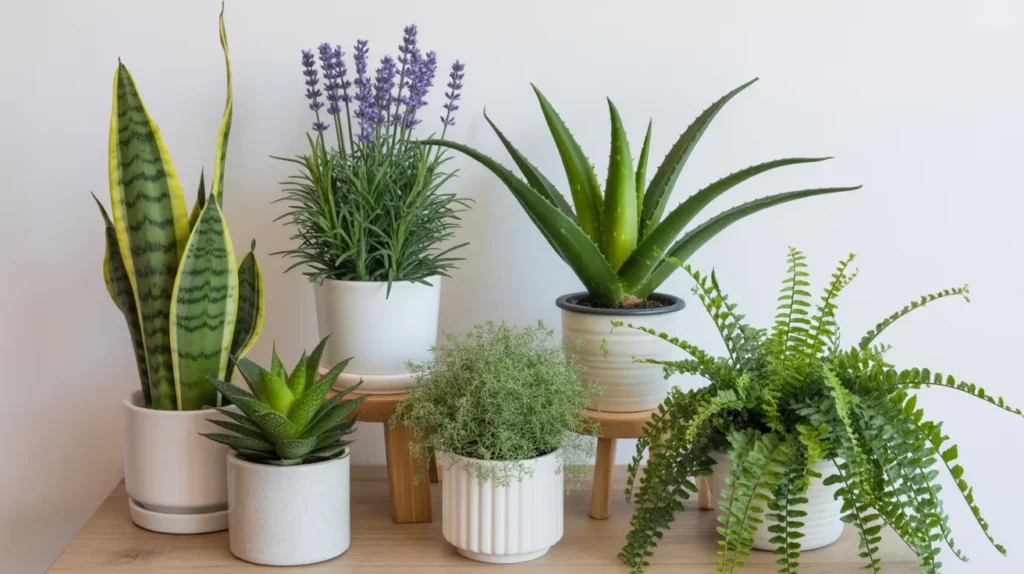
I’m going to be completely honest with you about each of these plants—the good, the not-so-good, and what you really need to know to keep them thriving.
1. Snake Plant (Sansevieria): The Overachiever for Air Purification
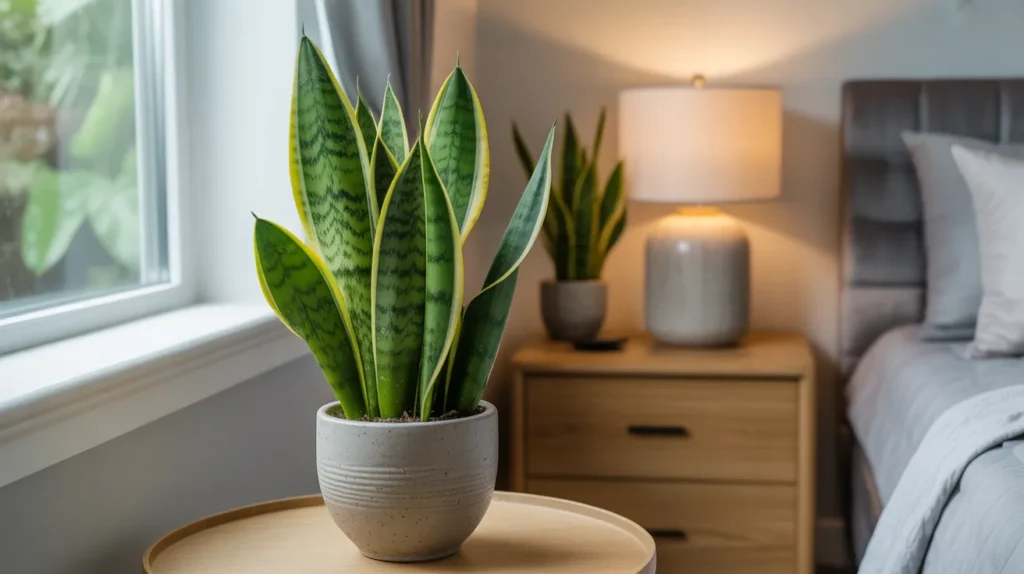
If you could only have one plant in your bedroom, make it this one. Seriously. The snake plant (also called mother-in-law’s tongue, which always makes me laugh) is basically the MVP of bedroom plants.
Why it’s amazing for your health:
This plant is one of the few that actually releases oxygen at night instead of carbon dioxide. That means while you’re sleeping, it’s actively improving the air you breathe. NASA’s study found that snake plants remove formaldehyde, trichloroethylene, xylene, toluene, and benzene from the air—basically a laundry list of nasty chemicals found in household products, fabrics, and building materials.
Plus, it’s incredibly effective at converting CO2 into oxygen, which means fresher, cleaner air all night long. People who sleep with snake plants in their rooms often report waking up feeling more refreshed and clear-headed.
What it looks like:
Tall, upright, sword-like leaves that grow straight up from the soil. The leaves are thick and leathery, usually dark green with light green or yellow variegated edges or horizontal bands. They can grow anywhere from 6 inches to 4 feet tall depending on the variety.
Care level: Beginner-friendly (honestly, almost impossible to kill)
Light needs: Low to bright indirect light (literally adapts to almost anything)
Water needs: Very low—water every 2-3 weeks, letting soil dry completely between waterings. Overwatering is the only way you’ll really hurt this plant.
Pet safety: Mildly toxic to cats and dogs if ingested (causes nausea and vomiting, but toxicity level is relatively low)
Best placement in your bedroom:
- Corner that doesn’t get much light
- On a dresser or nightstand
- Floor plant in a larger bedroom
- Near windows with filtered light
Pro tips:
- Don’t overwater—these plants actually do better with neglect
- Wipe leaves monthly with a damp cloth to maximize air purification
- If leaves start to wrinkle, it needs water; if they’re yellowing or mushy, you’re watering too much
- Consider getting 2-3 smaller snake plants instead of one large one to spread air purification around the room
Where to buy: Home Depot, Lowe’s, local nurseries, even IKEA usually has them
Approximate cost: $8-30 depending on size
2. Lavender (Lavandula): The Sleep-Enhancing Superstar
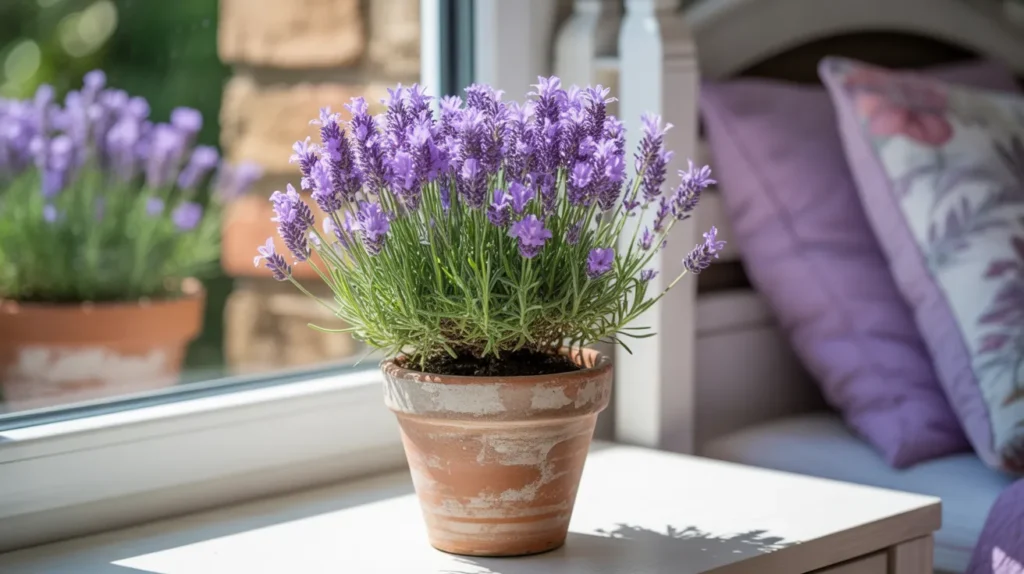
There’s a reason lavender shows up in every sleep spray, pillow mist, and bedtime tea on the market—it genuinely works. Having an actual lavender plant in your bedroom takes those benefits to the next level.
Why it’s amazing for your health:
The scent of lavender has been scientifically proven to lower heart rate, reduce blood pressure, and decrease stress levels. A study at the University of Southampton found that people who slept in rooms scented with lavender had 20% better sleep quality than those who didn’t.
Another study at Miami’s Miller School of Medicine showed that lavender helped babies sleep more deeply and cry less. If it works for babies (notoriously difficult sleepers), imagine what it can do for you!
Lavender is particularly helpful if you struggle with anxiety, insomnia, or just have trouble winding down at night. The calming aromatherapy effects start the moment you walk into your room.
What it looks like:
Slender stems topped with clusters of tiny purple flowers (though some varieties come in pink or white). The foliage is silvery-green and pleasantly fragrant even without flowers. The plant has a delicate, romantic appearance that adds serious charm to any bedroom.
Care level: Moderate (needs a bit more attention than some others on this list)
Light needs: Bright, direct sunlight—at least 6 hours daily (this is non-negotiable)
Water needs: Moderate—water when the top inch of soil is dry. Lavender hates soggy roots but also doesn’t love being bone dry for too long.
Pet safety: Mildly toxic to cats and dogs due to linalool content (can cause nausea and vomiting if ingested)
Best placement in your bedroom:
- South-facing windowsill (gets the most light)
- On a sunny nightstand
- Plant stand near a bright window
- Only works if you have genuinely sunny windows—this isn’t a low-light plant
Pro tips:
- If you don’t have a sunny bedroom, lavender might not be your best choice (consider essential oil diffuser instead)
- Trim spent flowers regularly to encourage new blooms
- Well-draining soil is essential—add perlite or sand to regular potting mix
- In winter, growth slows dramatically—this is normal
- Fresh or dried lavender sprigs on your pillow enhance the aromatherapy effect
Reality check: Lavender can be finicky indoors because most bedrooms don’t get enough direct light. If you have a shady bedroom, choose a different plant and use lavender essential oil instead.
Where to buy: Local nurseries, garden centers, farmers markets (where you can smell before buying)
Approximate cost: $12-25 for a potted plant
3. Spider Plant (Chlorophytum comosum): The Easy-Going Air Purifier
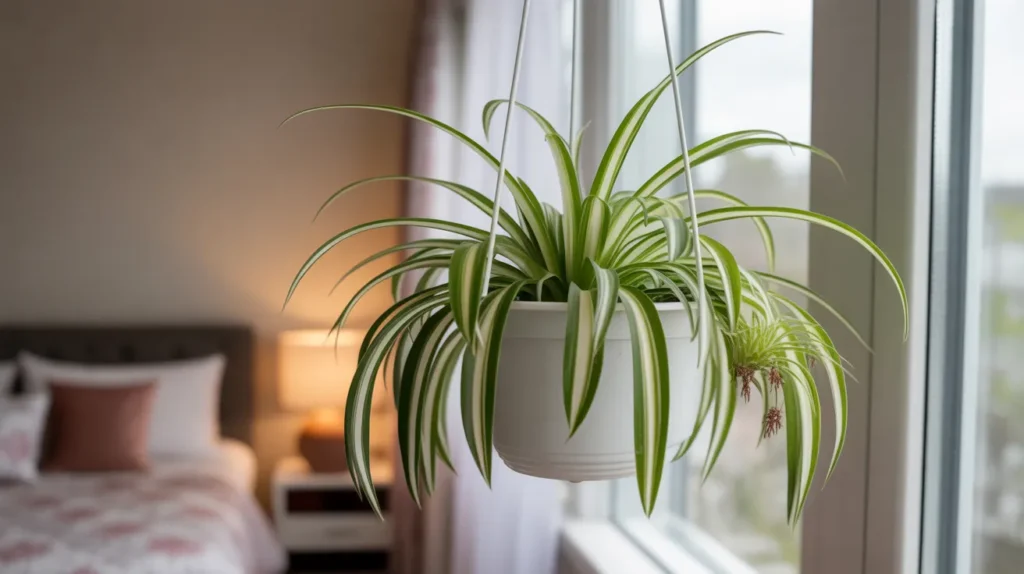
If you’re nervous about keeping plants alive, the spider plant is your new best friend. This cheerful, low-maintenance plant is perfect for beginners and ridiculously effective at cleaning your air.
Why it’s amazing for your health:
Spider plants are absolute champions at removing formaldehyde and carbon monoxide from indoor air. Since formaldehyde is found in tons of household items (fabrics, paper products, particleboard furniture, cleaning products), having a spider plant working overtime to absorb it is genuinely beneficial.
The plant can remove up to 90% of formaldehyde from the air in just 24 hours. It’s also great at tackling xylene (found in paints and adhesives) and carbon monoxide. Basically, it’s like having a living air filter that never needs replacing.
What it looks like:
Long, slender, arching leaves that grow from a central crown, creating a fountain-like appearance. Leaves are usually green with white or cream-colored stripes down the center or edges. Mature plants produce adorable little “babies” (spiderettes) that dangle from long stems—they look like tiny spiders, hence the name.
Care level: Beginner-friendly (seriously hard to kill)
Light needs: Medium to bright indirect light (tolerates low light but grows slower)
Water needs: Moderate—water when top inch of soil is dry. Pretty forgiving if you forget occasionally.
Pet safety: Non-toxic to cats and dogs! However, cats are weirdly attracted to spider plants (they contain compounds similar to catnip), so your cat might nibble on it. Won’t hurt them, but might damage your plant.
Best placement in your bedroom:
- Hanging planter near a window
- High shelf where leaves can cascade down
- Dresser or bookshelf
- Anywhere you need to fill vertical space
Pro tips:
- Brown leaf tips usually mean tap water chemicals (fluoride/chlorine)—use filtered or distilled water
- Those baby plants? You can propagate them super easily by putting them in water until they root
- Leaves turning pale? Needs more light
- If it’s getting leggy and sparse, it needs brighter light
- Trim brown tips with clean scissors for tidier appearance
Fun fact: Spider plants are one of the most popular houseplants worldwide because they’re practically indestructible and propagate like crazy—you’ll have babies to share with friends!
Where to buy: Everywhere—Home Depot, grocery stores, online, local nurseries
Approximate cost: $5-20 depending on size
4. Aloe Vera: The Multi-Tasking Medicine Cabinet
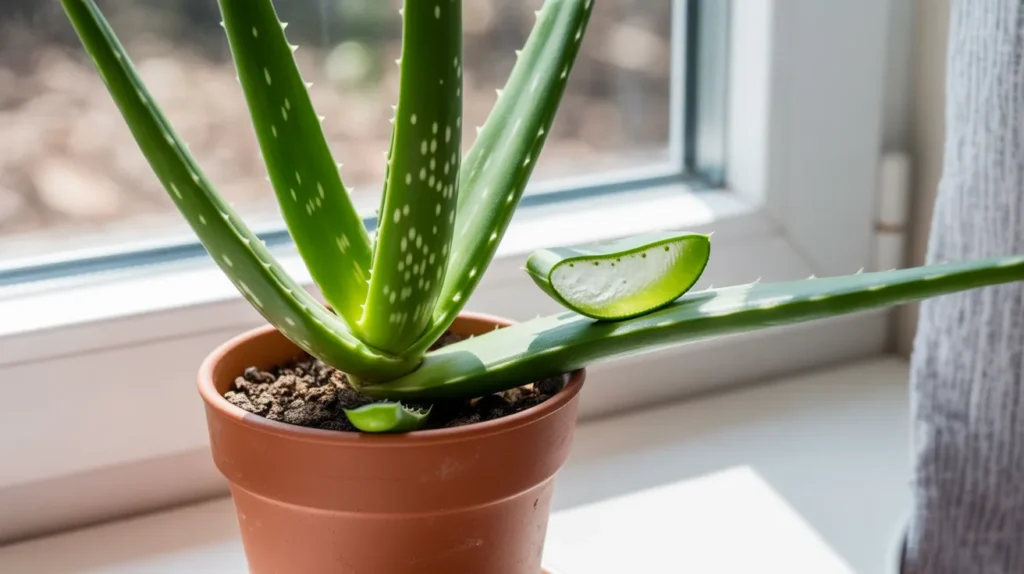
Aloe vera is like the Swiss Army knife of bedroom plants—it purifies air, produces oxygen at night, AND provides natural medicine right when you need it. Talk about overachieving.
Why it’s amazing for your health:
Like snake plants, aloe vera releases oxygen at night, making your sleep environment more oxygen-rich. It’s also excellent at removing formaldehyde and benzene from the air—common culprits from cleaning products and paints.
But here’s where aloe gets really cool: you can break off a leaf and use the gel inside for burns, sunburn, dry skin, minor cuts, acne, and even as a hair mask. It’s basically a natural first-aid kit sitting on your nightstand. The gel has anti-inflammatory and antibacterial properties that have been used medicinally for thousands of years.
Plus, if you suffer from dry skin (especially if you run AC or heat at night), having aloe in your room adds moisture to the air while giving you access to nature’s best skin soother.
What it looks like:
Thick, fleshy, pointed leaves that grow upward from the center in a rosette pattern. Leaves are gray-green with white spots or speckles and have small teeth along the edges. When you break a leaf, you’ll see the clear, gel-like substance inside.
Care level: Easy to moderate (pretty forgiving but has specific needs)
Light needs: Bright, indirect light (direct sun can turn leaves brown; too little light makes them weak and floppy)
Water needs: Low—water deeply but infrequently. Let soil dry out completely between waterings (every 2-3 weeks typically).
Pet safety: Toxic to cats and dogs if ingested (causes vomiting, diarrhea, lethargy)
Best placement in your bedroom:
- Bright windowsill with filtered light
- Nightstand near a window
- Shelf that gets good natural light
- NOT in dark corners or low-light areas
Pro tips:
- Overwatering is the #1 killer of aloe plants—when in doubt, wait another few days
- Well-draining soil is crucial (cactus/succulent mix works perfectly)
- If leaves are thin and curling inward, it needs water
- If leaves are brown or mushy, you’re overwatering
- To use the gel: cut a lower leaf close to the base, slice it open lengthwise, scoop out the gel
- Store cut gel in the fridge in an airtight container for up to a week
Reality check: Aloe vera needs decent light to thrive. If your bedroom is quite dark, this might struggle. Also, it’s not as fast-acting at air purification as some others, but the medicinal benefits make up for it.
Where to buy: Grocery stores, home improvement stores, nurseries, even Trader Joe’s usually has them
Approximate cost: $8-20 depending on size
5. English Ivy (Hedera helix): The Mold-Fighting Champion
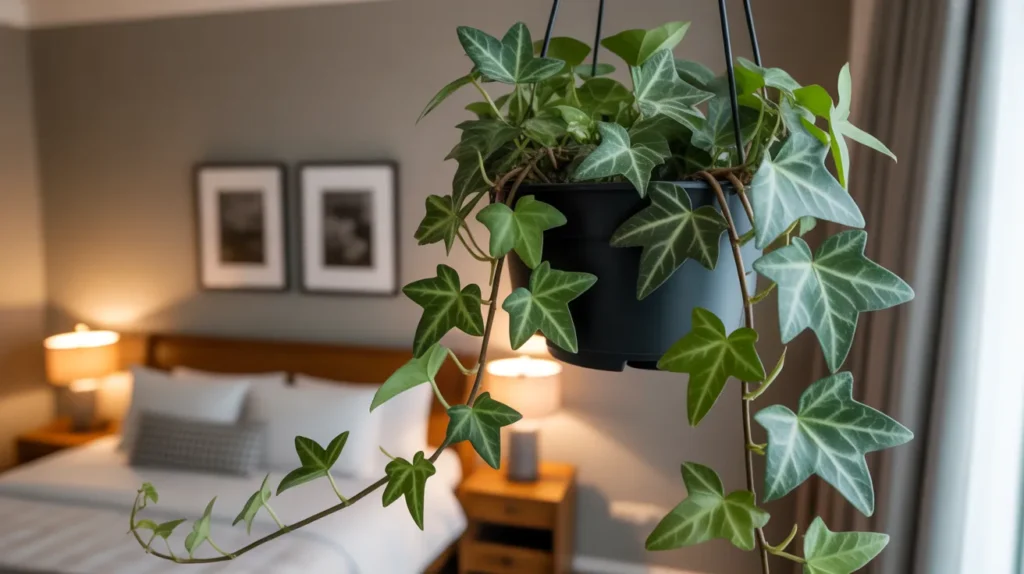
If you’ve ever dealt with allergies, asthma, or respiratory issues that seem worse at night, English ivy might be your solution. This elegant trailing plant is particularly amazing for people with breathing concerns.
Why it’s amazing for your health:
Here’s the showstopper: English ivy can reduce airborne mold particles by up to 94% in just 12 hours. NINETY-FOUR PERCENT. If you live in a humid climate, have a bathroom attached to your bedroom, or just struggle with mold issues, this plant is incredible.
It’s also been shown to help with asthma symptoms, reduce coughing, and ease breathing difficulties. The leaves contain compounds that naturally relax airways and reduce inflammation. Some studies have even shown it helps people with COPD and chronic bronchitis breathe easier.
Plus, it filters out formaldehyde, benzene, and other common indoor air pollutants.
What it looks like:
Glossy, dark green leaves with distinctive pointed lobes (usually 3-5 points per leaf). The leaves have prominent light-colored veins and grow on trailing or climbing vines. It has a classic, elegant appearance that works in any decor style.
Care level: Easy to moderate
Light needs: Medium indirect light (can tolerate some shade but grows slower; avoid direct sun)
Water needs: Moderate—keep soil consistently moist but not soggy
Pet safety: Toxic to cats and dogs if ingested (causes vomiting, diarrhea, abdominal pain, excessive salivation)
Best placement in your bedroom:
- Hanging planter where vines can trail down
- High shelf with room to grow
- On a plant stand
- Train it to climb a small trellis for visual interest
Pro tips:
- Mist occasionally for extra humidity (it appreciates this)
- Prefers cooler room temperatures (60-70°F)
- If leaves are turning brown, it’s either too dry or getting too much direct sun
- Pinch back growing tips to encourage bushier growth
- Wipe leaves monthly to remove dust and maximize air-purifying benefits
- Can be easily propagated from cuttings in water
Important note: While English ivy is amazing for air quality and mold reduction, it can be invasive outdoors in some regions. Keep it as a houseplant only and dispose of clippings responsibly.
Where to buy: Nurseries, home improvement stores, online plant retailers
Approximate cost: $10-25 depending on size
6. Boston Fern (Nephrolepis exaltata): The Natural Humidifier
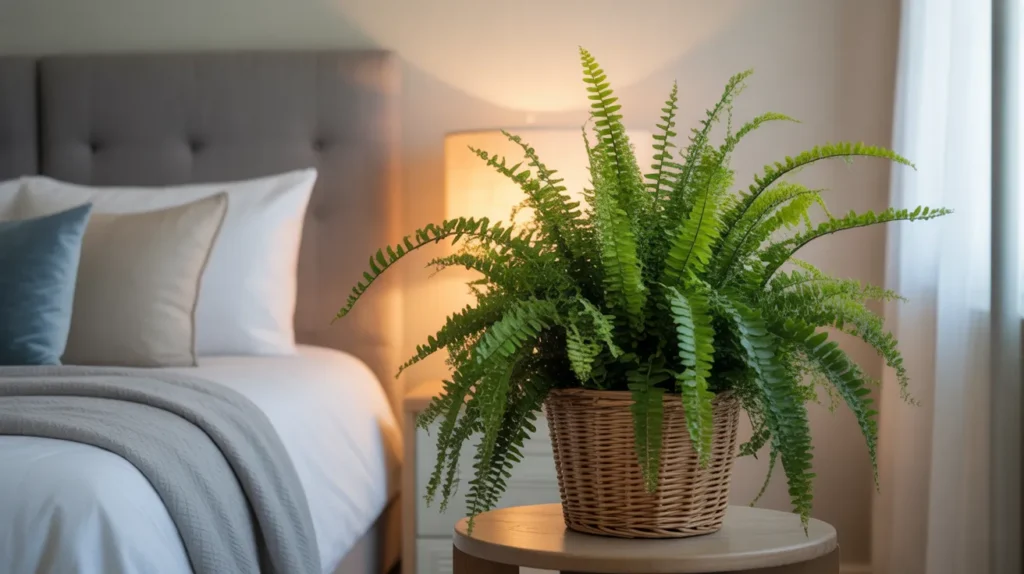
If you wake up with dry skin, a scratchy throat, or irritated sinuses, Boston fern might be the answer you’ve been looking for. This lush, gorgeous plant is essentially a natural humidifier that also happens to clean your air.
Why it’s amazing for your health:
Boston ferns are humidity powerhouses—they release significant amounts of moisture into the air through transpiration. This is incredible for:
- Dry skin and eczema relief
- Preventing dry throat and nose irritation
- Reducing static electricity
- Helping you breathe easier if you have respiratory issues
- Creating a more comfortable sleep environment if you run AC or heat
They also remove formaldehyde and xylene from the air, ranking among the most effective air-purifying plants in NASA’s study.
If you live in a dry climate or run climate control year-round, having 2-3 Boston ferns in your bedroom can noticeably improve air moisture levels without the weird mineral buildup that comes from electric humidifiers.
What it looks like:
Delicate, feathery fronds that arch gracefully outward, creating a lush, full appearance. Each frond is made up of dozens of small leaflets arranged along a central stem. The overall look is soft, romantic, and slightly vintage—perfect for creating that cozy bedroom vibe.
Care level: Moderate (needs consistent care but nothing too demanding)
Light needs: Bright, indirect light (no direct sun, which will scorch the fronds)
Water needs: High—soil should stay consistently moist (but not waterlogged)
Pet safety: Non-toxic to cats and dogs! One of the safest options if you have curious pets.
Best placement in your bedroom:
- Hanging planter near a window
- On a plant stand away from direct sun
- Bathroom attached to bedroom (loves the humidity)
- Anywhere with good air circulation
Pro tips:
- These plants NEED humidity—mist daily or place on a pebble tray with water
- Brown, crispy fronds mean too much sun or too little water/humidity
- Keep soil consistently moist but ensure good drainage (no standing water)
- Cooler temps are better (60-75°F)
- Trim brown fronds at the base to keep it looking fresh
- Fertilize monthly during growing season (spring and summer)
Reality check: Boston ferns require more maintenance than most plants on this list. If you travel frequently or tend to forget about plants, this might not be your best choice. But if you’re willing to give it attention, the health benefits are absolutely worth it.
Where to buy: Nurseries, home improvement stores, online retailers (buy in spring/summer for best selection)
Approximate cost: $15-35 depending on size
How Many Plants Do You Actually Need?
Here’s the honest truth: while one plant is better than no plants, you’ll get the most health benefits from having multiple plants in your bedroom.
For a small bedroom (100-150 sq ft): 2-4 plants For a medium bedroom (150-250 sq ft): 4-6 plants For a large bedroom (250+ sq ft): 6-10 plants
The key is variety. Mix plants that excel at different things:
- One or two oxygen-producers (snake plant, aloe)
- One air purifier (spider plant, English ivy)
- One humidifier (Boston fern)
- One aromatherapy plant (lavender)
This creates a comprehensive health-boosting environment that tackles multiple issues at once.
Styling Your Bedroom with Health-Boosting Plants
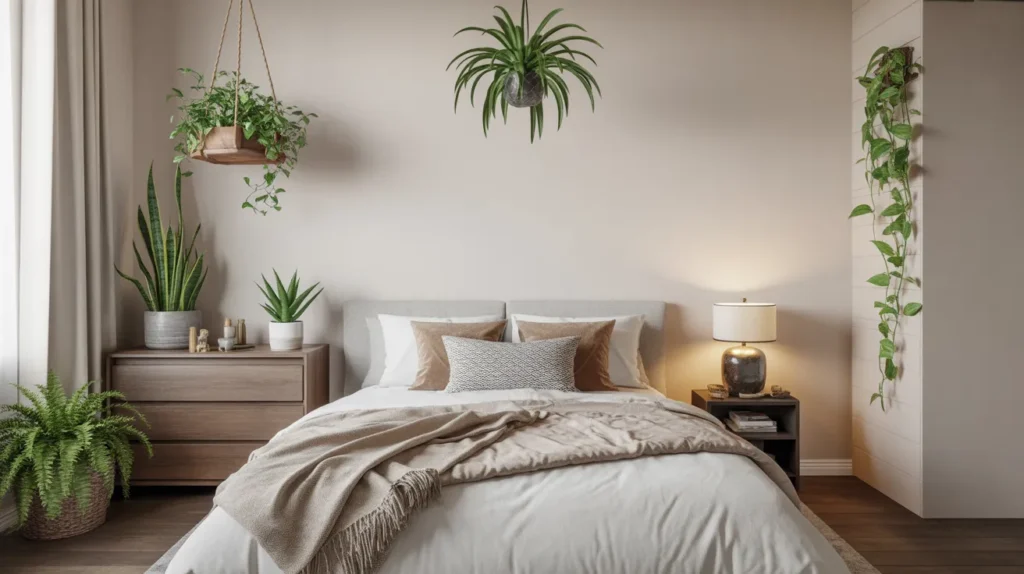
Let’s talk about making your plants look amazing while maximizing their health benefits. Because functional doesn’t have to mean boring!
Before you start styling, fix the basics by breaking these home clutter habits that quietly make your space look messy so your plants actually stand out.
Create Layers at Different Heights
High: Hanging planters with trailing plants (spider plant, Boston fern, English ivy) near windows or ceiling hooks
Medium: Nightstands, dressers, and shelves (aloe, lavender, small snake plants)
Low: Floor plants in corners (large snake plants, bigger Boston ferns in decorative baskets)
This creates visual interest while distributing air purification throughout your breathing zone.
Use Beautiful Containers That Fit Your Style
Minimalist: Simple terracotta pots or sleek ceramic planters in white, gray, or black
Boho: Woven baskets, macramé plant hangers, colorful ceramic pots with patterns
Rustic/Farmhouse: Galvanized metal planters, wooden crates, vintage-look containers
Modern: Geometric planters, matte black or white ceramics, stands with clean lines
Just make sure containers have drainage holes—or add rocks at the bottom if they don’t.
Consider Your Bedroom’s Light
Bright, sunny bedroom: Lavender, aloe vera, spider plants near windows; snake plants anywhere
Medium light bedroom: Spider plants, English ivy, Boston ferns; snake plants everywhere else
Low light bedroom: Stick with snake plants and spider plants (they’re the most forgiving)
Place your neediest plants in the brightest spots and your low-light lovers in shadier areas.
Create a Plant Corner or Shelf
Instead of scattering plants randomly, consider creating an intentional “plant zone” on a shelf, dresser top, or corner. This:
- Makes a design statement
- Concentrates the air-purifying benefits
- Makes watering easier (everything’s in one place)
- Adds a focal point to your room
Nightstand Styling
Your nightstand is prime real estate for a plant that helps you sleep:
- Small lavender plant for aromatherapy
- Aloe for overnight skin treatments
- Small snake plant for oxygen production
Pair with a lamp, book, and maybe a candle for that perfectly styled nightstand aesthetic.
Real Bedroom Plant Inspiration
Let me share some gorgeous real-world examples of bedrooms that nail the plant-health-style combination:
The Jungle Hideaway
Imagine a bedroom where plants cascade from ceiling hooks, fill corner shelves, and create this lush, enveloping atmosphere. Layers of Boston ferns, trailing spider plants, and strategically placed snake plants turn the space into a breathing oasis. The bed is piled with textured blankets and pillows in natural tones, and sunlight filters through all that greenery like you’re sleeping in a treehouse.
What makes it work: Multiple plants at different heights create depth and maximize air purification. The abundance of greenery is balanced with neutral, calm textiles so it feels restful, not overwhelming.
Key takeaway: Don’t be afraid to go big with plants if that’s your style. Just keep the rest of your decor relatively simple so the plants can shine.
The Minimalist Sanctuary
This bedroom keeps it simple: sage green walls create a calming backdrop, a rattan bed frame adds warmth and texture, and just a handful of carefully placed plants bring life without clutter. A large snake plant stands tall in one corner, a Boston fern sits on a clean-lined nightstand, and a small aloe perches on the windowsill. Wide wooden floors and simple white bedding complete the serene vibe.
What makes it work: Quality over quantity. Each plant has purpose and space to breathe. The muted color palette lets the greenery provide all the visual interest needed.
Key takeaway: You don’t need a jungle to get the health benefits. Even 3-4 well-chosen plants make a huge difference in a minimalist space.
The Sun-Soaked Retreat
Big windows flood this bedroom with natural light, and the plants are loving it. Lavender thrives on the sunny windowsill, spider plants hang at varying heights near the windows, and a large Boston fern sits in a woven basket on the floor. The bed is dressed in soft, inviting linens with plenty of pillows, and a colorful vintage rug adds warmth to the wooden floors. Everything feels fresh, alive, and deeply peaceful.
What makes it work: The plant selection matches the light conditions perfectly. The variety of textures (feathery ferns, spiky spider plants, soft lavender) keeps things interesting. Natural materials throughout (wood, woven baskets, linen) complement the organic feel of the plants.
Key takeaway: Work with your bedroom’s natural light, not against it. Choose plants that will thrive in your specific conditions.
Common Mistakes (And How to Avoid Them)
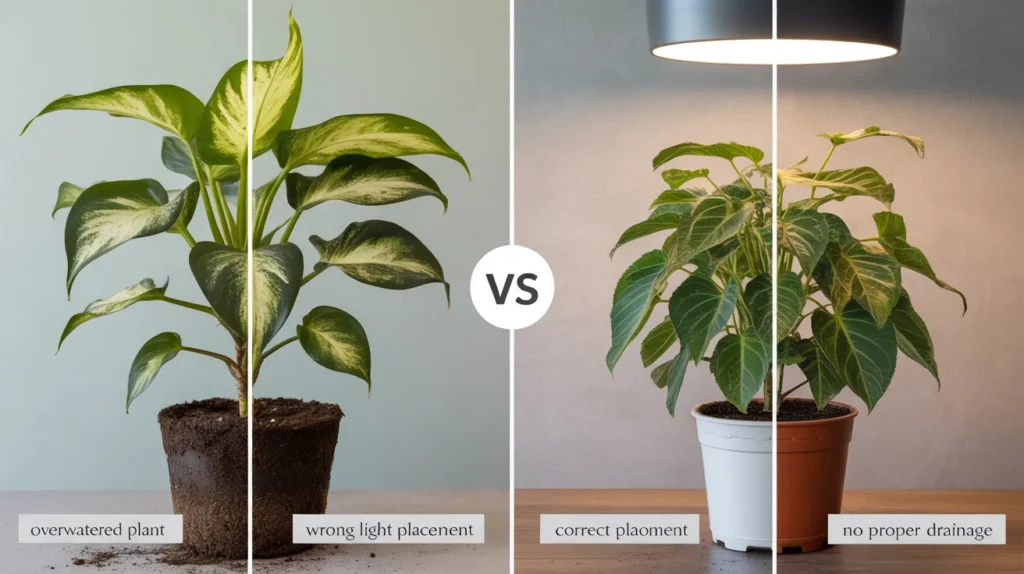
Let me save you from the mistakes I made when I first started keeping bedroom plants:
Overwatering
The problem: Most bedroom plants die from too much water, not too little. Overwatering leads to root rot, yellowing leaves, and eventually plant death.
The solution: Let the soil dry out between waterings (stick your finger in—if the top inch is dry, water; if it’s moist, wait). Better to underwater slightly than overwater. Most bedroom plants prefer to dry out a bit.
Putting the Wrong Plant in the Wrong Light
The problem: Putting a lavender plant (needs full sun) in a dark corner, or a snake plant (tolerates low light) in blazing direct sun.
The solution: Actually assess your bedroom’s light before buying plants. Morning light through east windows is different from afternoon sun through west windows. North windows get the least light. South windows get the most. Match your plants accordingly.
Ignoring Drainage
The problem: Planting in pots without drainage holes, leading to soggy soil and root rot.
The solution: Always use pots with drainage holes, or add a layer of rocks at the bottom if using decorative containers without holes. Place pots on saucers to catch excess water.
Forgetting About Humidity
The problem: Plants like Boston ferns and English ivy struggling in dry, climate-controlled bedrooms.
The solution: Mist regularly, use a pebble tray (fill a shallow tray with pebbles and water, place pot on top), or run a small humidifier. Group plants together—they create their own humid microclimate.
Not Cleaning Leaves
The problem: Dust accumulation on leaves reduces photosynthesis and air-purifying abilities.
The solution: Wipe leaves with a damp cloth monthly. This also lets you check for pests and admire your plants up close.
Buying Too Many Plants Too Fast
The problem: Getting overwhelmed and not being able to keep up with care, leading to dead plants and guilt.
The solution: Start with 2-3 easy plants (snake plant and spider plant are ideal). Once you’ve kept them alive for a few months, add more. Build your collection gradually.
Shopping Guide: Where to Find Healthy Bedroom Plants
Best Places to Buy:
Local nurseries and garden centers:
- Healthier plants than big box stores
- Staff who can answer questions
- Often have interesting varieties
- Support local businesses
Home Depot and Lowe’s:
- Affordable prices
- Good selection of common plants
- Convenient if you’re already shopping there
- Check carefully for pests and plant health
Online retailers:
- The Sill (great for beginners, includes care instructions)
- Bloomscape (larger plants, delivered to your door)
- Etsy (unique varieties, support small businesses)
- Amazon (convenient but quality varies—read reviews)
Grocery stores (Trader Joe’s, Whole Foods):
- Surprisingly good plant selection
- Very affordable
- Decent quality for the price
- Limited variety but good basics
Local plant swaps and Facebook groups:
- Free or very cheap plants
- Great way to get cuttings and babies
- Meet fellow plant people
- Sustainable option
What to Look For When Buying:
- Vibrant, uniformly colored leaves (no yellowing or brown spots)
- Firm stems and healthy growth
- Check undersides of leaves for pests
- Moist (not soggy) soil
- New growth emerging from the center
- No musty smell (indicates root rot)
Budget Tips:
- Start with small plants and let them grow (much cheaper)
- Buy from grocery stores instead of specialty shops
- Propagate plants from friends’ collections
- Look for end-of-season sales at nurseries
- Join plant swap groups for free plants
- Use DIY containers (thrifted pots, baskets, etc.)
Beginner’s Action Plan: Getting Started Tonight
Feeling ready to transform your bedroom but not sure where to start? Here’s your simple action plan:
Tonight:
- Assess your bedroom’s light (which direction do windows face? How much sun do you actually get?)
- Decide on budget ($30-50 is plenty to start)
- Measure spots where you might place plants
This Week:
- Buy 2-3 plants based on your light conditions
- Sunny bedroom: snake plant + lavender + spider plant
- Medium light: snake plant + spider plant + aloe
- Low light: snake plant + spider plant + another snake plant
- Get pots with drainage if plants don’t come with them
- Plant and water appropriately
First Month:
- Establish a watering schedule (mark your calendar)
- Observe how plants respond to their locations
- Adjust placement if needed
- Wipe leaves weekly
After 3 Months:
- If plants are thriving, add 1-2 more
- Try a slightly more challenging plant (English ivy or Boston fern)
- Start noticing the air quality and sleep improvements
Final Thoughts: Your Bedroom Sanctuary Awaits
Here’s what I wish someone had told me when I first started exploring bedroom plants that improve air health and wellness: it’s not about creating a perfect Instagram-worthy jungle or having the greenest thumb in the neighborhood. It’s about making small changes that genuinely improve your health, your sleep, and how you feel in your own space.
Start simple. Maybe it’s just one snake plant on your nightstand. But that one plant is quietly purifying your air, releasing oxygen while you sleep, and bringing a little piece of nature into your sanctuary. And honestly? That’s pretty incredible.
Give yourself permission to learn as you go. You might kill a plant or two (I definitely have). But you’ll also discover which plants thrive in your specific bedroom, which ones make you feel most relaxed, and how amazing it feels to wake up in a space filled with living, breathing greenery.
Your bedroom should be your refuge—the place where you recharge, rest, and take care of yourself. Adding plants that actively improve your health while making the space more beautiful? That’s not just good design. That’s self-care with leaves.
So go ahead. Pick up that first plant. Place it somewhere you’ll see it every day. Water it when it needs it. And watch as your bedroom slowly transforms into the peaceful, healthy sanctuary you deserve.
Sweet dreams and happy planting! 🌿
Ready for more plant wisdom? Check out these guides:
- The Best Low-Light Plants for Dark Bedrooms
- How to Keep Houseplants Alive When You Travel
- Pet-Safe Plants That Purify Air
- Creating a Bedroom Plant Care Routine That Actually Works