15 Rose Inspired Colors That Will Make You Fall in Love With Pink Hair All Over Again
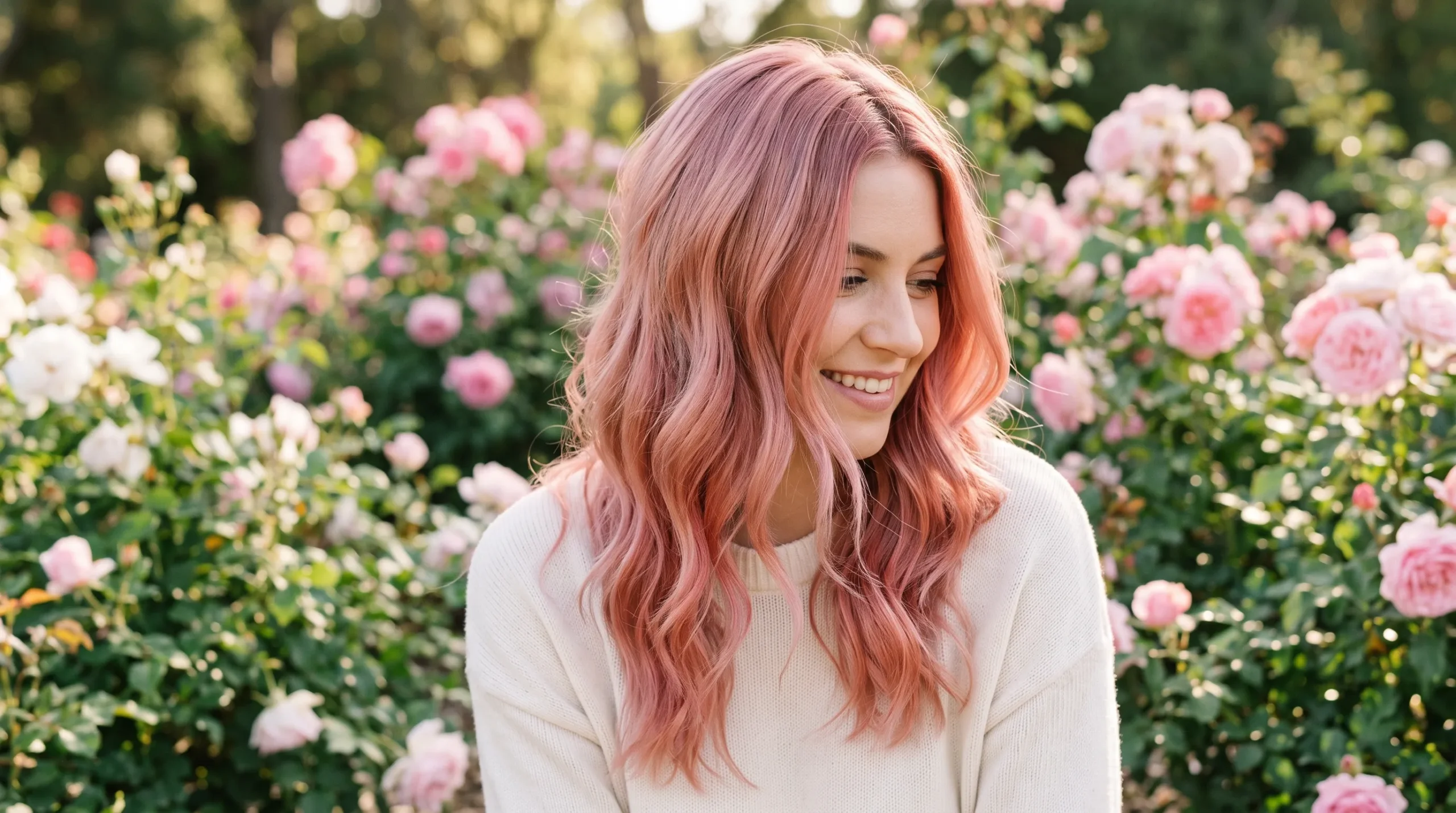
I have colored more heads of hair than I can count, and if there is one family of shades that never actually goes out of style, it is rose. I know trends come and go, but rose tones keep sneaking back into my chair every single season, just with a slightly different name and a slightly different cut attached to it. Rose isn’t one color, it’s a whole mood board, everything from a whisper-soft blush to a deep wine-stained plum, and that’s exactly why I love recommending it to clients who want something romantic without going full-on neon pink. It’s also one of the most versatile families I work with behind the chair, because a rose tone can be dialed up for someone who wants to turn heads, or dialed all the way down for someone who just wants a hint of warmth in their natural color. Below, I’m walking you through fifteen of my favorite rose inspired looks, the cuts I like to pair them with, and who each one tends to flatter. Grab your color swatch book, because you’re about to find your next appointment.
For a soft, dimensional rose look, explore these rose gold balayage ideas for dark hair.
15 Rose Inspired Colors to Bring Into Your Next Salon Visit
1. Rose Gold Wavy Lob
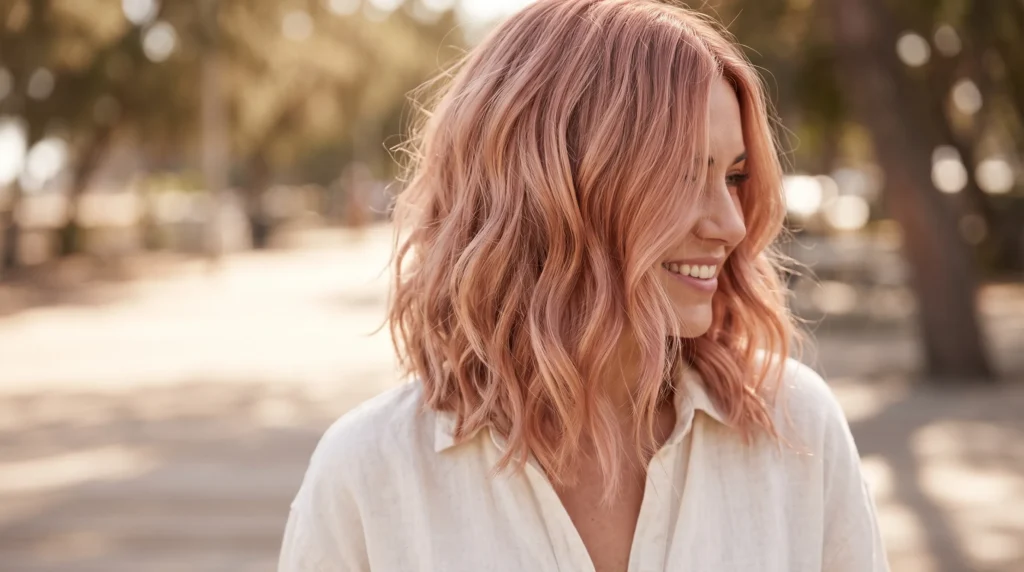
Rose gold is the shade I get asked for the most, hands down. It’s that warm, sun-kissed blend of pink and gold that reads expensive without trying too hard. I almost always pair it with a shoulder-length wavy lob because the waves catch the light and make the color shift subtly as you move. This is the cut and color combo I recommend to clients heading into beach season or anyone who wants a low-key glam everyday look. It grows out gracefully, too, which matters more to most of my clients than they expect going in. I usually build rose gold as a gloss over a pre-lightened base, which is part of why it looks so multidimensional in natural light rather than flat and one-note.
2. Blush Pink Pixie Cut

If you want maximum impact with minimal fuss, I’ll steer you toward a blush pink pixie. Blush is the softest, most pastel member of the rose family, and on a pixie it reads playful without being childish. I love this combination because the short cut keeps the face open while the pastel tone softens any harsh angles. It’s a bold statement that still feels wearable to the office, which is a balance I don’t get to hit very often with pastel color work. Because there’s so little length to maintain, touch-ups are quick, and the pastel base tends to fade into an equally pretty, softer shade rather than looking patchy.
3. Champagne Rose Layered Bob
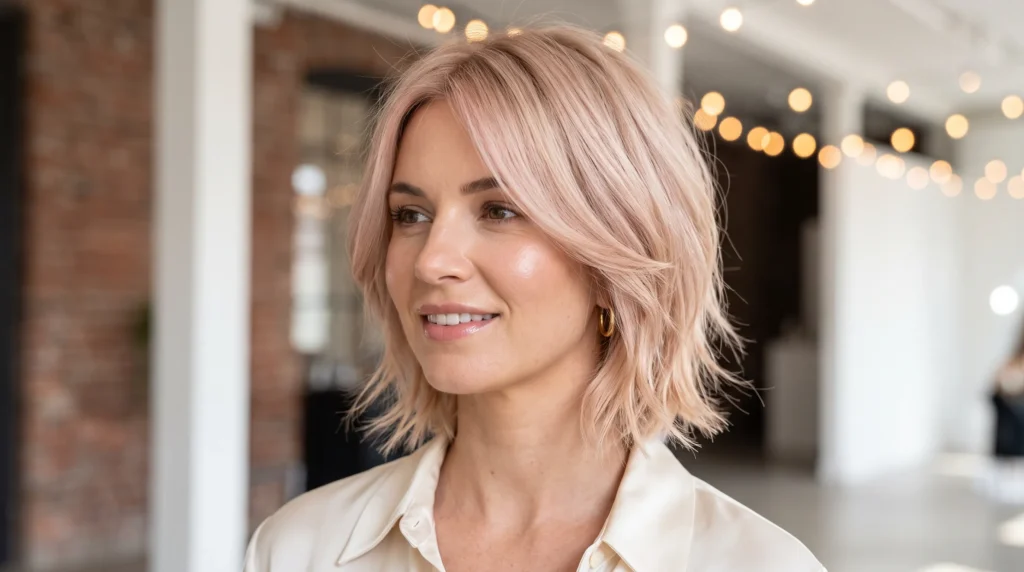
Champagne rose is my go-to when a client says they want “pink, but make it subtle.” It’s a pale, golden-pink hue that feels elegant rather than loud, and I like to cut it into a layered bob so the color has room to move and catch light at different lengths. This one is a favorite for clients heading into a wedding season or a holiday event where they want to look polished without a dramatic color change. It’s also incredibly forgiving on regrowth, since the tone is so close to a warm blonde base to begin with.
4. Dusty Rose Curtain Bangs
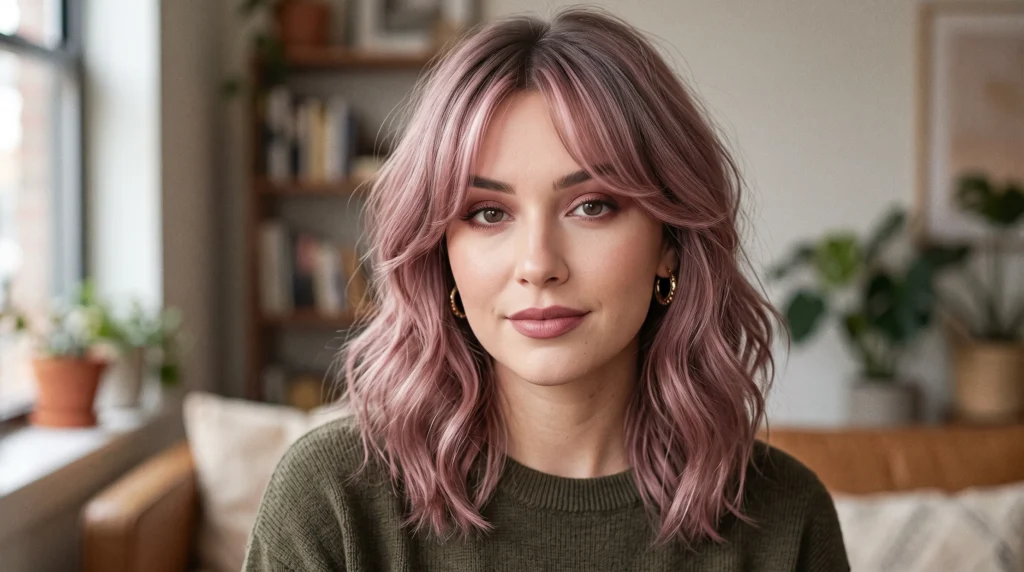
Dusty rose has a gray undertone running through the pink, which gives it this moody, vintage feel I’m obsessed with right now. I always pair it with curtain bangs because the soft fringe frames the face beautifully and adds a bit of old-Hollywood romance to the whole look. This shade works on medium to long hair and gives you depth and dimension instead of one flat wash of color, which is what separates a good dusty rose from a great one. I like to weave in a couple of lighter money-piece strands around the bangs so the muted tone still has some shine and contrast.
5. Baby Pink Blunt Cut Bob
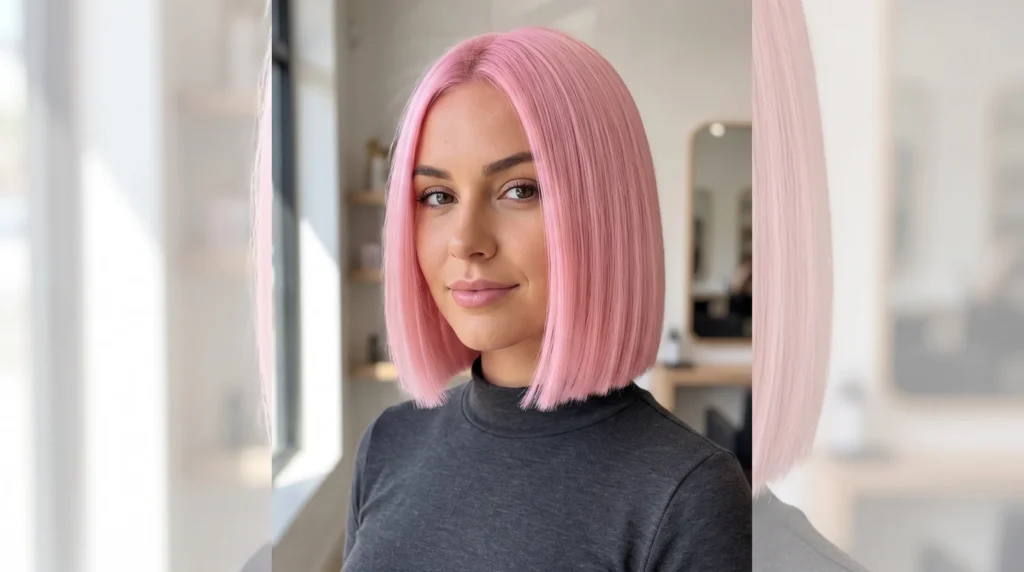
Baby pink is sweeter and lighter than blush, and I love it on a crisp, blunt-cut bob. The clean line of the cut keeps the color from feeling too saccharine, and together they strike this bold-yet-structured balance that I think is really underrated. I recommend this combo to clients who want a fun pop of color but still want their hair to look intentional and put together, not undone. The sharp blunt ends also make the color look denser and more saturated than the same shade would on choppy layers.
6. Hot Rose Pink Shag Cut
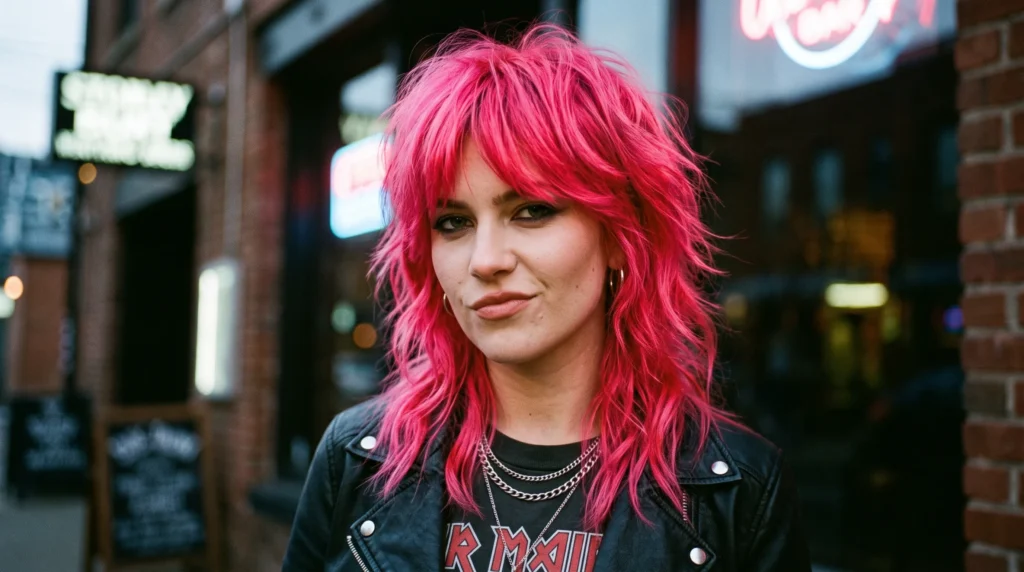
For my clients who want to make an entrance, hot rose pink is the answer. It’s an electric, saturated pink with serious attitude, and I only ever put it on a shag cut because the choppy layers give the color texture and movement instead of letting it sit flat. This is a rocker-chic combination through and through, and it’s for anyone who genuinely likes being noticed when they walk into a room. Because the pigment is so vivid, I always warn clients this one needs the most frequent refresh appointments of anything on this list.
7. Fuchsia Rose Asymmetrical Bob
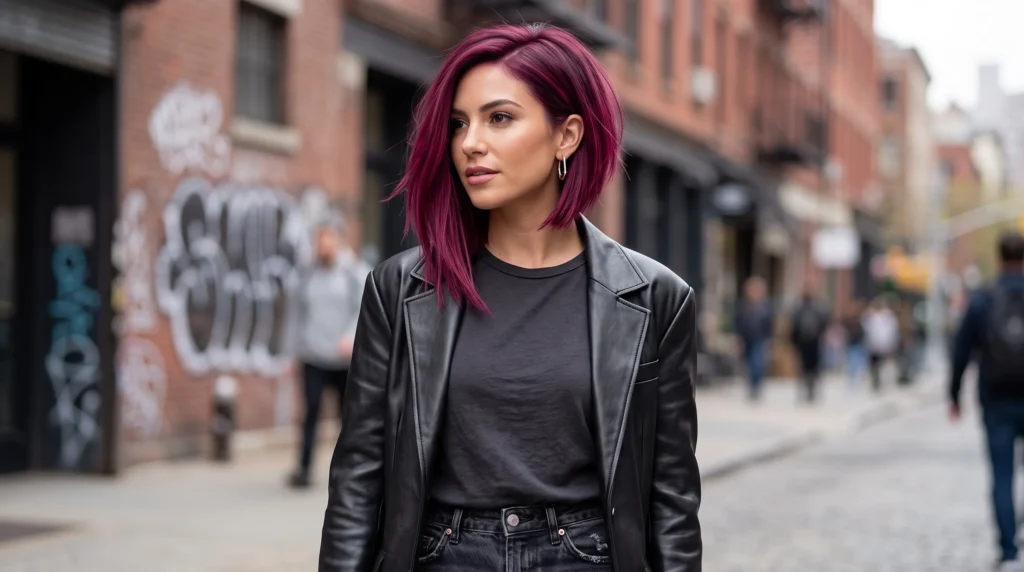
Fuchsia rose leans deeper and slightly purple compared to the brighter pinks, and I think it’s one of the most dramatic shades in this whole roundup. Cut into an asymmetrical bob, with one side noticeably longer than the other, it becomes a genuinely edgy, fashion-forward statement. I only recommend this pairing to clients who already know they want their hair to say something about them, because subtle is not the goal here. The uneven length also gives the color a bit of visual movement that a symmetrical cut just doesn’t offer.
8. Berry Rose Wolf Cut
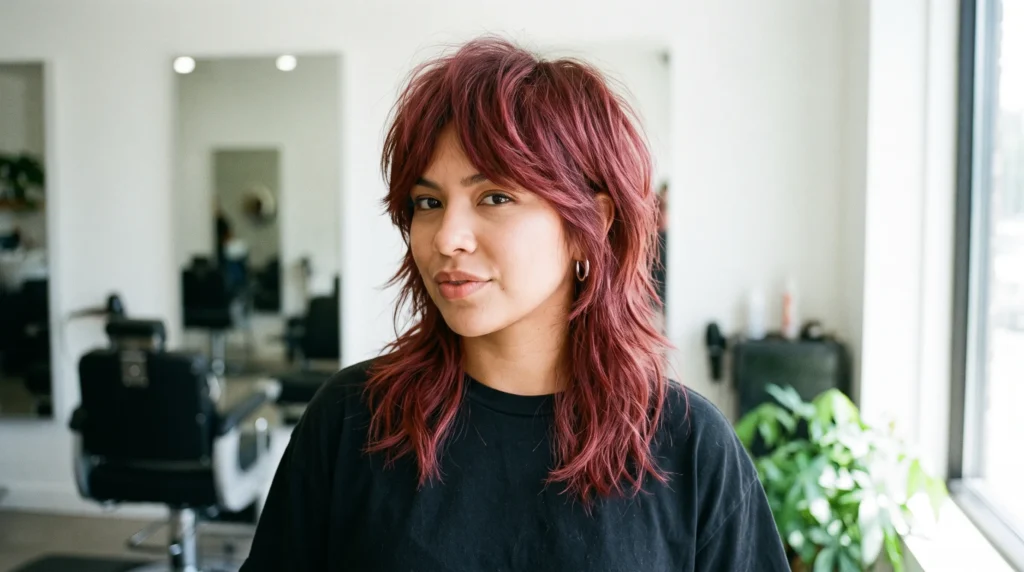
Berry rose has a rich, red-leaning undertone that I find incredibly flattering on almost every skin tone I work with. I love pairing it with a wolf cut, which is essentially a shaggy, heavily layered style with tons of volume built in. The choppy texture of the wolf cut plays beautifully off the depth of berry rose, giving you a look that’s bold but still has an easy, playful energy to it. This is one of my favorite recommendations for clients who want a color with some richness but aren’t ready to commit to something as saturated as hot pink.
9. Undercut Magenta Rose Pixie
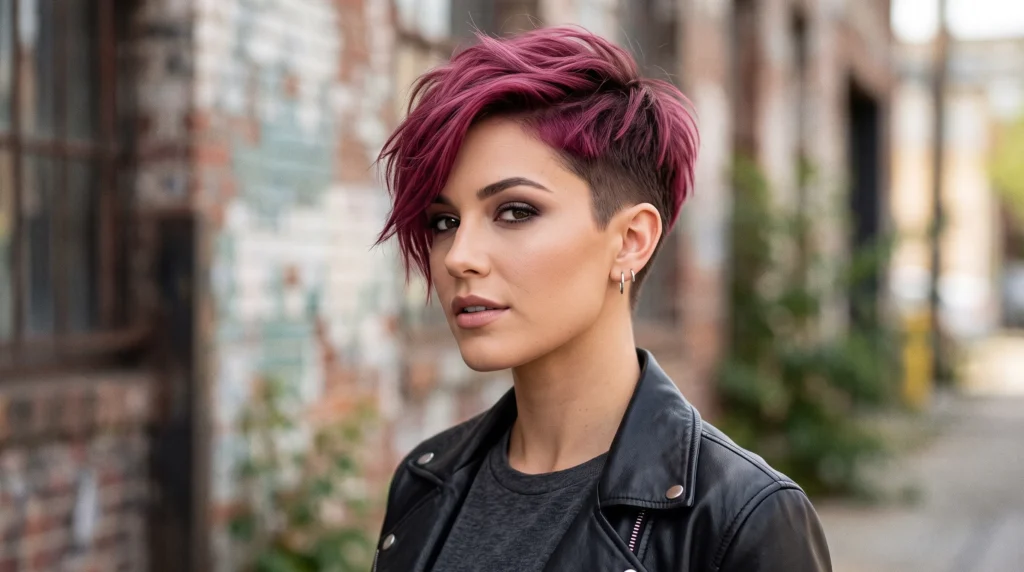
When a client wants low maintenance and high drama at the same time, I bring up the undercut magenta rose pixie. Magenta rose is bright and unapologetic, and shaving the sides or the back gives the whole style an edgy, high-fashion finish. It’s genuinely one of the easiest color and cut combinations to maintain, since there’s simply less hair to fuss over, but it never reads as low-effort. I like adding a slightly deeper root shadow underneath the magenta so the color has somewhere to grow into as it fades.
10. Coral Rose Feathered Layers
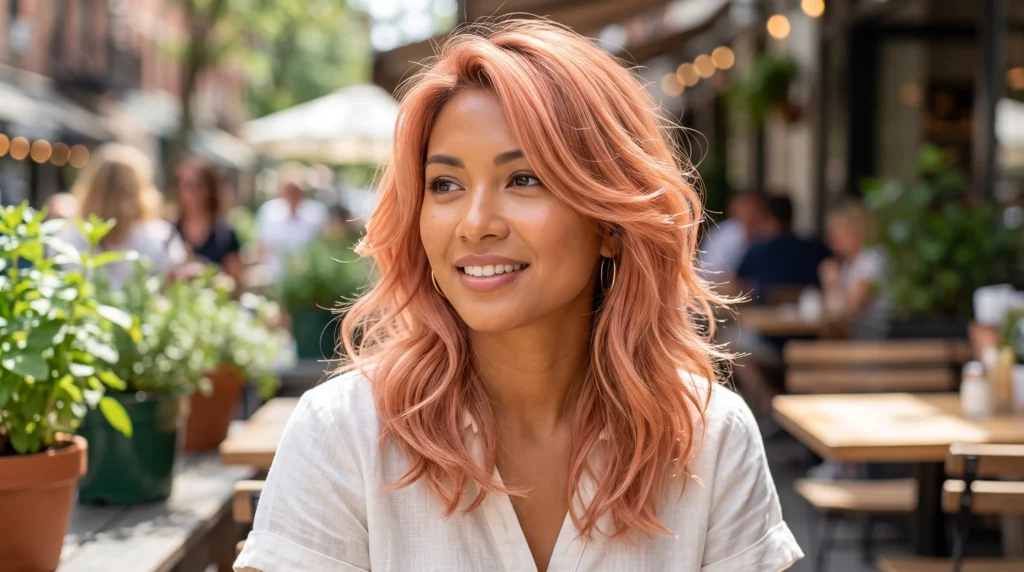
Coral rose brings warmth into the rose family with its peachy-pink base, and I think it’s one of the most wearable shades on this list for daily life. Feathered layers give it lightness and movement, which enhances that warm glow instead of weighing it down. I recommend this one constantly for clients heading into summer, since it reads effortless whether you’re at brunch or at the beach. It also happens to be one of the most flattering rose shades for warmer, golden skin undertones.
11. Long Wavy Hair Mauve Rose
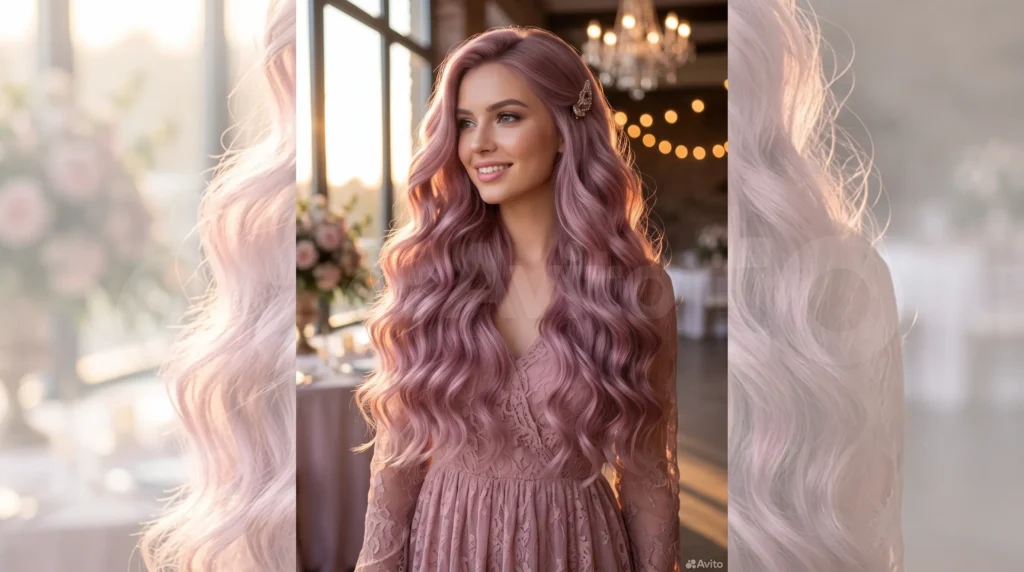
Mauve rose sits right between pink and lavender, and it’s one of the most romantic, vintage-leaning shades I get to create. On long, flowing waves, it takes on this dreamy quality that I love recommending for weddings, formal events, or honestly any night you just want to feel beautiful. The wavy texture adds volume and movement, and mauve rose gives the whole look a soft, elegant finish. I always tell clients this shade photographs beautifully under warm, golden lighting, which is part of why it’s such a popular request for special occasions.
12. Rosewood Textured Bob
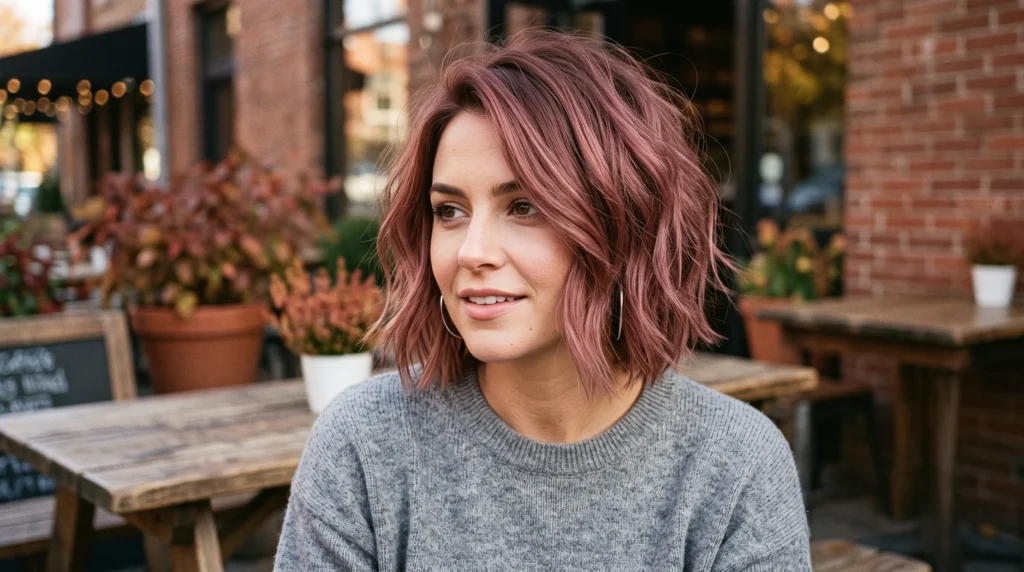
Rosewood is a deep, earthy pink with a noticeable brown undertone, and I think it’s one of the most underrated shades in the rose family. On a textured bob, it reads modern and a little bit playful, while still being genuinely low maintenance since the brown base grows out softly. This is the shade I bring up when a client wants color depth without committing to something high upkeep. It’s also a great transitional color if someone wants to test the rose family before going lighter or brighter.
13. Burgundy Rose Layering
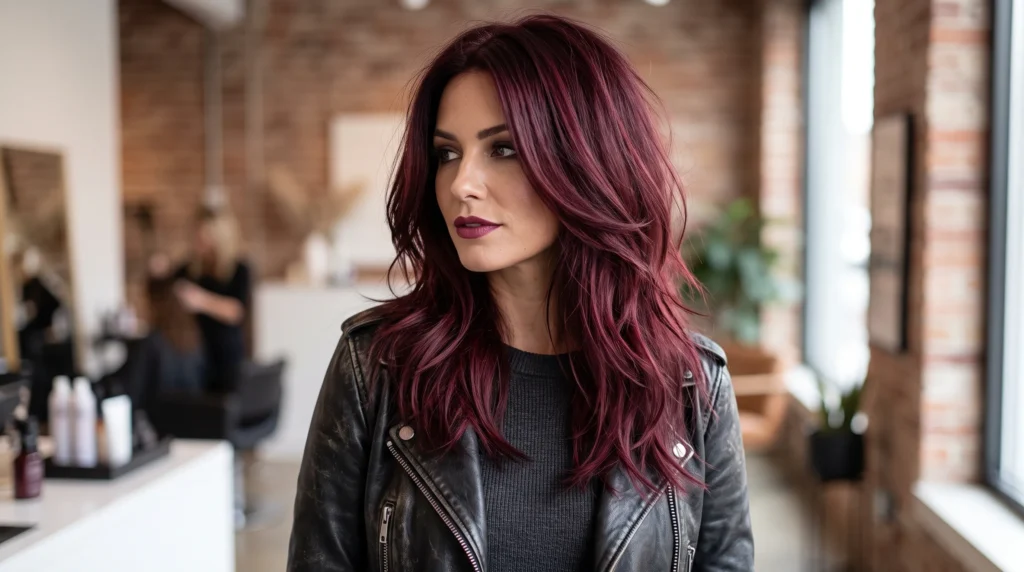
Burgundy rose is where things get intense, in the best way. It’s a dark, saturated rose with red undertones that feels rich and a little punky, and I love it cut into long layers around the shoulders for movement and drama. This is the shade I recommend to clients who want a mature, sophisticated take on rose color without cutting their length short. Because the base is so dark, it also holds its vibrancy noticeably longer than the lighter pastel shades on this list.
14. Plum Rose Choppy Pixie
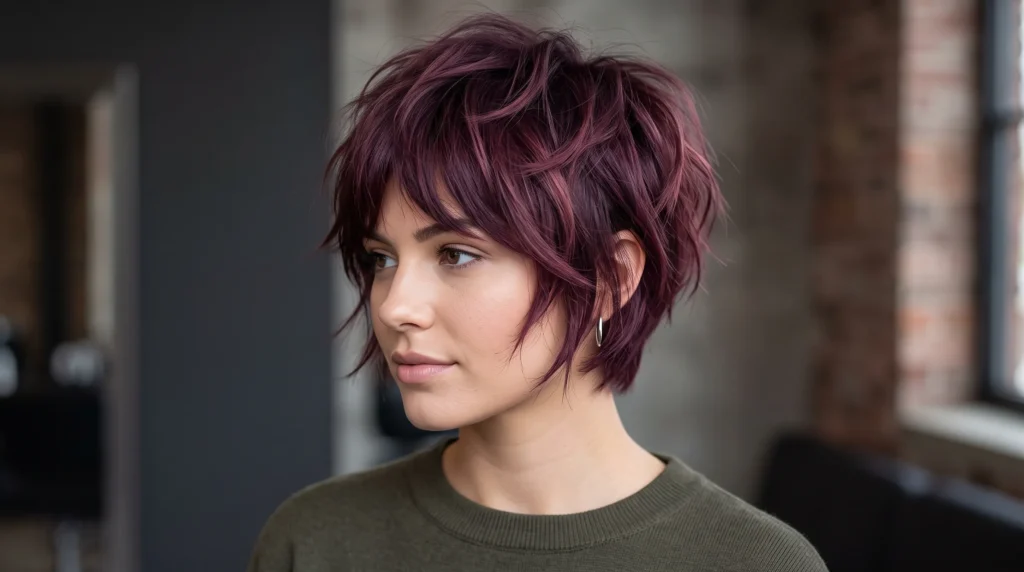
Plum rose leans into deep purple undertones, and it has this mysterious, moody quality that I think pairs perfectly with a choppy pixie cut. The texture of the pixie keeps things full and edgy, while the plum rose tone gives the whole style a classy, almost dangerous edge. It’s a combination for clients who want their hair to feel just as intentional and layered as the rest of their personal style. I like to keep the color slightly deeper at the root so it frames the face without overwhelming shorter layers.
15. Ruby Rose Sleek Long Hair
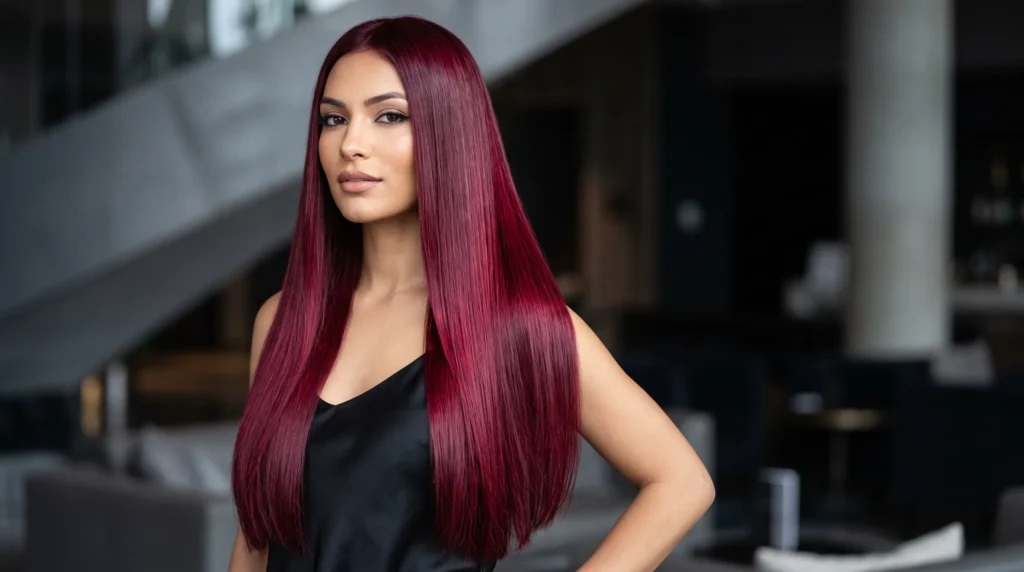
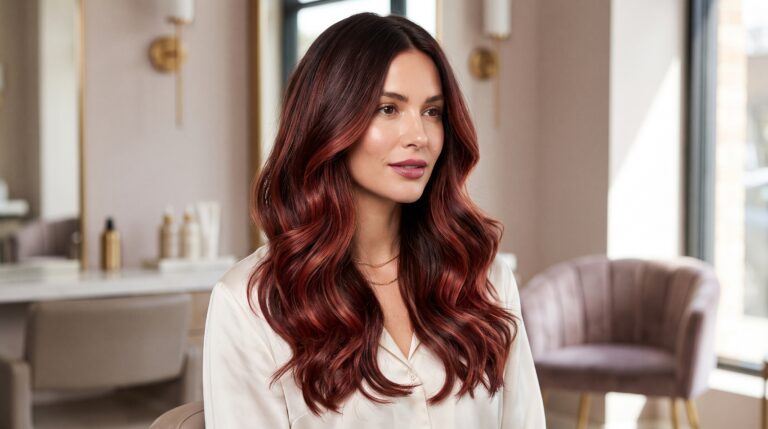
I like to close out this list with ruby rose, a deep, rich red-pink that I think looks absolutely stunning on long hair. Worn sleek and straight, it creates real drama since the polished finish lets the richness of the color shine through completely. This is the shade I recommend when a client wants glamour above everything else, no waves, no layers competing for attention, just pure color payoff. A glossy, frizz-free finish is essential here, since any dullness will flatten how rich the color reads.
How I Help Clients Choose the Right Rose Shade
With fifteen shades on this list, I know it can feel overwhelming to pick just one, so here’s how I actually narrow it down in the chair. First, I look at undertone. Warmer skin tones tend to glow in rose gold, coral rose, and champagne rose, while cooler undertones usually look best in mauve rose, fuchsia rose, or dusty rose. Second, I think about maintenance realistically, not aspirationally. If a client travels constantly or washes their hair every day, I’ll steer them toward a deeper, more forgiving shade like rosewood or burgundy rose instead of a pastel that needs a color-depositing conditioner in weekly rotation. Third, I always factor in the starting hair color, since lifting dark brunette or black hair to a pale enough base for something like baby pink or blush pink is a multi-session process, not a single appointment. Being upfront about that timeline from the start saves a lot of disappointment later.
A Quick Note on Keeping Rose Tones Vibrant
Here’s the thing I tell every single client who sits in my chair for a rose-family color: these shades fade faster than almost any other tone I work with. Pink and rose pigments are notoriously delicate, so if you skip the aftercare, you’ll be looking at a dull, washed-out version of your color within a few weeks. I always send clients home with a color-safe shampoo and conditioner, and I tell them to use lukewarm water instead of hot, since heat is one of the fastest ways to strip a rose tone. I also recommend spacing out wash days and reaching for a color-depositing mask every couple of weeks to refresh the tone between salon visits. For anyone who wants a deeper dive into keeping these colors looking salon-fresh, Wella Professionals has a solid guide on building and maintaining rose gold tones that I point my own clients toward.
Finding Your Rose
Honestly, the best part of my job is watching a client’s face when they see a rose tone in the mirror for the first time. Whether you’re drawn to something as soft as champagne rose or as bold as hot rose pink, there’s a shade and a cut combination in this list that will work with your features, your lifestyle, and how much maintenance you’re actually willing to put in. My advice, as always, is to bring a photo to your consultation, be honest with your colorist about your hair’s history, and trust the process. Rose tones reward patience, and once you find your shade, I promise you’ll understand why I keep recommending this color family to anyone who will listen.