Feed In Braid Hairstyles: 20 Gorgeous Protective Styles You’ll Want to Save
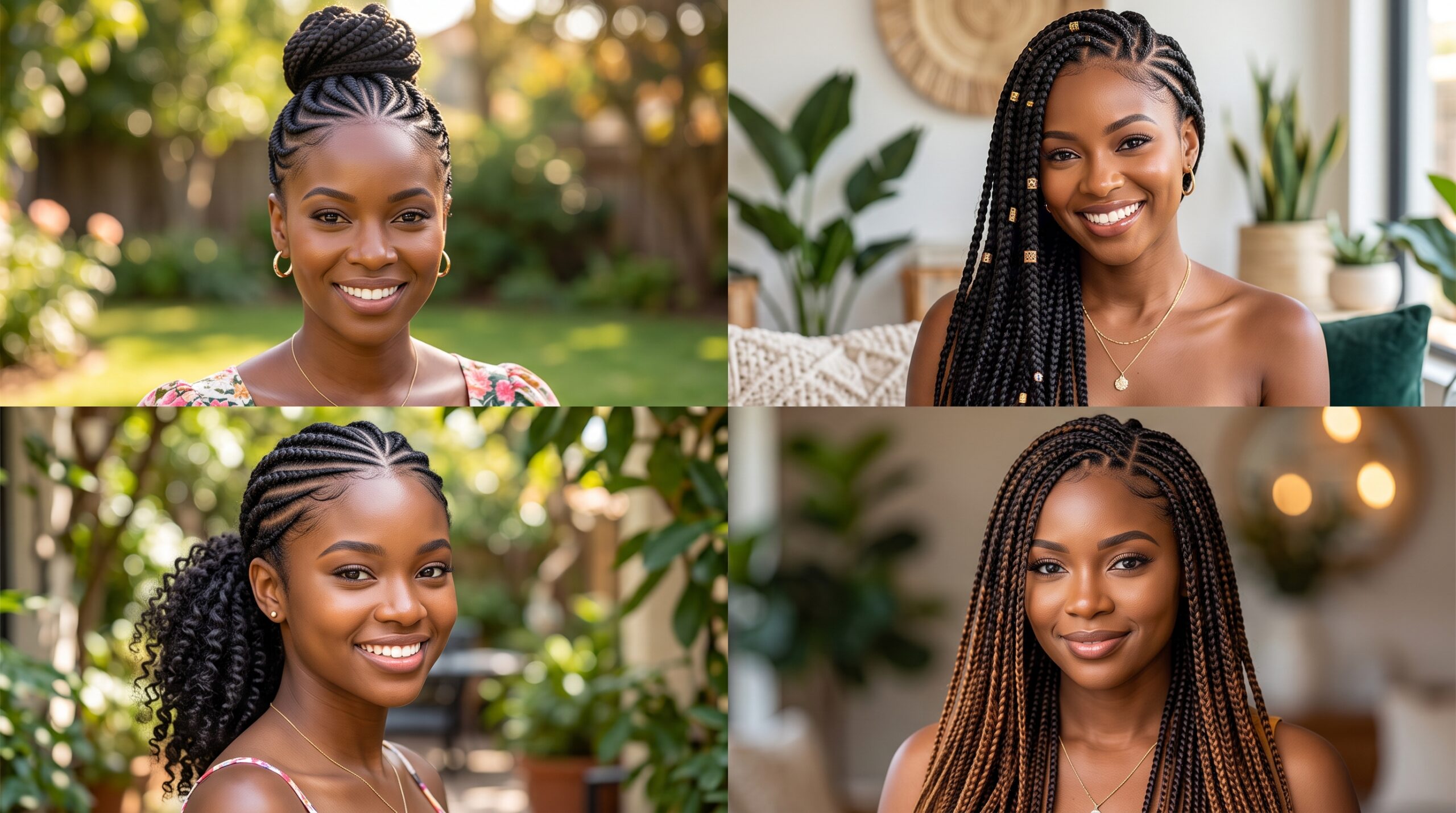
There’s a reason a fresh set of braids never really goes out of fashion. Maybe it’s the crisp parts, maybe it’s the joy of rolling out of bed with your hair already done — either way, if you’ve been hunting for new feed in braid hairstyles, trying to figure out which pattern suits your face shape, or torn between a sleek cornrow set and a romantic updo, you’ve landed in the right spot.
I’m the kind of person who bookmarks braid inspiration weeks before my actual salon appointment. Some looks are built for hectic weekdays, others are clearly meant to be the star of a vacation photo dump or a big event. Below, I’m walking through a mix of feed in braid hairstyles that feel current, easy to live with, and far more flexible than people expect — plus the small maintenance habits that keep each one looking sharp for weeks.
Looking for a protective style that never goes out of fashion? These Feed In Braid Hairstyles are a must-see.
Feed In Braid Hairstyles That Deserve a Spot on Your Inspiration Board
Every style below falls under the same umbrella — feed in braid hairstyles — but each one takes the technique somewhere a little different, from razor-sharp cornrows to soft curled ponytails and sculpted buns. Think of this as your shortlist for the next time you’re sitting in the chair.
Classic Straight-Back Braids with Silvery Ends
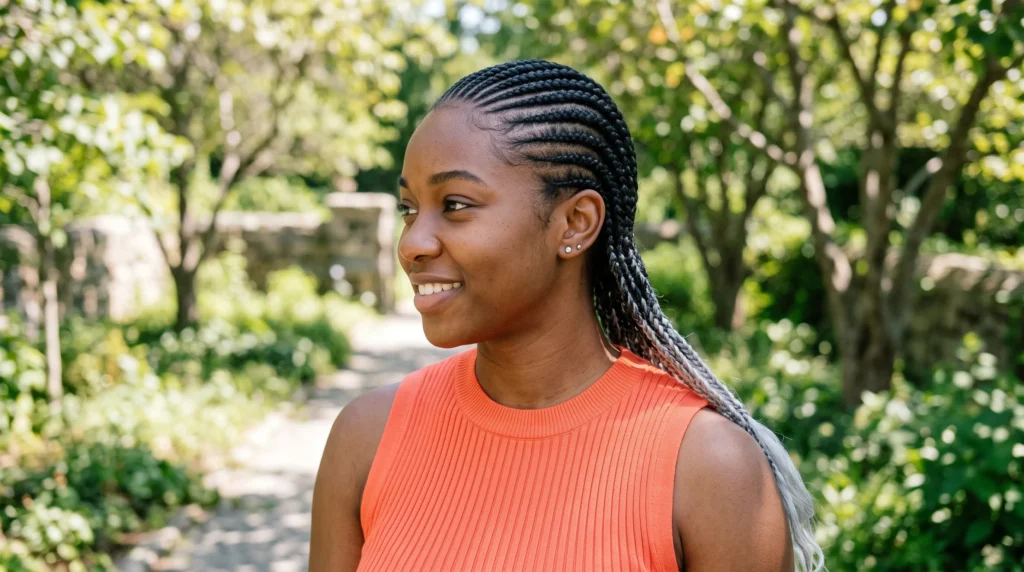
This one proves that simplicity is often the most striking choice. Rows start slim near the part and gradually thicken as they travel back, giving the whole look a smooth, natural build. A hint of silvery color at the tips freshens things up without stealing the spotlight, and a bright top is really all the styling this look needs. For anyone easing into braids for the first time, this is a low-effort, high-payoff place to begin.
To make a set last, focus on the scalp rather than the braids themselves. A light rosemary-mint oil keeps things from drying out without leaving residue, and wrapping up in a satin scarf at night protects the parts and keeps flyaways down. Stylists who specialize in protective styling often stress that healthy results start with proper scalp prep before the braiding even begins — a detail that’s easy to overlook but makes a real difference over several weeks of wear.
Curved Rows Blending into Loose Curls
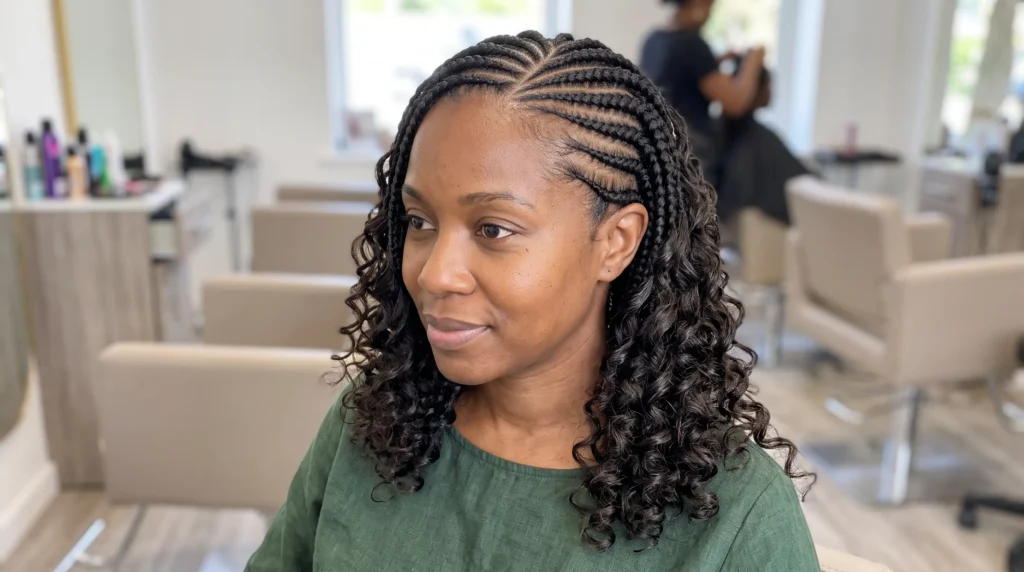
For days when you want something softer, this design pairs precise curved parting near the scalp with flowing curled extensions lower down. The curls add gentle movement while the braid work keeps everything structured, which is why this combination shows up constantly in salon inspiration folders. A lightweight mousse works far better here than a heavy oil — it refreshes the curl pattern without turning sticky. Loosely gathering the curled ends before bed also helps them keep their shape night after night.
A Braided Heart Pattern with a Low Bun
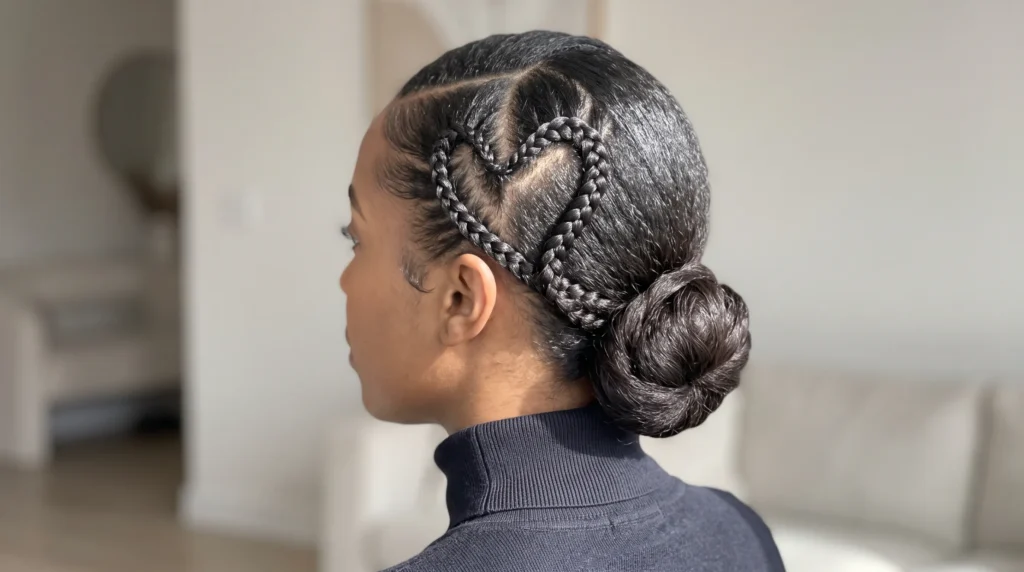
Sometimes the braid pattern itself is the accessory. This look weaves a heart shape into the side sections before the rest of the hair flows into a neat low bun — no extra beads or charms required. Because the design is so detailed, upkeep is light: a shine mist every few days restores gloss without disturbing the pattern, and gentle edge care keeps the hairline looking crisp.
An Oversized High Bun with Geometric Sections
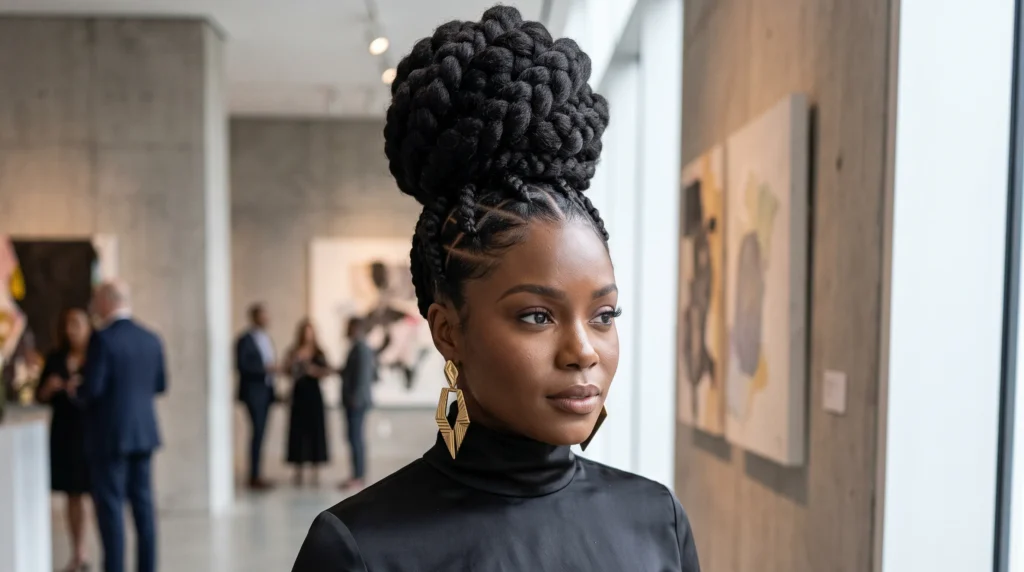
When you want one style to instantly elevate an outfit, this is it. A large braided bun sits high on the crown while carefully divided sections create clean geometric lines around the hairline. Wrapping the bun loosely in silk overnight helps it hold its shape, and a light jojoba serum on the scalp keeps things comfortable through several weeks of wear. Dramatic doesn’t have to mean high-maintenance — a well-built bun can stay polished for a month or more with very little daily attention.
Deep Burgundy Braids for a Color Refresh
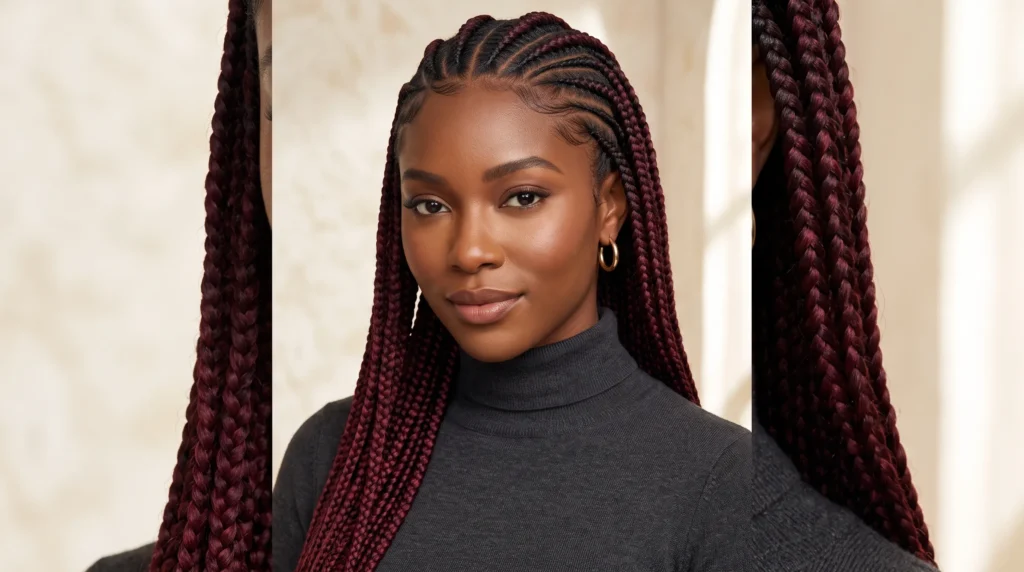
If you want more than classic black without committing to a bold fashion shade, burgundy is nearly foolproof. Sleek rows near the scalp feed into long braids with warm wine undertones running through them, adding richness while keeping the look sophisticated. A soothing scalp tonic works well here since heavier creams can dull colored extensions. Warm tones like this also tend to disguise new growth better than jet black, which is a nice bonus for longer wear.
Center-Part Braids with Face-Framing Length

This is a genuinely timeless option. Soft, curved sections near the part gradually build into fuller braids toward the back, and the even, shoulder-grazing length keeps the whole thing looking symmetrical from every angle. It reads as polished enough for the office yet relaxed enough for weekend errands. A light braid sheen spray adds shine without buildup, and a satin bonnet at night keeps the parts crisp for the long haul.
Boho Braids with Extra Curl Volume
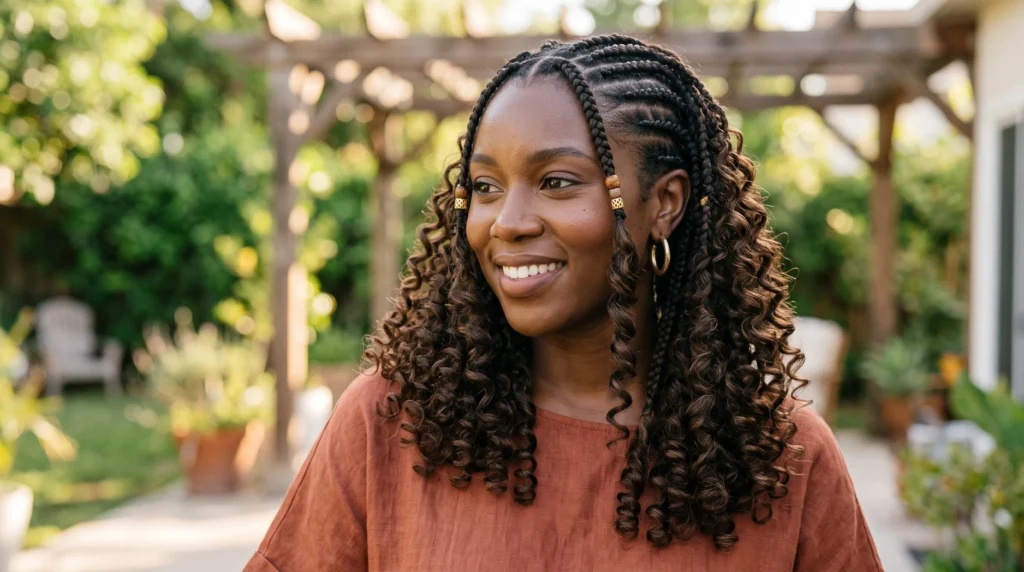
Mixing structured rows at the scalp with springy, voluminous curls lower down creates one of the prettiest boho takes on this technique. It’s ideal if you want the polish of traditional braiding with a lot more texture. Curly extensions need moisture more than styling product, so a lightweight foam mousse — gently worked through and separated by hand — keeps curls soft rather than fluffy or matted.
Extra-Long Silver Braids for Serious Impact
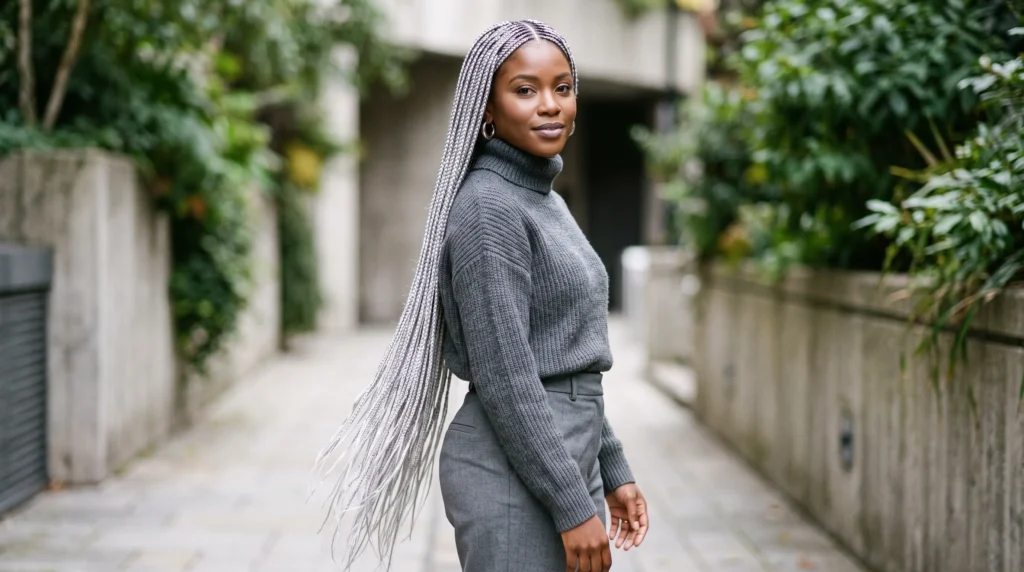
A color change can completely transform a familiar silhouette, and silvery-gray braids do exactly that. Tiny, uniform braids and a clean center part keep the look refined rather than costume-like, and a monochrome outfit lets the cool tone really stand out. Long styles like this feel lighter than expected once installed, but a lightweight growth serum on the scalp keeps things comfortable during extended wear.
Minimalist Thick Braids with Clean Parting
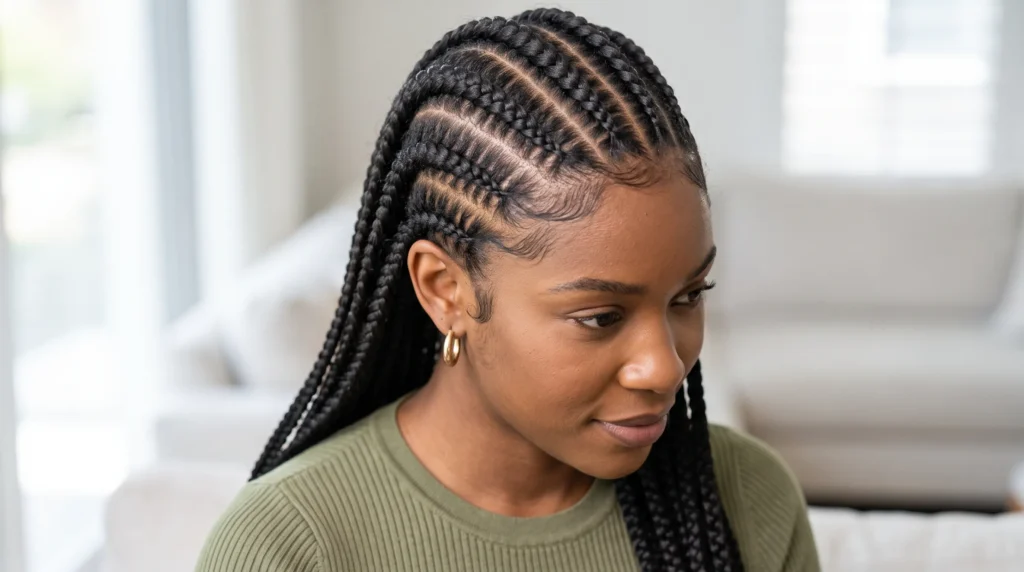
Sometimes the best styling choice is restraint. Medium-to-thick rows spaced evenly across the head flow into long, smooth braids, with soft baby hairs framing the face instead of heavy gel. A light touch of edge control applied with a soft brush is usually all that’s needed between washes — many protective-style specialists point out that healthy upkeep, not extra product, is what keeps a simple look like this feeling fresh.
Short Straight-Back Braids for Everyday Ease

Length isn’t required to make an impact. This shoulder-grazing version keeps things lightweight and practical, with evenly spaced rows that follow the natural curve of the head. Maintenance is refreshingly simple — a diluted shampoo rinse every couple of weeks plus an occasional scalp treatment is usually all it takes.
Warm Caramel Braids with Feathered Parting
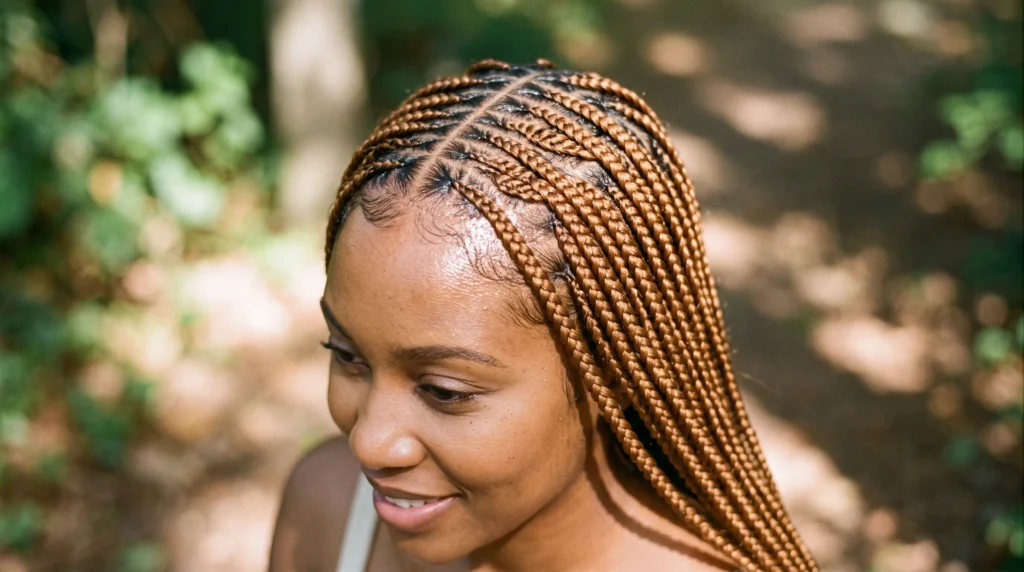
Trading jet black for a warm caramel tone instantly softens the whole look, and the feathered, leaf-like parting near the scalp adds extra dimension before the braids smooth out below. Warm shades like this photograph beautifully in natural light and tend to blend new growth well over time. A few drops of a hydrating scalp oil keep shine balanced without looking greasy.
A High Feed-In Ponytail with Metallic Wraps
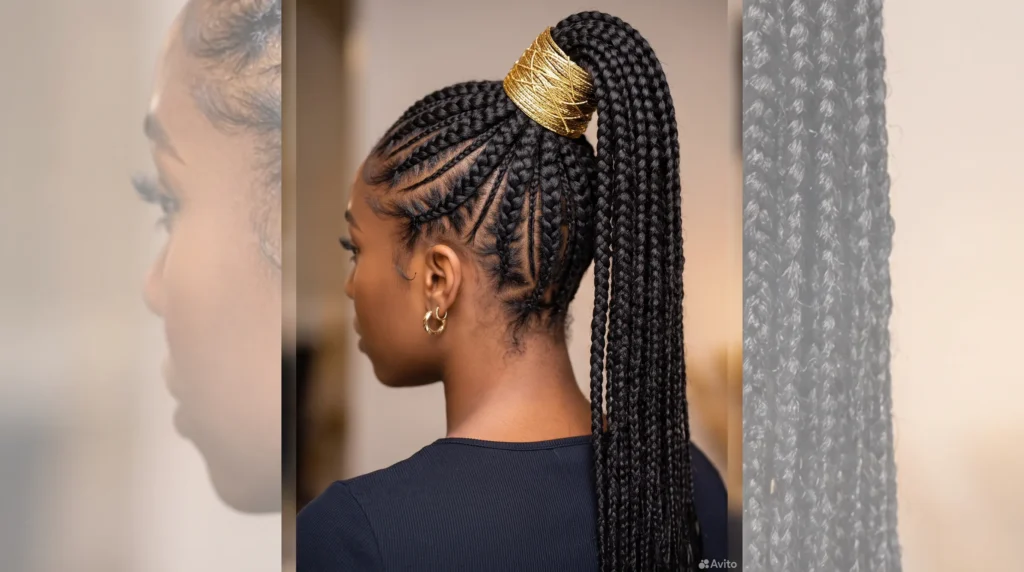
For something that makes an entrance, long braids gathered into a high ponytail with gold thread wraps deliver plenty of drama without much extra effort. Because high ponytails put more tension on the hairline, it helps to loosen the style at night occasionally and use a silk scrunchie to reduce pulling at the base.
An Oversized Bun with Diamond-Shaped Sections
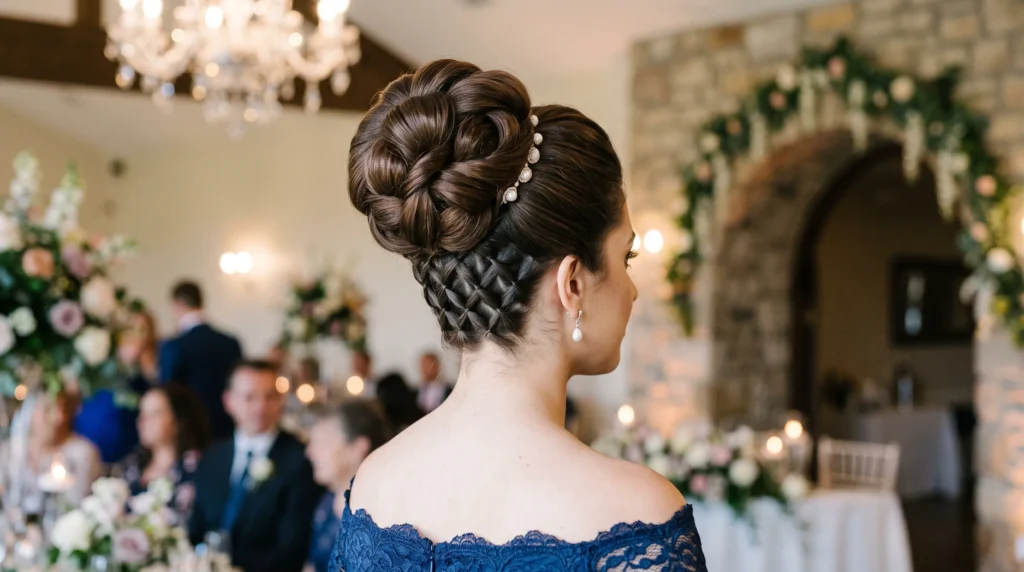
Diamond-patterned sections near the nape lead up into a large, elegant bun — the kind of style that photographs well from every angle. It suits weddings and big events just as easily as a week when you simply want your hair off your shoulders. A silk scarf protects the shape overnight better than a bonnet alone.
A Purple-and-Platinum Ponytail for Bold Color
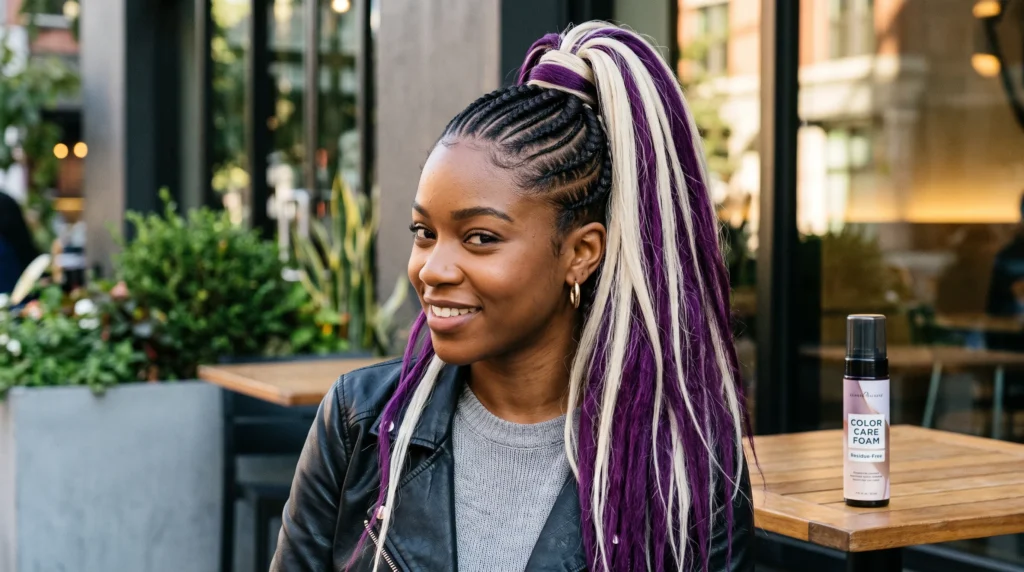
Not every day calls for classic black. This vibrant combination of deep purple and platinum extensions creates dramatic contrast while keeping the rows themselves perfectly neat, proving that color and precision aren’t mutually exclusive. Gentle, residue-free foam products help keep bright shades looking fresh for the life of the style.
A Feed-In Updo with Faux Locs
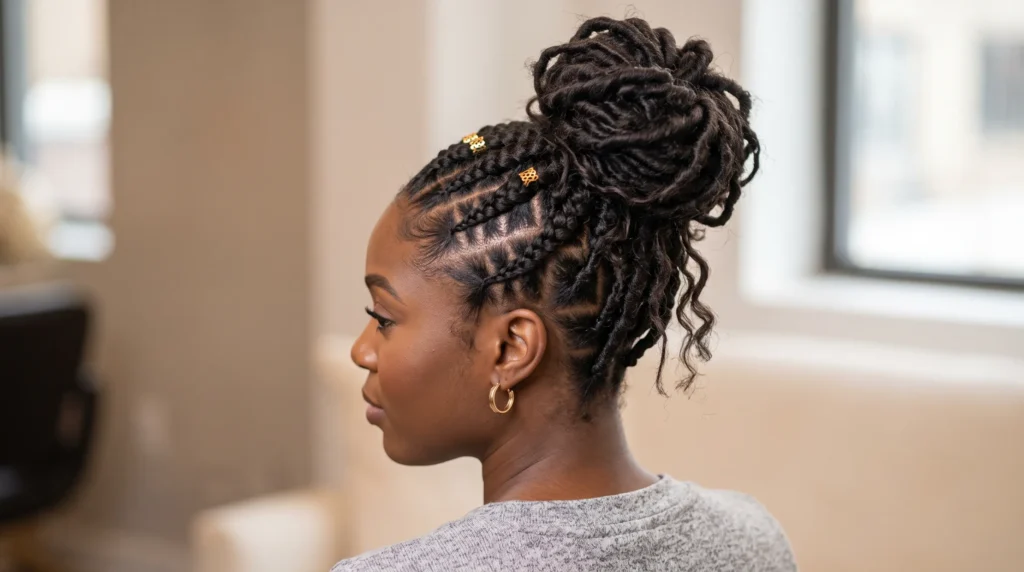
For something beyond traditional braiding, structured feed-in sections can transition into soft faux locs gathered into a relaxed bun. It’s a good reminder that this technique isn’t limited to one aesthetic — regular scalp cleansing between washes keeps textured styles like this comfortable long-term.
A Sleek High Ponytail with Curved Cornrows
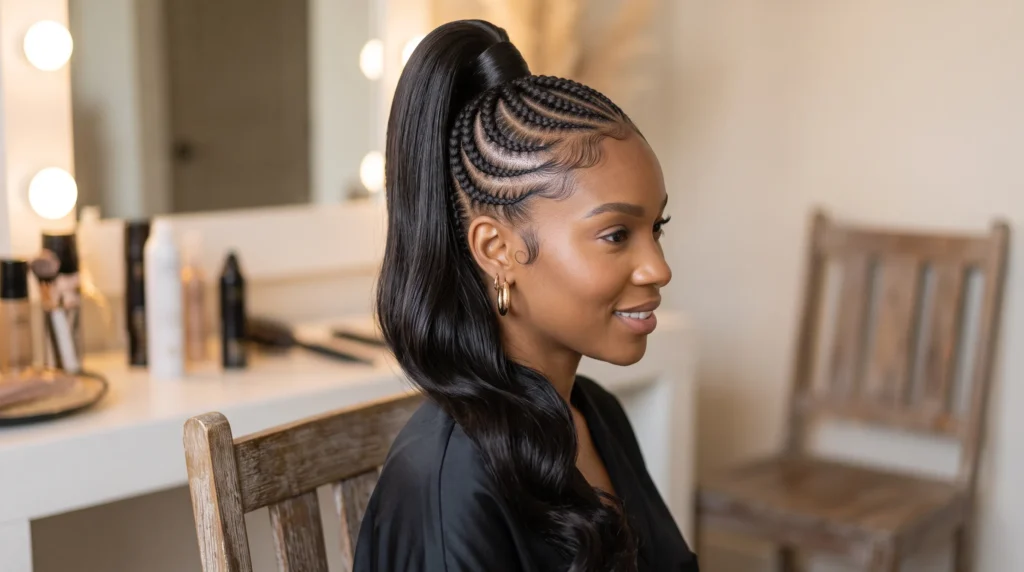
Curved parting that follows the shape of the head, paired with a long ponytail draped over one shoulder, is a formula that works for almost any occasion. Soft baby hairs at the hairline keep it from looking overdone. A calming scalp treatment helps soothe the roots, since high, sleek styles do carry a bit more tension than looser ones.
Half-Up Boho Braids with Spiral Curls
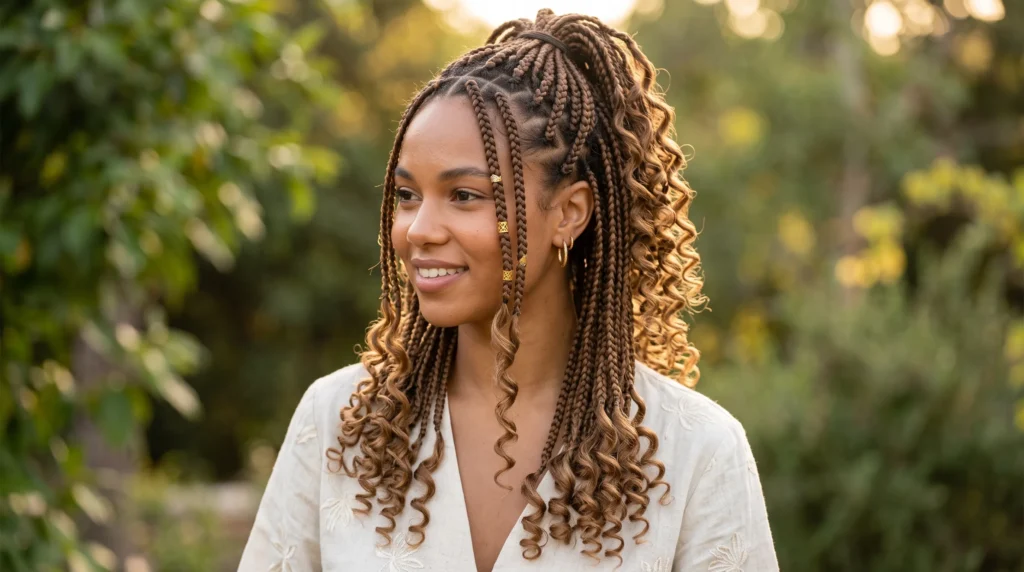
Gathering the top section into a playful half-up ponytail while the rest of the braids flow with curled ends gives this look a youthful, effortless feel — great for warmer months when you want something protective but still relaxed.
Swirling Braids with Artistic Parting
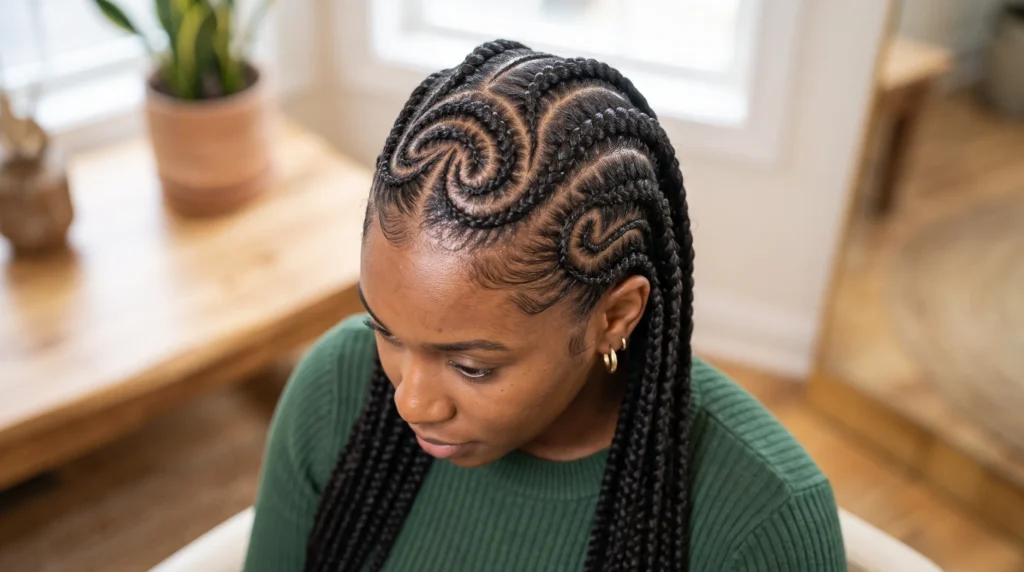
Not every part has to run in a straight line. Dramatic swirl patterns at the scalp turn into long feed-in braids below, making the parting itself the real statement piece. Detailed patterns like this actually need less product, not more — a silk scarf at night preserves the design far better than daily touch-ups.
A Textured Updo with Soft Faux Locs
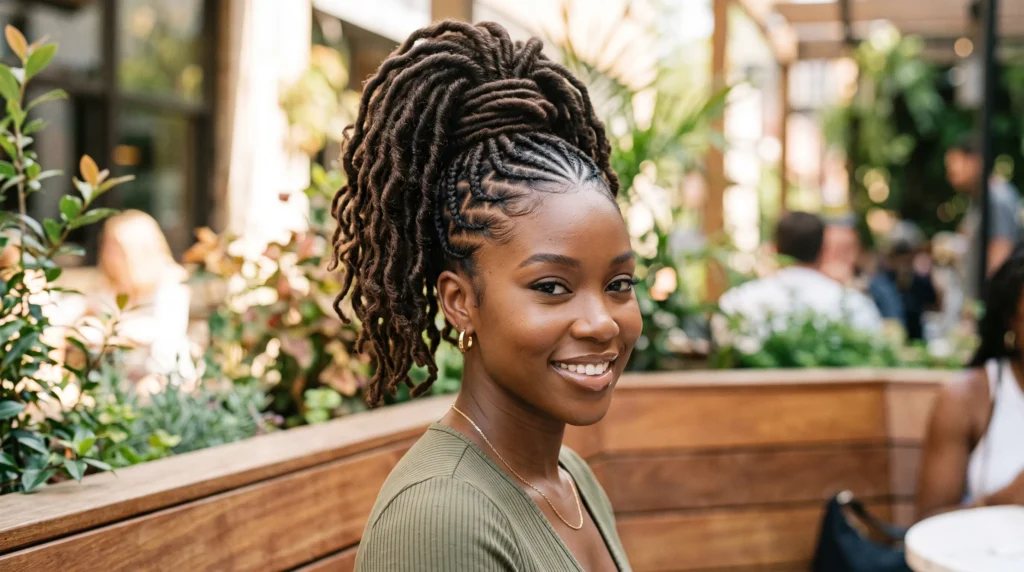
Geometric feed-in sections that transition into a full, textured ponytail of soft locs strike a nice balance between polished and relaxed, and they work equally well for a regular week or a special occasion.
Heart-Inspired Braids with Bold Pattern Work
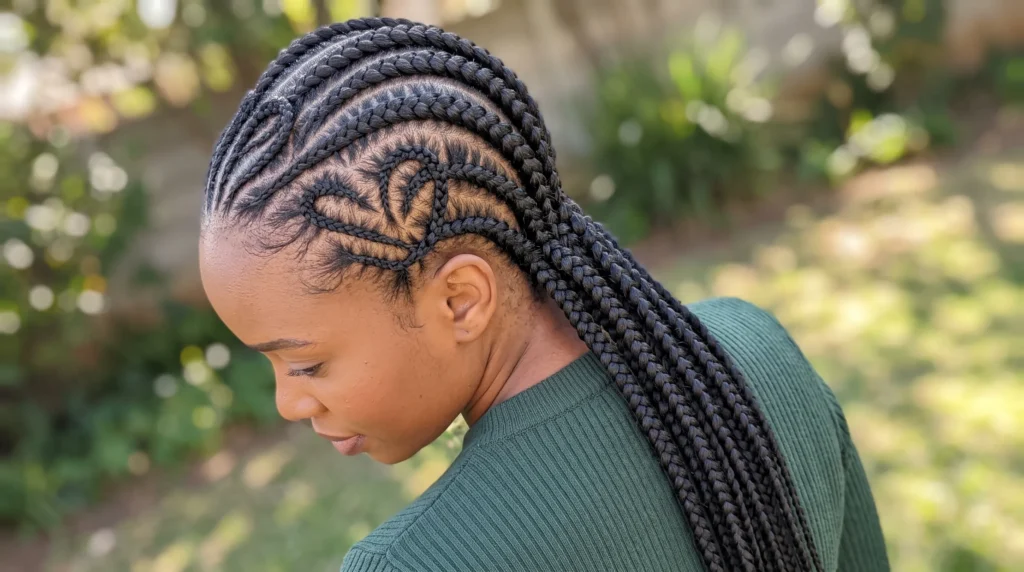
Closing out with one of the most artistic options on this list, curved heart motifs woven across the scalp lead into thicker braids for a playful yet intentional finish. Styles this detailed take a little extra patience during installation but are genuinely low-maintenance afterward — a light sheen spray and consistent nighttime protection are usually enough to keep the design crisp for weeks.
A Quick Word on Scalp Health
Whichever style you choose, the biggest factor in how good your braids look — and how healthy your hair stays underneath them — comes down to tension and scalp care, not the pattern itself. If a style feels painful during or after installation, that’s not something to push through. According to the American Academy of Dermatology, hairstyles that repeatedly pull on the hairline can lead to traction alopecia, a type of hair loss caused by ongoing tension at the root, and it’s especially worth watching for in tightly braided styles. The fix is usually simple: ask your stylist to braid with a bit less tension near the hairline, give your scalp occasional breaks between installs, and keep it clean and moisturized while the style is in.
How to Pick the Right Feed In Braid Hairstyle for You
With so many variations out there, choosing one can feel overwhelming, so it helps to narrow things down by a few practical factors rather than just picking whatever look trends first.
Face shape. Straight-back rows and center parts tend to flatter rounder faces by adding length, while curved or swirled parting patterns can soften angular features. If you’re unsure, ask your stylist to sketch the parting on dry hair before braiding begins — most are happy to adjust the pattern slightly around the hairline.
Lifestyle and activity level. If you work out often or spend a lot of time outdoors, shorter, thinner braids or a low-tension bun will hold up better than an elaborate high ponytail, which places more pull on the hairline with daily movement.
How long you want to wear it. Smaller, more detailed patterns generally look fresh for longer because new growth is less noticeable, while thicker, chunkier braids may need a touch-up sooner. Warm or lighter colors also tend to camouflage regrowth better than solid black.
Maintenance routine. Be honest about how much nightly care you’ll actually do. Styles with buns or updos usually require a bit more wrapping effort to protect the shape, while simple straight-back rows are more forgiving if you skip a night here and there.
Frequently Asked Questions
How long do feed in braid hairstyles typically last? Most feed-in styles hold up well for four to eight weeks, depending on braid size, hair growth rate, and how well the scalp is cared for in between washes. Thicker braids and looser tension generally last a bit longer than tiny, tightly installed ones.
Are feed in braids better than braids installed with a knot at the base? Feed-in techniques gradually blend in extensions from the root, which usually means less bulk and tension right at the hairline compared to styles that start with a knot. That said, both approaches can be done gently or too tightly — a lot depends on the stylist’s technique rather than the method alone.
Can feed in braids work on shorter natural hair? Yes. Because the technique builds gradually, it can be adapted to shorter hair lengths more easily than styles that require a long base to attach extensions to. It’s worth mentioning your hair length to your stylist beforehand so they can adjust the starting point of each row.
How often should I moisturize my scalp with braids in? A light oil or scalp spray every two to three days is usually enough to prevent dryness and itching without leaving buildup between the rows. Heavier creams and butters are best avoided since they can weigh down the braids and attract lint.
Final Thoughts
What I love most about feed in braid hairstyles is how much range they offer. You can go sleek and minimal, bold and colorful, soft and curly, or sculptural and dramatic — and still land on something that protects your natural hair underneath. Whether you’re prepping for a special event or just want a few weeks off from daily styling, there’s a version of this technique that fits the moment. Save a few of these for your next appointment, bring reference photos, and don’t be afraid to ask your stylist to adjust tension, size, or color to make the style truly your own.