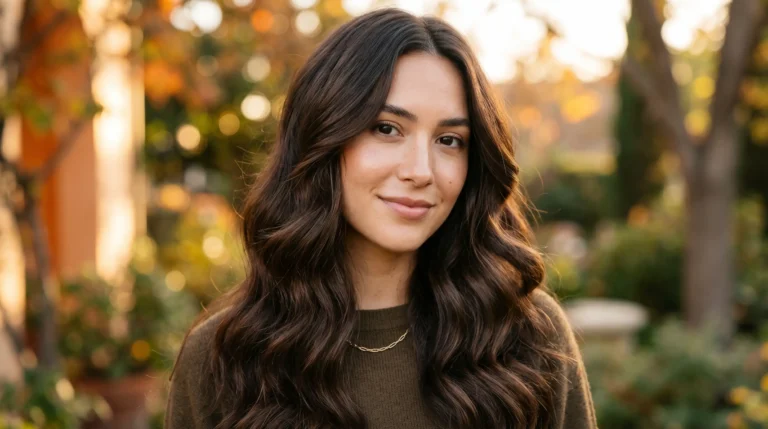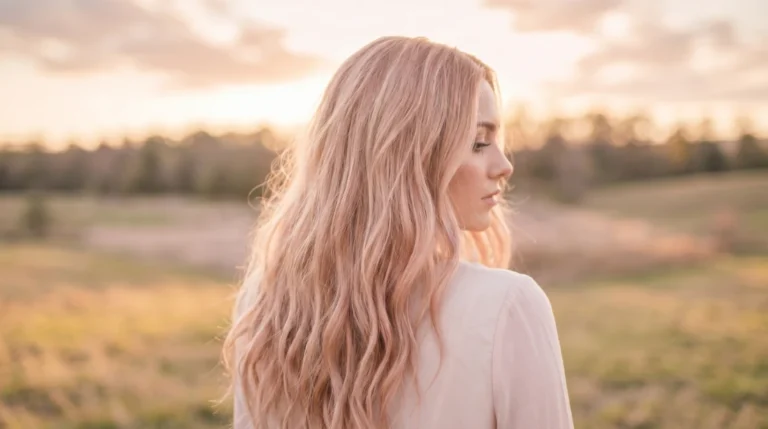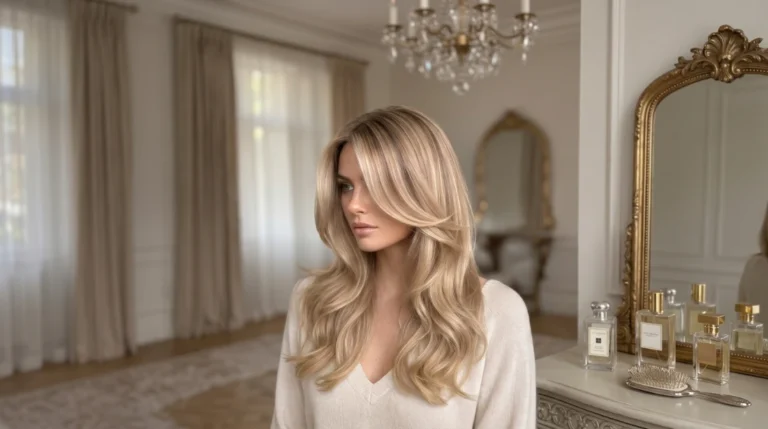
Purple Ombre Hair Ideas: 20 Stunning Looks That Fade Like a Dream
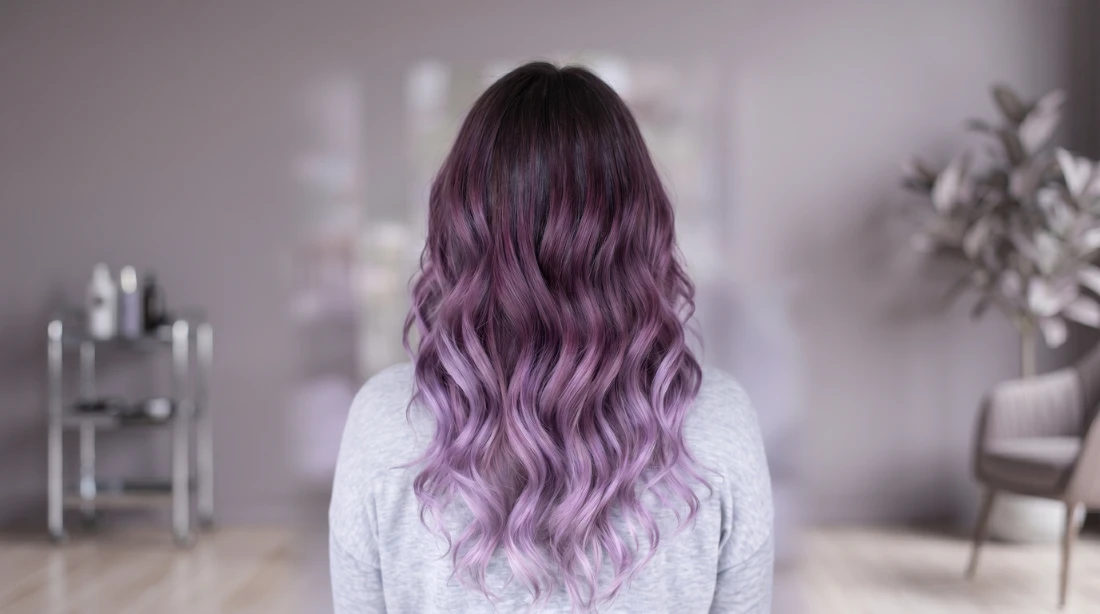
There’s something almost supernatural about the way purple moves through hair. Not the flat, uniform purple of a Halloween costume — but that slow, breathtaking melt from a natural root into lavender, plum, violet, or mauve that looks less like a dye job and more like the hair simply decided to bloom that way.
According to StyleCraze’s 2026 purple ombre guide, purple ombre remains one of the most requested color techniques at salons this year precisely because it sits at the intersection of bold and wearable — dramatic enough to make a statement, soft enough to be adapted to any hair type, length, or lifestyle. The advancement in balayage and color-melt techniques means the transition zone between natural root and vivid purple can now be made almost invisible — a gradient rather than a line.
Here are the 20 best purple ombre hair ideas worth bookmarking right now.
Purple Ombre Hair Ideas: 20 Looks for Every Hair Type and Commitment Level
1. The Midnight Melt
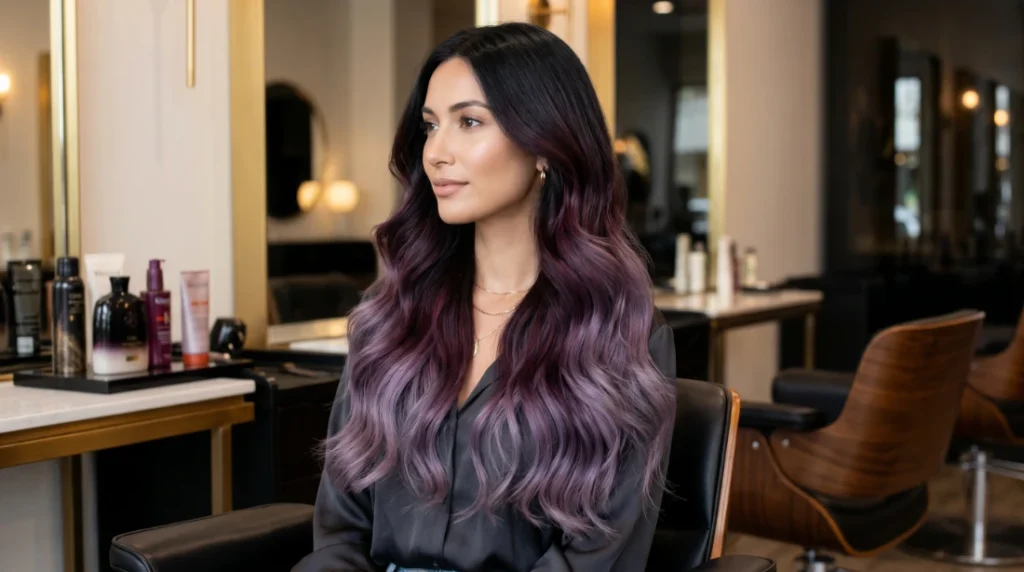
A deep black root that dissolves into a rich, bruised plum by the mid-length, then softens into smoky violet at the very tips. Three distinct tonal stages, no visible transitions. It has a predatory edge that feels runway-ready but wearable enough for a night out — and the dark root means significantly less upkeep between appointments.
Maintenance tip: A color-depositing conditioner in a violet shade applied every third wash keeps the plum tones vivid rather than faded and muddy.
2. The Lavender Daydream
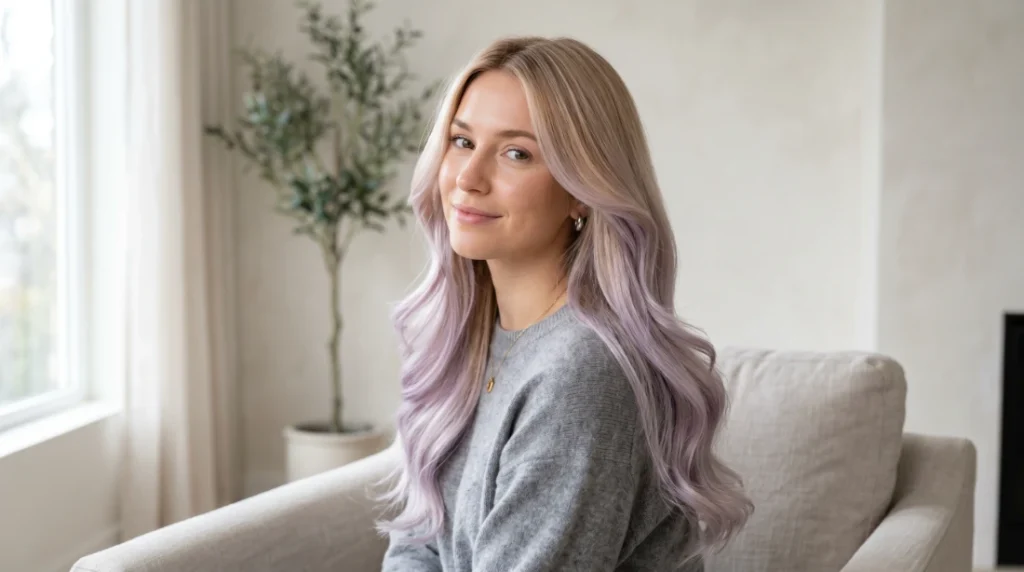
Warm blonde roots bleeding seamlessly into the palest lavender at the ends — so pale it reads almost as silver-lilac in natural light. Cashmere-soft color that works particularly well for blondes who want to explore the purple family without a dramatic overhaul. The pale lavender sits close enough to blonde that grow-out is nearly invisible.
Maintenance tip: A bond-repairing foam applied before heat styling protects the lightened ends that this shade requires. Lavender this pale needs pre-lightening, so internal scaffolding for the strands is non-negotiable.
3. The Berry Crush
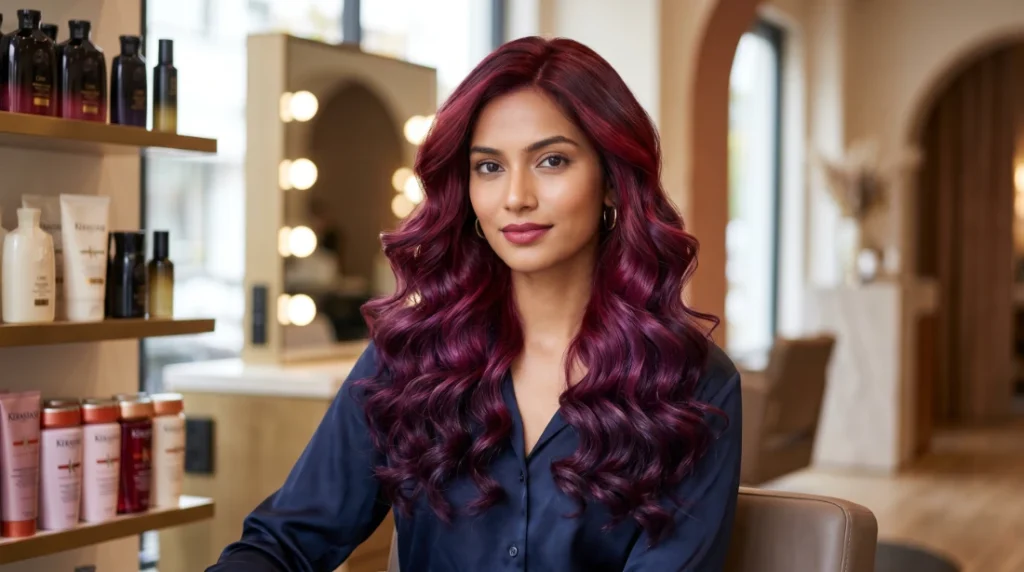
Deep cherry-red roots melting into a vivid berry-violet that darkens toward the ends rather than lightening — a reverse ombre that feels luxurious and unexpected. It eliminates the washed-out tips problem that many brunettes encounter with traditional ombre, where the color gets richer and more complex as it travels down the strand rather than fading to nothing.
Maintenance tip: A sulfate-free shampoo exclusively — sulfates are color’s worst enemy, and with a vivid shade like this, every wash counts.
4. The Rose-Violet Melt
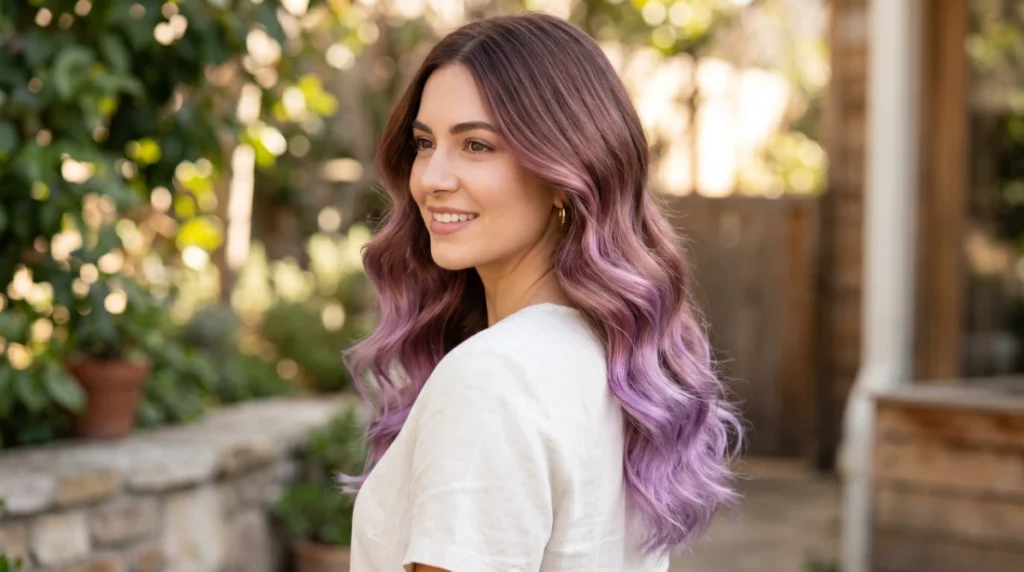
A warm brunette base transitioning into a rosy mauve, then settling into a soft violet at the ends. It’s romantic without being saccharine, and the warm-to-cool gradient is particularly flattering on cool-toned complexions — it enhances the natural complexion rather than washing it out.
Maintenance tip: Loose, tousled waves activate this color story beautifully. A sea salt spray with UV protection adds the right texture while shielding the delicate rose tones from sun fading.
5. The Silver Violet Fade
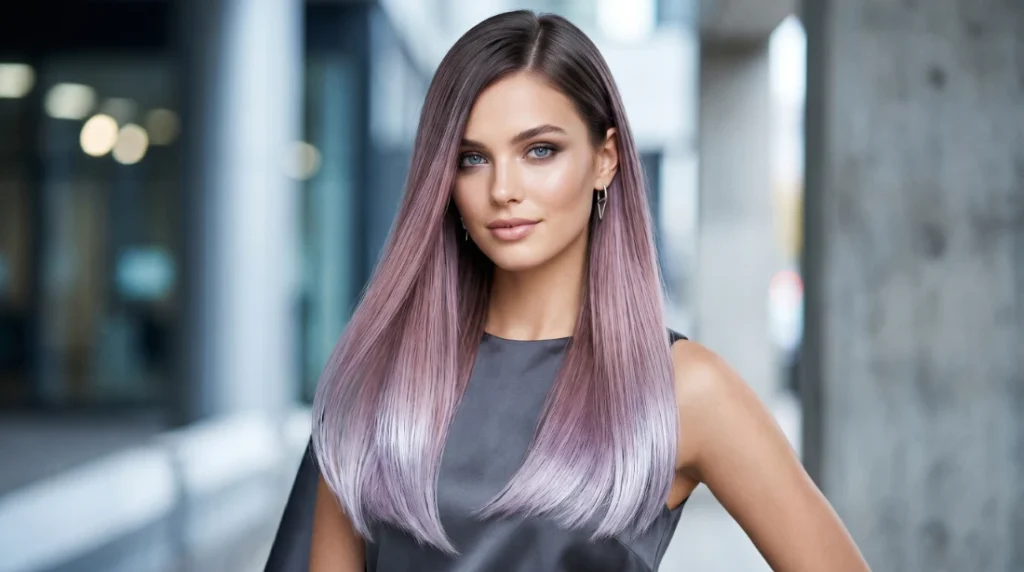
Light ash-brown roots dissolving into a dusty orchid, then fully fading into a polished silver-violet at the tips. Ice-cool and impossibly chic. This technique also works brilliantly for anyone going grey naturally — it blends silver growth into the color design itself, making regrowth part of the aesthetic rather than an embarrassment.
Maintenance tip: A toning shampoo used once weekly prevents the silver sections from pulling yellow, keeping that icy violet looking intentional and sharp.
6. The Plum Cascade
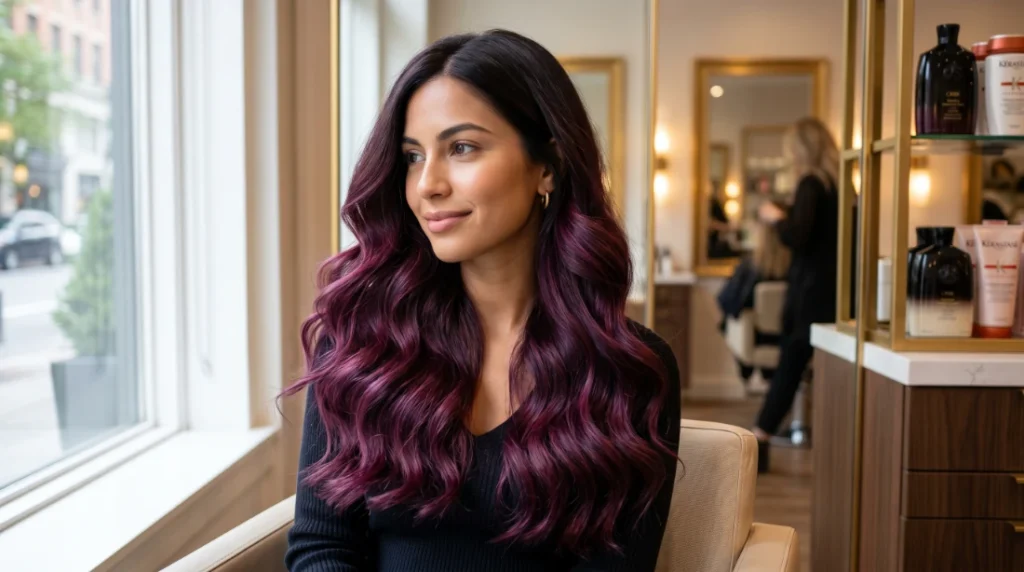
Natural dark-brown roots shifting into a deep plum that cascades in loose waves — the kind of color that catches every light source in a room and gives back something different each time. It adds incredible depth and dimension to flat, one-dimensional dark hair without requiring a full color overhaul.
Maintenance tip: When diffusing, scrunch in an argan oil serum through the mid-lengths to amplify the deep plum’s natural luminosity and keep the wave pattern intact without frizz.
7. The Dusty Mauve Dream
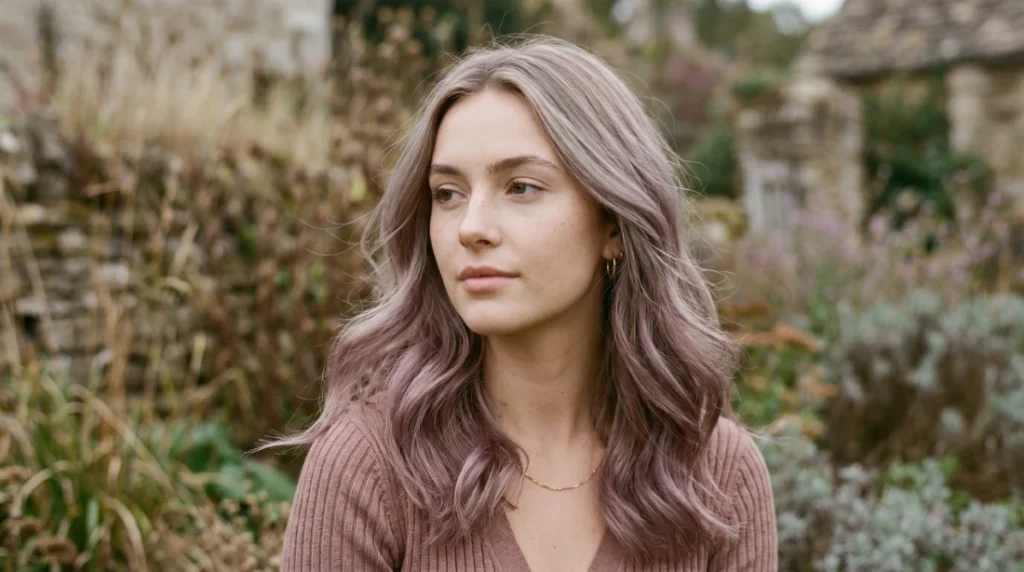
A greige-blonde base fading into a dusty, desaturated mauve — the kind of purple that looks almost accidental, like light passing through stained glass. This is the option for the color-curious who are nervous about “looking too done.” Subtle enough for conservative environments but interesting enough to satisfy a genuinely creative impulse.
Maintenance tip: Air-dry whenever possible and finish with a single drop of lightweight glossing oil through the ends. The mauve pops best without heat interference.
8. The Amethyst Coil
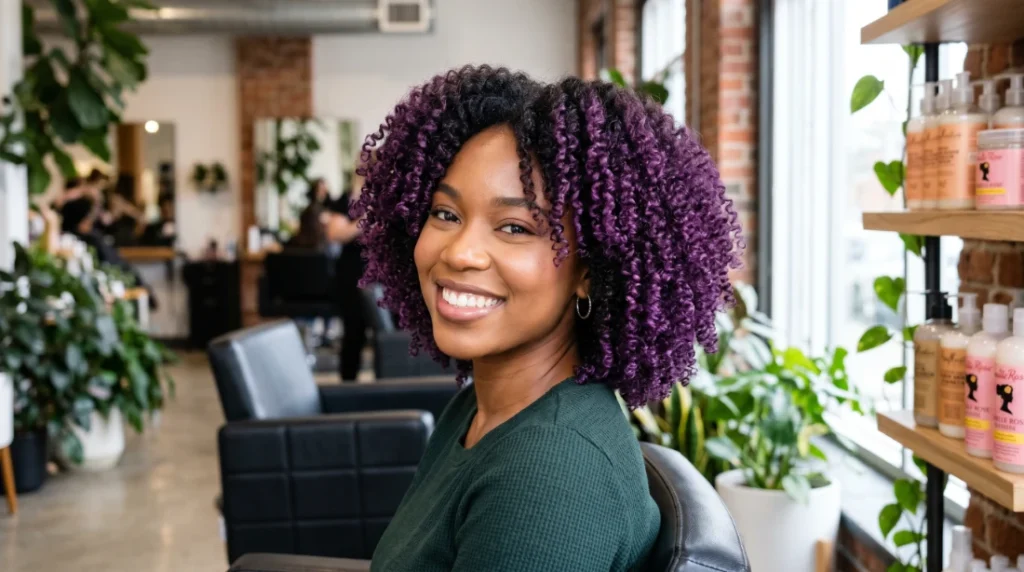
Made specifically for natural curls. A rich, warm-brown root evolving into a vibrant amethyst that saturates every coil from the mid-length down — each curl a separate jewel catching the light. The ombre placement follows the curl pattern naturally, making the color look inherently organic rather than applied.
Maintenance tip: After washing, apply a curl-defining cream from mid-length to ends while soaking wet, then scrunch upward. The color will appear significantly more vivid on fully defined, hydrated coils.
9. The Lilac Lob
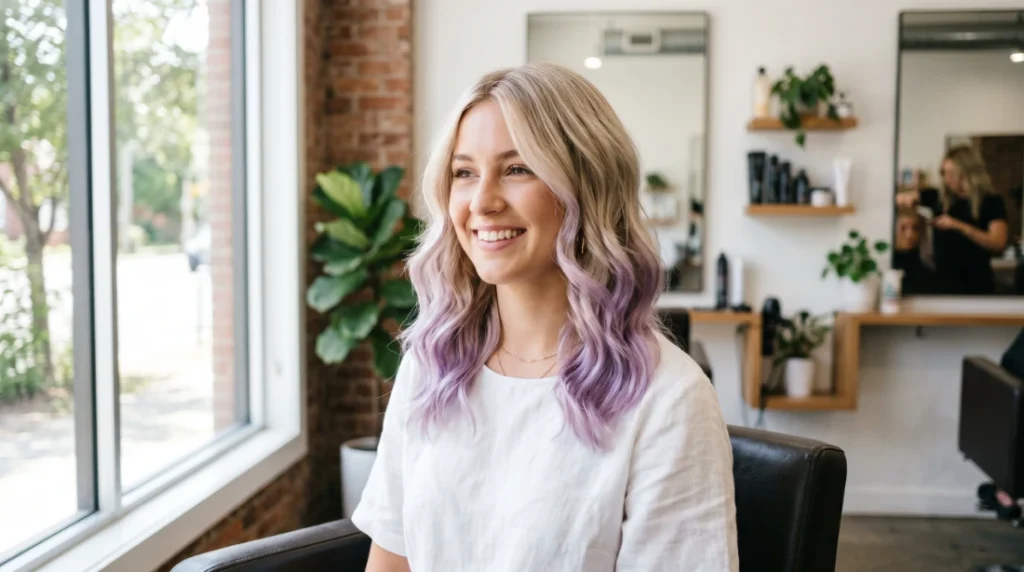
A warm blonde lob with lilac painted through the bottom third — light, breezy, and perfect for warmer months when you want color that feels like a vacation. The shoulder-grazing length is universally flattering, and the lilac placement near the ends prevents the color from overpowering finer facial features.
Maintenance tip: A quick toning gloss in a lilac shade done at home between salon visits keeps the color punchy without the cost or commitment of a full appointment.
10. The Wisteria Wave
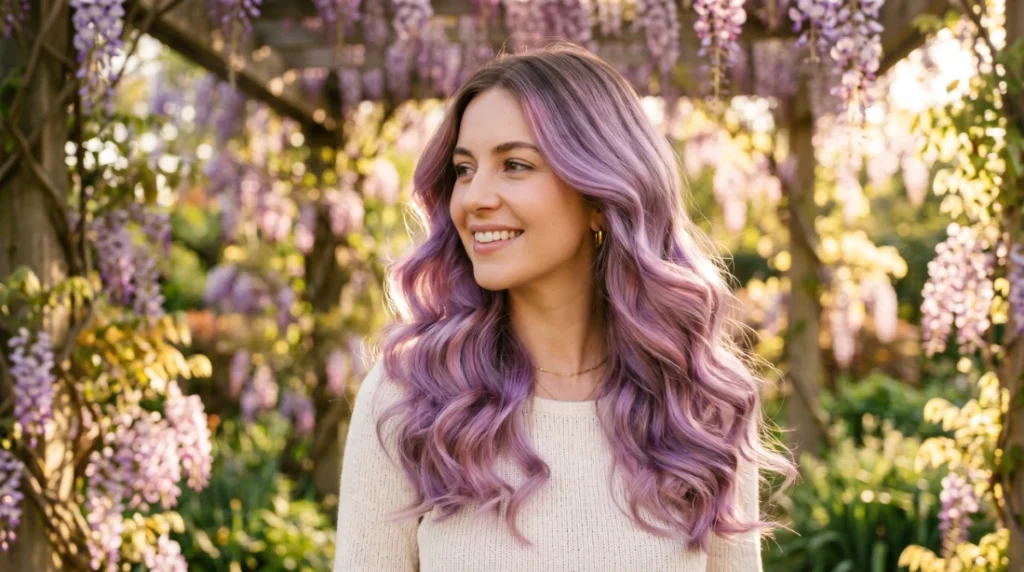
A natural medium-brown root that drifts into a lavender-purple with warm pink undertones through large, effortless waves. The pink undertone in the wisteria shade works beautifully for warm and olive skin tones, adding a healthy glow rather than competing with the complexion.
Maintenance tip: Use a large-barrel curling wand (1.5 to 2 inches) and wrap sections away from the face. This opens up the wave, allowing the full color gradient to display itself rather than getting tucked inside a tight curl.
11. The Ultraviolet Balayage
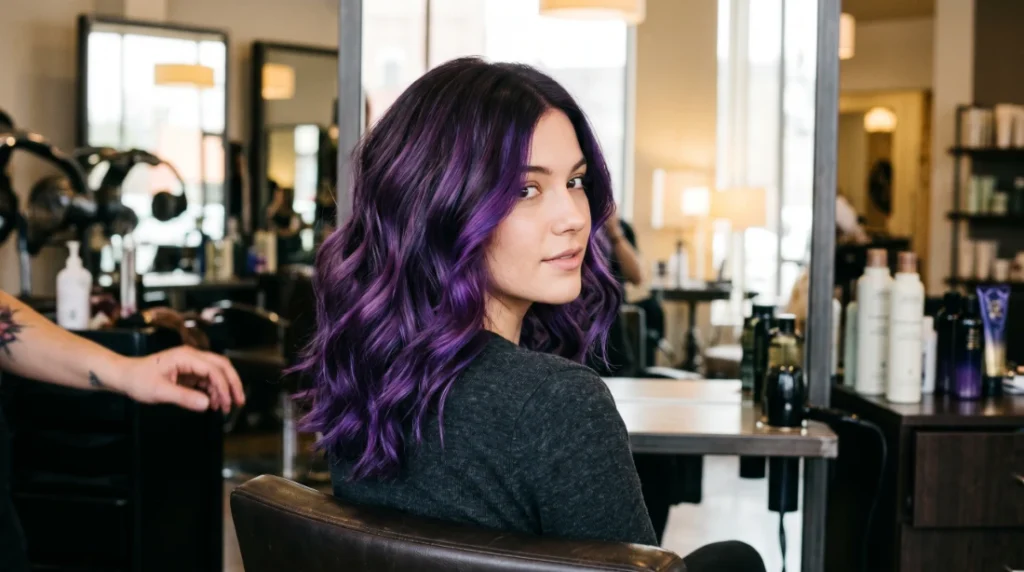
A natural brunette base with thick, hand-painted ultraviolet sections sweeping through from root to tip on select strands — more of a highlighted approach than a full melt, but with maximum color impact. It allows dark-haired individuals to introduce bold purple without committing to a full lightening process. Strategic placement, minimal bleach, maximum effect.
Maintenance tip: A bond-building treatment used in-salon during the lightening process is essential here — lifting dark hair to a level that holds ultraviolet requires bond protection to prevent breakage.
12. The Iced Grape
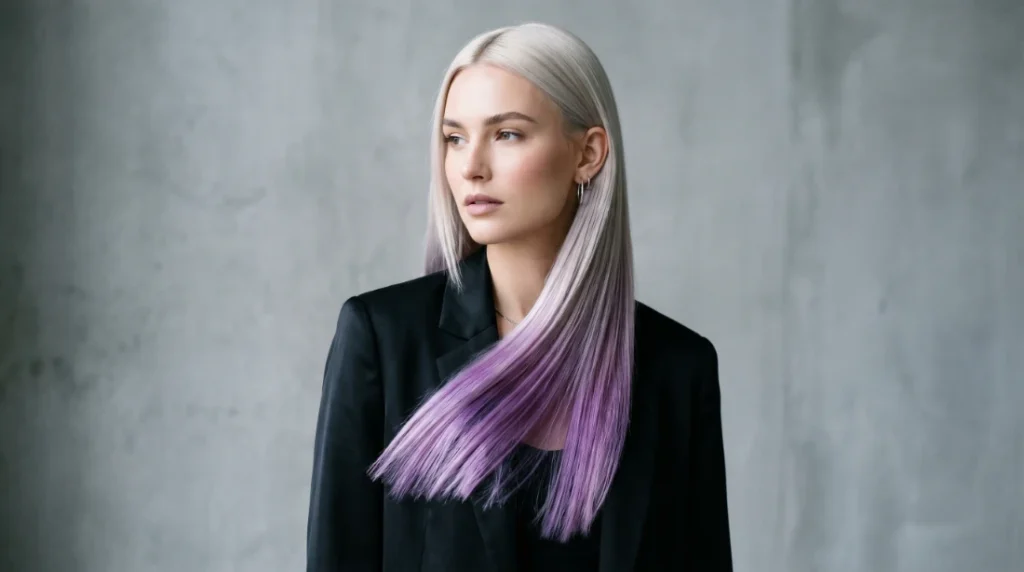
A platinum or white blonde base fading into a transparent, iced grape — barely-there purple that shimmers more than it saturates. Ethereal in the truest sense. This is the gentlest possible introduction to purple: so soft it could pass as a toning gloss to the untrained eye, yet unmistakably beautiful in the right light.
Maintenance tip: A purple toning conditioner left on for five minutes in the shower once weekly maintains this shade. The payoff is cumulative — the more consistently you use it, the more even and beautiful the iced grape tone becomes.
13. The Burgundy-to-Violet
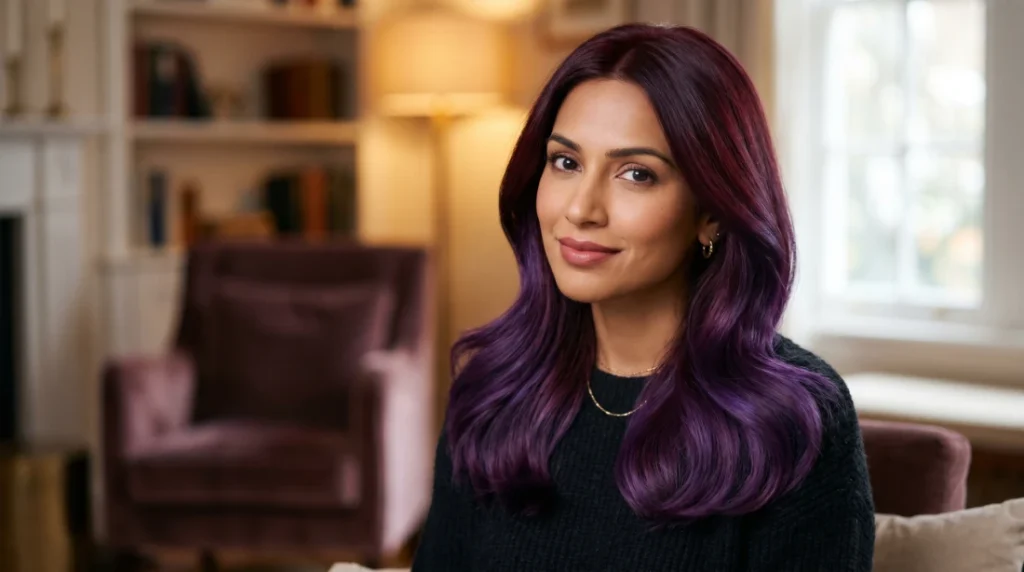
Deep, wine-dark burgundy roots descending into a complex violet-purple. Rich, dimensional, and deeply romantic — it bridges the gap between “I want red” and “I want purple” simultaneously, and gives the violet more warmth than it would have sitting on a neutral or cool base alone.
Maintenance tip: A heated styling brush used for a blowout smooths the cuticle and amplifies the light-catching quality of these deep, multi-tonal shades — the glossier the finish, the more color complexity becomes visible.
14. The Neon Violet Underlayer
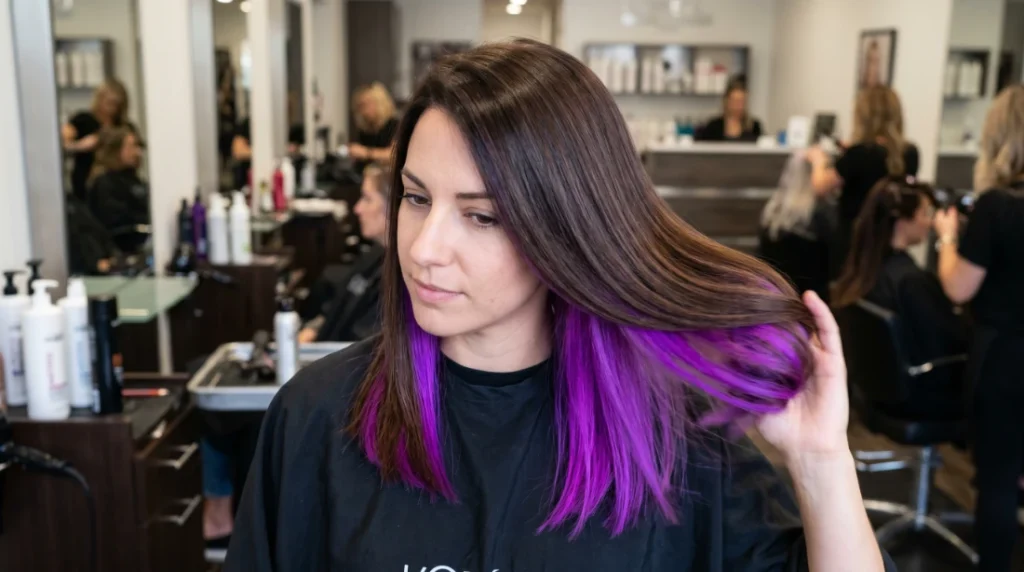
Hair that appears completely natural at the top — but when the wind moves it, when it’s tossed over one shoulder, when it’s pulled into a ponytail — a vivid, neon violet underlayer is revealed. The ultimate solution for professional or conservative environments who still want expressive color. Fully hideable, fully dramatic, entirely on your terms.
Maintenance tip: Color the underlayer with a semi-permanent vivid dye rather than permanent — less commitment, easier maintenance, and the underlayer fades more slowly due to reduced sun exposure.
15. The Deep Space Violet
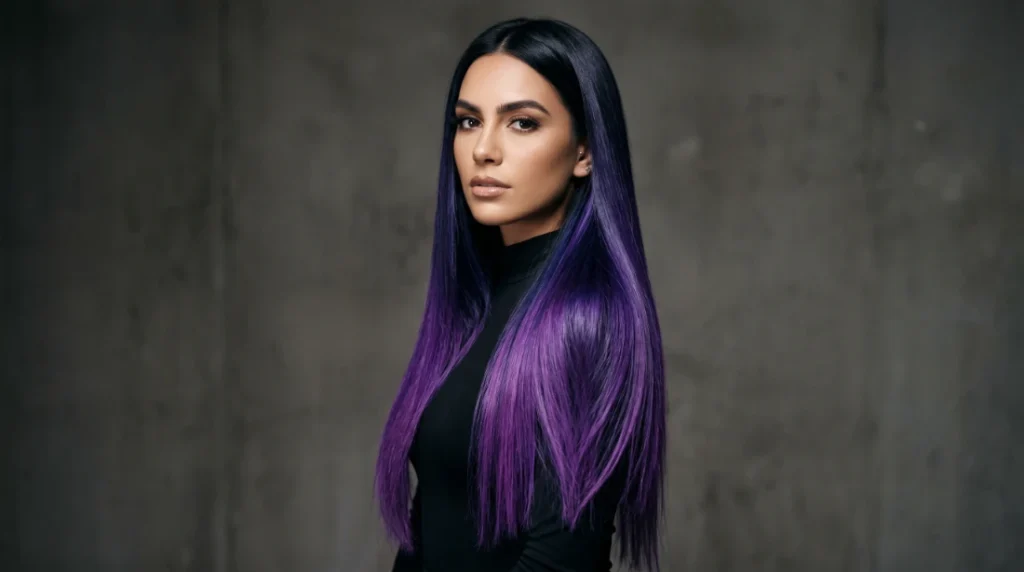
Black roots. Dark indigo mid-length. Pure violet tips. A three-stage color journey that mimics the gradient of a night sky — deep, expansive, and lit from within. On long, straight hair this is pure cinema. The three-stage gradient adds dimension that a single color never could and creates the illusion of extraordinary length and depth.
Maintenance tip: A lightweight flat iron on medium heat — no higher than 380°F — gives the sleek, cinematic finish without stripping the indigo and violet tones that make this look so spectacular.
16. The Smoky Lavender Shag
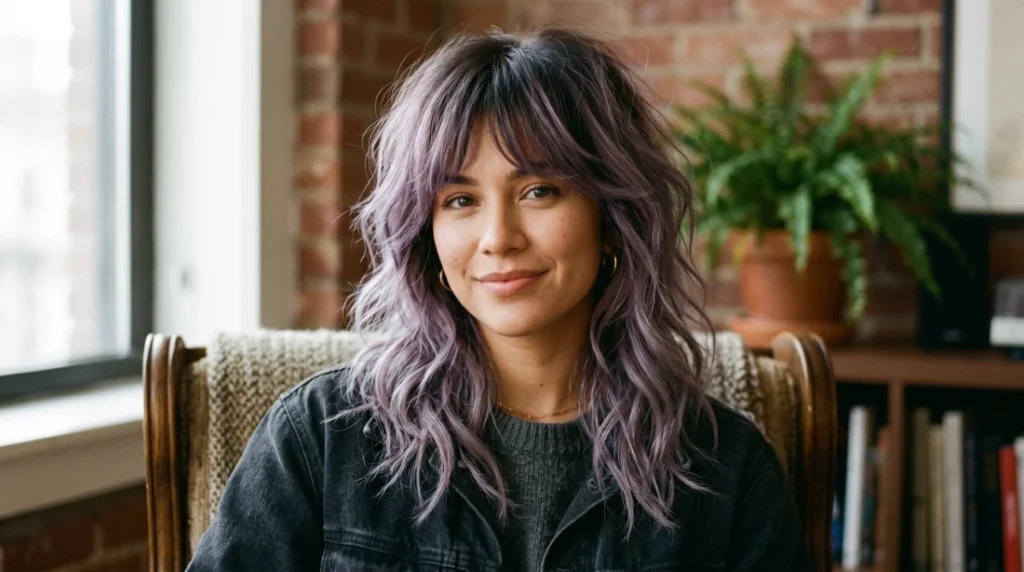
A shag haircut painted in smoky lavender — the cut and color working together to create something that belongs on a vintage record cover and a 2026 mood board simultaneously. The shag’s inherent layers give the lavender ombre multiple planes to live on, making the color appear infinitely more complex than a single process could ever achieve.
Maintenance tip: Diffuse on low heat and finish with a texturizing spray to enhance each layer’s individual shape. The shag’s curated texture should look lived-in, not polished.
17. The Violet Money Piece
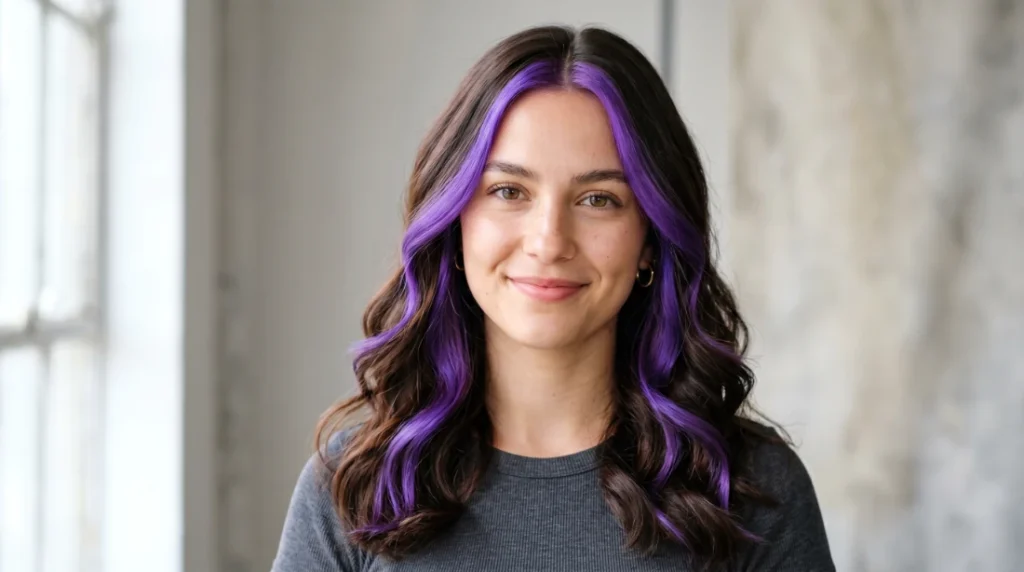
Not a full ombre — instead, vivid violet face-framing pieces from root to tip on the front sections only, while the rest of the hair stays in its natural brunette state. Zero commitment to full color, maximum impact on first impression. Every photo, every conversation, and every mirror glance leads with that violet pop.
Maintenance tip: When straightening the money pieces, run a flat iron slowly — the violet sections have been lightened more than the rest and need lower heat and thermal protectant before any hot tool touches them.
18. The Rosewood Violet
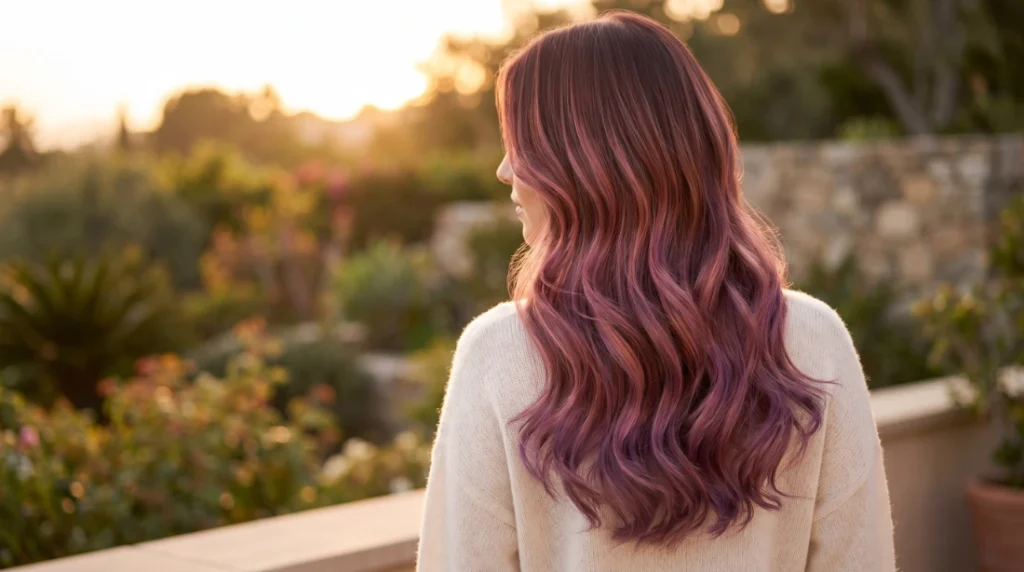
A complex rosewood root that evolves into a warm violet at the ends, carrying pink and copper undertones throughout. The most dimensional color on this list and the hardest to assign a single name. The rosewood undertones give warm-toned skin a purple option that doesn’t compete with the complexion — the warmth adds harmony rather than contrast.
Maintenance tip: A color-depositing mask in a rose-violet shade used monthly maintains the warmth in this complex color story, preventing the purple from cooling down and losing its rosewood quality.
19. The Dark Academia Violet
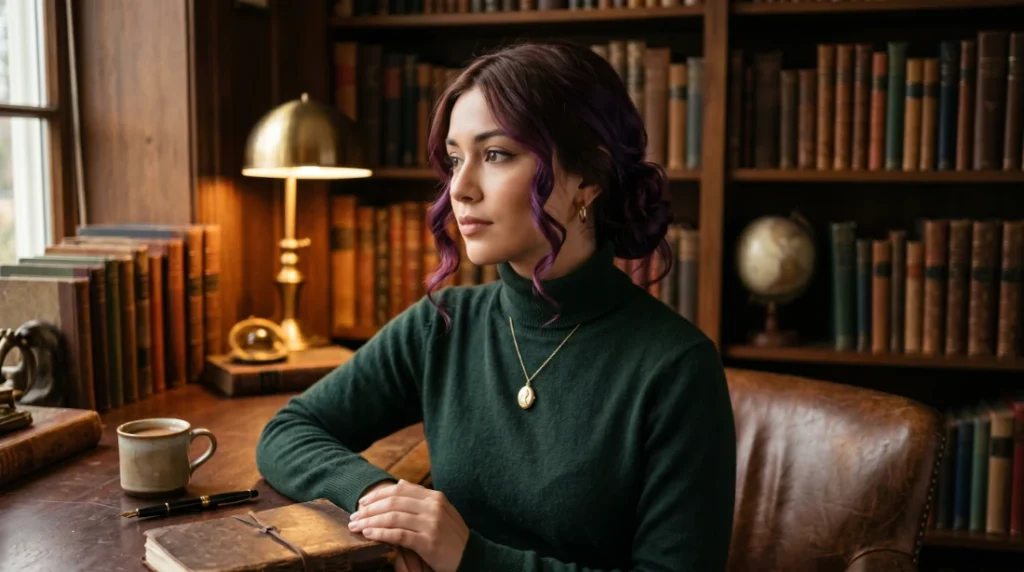
A rich chestnut brown root fading into a dark, moody violet — something between eggplant and indigo — worn in a loose, low bun with face-framing tendrils that show off the gradient. Combines a practical updo format with the full color payoff of an ombre, with the tendrils doing all the color work while the bun keeps things polished.
Maintenance tip: When wrapping the bun, leave two or three front pieces loose and use a small curling wand to give those tendrils a soft spiral — the gradient reads most beautifully on a piece with a little movement rather than lying flat.
20. The French Lavender Balayage
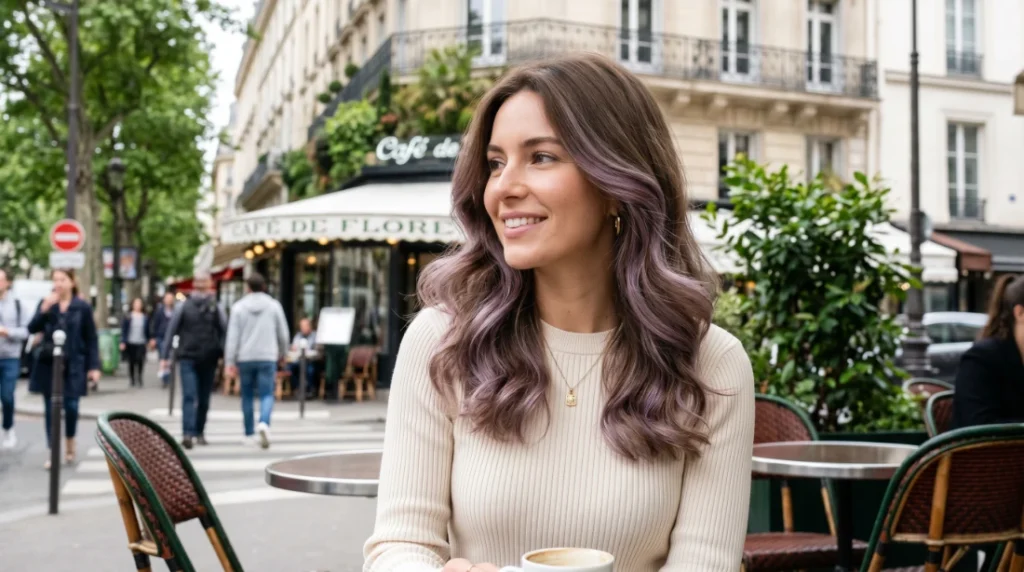
A medium-brown base with hand-painted lavender balayage pieces placed so strategically they look like highlights — until you look again and realize they’re purple. Understated European chic. The most office-appropriate entry on this list — the lavender reads as a creative highlight color rather than a statement, making it suitable for stricter dress codes.
Maintenance tip: A boar bristle brush used for light brushing before bed distributes natural scalp oils into the balayage sections, keeping the color looking nourished and glossy between washes.
Maintenance Essentials for Purple Ombre Hair
Cool water rinses every time. Hot water opens the cuticle and flushes pigment down the drain faster than anything else. Rinsing with cool or lukewarm water extends the life of any purple tone by several weeks — it’s the single easiest maintenance habit with the highest return.
Wash less, condition more. Purple — especially in its lighter, pastel forms — fades with every wash. Stretching wash days using a color-safe dry shampoo keeps tones vibrant longer. On non-wash days, a small amount of color-safe conditioner worked through dry ends refreshes the appearance without a full cleanse.
Gloss appointments every 4–6 weeks. A toning gloss applied at the salon between full color appointments takes about 20 minutes and costs a fraction of a full service. It deposits purple tone back into faded sections and gives the overall color a freshly done appearance.
Thermal protectant before every heat pass. Every time a hot tool touches color-treated hair — flat iron, curling wand, blow dryer — a thermal protectant must be applied first. Non-negotiable, no exceptions.
Never use clarifying shampoo. Avoid clarifying shampoos entirely unless specifically trying to fade the color. Also avoid shampoos with high alcohol content, which strip both moisture and pigment simultaneously.