Short Hairstyles for Fine Hair: The Cuts That Actually Add Volume
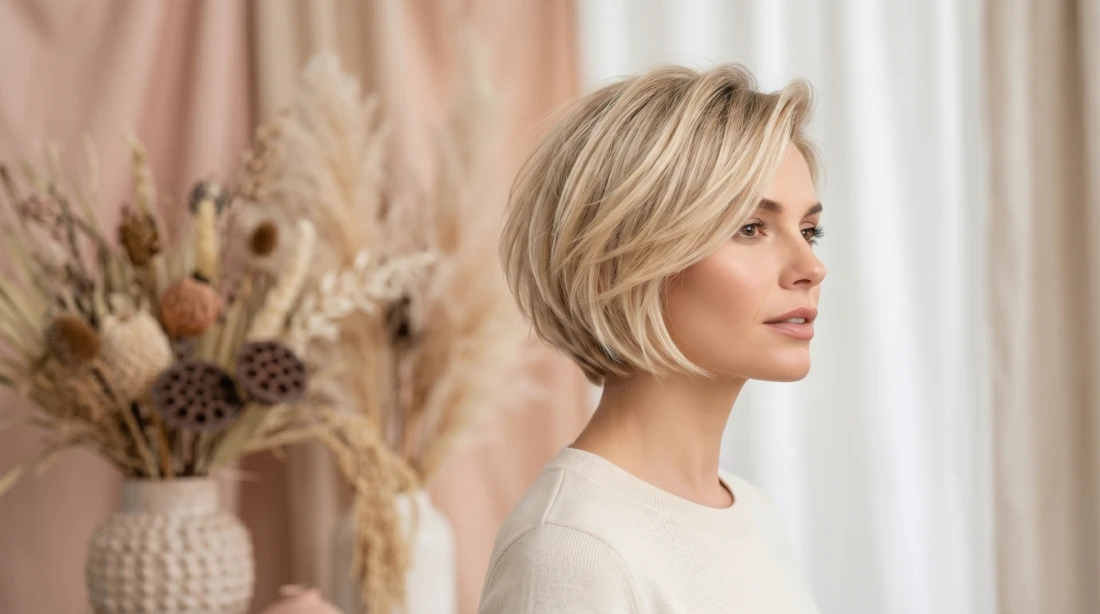
Fine hair has one genuine advantage over thick hair that doesn’t get discussed enough: it responds to a great cut better than almost any other hair type. The right short style on fine hair creates an immediate, visible transformation — more body, more movement, more personality — in a way that a great cut on thick hair simply cannot replicate.
The challenge is knowing which cuts work and which ones work against you. According to Rush Hair’s 2026 fine hair guide, the aim of short hairstyles for fine hair is to create the illusion of thicker, fuller hair through layering, textured cutting, and shaping techniques that enhance body and movement — and for fine hair specifically, these techniques are especially effective in transforming delicate strands into a style that feels vibrant and full of life.
Here are the five cuts that consistently deliver — along with exactly how to style and maintain each one.
Short Hairstyles for Fine Hair: 5 Cuts That Add Instant Volume
1. The Pixie Cut
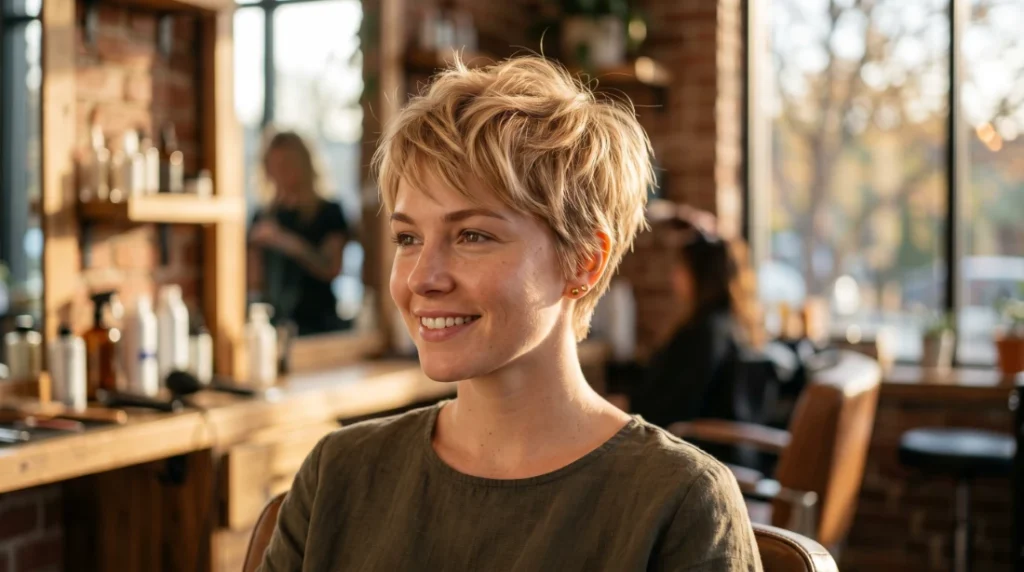
The pixie cut is the most transformative option available for fine hair, and it’s one of the defining short hair trends of 2026. Shorter back and sides with longer layers left on top create immediate texture and the appearance of real thickness. The top layers have enough length to be styled with height and direction, while the shorter sides and nape create contrast that makes the crown look fuller by comparison.
A soft, feathered pixie with delicate layers that lift at the crown and taper neatly around the ears adds dimension and movement in a way that flat, uniform pixies don’t. The “undone but polished” quality that celebrity hairstylist Tommy Buckett describes as defining the best short cuts of 2026 is most achievable on fine hair with this style.
Best for: Oval, heart-shaped, and round faces. Works particularly well on straight or slightly wavy fine hair.
How to style: A lightweight volumizing mousse worked through damp hair from root to tip before blow-drying with a diffuser or round brush gives immediate lift. A texturizing spray applied to dry hair afterward separates the layers and creates that slightly tousled, lived-in quality. Avoid any product that weighs the hair down — heavy creams and serums collapse fine pixie layers almost immediately.
Salon ask: “Soft feathered pixie with layers lifted at the crown — textured finish, tapered at the nape.”
2. The Classic Bob
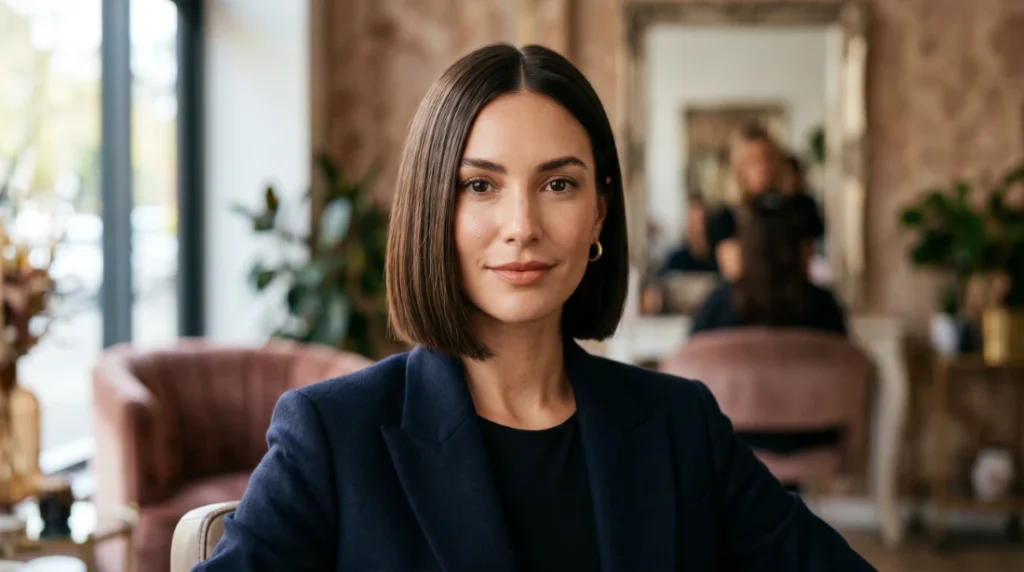
The blunt bob is consistently the most recommended cut for fine hair by professional colorists and stylists — and for good reason. A sharp, even perimeter creates the immediate visual impression of thickness and density that no other cut achieves as cleanly. Celebrity hairstylist Clariss Rubenstein describes the blunt bob as her top recommendation for fine hair: “The sharp, even perimeter creates the illusion of thickness — it’s timeless, chic, and perfect for fine hair.”
The classic bob hits at the jawline, which is the most flattering length for creating fullness. An A-line bob — slightly shorter at the back and longer at the front — adds movement and prevents the back from feeling heavy. Soft layers can be added for a more relaxed, less structured finish if the blunt edge feels too precise.
Best for: Almost any face shape, depending on the specific length and cut variation chosen.
How to style: Lightweight styling gel applied through damp hair before blow-drying with a round brush creates structure and body without weighing fine strands down. Blow-dry upward from the roots to create lift rather than flat, smooth coverage. A finishing spray rather than a serum maintains the shape without the heaviness.
Salon ask: “Classic blunt bob at the jawline — sharp perimeter, minimal layers, or A-line variation for movement.”
3. The Lob (Long Bob)
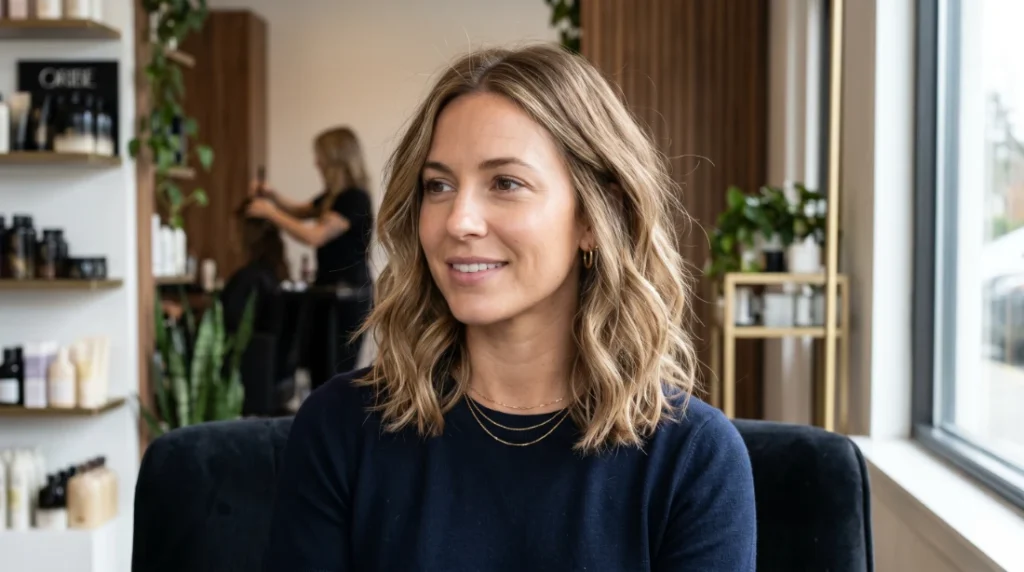
The lob sits just above the shoulders and is the right choice for anyone not ready to commit to a shorter cut — or for fine hair that benefits from slightly more length to work with for styling versatility. A textured lob with added layers creates depth and prevents the style from looking flat, which is the main risk of fine hair at this length without strategic cutting.
Loose waves created with a curling wand make fine hair at lob length appear significantly thicker and fuller — the waves add visual bulk that straight fine hair at this length lacks. The lob is also the easiest short cut to transition to longer styles from, making it a natural starting point for fine-haired women exploring shorter lengths for the first time.
Best for: Square, oval, and heart-shaped faces.
How to style: Layers are essential for a lob to work on fine hair — without them, the length simply lies flat and the fullness effect is lost. Loose waves with a medium-barrel curling wand, applied alternating directions and then loosened with fingers, create the best result. A volumizing spray at the roots before styling provides the lift that fine hair at this length needs.
Salon ask: “Textured lob with soft layers throughout — above the shoulders, movement and depth rather than blunt weight.”
4. The Layered Shag
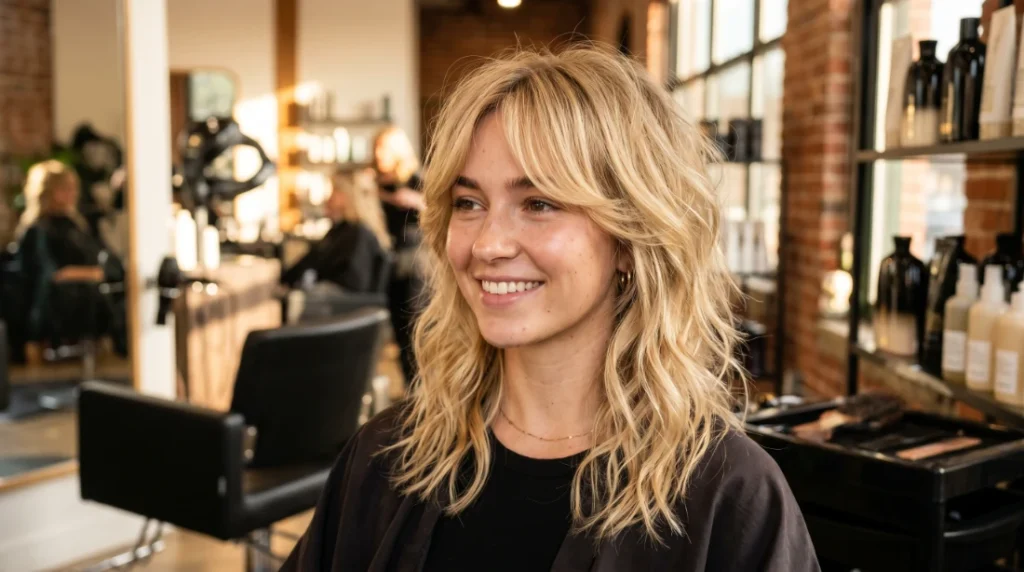
The shag has become one of the defining cuts of 2026, and it works particularly well on fine hair because the architecture of the cut — short choppy layers at varying lengths throughout — creates texture, movement, and the appearance of significantly more volume than the hair actually has. Curtain bangs as part of the shag package soften the face, add dimension around the eyes, and create a face-framing quality that makes the entire cut look more intentional.
The layered shag works on round and oval face shapes especially well because the layers add height and vertical interest. The key technical detail for fine hair is the layering — too uniform and the shag loses its volume-creating effect.
Best for: Round and oval face shapes. Works well on naturally wavy fine hair where the texture already creates the slightly undone quality the shag requires.
How to style: Dry shampoo applied at the roots before styling lifts the fine layers immediately. A diffuser rather than a round brush preserves the natural movement of the layers without smoothing them flat. Avoid heavy products at all costs — the shag’s volume effect on fine hair disappears the moment anything weighty touches the layers.
Salon ask: “Layered shag with curtain bangs — choppy layers throughout, short to medium length, textured finish.”
5. The Asymmetrical Cut
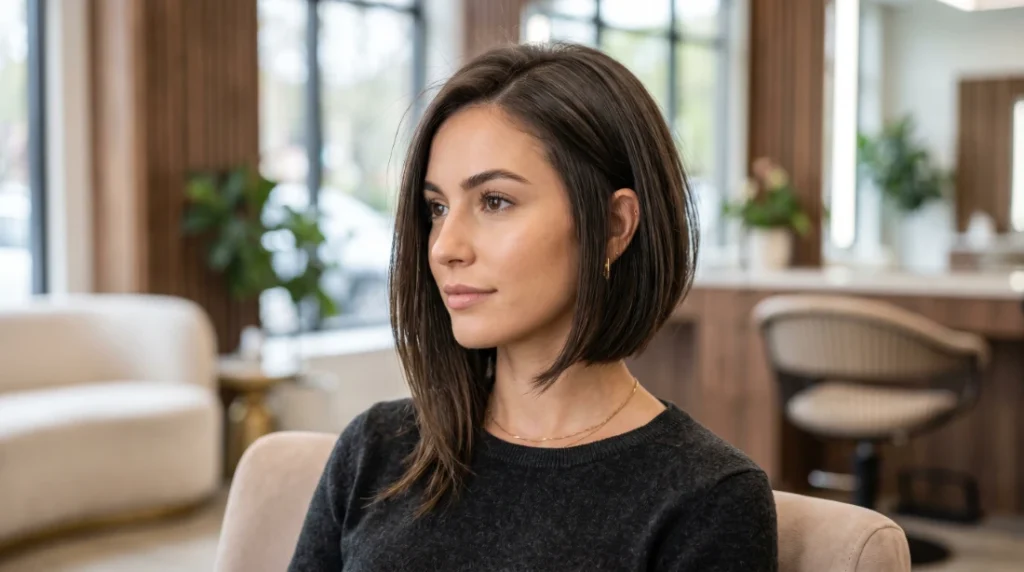
An asymmetrical cut — where one side is noticeably longer than the other — creates the visual impression of volume and thickness through contrast and interest rather than through the hair itself having more substance. The eye reads the length differential as dimension, which translates immediately into the perception of fuller hair. This works with both bobs and pixies and adds an edgy, contemporary quality to either style.
The asymmetrical cut is particularly effective on fine hair that lacks volume at the sides because the longer side creates natural coverage while the shorter side exposes the neckline in a way that reads as intentionally bold rather than sparse.
Best for: Square and round face shapes, where the asymmetry creates balance against stronger jaw or cheekbone structure.
How to style: Blow-dry with a round brush, directing the longer side outward and downward to create fullness. A light wax or pomade applied only to the tips of the shorter side enhances the contrast between the two lengths without weighing the fine strands down overall. The asymmetry does the styling work — product just needs to support it, not compete with it.
Salon ask: “Asymmetrical bob or pixie — meaningful length difference between the two sides, not a subtle variation.”
Styling Essentials for Short Fine Hair
Product weight is everything. Fine hair collapses under anything heavy. Stick to lightweight mousse, sea salt spray, and light-hold hairspray. Avoid thick creams, heavy serums, or oil-based products on the lengths — if you use a serum, apply only to the ends and in the smallest possible quantity.
Root lift is the priority. A root-lifting spray or volumizing mousse applied specifically at the scalp before blow-drying creates the foundation that all fine short hairstyles need. Without root lift, even the best cut lies flat by mid-morning.
Blow-dry technique matters more than product. Directing the blow-dryer upward while lifting sections with a round brush creates volume that persists throughout the day. Flat, forward-directed drying neutralizes the effect of even the best cut on fine hair.
Waves and curls create the most convincing fullness. Loose, natural-looking waves created with a medium-barrel iron add visual bulk to fine hair more effectively than any product or technique. The waves create the illusion of thickness from every angle.
Care and Maintenance for Fine Short Hair
Wash every 2–3 days maximum. Overwashing strips natural oils that give fine hair its body and leaves strands looking finer and flatter. On non-wash days, a dry shampoo that doesn’t leave a white cast maintains both volume and cleanliness.
Sulfate-free shampoo. Sulfates are too stripping for fine hair — they remove the natural moisture that keeps fine strands soft, flexible, and healthy-looking. A gentle, sulfate-free formula used consistently makes a visible difference over time.
Trim every 6–8 weeks. Short cuts on fine hair lose their shape faster than longer styles — the precision of the cut is what creates the volume effect, and once that precision goes, so does the fullness. Regular trims are the most important maintenance step for keeping short fine hairstyles working.
Heat protection every time. Fine hair is more vulnerable to heat damage than thick hair because there’s less structural mass to absorb the impact. Damaged fine hair looks even finer — apply a lightweight heat protectant before any hot tool use without exception.
FAQ: Short Hairstyles for Fine Hair
Will short hair make fine hair look thinner? Not with the right cut. Short hair on fine hair creates the illusion of thickness by removing the weight that causes flatness in longer styles. The cut itself — specifically the layering, texture, and shaping — is what determines whether fine hair looks fuller or flatter.
Which styles should fine hair avoid? Blunt cuts with no layers at longer lengths, and anything too heavy or uniform through the mid-lengths. The blunt bob works at the jaw specifically because of the short length — a blunt lob or longer blunt cut without any layering tends to sit flat and limp on fine hair.
How do I get short fine hair to appear fuller? Layers, lightweight mousse, and blow-drying upward with a round brush are the three fundamentals. Soft waves are the most effective single addition — they create immediate visual bulk that no product can replicate as convincingly.
What’s the ideal cut for fine, thinning hair specifically? Highly textured pixies, classic bobs, and lobs with soft layers added throughout are consistently the strongest options. They add volume, create movement, and don’t require high-maintenance styling to look their best.