
November Journal Ideas: 30 Gentle Prompts to Reset Before the New Year

November has a quiet kind of magic.
It’s not as loud as December, and it’s not as fresh as January.
It sits in the middle — a soft pause where you finally notice how much this year asked of you.
If you’ve felt tired, a bit behind, or like the whole year blurred together, you’re not alone. That’s actually why this month is perfect for slowing down with your journal. These November journal ideas are here to help you gently reflect, release, and realign before the new year sneaks up on you.
You don’t have to tackle all 30 prompts. Just pick what your heart needs today, and let the rest wait.
Cozy November Mindset Check-In

Think of this section as a warm mental reset. Before you dive into goals or deep reflections, it helps to ask: How am I, really? And if you ever feel stuck and want even more inspiration, you can save these alongside my 101 creative journal entry ideas for days when your brain feels blank but you still want to write.
Use these November journal prompts to check in with your mood, your energy, and the kind of month you want to create.
1. How do you want November to feel for you—three words only?
Write down just three words. They might be calm, focused, cozy, playful, or anything that feels good in your body when you read it. Then, unpack why each word matters to you right now and what you’re craving beneath that feeling.
Ask yourself what tiny choices in your day—like how you start your morning, how often you check your phone, or who you say yes to—would support those words. You can even rewrite your three words at the top of your weekly to-do list to remind yourself what you’re actually trying to create this month, beyond tasks. Let these three words be your quiet guide instead of another loud rule.
2. What’s one thing you’re ready to leave behind from the past few months?
Think of something that’s been clinging to you—maybe a habit, a mindset, or a situation that no longer serves you. Describe how it’s been affecting your mood, energy, or self-worth. Be honest about the ways you’ve adjusted yourself around this thing, even when it wasn’t fair to you.
Then, write about why you’re ready to let it go now, and what finally pushed you to that point. Finish by imagining what your life might feel like if you actually released it, even just 10% more than before.
3. What’s something small that’s been weighing on you more than it should?
Sometimes it’s not the big life changes that exhaust us, it’s the small nagging worries that never get a voice. Write about one tiny thing that’s been sitting in the back of your mind—maybe a message you haven’t replied to, a conversation you’ve been avoiding, or a task you keep postponing.
Describe how it shows up in your day and how often your brain circles back to it. Ask yourself if it really deserves this much space and stress. Then, brainstorm one simple action or mindset shift that could shrink its power, even if it doesn’t solve it completely.
4. Describe your ideal cozy November day from morning to night.
Close your eyes for a moment and picture a day that feels soft, slow, and safe. Start from the moment you wake up—what do you see, hear, and smell around you?
Walk yourself through your morning, afternoon, and evening, describing the little rituals that would make the day feel nourishing rather than rushed.
Let yourself write about details like warm drinks, blankets, scents, music, and the people (or solitude) you’d want. When you’re done, look for one or two tiny pieces of that dream day you could steal and bring into a real day this month.
5. Where do you feel tension in your life right now—and what would ease it, even a little?
Scan through the different areas of your life: work, home, relationships, health, and your inner world. Notice where your shoulders lift, your jaw tightens, or your thoughts speed up when you think about it. Write honestly about why that area feels tense and what stories you’re telling yourself about it.
Then, instead of trying to “fix” everything, ask what would ease it by just 5%—more rest, a conversation, asking for help, saying no, or lowering expectations. Let this prompt be less about solving and more about softening the pressure you’re under.
6. What boundaries does your November self need to feel safe and calm?
Think about where you’ve been feeling drained, overextended, or low-key resentful. Those feelings are often signals that a boundary is missing or being crossed. Write about what you need this month in terms of time, energy, emotional availability, and access to you.
Be specific about what you’d like to say “no” to more often, and what you want to fiercely protect (like rest, your mornings, or your creative time). Finally, write a few gentle boundary phrases you could actually use—so it’s easier to honor your needs when the moment comes.
7. If November was a soft reset button, what would you gently reset first?
Instead of imagining a dramatic “new life,” think about a gentle reset—something you could adjust slowly rather than flip overnight. Write about one area that’s been feeling off: maybe your sleep, your mindset, your habits, or your self-talk.
Explore what “reset” would realistically mean there, without perfection or extremes. Then, list two or three simple actions that would support this reset, like going to bed 20 minutes earlier, journaling before scrolling, or checking in with yourself once a day. Let this prompt remind you that you’re allowed to start again in the middle of the year—not just on January 1st.
Gratitude & Warm Moments

Gratitude in November doesn’t have to be a forced “I’m thankful for everything” list. It can be quiet, specific, and real. These November journal ideas are about noticing the warmth that already lives in your daily life — even on hard days.
8. List five tiny November things you’re grateful for.
Instead of big life milestones, zoom in on the quiet details that make this month softer. Think about things like the sound of rain, the warmth of a hoodie, a favorite soup, the way the sky looks at 5 p.m., or the feeling of climbing into clean sheets.
For each tiny thing, write at least a sentence about why it feels special or comforting to you. Notice how your body feels as you write about them—do your shoulders drop a little, does your breath slow down? Let this list be a reminder that even in stressful seasons, small comforts are still there, waiting to be noticed.
9. Write about one person you’re quietly grateful for and why.
Choose someone who doesn’t always get a big thank-you speech—maybe a friend, sibling, coworker, or even someone you mostly know online.
Describe the little ways they make your life lighter, easier, or funnier. Write about a recent moment where their presence felt like support, even if they didn’t realize how much it meant. Reflect on how you feel around them: safer, more yourself, more hopeful, more seen.
If it feels right, you can end this entry by writing what you might say to them if you chose to share your gratitude one day.
10. What’s a hard moment from this year that you now feel thankful for?
This isn’t about pretending everything happens for a perfect reason, but sometimes pain does leave behind a lesson. Think of a tough situation you went through—maybe heartbreak, disappointment, burnout, or a failure.
Write about how it felt in the middle of it, and then how you see it differently now with a bit of distance. Explore what it forced you to learn about yourself, your boundaries, your desires, or your strength. End by writing a gentle thank you to that past version of you who got through it, even on days when she didn’t think she could.
11. What’s something about yourself you’re grateful for but rarely appreciate?
We’re usually quick to pick apart our flaws, but slow to praise our strengths. Choose one inner quality you’re quietly proud of—your empathy, your honesty, your resilience, your humor, or your ability to keep going. Describe a few times this trait showed up and helped you or someone else.
Reflect on how different your life would feel without this part of you. Finish by writing a few kind sentences to yourself, as if you’re thanking your own heart for carrying that strength all this time.
12. Describe a recent moment that made you feel unexpectedly warm inside.
Think of a moment in the last few weeks where you felt a little glow—maybe someone remembered a small detail about you, you had a quiet night alone, someone held the door, or you heard a song that brought back a soft memory.
Write out the scene like you’re replaying it in slow motion. Describe where you were, what you were wearing or holding, and what your body felt like in that moment. Then, explore why it touched you so much—what need did it meet, or what part of you did it speak to?
Let yourself enjoy that memory fully on the page, as if you’re reliving it.
13. What traditions or rituals make this time of year feel special to you?
These don’t have to be big holidays or picture-perfect celebrations. Think about little rituals like lighting a candle at night, cleaning your room before a new month starts, baking something, visiting a place, or watching a specific movie. Write about how these traditions started, and how they make you feel now.
Ask yourself if there’s a new ritual you’d like to add this November—something that would make the month feel more like yours. Remember, your rituals don’t have to look like anyone else’s to be meaningful.
14. How can you show gratitude to your body this month, in simple, doable ways?
Instead of asking your body to do more, what if you tried thanking it for what it already handles? Start by writing about the things your body lets you do every day, even on low-energy days—walking, thinking, hugging, working, laughing, resting.
Notice if there’s any part of your body you judge harshly and gently ask yourself what it’s been doing for you all this time. Then, brainstorm small acts of kindness you could offer it: more water, more stretching, softer clothes, better sleep, kinder thoughts.
Let this entry be a quiet apology for past harshness and a soft promise to treat your body with more care going forward.
Reflecting on the Year So Far

Before you rush into new year resolutions, it’s worth pausing to look back at the story you’ve already lived this year. These November journal prompts will help you notice the growth, the patterns, and the parts you might’ve rushed past.
15. If you had to name this year like a book title, what would it be?
Have fun with this one—your title can be poetic, dramatic, funny, or completely chaotic. Write the title first, then explain why it fits the story of your year so far. Think about the main themes that have shown up: growth, loss, change, healing, confusion, or rebuilding.
Reflect on the “plot twists” that surprised you and the character development you’ve gone through. If you want, you can even break your year into “chapters” and name those too, noticing how different they feel from one another.
16. What did you learn the hard way this year?
Think of a lesson that didn’t arrive gently—it came through pain, conflict, or discomfort. Describe the situation in detail: what happened, how you reacted, and how it made you feel.
Then, write about the truth you eventually realized because of it, even if you resisted it at first. Ask yourself how you might handle a similar situation differently next time with this new wisdom.
Let this prompt remind you that even the hard lessons added to your emotional toolkit, uncomfortable as they were.
17. What’s one promise you kept to yourself—and how did that change you?
We often focus on the promises we broke, but there’s so much power in the ones we kept. Think about something you told yourself you’d do or stop doing, and you actually followed through, even imperfectly. Describe what that promise was and why it mattered to you. Reflect on how keeping it shifted your self-trust, confidence, or daily life.
Finally, write about how you can build on that win, using it as proof that you can show up for yourself again.
18. Where did you surprise yourself in 2025?
Look back on moments where you handled something better than you expected, took a risk, or behaved like a slightly braver version of yourself.
Describe one specific situation and how you showed up in it. Explore what you were scared of beforehand and what actually happened in reality. Ask yourself what this says about your growth and how you might be underestimating yourself.
Let this entry be a highlight reel of your quiet courage, even if no one else noticed.
19. What’s something you thought you wanted this year but now realize you don’t?
Think about a goal, relationship, lifestyle, or achievement you were chasing earlier this year. Write about why you wanted it back then, and what it represented for you—validation, security, status, excitement.
Then, explore why it doesn’t feel as right or important now. Notice how your values, priorities, or self-awareness might’ve shifted. Instead of judging yourself for changing your mind, treat this as a sign of growth and deeper self-knowledge.
If this reflection brings up a lot of emotion or self-judgment, it might help to move slowly and follow some soft, doable steps to love yourself again as you let old versions of you go.
20. What part of your life feels most aligned right now—and why?
Scan your life gently and notice where things feel relatively calm, natural, or “right,” even if everything isn’t perfect. Maybe it’s your friendships, your creative habits, your new boundaries, or a small daily routine. Write about what’s working there and what choices you made that contributed to that alignment.
Reflect on how you show up in that area compared to others—are you more honest, more confident, more relaxed? Finally, ask yourself what you can borrow from that aligned area and apply to the places that feel more chaotic.
21. What’s a chapter you feel ready to close before the new year begins?
This could be a mindset, a pattern, a role you play, or even a story you keep telling yourself about who you are. Describe this chapter like you’re describing a part of a book you’re almost done with.
Write about how it started, how it shaped you, and how it’s been showing up recently. Then, gently explore why you’re ready to close it now and what you fear or hope might come after it.
You can even write a small “goodbye letter” to this chapter, thanking it for what it taught you and letting it know you’re moving on.
Soft Goals & Gentle Intentions for the New Year
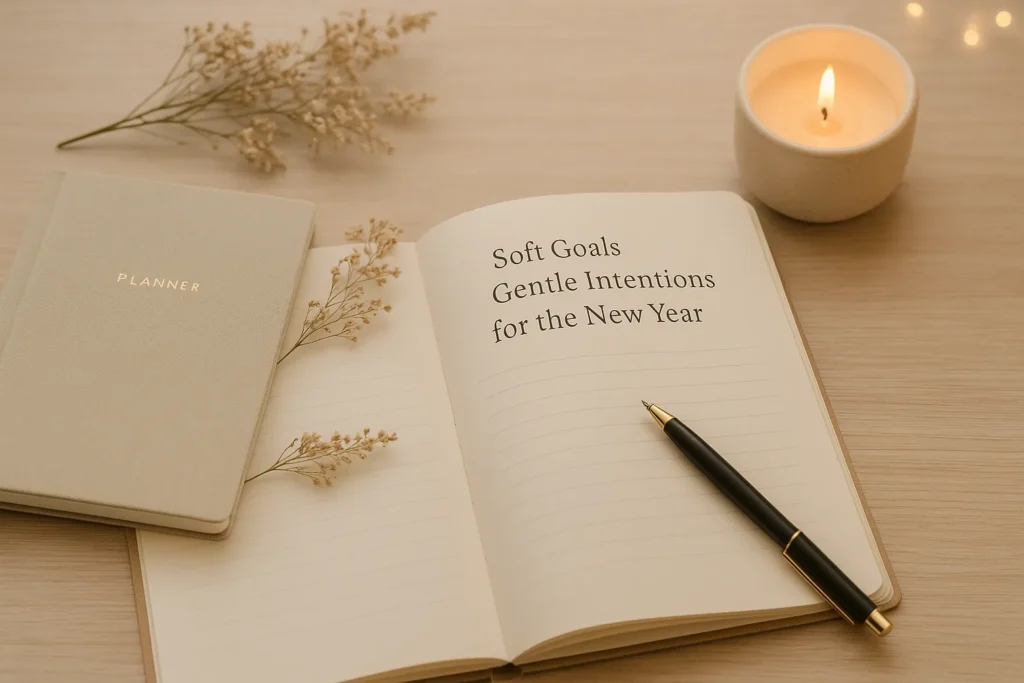
This isn’t about hustling or fixing yourself. It’s about deciding who you want to be more of. These November writing prompts will help you set soft goals and kind intentions that feel human, not harsh.
22. What do you want less of in your life next year?
Instead of starting with resolutions about doing more, start by writing about what you’d like to release. Think about things like overcommitting, constant comparison, scrolling, rushing, people-pleasing, or saying yes when you mean no.
Describe how each of these has been draining you or shaping your choices this year. Then, imagine what your day-to-day life might feel like with even one of them reduced.
Finish by writing one small, tangible way you could start creating “less” of that thing, without pressuring yourself to be perfect.
23. What do you want more of—emotionally, not just in your schedule?
Forget to-do lists for a moment and focus on feelings: peace, joy, stability, connection, creativity, excitement, or softness. Choose a few emotions that feel nourishing to you and describe why you’re craving them.
Then, brainstorm what kinds of activities, people, routines, or environments tend to bring those emotions out in you. Reflect on where you’ve been chasing the appearance of a good life versus the actual experience of feeling good inside it.
Let this entry be a gentle reminder that your emotional life matters as much as your achievements.
24. Describe the version of you you’re slowly becoming.
Imagine yourself a year or two from now, not as a flawless person, but as a softer, wiser, more grounded version of you. Write about how she acts, what she tolerates, what she walks away from, and what she prioritizes.
Describe how she talks to herself on bad days and how she celebrates herself on good ones. Then, look for small hints that parts of her are already here in your current life.
Use this prompt not to pressure yourself, but to recognize that you’re already in the process of becoming her.
25. If you chose one theme word for next year, what word feels right today?
Let your intuition choose a word—something like “ease,” “brave,” “steady,” “expand,” “heal,” or “soften.” Write about why this word is calling you right now and what it represents for your next chapter.
Imagine how this word would look in real life: what kinds of decisions would align with it, and what things would go against it? Reflect on where you already see this word showing up in your current habits or relationships.
You can even write little affirmations or intentions using your word to make it feel more anchored.
26. What’s one habit you could start in November that your future self would thank you for?
Think small and sustainable, not huge and dramatic. Maybe it’s a 5-minute stretch, a nightly brain dump in your journal, a short walk, a weekly reset, or a rule about your phone.
Describe why this habit matters to you and what problem it might gently ease over time. Then, write about how you’ll make it realistic—when you’ll do it, how often, and how you’ll remind yourself.
Picture your future self in a few months feeling a bit calmer or more grounded, and let this vision motivate you more than pressure does.
27. What are three things you’re no longer available for in relationships, work, or life?
Write down three clear “no more” statements about what you won’t accept going forward—things like disrespect, emotional breadcrumbing, chronic overwork, guilt-tripping, or constantly explaining yourself.
For each one, explain where it’s been showing up in your life and how it has made you feel. Reflect on why you tolerated it for as long as you did, without judging yourself.
Then, describe what it would look like to actually act on this new standard the next time it appears. Let this prompt feel like drawing a quiet but firm line in the sand on your own behalf.
28. Write a short letter to your future self at the end of next year.
Imagine you’re writing to yourself twelve or so months from now, after another full year of growth and change. Start by acknowledging what you know she’s been through this year—you don’t know the details, but you know life will have had its ups and downs.
Tell her what you hope she remembers about her worth, her strength, and her softness. Share what you hope she’s proud of, even if it’s something simple like resting more or saying no when needed.
Close the letter with a gentle promise: that you’re doing your best now to take care of her, even if you don’t have everything figured out.
29. What would a “gentle” approach to productivity look like for you?
Write about how you’ve been taught to see productivity—maybe as constant output, busyness, or never-ending pressure. Then, imagine a version of productivity that leaves room for rest, slowness, and being human.
Describe what your days would look like if you focused on doing a few meaningful things instead of everything at once. Reflect on how you might plan your tasks, set goals, and talk to yourself on days when you can’t do it all.
Let this prompt invite you to build a life you can actually sustain, not just survive.
30. Finish this sentence: “By the time this year ends, I want to feel…” and explain why.
Choose one main feeling you want to be sitting with at the end of the year—peaceful, proud, lighter, more grounded, connected, or hopeful.
Write it down, then spend a few paragraphs exploring why that feeling matters so much to you right now. Think about what’s been getting in the way of that feeling this year and how you might gently create more space for it.
Brainstorm a few small steps or shifts that could move you closer to that emotional state, even if life around you doesn’t become perfect. Treat this not as a strict goal, but as a direction you’re slowly and kindly walking toward.
A Soft Ending to Your November

You don’t have to turn November into a big transformation project. Even answering a few of these November journal ideas can help you feel more present, more honest with yourself, and a little less rushed as the year winds down.
Some days you might fill pages. Other days, you might only manage three lines—and that still counts.
The point isn’t to have a “perfect” journaling routine. The point is to keep returning to yourself, gently, until it feels natural again.