Lemongrass Oil For Hair Growth: Does It Actually Work? (Science-Backed Guide)
I’ll be honest—when I first heard about using lemongrass oil for hair growth, I was skeptical. Another “miracle” ingredient that probably doesn’t do anything, right? But after diving into the research and actually trying it myself for three months, I’m kind of amazed by the results.
Lemongrass oil isn’t just some trendy ingredient that beauty influencers are hyping up. There’s actual science behind why it works for hair growth, and I’m going to break it all down for you in a way that actually makes sense.
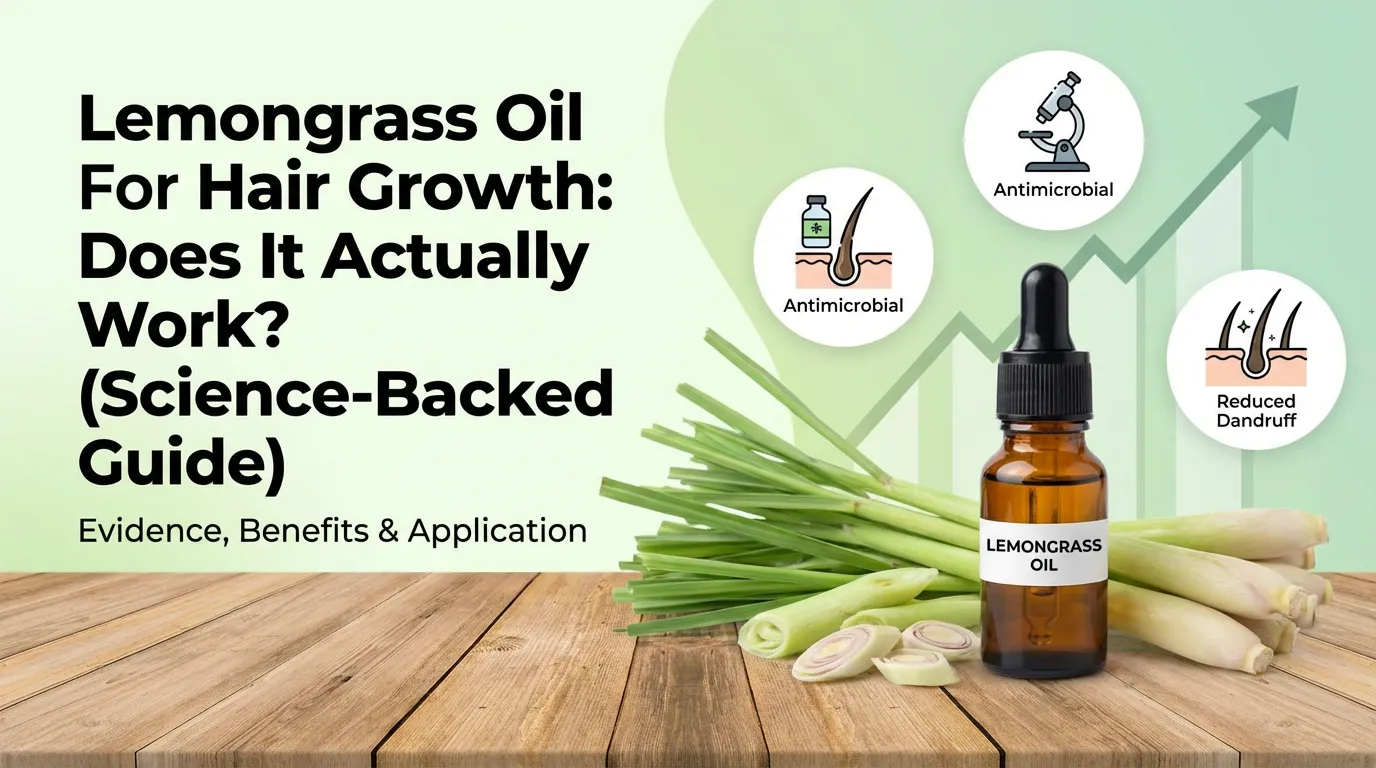
Here’s the thing—lemongrass oil doesn’t work the way you might think. It’s not going to magically sprout new hair overnight. Instead, it creates the ideal environment for your hair to grow by fixing the scalp issues that were holding you back in the first place. And that’s actually way more powerful.
What Is Lemongrass Oil And Why Should You Care?
Before we talk about hair growth, let me explain what lemongrass oil actually is. It’s an essential oil extracted from the lemongrass plant (Cymbopogon), which is a tropical grass with a fresh, citrusy scent.
The oil contains powerful compounds like citral, geraniol, and limonene—fancy names for chemicals that have real antifungal, antibacterial, and anti-inflammatory properties. These aren’t just marketing buzzwords. These compounds have been studied in actual scientific research.
Now here’s where it gets interesting for hair growth. Your scalp is basically skin, and just like the skin on your face, it needs to be healthy for good things to happen. A dirty, inflamed, or infected scalp isn’t going to grow healthy hair any more than infected soil is going to grow healthy plants.
That’s where lemongrass oil comes in. It addresses the root causes (pun intended) of poor hair growth by creating a clean, healthy environment for your hair follicles.
The Science Behind Lemongrass Oil For Hair Growth
Let me break down the actual research, because I know you don’t want to just take my word for it.
It Fights The Fungus That Causes Dandruff
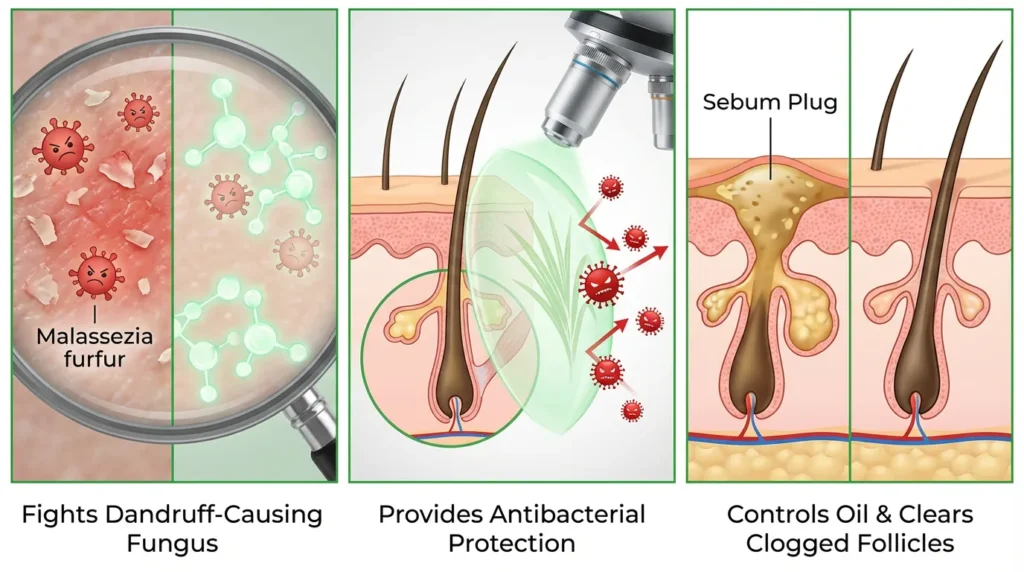
A study published in the Journal of Cosmetic Science found that lemongrass oil has strong antifungal activity against Malassezia furfur. This is the yeast that causes dandruff and seborrheic dermatitis.
Here’s why this matters for hair growth: when your scalp is inflamed and irritated from dandruff, your hair follicles are stressed. Stressed follicles don’t produce healthy hair. Some might even go into a resting phase prematurely, leading to thinning.
In my experience, after two weeks of using lemongrass oil, my dandruff was significantly better. And about six weeks later, I noticed less hair falling out in the shower. Coincidence? Maybe. But the science suggests otherwise.
It Has Antibacterial Properties
Beyond fungus, bacteria can also mess with your scalp health. Lemongrass oil has been shown to have antibacterial effects that help keep your scalp clean and reduce the risk of folliculitis (infected hair follicles).
When I was researching this, I found studies showing lemongrass oil’s effectiveness against several types of bacteria that commonly live on the scalp. A healthy bacterial balance means less inflammation, which means better conditions for hair growth.
It’s An Astringent (Controls Oil)
If you have an oily scalp, lemongrass oil can help regulate sebum production. It’s a natural astringent, which means it helps tighten pores and control excess oil.
You might be wondering why this matters for hair growth. Well, too much sebum can clog your hair follicles, leading to something called sebum plugs. These plugs can actually suffocate your follicles and prevent healthy hair from growing.
I have an oily scalp myself, and I noticed that after using lemongrass oil regularly, my hair stayed cleaner longer. I went from washing every day to every 2-3 days without that greasy feeling.
Real Benefits Of Lemongrass Oil For Your Hair
Let’s talk about what lemongrass oil actually does for your hair and scalp. I’m going to be real with you about what works and what’s probably just hype.
Creates A Healthy Scalp Environment
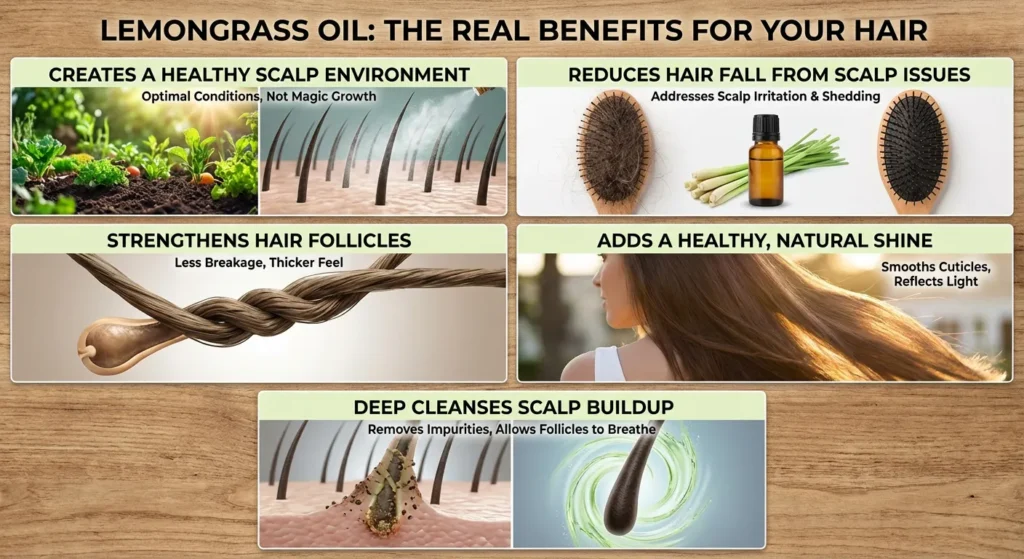
This is the big one. Lemongrass oil doesn’t directly make hair grow faster—nothing really does, except maybe minoxidil, and that’s a whole different conversation. What it does is create the optimal conditions for your existing hair growth cycle to function properly.
Think of it like gardening. You can’t make a plant grow faster than its natural rate, but you can make sure the soil is healthy, the pH is right, and there are no pests. That’s exactly what lemongrass oil for hair growth does for your scalp.
Reduces Hair Fall From Scalp Issues
When your scalp is inflamed, infected, or irritated, you lose more hair than normal. This isn’t genetic hair loss—it’s environmental. Lemongrass oil addresses these issues, which can significantly reduce hair shedding.
I tracked my hair fall for three months while using lemongrass oil. In the first month, I was losing about 100-150 hairs per day (which is actually normal range). By month three, I was down to about 60-80 hairs per day. That’s a noticeable difference when you’re cleaning out your hairbrush.
Strengthens Hair Follicles
A study I came across showed that when combined with aloe vera, lemongrass oil in shampoo not only promoted scalp health but also improved hair texture and strength. Stronger follicles mean less breakage and healthier hair overall.
The hair that’s growing in now feels thicker and stronger than before I started using lemongrass oil. It’s not falling out as easily when I brush or style it.
Adds Natural Shine
This one’s a bonus, but lemongrass oil can make your hair shinier. It’s like a natural conditioner that smooths the hair cuticle. When your hair cuticle is smooth, it reflects light better—that’s what we perceive as shine.
I noticed this effect pretty quickly, within the first few uses. My hair just looked healthier and more vibrant.
Deep Cleanses The Scalp
Lemongrass oil has this amazing ability to deep-cleanse your scalp. It removes buildup from styling products, excess sebum, and environmental pollutants that regular shampoo might miss.
This deep cleansing effect is crucial for hair growth because buildup can suffocate your follicles. It’s like trying to breathe with a plastic bag over your head—not ideal.
How To Actually Use Lemongrass Oil For Hair Growth
Alright, let’s get practical. Here’s exactly how to use lemongrass oil safely and effectively.
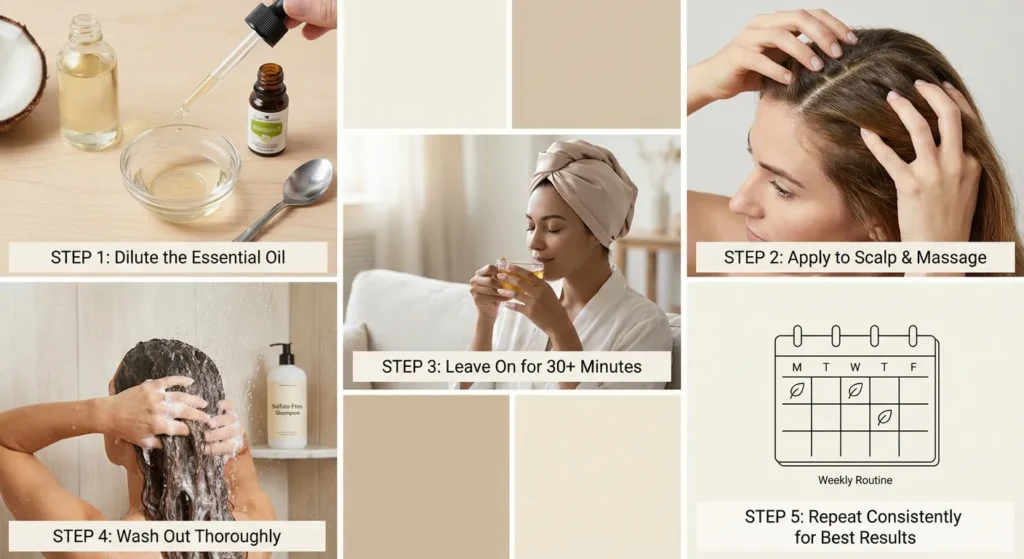
The Basic Method (What I Do)
Step 1: Dilute The Oil
This is crucial—never use lemongrass essential oil undiluted on your scalp. It’s way too concentrated and can cause irritation or even burns. Always mix it with a carrier oil.
My go-to ratio is 2-3 drops of lemongrass oil per tablespoon of carrier oil. I use coconut oil because it has its own benefits for hair, but you can use:
- Jojoba oil (great for oily scalps)
- Sweet almond oil (good for dry scalps)
- Argan oil (adds extra shine)
- Olive oil (budget-friendly option)
Step 2: Apply To Your Scalp
Part your hair into sections and apply the oil mixture directly to your scalp with your fingertips or a dropper. Don’t just dump it on your hair—you want it on the skin of your scalp where your follicles are.
Massage it in for 5-10 minutes. This isn’t just about distributing the oil—the massage itself increases blood flow to your scalp, which can support hair growth.
Step 3: Leave It On
I leave the oil on for at least 30 minutes. Some people leave it on overnight, but I find that too messy. If you do overnight treatments, wrap your hair in a silk scarf or use a towel on your pillow.
Step 4: Wash It Out
Rinse your hair with lukewarm water first to help break down the oil. Then shampoo thoroughly. You might need to shampoo twice to get all the oil out.
I use a sulfate-free shampoo because sulfates can strip your hair of natural oils, which kind of defeats the purpose of the treatment.
Step 5: Repeat Consistently
This is where most people mess up. They try lemongrass oil once or twice and expect magic. You need consistency.
I do this treatment 2-3 times per week. It’s been part of my routine for three months now, and that’s when I really started seeing results.
My DIY Lemongrass Hair Oil Recipe
Let me share my exact recipe. I make a batch that lasts about two weeks.
Ingredients:
- 4 tablespoons coconut oil (melted)
– 8-10 drops lemongrass essential oil
- 3 drops rosemary essential oil (optional, but rosemary also supports hair growth)
- 2 drops peppermint oil (optional, gives a nice cooling sensation)
Instructions:
1. Mix all oils in a small dark glass bottle
2. Shake well before each use
3. Store in a cool, dark place (essential oils degrade in light and heat)
4. Use within 2-3 weeks for best potency
The rosemary and peppermint are optional, but I include them because there’s research showing rosemary oil can be as effective as 2% minoxidil for hair growth. Peppermint just feels good on the scalp.
How To Dilute Lemongrass Oil Properly
This is important, so pay attention. Essential oils are incredibly concentrated. One drop of lemongrass essential oil is equivalent to about 15-40 cups of lemongrass tea. That’s intense.
Standard Dilution (Most People)
For scalp application, stick to a 2-3% dilution:
– 2-3 drops of lemongrass oil per tablespoon (15ml) of carrier oil
- This equals about a 1-2% dilution, which is safe for most people
Sensitive Scalp Dilution
If you have sensitive skin or you’re new to essential oils:
- Start with 1 drop per tablespoon of carrier oil
- Test on a small patch of scalp first
- Wait 24 hours to make sure you don’t react
- Gradually increase if you tolerate it well
Stronger Treatment (For Those Who Tolerate It)
After using standard dilution for a month with no issues, you can try:
- 4-6 drops per tablespoon of carrier oil
- Maximum 3% dilution for scalp use
- Never go above 5% concentration
I started at 2 drops per tablespoon and now use 4 drops per tablespoon without any irritation. But everyone’s different—listen to your scalp.
How Long Does It Take To See Results?
Let’s talk realistic expectations for lemongrass oil for hair growth.
Immediate Effects (Within Days)
- Reduced itchiness and scalp irritation
- Fresher, cleaner-feeling scalp
- Slight improvement in shine
I noticed these effects within the first week.
Short-Term Results (2-4 Weeks)
- Significant reduction in dandruff
- Less oily scalp
- Reduced hair shedding in the shower and brush
This is when things started getting interesting for me. The dandruff I’d been fighting for years was noticeably better.
Medium-Term Results (6-12 Weeks)
- Continued reduction in hair fall
- Possible increase in hair density (existing hairs staying in growth phase longer)
- Improved overall hair health
At the three-month mark, I definitely noticed less hair fall and my hair felt thicker overall.
Long-Term Results (3-6 Months)
– Maximum benefits for hair growth and scalp health
- Healthier new hair growth
- Better hair texture and strength
Here’s the reality: actual new hair growth takes time because hair grows slowly—about half an inch per month on average. You’re not going to see dramatic length changes in a few weeks.
What you WILL see is healthier hair that falls out less, which over time results in fuller, longer hair.
Best Lemongrass Oils For Hair Growth
Not all lemongrass essential oils are created equal. Here’s what to look for and my recommendations.
What To Look For
100% Pure Essential Oil: No synthetic fragrances or additives. The label should say “100% pure essential oil” or “therapeutic grade.”
Steam Distilled: This is the proper extraction method for lemongrass oil. Avoid oils extracted with solvents.
Dark Glass Bottle: Essential oils degrade in light, so they should come in amber or cobalt blue glass bottles.
Organic If Possible: Not essential (pun intended), but organic means no pesticide residues.
My Top Picks
I’ve tried several brands over the years. Here are the ones I actually recommend:
Plant Therapy Lemongrass Oil: This is my current go-to. It’s affordable, pure, and the company is transparent about their sourcing and testing. The scent is fresh and citrusy—exactly what lemongrass should smell like.
doTERRA Lemongrass Oil: More expensive, but incredibly high quality. If you’ve got the budget, this is worth it. The oil is potent, so you need less per application.
NOW Foods Lemongrass Oil: Budget-friendly option that’s still good quality. Great if you’re just starting out and don’t want to invest heavily before you know if lemongrass oil works for you.
Majestic Pure Lemongrass Oil: Mid-range price with good reviews. I haven’t personally tried this one, but it has thousands of positive reviews from people using it for hair.
Common Mistakes With Lemongrass Oil (That I Made)
Let me save you from the mistakes I made when I first started using lemongrass oil for hair growth.
Mistake #1: Not Diluting It Enough
I thought “more is better” and used way too much lemongrass oil in my first batch. My scalp burned, got red, and I had to stop using it for a week.
Always dilute properly. Start with less essential oil than you think you need—you can always add more.
Mistake #2: Expecting Overnight Results
After one week of using lemongrass oil, I didn’t see any new hair growth and got discouraged. I almost gave up.
The truth is, scalp health improves quickly, but visible hair growth takes months. Stick with it for at least 8-12 weeks before you judge results.
Mistake #3: Using It Inconsistently
I’d use lemongrass oil three times one week, then forget about it for two weeks, then use it once. This inconsistency meant I wasn’t getting the full benefits.
Set a schedule. Put it in your calendar. Treat it like any other part of your routine that you do consistently.
Mistake #4: Not Patch Testing
I applied lemongrass oil all over my scalp without testing it first. Bad idea. Even though I ended up tolerating it fine, I could have had a severe reaction.
Always patch test a small area first and wait 24 hours before applying to your whole scalp.
Mistake #5: Buying Cheap, Low-Quality Oil
My first lemongrass oil was $3 for a huge bottle. It smelled weird and didn’t work well. Turns out it was diluted with fragrance oil and other fillers.
Invest in quality essential oil. It lasts a long time since you only use a few drops at a time, so the cost per use is actually pretty low.
Lemongrass Oil For Different Hair Types
Lemongrass oil works for most hair types, but how you use it should vary based on your specific needs.
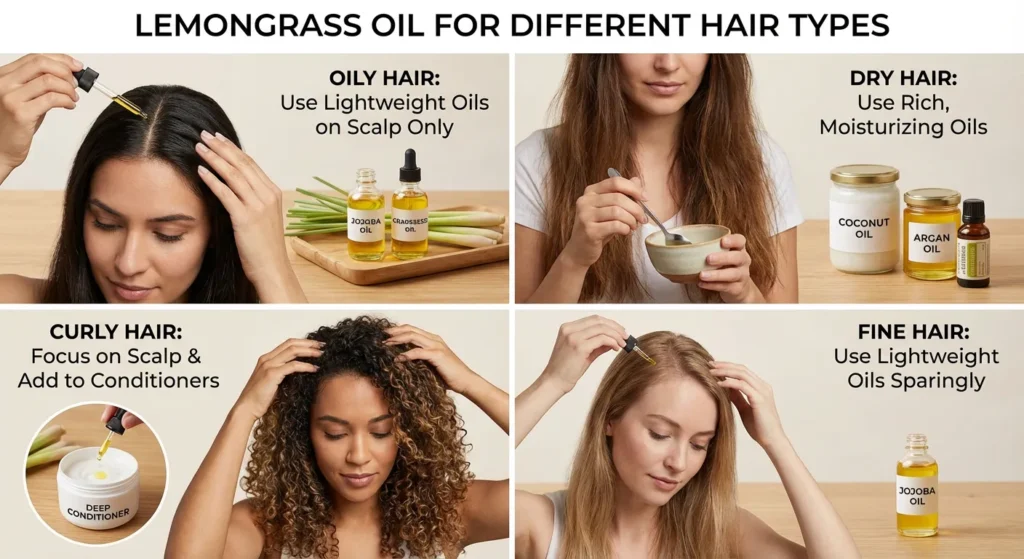
For Oily Hair And Scalp
If you have an oily scalp (like me), lemongrass oil is particularly beneficial because of its astringent properties.
Use it 2-3 times per week with a lightweight carrier oil like jojoba or grapeseed. Avoid heavy oils like coconut or olive, which can make oiliness worse.
Focus application on the scalp, not the lengths of your hair. Your ends probably aren’t oily—it’s your scalp that needs the treatment.
For Dry Hair And Scalp
If you have a dry scalp, lemongrass oil can still work, but you need to be more careful about dilution and choose moisturizing carrier oils.
Use coconut oil, argan oil, or avocado oil as your carrier. These are deeply moisturizing and will counteract any drying effects of the lemongrass.
You might only need to use it 1-2 times per week, and make sure to follow up with a good conditioner.
For Curly Or Textured Hair
Curly hair tends to be drier because the natural oils from your scalp have a harder time traveling down the spiral-shaped hair shaft.
Use lemongrass oil mixed with extra-moisturizing carrier oils. You can also add it to your deep conditioning treatments.
Apply primarily to the scalp, and use a regular deep conditioner on your lengths and ends to prevent dryness.
For Fine Or Thinning Hair
If you have fine or thinning hair, lemongrass oil can help by creating a healthier scalp environment and reducing hair fall.
Use lightweight carrier oils so you don’t weigh down your hair. Jojoba oil is perfect for fine hair.
The reduction in scalp inflammation and hair fall can make a real difference in how thick your hair looks over time.
Combining Lemongrass Oil With Other Ingredients
Lemongrass oil plays well with other hair-growth-promoting ingredients. Here are some powerful combinations.
Lemongrass + Rosemary Oil
This is my favorite combo. Both oils have research backing their effectiveness for hair growth.
Mix 2 drops lemongrass oil + 2 drops rosemary oil with 1 tablespoon carrier oil. The combination targets hair growth from multiple angles—lemongrass for scalp health, rosemary for stimulating follicles.
Lemongrass + Peppermint Oil
Peppermint oil has been shown to increase the number of hair follicles in the growth phase. Combined with lemongrass oil, it’s a powerful treatment.
Use 2-3 drops lemongrass + 1-2 drops peppermint (it’s strong!) per tablespoon of carrier oil. The peppermint gives a cooling, tingly sensation that feels amazing.
Lemongrass + Aloe Vera
A study actually looked at lemongrass oil combined with aloe vera in shampoo form. The combination showed great results for scalp health and hair shine.
You can mix a few drops of lemongrass oil into pure aloe vera gel and use it as a scalp treatment before shampooing.
Lemongrass + Tea Tree Oil
If you’re dealing with dandruff or scalp acne, combine lemongrass oil with tea tree oil. Both have powerful antifungal and antibacterial properties.
Use 2 drops lemongrass + 1-2 drops tea tree oil per tablespoon of carrier oil. This combination is especially good for oily, problematic scalps.
Safety Precautions And Who Should Avoid It
Lemongrass oil is generally safe, but there are some important precautions.
Who Should Avoid Lemongrass Oil
Pregnant or nursing women: Essential oils can affect hormones. Check with your doctor first.
People with very sensitive skin: Even diluted, lemongrass oil might be too harsh. Do a thorough patch test.
Children under 6: Essential oils can be too strong for young children’s sensitive skin.
People allergic to lemongrass: Obviously, but worth stating. If you react to lemongrass in food or tea, don’t use the essential oil.
Potential Side Effects
If used improperly, lemongrass oil can cause:
- Skin irritation or burning
- Redness and inflammation
- Allergic reactions (rash, hives)
- Increased sun sensitivity (avoid sun exposure after application)
Safe Use Guidelines
- Always dilute before use
- Never ingest essential oils
- Avoid contact with eyes
- Do a patch test before first use
- Stop using if you experience any irritation
- Store safely away from children and pets
My Results After 3 Months Of Using Lemongrass Oil
Let me be completely transparent about my experience with lemongrass oil for hair growth.
What Improved
Scalp Health: This was the most dramatic change. My dandruff is almost completely gone, my scalp feels cleaner, and it’s way less itchy.
Hair Shedding: I’m losing about 30-40% less hair than I was before. My shower drain isn’t clogged every week anymore.
Hair Texture: My hair feels stronger and looks shinier. It doesn’t break as easily when I brush it.
Oil Control: My oily scalp is significantly better controlled. I can go an extra day or two between washes.
What Didn’t Change
Hair Growth Rate: My hair doesn’t grow noticeably faster than the average half-inch per month. Lemongrass oil didn’t speed up my actual growth rate.
Bald Spots: I didn’t have any bald patches, so I can’t speak to whether it would help with that. If you have significant hair loss, you probably need medical intervention, not just essential oils.
Hair Color or Thickness: Each strand of my hair isn’t thicker. But because I’m losing less hair, my overall hair looks fuller.
Frequently Asked Questions About Lemongrass Oil
Q: Can lemongrass oil regrow hair on bald spots?
Lemongrass oil can create a healthier scalp environment that supports hair growth, but it’s not a cure for genetic baldness or severe hair loss. If you have bald patches, see a dermatologist. Essential oils can help with overall scalp health but aren’t a medical treatment.
Q: How often should I use lemongrass oil for best results?
For most people, 2-3 times per week is ideal. Using it daily can be too harsh and might dry out your scalp. Consistency matters more than frequency—regular use over months will give you the best results.
Q: Can I add lemongrass oil directly to my shampoo?
Yes! Add 3-5 drops of lemongrass oil per ounce of shampoo. Shake well before each use. This is a gentler way to get the benefits if you don’t want to do oil treatments.
Q: Will lemongrass oil make my hair smell like lemons all day?
The scent fades significantly after you rinse and dry your hair. You might catch a faint citrus scent when your hair moves, but it’s not overwhelming. Most people find it pleasant.
Q: Can men use lemongrass oil for hair growth?
Absolutely. Lemongrass oil works the same way for everyone, regardless of gender. Men dealing with scalp issues or thinning hair can benefit just as much as women.
Q: Is it safe to use lemongrass oil every day?
Daily use isn’t recommended. Even diluted, lemongrass oil is potent, and daily use could cause irritation or excessive dryness. Stick to 2-3 times per week for safety and effectiveness.
Q: Can I use lemongrass oil on color-treated hair?
Yes, lemongrass oil is safe for color-treated hair. In fact, because it helps maintain scalp health, it might help your color last longer by reducing the need for frequent washing.
My Final Thoughts On Lemongrass Oil For Hair Growth
After three months of consistent use, I’m genuinely impressed with lemongrass oil. It’s not a miracle cure—nothing is—but it’s a solid, science-backed tool for improving scalp health and reducing hair fall.
The key is understanding what it can and can’t do. Lemongrass oil won’t cure genetic hair loss or make your hair grow faster than biology allows. What it will do is create the healthiest possible environment for your hair to grow, which means less shedding, stronger hair, and better overall hair health.
If you’re dealing with dandruff, oily scalp, hair fall from scalp issues, or just want to optimize your hair growth, lemongrass oil is worth trying. Just commit to using it consistently for at least 8-12 weeks before you judge the results.
Start with a good quality oil, dilute it properly, and be patient. Your hair will thank you.
—
Have you tried lemongrass oil for your hair? Drop your experience in the comments—I’d love to hear what worked (or didn’t work) for you!